
Lesson
Aggregate states of substances

Objective:
- To explain the solid, liquid and gas structure of substances according to particle theory.
Teacher’s Guide
- Before proceeding with the lab work, review the safety rules by following the link:
- Divide the students so that there are three students in each group.
- To download the worksheet, go to: worksheet
Practical part

Experiment 1.
What substance melts ice quickly?
You can try to melt 4 pieces of ice with different substances: hot water, salt, and a solution. At the end of the experiment, you will determine which substance melts the ice better.
Step 1.
Familiarize yourself with the necessary remedies: 4 pieces of ice, salt, hot water, alcohol, room temperature water, and dishwashing liquid.
Step 2.
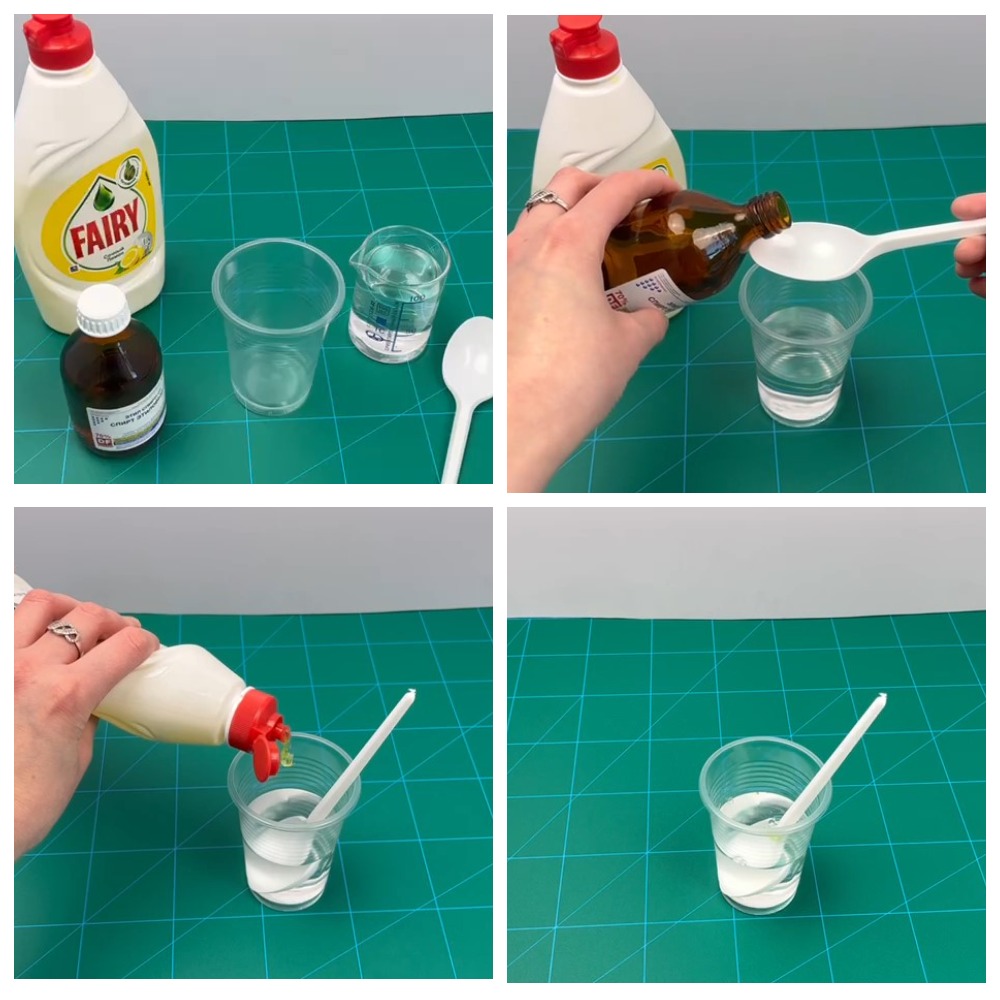
Prepare the solution: mix 100 ml of water at room temperature with half a teaspoon of alcohol and 1-2 drops of dishwashing liquid.
Step 3.
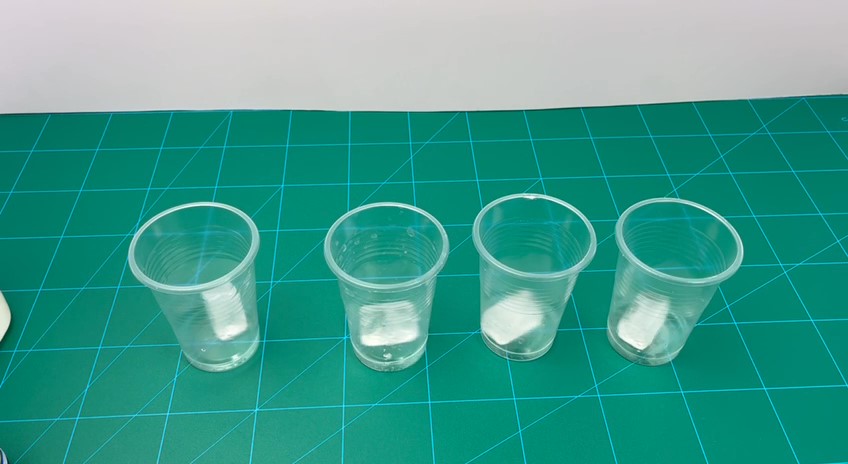
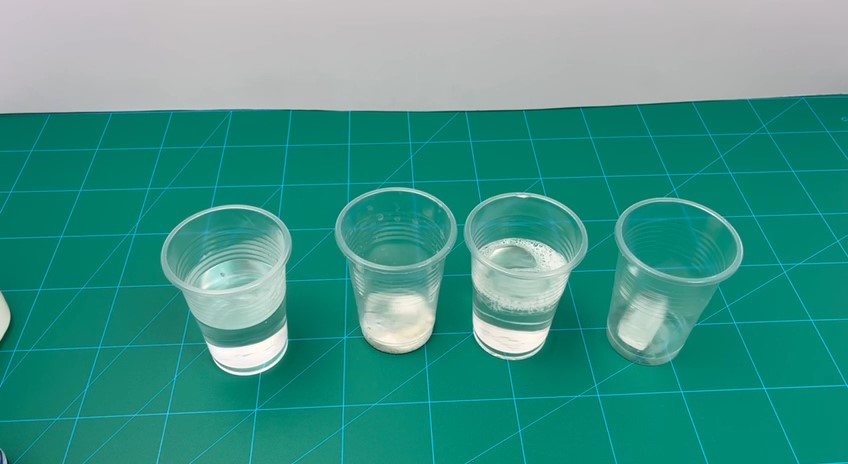
Place 1 ice cube in each of the 4 plastic glasses.
Step 4.
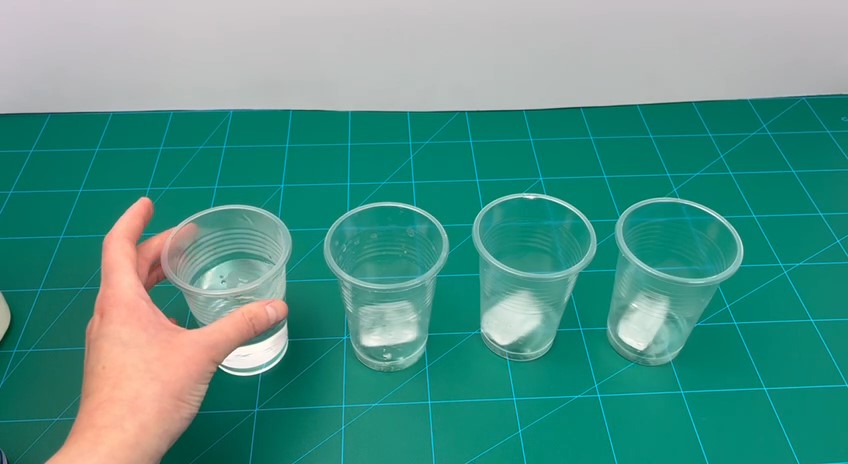
Pour about 100 ml of hot water into the first glass.
Step 5.
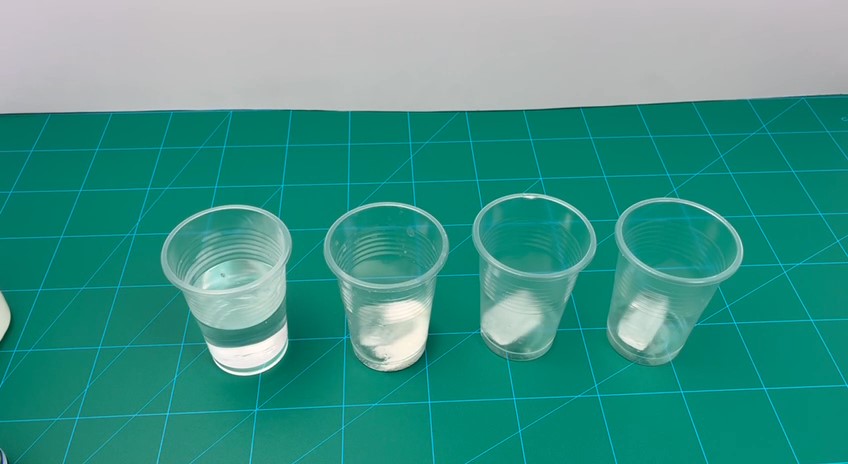
Put 1 teaspoon of salt in the second glass.
Step 6.
Pour the prepared solution into the third glass. And in the fourth glass, let there be only a piece of ice itself.
Step 7.
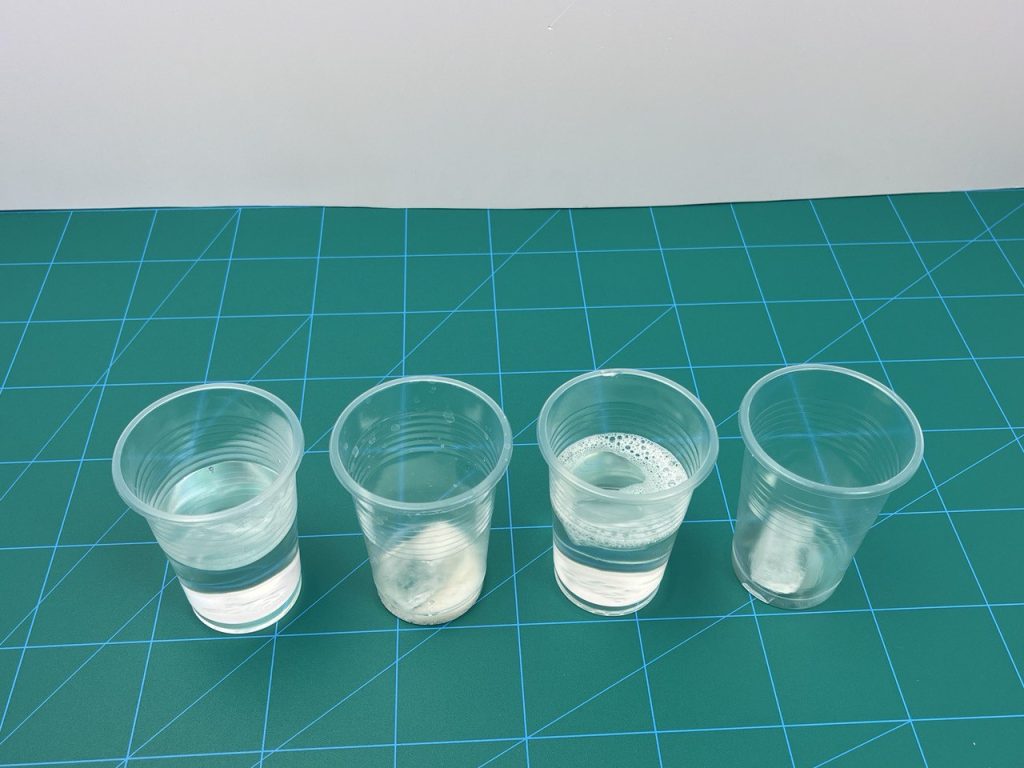
Monitor the process: after 1 minute, after 5 minutes and after 10 minutes. In which glass is the ice melting faster?
Step 8.
Fill in the table of changes in the ice melting process:
| 1 min | 5 min | 10 min | |
| Hot Water | |||
| Salt | |||
| Solution |
Step 9.
Answer the following questions and draw conclusions:
- What type of change in the aggregate state of matter does this process refer to?
- Under the influence of which substance did the ice melt faster?
- In which glass did the ice melt more slowly than in any other glass?
- How can you apply this experience to your own life?
Experiment 2.
The movement of molecules in hot and cold water
In this experiment, you will learn why tea turns red quickly in hot water and why the color of the tea comes out very slowly in cold water.
Step 1.
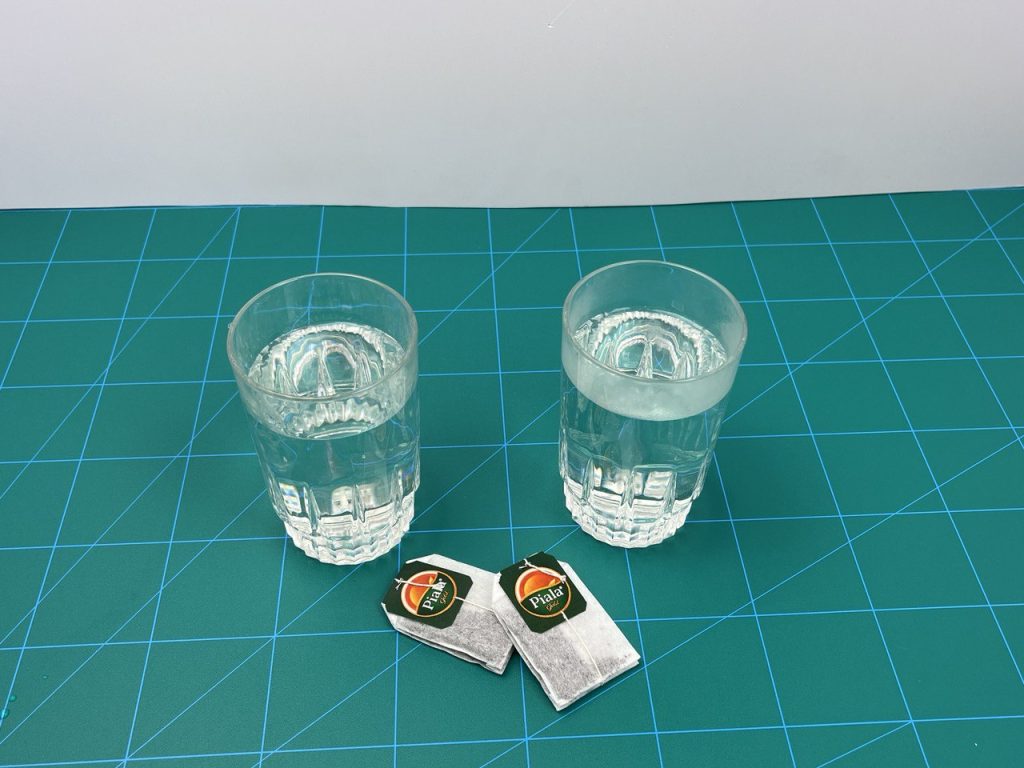
Familiarize yourself with the necessary tools: 2 pieces of tea in sachets, 1 cup of hot water, and 1 cup of cold water.
Step 2.
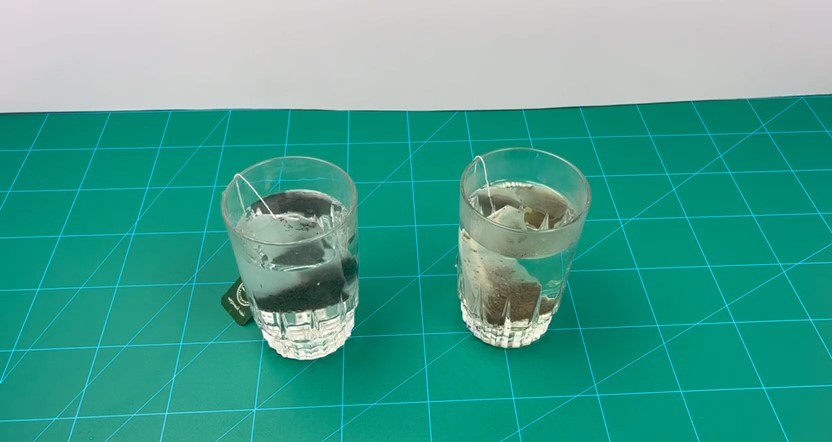
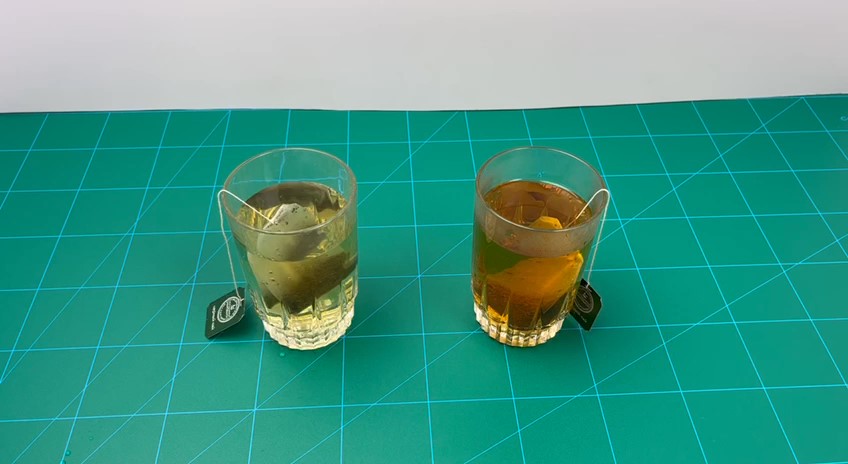
Place 1 tea bag each in glasses of water.
Step 3.
Watch the process. In which glass does the tea stain faster?
Step 4.
Answer the following questions and draw conclusions:
- In which glass of water did the tea come out better?
- Why do you think the tea comes out faster in hot water?
- How do molecules move in the three different aggregate states?
Experiment 3.
Creating a cloud in a bottle.
By doing this experiment, you will witness how clouds are formed. As you squeeze the bottle, the pressure inside the bottle drops and water vapor goes from a gaseous state to a liquid state, interacting with the alcohol molecules to form a cloud. And you will study the process of transition from the gaseous state to the liquid state – condensation.
Step 1.
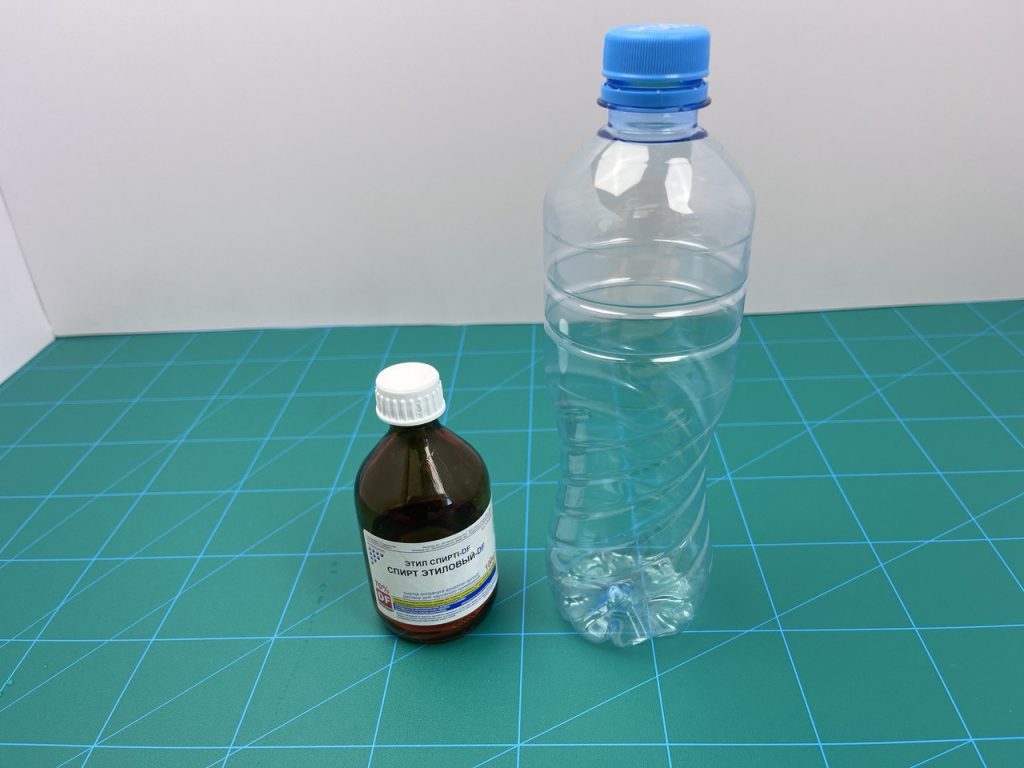
Familiarize yourself with the necessary tools: the bottle (it is important that it be soft, flexible) and the alcohol.
Step 2.
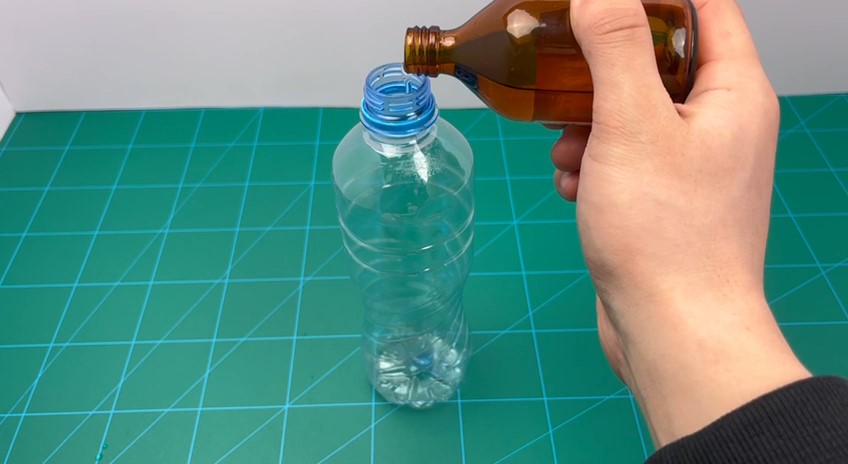
Pour about 10 ml of alcohol into the bottle.
Step 3.
Close the lid of the bottle and swirl the alcohol inside the bottle to cover the entire bottle with alcohol.
Step 4.
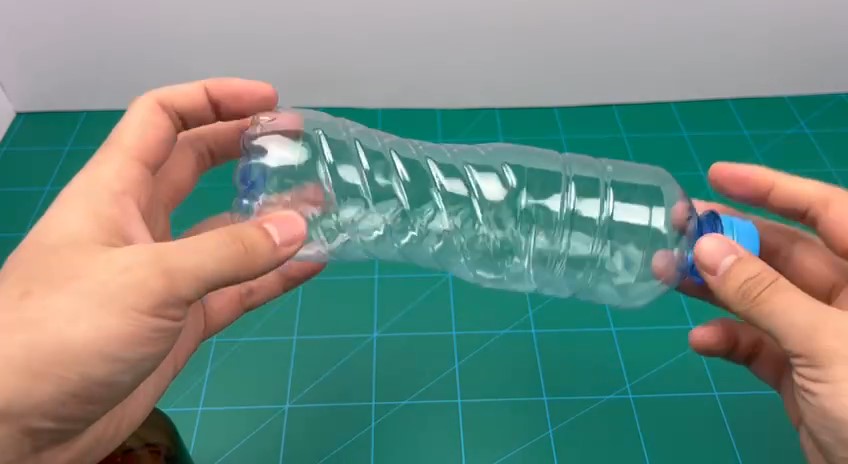
Squeeze the bottle as hard as you can.
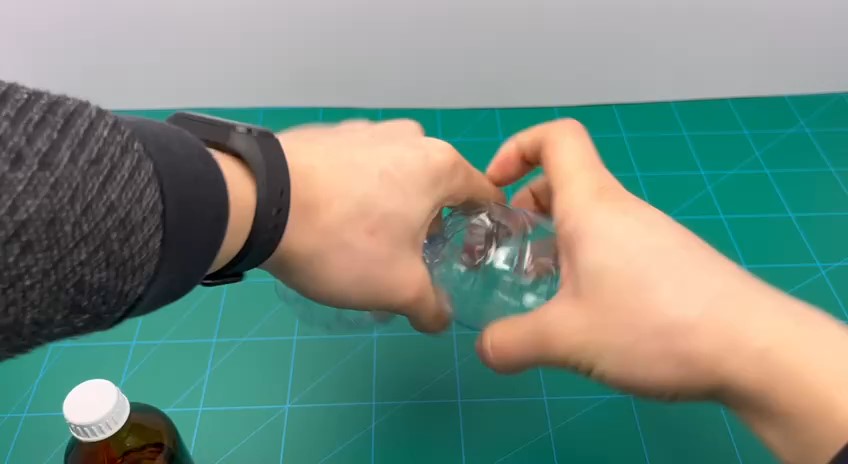
Step 5.
Release the bottle as soon as you finish spinning hard. What changes have occurred in the bottle?
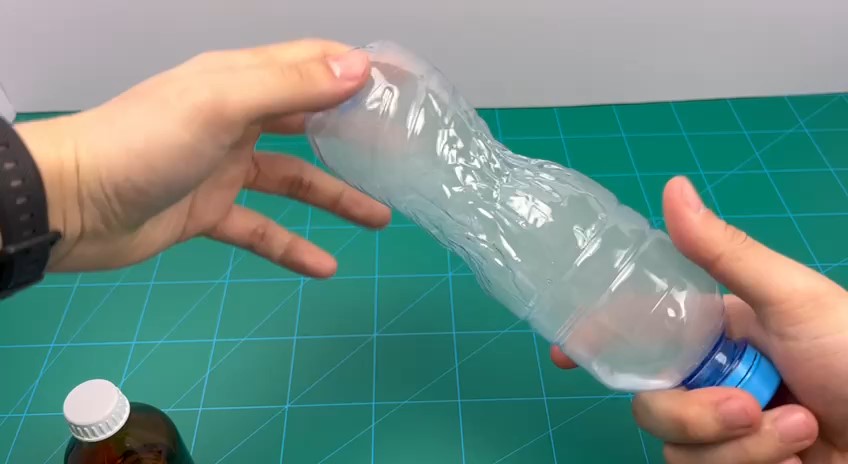
Step 6.
When you open the lid of the bottle and squeeze it from the small of the bottle, you may notice that cloud particles are coming out of the neck of the bottle.
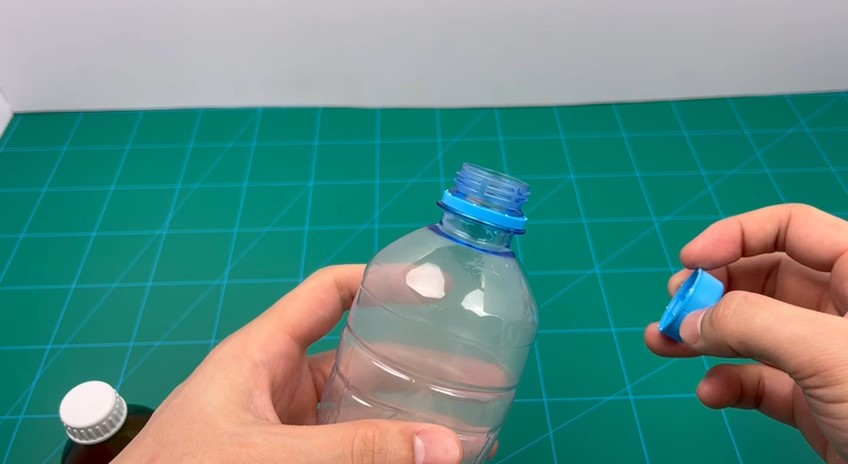
Step 7.
You can repeat the process several times by closing the bottle cap and squeezing it.
Step 8.
Answer the following questions and draw conclusions:
- What is condensation?
- How are clouds formed?
- Give examples of the condensation process.
Conclusion
In doing this hands-on activity, students were introduced to the aggregate states of substances and conducted experiments on the processes by which they change from one state to another. In addition, by conducting an experiment on the movement of molecules in a liquid state, an understanding of whether or not it moves in different states was formed. The education formed today will form the basis of information in high school subjects such as physics and chemistry in the future and will help to further improve knowledge.