Lesson
Project objective
– To learn how to measure body mass and other physical measurements;
– To develop students’ 4K skills ;
– Calculate the average of all class data;
– To know the rules of health care.
Teacher’s guide
– In the practical part of the project, students work in groups of 3-4 students.
– Pupils should be introduced to the topics like mass, weight, human body weight.
– Before beginning the experimental part, familiarize and provide students with all the necessary materials.
– Provide brief instructions on how to use the scales and measuring tape.
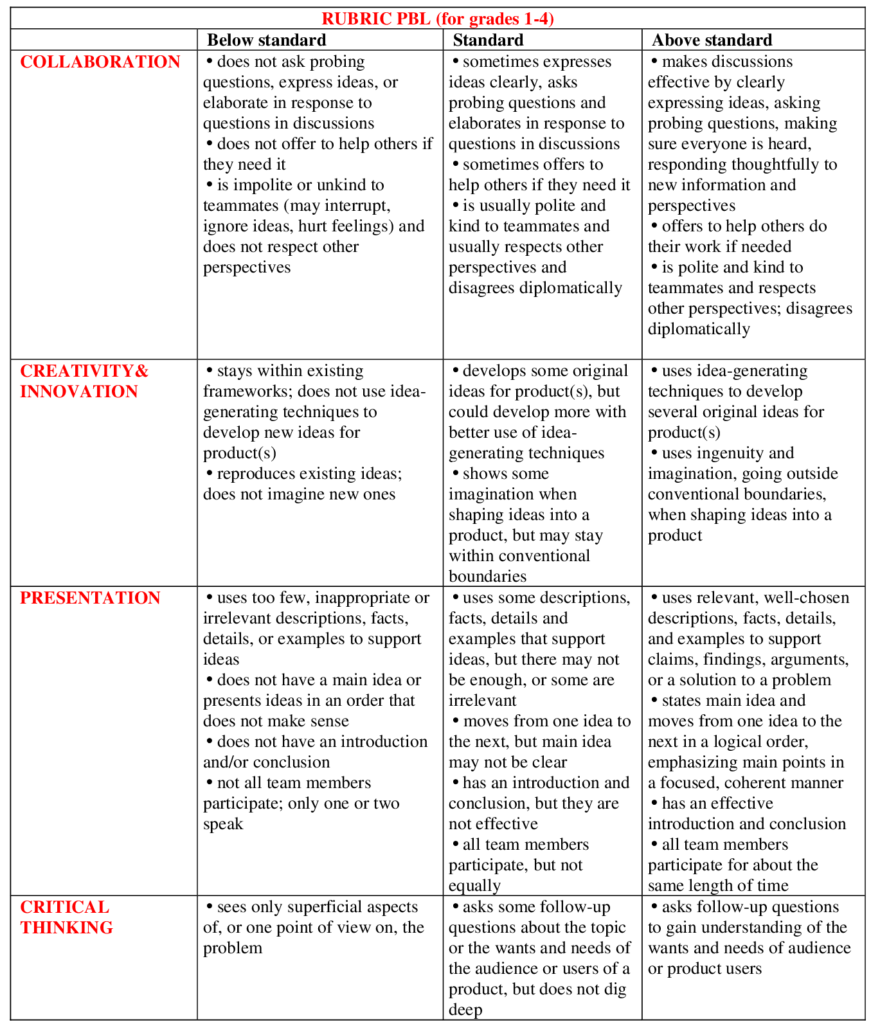
– Explain the PBL (project based learning) rubric to the students at the beginning of the lesson. Skills 4K (critical thinking, collaboration, creativity, presentation)
Safety in Steam lessons
It is recommended that the teacher is familiar with the safety procedures before the start of the lesson. If necessary (in the case of items specified in the safety rules), brief the students. Visit Safety considerations for Steam lessons
Theoretical background
Weight and gravity are of a different physical nature. Gravity is caused by the interaction of a body and the Earth. The weight of a body is due to the interaction between the body and the point of support (suspension). The support (suspension) deforms, resulting in an elastic force.
The weight of an object indicates how heavy it is. Because of this, weight and mass are often used synonymously. Technically, however, weight is the force that a mass-containing object exerts on another body solely by the force of gravity. While mass is independent of gravity, weight is the embodiment of that force.

Mass – is the quantity of matter contained in a body. The common scientific term for mass is the Latin letter m. In the standard system, the unit of measurement of mass is considered to be kilograms. However, in everyday life other units, such as grams or tons, are also used. One characteristic feature of mass is that it is constant, irrespective of position in space. According to the law of universal gravitation, two objects are attracted to each other with a force proportional to their mass and inversely proportional to the square of the distance between them. The force of gravitational attraction itself has no effect on the magnitude of the mass of these objects.
So, for example, a stone with a mass of 60 kilograms on Earth will have a mass of 60 kilograms on Mars, Jupiter or any other corner of our infinite universe. Here we do not consider the effects described by the special theory of relativity, where mass changes when moving at relativistic speeds close to the speed of light. Consideration of these effects is beyond the scope of this paper.

Practical part
The students should work in groups of 2-3 people to collect the data. Weight can be a sensitive issue, so it is better to let the students choose their own group. Prepare a class data chart to compare data that is visible to the whole class. Depending on whether or not the students are familiar with descriptive statistics, some or all of the calculations should be done in class.
1. discuss what it means to be considered physically healthy.
Students can share their physical fitness plans or plans to improve or maintain the physical fitness of family members. What factors play an important role? How do you think you can measure physical fitness?
2. Introducing different biometric measures, including length, as one approach to measuring physical fitness
3 . Match and indicate the class data on the board. You can use this feature to randomly check the students’ report. Discuss the patterns in the data set. The teacher can use a calculator to graph the distribution.
5. Make a class distribution table-ask each student to make a table of the distribution of different biometric indicators of the class.
| Body data | Student 1 | Student 2 | Student 3 |
| weight | |||
| height | |||
| waist | |||
| hip |
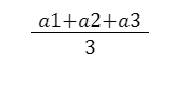
6. Calculate descriptive statistics – ask each student to write the mean value for each data set. The teacher should calculate each group together with the students. Then calculate the total mass of the whole class.
Use a tape measure to measure the height, waist and hips of each student. Record these data on the page below. Use a scale to measure each person’s weight.
After the practical work, discuss with the students about their daily routine. What they eat and how often they are checked by the doctor. To be healthy.
“Harmful or useful”.
– If you think it is healthy – clap your hands three times.
– If you think it’s harmful – stomp your feet three times.
1. I brush my teeth twice a day and always rinse my mouth after eating (clap).
2. I always try to eat as much fruit as possible (clap).
3. When I am nervous, I bite my nails (stomp).
4. When I get my feet wet, I try to get home as quickly as possible and change my wet shoes (clapping).
5. Vitamins are useful. I buy them at the pharmacy and eat them by the handfuls (stomping).
Conclusion
In this lesson the students have calculated an average body biometry. They were introduced to the rules of health care.
 In this project every pupil will be awarded a STEAM title in the category:
– You did the biometric research of the whole class you are a real – scientist researcher!
– Working in a group, you listened to your partner and worked together to develop group work skills. During the practical work you showed your creativity and skills.
Evaluation