
Lesson
Project objective
– To introduce students to interesting facts about the Pythagorean theorem;
– Explain the definition of areas of combined figures, flat figures in the environment;
– To be able to calculate the areas of planar figures in the environment;
– To make a model of Pythagoras’ theorem.
Teacher’s guide
– In the practical part of the project, students work in a group of 3-4 students.
– Pupils should be introduced to the themes of the plane of figures and the Pythagorean theorem.
– Before beginning the experimental part, introduce and provide the students with all the necessary materials.
– Give brief instructions on how to use the scissors.
– Explain the PBL (project based learning) rubric to the students at the beginning of the lesson. Skills 4K (critical thinking, collaboration, creativity, presentation)
Safety in Steam lessons
Before we begin the lesson, teachers are advised to familiarise themselves with the safety procedures. If necessary (if using items specified in the PPE), brief the students. Go to Safety in Steam lessons
Theoretical Part
The Pythagorean Theorem is one of the fundamental theorems of Euclidean geometry, which establishes the relationship between the sides of a right triangle.
The ancient Chinese book Zhou bi suan jing refers to a Pythagorean triangle with sides 3, 4 and 5. The great German mathematical historian Moritz Cantor (1829 – 1920) believed that the equality c2 = a2 + b2

3 was already known to the Egyptians around 2300 BC. According to the scholar, builders then constructed right angles by means of right triangles with sides 3, 4 and 5. Somewhat more is known about Pythagoras’ theorem among the Babylonians. One text gives an approximate calculation of the hypotenuse of an isosceles right triangle.
The basic formulation contains algebraic operations – in a right-angled triangle whose lengths of the cathetuses are a and b, and whose length of the hypotenuse is c, the following relation is satisfied

An equivalent geometric formulation is also possible, resorting to the notion of the area of a figure: in a right-angled triangle, the area of the square built on the hypotenuse is equal to the sum of the areas of the squares built on the cathetuses. This is the formulation of the theorem in Euclid’s Elements.
Practical part
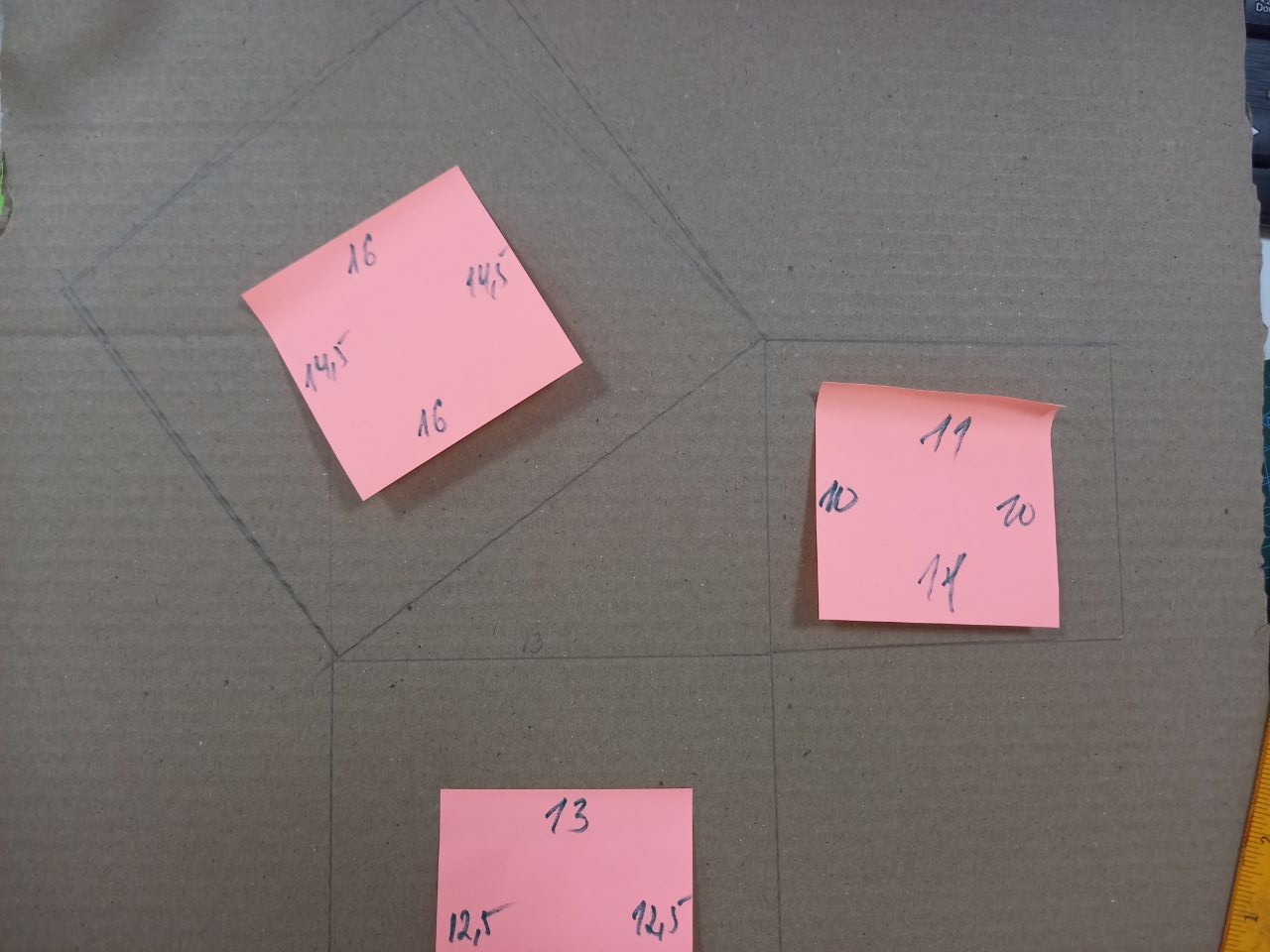
Step 1. 40x40cm cardboard, draw a triangle right in the middle and a rectangle along the sides
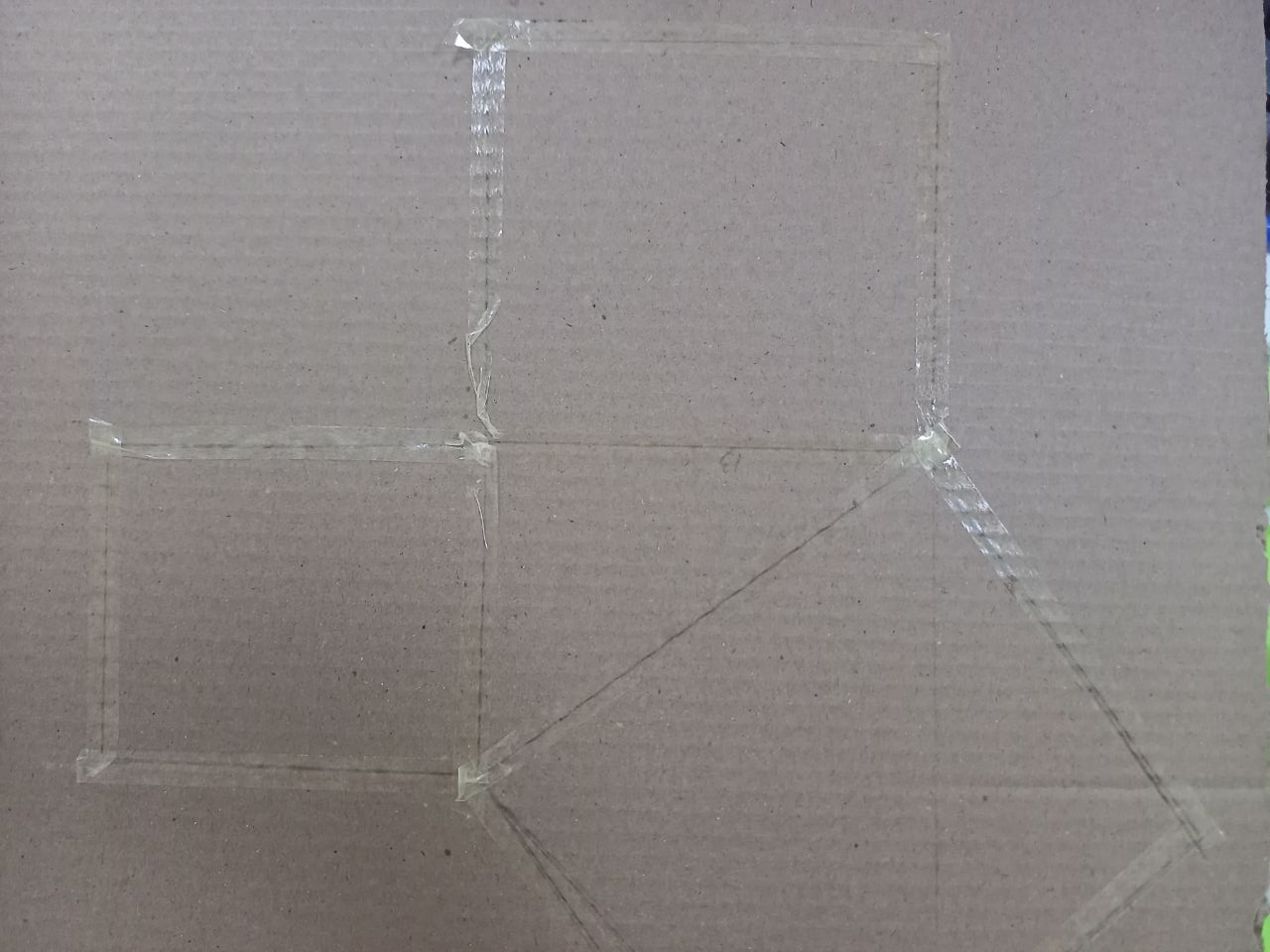
Step 2. Glue the double-sided adhesive tape exactly over this design
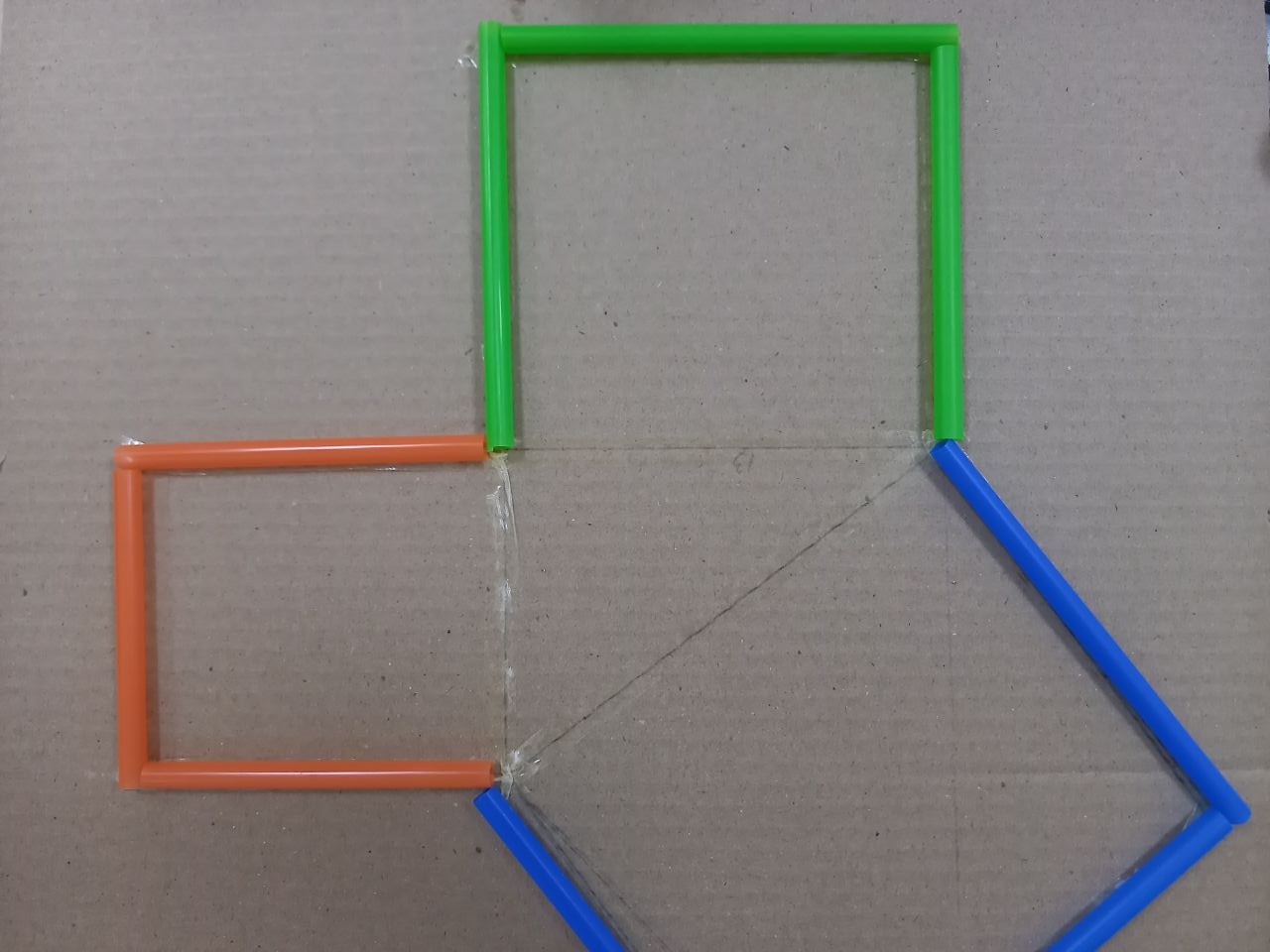
Step 3. Now place the juice straws over the tape
Step 4. Cut the same triangle out of cardboard to the size of the triangle in the centre
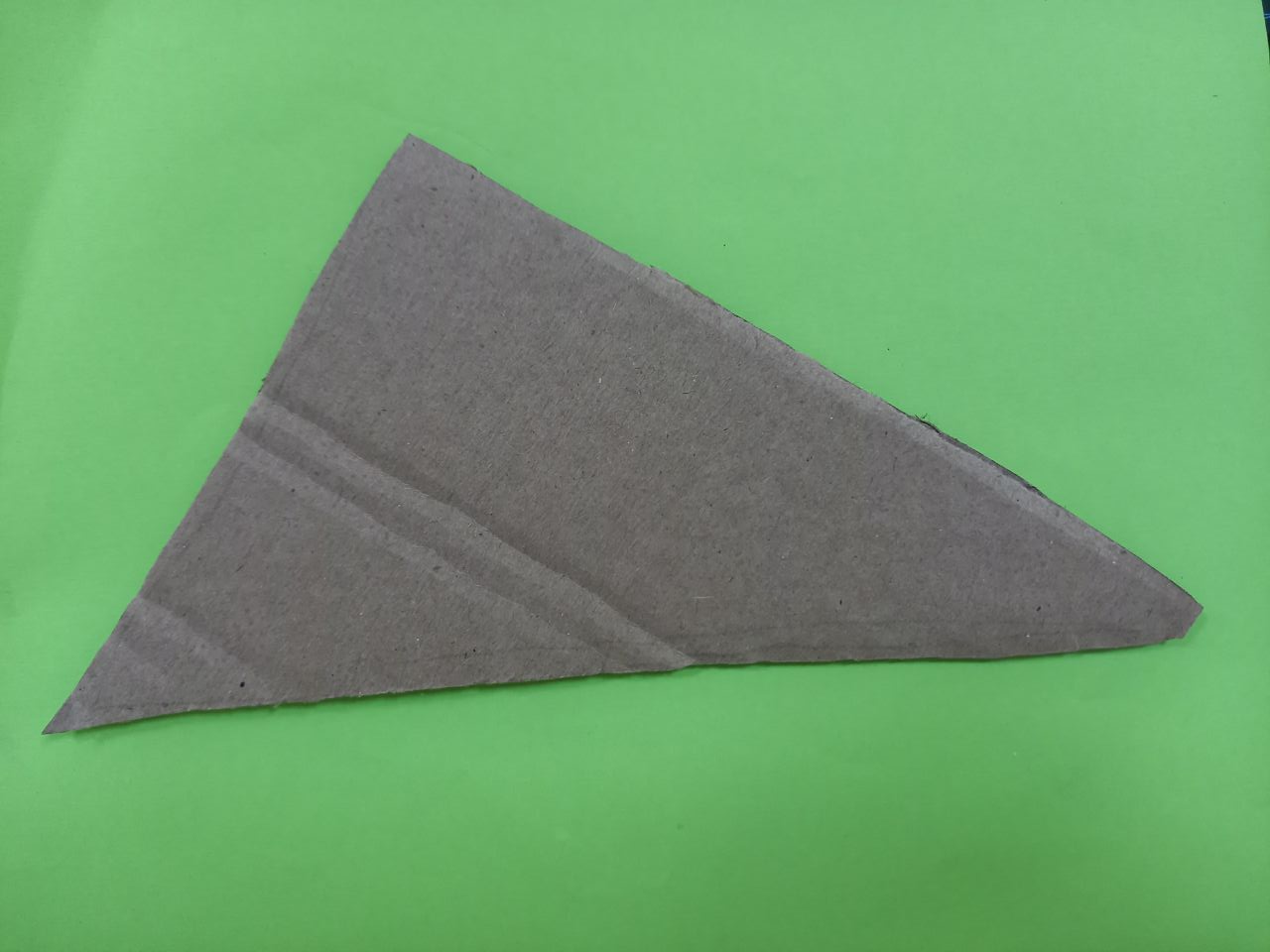
Step 5. Over this triangle, use double-sided adhesive tape to insert the juice straw
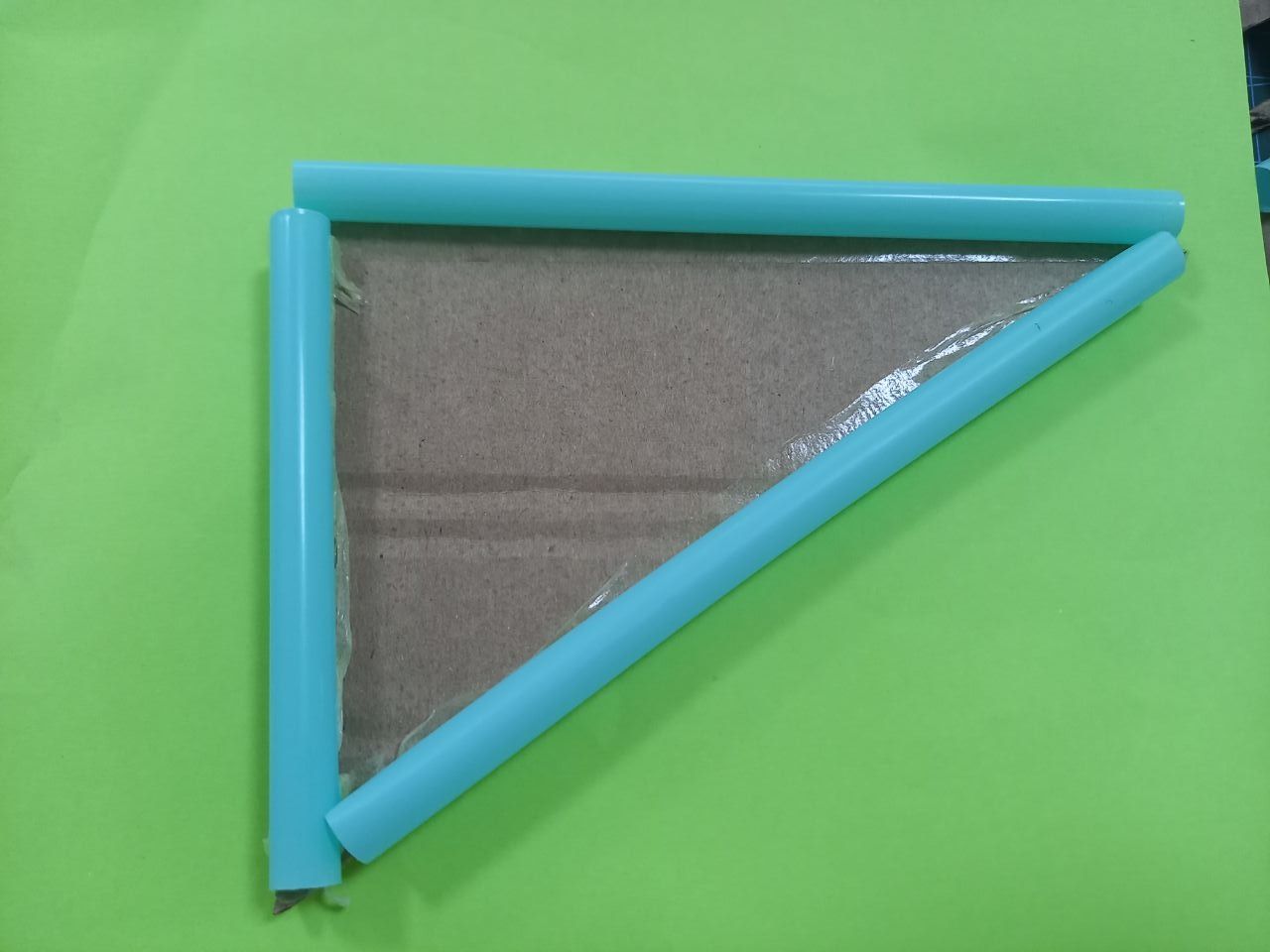
Step 6. Over the juice tubes, which are placed in rectangles, place another layer of tubes using double-sided adhesive tape
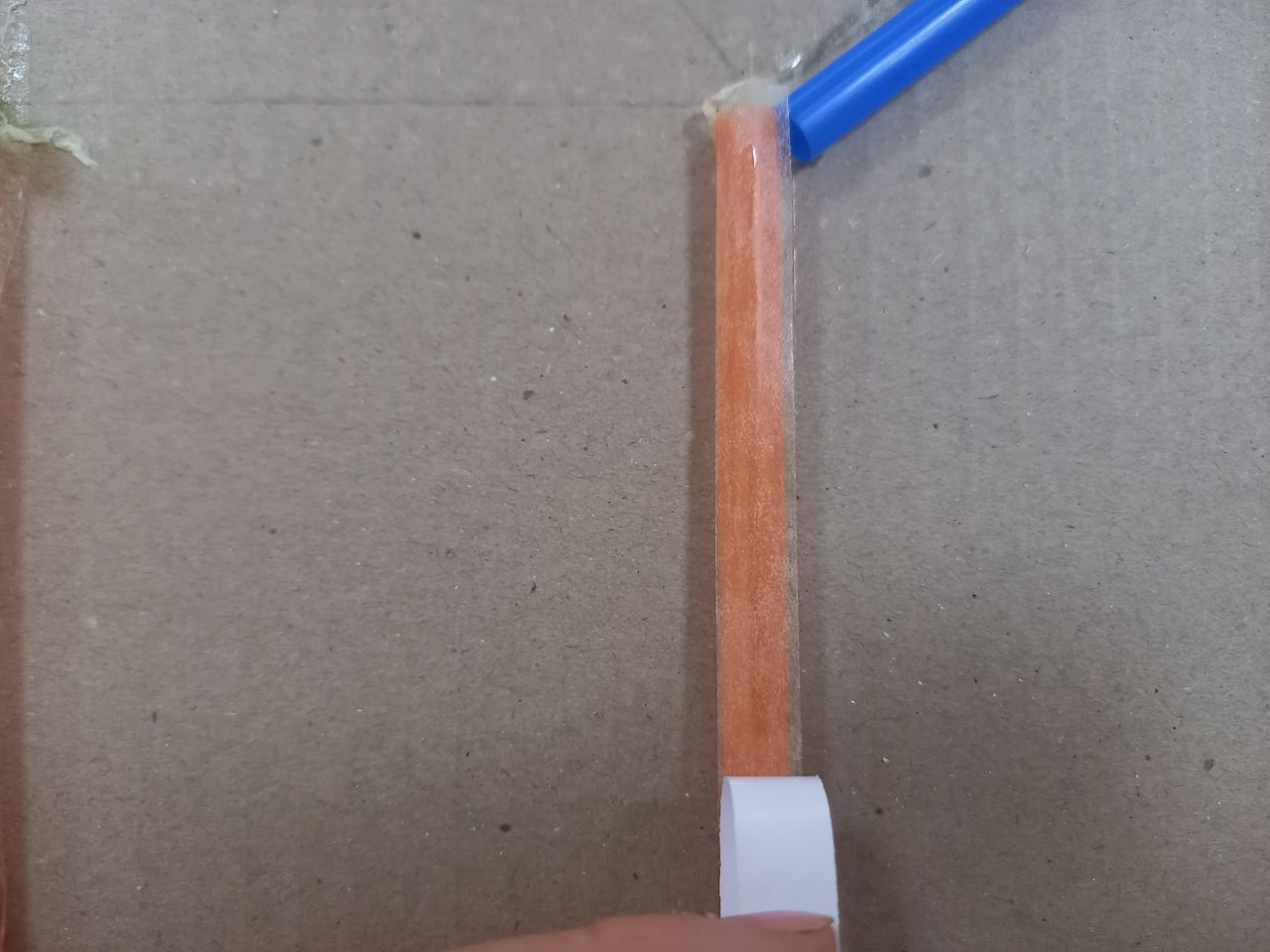
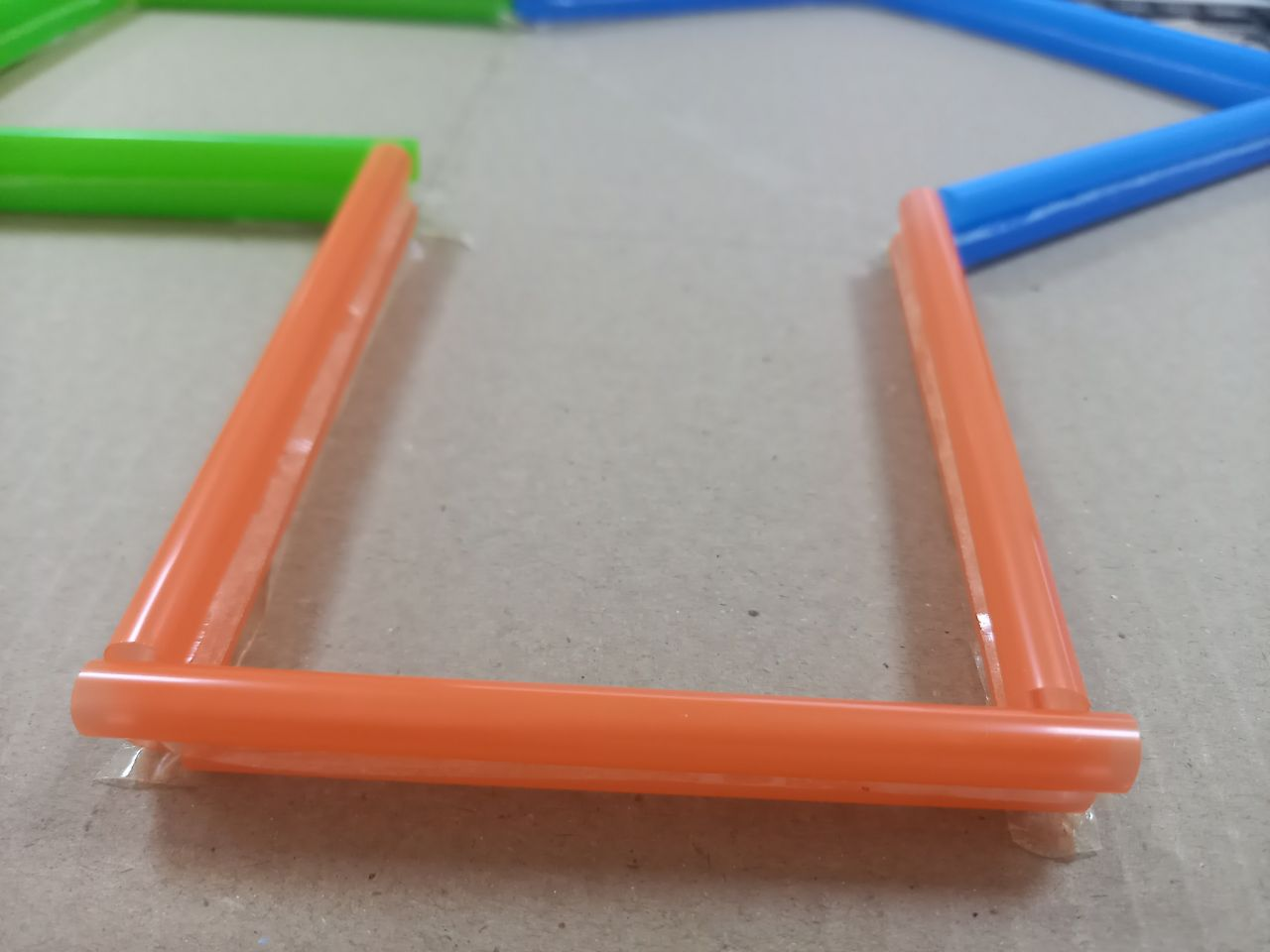
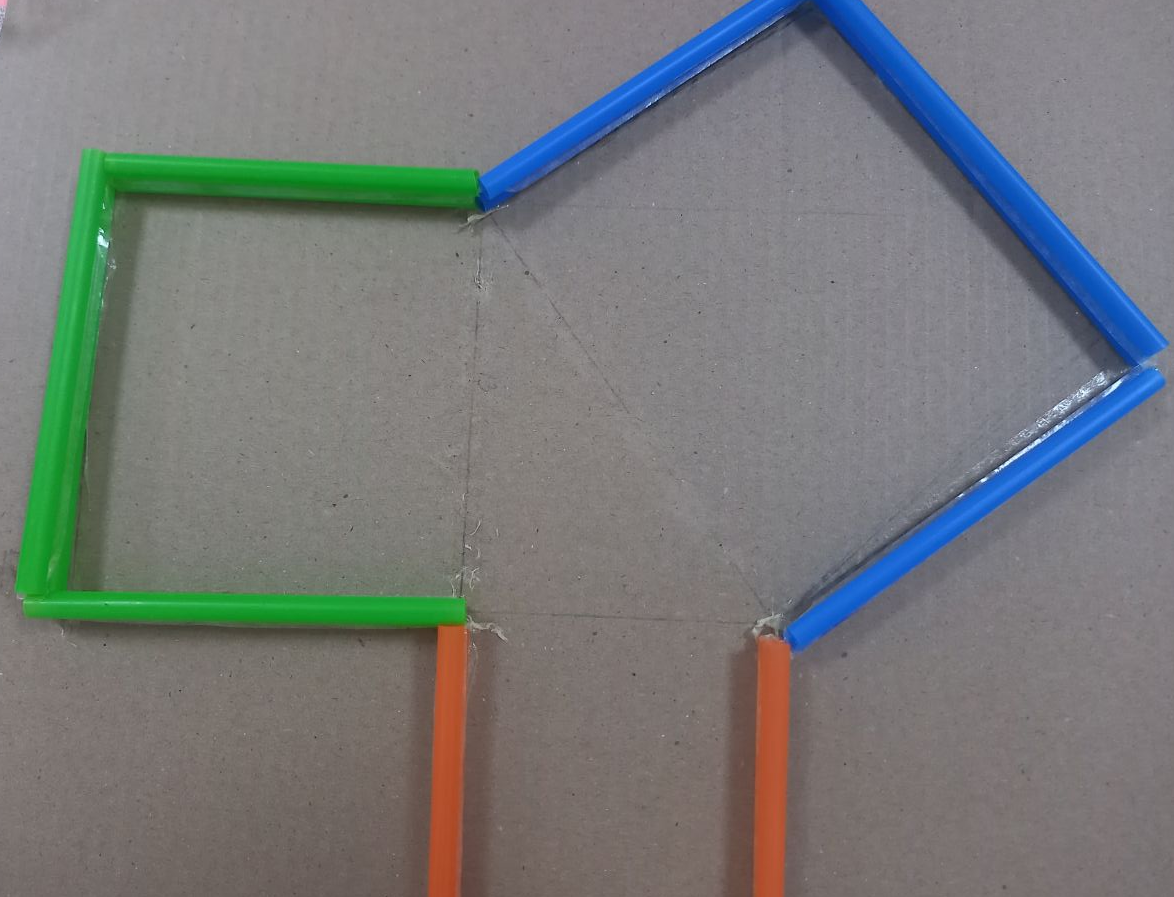
Step 7. Pythagoras’ theorem is ready. This project can be used to solve problems in the daily class and can be used to find the area of different shapes
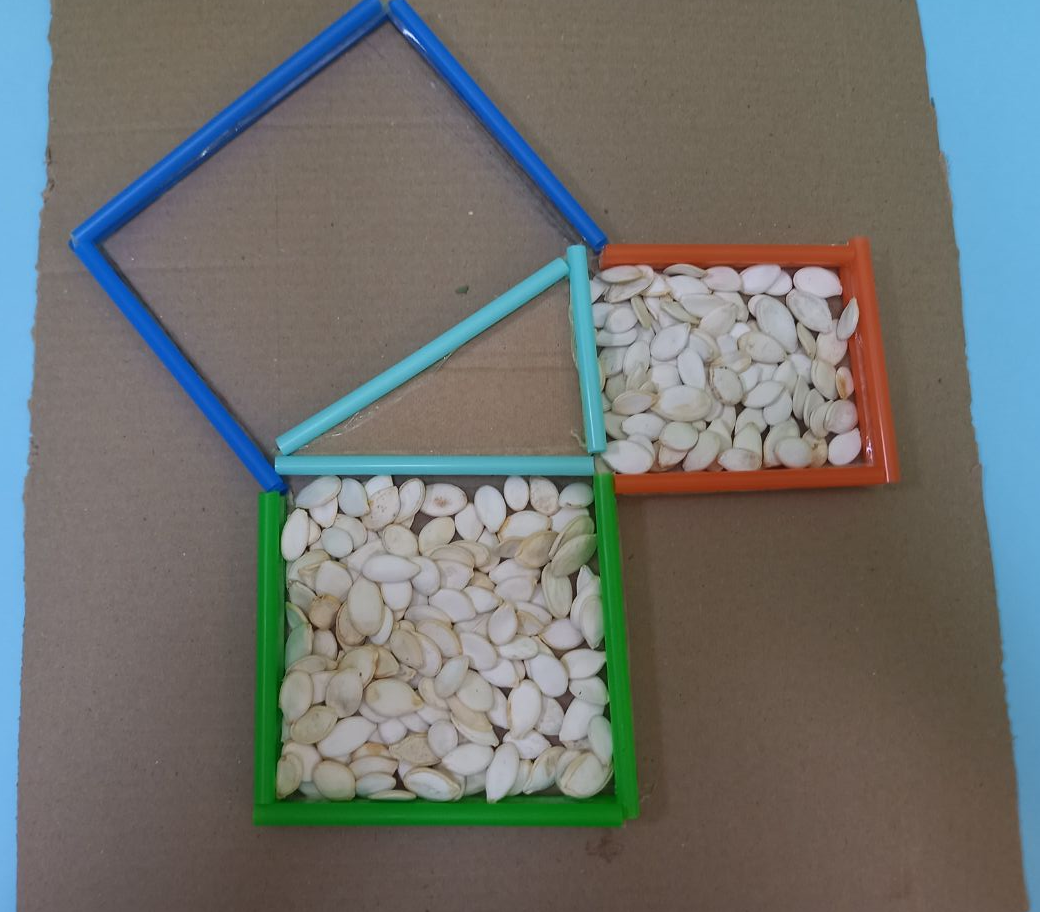
Step 8. After the practical part, have the students answer the questions and find the area of the layout
Differentiation by “dialogue and support”.
– What are the figures in the model?
– What is the area of the first figure?
– What is the area of the second figure?
– What is the area of the third figure?
– What is the area of the triangle?
Conclusion
In this lesson, students learned how to find the area of shapes and, using the model of Pythagoras’ theorem, they were introduced to shapes and their parts.

On this project, each student is awarded a STEAM title, by category:
– You have made a model of Pythagoras’ theorem yourself and calculated the area of shapes you are a real mathematician!
– You have developed teamwork skills by working in groups. In the practical work you have shown your creativity and cohesion.
Evaluation

