Lesson
Project objective
– To familiarise students with braille;
– To develop pupils’ 4K skills ;
– To make braille, and use it to read words.
Teacher’s guide
– In the practical part of the project pupils work individually.
– Pupils should be introduced to the topics as braille .
– Before beginning the experimental part, familiarize and provide students with all the necessary materials.
– Provide brief instructions on how to work with the skewers.
– Explain the PBL (project based learning) rubric to the students at the beginning of the lesson. 4K skills (critical thinking, collaboration, creativity, presentation)
Safety in Steam lessons
Before we begin the lesson, teachers are advised to familiarise themselves with the safety procedures. If necessary (if using items specified in the PPE), brief the students. Go to Safety in Steam lessons
Theoretical Part
Braille is an embossed tactile typeface designed for reading and writing by blind and visually impaired people. It was invented in 1824 by a 15-year-old French teenager, Louis Braille. As a child, Louis hurt his eye with a saddlery knife in his father’s workshop and became blind due to progressive inflammation. In 1819, Louis Braille was enrolled in the Paris School for the Blind, where he was taught using books written in Braille by Valentin Gaiouille. After reading all these books, Louis realized that Gaiouille’s system is imperfect – it took a few seconds to feel each letter.

Louis Braille developed his Braille as an alternative to Valentin Gaille’s, inspired by the simplicity of Charles Barbier’s Nocturnal. “Night type” was used at the time by the military to record reports that could be read in the dark. Louis Braille spent a long time refining his typeface and in 1837 he presented it in an updated form – since then the Latin Braille system has hardly changed.
Braille instruction

Braille is not only a means of communication for the visually impaired, but also contributes to the development of general linguistic literacy. You can learn braille with the help of a braille teacher or on your own. There are several different ways to memorise the characters in Braille, e.g. by associating them with objects.
It is important to teach a blind child to read and write in Braille – it is an alternative path to literacy, without which the child will not be able to master written language. To teach a blind child to read and write in Braille requires the interaction of many people – parents, a teacher, an ophthalmologist, a visually impaired teacher.
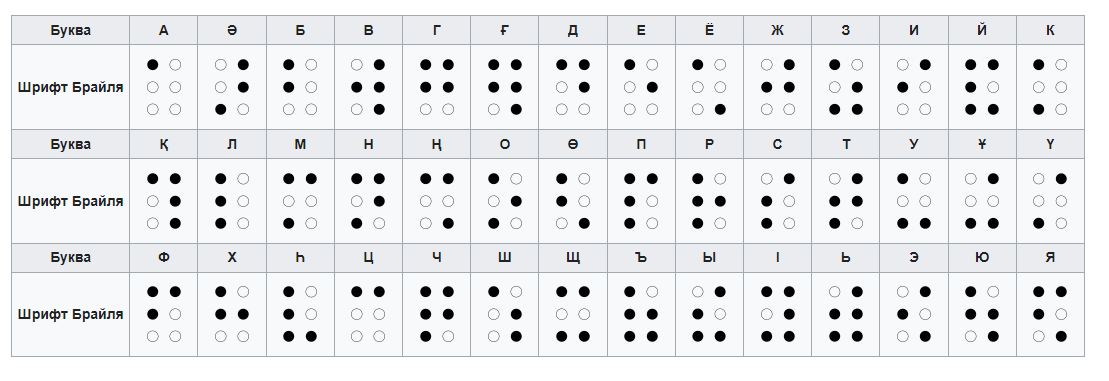
Kazakh Braille is a type of Braille for the Kazakh language, created on the basis of Russian Braille with additional combinations of dots corresponding to some letters of the Kazakh alphabet.
Practical part
Step 1. Print the Braille alphabet on a printer. Place the graph paper on top of the cardboard select one square and gently press on the paper with the end of a pencil or wooden stick. Do not pierce the paper
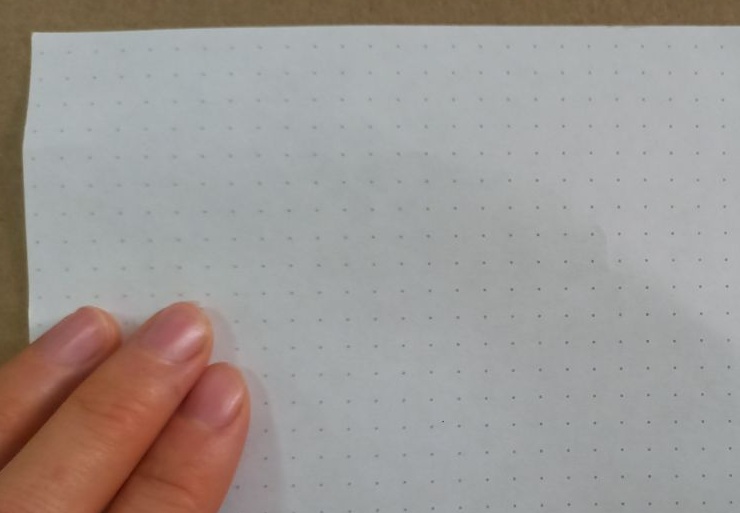
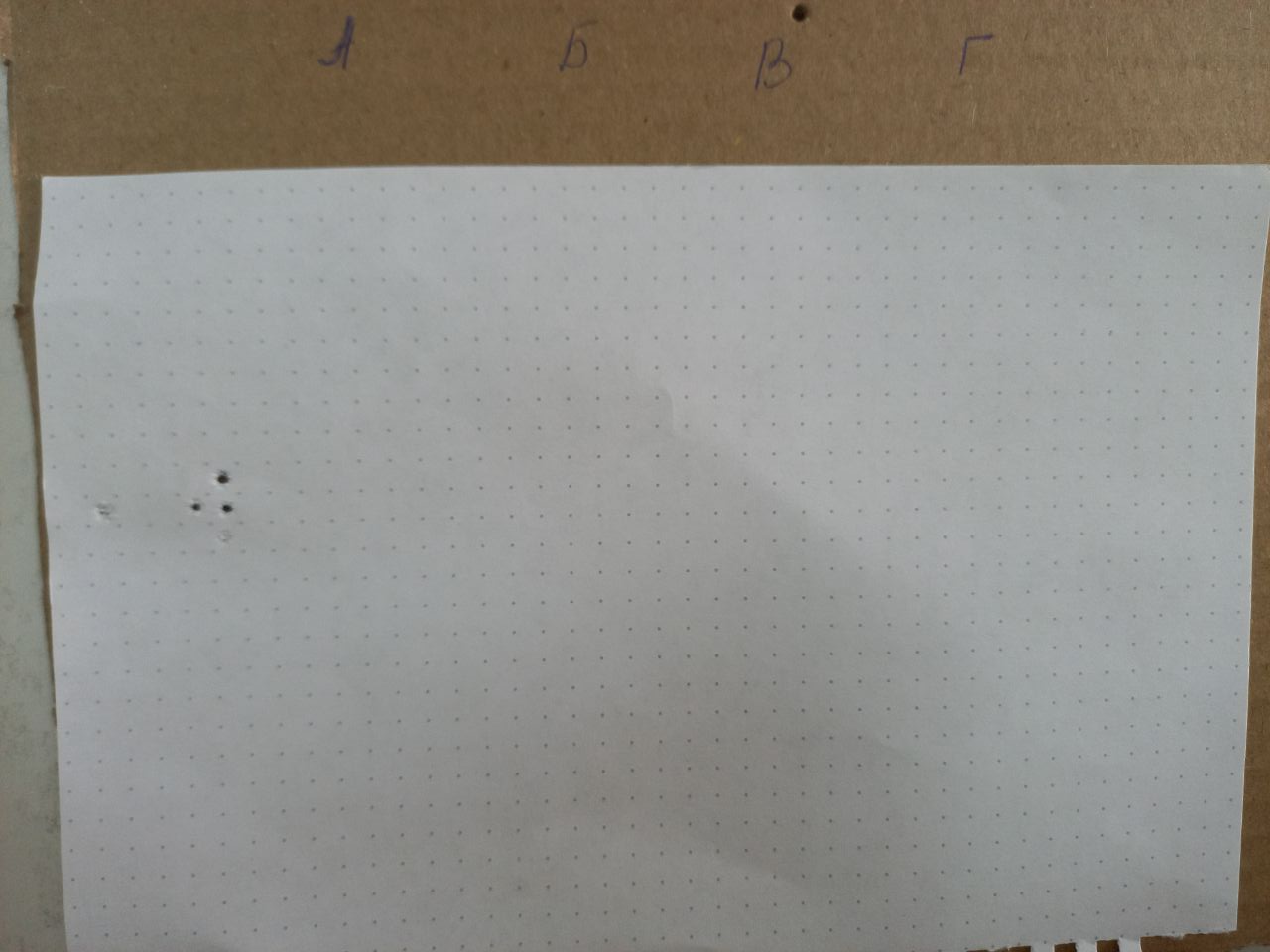
Step 2. Turn over the graph paper. You will notice a small dot (roughness) on the paper
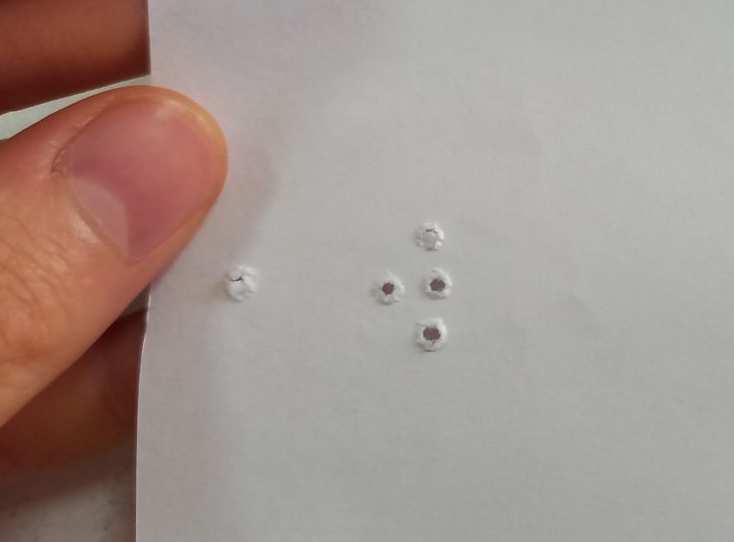
Repeat the first step, but this time choose two squares next to each other and press with the tip of a wooden stick. Can you feel the two ends of your fingers next to each other as you flick the paper? What letter does the dot pattern you have chosen represent?
Step 3. The sheet of notebook should be glued to the cardboard, pressed with the tip of the stick so that it is visible on the other side of the cardboard
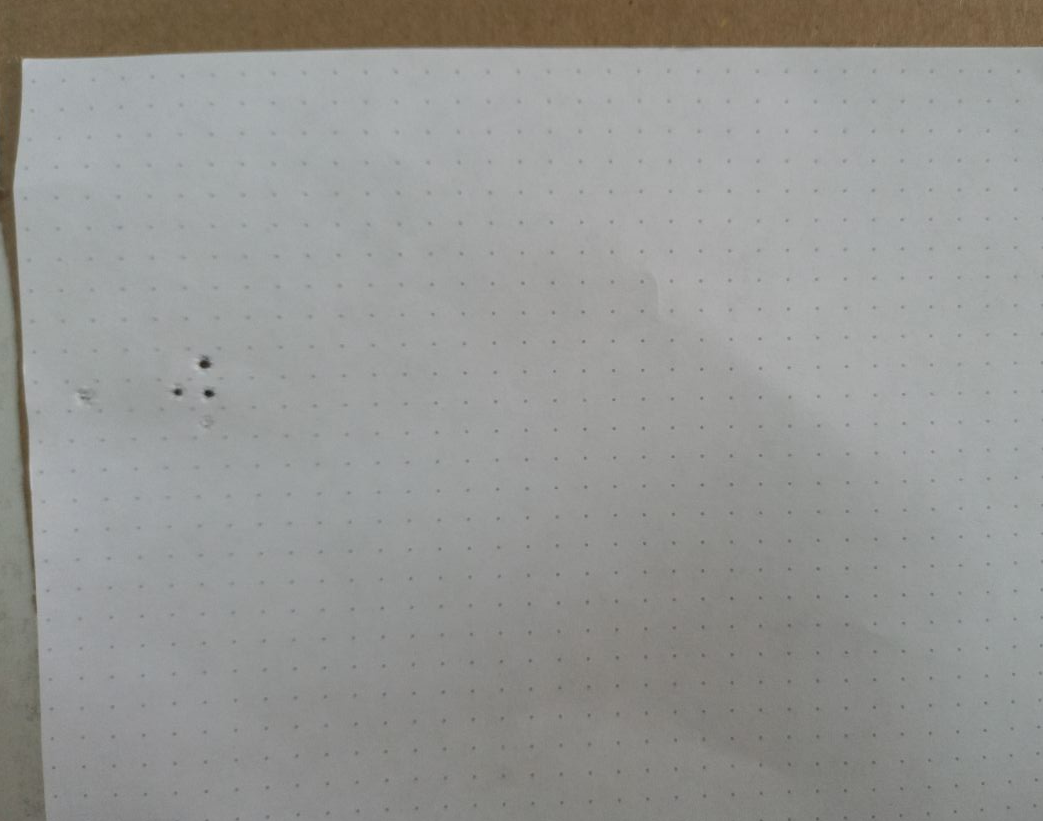
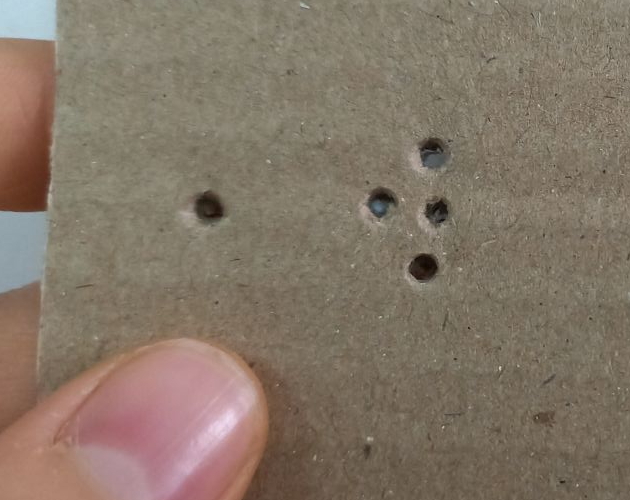
Step 4. Repeat the step as often as you like, or make it harder, and ask a friend to write you a whole word in Braille. Can you read the word with your eyes closed? From a friend
Usually your index fingers are used to read Braille, although your other fingers should have been able to recognise the abnormalities as well. It is important how close or far apart you place the individual dots: if they are too far apart, one end of the finger will no longer be able to identify them. If they are placed too close together, your finger may not recognise them as two separate dots. Now that you know how braille works, try reading it with your fingers next time!
Conclusion
In this lesson the students were introduced to braille . Braille was made from available materials and used in practice.

In this project each student will be awarded a STEAM title in the category:
– You, have learnt braille and you can create braille, use it in practice and work with people with unique characteristics.
– You know how to communicate with people, during a project. You realised that each person is a special individual. During the practical work, you showed your creativity and qualifications.
Evaluation