Week 1
Project objective
1. Make a model of the Earth out of plasticine.
2. study the structure of the Earth based on the Earth model.
Teacher’s guide
– In the experimental part of the project, students work in groups of 4-5 people.
– The students should be familiar with the topics like the Earth, the structure of the Earth.
– Before beginning the hands-on part, familiarize and provide students with all the necessary materials.
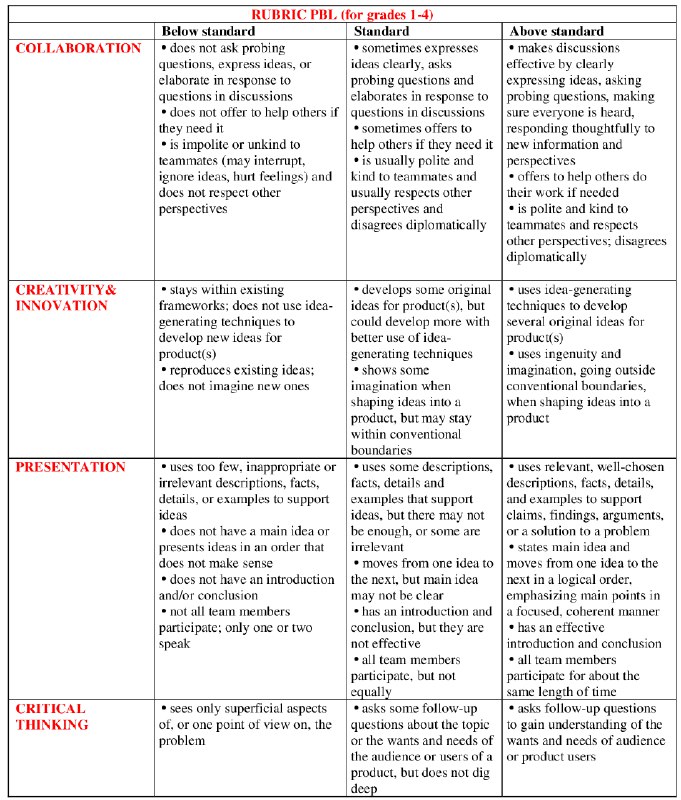
– At the beginning of the lesson explain the PBL (project based learning) rubrics to the students. Skills 4K (critical thinking, collaboration, creativity, prepositioning)
– This project offers 2 options for the structure of the globe. Make one of them or you can make both at the same time.
Safety in Steam lessons
It is recommended that teachers are fully aware of the safety procedures before the beginning of the lesson. If necessary (if they are using items specified in the PPE guidelines), brief the students. Visit Safety in Steam lessons: Safety
Theoretical Part
Dear students, answer the questions:
– Which planets of the solar system do you know? Name .
– What are the Earth’s parts? (structure)
Earth Structure
Earth is the third farthest planet in our solar system from the Sun. It is the densest. The only planet with life.
We are all Earthlings to each other.
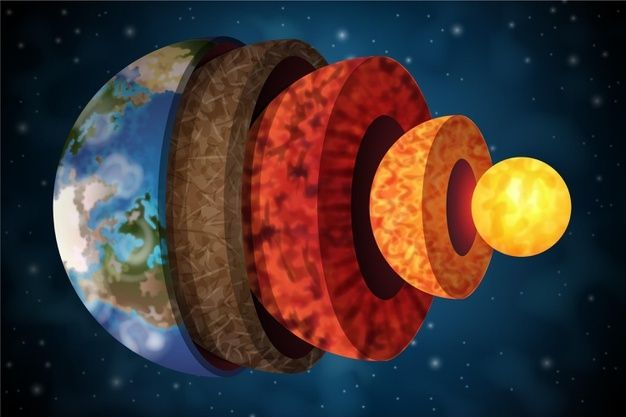
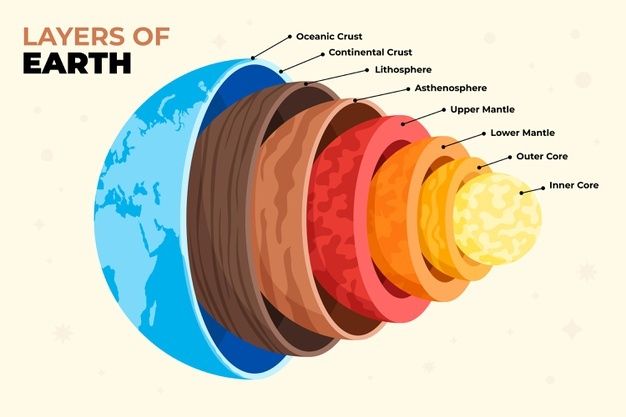
What is the Earth made of? The internal structure of our planet (look table and picture below)
| Earth’s crust | This is the top part of the solid Earth. There are two types of crust – continental (continents) and oceanic.Continental crust includes the continents – Eurasia, Africa, Australia, South America, North America and Antarctica.The oceans are the Pacific, Atlantic, Indian and Arctic oceans. |
| Lithosphere | The lithosphere is the Earth’s solid shell. It consists of the Earth’s crust and the upper part of the mantle. There are blocks of the lithosphere – these are the lithospheric plates that are moving. |
| Asthenosphere | This is a plastic shell in the Earth’s upper mantle, beneath the lithosphere. |
| Mantle | This is the Earth’s intermediate layer, located underneath the crust and above the core. It contains most of the Earth’s matter.It is divided into the Upper Mesosphere (upper mantle) and Lower Mesosphere (lower mantle).Substances above the mantle are in a semi-molten state. |
| The core | The core is the central part of the Earth, the sphere beneath the mantle Divided into a solid inner core and a liquid outer core. The temperature at the centre of the Earth’s core reaches 6000 °C |
Sources of information:
1. https://ru.freepik.com/
2. Upper Mantle. Translated from English. 1964.
3. Earth // Great Soviet Encyclopedia : [in 30 vol.] / edited by A. M. Prokhorov. – 3rd edition – M. : Soviet Encyclopaedia, 1969-1978.
Practical part
A model of the Earth in plasticine, namely the internal structure in the shape of a sphere.
Step 1: Divide into groups (5 students each)
Step 2: Familiarise yourself with all the necessary materials and divide into 2 projects (Plasticine Earth)
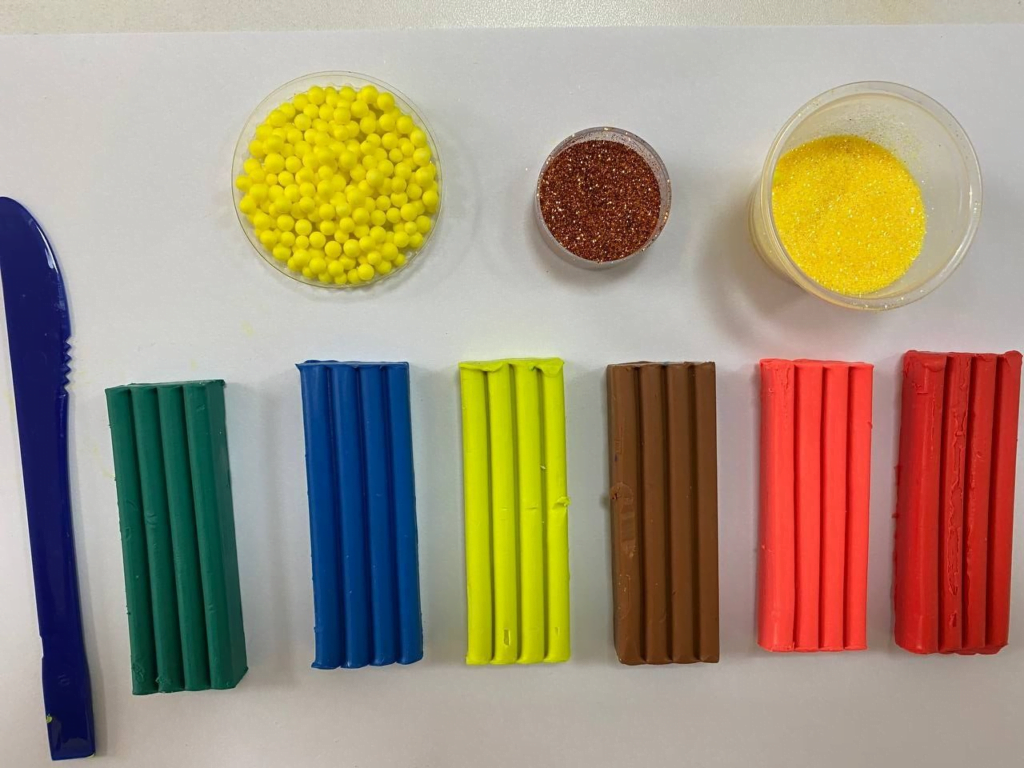
Step 3: The structure of the Earth. Inner and outer core.
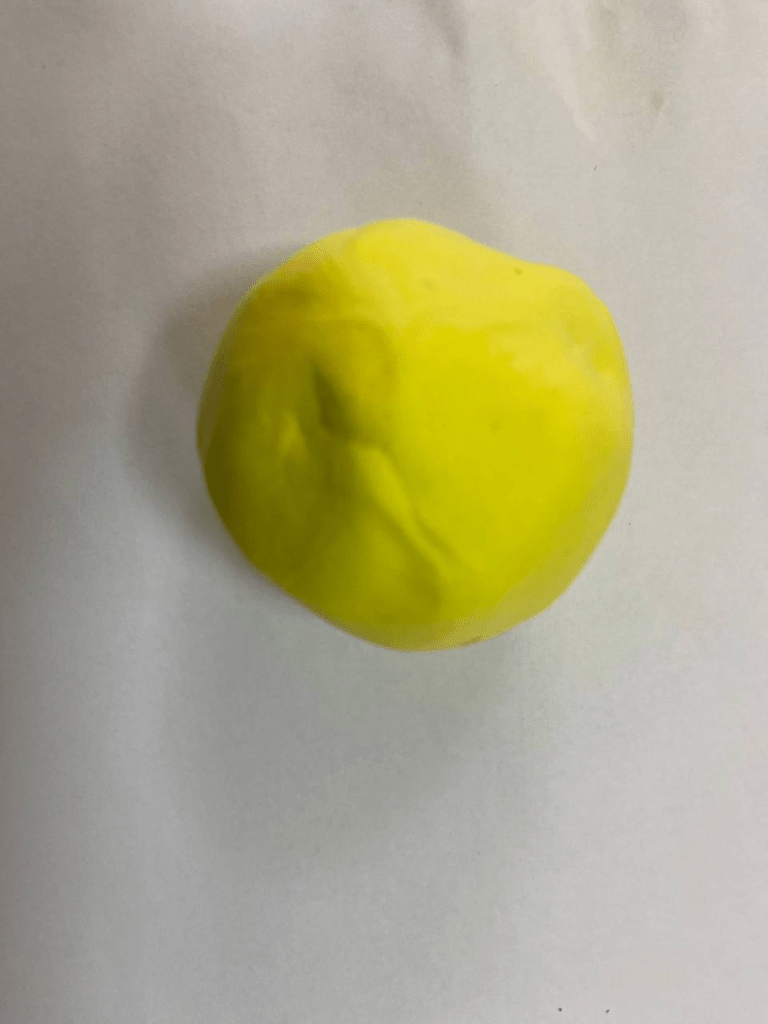
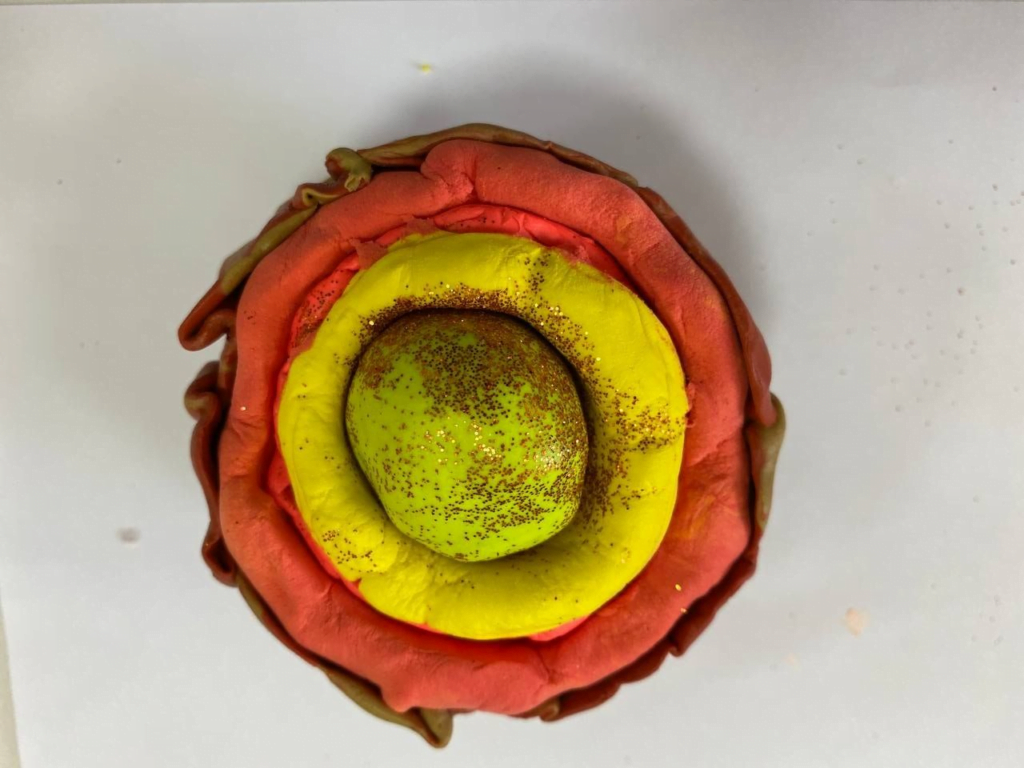
Roll out yellow plasticine by hand and fill in glitter and Styrofoam balls. Then cover the plasticine so that it does not crumble. Then cover with orange (yellow) air plasticine.
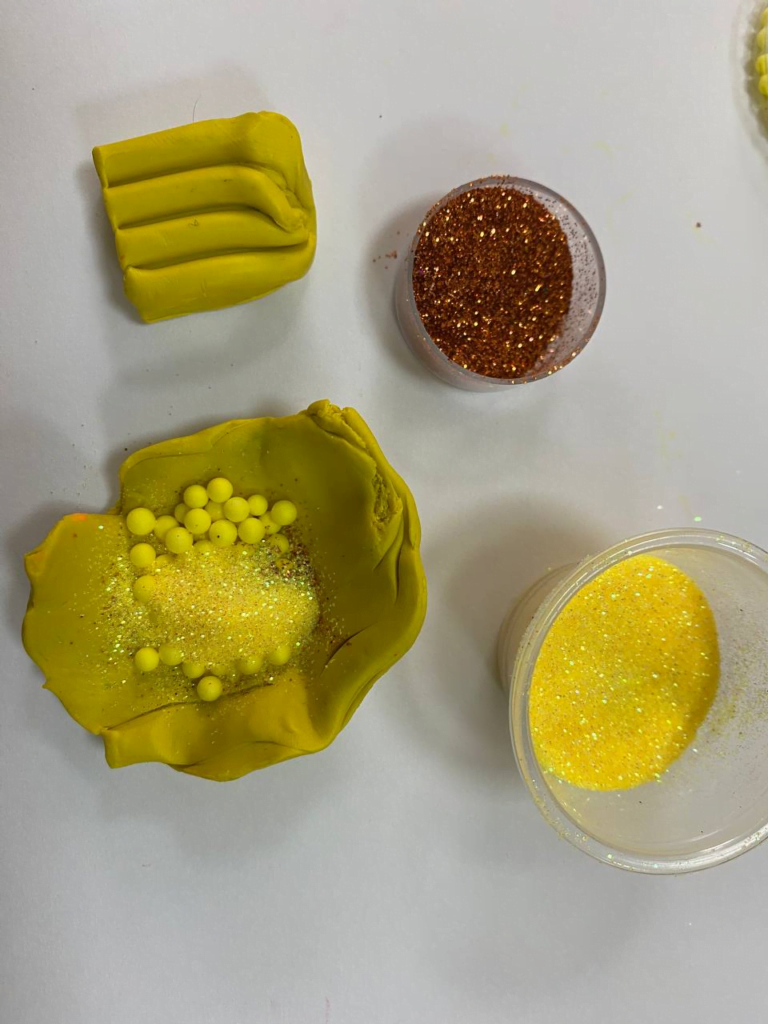
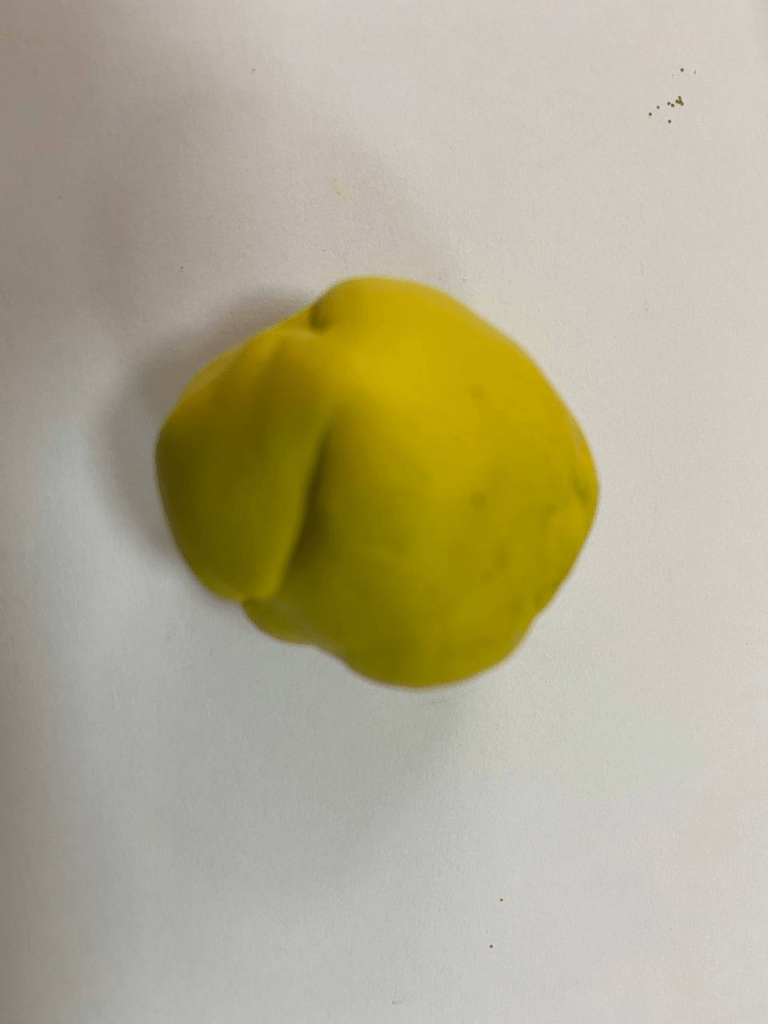
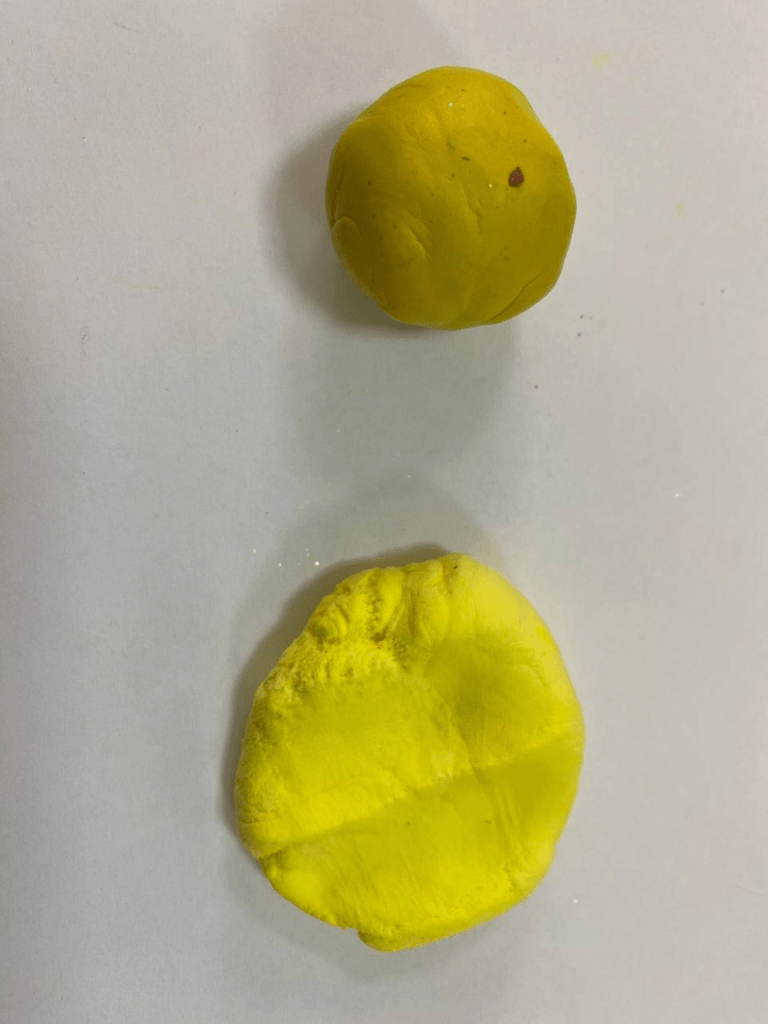
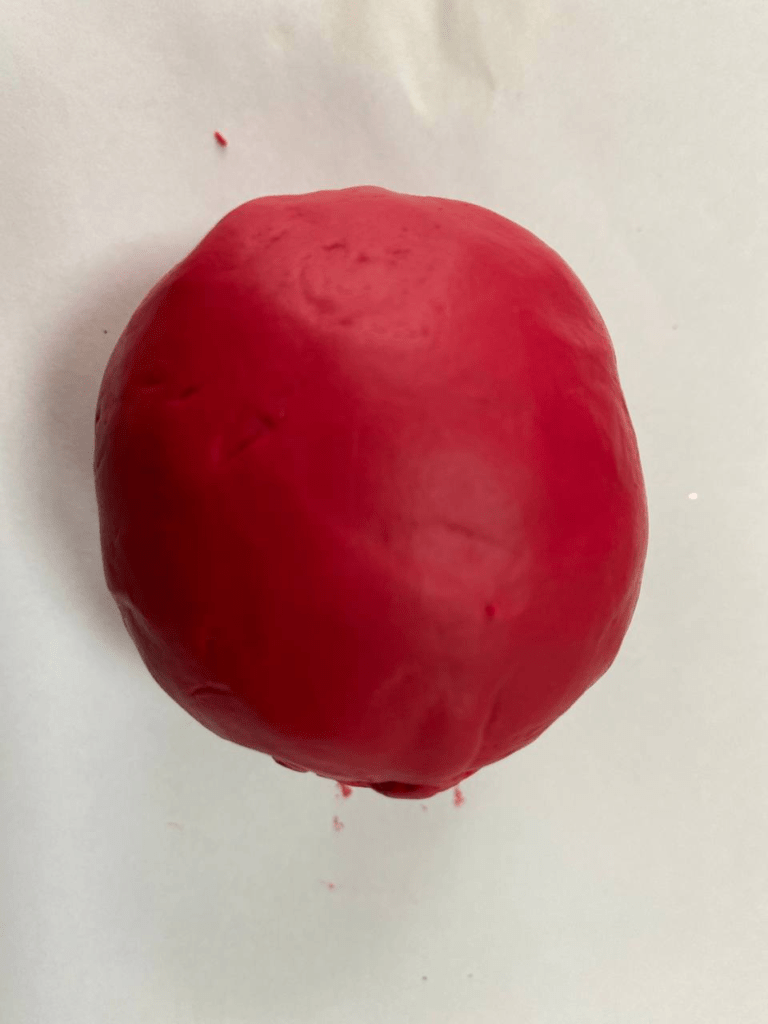
Step 4: Structure of the Earth. Mantle.
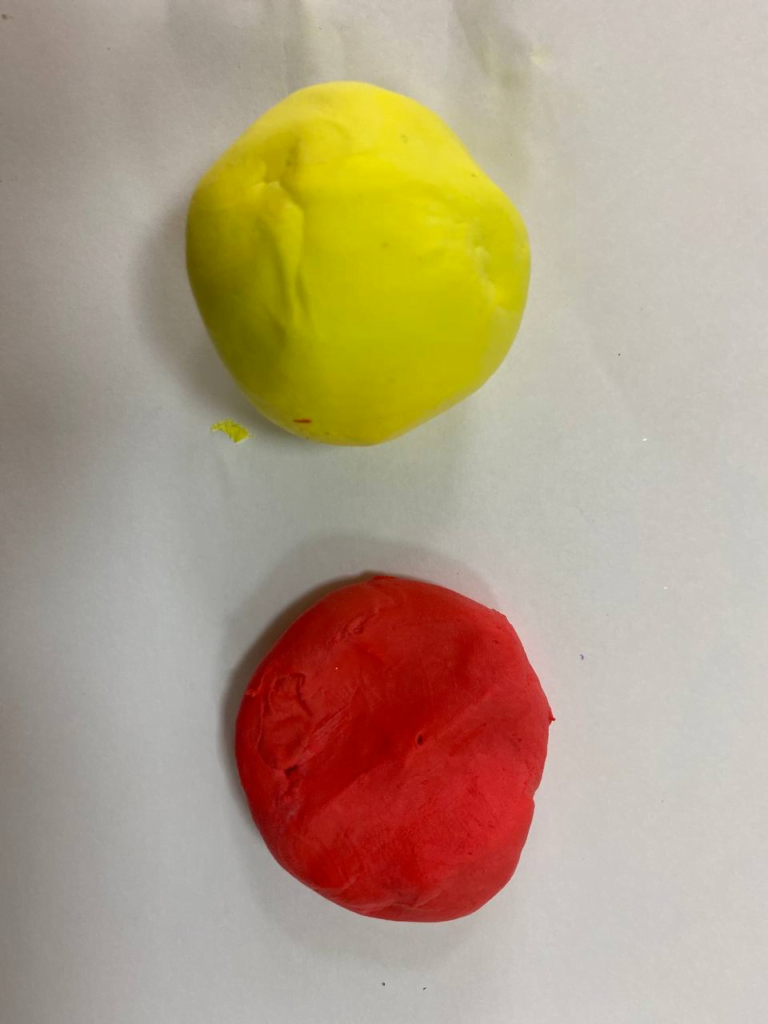
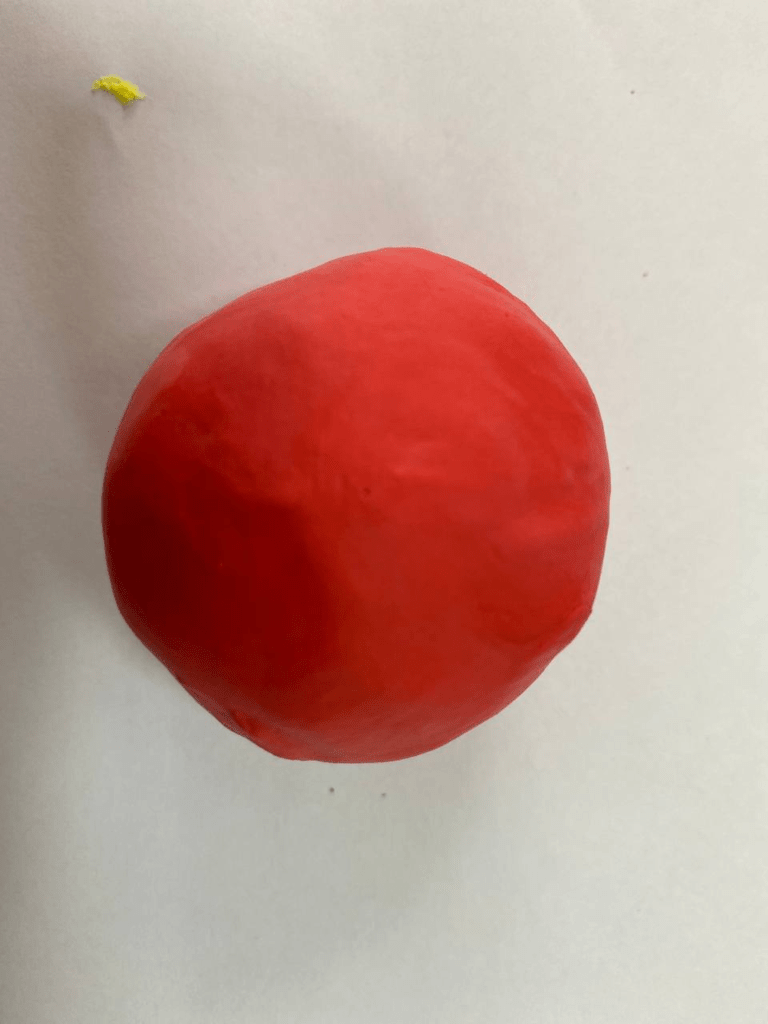
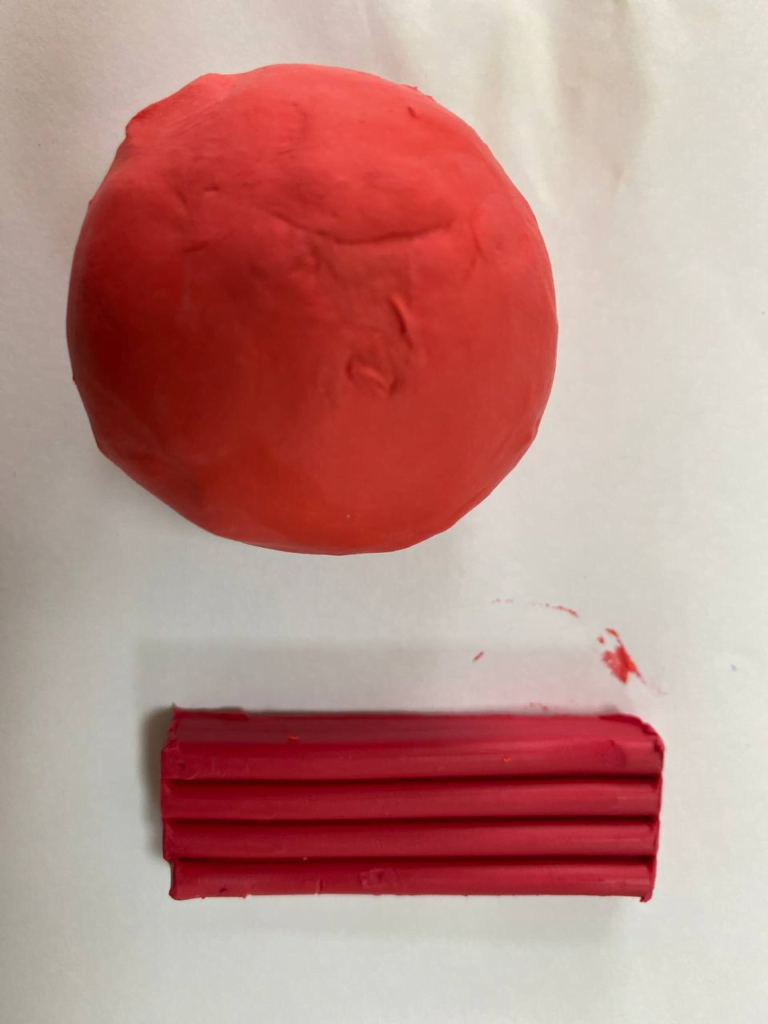
Roll out red (coral) plasticine and then coat the finished mass. The first layer is normal, hard plasticine. The second layer is air plasticine).
Step 5: Structure of the Earth. Lithosphere.
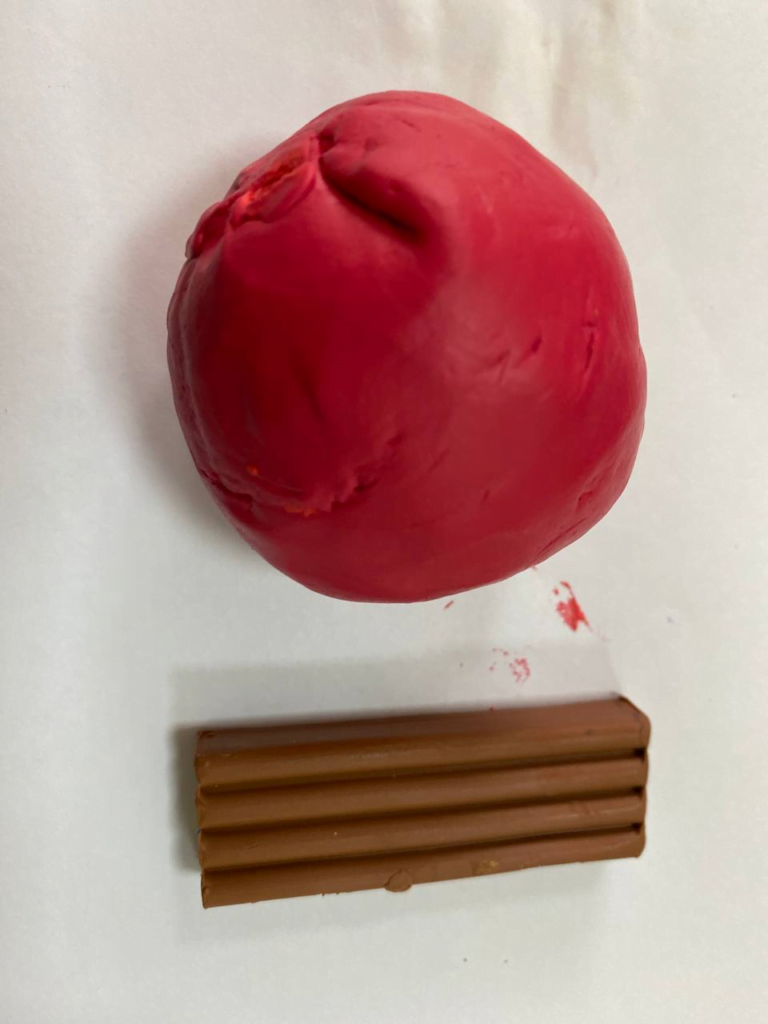
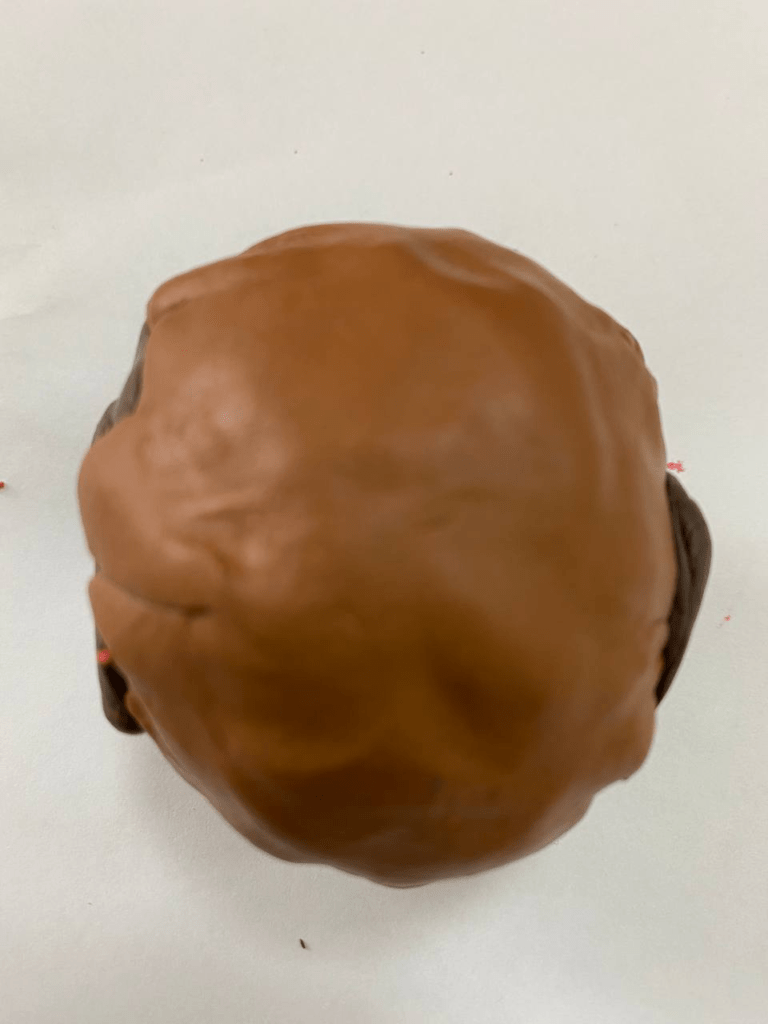
Roll out 2 brown clay and cover the mantle.
Step 6: Structure of the Earth. The oceanic crust of the Earth.
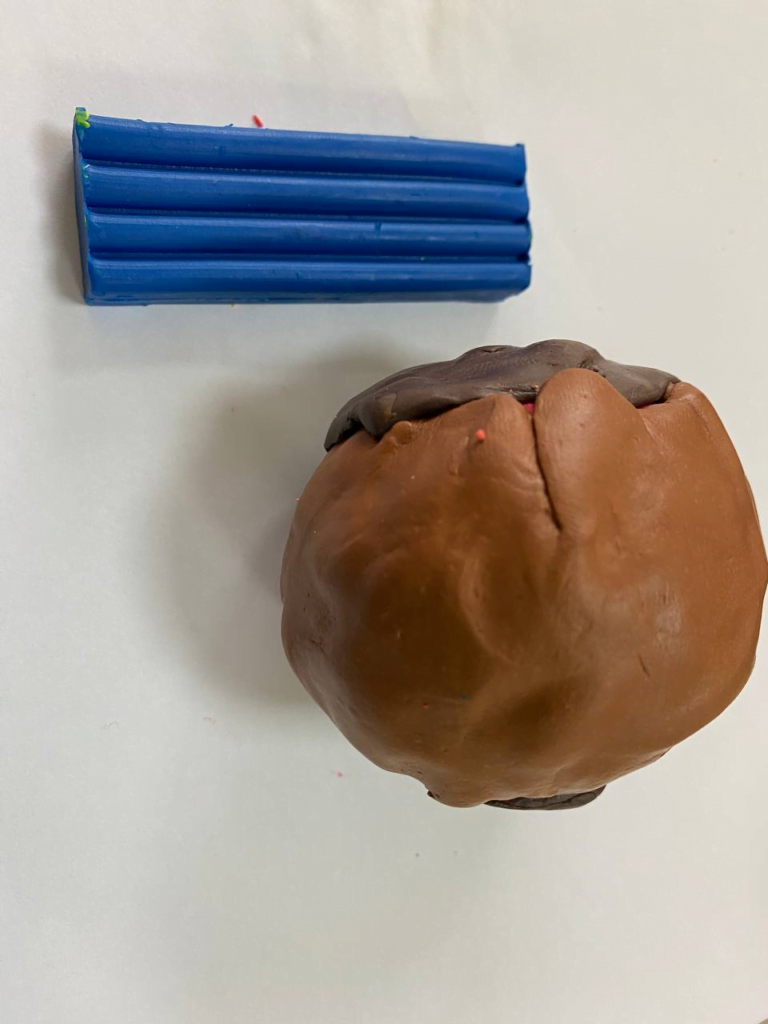
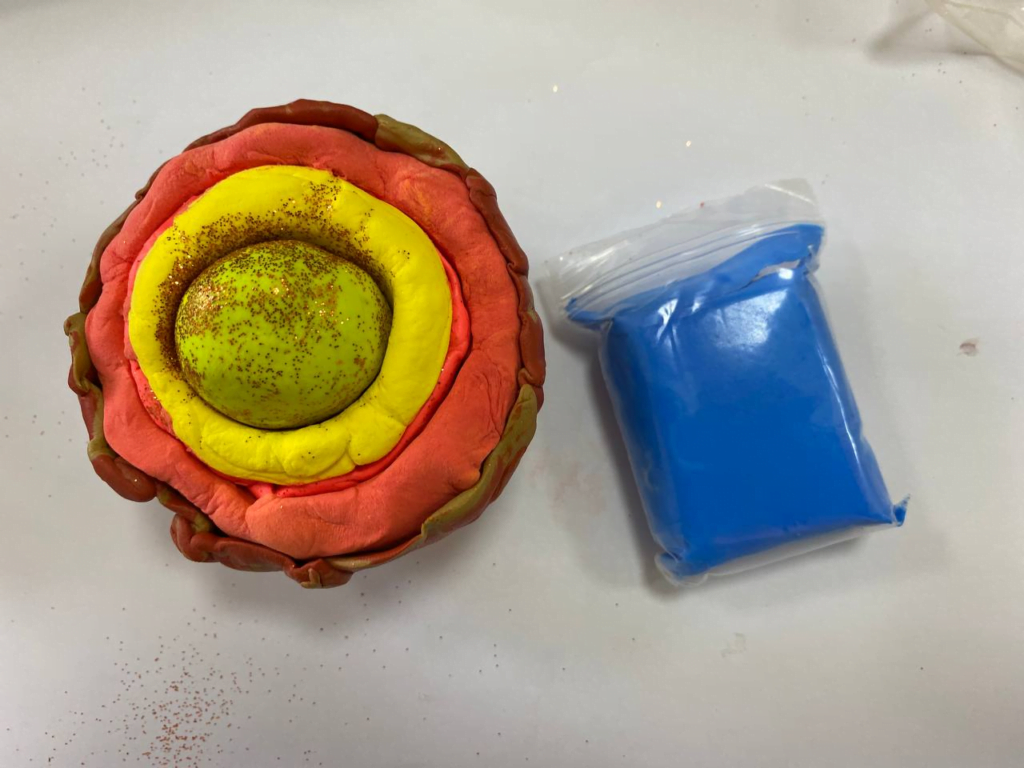
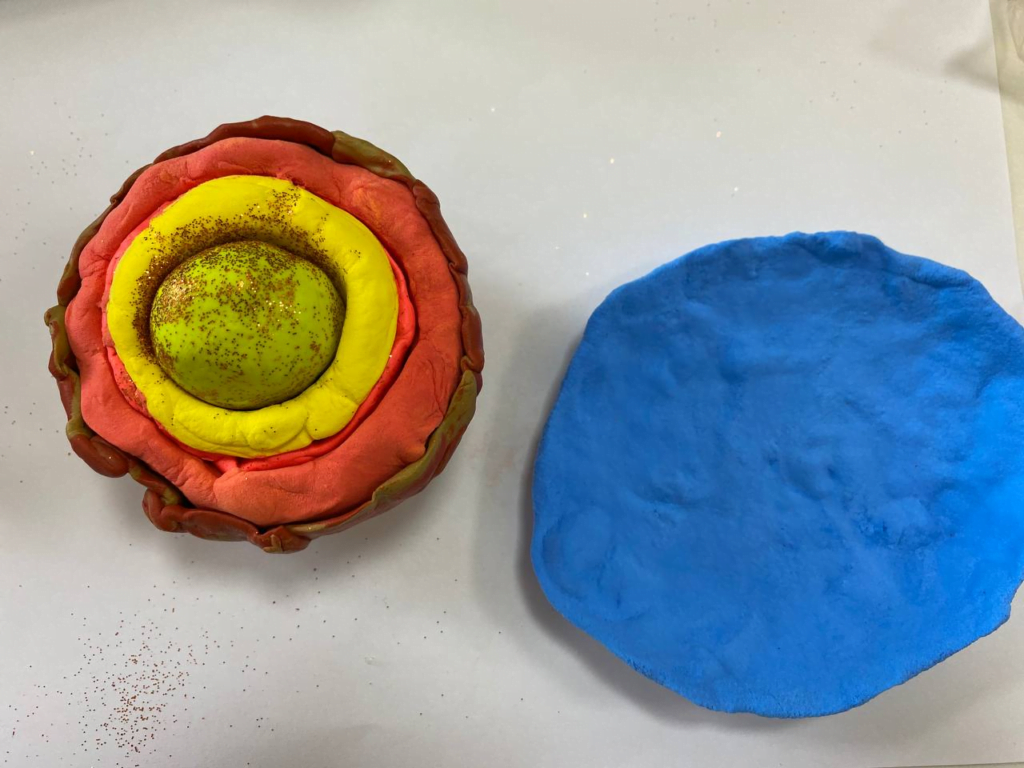
Roll out 2 blue clay and cover the Earth’s crust.
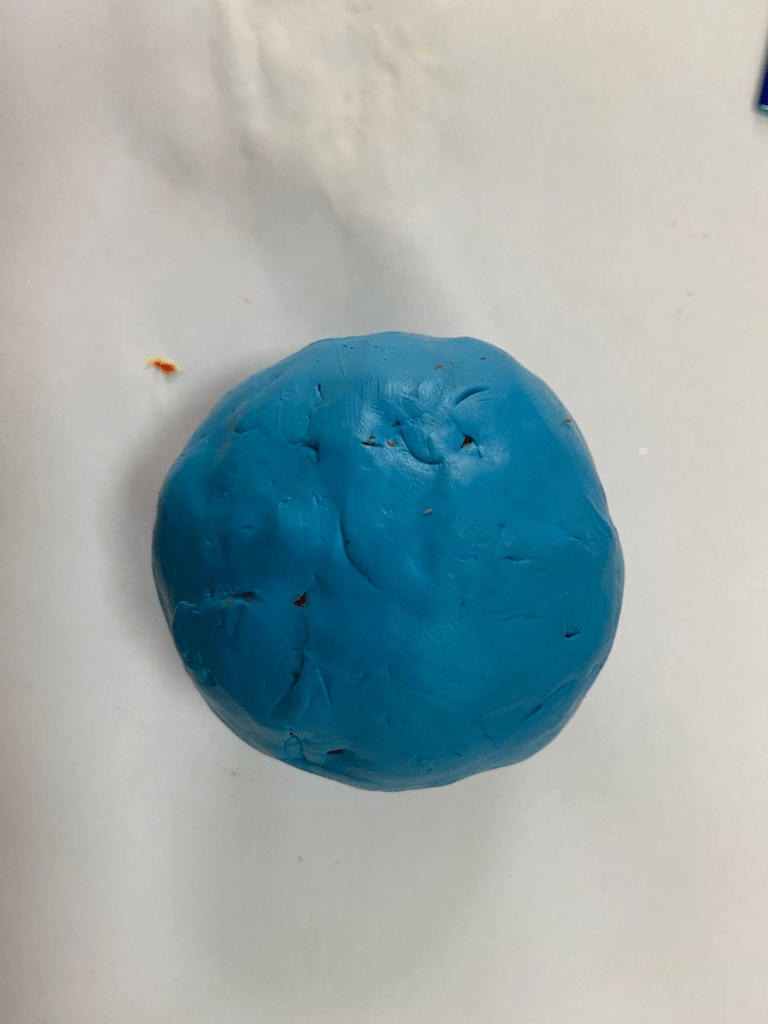
Step 7: Structure of the Earth. Continental crust of the Earth.
Roll out the green plasticine and cut out the continents (by eye)
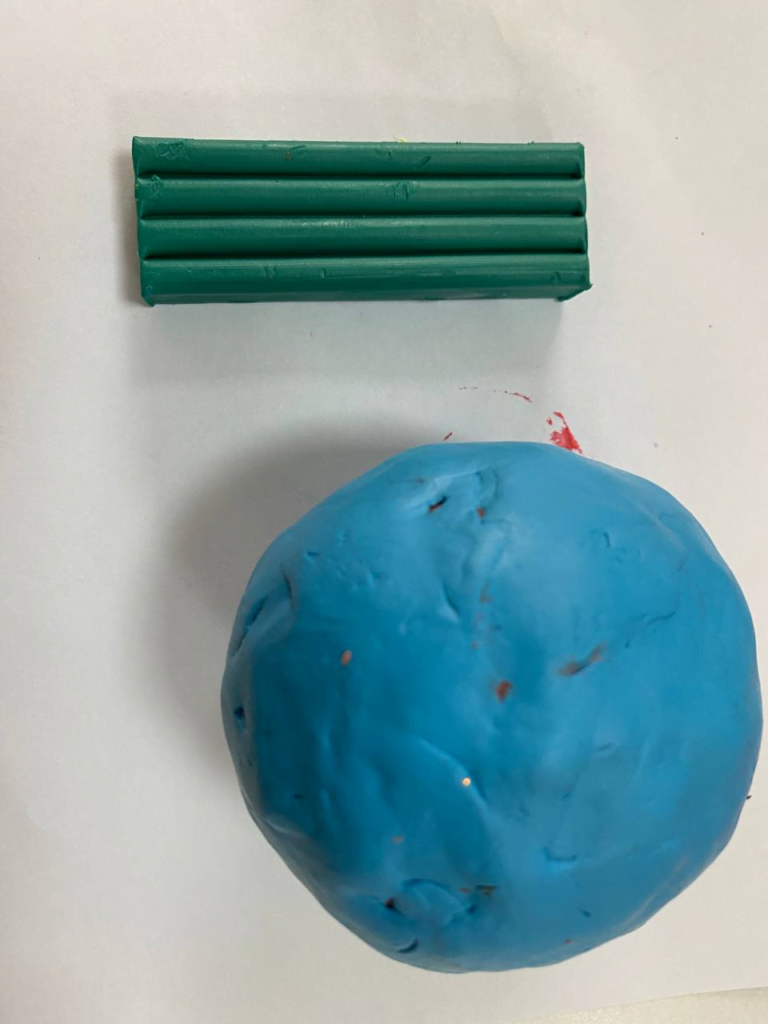
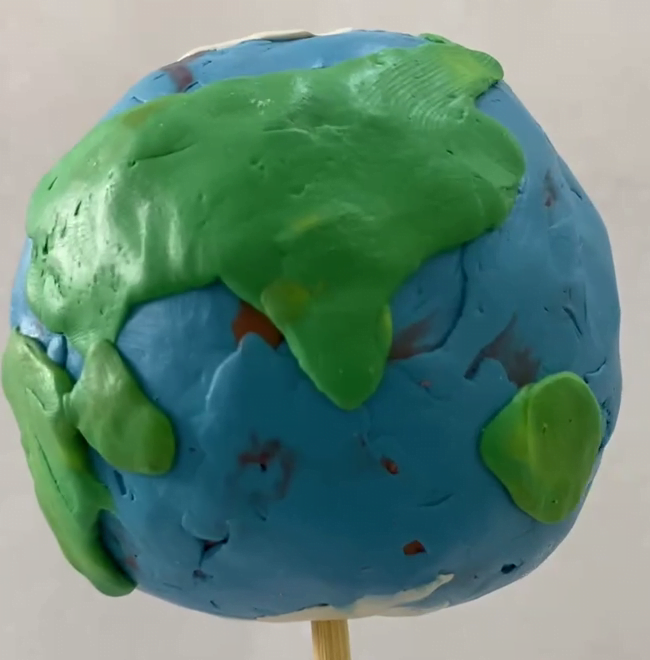
Step 7: Make the cut with a modelling knife
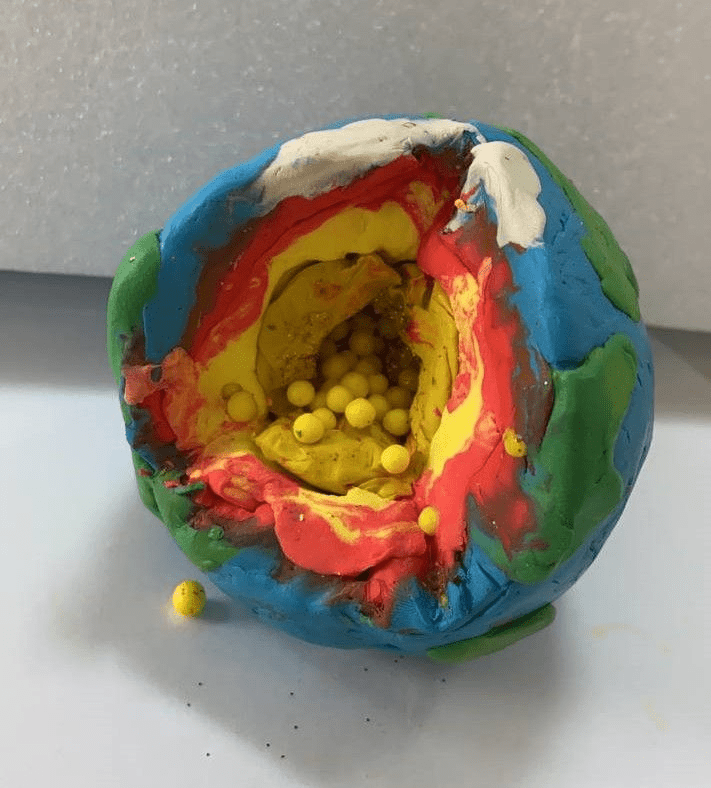
2. The internal structure of the Earth – the cross-section.
The practical part
Step 1: Divide into groups (5 students each)
Step 2.Familiarise yourself with all the necessary materials
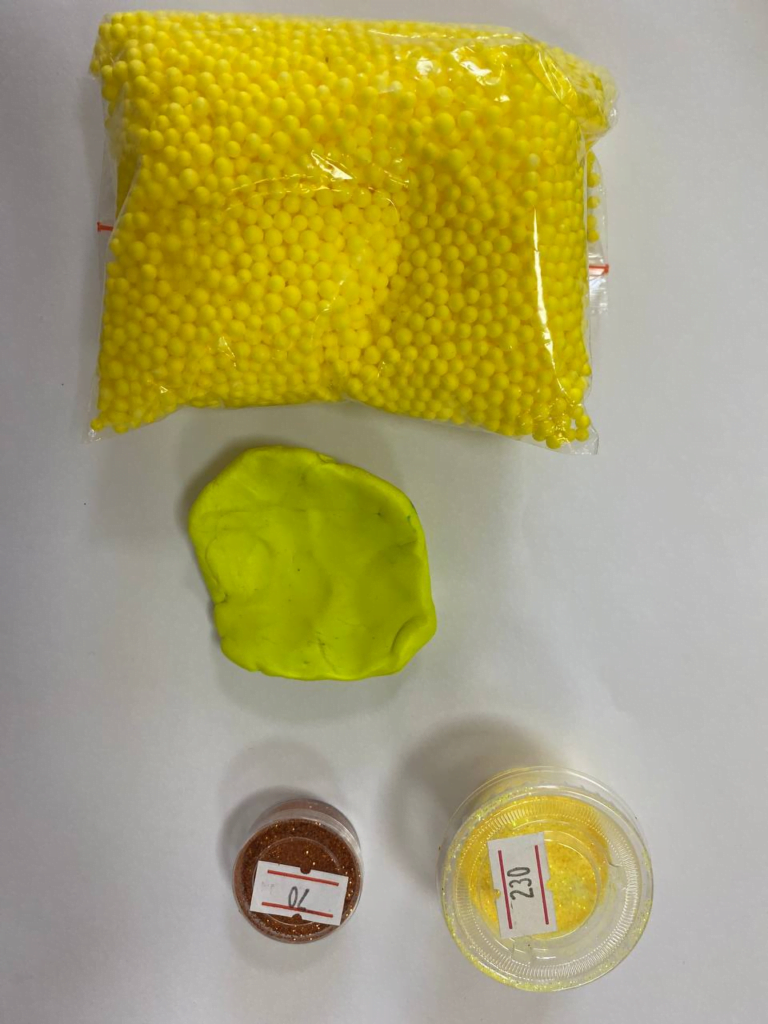
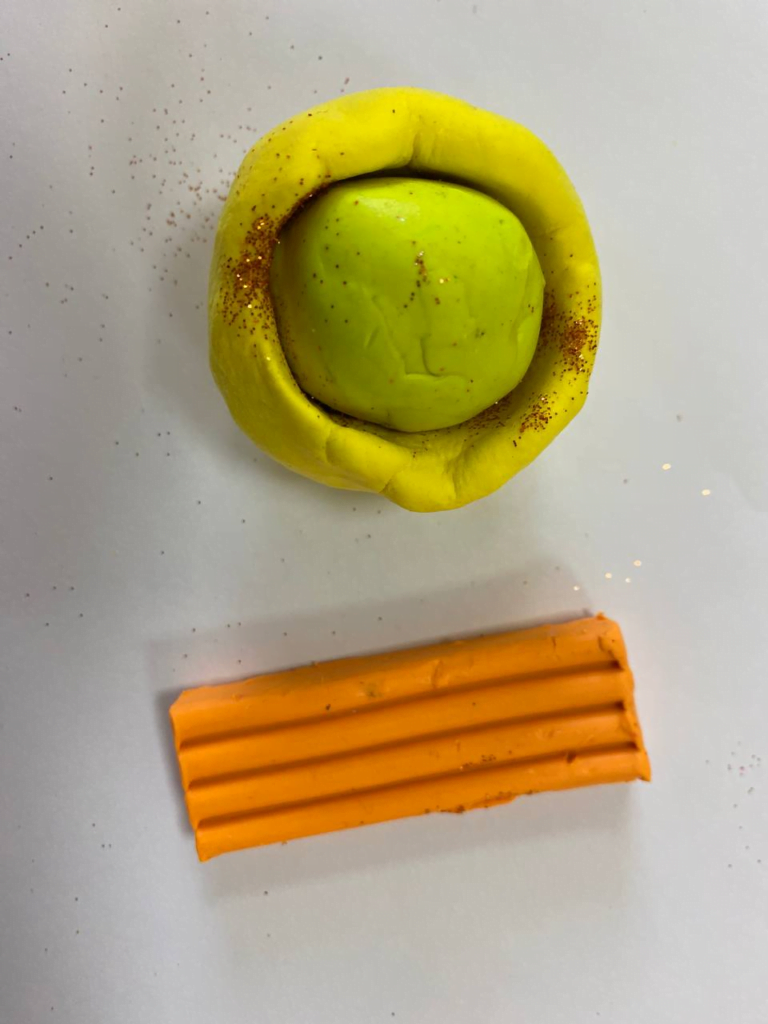
Step 3: The structure of the Earth. Inner and outer core.
Roll out yellow plasticine by hand and fill in glitter and Styrofoam balls. Then cover the plasticine so that it does not crumble. Then cover with orange (yellow) air plasticine.
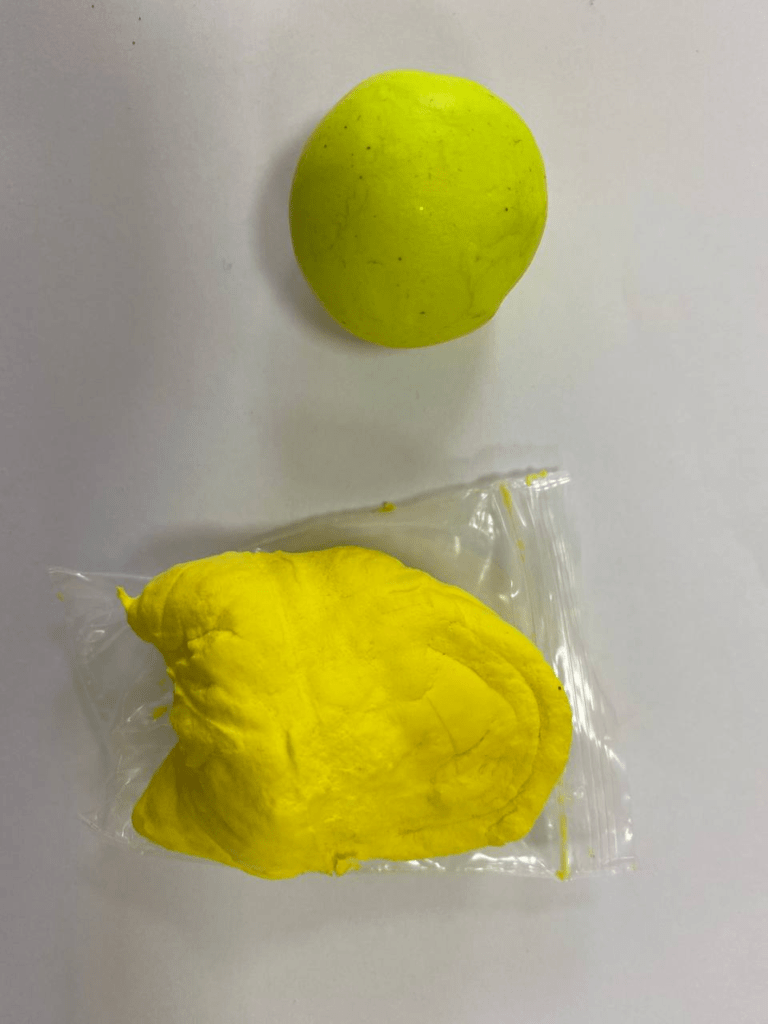
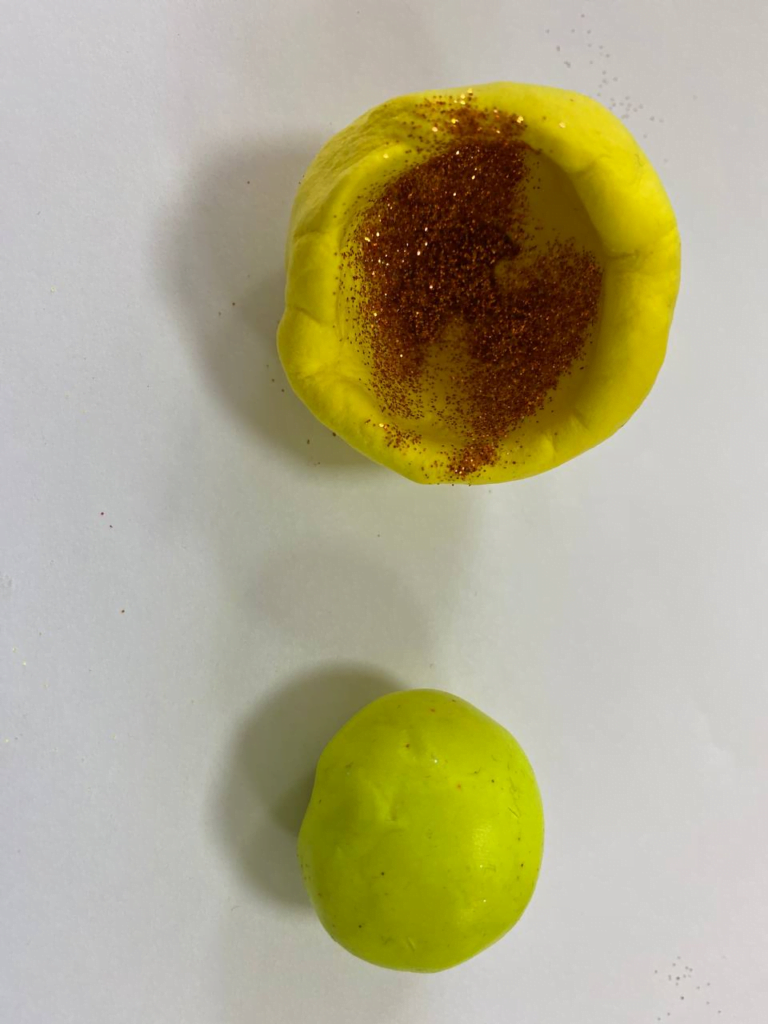
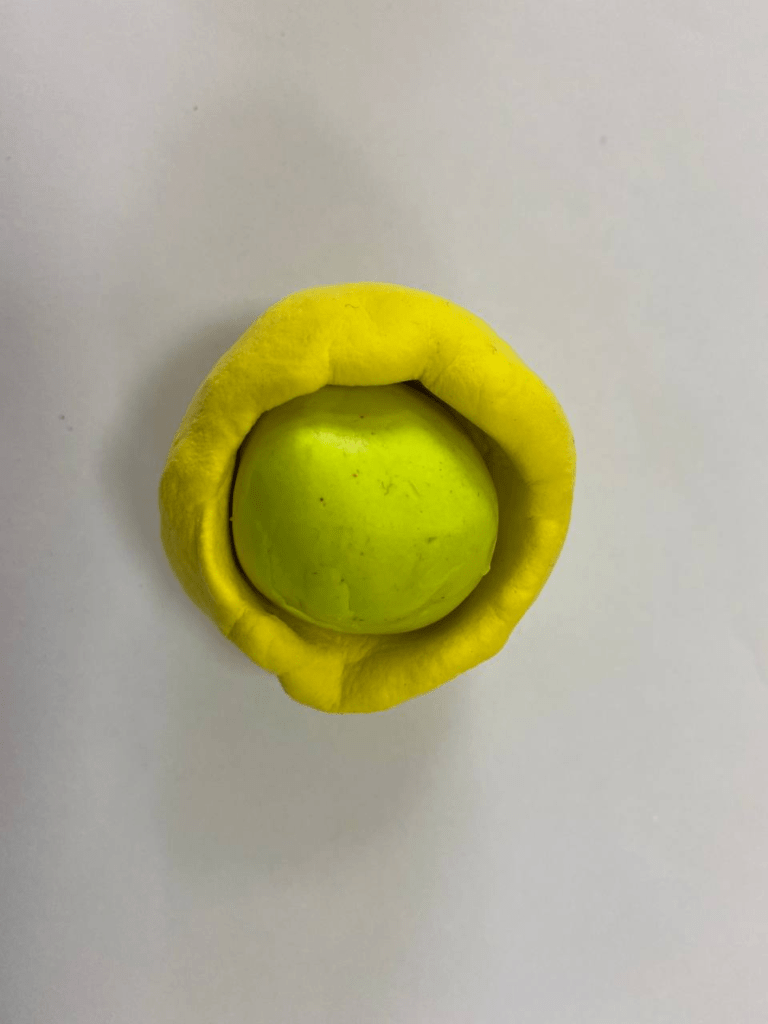
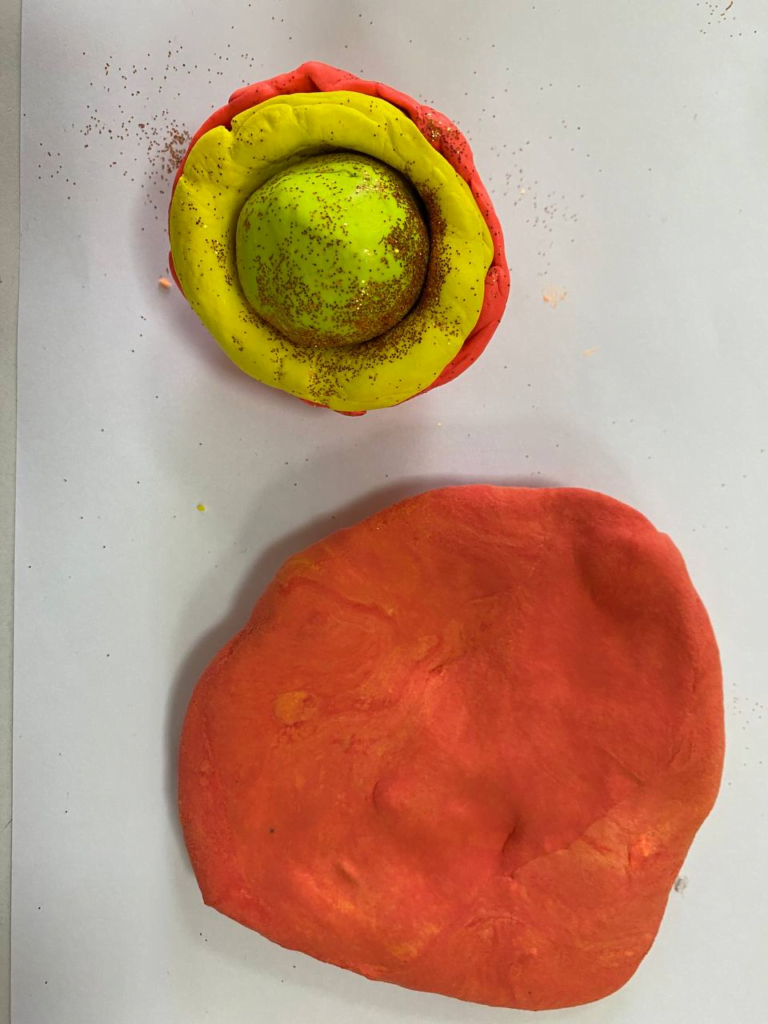
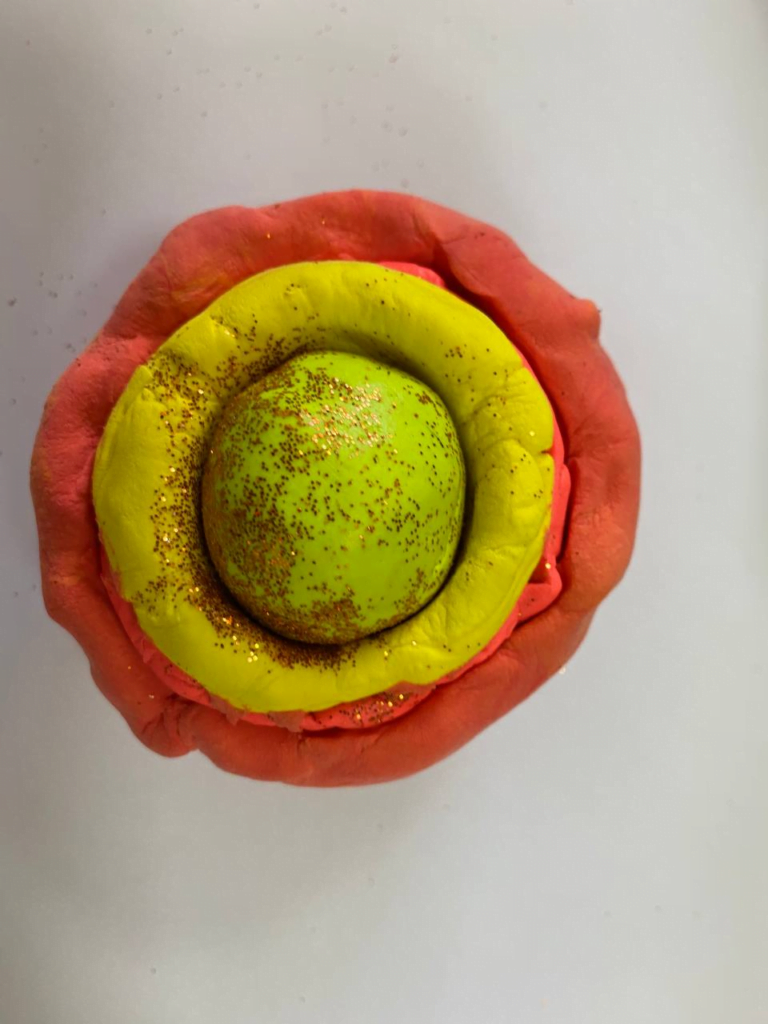
Step 4: Structure of the Earth. Mantle.
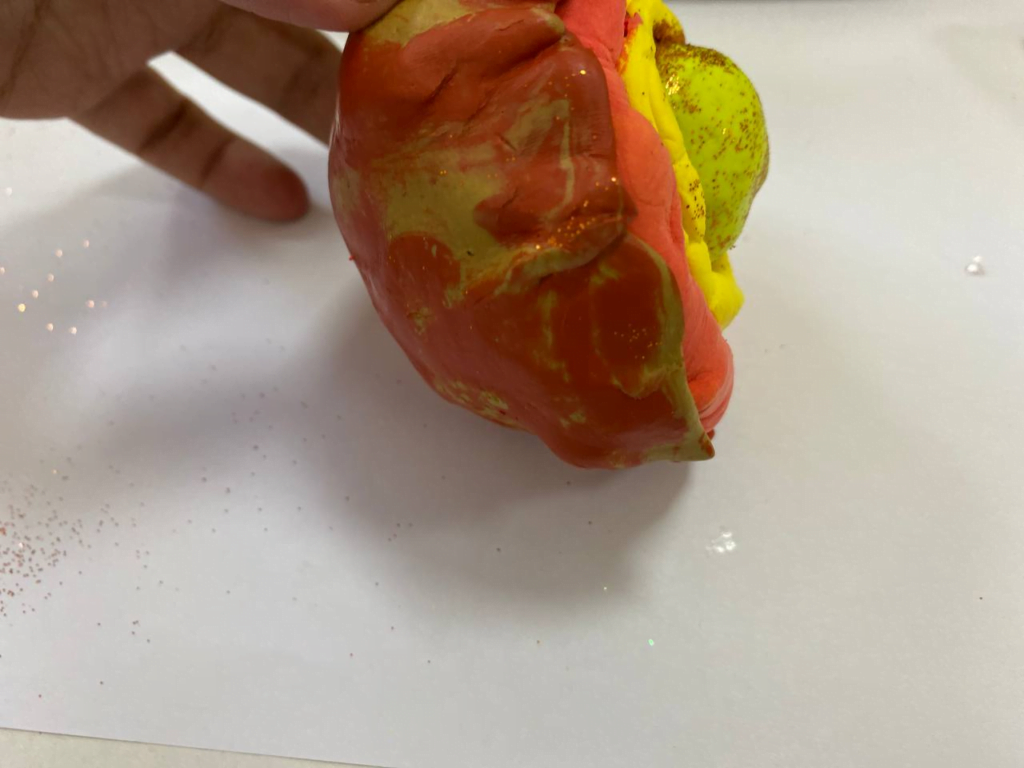
Roll out red (coral) hard plasticine and then coat the finished mass. First layer is normal, hard plasticine. Second layer is air plasticine).
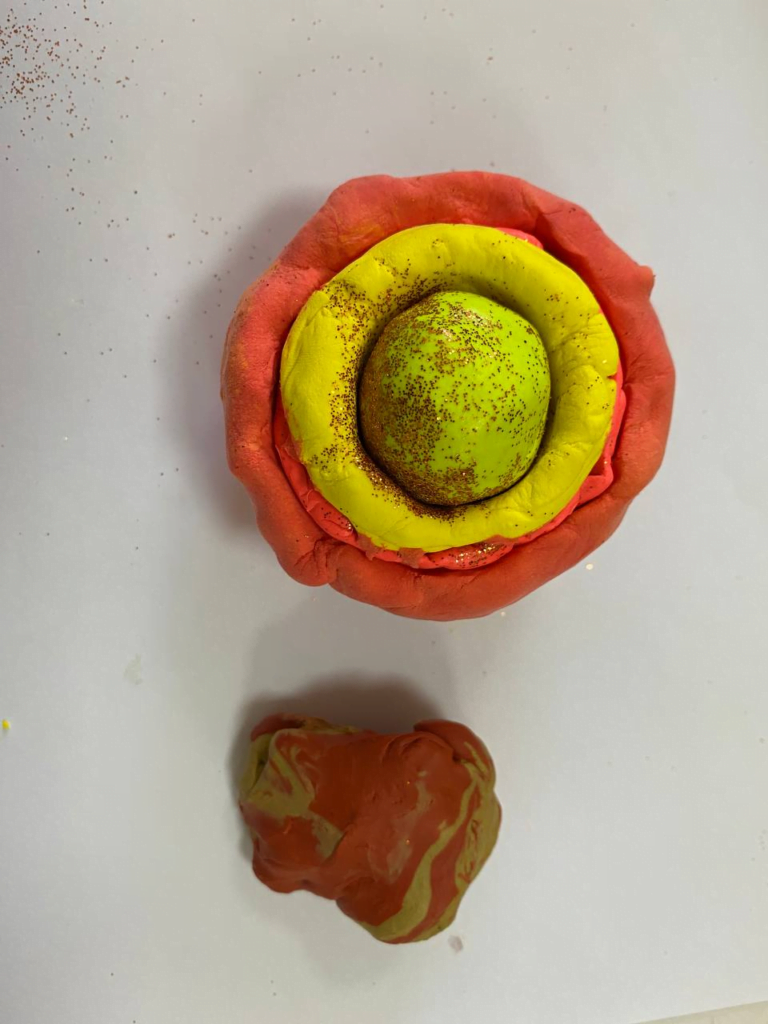
Step 5: Structure of the Earth. Lithosphere.
Roll out brown hard plasticine and cover the mantle.
Step 6: Structure of the Earth. The oceanic crust of the Earth.
Roll out the blue air plasticine and cover the Earth’s crust.
Step 7: Structure of the Earth. Continental crust of the Earth.
Roll out the green plasticine and cut out the continents (by eye)
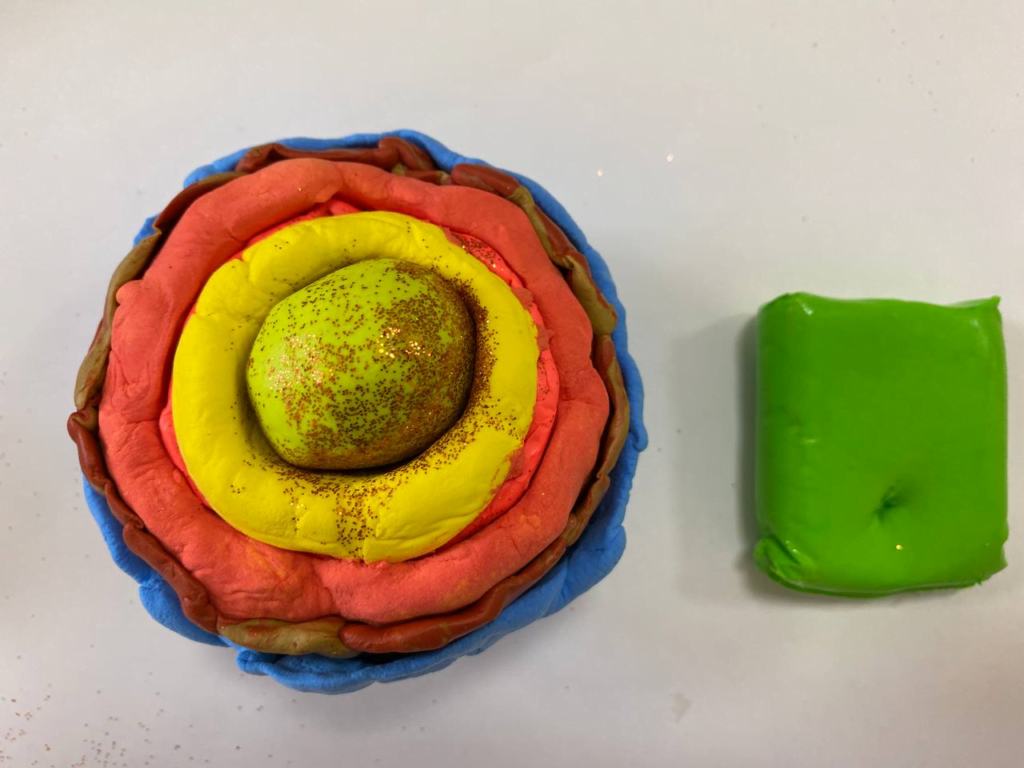
Step 8. In this way, we get parts like this. Air plasticine does not stick to solid plasticine. And Alternating regular clay with air clay gives us a clear view of the layers of the Earth.
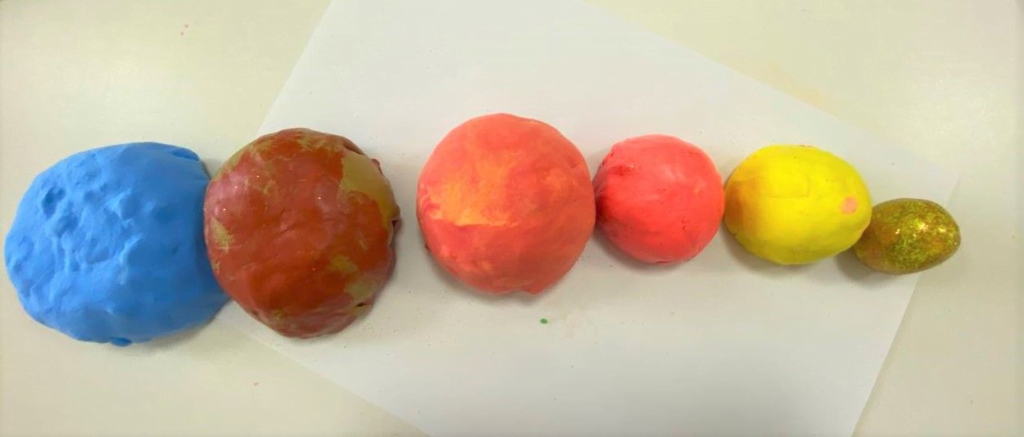
Conclusion
Thus, on this project the pupils have mastered the model and the structure of the globe. With the help of the necessary materials, the pupils made a model of the Earth out of plasticine on their own.

On this project, each student is awarded a STEAM title, in three categories:
– You have independently, investigated the internal structure of the Earth and their properties, You are a real scientist – a geologist!
– You independently made a model of the Earth out of plasticine. This in turn is a technological process. Congratulations, you are a young engineering technologist!
– You have independently studied the Earth’s crust, namely, you have delineated the core, mantle, lithosphere and the continental and oceanic crust; you are an artist-cartographer!
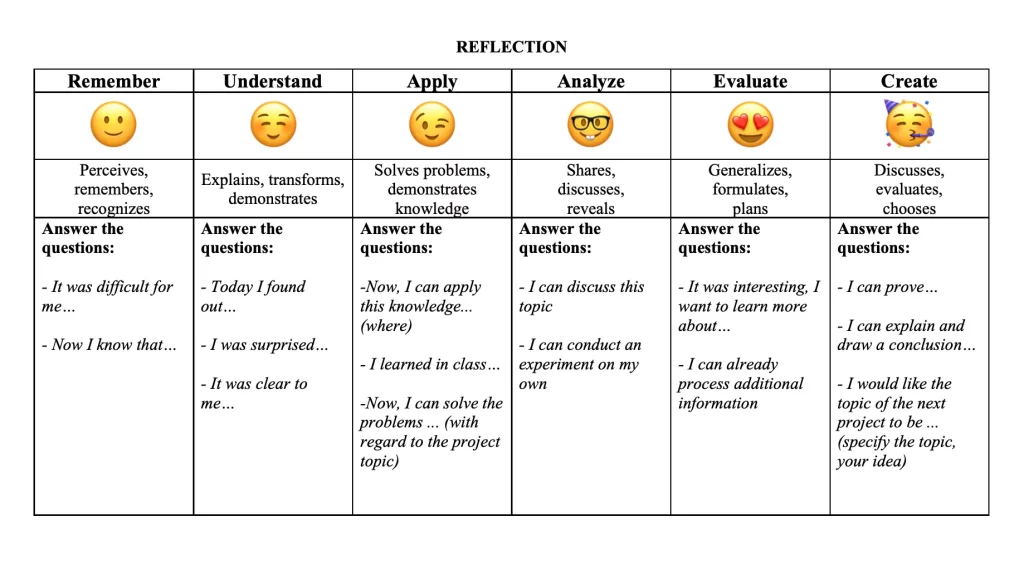
Evaluation