
Lesson
Project objective
1. to investigate the property of air to fill space
2. Creating soap bubbles
Teacher’s guide
– For the experimental part of the project, students work in groups of 4-5.
– Students should be introduced to the topics covering the purpose of the project.
– Before beginning the experimental part, familiarize and provide the students with all the necessary materials.
– At the beginning of the lesson explain the PBL (project based learning) rubrics to the students. Skills 4K (critical thinking, collaboration, creativity, presentation)
Safety in Steam lessons
It is recommended that teachers are fully aware of the safety procedures before the beginning of the lesson. If necessary (if they are using items specified in the PPE guidelines), brief the students. Visit Safety in Steam lessons: Safety lessons
Theoretical part
Properties of air
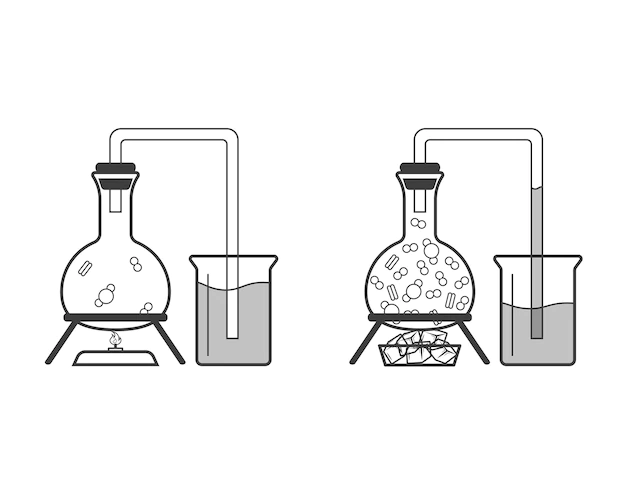
Properties of air air expansion when heated air contraction when cooled laboratory experiments
Some basic properties of air
1. Air is colourless and odourless:
Air has no colour of its own. It also has no essence of its own. It is therefore transparent and odourless. But sometimes it smells aromatic or stinks when certain gases are mixed together.
2. It can only be felt:
Air can only be felt as a breeze or wind. You cannot see or taste it, but you can only breathe it. The air entering your body contains oxygen and the air you breathe out contains carbon dioxide.
3. Air is made up of gases:
Air is made up of several gases such as oxygen, nitrogen, argon, water vapour, carbon dioxide, etc. The components may vary according to local conditions such as factories, volcanic eruptions and some human activities.
4. Air exerts pressure:
Air particles can flow in all directions and create a force called pressure. For example, the closer you get to the Earth, the higher the atmospheric pressure.
Air force or pressure also exists as air resistance when an object tries to move parallel to the air. It is also called drag.
5. Air takes up space:
Air, when blown in, fills the space. In this way, it takes up space. For example, when you fill a balloon with air, it expands. The more air you blow into it, the more it will expand. This is due to the volume occupied by the air.
6. Air has mass:
It’s hard to believe that air consists of mass. But it’s true! For example, when you move towards high altitude areas, you will find it difficult to breathe. This is due to the earth’s gravitational force. Because of this force, the air at the surface of the Earth is more dense than at higher altitudes.
7. Air expands: Shown as an experiment in the photo above
One of the properties of air is its ability to expand. When air is exposed to heat, it expands and takes up more space. The more it inflates, the thinner it becomes.
Conclusion
Air is an important form of inexhaustible natural resource that is essential for survival. In the realm without air there would be no animals or plants, no protection from the sun’s dangerous radiation, and no fire, as it requires oxygen to burn, and large variations in temperature.
Air is a physical material. It is a mixture of many gases that exist in the atmosphere and has its own weight. It exerts pressure on the surface of the Earth. The weight of air per unit area of the Earth is known as atmospheric pressure. And atmospheric pressure is an important factor in causing changes in the weather.
Consider how air fills space: as an experience with soap bubbles
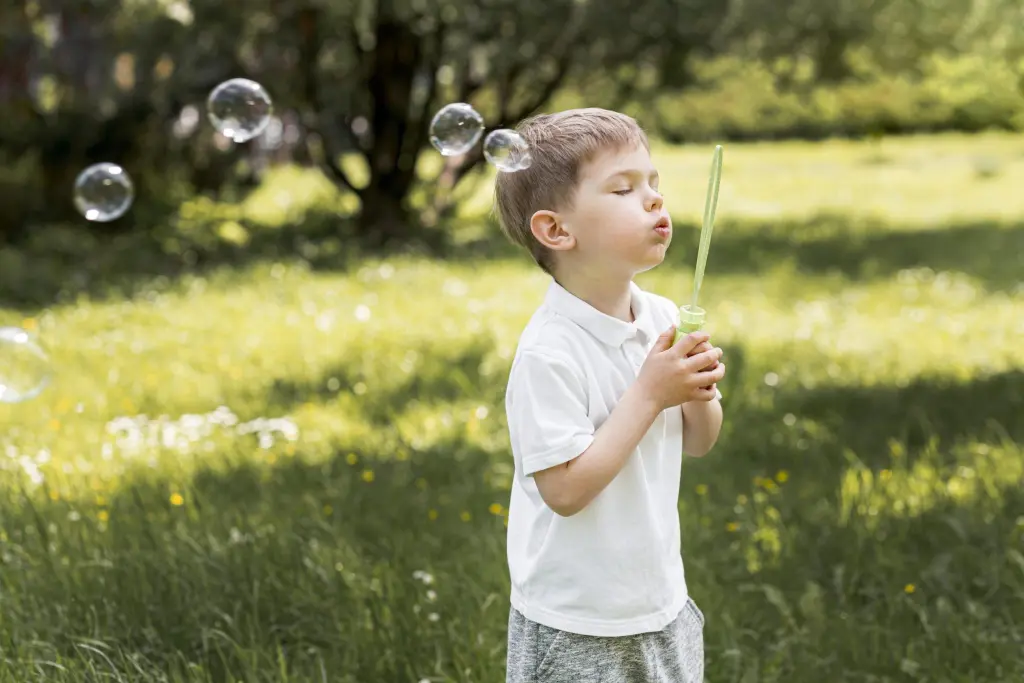
The health benefits of blowing bubbles
Who doesn’t love blowing bubbles? Bubbles are whimsical, bubbly, playful and nostalgic.
Bubbles are good for your health! The ONLY thing to do is not to inhale them!!!
Blowing soap bubbles can teach you how to keep your airways healthy. When you blow into a bubble wand, try to control your breathing to create as much of a bubble as possible before it bursts. Replay this sensation of not blowing bubbles and you will maintain the strength of your small airways and help draw more air into your lungs.
For the littlest ones, blowing bubbles helps to teach breathing control and deep breathing, especially for children.
Sources:
- https://helphopelive.org/health-benefits-blowing-bubbles/#
- https://www.turito.com/blog/physics/air-composition-properties
- “https://ru.freepik.com/free-photo/_9009978.htm#query=%D0%BC%D1%8B%D0%BB%D1%8C%D0%BD%D1%8B%D0%B5%20%D0%BF%D1%83%D0%B7%D1%8B%D1%80%D0%B8&position=45&from_view=search&track=sph”>Freepik</a>
The practical part
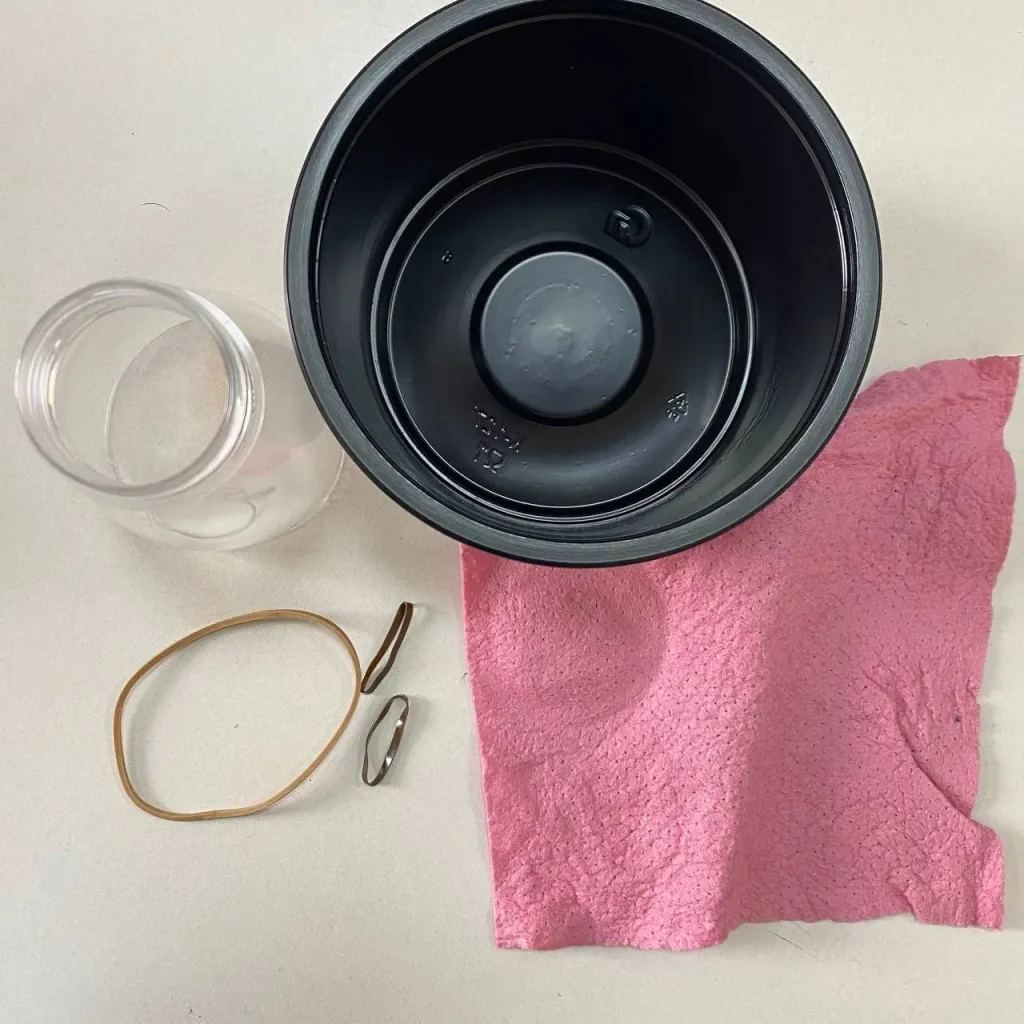
Step 1: Prepare all the necessary materials. Take a small plastic bottle and together with the teacher divide the bottle in half using scissors.
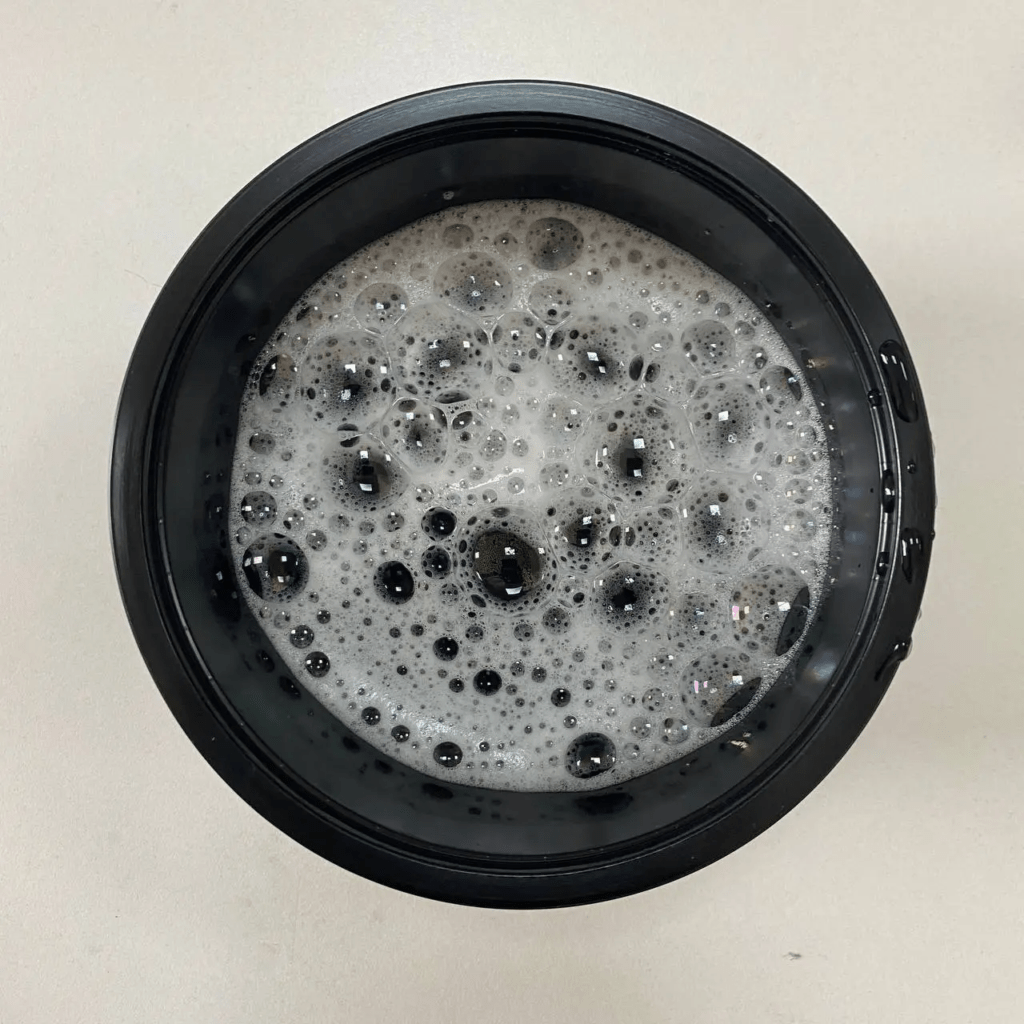
Step 2: Pour some water and a few drops of liquid soap/shampoo/detergent, etc. into a dishpan of your choice.
Do not taste it!
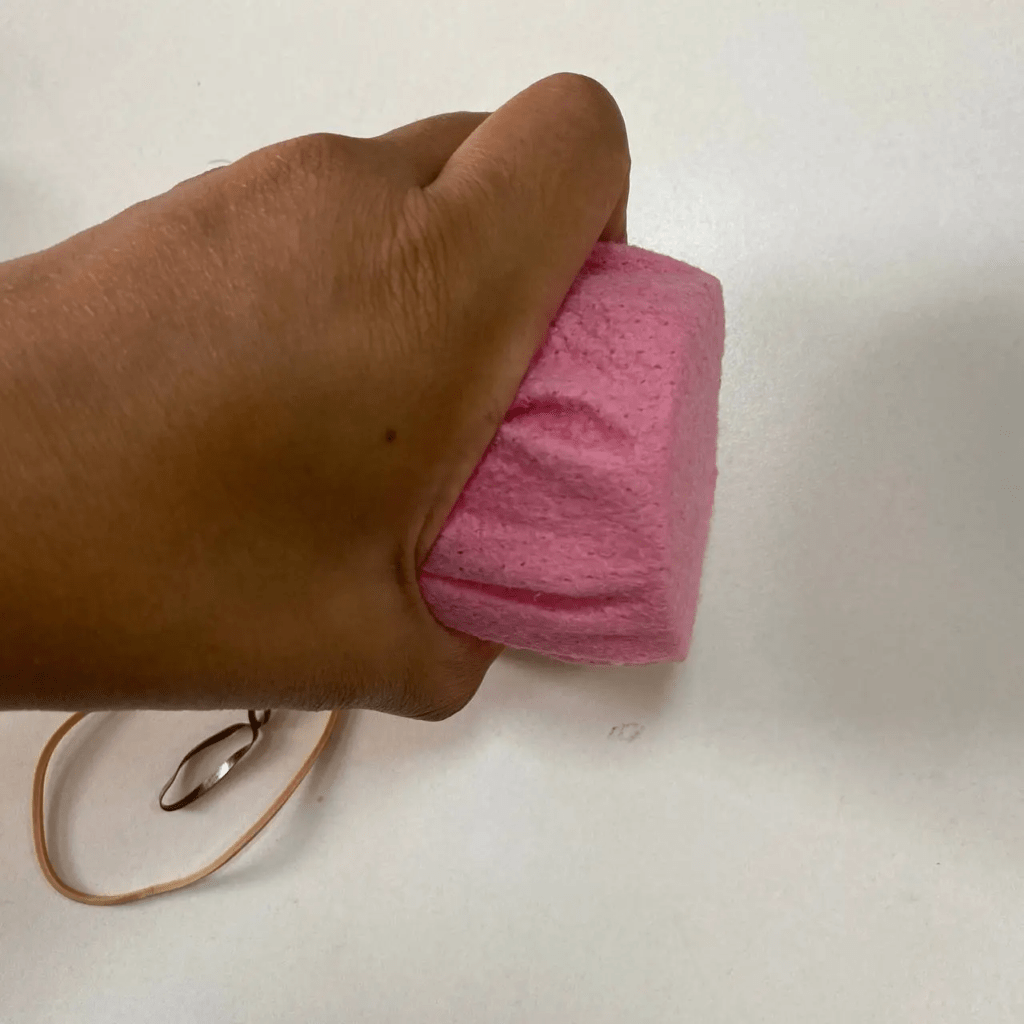
Step 3. Then take the top of the bottle with the neck, and wrap a towel (you can use gauze/capron/wet cloths etc) around the cut edge. And secure everything with a rubber band.
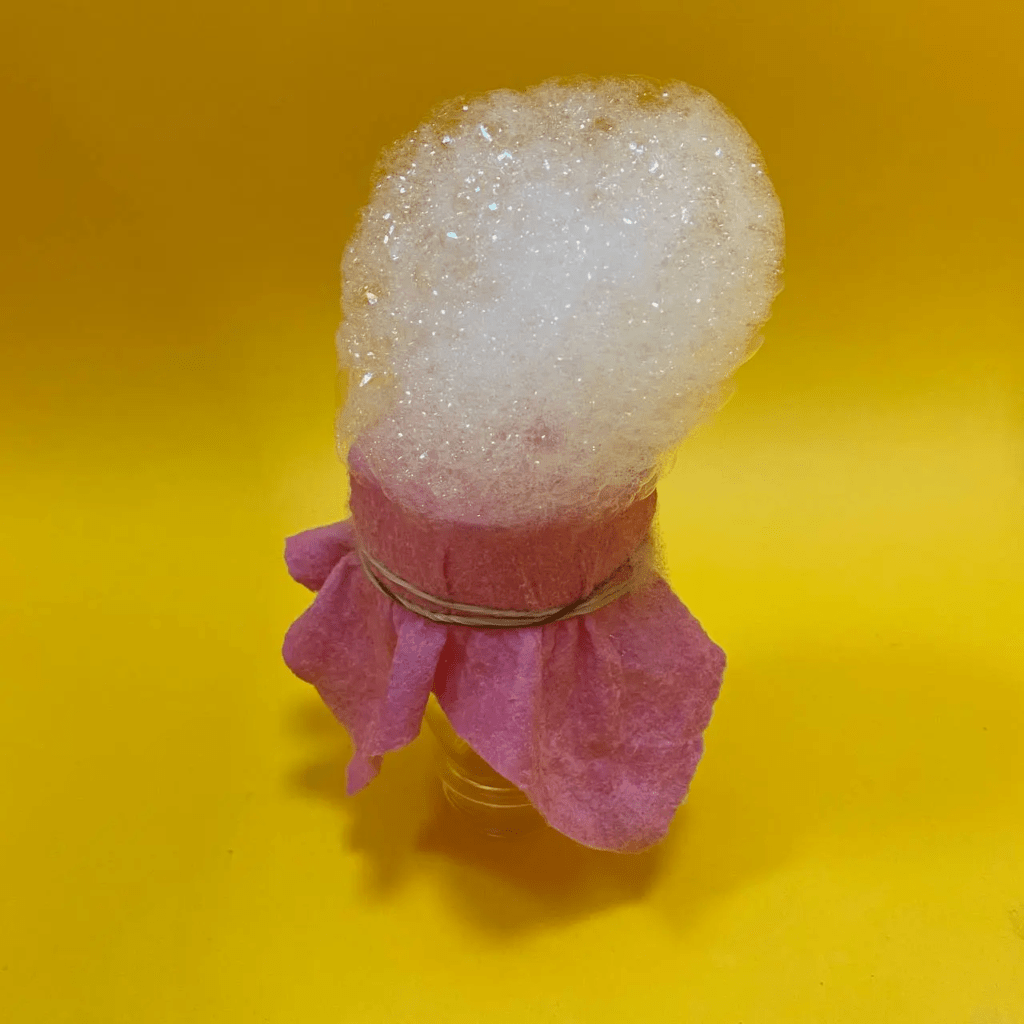
Step 4. Then soak the towel in the prepared soapy water and blow on the reverse side. Extraordinary amazing bubbles will come out!
Think about what you have filled the bubbles with (the answer is air).
Conclusion
In this project, the pupils made their own soap bubbles and investigated the properties of air and water.
On this project, each pupil is awarded a STEAM title, in several categories:
– You have made your own soap bubbles. You are a young chemist!
Evaluation

