Week 1
Objectives
- explore ways to automate irrigation systems
- learn to plan and build engineering facilities
- learn about the exploitation of solar energy and solar panels
- learn to work in groups
Goals
Students should develop an understanding of:
- irrigation systems and design of irrigation systems
- use of solar energy
- plan for solving a real-world problem
- planning and construction of engineering facilities
- communication skills for collaboration with the teacher and other students
- at least one type of irrigation system
Interdisciplinary connection
- Biology (plant growth and development)
- Physics (work with electronics)
- Informatics (programming)
Introduction
For centuries, farmers around the world have had to be creative in the absence of rain. To overcome water scarcity and increase yields, they used technologies such as irrigation systems.
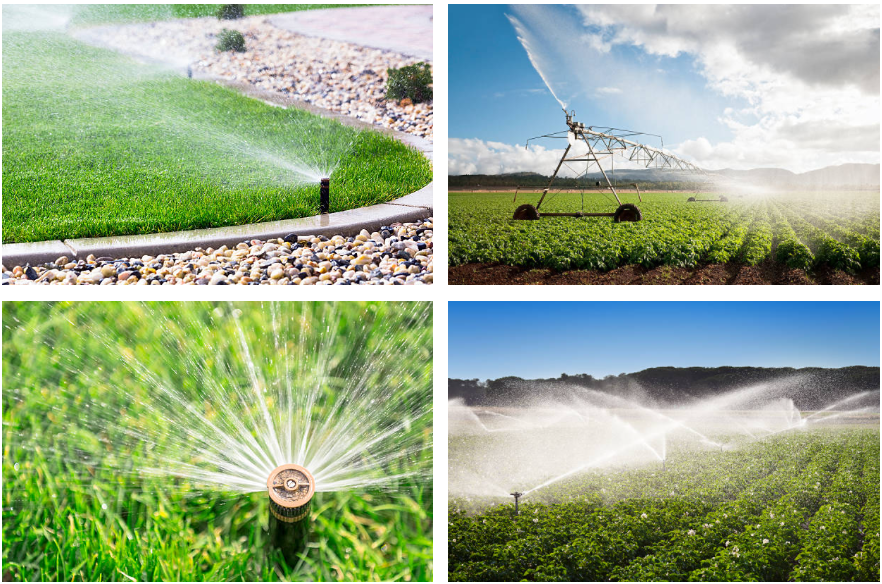
However, most irrigation systems are ineffective. About half of all irrigation water is wasted due to runoff, wind and evaporation. This is because most irrigation systems use simple timers and controllers to irrigate fields on a schedule. A much more efficient approach is to use a smart irrigation system that aims to use water only when needed and waste exactly the right amount of water [1].
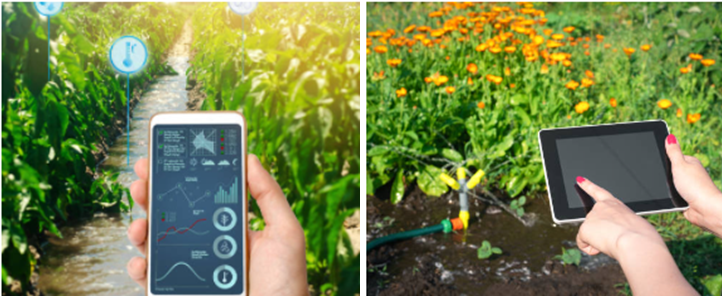
An intelligent irrigation system collects information from sensors and sends commands to actuators that start irrigation water. The commands for the irrigation system are predefined by the user [2]. Smart irrigation has many benefits. One of them is soil moisture control which allows farmers to automate irrigation processes and reduce water consumption. Other benefits also include cost savings through minimal water loss, smart notifications in case of deviations, a single overview of soil characteristics, and many more [1].
Resources:
Lesson 1.
Plant growth. Remember the structure of cells and the type of tissues of the apical kidney and the zone of root division. As you remember, the educational fabric is located there. Due to the continuous division of its cells, the growth of roots and shoots occurs. Plant growth is associated with reproduction – an increase in the number of cells and the redistribution of substances that make up the plant. In light, due to photosynthesis, the growth of green plants usually leads to an increase in body weight, since the accumulation of organic matter prevails over their consumption for respiration. In the dark, the growth of green plants occurs due to the available organic matter while spending them on the respiration process.
When studying the root, stem and leaf, the methods of growth of these organs were found out: the root grows with its end, and its growth zone does not exceed 8-10 mm, while the stem grows with its apex and upper internodes. The growth zone of the stem has a few centimeters, and sometimes reaches 10 cm or more.
Plant development. Qualitative changes in the life and structure of living organisms are called its development. In the course of development, new properties and organs are formed.
The development of the organism begins with the appearance of the embryo. The first stage in plant development is called the embryonic stage. It covers the time from the beginning of the formation of the embryo to the moment of germination of seeds. At this point, the main factors affecting plant germination are temperature and humidity. At low temperatures, the seeds do not germinate. Dry seeds are also unable to germinate.
The second stage in the development of plants is youth. It lasts from the moment the seed germinates until the first flowering. During this period of life, the plant is actively growing, significantly increasing its green mass. It branches, forms new young shoots (twigs) and leaves, grows in height.
.jpg)
Pic. Plant development
Preparation and introductory questions:
Explain the need for water for growing crops by involving students in the discussion. Ask students:
- What do plants need to grow? (water, soil, sunlight, fertilizers, etc.)
- What can happen to plants if they don’t have enough water? (they can turn yellow, wither, dry out, die, etc.)
- Does anyone know what irrigation is? Let students share their insights. (Irrigation is the process of moving water from one place to another to help plants grow)
Ask students if they have seen any examples of irrigation in their village and let them share examples. Ask what irrigation methods have been used or can be used (use of canals, tanks, pipes, hoses, etc.)
Tell students:
In this lesson, you will work as engineers. Imagine that you are engineers [Engineers are specialists who create or improve technical mechanisms (motors, machines)]. You will work in small groups to figure out how you can automate your irrigation system to water your crops.
Divide students into groups of 4. Provide one set of materials per group.
Note:
Further in the material, an example of the implementation of a project for the automation of an irrigation system is provided. You can use this example as a reference. Provide students with the opportunity to think about the design of the project and contribute ideas for improving it.
Soil preparation and planting plant seeds
1. We need a rectangular box. In our case, this is a box of the following dimensions: length 29 cm, width 20 cm, height 6.5 cm. You can also take any identical box with dimensions at least the same as those indicated above. If there is no such box, you can make it from cardboard [ download cardboard dimensions ].
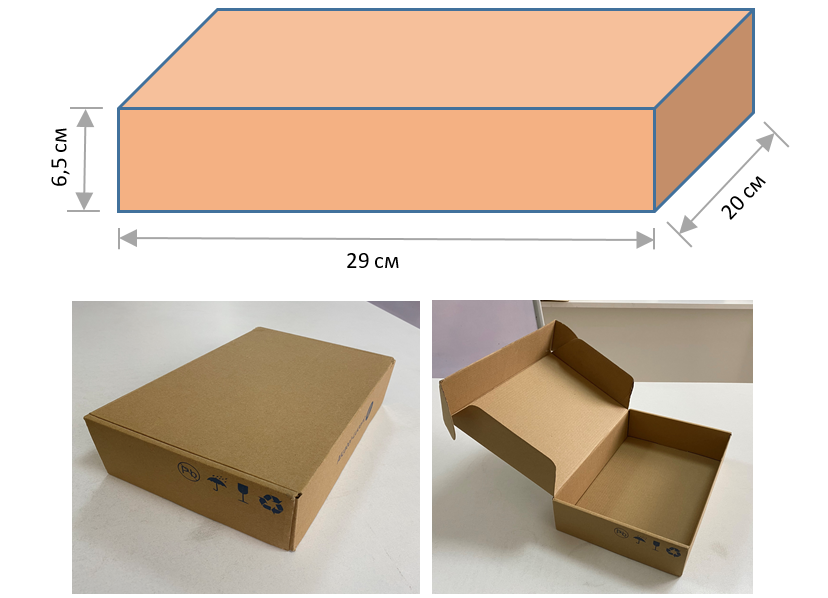
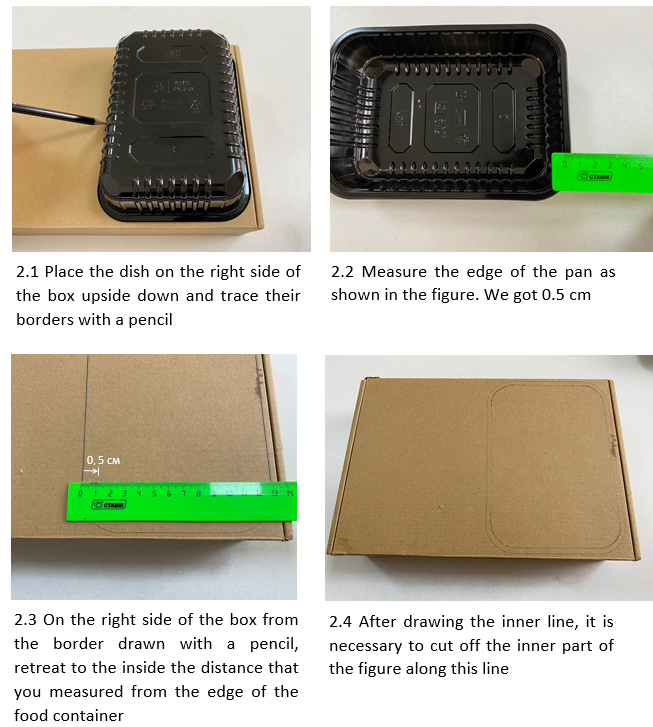
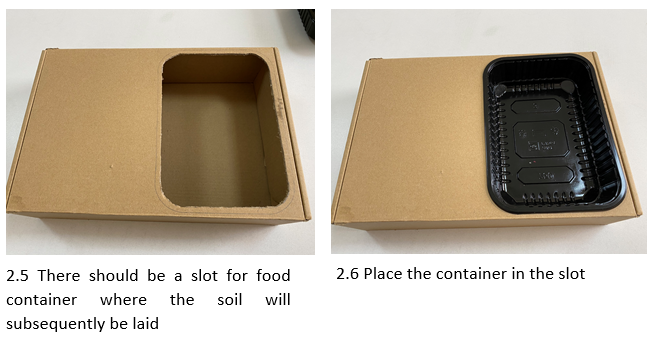
2. Socket preparation for soil
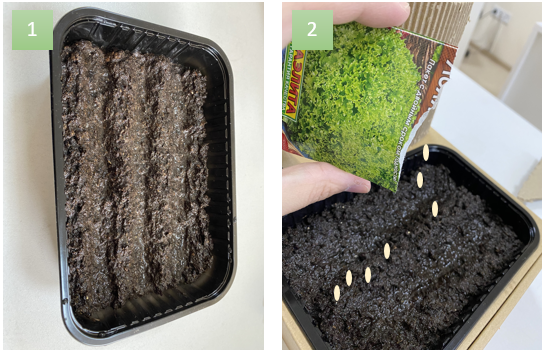
3. Preparing the soil and planting plant seeds
Place the required amount of soil in a plastic dish (just above the middle). Plant the seeds of your plant. In our case, these are lettuce leaves (since seedlings appear in one week). Take care of your plants in parallel with the further implementation of the project.