Lesson 1
Topic of laboratory work: “Vital lung volume”
The purpose of the work:
- To learn how to determine the vital volume of the lungs
- 8.1.4.3 determine the vital volume of the lungs and the minute volume of respiration at rest and during exercise
Teacher’s Guide
- Children should do the work on their own in groups of one
- The workplace must be cleaned and put in order
Safety precautions:
Worksheet:
Description
To measure the vital volume of the lungs, special medical devices called spirometers are used. These devices help us understand how effectively our lungs and respiratory system work.
Good physical shape and a healthy lifestyle contribute to an increase in the vital volume of the lungs. Sports, exercise and proper breathing can help strengthen our lungs and improve their functionality.
The VC can be calculated using the following formula:
VC = TV + IRV + ERV
TV – tidal volume that a person inhales and exhales with calm breathing
The IRV is the reserve volume of inspiration, the volume of air that a person can inhale after a normal inhalation.
ERV is the reserve volume of exhalation, the volume of air that a person can exhale after a normal exhalation.
There is also a total lung capacity (TLC) – this is the total volume of a person’s lungs, which is calculated according to the formula
TLC = VC + FRC
FRC is the functional residual capacity of the lungs, that is, the volume of air that remains in the lungs after full exhalation, which means it is the lung capacity that is not used in breathing. In an adult, this volume is usually 1.5 liters.
Practical part
1) First we have to take a normal breath and inhale a normal exhalation into the balloon. Fix the volume. Measure the radius of the ball (r) and its length (a) and calculate its volume using the following formula:
V = 2*a*r*r*pi/3
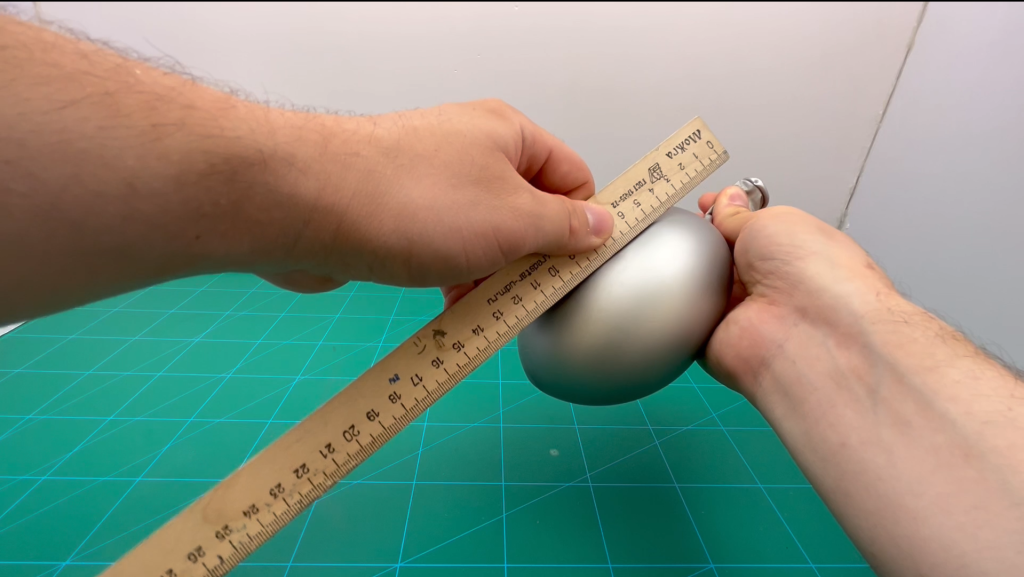
Do two more repetitions and calculate the arithmetic mean. This will be your TV.
2) Now take a normal breath, and then a normal exhale. Now hold your breath and make a full residual exhalation into a ball. Measure the radius of the ball (r) and its length (a) and calculate its volume using the following formula:
V = 2*a*r*r*pi/3
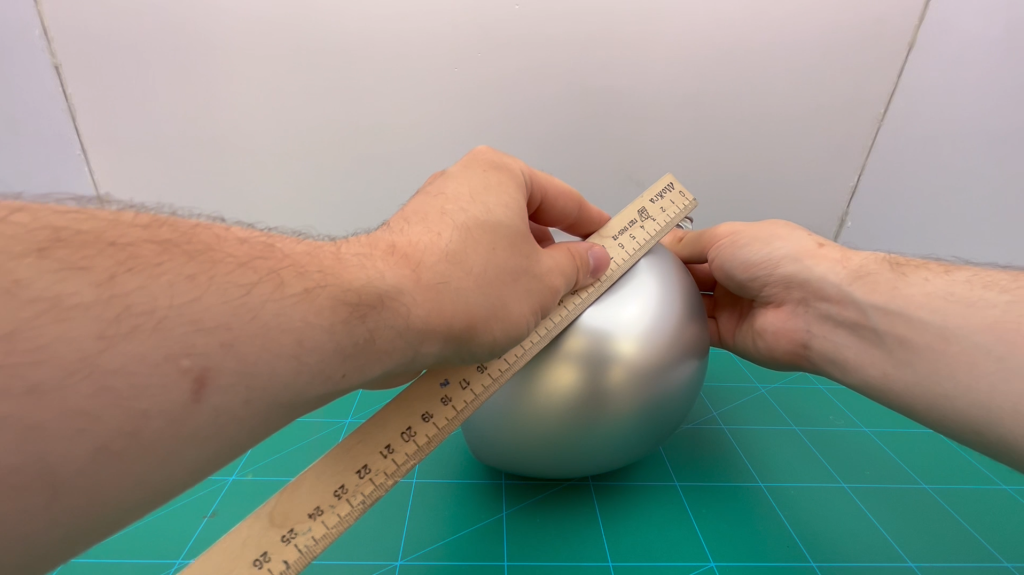
Do two more repetitions and calculate the arithmetic mean. You have received the ERV.
3) Now we will calculate the VC. To do this, take a full breath and after that, make a full exhalation into the ball as far as possible. Measure the radius of the ball (r) and its length (a) and calculate its volume using the following formula:
V = 2*a*r*r*pi/3
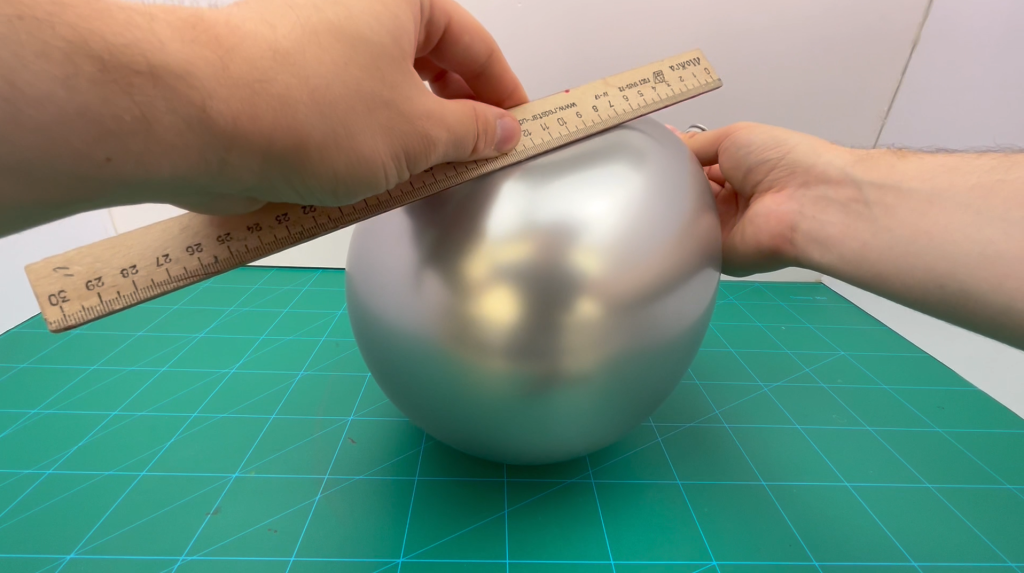
Do two more repetitions and calculate the arithmetic mean. This is your VC.
4) Now we can measure the IRV. To do this, you can rebuild the formula for the VC and get:
IRV = VC – ERV – TV
5) Fill in all the data in the table and make a conclusion.
| Тип объема | Number of measurement | Radius | Length | Volume | Average volume |
| TV | 1 | ||||
| 2 | |||||
| 3 | |||||
| ERV | 1 | ||||
| 2 | |||||
| 3 | |||||
| VC | 1 | ||||
| 2 | |||||
| 3 | |||||
| IrV |