
Lesson 1
Topic of laboratory work: Qualitative reactions to flame staining
The purpose of the work:
- Learn to identify ions by colored flame
- Describe and conduct flame staining experiments to determine cations
Teacher’s Guide
- Children should do the in groups of 2-3;
- The workplace must be cleaned and put in order.
- Before starting laboratory work, read the safety rules:
- To download the worksheet, please follow this link:
Theoretical part
When we talk about a flame, we usually think of its bright yellow or orange color. However, there are many other colors that can appear in the flame due to the presence of various substances. Today we will talk about the ability of cations to color flames and how they create this fascinating symphony of colors.
Cations are positively charged ions that can be formed by various chemicals. When the cations are in the flame, they can transfer the energy of their electrons by electronic transition. This electronic transition is accompanied by the emission of light of a certain wavelength, which leads to the staining of the flame.
Different cations can create different colors of flame. For example, sodium cations give the flame a bright yellow color, potassium cations are purple, barium cations are green, and copper cations are blue. These are just some examples of colors that can be obtained due to various cations.
The reason why different cations create different colors is related to the energy levels of the electrons in the atoms. When an electron receives energy and moves to a higher energy level, it then returns to its original level, emitting light. The amount of energy required for such a transition depends on the chemical element and its cation.
The ability of cations to color the flame turns an ordinary flame into a real theatrical representation of colors, which is also actively used in fireworks, where the addition of various salts gives such a wide range of colors.
Practical part

flame color
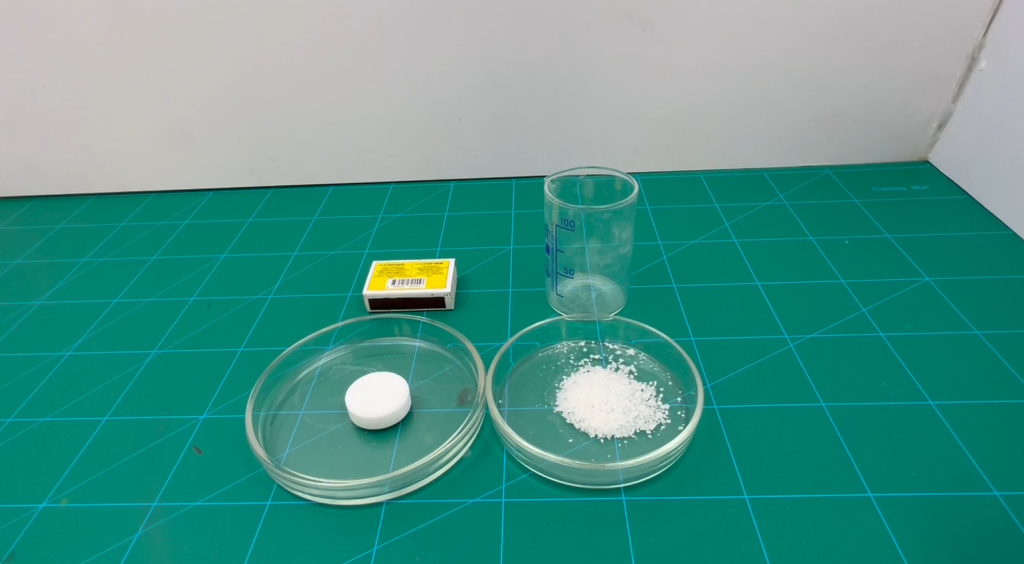
1. For the experiment, we will put a tablet of solid fuel and pour a little sodium chloride on it.
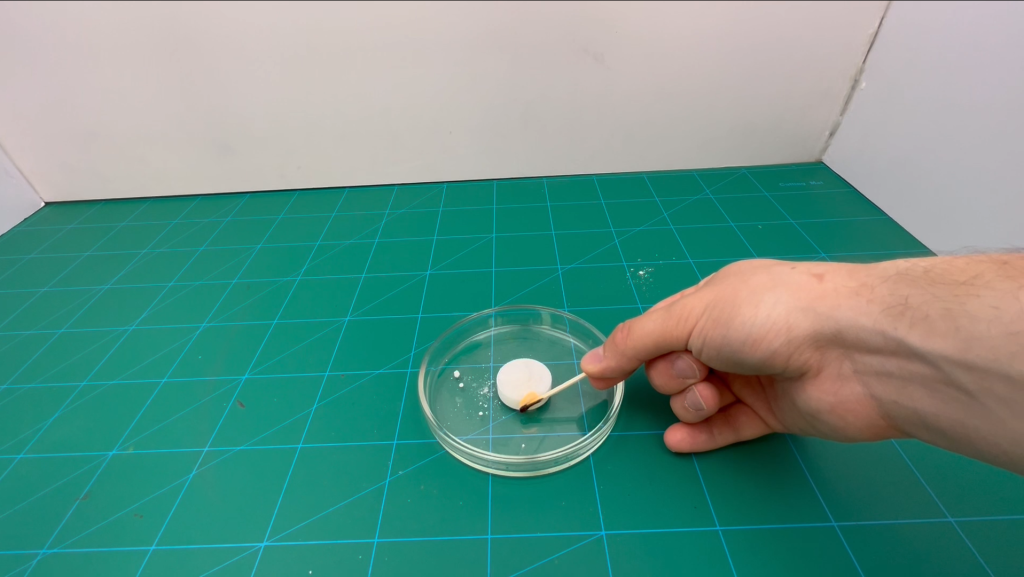
2. After that, take matches and set fire to the fuel.
3. Observe the changes.
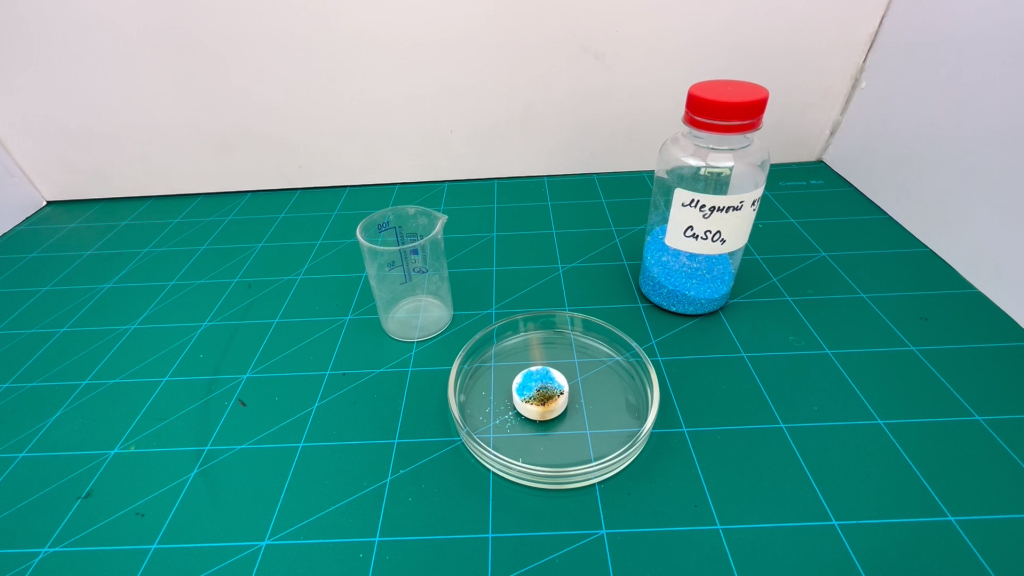
4. Repeat these procedures for other salts and record the result in the table
| Salt name | Flame color |