
Lesson 1
Teacher’s Guide
– Divide the students into groups. There should be 5 students in each group.
– Before starting the project, ask students questions about what they know about the Ferris wheel.
– Make a presentation on the topic.
– In the first week, students will begin to draw his project, and make a wheel according to the drawing.
– In the second week I will continue to make a wheel and more cabs.
– In the third week they will already work with the battery.
To evaluate the project, in the first week, provide this material (PBL rubrics) to students in order to:
– the students previously understood by what criteria they needed to prepare,
– the students were able to independently give an appropriate assessment to their colleagues.
Project objective
– Acquisition of engineering skills
– Make a Ferris wheel, and find out how its mechanism works
– Work with a current source
Expected results
After studying the project, students will be able to:
– to acquire the skill of cooperation with a teacher and work in a group, in pairs;
– analyze and summarize the information received;
– communicative competence will be formed in the course of educational activities.
Interdisciplinary communication:
– Engineering/ natural science (the principle of operation of the Ferris wheel, working with electronic devices)
– Artistic work (layout development, design)
Introduction
First, ask students questions
– Have you ever seen a Ferris Wheel?
– Have you ever ridden a Ferris Wheel?
A Ferris wheel (also a Ferris wheel in colloquial language) is a mechanical attraction in the form of a large vertically mounted wheel, to the rim of which cabins for passengers are attached. Ferris wheels are available in many amusement parks and other places.
The first Ferris wheel was built in 1893 by engineer George Washington Gale Ferris Jr. It was installed at the World’s Columbian Exposition in Chicago. The wheel was created as an American response to the Eiffel Tower in Paris. The diameter of the wheel was 75 meters, weight – 20 tons. The wheel was driven by two steam engines with a capacity of one thousand hp each. There were 36 cabs attached to the wheel rim, about the size of a bus. There were twenty seats and forty standing places in each cabin, and thus the total passenger capacity of the attraction was 2,160 people. The rotation of the wheel took twenty minutes. Weighing 70 tons, the wheel axle was at that time the largest forged steel part in the history of technology. The wheel was taller than the tallest skyscraper of that time, but four times lower than the Eiffel Tower.
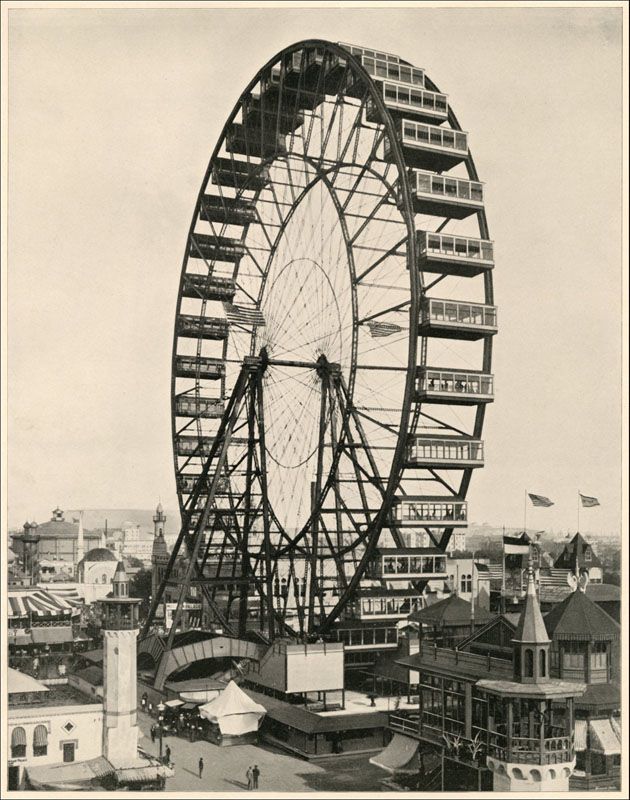
Types of Ferris wheels
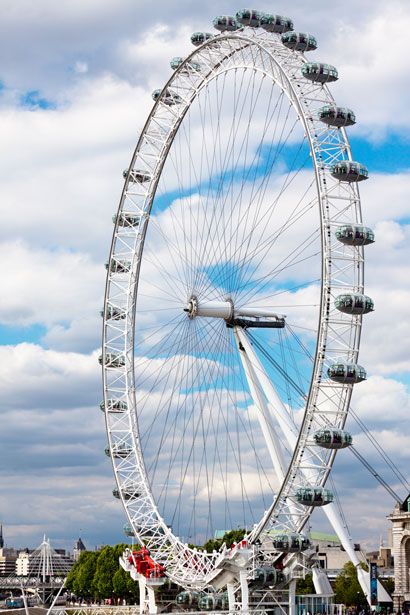
“Observation wheels”
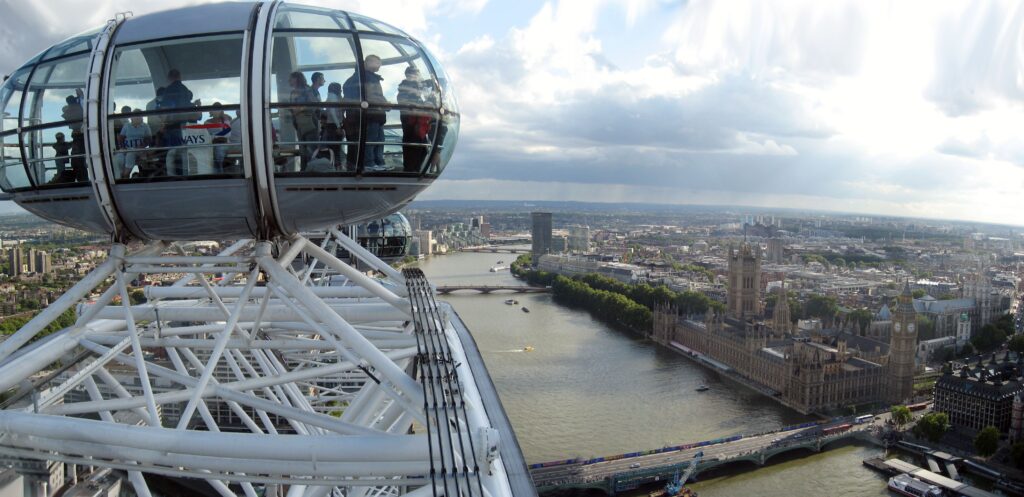
The so-called “observation wheels” are a new type of Ferris wheels. The first wheel of this type was the “London Eye”. This wheel was opened in 1999. Currently, the construction of wheels of this type is underway in Las Vegas, Shanghai, Moscow, Berdyansk and some other cities.
The main difference between the observation wheel and the Ferris wheel of the classical type is that the observation wheel cabins are not suspended from the rim, but mounted outside the rim. If the cabins of an ordinary Ferris wheel are held in the proper position due to gravity, then the observation wheel requires a complex mechanical stabilization system to hold the cabins in the right position.
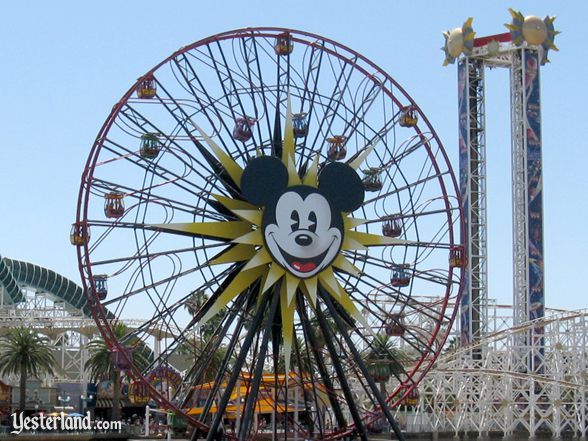
Other types
An unusual type of classic Ferris wheel was a wheel with sliding booths. Such a wheel was built in the 1920s in the Coney Island Park in the Brooklyn borough of New York. It has been preserved to this day and is now used in the park “Deno’s Wonder Wheel Park”. A copy of this wheel operates in California’s Disney Land Park.
The practical part of the work
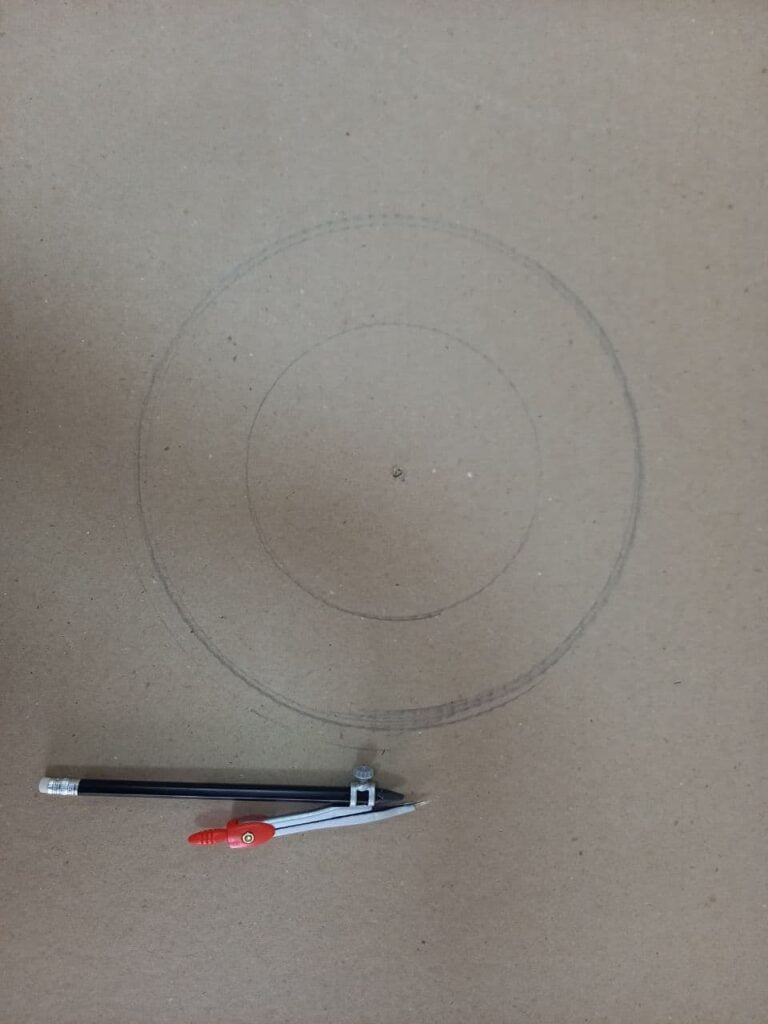
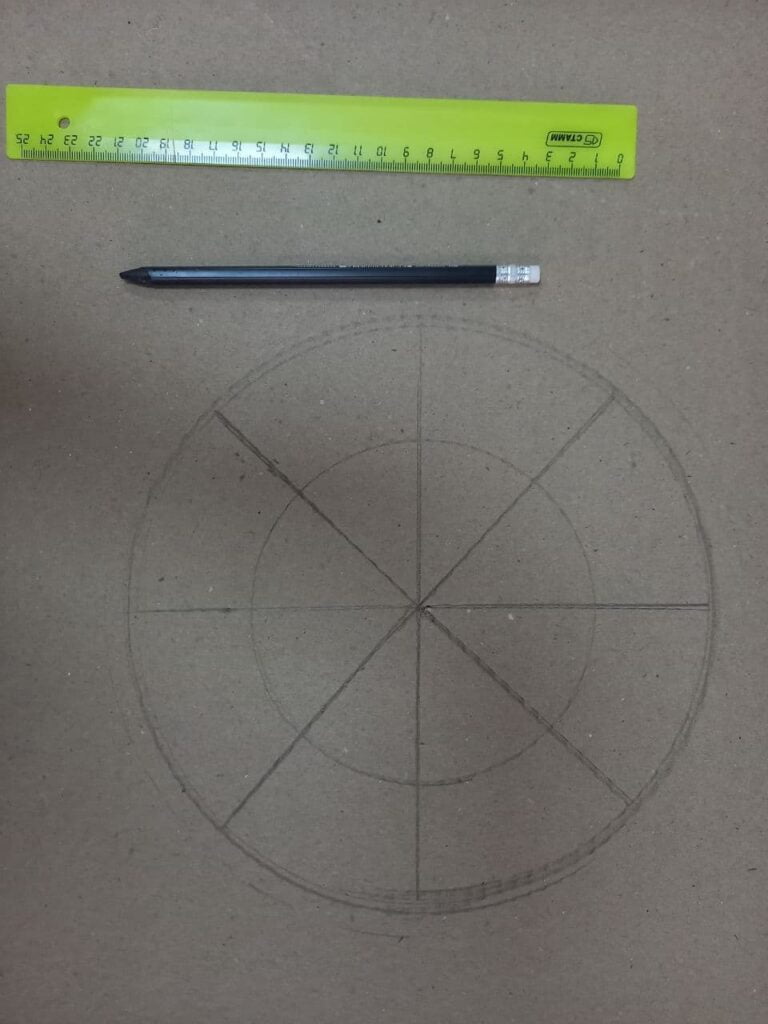
Step 1. We take cardboard, use a compass to draw a circle with a diameter of 24 cm and a second circle with a diameter of 16 cm, and divide it into 8 fractions as in the figure
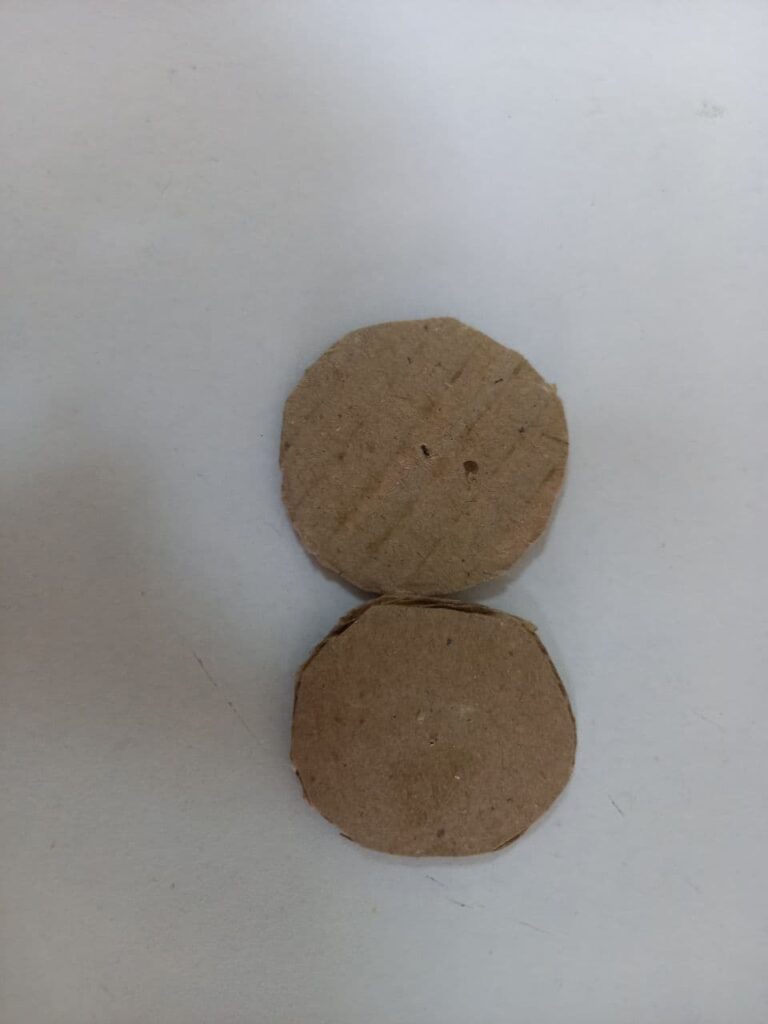
Step 2. We cut out another small circle (we will attach skewers to it) with a diameter of 4 cm. We put a small circle in the center of the drawing, and attach the skewers with hot glue (all skewers must be attached along the lines of the drawing).
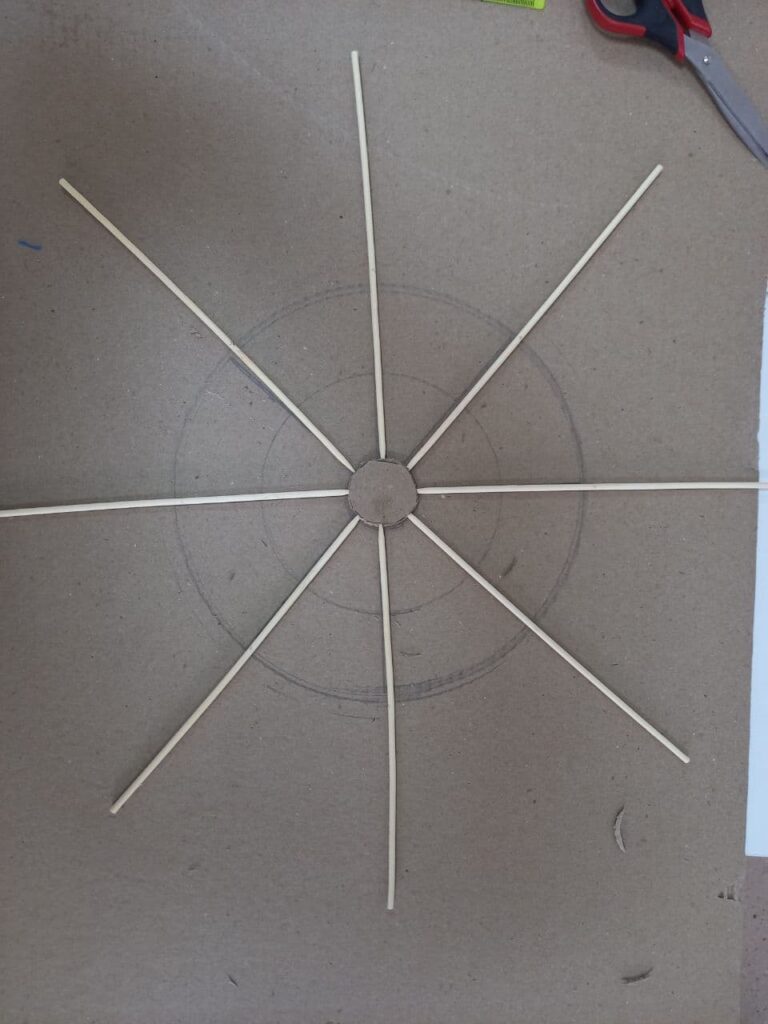
Step 3. Note the extra length of the skewer in a circle, and cut it off.
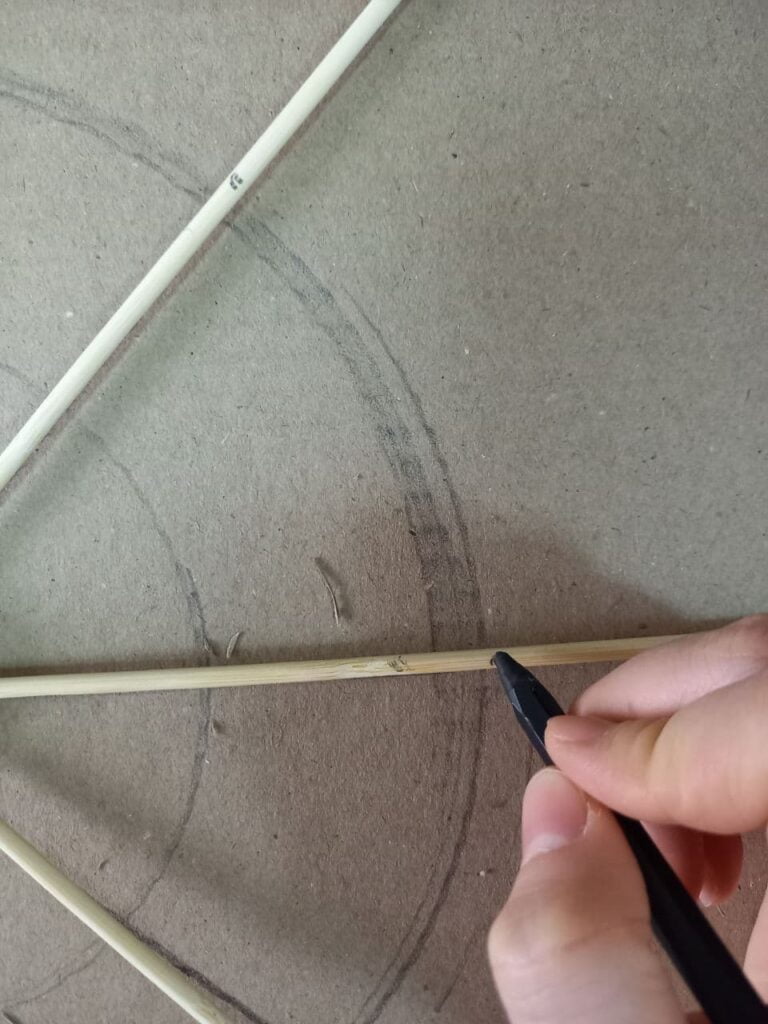
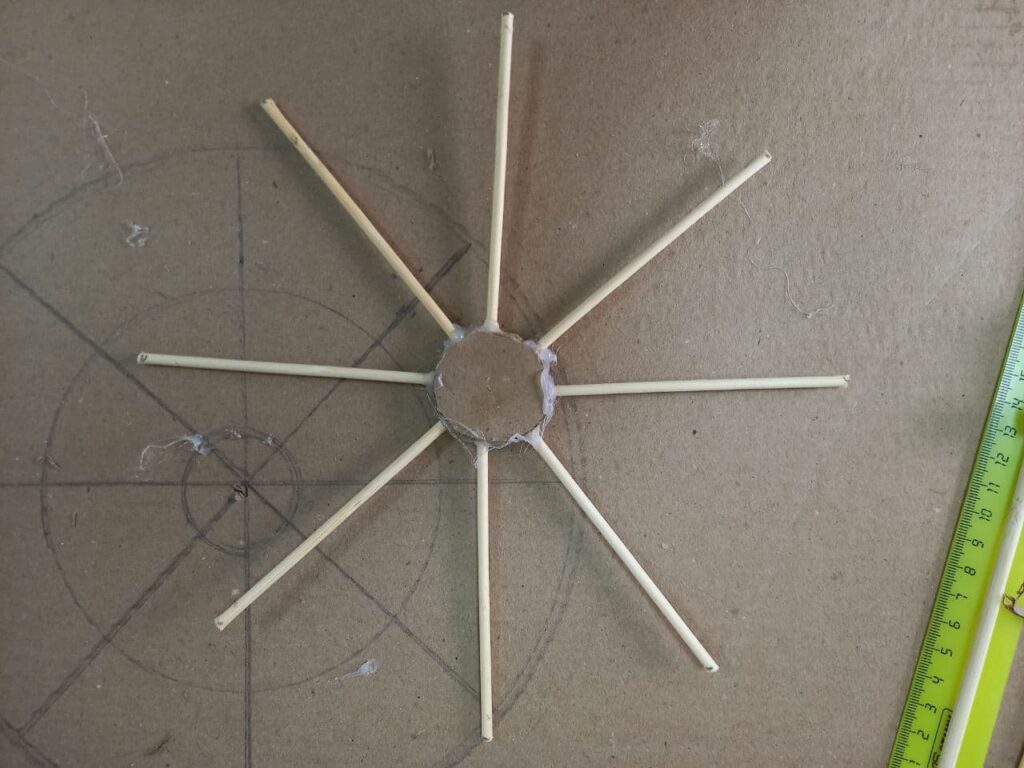
Step 4. We connect the wheel as in the picture
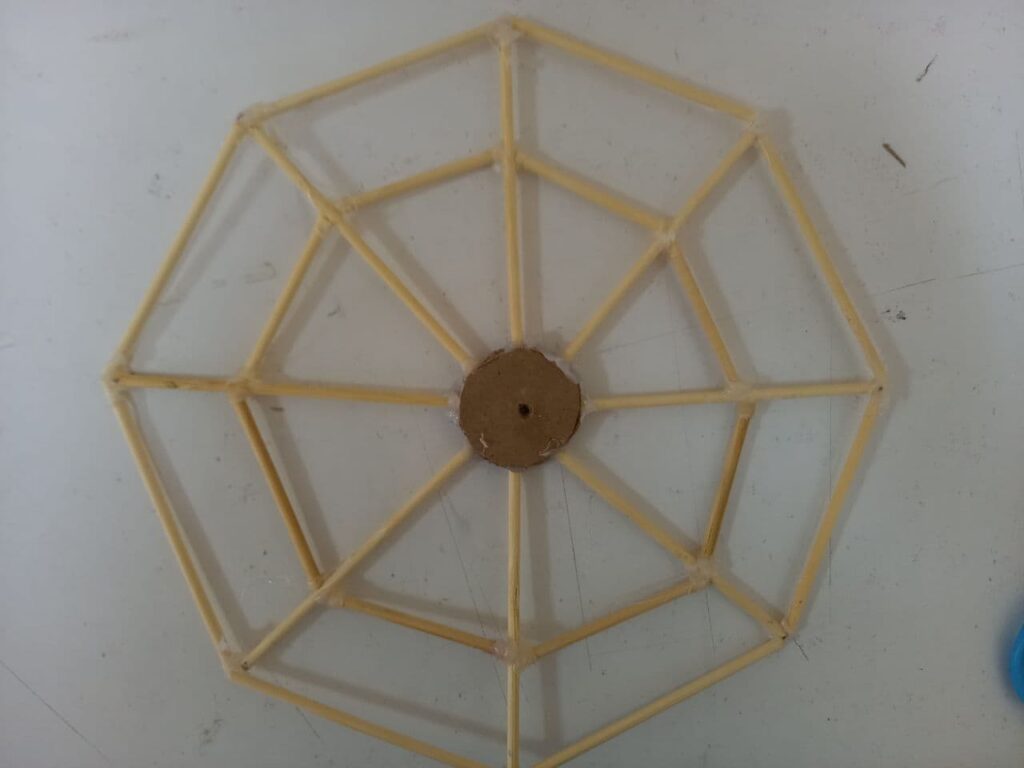
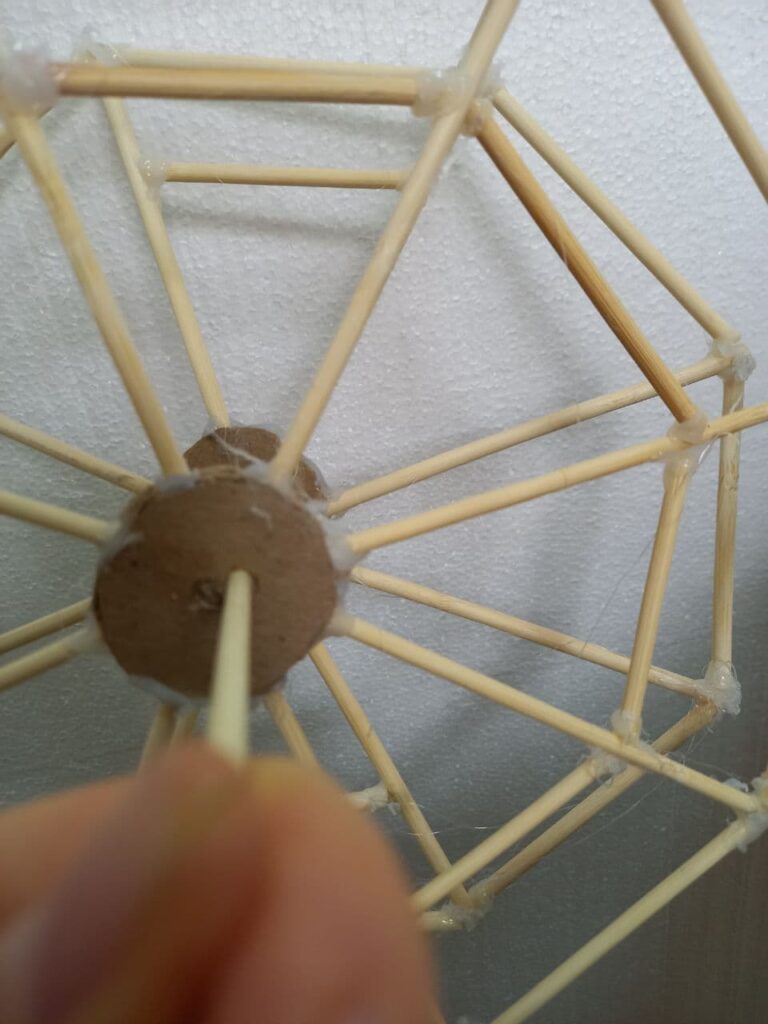
Step 5 . We make the same second wheel, and connect both wheels with haste (so that there is a distance between the two wheels) insert a skewer in the middle (this will help to spin the wheel)
Homework
Find more information about the most popular Ferris wheel in the world