
Lesson 1
Objective
- learn how traffic lights work;
- learn about traffic signs;
- learn how to plan and build engineering structures;
- learn how to work together and in groups.
Expected results
Students should develop an understanding of:
- designing traffic signal systems
- Planning and construction of engineering projects
- Communication skills for cooperating with a teacher and other students
- At least one type of traffic light system
Interdisciplinary communication
Computer science (Arduino, write code)
Physics (working with current, electronics, wiring diagrams)
Introduction
The first traffic light was installed on 10 December 1868 in London, outside the British Parliament. Its inventor, John Peake Knight, was an expert in railway semaphores. It was operated by hand and had two semaphore arrows: those raised horizontally signalled ‘stop’ and those lowered at a 45° angle signalled caution. At night a rotating gas lamp was used which gave respectively a red and a green signal. The traffic light was used to make it easier for pedestrians to cross the street and its signals were intended for vehicles – while pedestrians were walking, vehicles had to stand still. On 2 January 1869, a traffic light gas lamp exploded, injuring the policeman controlling the traffic light.
The first automatic traffic light system (capable of switching without direct human intervention) was developed and patented in 1910 by Ernst Sirrine of Chicago. His traffic lights used non-illuminated Stop and Proceed inscriptions.
The inventor of the first electric traffic light is considered to be Lester Weir of Salt Lake City, Utah, USA. In 1912 he designed (but not patented) a traffic light with two circular electric signals (red and green).
On August 5, 1914 in Cleveland, the American Traffic Signal Company installed four electric traffic signals designed by James Hogue at the intersection of 105th Street and Euclid Avenue. They had a red and green signal and, when they switched, they made a beeping sound. The system was controlled by a policeman sitting in a glass booth at the intersection. The traffic lights gave the same rules as today in the US: turn right at any time if there was no obstruction, and turn left at the green signal around the centre of the intersection.
In 1920, three-colour traffic lights using a yellow signal were installed in Detroit and New York. The authors of the inventions were William Potts and John F. Harriss, respectively.
In Europe, similar traffic lights were first installed in 1922 in Paris, at the intersection of the Rue de Rivoli and Boulevard de Sebastopol, and in Hamburg, on Stephansplatz square. In England – in 1927 in the city of Wolverhampton.
The first traffic light in the USSR was installed on January 15, 1930 in Leningrad at the intersection of Prospekt 25 of October and Volodarsky (now Nevsky and Liteiny Avenues). And the first traffic light in Moscow appeared on December 30 of the same year at the corner of Petrovka and Kuznetsky Most.
The name of the American inventor Garrett Morgan, who patented an original traffic light design in 1923, is often mentioned in connection with the history of traffic lights. He made history due to the fact that for the first time in the world he wrote in his patent the purpose of the device, in addition to the technical design: “The purpose of the device is to make the sequence of passing through an intersection independent of the person sitting in the car”.
In the mid-1990s, green LEDs of sufficient brightness and colour purity were invented, and experiments with LED traffic lights began. Moscow became the first city in which LED traffic lights began to be used en masse.
Resources used:
[1] https://svetofor-zom.ru/svetofor-ponyatiya-istoriya-naznachenie.html
So, let’s create a model of the road in which we put our traffic light.
Practical part
Dimensions are optional, you can do as you like
If you can do it better, write in a comment
1. Take a cardboard measuring 55 cm x 33 cm and draw a model of the top of the box on it. Cut out the resulting piece
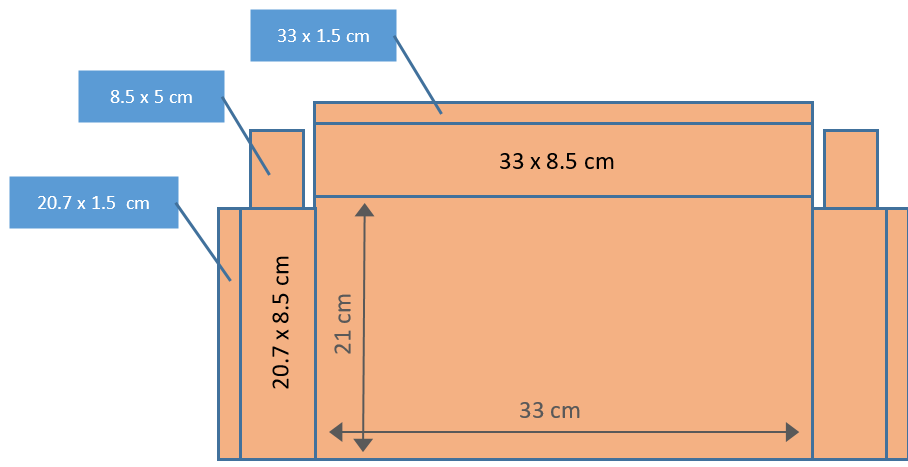
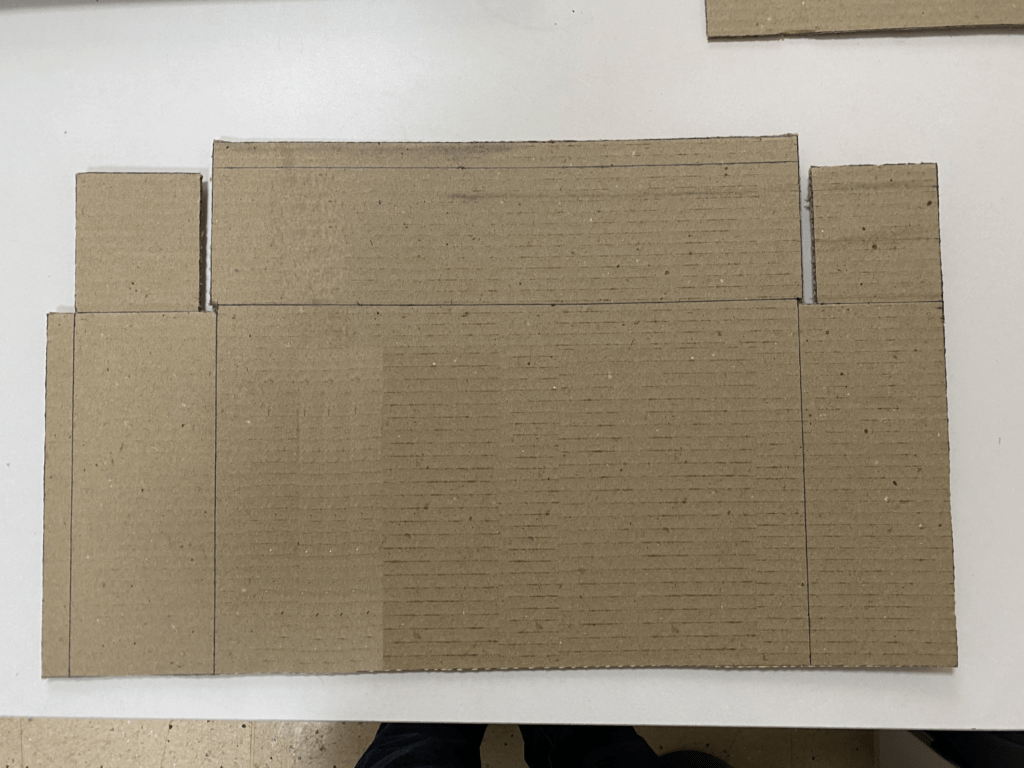
2. Take cardboard measuring 25 cm x 37 cm and draw a model of the bottom of the box on it. Cut out the resulting piece
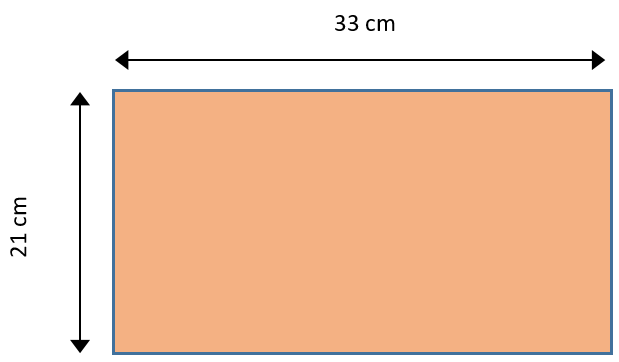
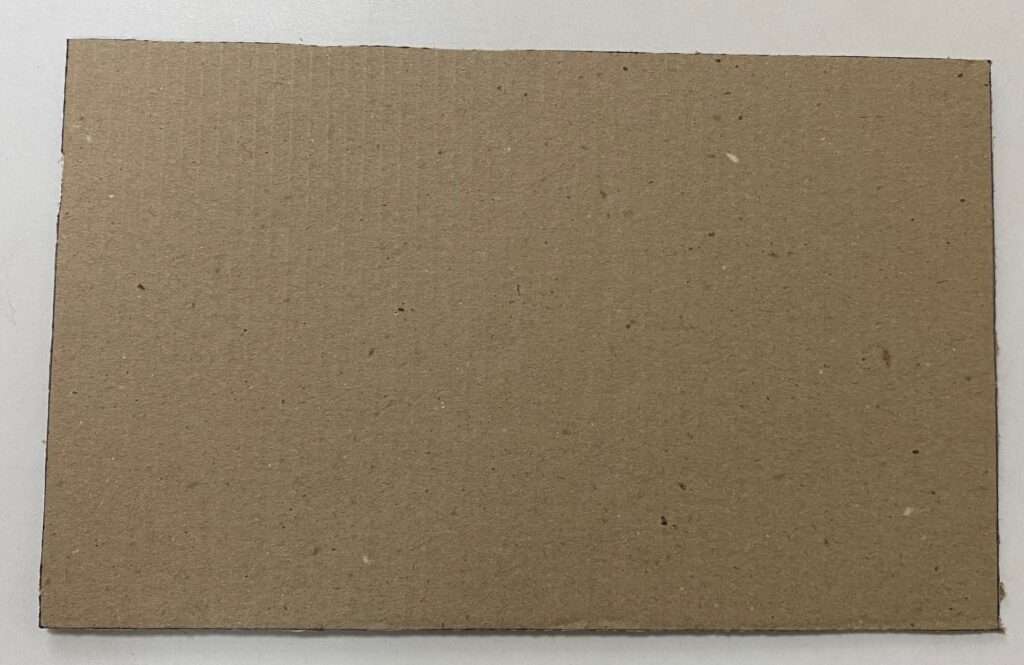
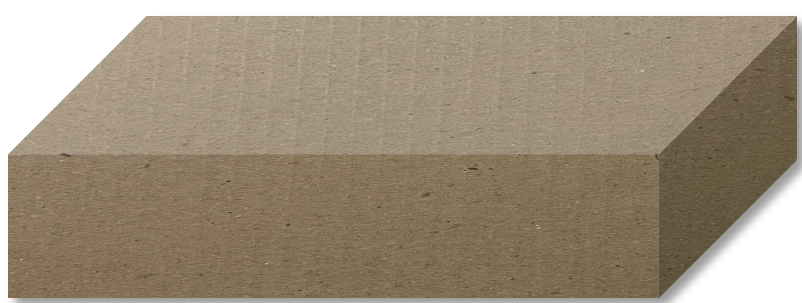
3. Glue the models together. The shape of the box should be as follows
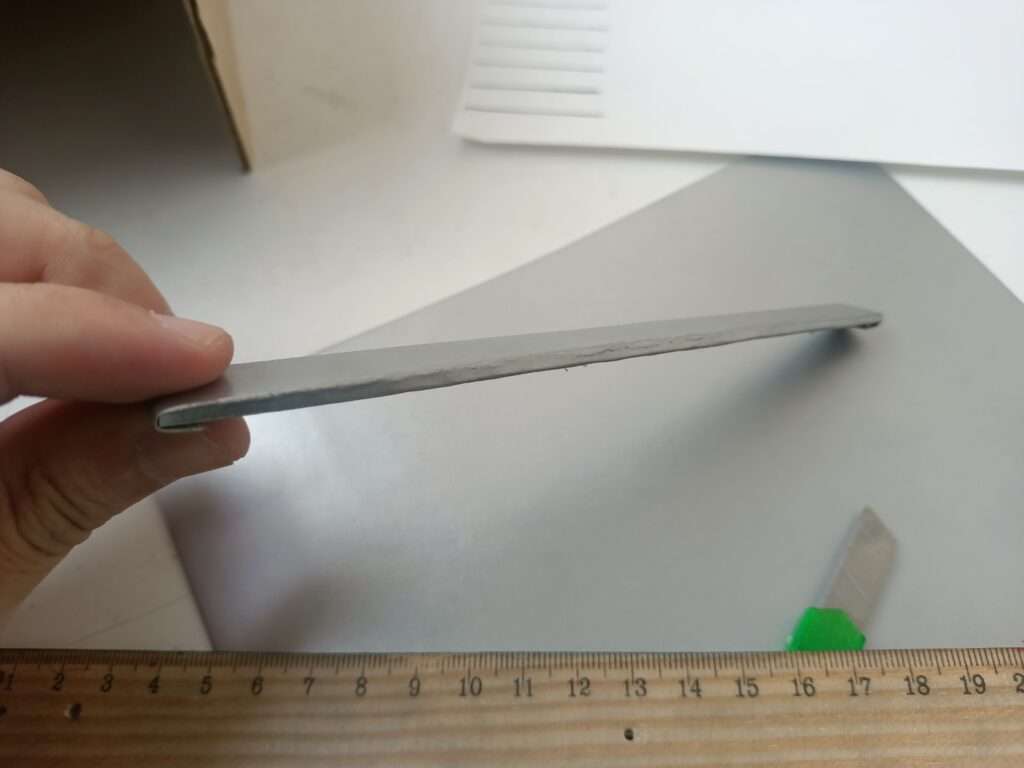
4. Making a border
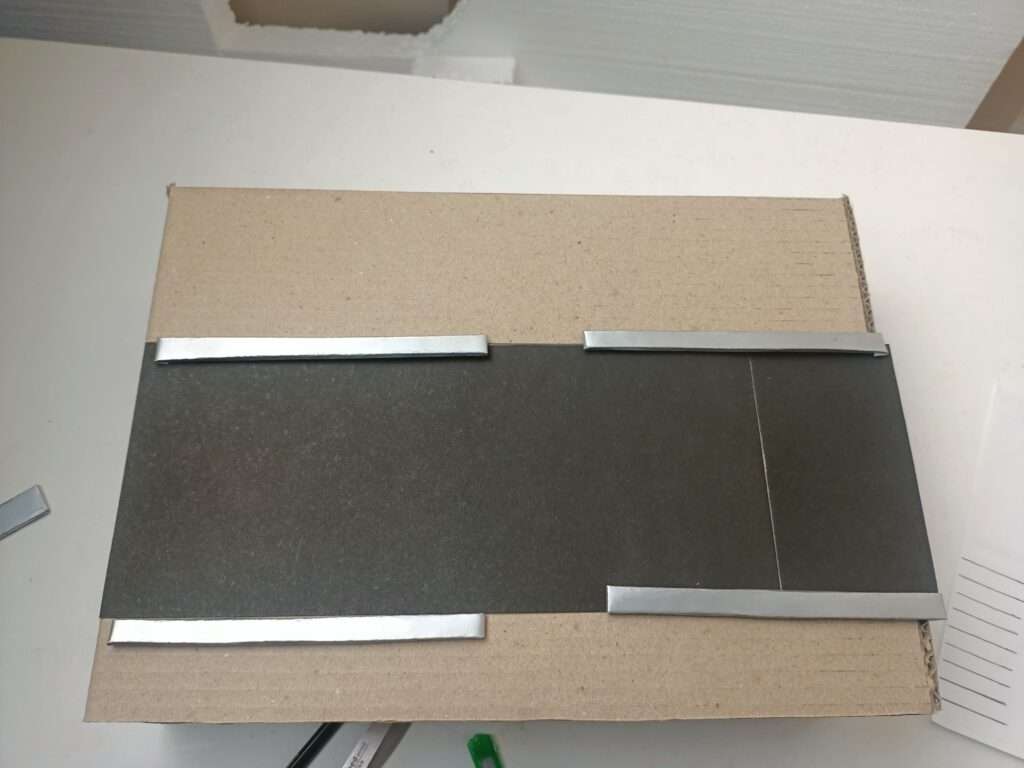
5. Glue our kerb to the road
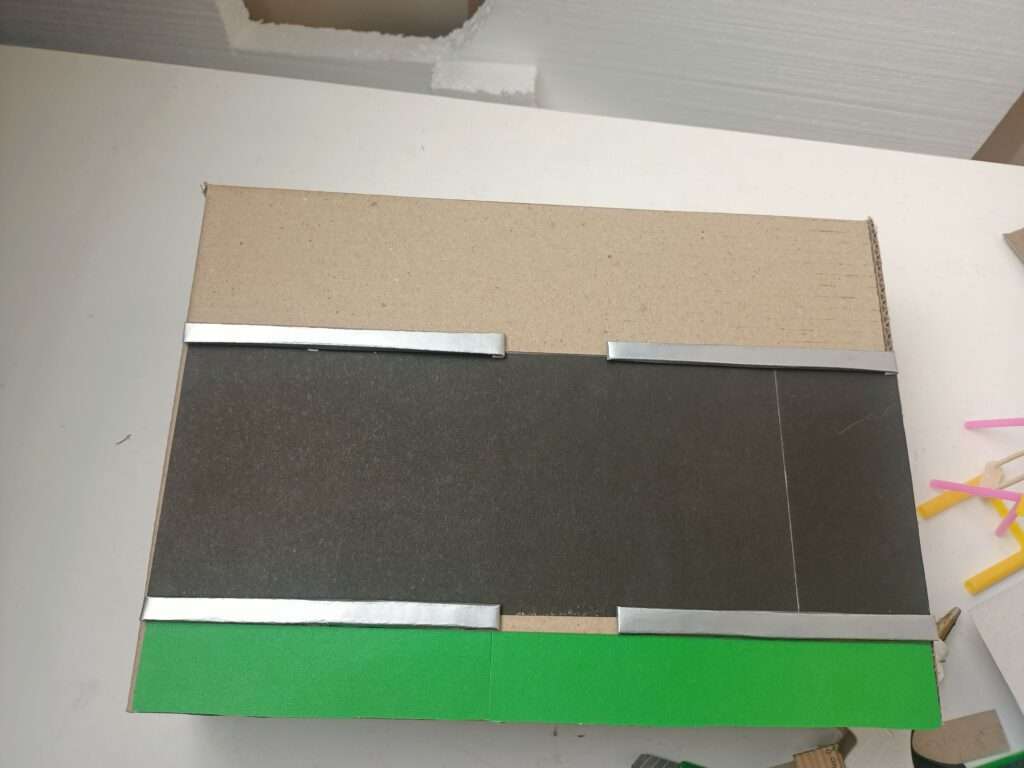
6. Вy the roadside, glue green paper as a lawn
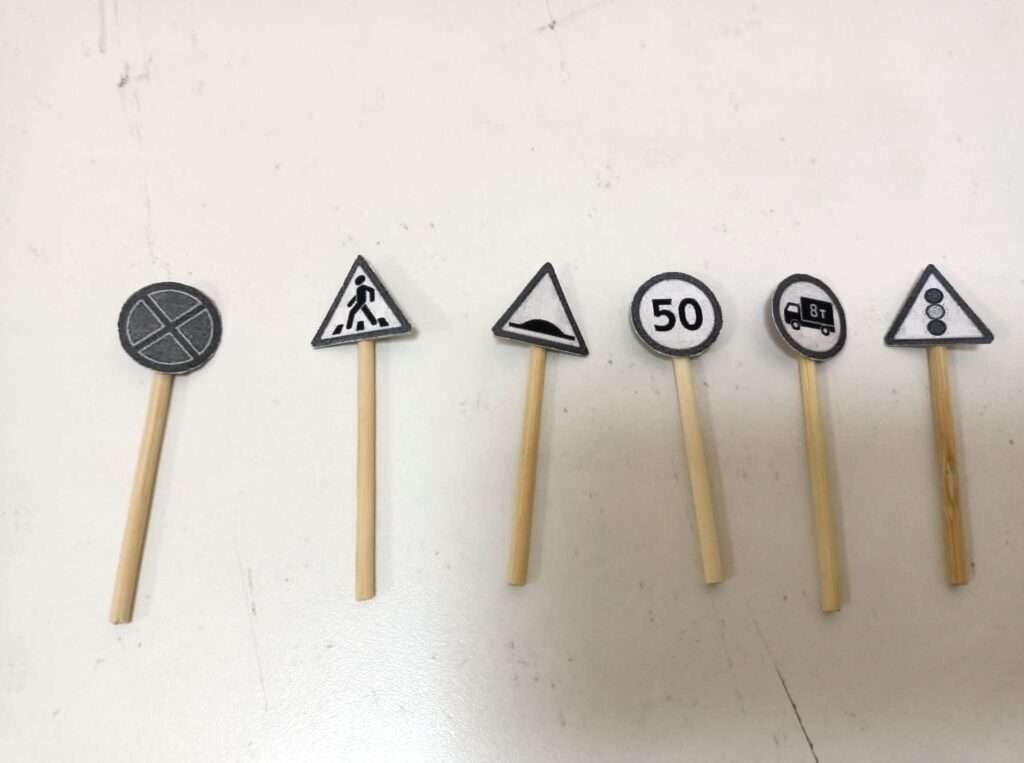
7. Making traffic signs out of cardboard paper
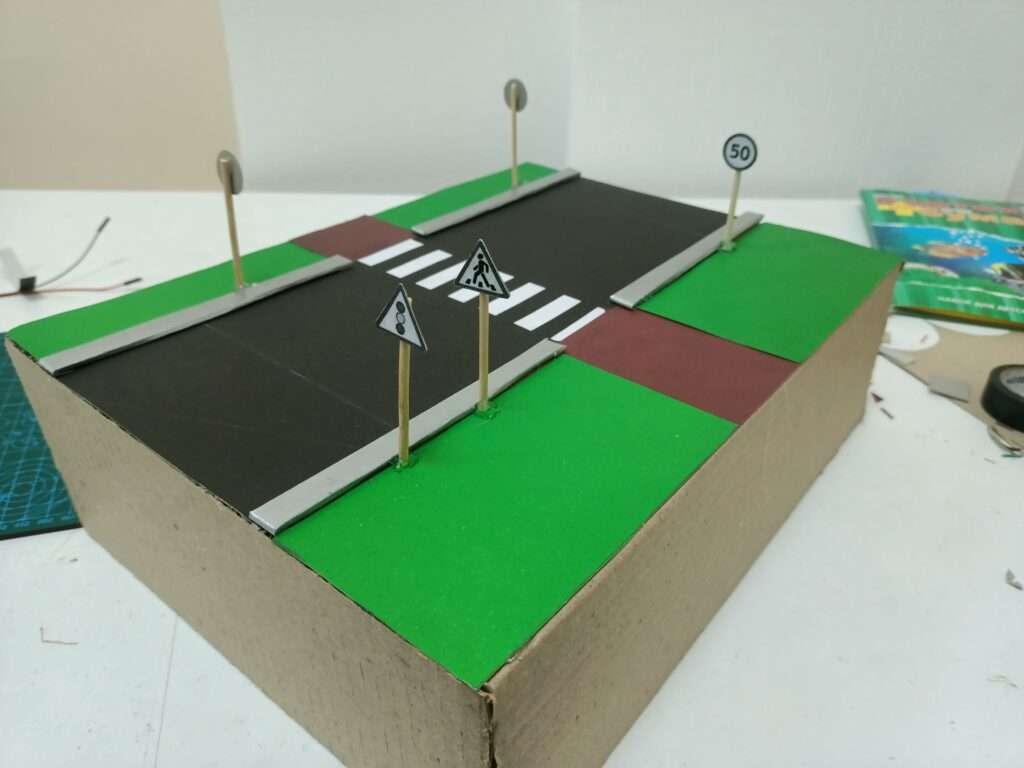
Our layout is ready