Lesson 1
Determination of vitamin C
The purpose of the work:
- to learn how to determine the amount of vitamin C in products by titration
- 8.1.2.5 describe the value of vitamins in the human body;
- 8.1.2.6 make a list of foods with a significant vitamin content;
- 8.1.2.7 determine the presence of vitamin C in food
Teacher’s Guide
- Children should do the work independently in groups of 3 people
- The workplace must be cleaned and put in order
Safety precautions:
Worksheet
Theoretical part
Vitamin C is an important nutrient that helps our body fight diseases and strengthens our immune system. It is found in foods such as citrus fruits, strawberries, kiwis, fresh vegetables and berries. It also helps our body absorb iron from plant foods, which is especially important for vegetarians and vegans. If you eat enough foods rich in vitamin C, then you can strengthen your immune system and stay healthy.
Today we will use the method of iodometry to measure the amount of vitamin C in products using the example of orange juice.
We will use a technique called titration. Titration is a method that is used to determine the concentration of a substance in a solution. For titration, a known amount of a solution with a known concentration (called a titrant) is used, which is added to the analyzed solution until a chemical reaction occurs between these solutions. When the reaction is completed, the amount of added titrant is determined and this value is used to calculate the concentration of the analyzed solution.
C6H¬8O6 + I2 = C6H6O6 + 2HI
Brown Colorless
The essence of today’s experiment is that when vitamin C reacts with iodine, it discolors the brown color of the iodine solution. Therefore, as soon as the analyzed solution, that is, the juice, ceases to discolor the added titrant, that is, the iodine solution, then we will be able to find a lot of vitamin C in the juice.
Practical part
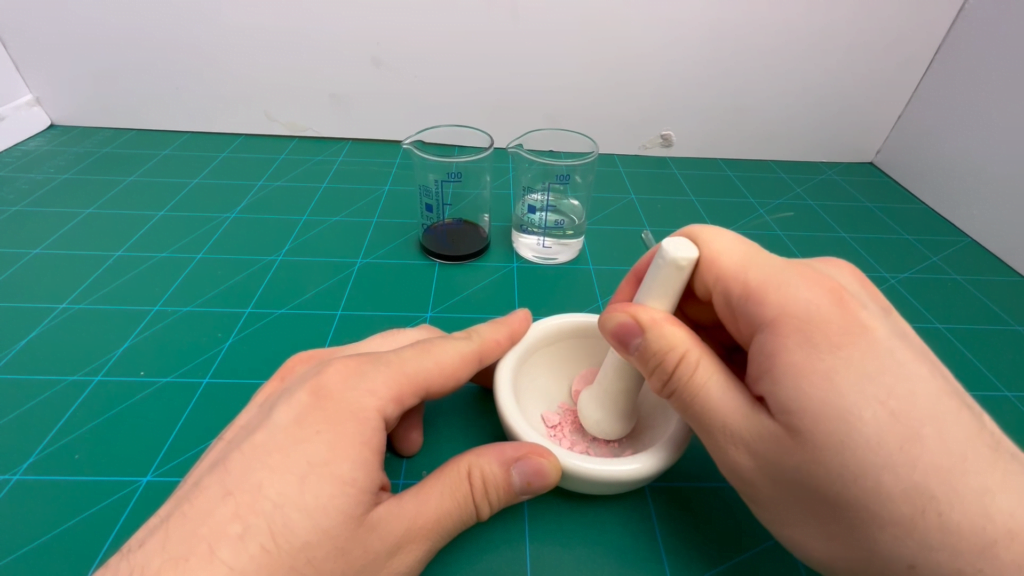
1) Crush ascorbic acid in a mortar to a powder state
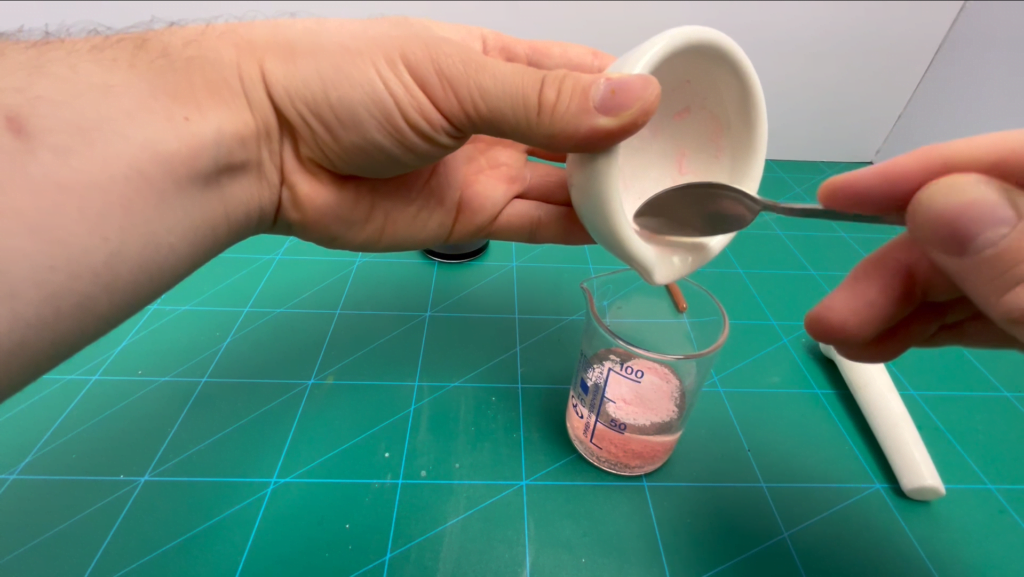
2) Dilute the powder in 50 ml of water
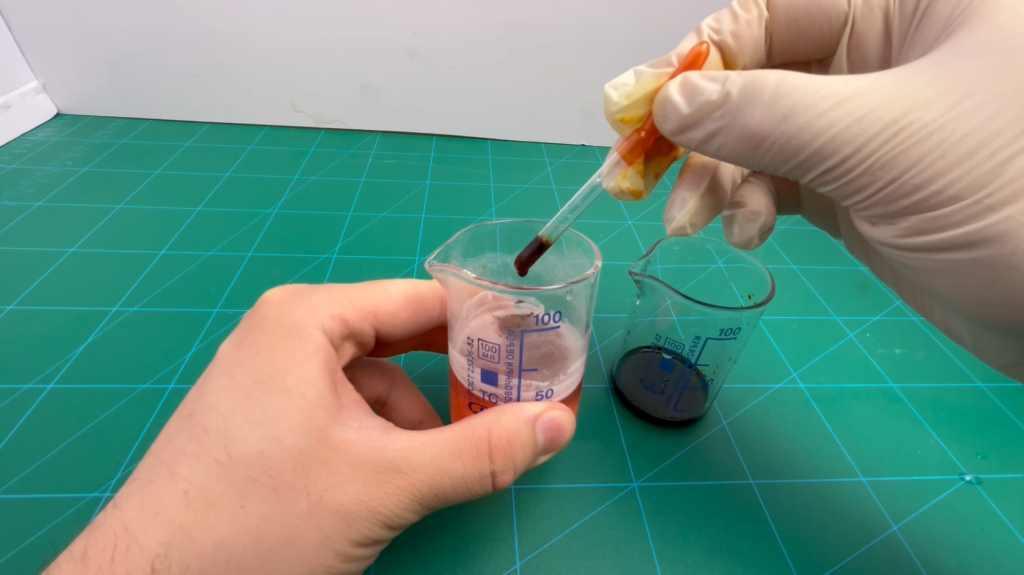
3) Start adding 1-2 drops of iodine and stir the solution thoroughly until the iodine dissolves. As soon as the iodine stops dissolving in water and the color of the solution becomes darker, stop adding iodine and write down the result. We’ve finished the calibration.
4) Now we can titrate the juice. Pour 50 ml of juice into a measuring cup.
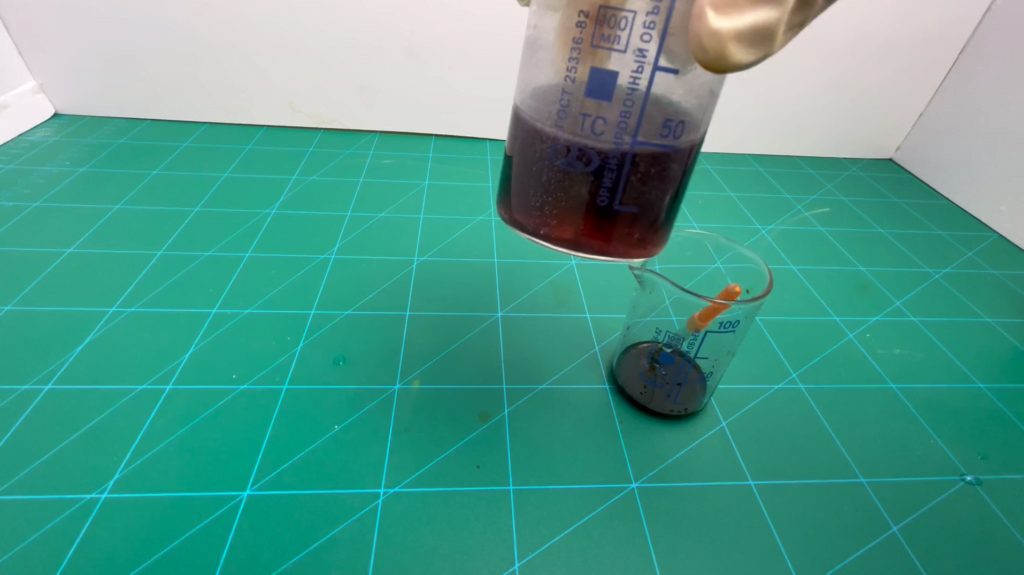
5) Add 1 drop of iodine and stir the juice thoroughly until the iodine dissolves and the natural color returns. As soon as the juice starts to darken, stop titration and record the number of drops.
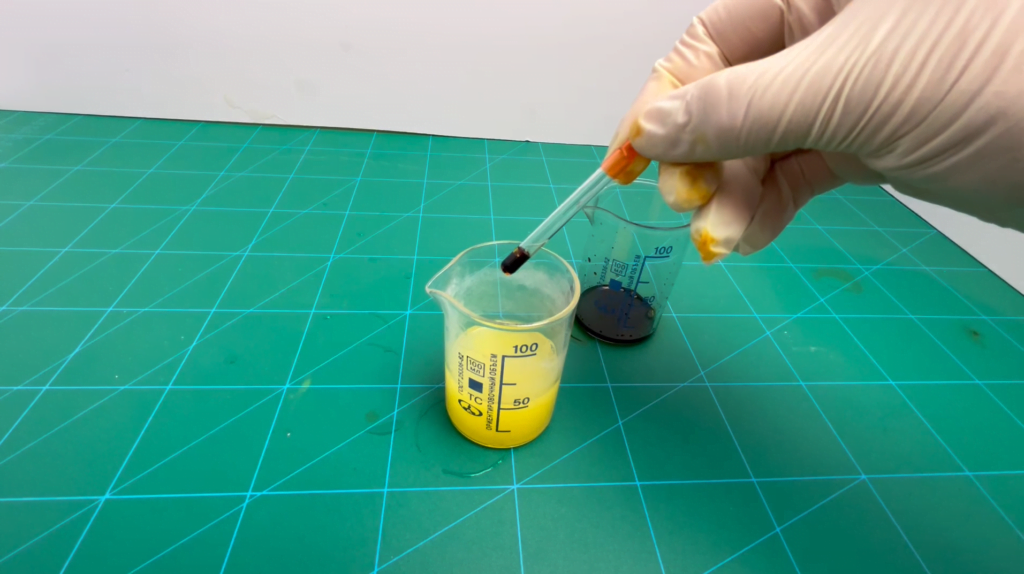
6) Repeat this procedure for other juices. Fill in the table.
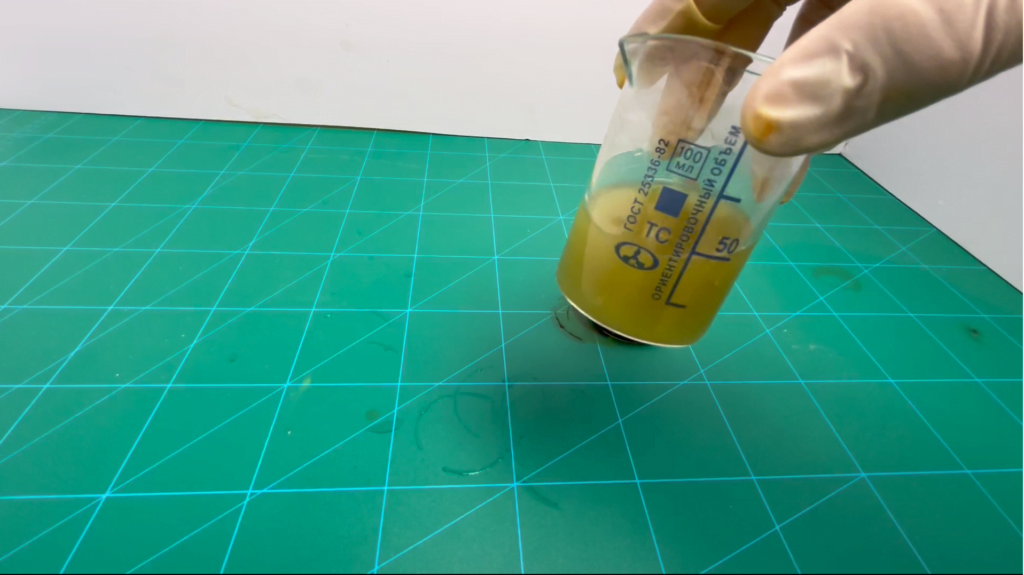
| Solution | Number of iodine drops |
| Ascorbic acid | |
| Orange juice | |
| Pineapple juice | |
| Apple juice |
7) Now you can do the calculations. Calculations are made using a proportion. For example:
If it took 40 drops of iodine to titrate 50 ml of a solution with a mass of ascorbic acid 50 mg, and 20 drops of iodine to titrate 50 ml of juice, then we get the following proportion:
(50 mg)/(40 drops)=(x mg)/(20 drops)
Solving the proportion we get:
x= (50 mg *20 drops) /(40 drops)=25 mg
So there was 25 mg of vitamin C in 50 ml of juice