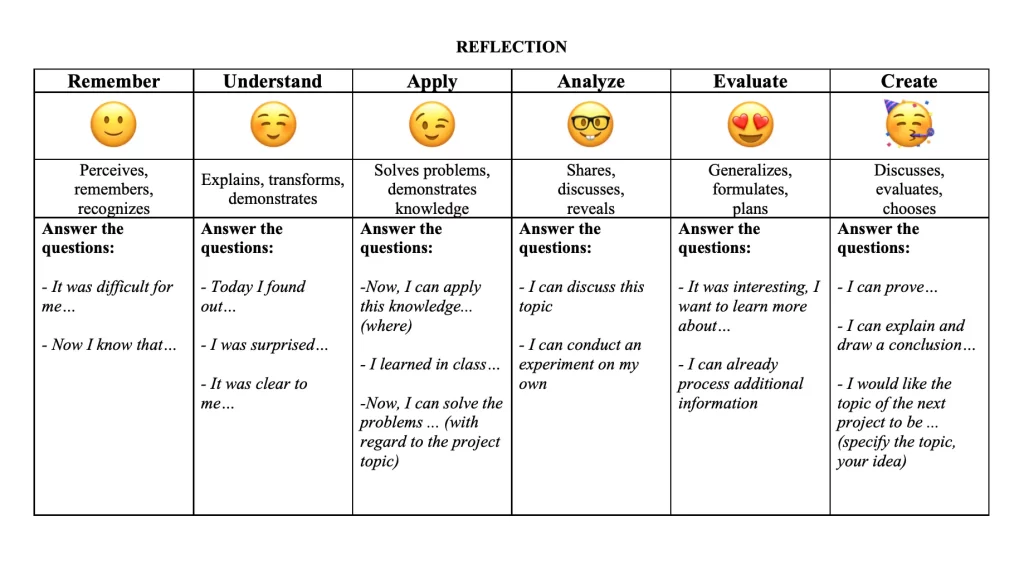
Task

Heat exchange
Objective of the work
- Explain the physical meaning of heat and heat exchange.
- Determine the amounts of heat of water at different temperatures.
- Be able to use the laboratory tools in the activity.
Teacher’s guide
In the practical work, the students work in groups.
The students should familiarise themselves with topics such as heat/heat exchange/quantity of heat.
Before starting the practical work, familiarise and provide the students with all the necessary materials.
Give the students a worksheet to complete the lab work. You can download the worksheet from the Worksheet link:
Familiarise the students with safety procedures
Requirements for laboratory work for the students
Laboratory works are carried out by students in the classroom under the direct supervision of the teacher and with strict adherence to safety and health requirements.
Laboratory work is accompanied by measurements and calculations. A report shall be prepared on the results of the work.
The report on the performance of laboratory work by the student shall contain:
- The name and number of the laboratory work;
- The name of the theme of laboratory work;
- The purpose of laboratory work;
- Brief description of the laboratory system (if any);
- The methods of measurement;
- The course of the laboratory work;
- Results of measurements and calculations (usually in the form of tables) with obligatory indication of the units of measurement;
- The results of the individual measurements; add a photo guide
- The results of processing the experimental data obtained with an estimate of the error of measurements;
- Graphs, charts, drawings;
- Basic calculation formulas with the indication of the quantities to be measured (all the alphabetic values of the formulas must be explained);
- Calculation and detailed analysis of the results;
- Conclusions.
Provide this material (PBL rubrics) to students for assessment so that:
- Students understand in advance what criteria they need to prepare,
- Students will be able to assess their own peers accordingly.
Practical part of the work
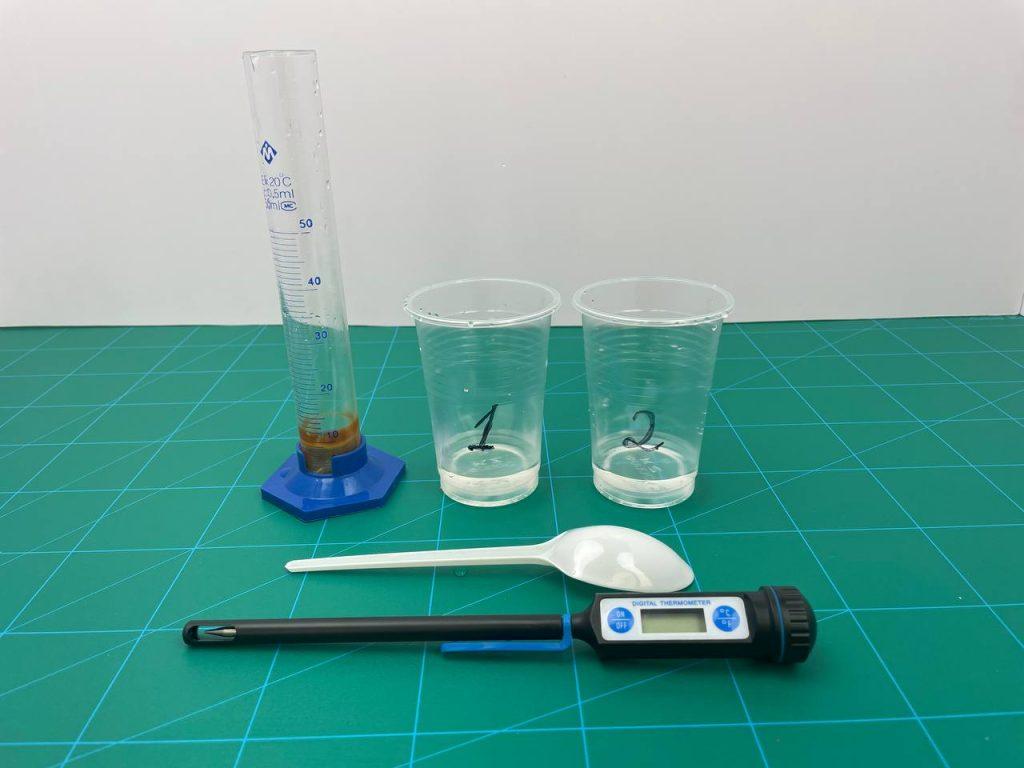
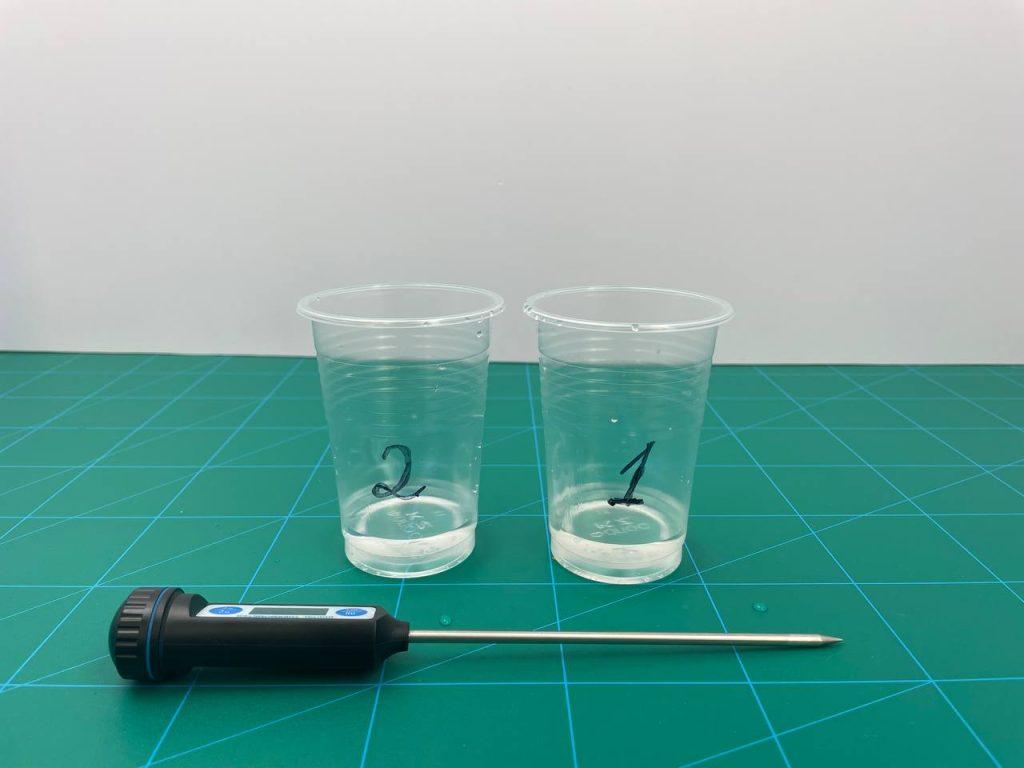
Step 1: Before you begin, prepare the necessary equipment
- Hot water – beaker №1
- Cold water – beaker №2
- Measuring cylinder (beaker)
- Spoon or stick to mix any water
- Thermometer
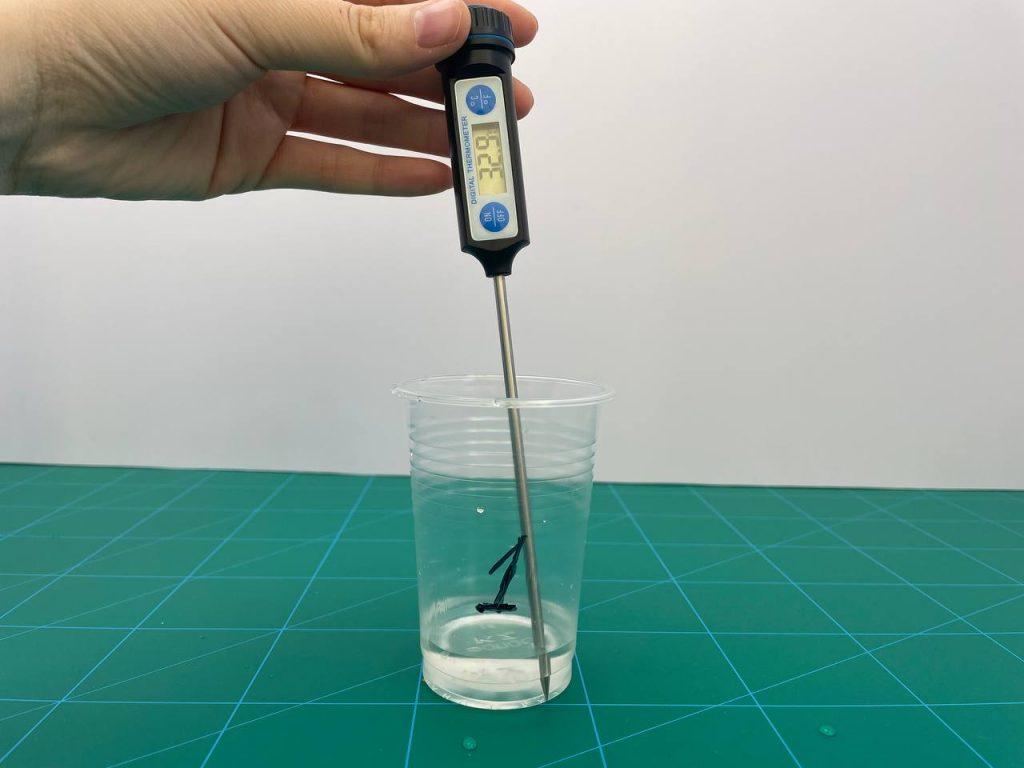
Step 2: Measure the temperature t of the hot water
Hot water temperature t =32.9 ºC
Step 3: First of all, determine the mass of hot water. To do this –
- pour 1 cup of hot water into a measuring cylinder
- find the V volume of hot water. Volume of hot water V = 22 ml = 22×10^-6 m3
- look up the density of water in the table. Water density ρ = 1000kg / m3
- calculate the mass of hot water using the formula m = ρ×V
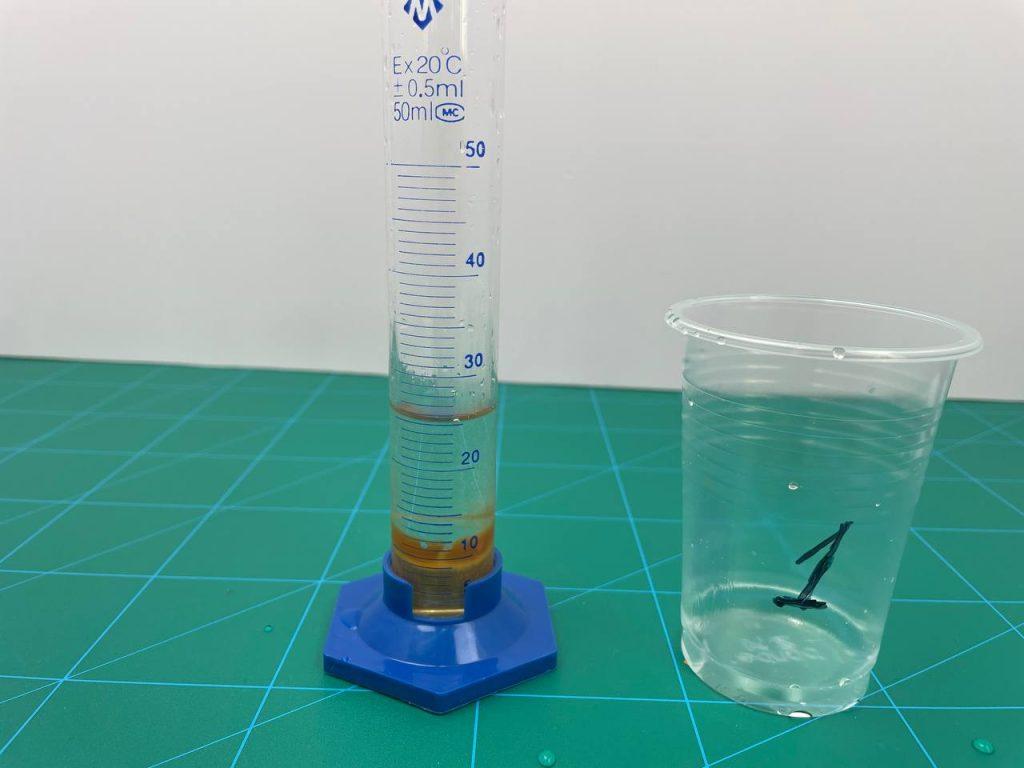
Result
Mass of hot water m = 0.022 kg

Step 4: Measure the temperature of the cold water in the 2nd beaker
Cold water temperature t=20.6 ºC
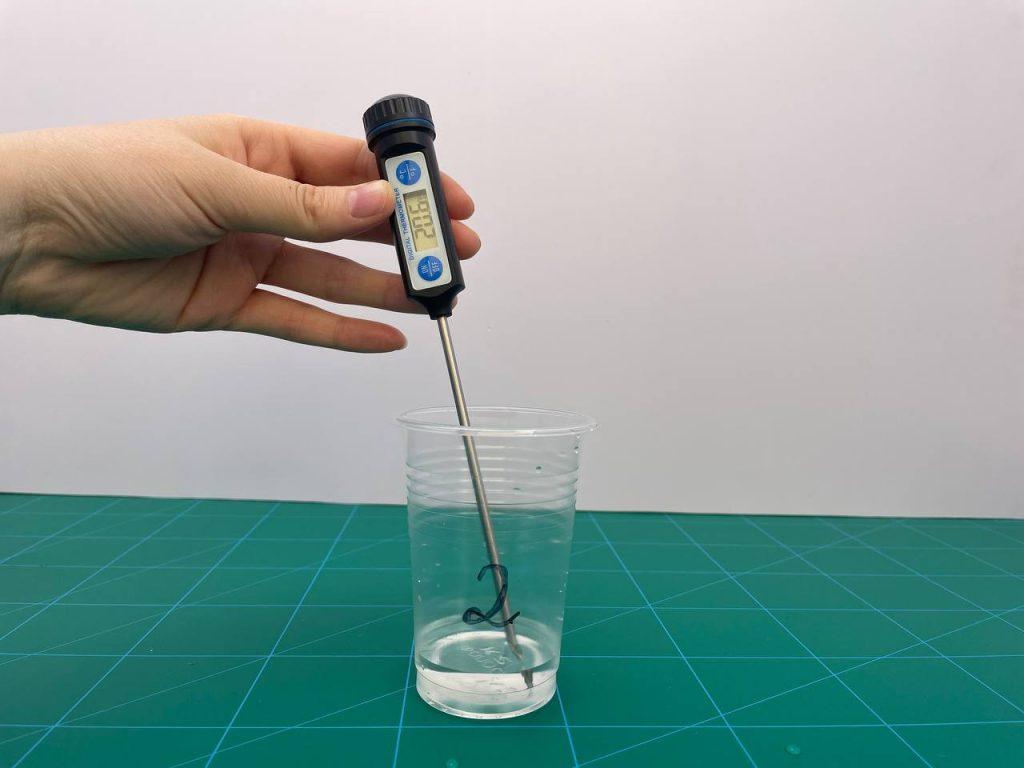
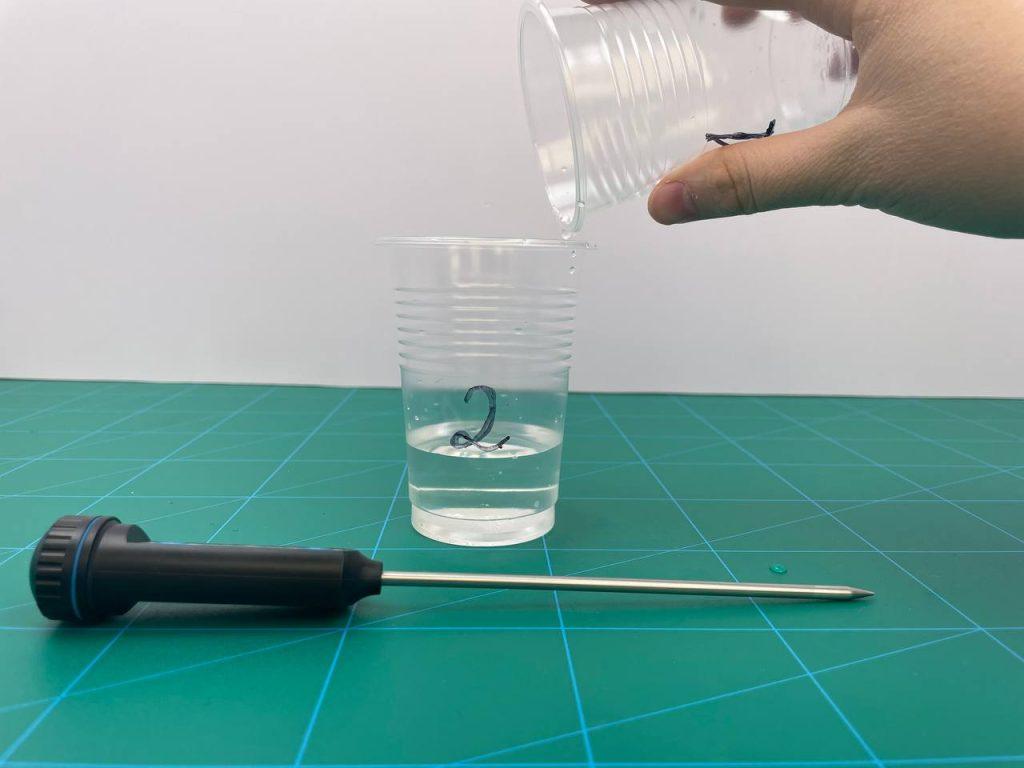
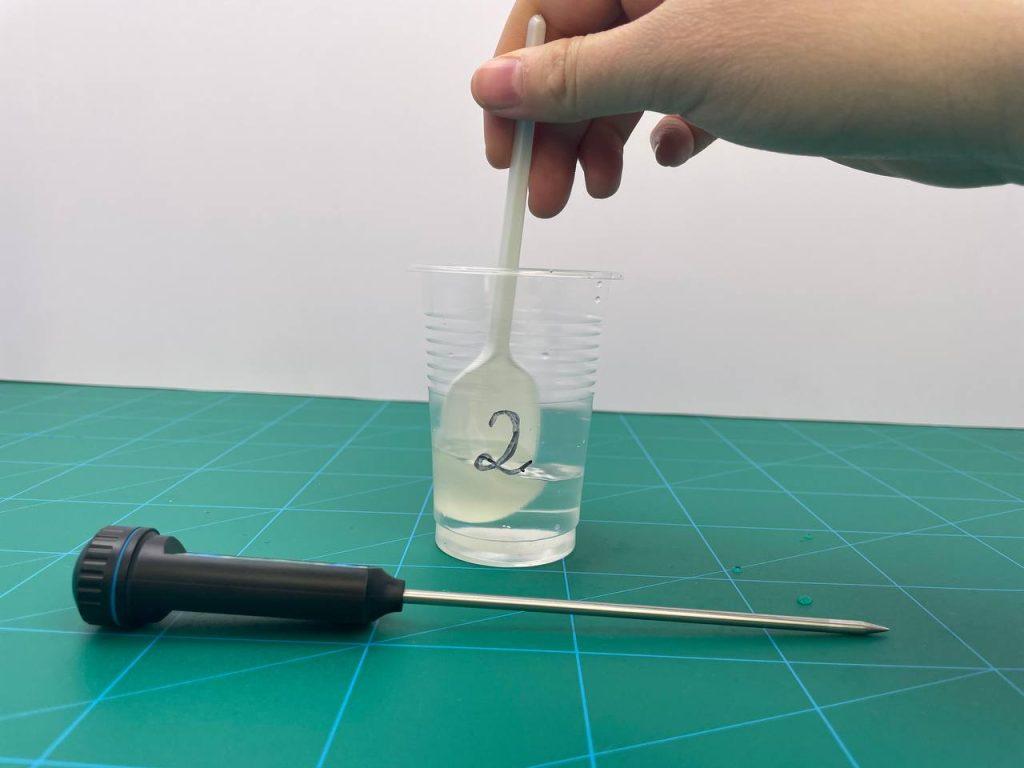
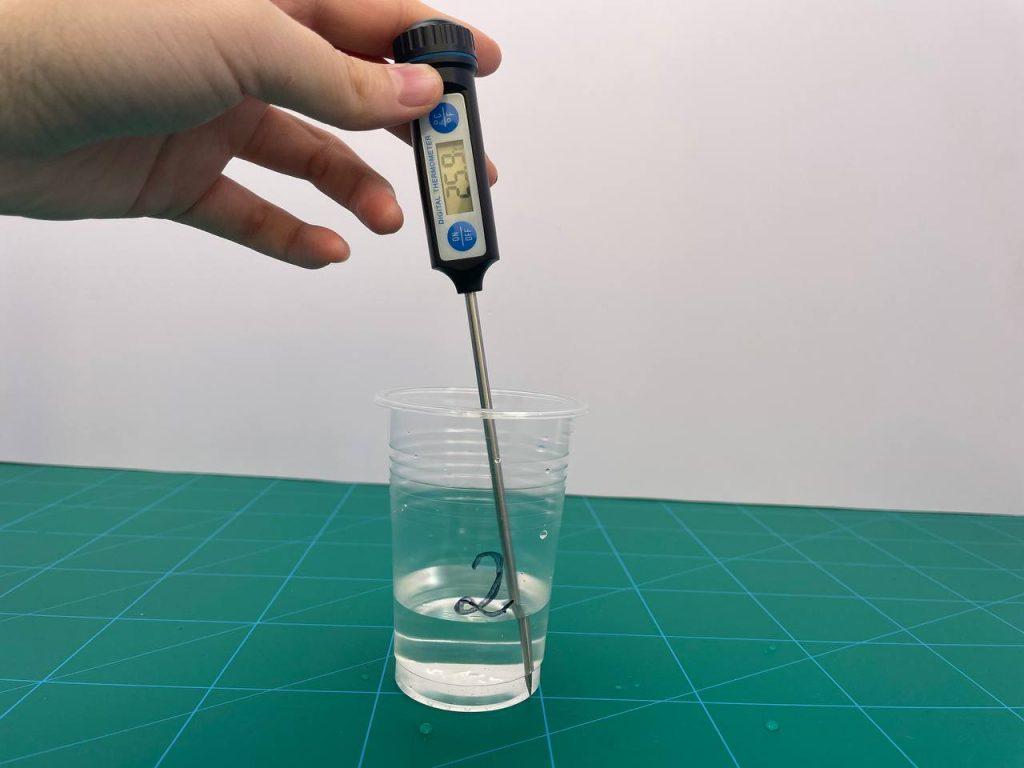
Step 5: Pour hot water over the cold water and stir. Then measure the temperature of the mixed mixture
Mixture temperature t =25.9 ºC
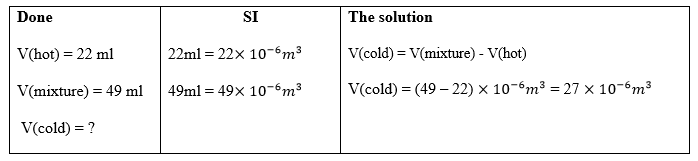
Step 6: Determine the volume of cold water. To do this –
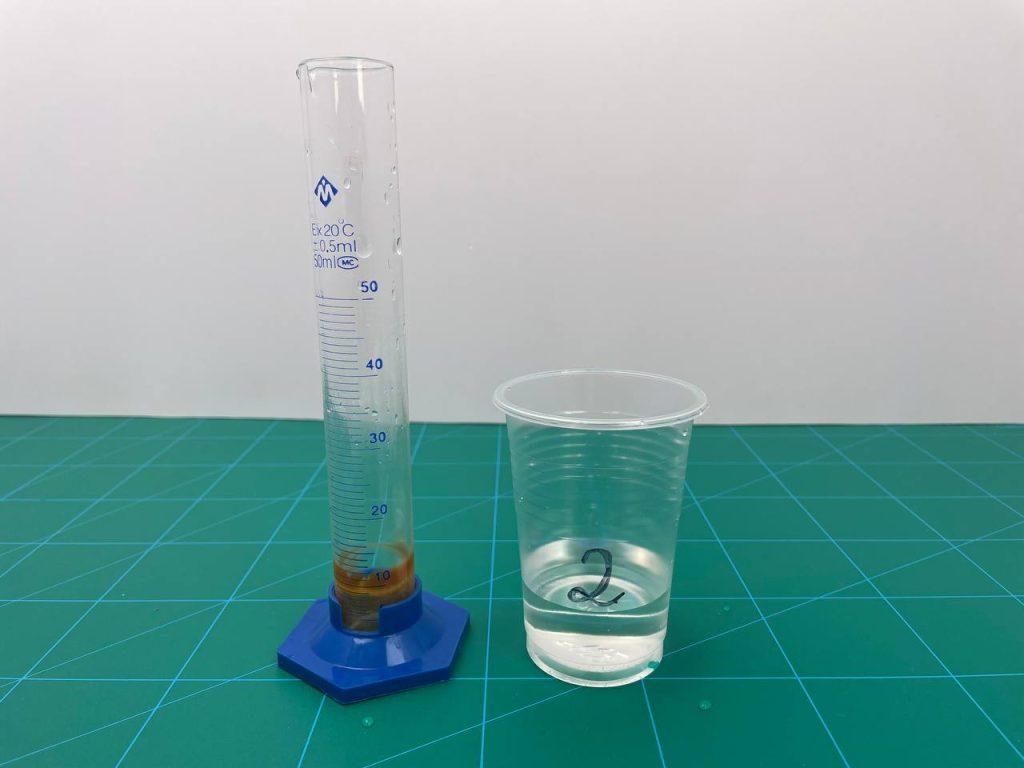
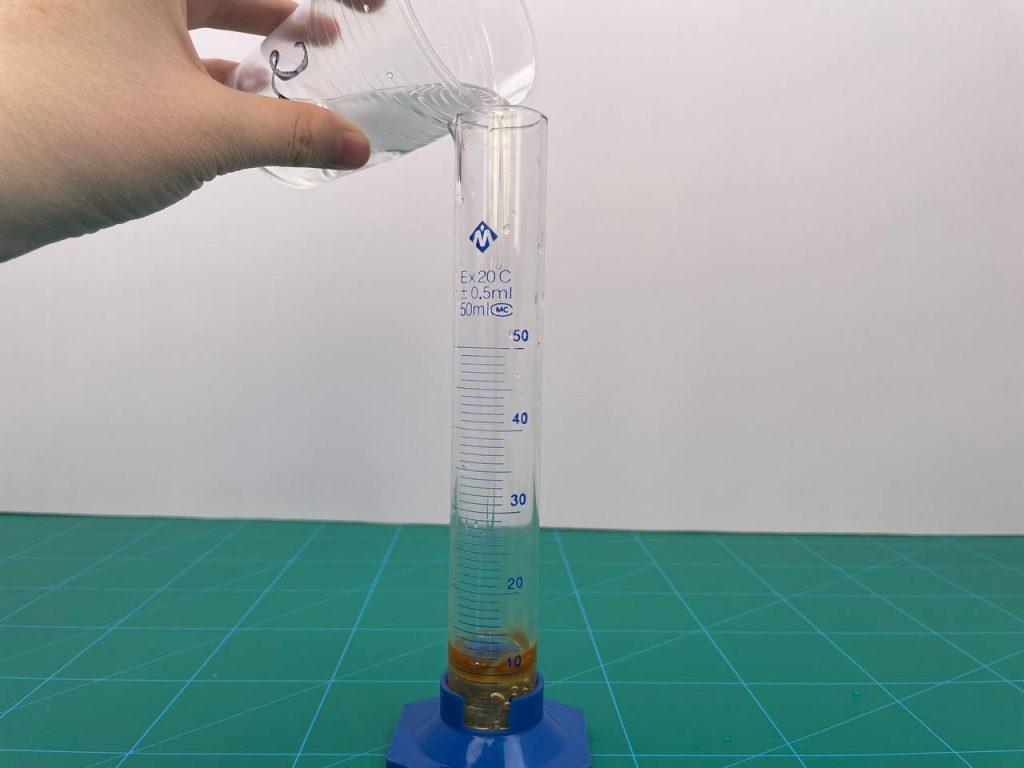
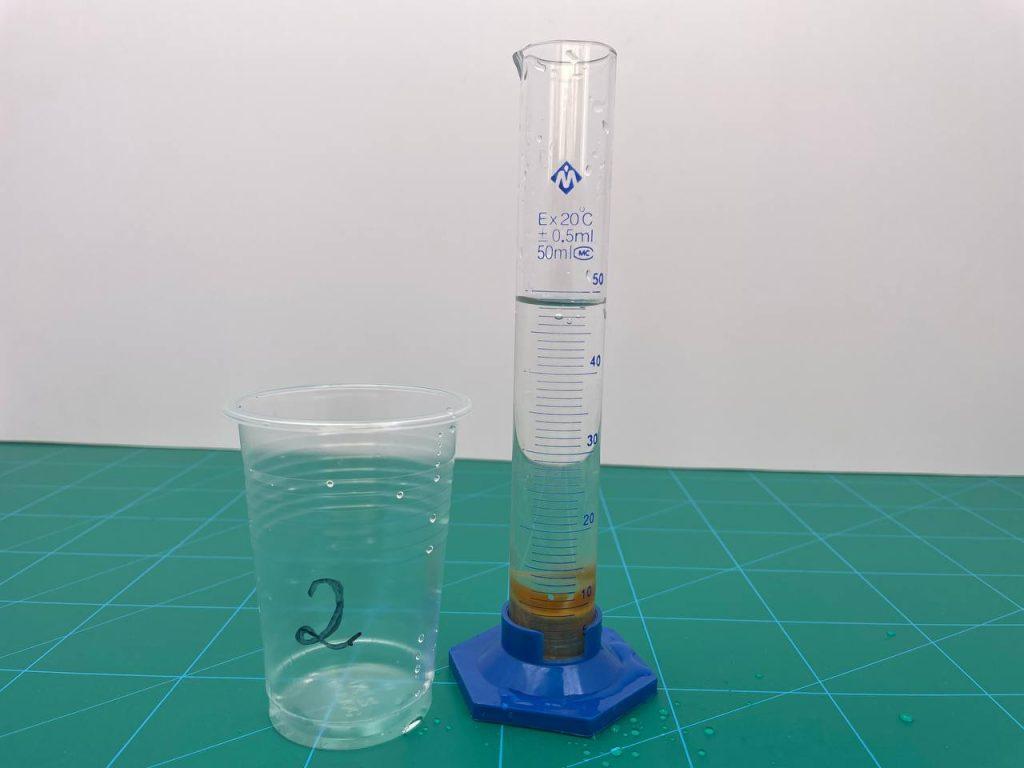
- pour the water mixture into a measuring cylinder
- determine the volume V of the water mixture . Volume V = 49 ml = 49×10^-6 m3
- to find the volume of cold water, reduce the volume of hot water from the volume of water in the mixture
- V (cold) = V (mixture) – V (hot)
Result
Cold water volume V= 27 ml = 27×10^-6 m3
Step 7: Determine the mass of cold water. To do this.
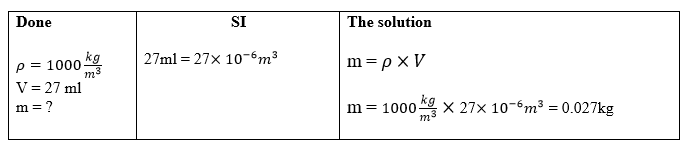
- see the density of water in the table. Water density ρ = 1000kg / m3
- calculate the mass of cold water using the formula m = ρ×V
The result is
Vass of cold water m = 0.027 kg
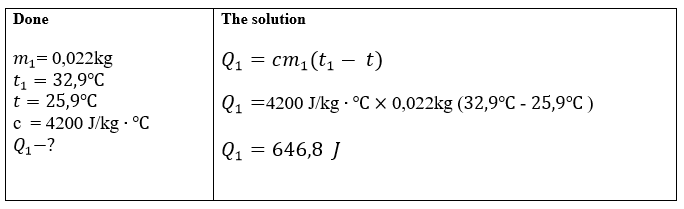
Step 8: When the hot water has cooled to the temperature of the mixture, calculate the amount of heat released using the formula below
- Q1 – is the amount of heat released by the hot water when it cools down to the temperature of the mixture
- c – specific heat capacity of water
- m1 – mass of hot water
- t – temperature of the water in the mixture
- t1 – temperature of hot water
Warning! The specific heat capacity is a table value. You can download a table of the specific heat capacity of objects here Table
Calculation result
When hot water is cooled down to the mixture temperature, the amount of heat released is Q1 = 646.8 J
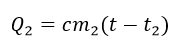
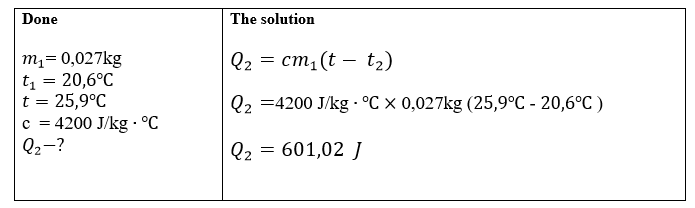
Step 9: When the cold water has warmed up to the temperature of the mixture, calculate the amount of heat produced using the formula below
Calculation result
When cold water is heated to the mixture temperature, the amount of heat produced is Q2 = 601.02 J
Step 10: Record all the results of the calculations in the table
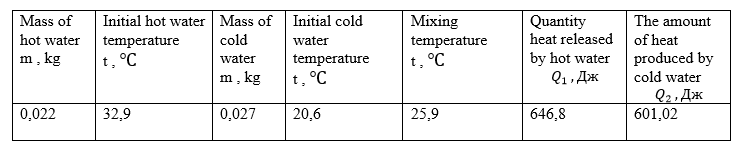
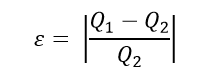
Step 11: Calculate the relative error of the experiment using the ratio :
where
- Q1 – amount of heat generated by hot water,
- Q2 – amount of heat produced by cold water.
Calculation result
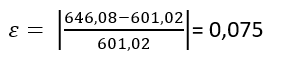
Step 12: Conclude on the work!
Conclusion
In this lab activity, the students were introduced to the topic of heat transfer and learned about the medium in which heat transfer occurs. They also compared the amount of heat produced by hot water with the amount of heat produced by cold water and made calculations.