Lesson 2
Topic of the laboratory work: “Study of the local ecosystem”
The purpose of the work:
- Find out what environmental factors exist and how they affect wildlife
- Learn to distinguish between biotic and abiotic factors
- Learn to identify and even measure some factors
Teacher’s Guide:
- Tasks are performed in groups of 2-3 people
- When working with a mercury thermometer, care must be taken not to break it
Expected goals:
- Students understand how to demonstrate the surface tension of water in practice.
Worksheet:
Safety technique:
Description
Soil acidity is a measure of how acidic or alkaline the soil is. This measure is measured on a scale from 0 to 14, where 7 is a neutral value. A value below 7 indicates acidic soil, and a value above 7 indicates alkaline. A well-balanced soil corresponding to plants usually has a slightly acidic reaction, with a value ranging from 6 to 7.5. Acidic soil can be a problem for some plants, as it can increase the level of aluminum dissolved in it and other toxic elements that make it difficult for plants to absorb nutrients.
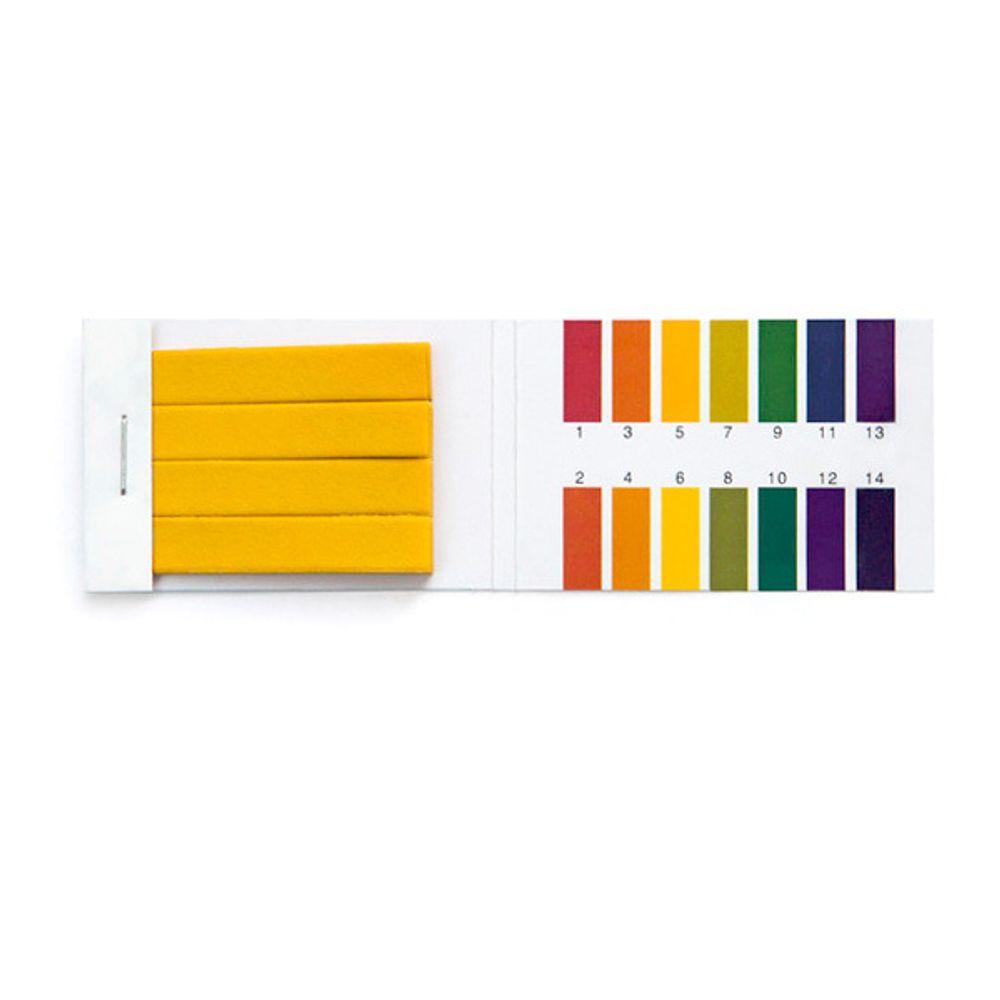
Litmus paper is a paper sheet that allows you to quickly determine whether a solution is acidic, alkaline or neutral.
This paper has the property of changing color depending on the acidity or alkalinity of the solution. The red litmus indicator turns blue in alkaline solutions, and the blue litmus indicator turns red in acidic solutions. If the solution does not show any changes in the color of the litmus paper, it means that it is neutral.
Litmus paper is a simple and affordable tool for quickly and easily checking the acidity or alkalinity of various solutions, such as water, juices, urine and other liquids. It is often used in chemical laboratories, as well as at home to check the quality of water and other liquids.
List of necessary equipment
- Cup
- Water
- Shoulder blade
- A piece of gauze
- Litmus paper
Practical part
1) Scoop up a small amount of earth with a spatula
2) Put the earth in gauze and tie it up to make a bag of earth
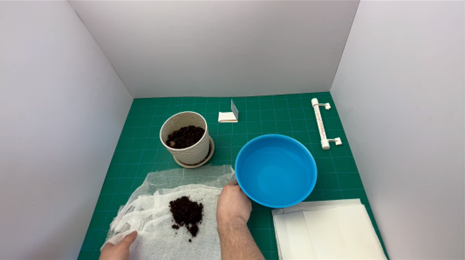
3) Put the gauze with earth into a bowl of water and hold for 5 minutes
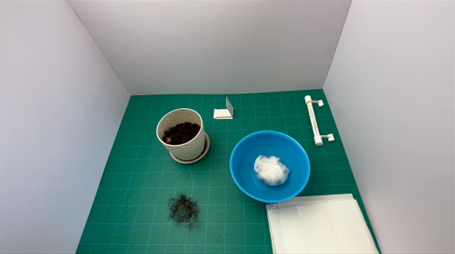
4) Remove the gauze with the earth from the cup
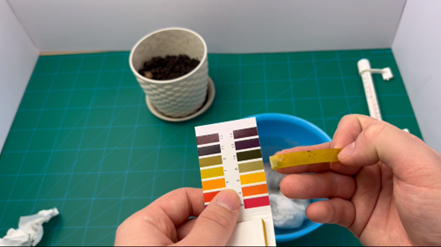
5) Dip the litmus paper into the water and hold it for 1 minute
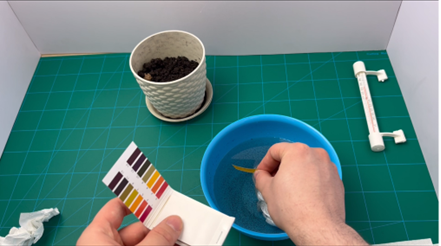
6) Write down the result and compare it with the table
Conclusion
In this laboratory work you learned how to determine air humidity and soil acidity
Rules for designing the laboratory work
The laboratory work should contain items in the following order:
- Laboratory work number
- Topic name
- Purpose of the work
- Hypothesis
- Brief description of the theoretical part
- Equipment
- Steps in the correct sequence
- Add a photo from the experiment (if you can’t insert a photo, you can add a picture)
- Give a brief description
- Write a brief discussion and explanation of the topic covered
- Write the conclusion of the work
- The workplace must be cleaned and put in order
Feedback