
Lesson 1
Purpose of the work:
- master the rules for making a herbarium;
- study rare plants of your region, as well as plants suitable for botanical collections;
- learn to classify and identify plants in your own region.
Expected results:
After completing the work, students can:
- develop teamwork skills
- be able to analyze and summarize the information received
- draw logical conclusions
Teacher’s Guide:
- Divide the students to 3-4 students in each group.
- Before starting laboratory work, read the safety rules:
- To download the worksheet, please follow this link:
Theoretical part
All living species including plants, animals, birds and also microbes have their own scientific names. For example,
- The scientific name of the tiger is presented as Panthera tigris. ‘Panthera’ represents the genus and ‘tigris’ represents a particular species or specific epithet.
- The scientific name of humans is presented as Homo sapiens. ‘Homo’ represents the genus and ‘sapiens’ represents a particular species.
- The scientific name of a garden tulip is presented as Tulipa gesneriana. ‘Tulipa’ represents the genus and ‘gesneriana’ represents a particular species.
A Biologist from all over the world follows a uniform set of principles for naming the organisms. There are two international codes which are agreed upon by all the biologists over the entire world for the naming protocol. They are:
- International Code of Botanical Nomenclature (ICBN) – Deals with the biological nomenclature for plants.
- International Code of Zoological Nomenclature (ICZN) – Deals with the biological nomenclature of animals.
These codes make sure that each organism gets a specific name and that name is globally identified.
The binomial nomenclature rules for writing the scientific names of organisms include the following:
- All the scientific names of organisms are usually Latin. Hence, they are written in italics.
- There exist two parts of a name. The first word identifies the genus and the second word identifies the species.
- When the names are handwritten, they are underlined or italicized if typed. This is done to specify its Latin origin.
- The name of the genus starts with a capital letter and the name of the species starts with a small letter.
Sources:
Practical part
Step 1. In this practical work you will need seeds and fruits of various plants. Collect and use seeds and fruits of plants that grow in your local region. Below is an instruction for a collection of samples collected in the Presidential Park of Astana
Step 2. As a backbone of the herbarium, use two sheets of A4 cardboard or A3 corrugated cardboard sheet. Create a frame around the cardboard using electrical tape.

Step 3. Glue the samples onto the cardboard one by one. Use your imagination to sequence and arrange the examples. Leave some space under each sample for sticking the plant name.
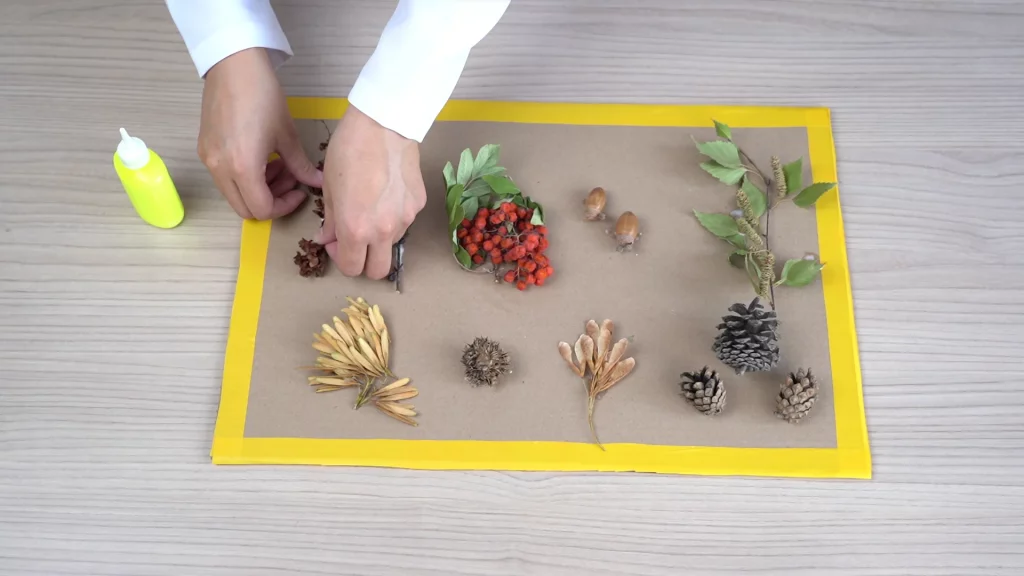
Step 4. Now, using binomial nomenclature, try to identify the type of plant. Pay attention to the small features of each plant. For example: type of leaves, their location, type of fruit, type of inflorescences (if any). Using keys, books, or online resources to identify collected specimens, determine the genus and species of the plant. You can use the online identifier by following the link: Определение растения – Плантариум (plantarium.ru)
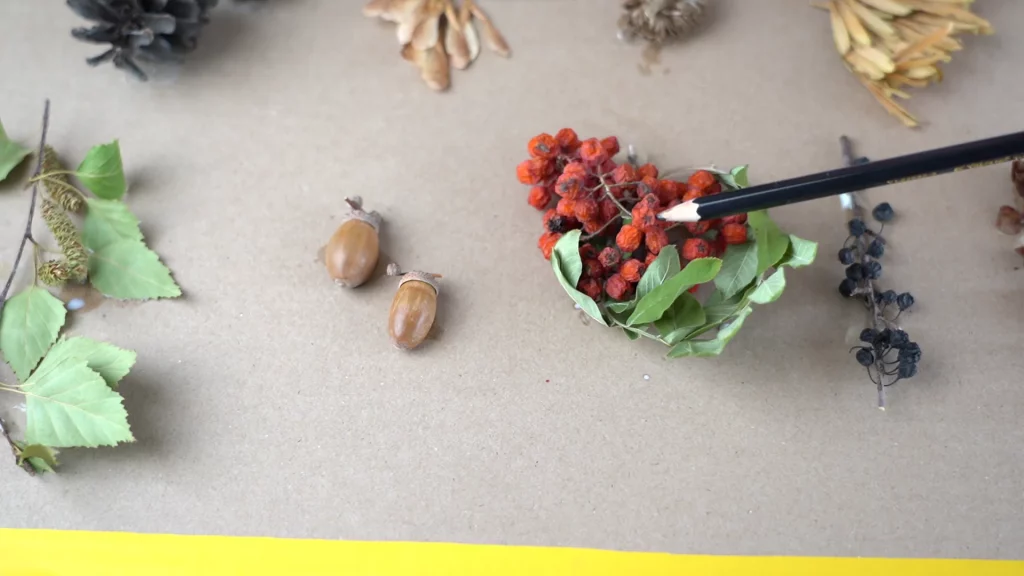
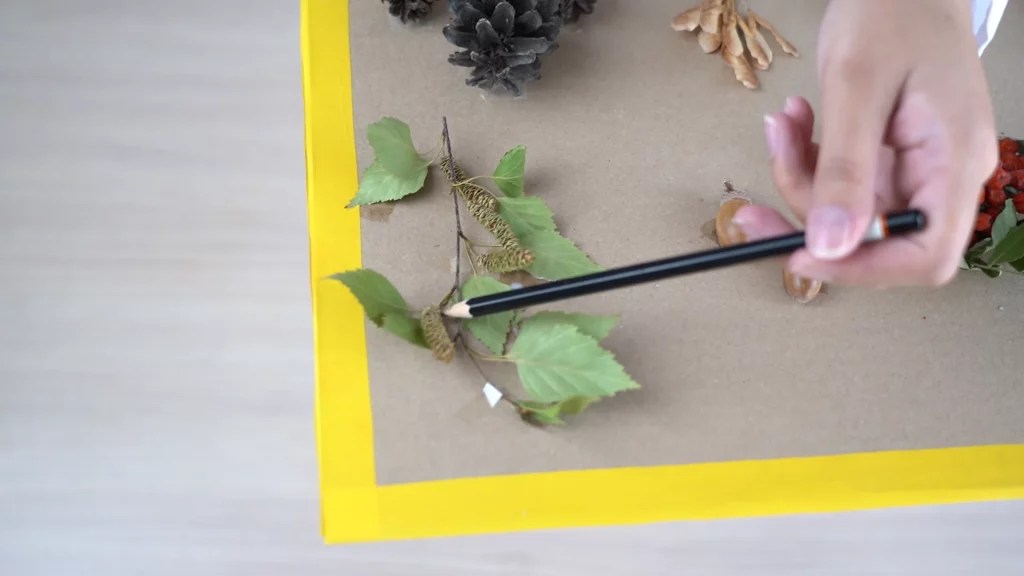
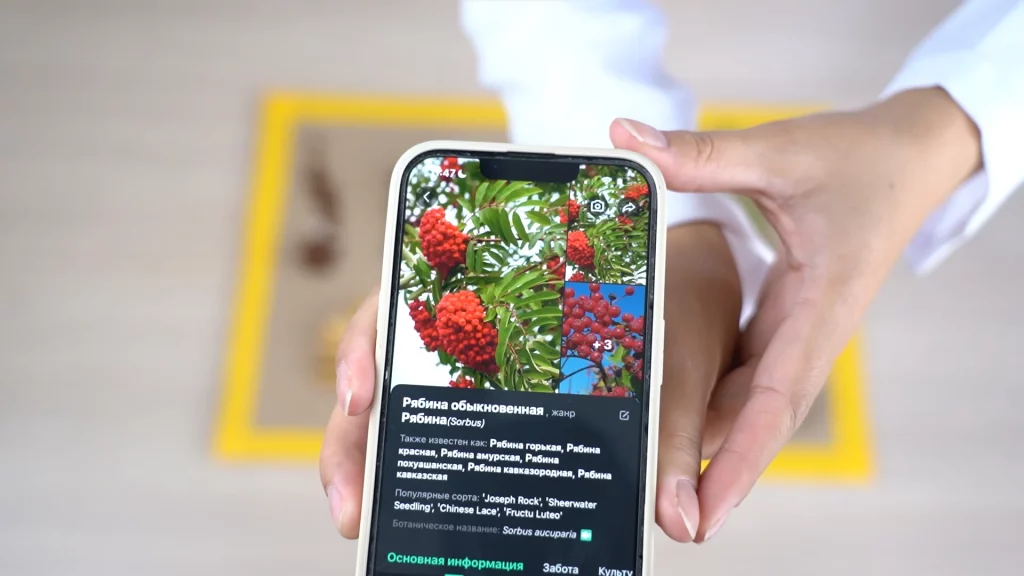
Step 5. You can use the PictureThis mobile app to ensure your answers are correct. You can download it on AppStore or Playmarket.
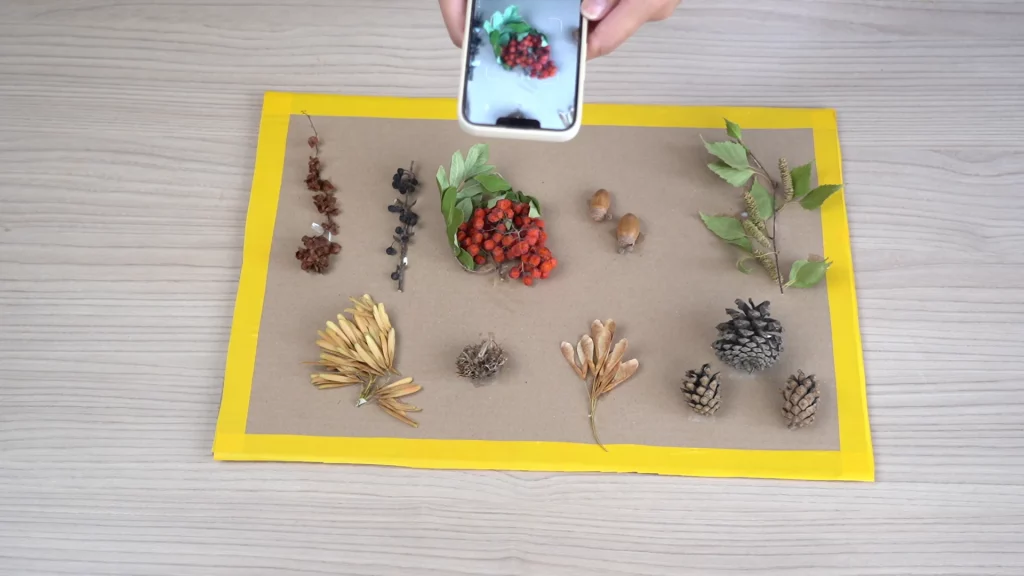
Step 6. Write each name of the species to stickers and glue below each sample.
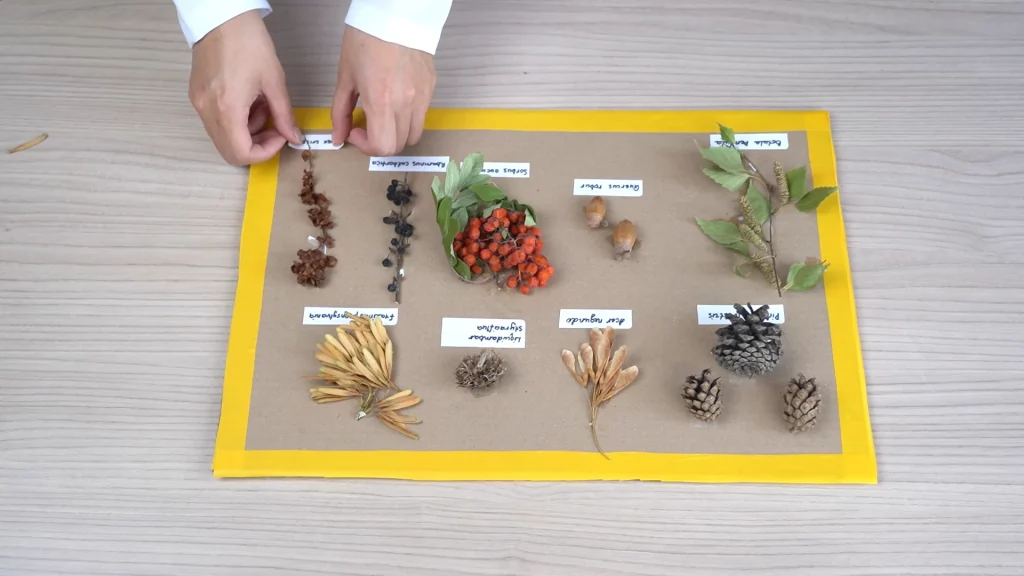
Step 7. Your herbarium is ready!
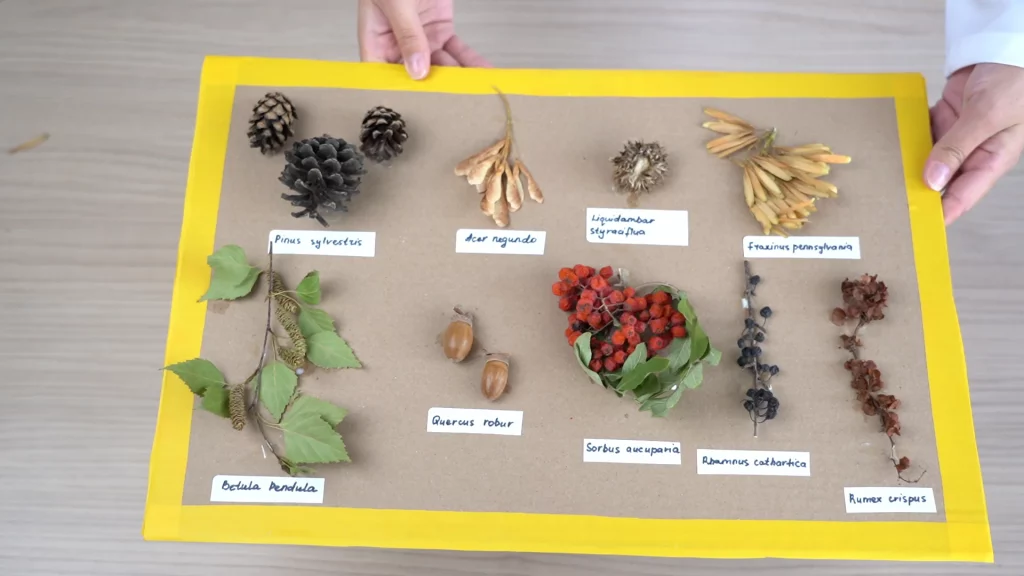
Step 8. Write the binomial names of plants you used on the worksheet and give a brief description of them:
- Scots pine – Pinus sylvestris
- Boxelder maple – Acer negundo
- American sweetgum – Liquidambar styraciflua
- Green Ash – Fraxinus pennsylvania
- Silver birch- Betul pendula
- English oak – Quercus robur
- Rowan – Sorbus aucuparia
- Buckthorn – Rhamnus cathartica
- Curly Dock – Rumex crispus
Conclusion
Through this hands-on activity, students learned about the diversity of local flora and developed skills in collecting scientific data and using a plant identifier. They also gained the opportunity to better understand the nature and ecosystem of their region.