Lesson 1
Topic of laboratory work: The role of vision in the perception of pain
The purpose of the work:
To learn about the vision and its diseases
Learn about eye hygiene
Learn about the role of vision in pain perception
Learning outcomes:
Students know the importance of eye hygiene
Students know major eye diseases
Students can repeat the famous experiment of Mattew Botvinick and Jonathan Cohen
Teacher’s guide:
Tasks are performed in pairs
The teacher must make the first try himself/herself
Worksheet:
Safety technique:
Description
The Importance of Vision:
Vision, often regarded as our most dominant sense, plays a pivotal role in our daily lives. It serves as a window to the world, allowing us to navigate through our surroundings, appreciate the beauty of nature, and engage in various activities. The significance of vision cannot be overstated, as it profoundly influences our overall well-being and quality of life.


Despite its importance, vision is vulnerable to various diseases and conditions that can impair or even lead to the loss of sight. Conditions such as cataracts, glaucoma, macular degeneration, and diabetic retinopathy are among the most common eye diseases. These ailments underscore the necessity of regular eye examinations to detect and manage issues at an early stage, preserving the gift of sight.
The Role of Vision in the Perception of Pain:
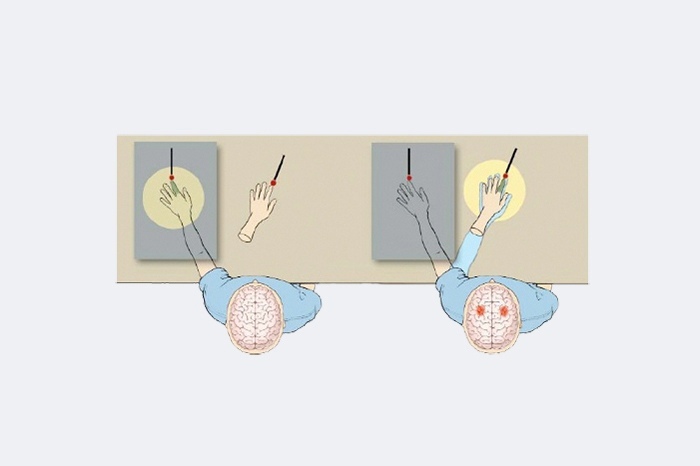
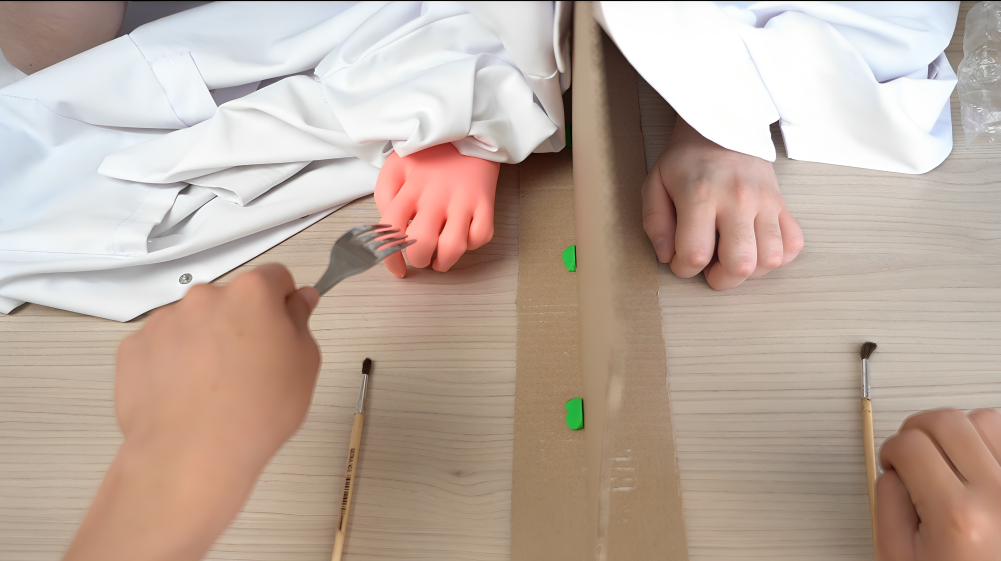
Vision is very important for the perception of pain. The famous experiment of Matthew Botvinnik and Jonathan Cohen proved this connection. In this experiment, a rubber hand is placed in front of the subject while the real hand is hidden from the person’s view. Using brushes, the researcher runs over the fingers of real and rubber hands for a certain time. Then a strong stimulus is applied in the form of a prick with a needle or other sharp object. Matthew Botvinnik and Jonathan Cohen discovered that at some point in time, the human brain begins to perceive an artificial hand as its own, and thus responds to a visual stimulus as if it were its own hand. The experiment proved that vision plays a key role in the perception of pain.
List of necessary equipment
- Rubber hand
- Tassels
- Fork
- Bathrobe/sheet
- Partition
Practical part
1) To begin, set up a barrier and place your left hand to the left of the barrier so that you cannot see it
2) To the right of the barrier, place a model of your left hand and cover everything from the shoulder to the hand with a robe so that the model of the hand appears to be yours
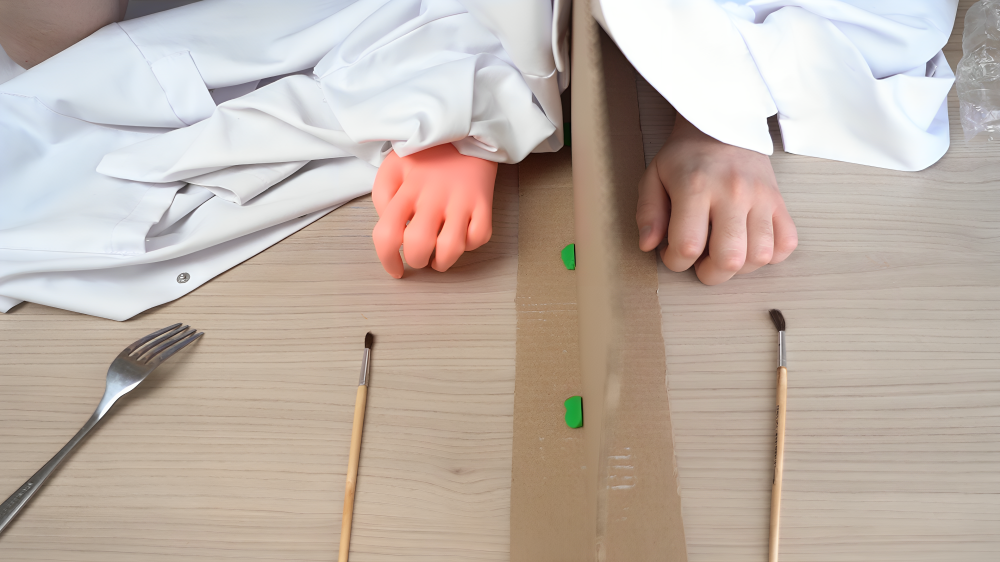
3) Now your partner should begin to simultaneously stroke the middle finger of your and the artificial hand with a brush for at least 1 minute. Can be longer
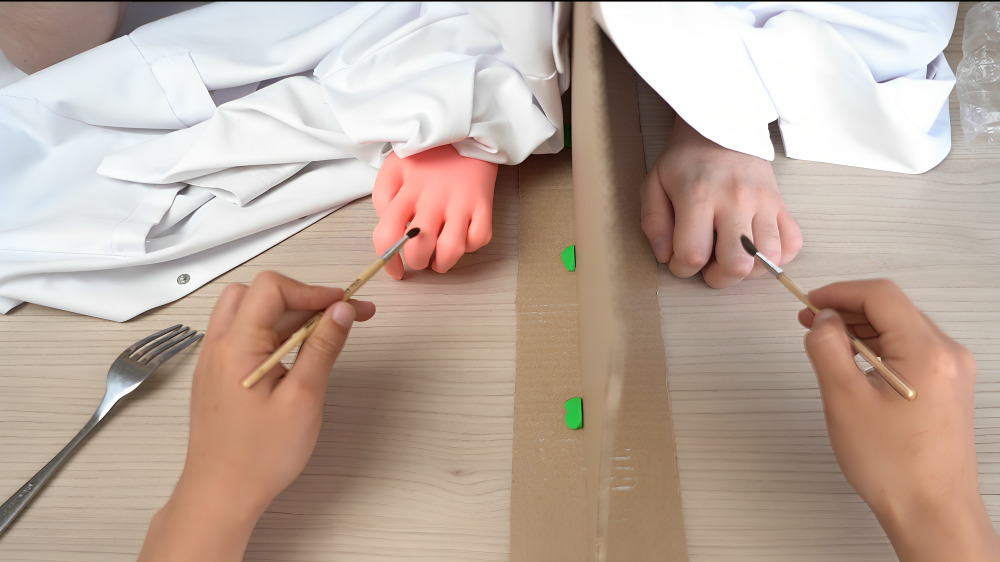
4) After this, have your partner put down the brushes and try to touch the artificial hand with a fork (needle). If you feel pain, then the experiment was successful.
Conclusion
Thus, you have learned how to do the famous Pittsburgh experiment and know how to prove the role of vision in the perception of pain. This experiment is one of the most important in the field of neuroscience.
Rules for designing the laboratory work
The laboratory work should contain items in the following order:
- Laboratory work number
- Topic name
- Purpose of the work
- Hypothesis
- Brief description of the theoretical part
- Equipment
- Steps in the correct sequence
- Add a photo from the experiment (if you can’t insert a photo, you can add a picture)
- Give a brief description
- Write a brief discussion and explanation of the topic covered
- Write the conclusion of the work
- The workplace must be cleaned and put in order
Feedback