
Lesson
Objective:
- To introduce the structure of the atom
- Description of the arrangement of the atom’s particles
- Build a model of a carbon atom
Teacher’s Guide
1. Divide students into groups.
2. Students create a model of a carbon atom. It consists of 6 protons, 6 neutrons, and 6 electrons.
3. Download the worksheet:
4. Before proceeding with the lab work, review the safety rules by following the link:
Theoretical part
The atom is the smallest building block of matter that makes up everything we see around us. They are the building blocks of everything around us.
Different atoms have different sizes and properties. For example, gold atoms are larger than iron atoms, and helium atoms are much lighter than oxygen atoms.
Particles of an atom
- Atoms are made up of three main particles: protons, neutrons, and electrons.
- Protons and neutrons are in the nucleus of the atom, and electrons orbit the nucleus.
- Protons have a positive charge, neutrons have no charge, and electrons have a negative charge.
- The number of electrons in the atom corresponds to the number of protons in the nucleus, which makes the atom electrically neutral.
Practical part
Step 1.
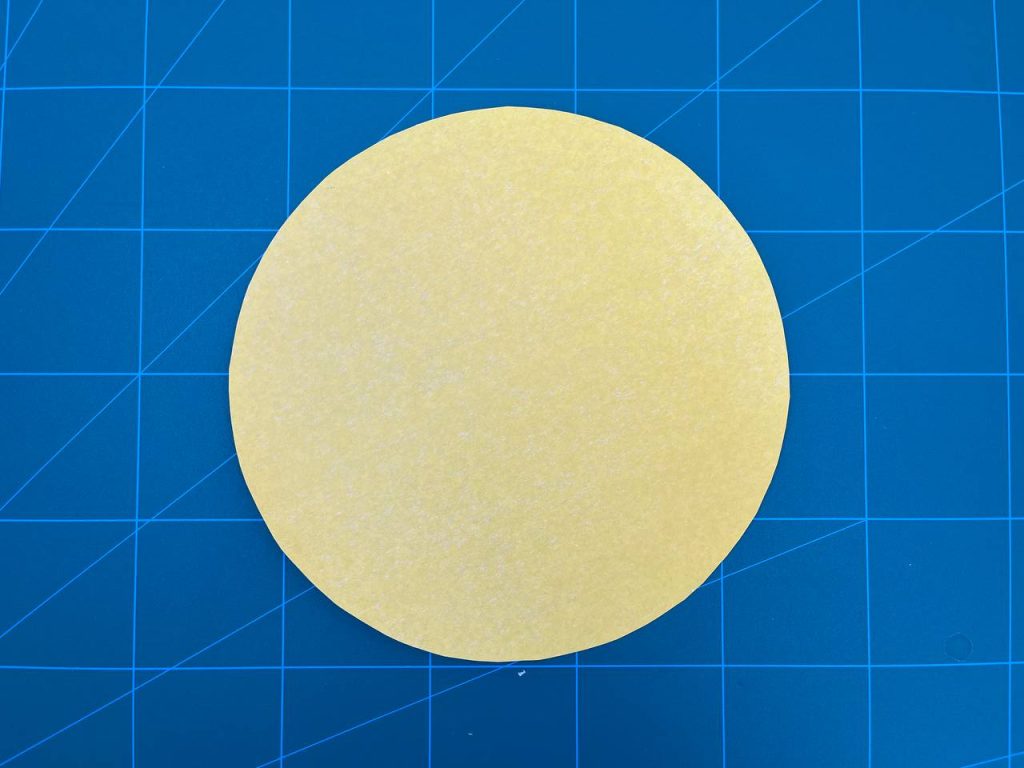
Draw a circle of 9.5 cm radius on cardboard paper with a compass and cut it out.
Step 2.
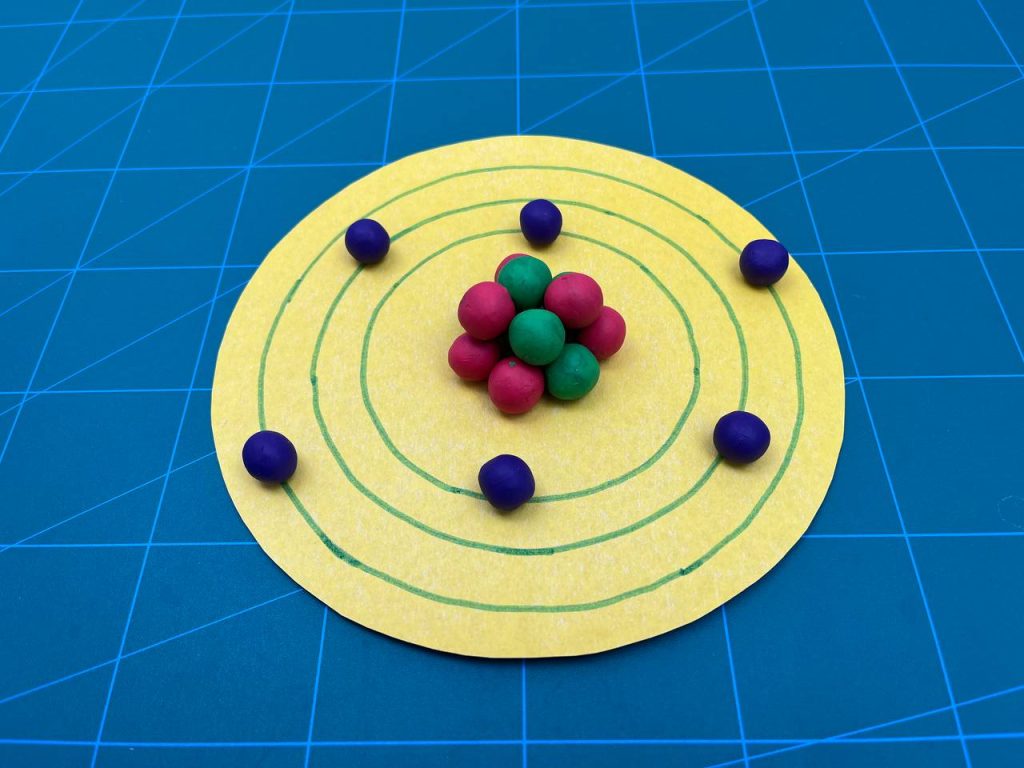
Create a model of a carbon atom. The carbon atom consists of 6 protons, 6 neutrons, and 6 electrons. Make six balls of the same color of plasticine. This means that you will have the protons of the atom.

Step 3.
Make 6 balls of two colors of plasticine to create a neutron and an electron.
Warning. The volume of the electron is smaller than the volume of the neutron and proton.

Step 4.
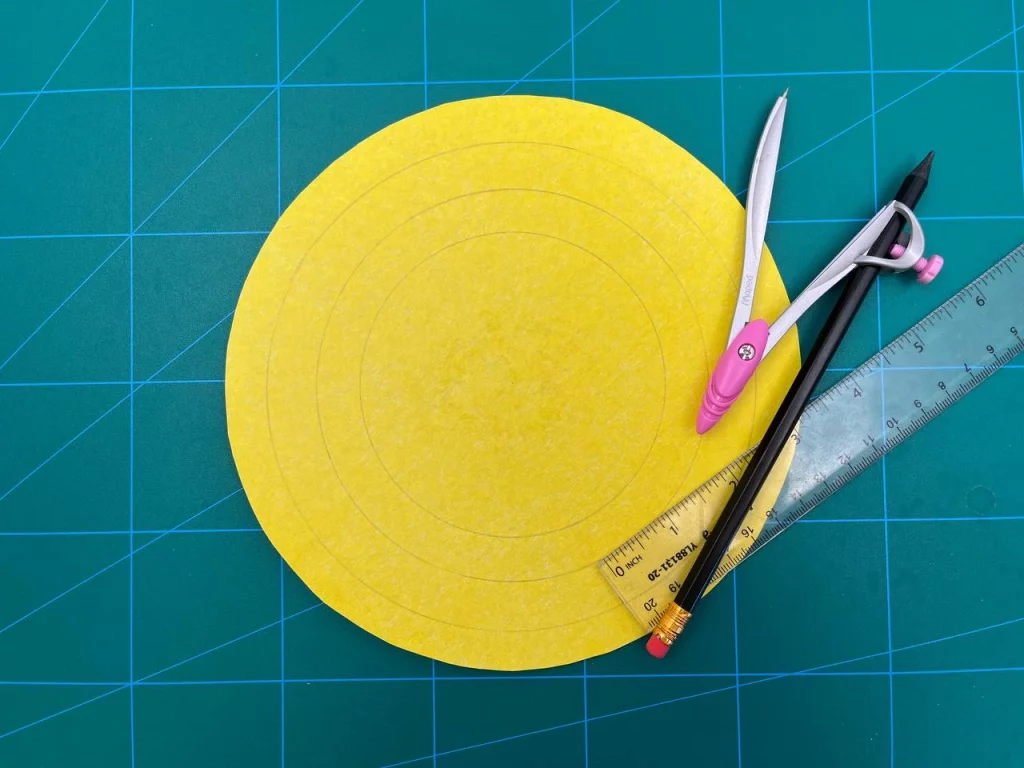
On solid paper, draw three circles with a radius of 8 cm, 6.5 cm, and 5 cm. This will be the orbit of the electron.
Step 5.
Draw a clear line over the lines of the circle with a felt-tip pen.

Step 6.
Place protons and neutrons in the center of the circle.

Step 7.
Place 2 pieces of electrons in each electron orbital.
Step 8.
Answer the following questions and draw conclusions:
- What are the particles of which substances are composed?
- What are the particles that make up molecules called?
- What are the particles that make up atoms called?
- What are the particles that make up a nucleus?
- What are the charges of the proton, neutron, and electron?
- How is the electron located?
- What is the structure of the carbon atom? Describe it.
Conclusion
By doing this hands-on activity, students realized that matter is a very complex structure. By developing a model of the carbon atom, they became convinced that matter is made up of very small particles. Even though the atom is actually very small, it plays an important role in our world and in our lives.