
Lesson 1
Purpose of the work:
- study of the process of vegetative propagation of plants, its methods and influence on plant development
Expected results:
After completing the work, students can:
- develop teamwork skills
- be able to analyze and summarize the information received
- draw logical conclusions
Teacher’s Guide:
- The task is performed in groups of 3-4 people
- Working with a knife requires special care
- Before starting laboratory work, please read the safety rules by following the link:
- To download the worksheet, follow the link:
Theoretical part

Vegetative propagation of plants is a process in which new plants are formed from different parts of the mother plant without using seeds. This type of propagation includes various methods such as cuttings (where part of the stem or root is used to grow a new plant), division of rhizomes, separation of sprouts or tubers.
The main characteristic of vegetative propagation is that genetically the new plants are completely or partially identical to the mother plant. This method is often used to preserve genetically valuable or desirable plant characteristics.
Practical part
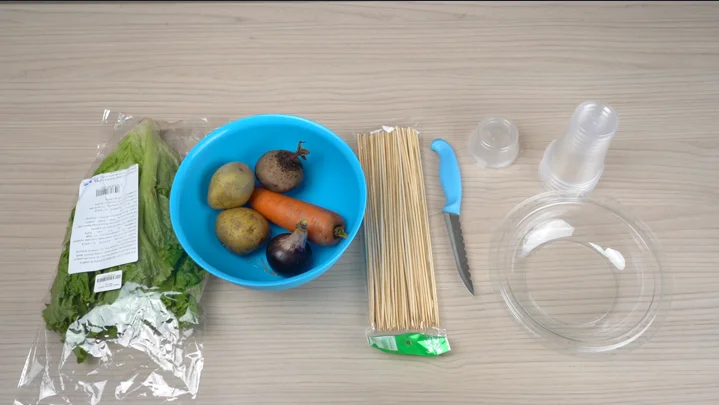
This work uses various types of vegetables that are consumed in the daily diet. For the experiment you can use kitchen scraps or cut off the necessary part from a whole plant.
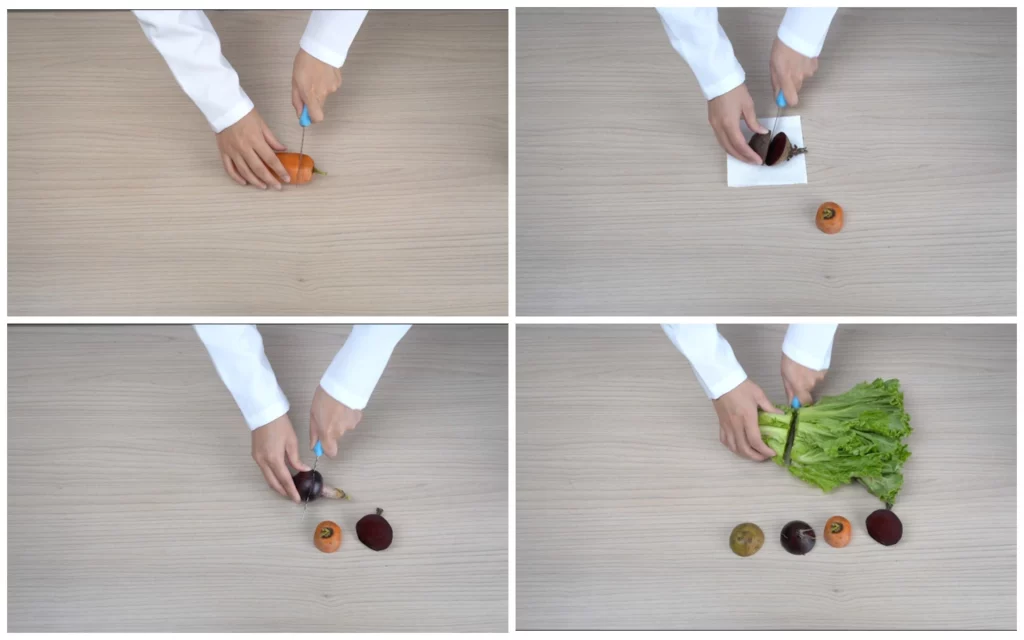
Step 1: Use a knife to carefully cut off roughly 5-7 cm from the base of the plant.Cut the bottom of the onion and iceberg lettuce. Cut off the top of carrot and beet.
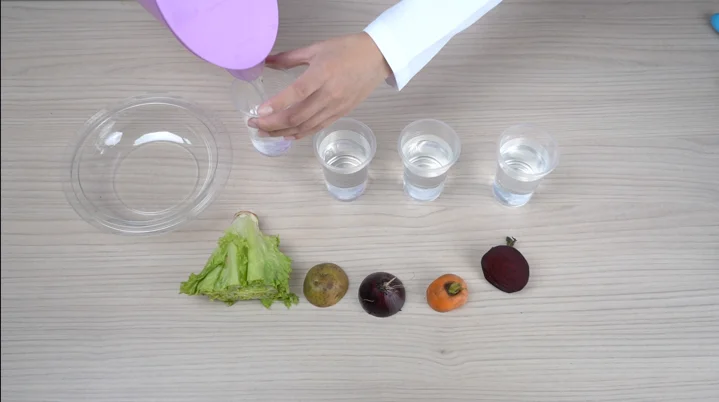
Step 2: Fill the cups with water.
Step 3. Pierce the vegetables with skewers or toothpicks on all four sides.
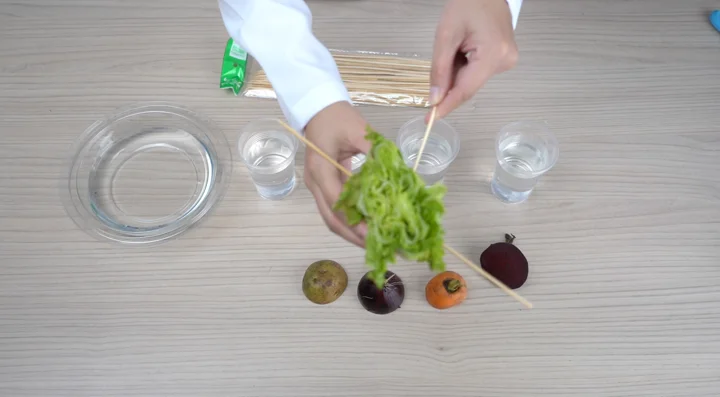
Step 4: Place them in water.
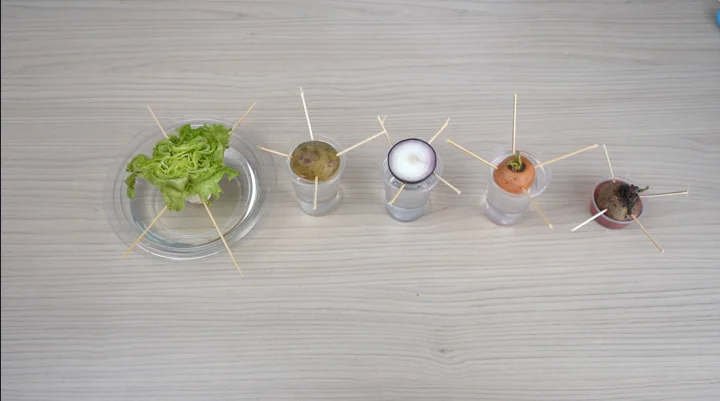
Observe the development for 7-14 days. Don’t forget to change the water regularly.