
Lesson
Purpose of the work
- understand an element (simple substance) as a collection of identical atoms;
- find out that a pure substance consists of identical atoms or molecules.
- distinguish between the following concepts: element (simple substance), mixture, and compound.
- using knowledge about the physical properties of elements and compounds to recognize unfamiliar substances in a mixture
Teacher’s Guide
- Before starting the practical part of the laboratory work, introduce students to safety techniques and laboratory utensils
- Introduce students to the theoretical and practical part of the laboratory work
- Introduce and show students all the necessary materials for conducting the experiment
- Students should prepare notebooks (journals, sheets of paper) for laboratory work in advance. Students write down data, research results, and observations (one notebook per academic year is recommended)
Lab Report
When performing laboratory work, each student writes a report on the work. Records should be made in such a way as to briefly and logically describe the operation, devices and reagents used. The report should contain the following information:
- Name of the work and date of its completion.
- The goal of the overall work and each personal experience.
- Diagram of the device used and its description (if any).
- The order of work execution (progress of work).
- Chemical reactions during the experiment.
- Table with experimental data.
- Calculations and graphs if necessary.
- Conclusions.
It is recommended that each student has a journal (notebook) for laboratory work.
If necessary, the teacher can print out a report on laboratory experiments for students in each lesson by clicking on the link
Theoretical part

Comparison of mixtures of substances and their compounds
Subject of chemistry-studies substances, their properties, transformations and applications.
So let’s see what it is?
Substances are physical bodies, things that surround us.
In this lesson, we will look at two types of items,
- pure substances
- mixtures
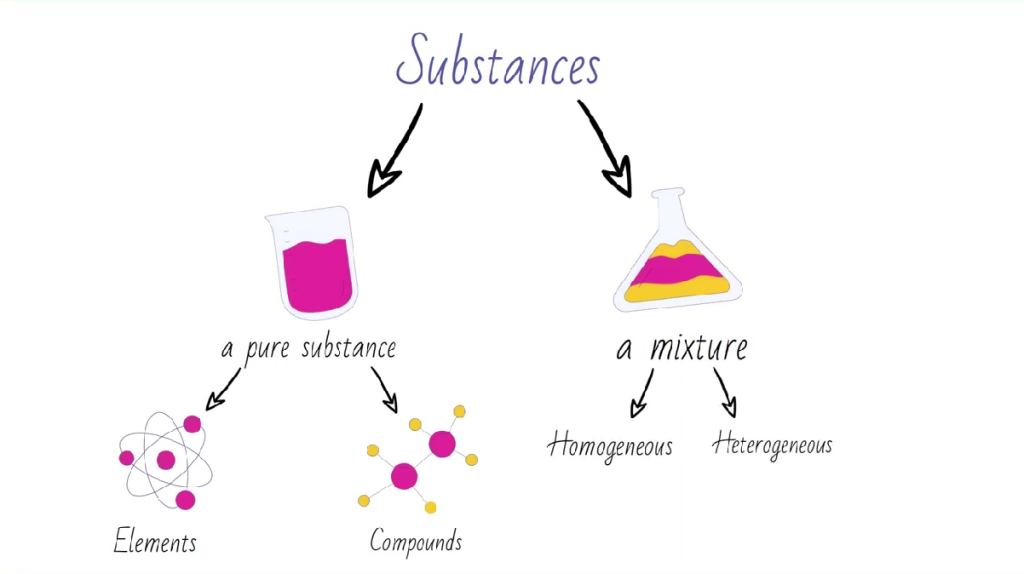
Pure substances can consist of elements or compounds.
And mixtures-consist of a mixture of solutions, ingots and gases. Mixtures are divided into homogeneous and heterogeneous
How to distinguish a mixture from a pure substance?
Substances with constant physical properties of the pelvisare called pure.
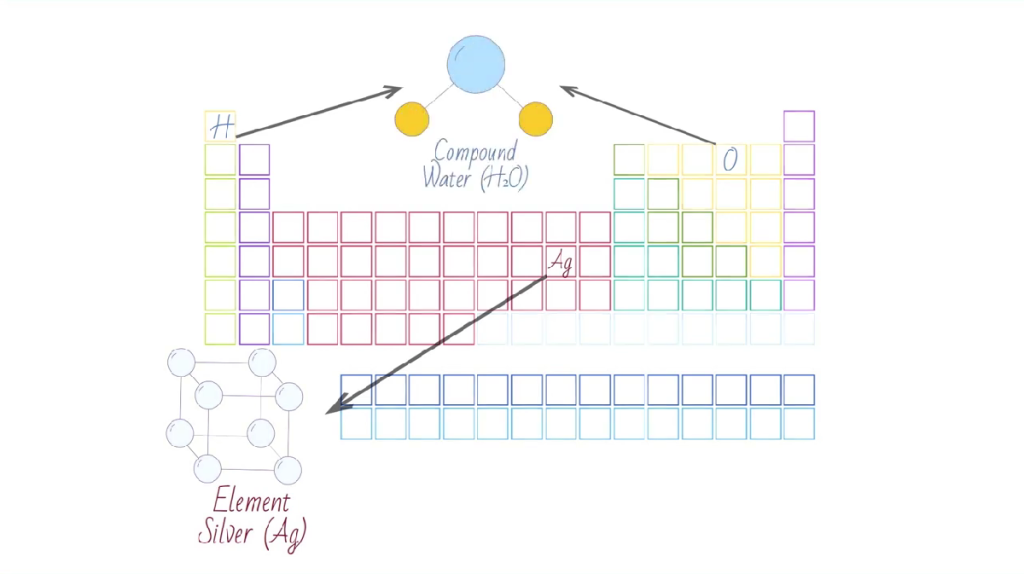
Pure substances are substances that consist of individual elements of the periodic table. For example, gold, sulfur, silver, etc.
Or from chemical compounds consisting of 2 or more elements, such as carbon dioxide, water, etc.
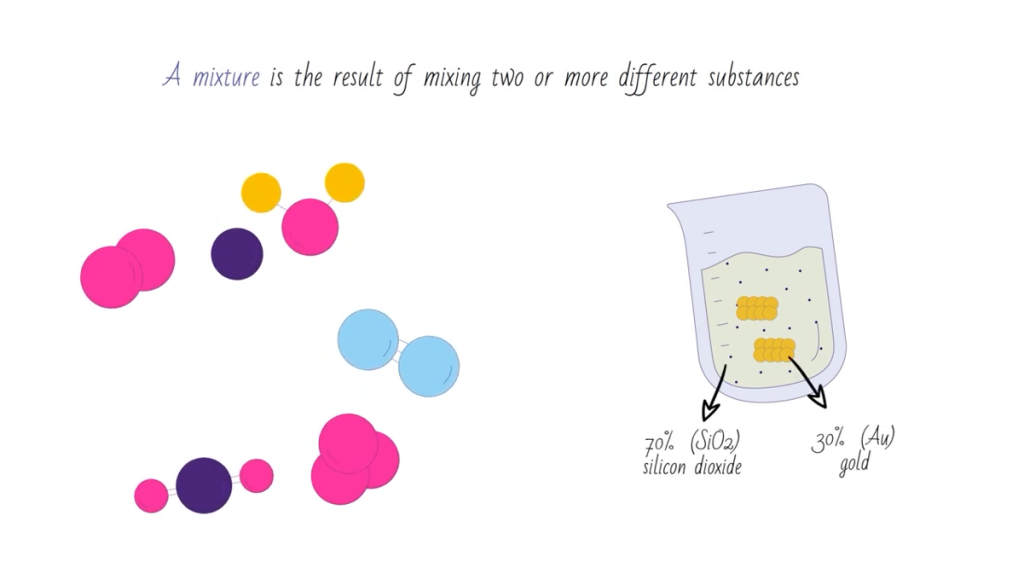
A mixture is the result of mixing two or more different substances. And the composition of additives is unstable. At the same time, each substance retains its properties.
Let’s look at a few examples:
– air is a homogeneous (i.e. homogeneous) mixture of several gases, consisting of nitrogen, oxygen, inert gases, carbon dioxide, etc.
– if you mix sand with gold particles, it will be a heterogeneous (i.e. heterogeneous) mixture of gold and silicon dioxide
Practical part
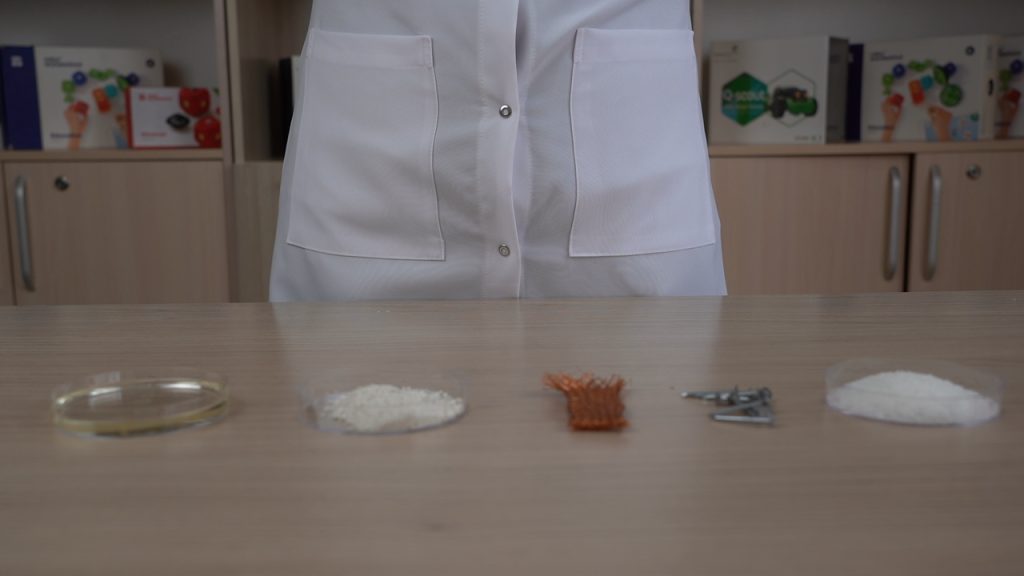
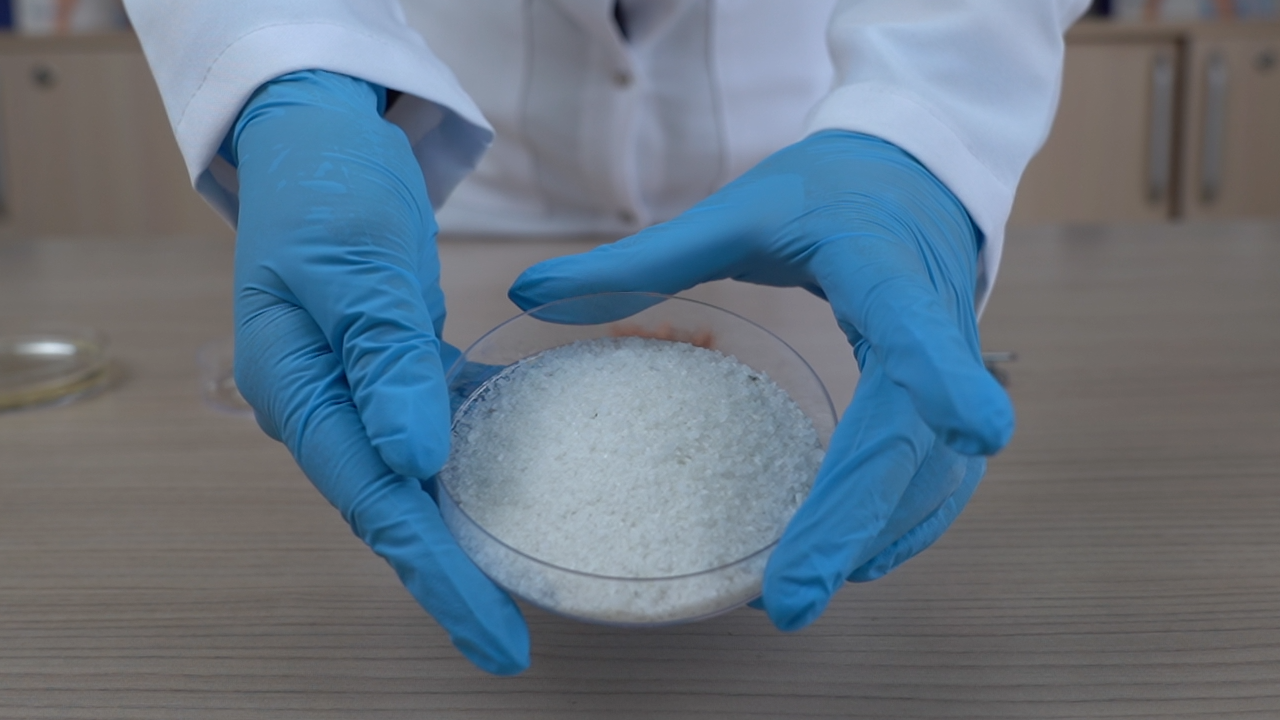
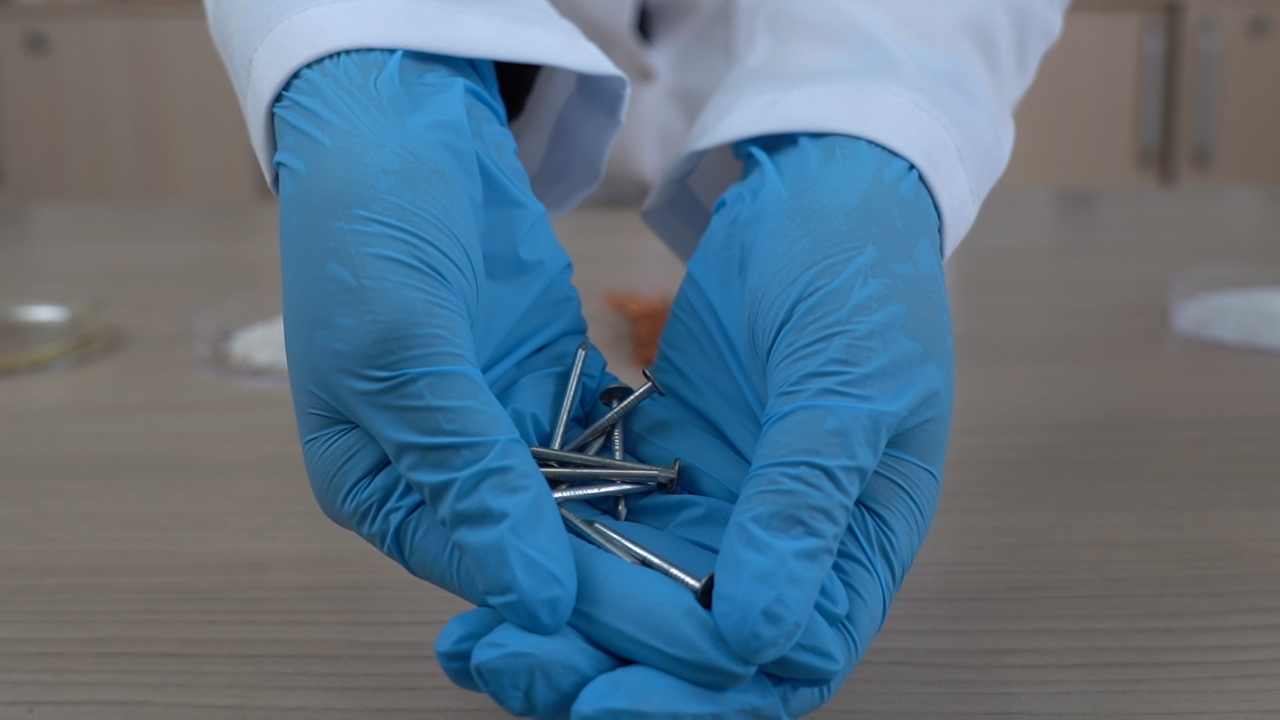
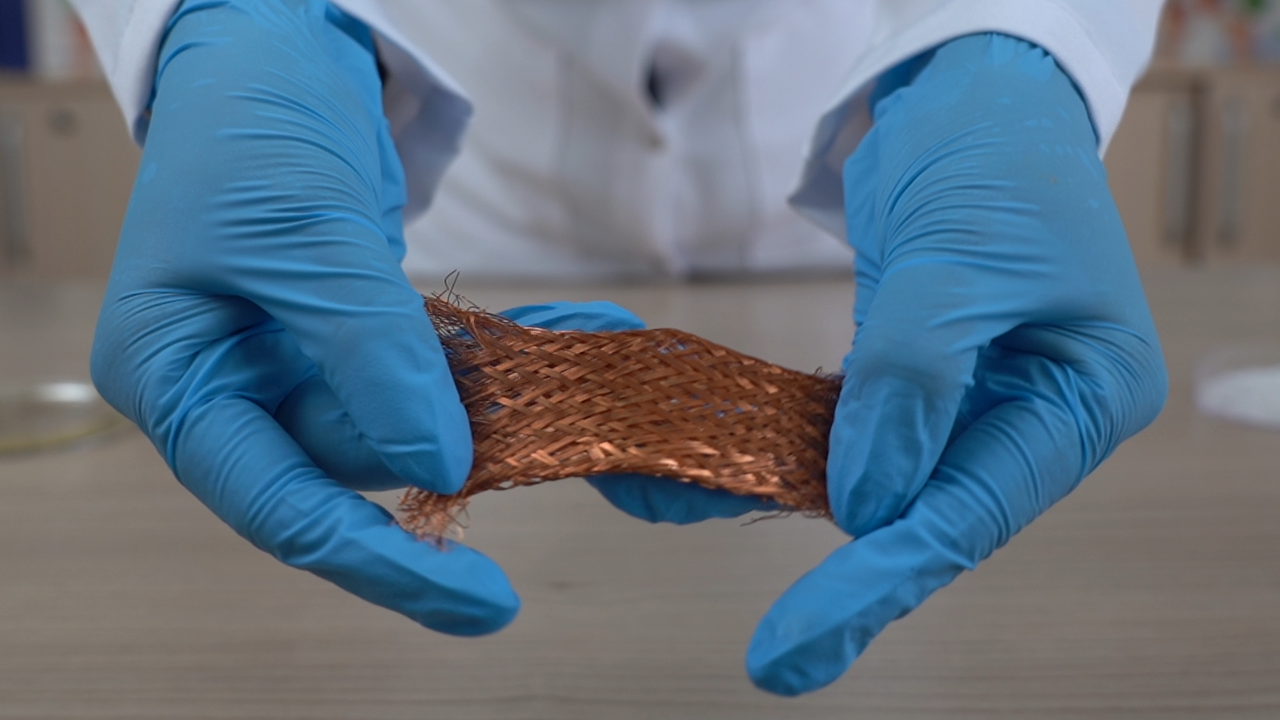
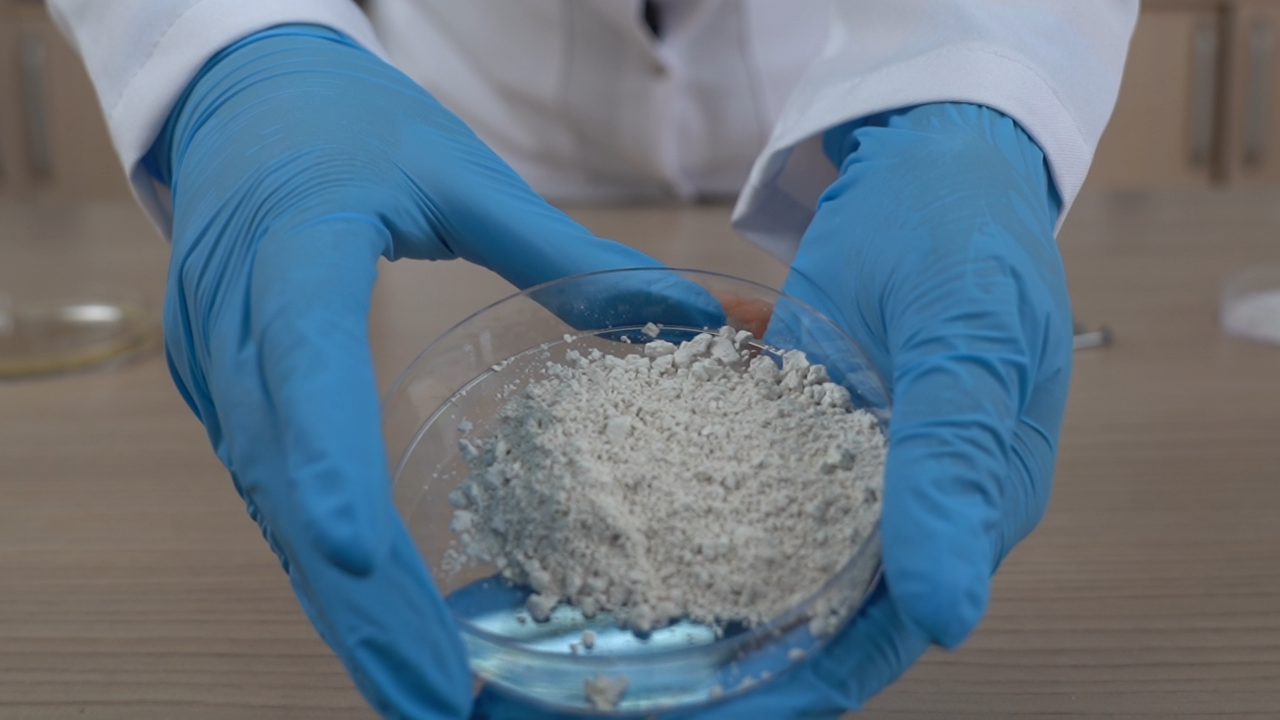
Step 1. Prepare sample items. Get acquainted with the items shown in the picture.
- sugar or salt
- oil
- iron (iron nails)
- copper (copper wire)
- chalk
Step 2. Describe each item: color, aggregate state, density, smell, etc.
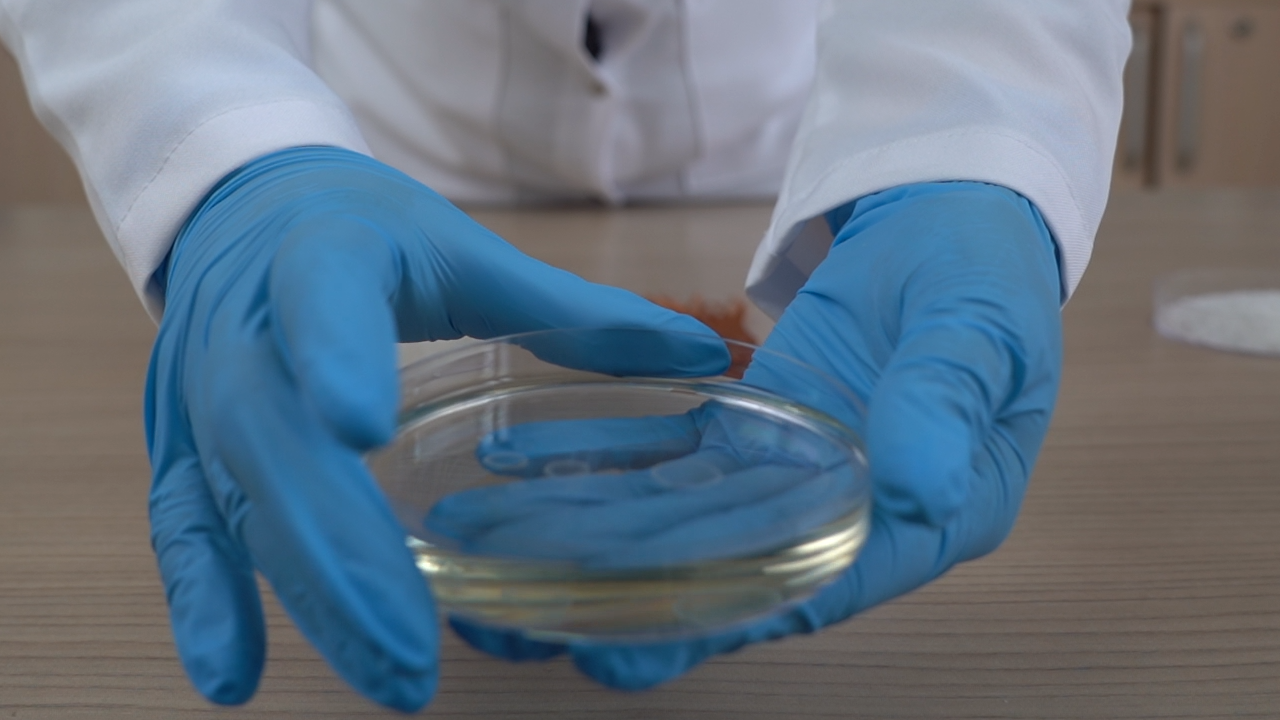
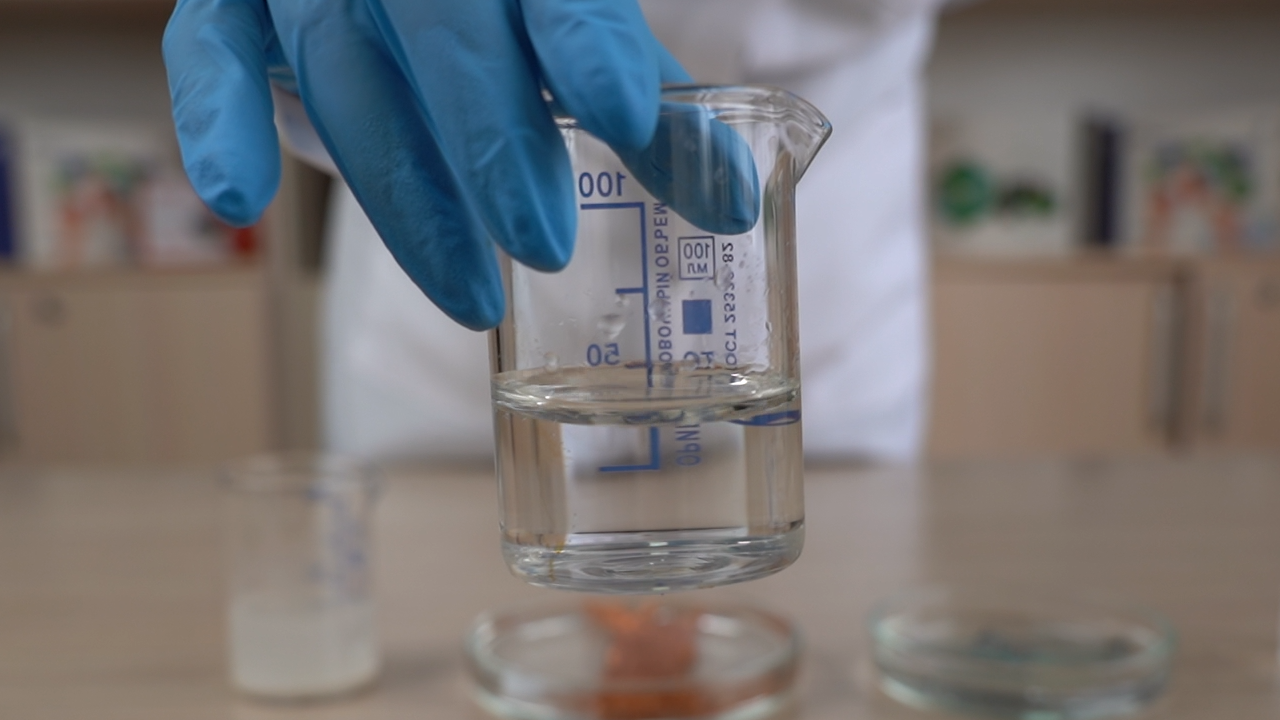
Step 3. Then prepare beakers half filled with water.
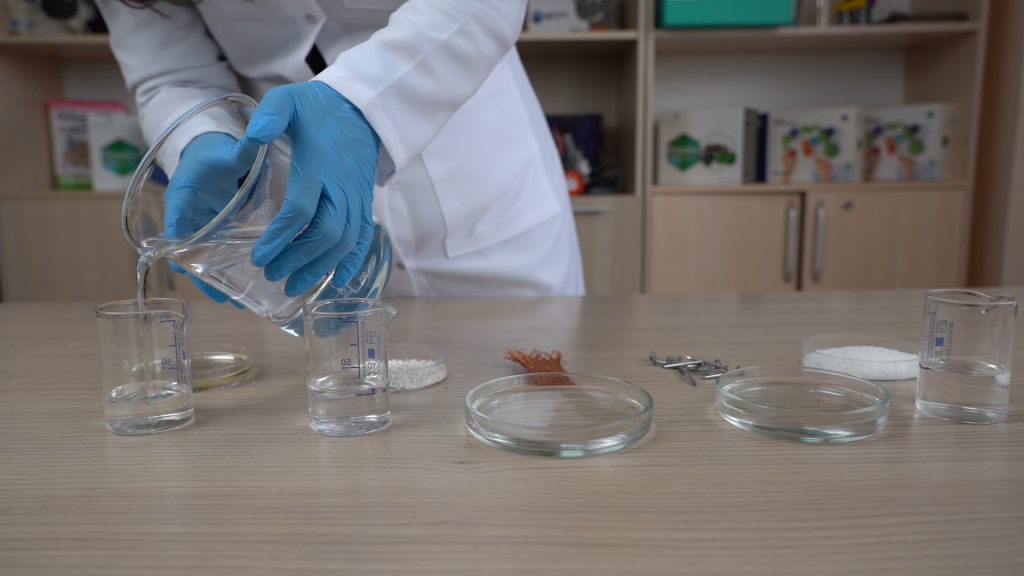
Step 4. Place samples of the prepared items in the water. Mix it up. What did you notice?
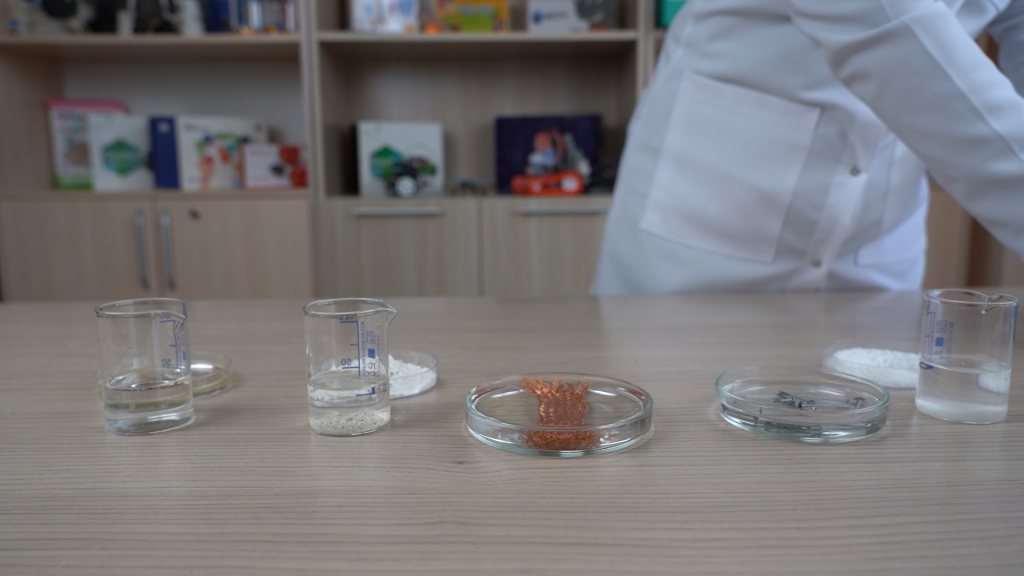
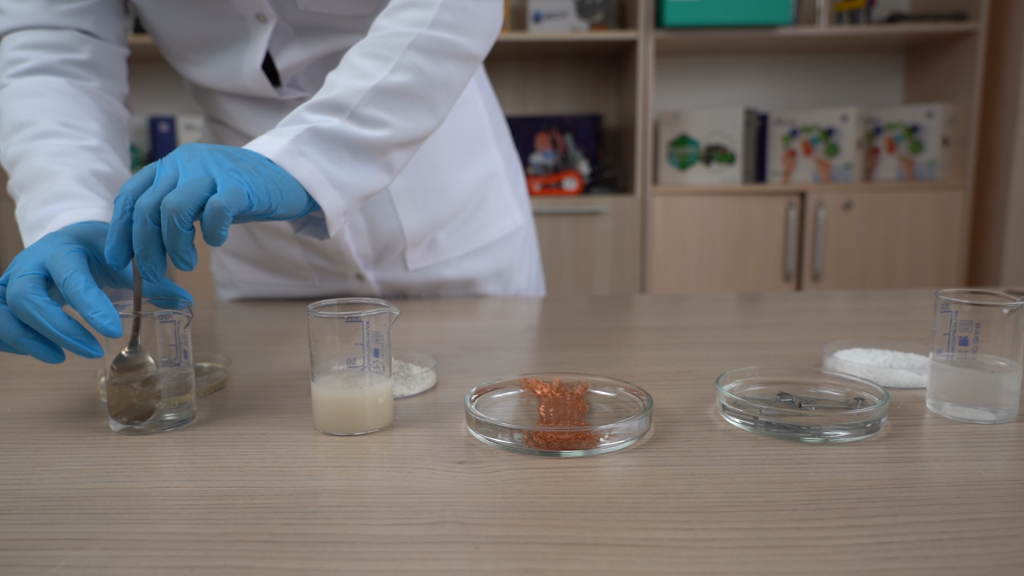
Step 5. Write down your observations in a table.
Next, we track changes.
– Salt is completely dissolved in water, turns into a solution, that is, a homogeneous mixture is formed. Salt is heavier than water.
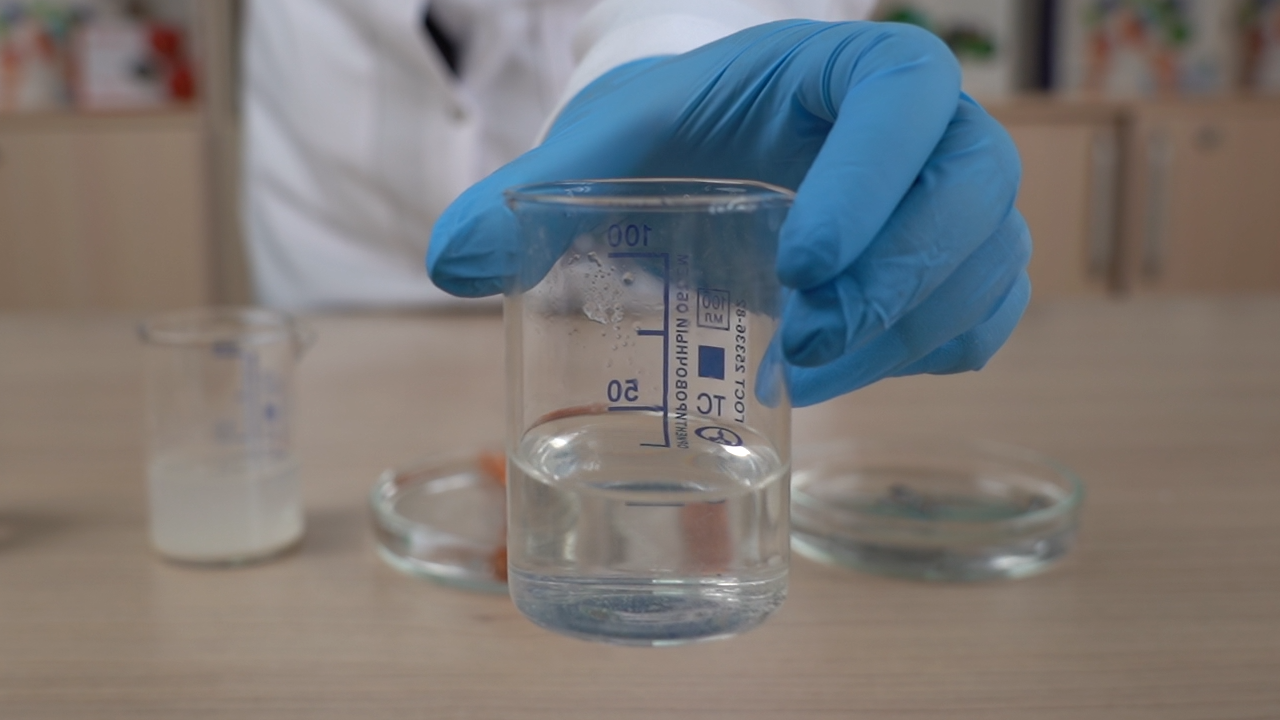
– Iron does not change its properties
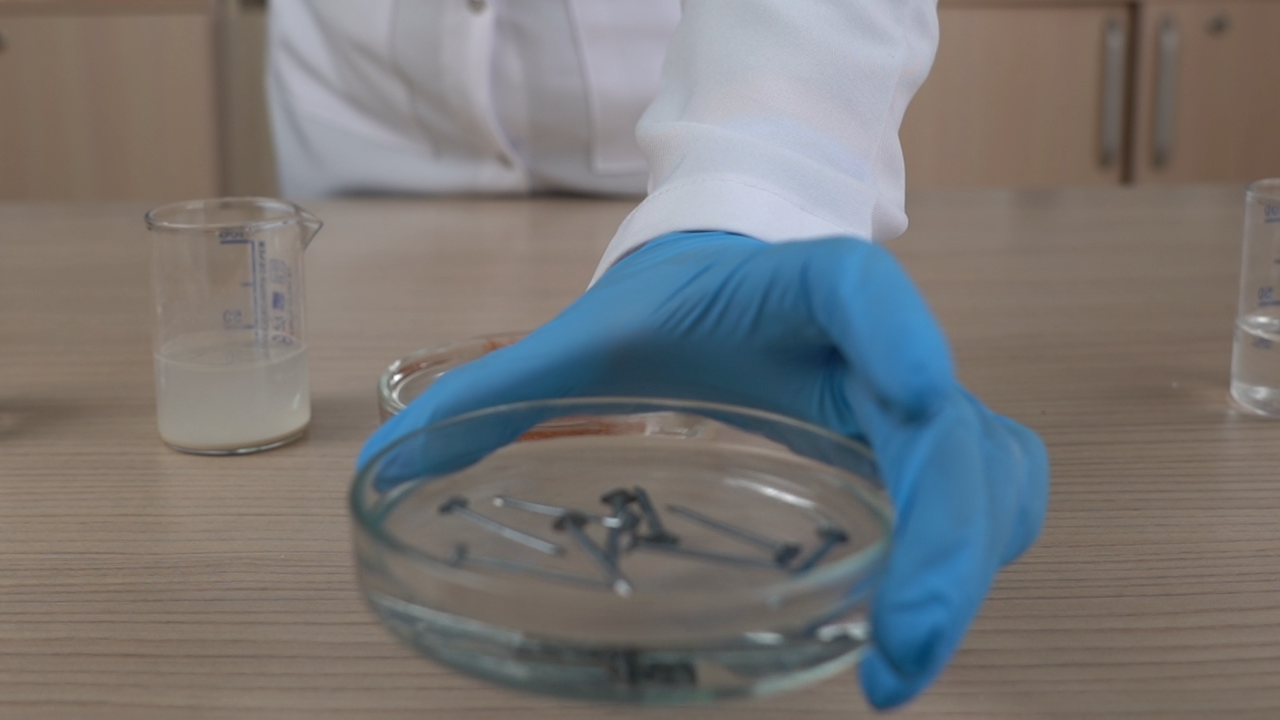
– The properties of copper also do not change.
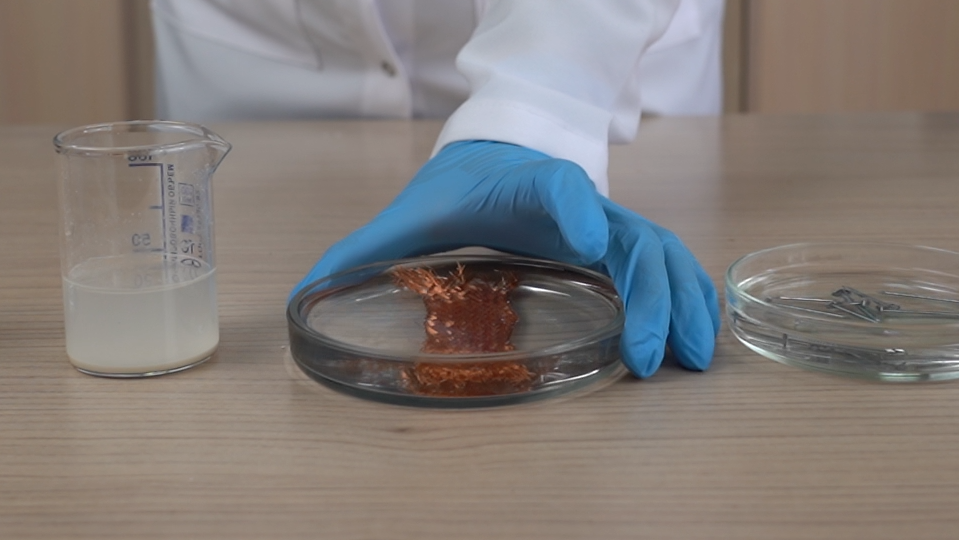
– Chalk does not dissolve well in water and forms a precipitate, staining the water. A heterogeneous mixture appeared. Chalk is heavier than water.
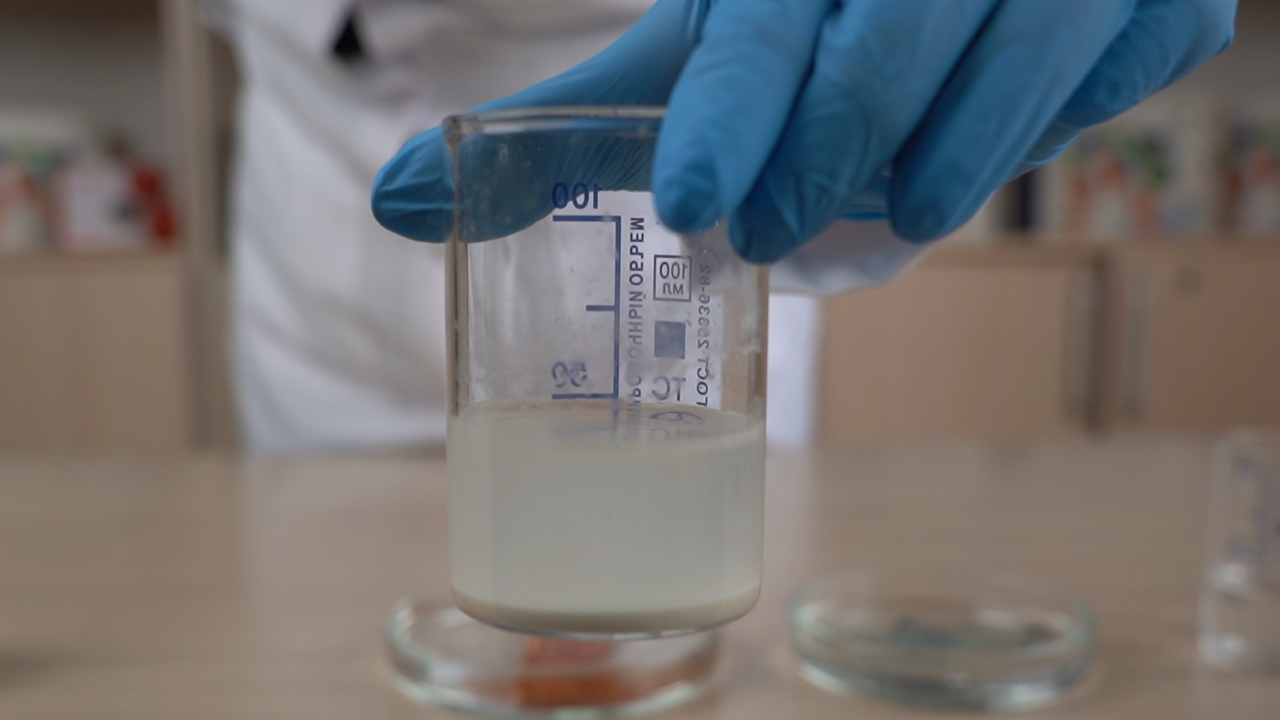
– With water, the oil forms an inhomogeneous, i.e. heterogeneous mixture. The density of oil is less than water, so the oil remains on the surface of the water.
| Description | sugar or salt | iron | copper | oil | boron or lime |
| composition | |||||
| physical properties:– aggregate state– color– density– solubility | |||||
| characteristics of mixtures or solutions with water (homogeneous or inhomogeneous) | |||||
| aggregate state of the mixture(or solution) | |||||
| split method |
Make a conclusion in the worksheet.
Conclusion
In this laboratory work, students were introduced to pure substances and mixtures. Pure substances and their compounds were also compared.