
Lesson
Purpose of the work
- know the types of mixtures and how to separate them
- be able to plan and conduct a mixture separation experiment
Teacher’s Guide
- Before starting the practical part of the lab practice, introduce students to safety techniques and laboratory utensils
- Introduce students to the theoretical and practical part of the laboratory work
- Introduce and show students all the necessary materials for conducting the experiment
- Students should prepare notebooks (journals, sheets of paper) for laboratory work in advance. Students write down data, research results, and observations (one notebook per academic year is recommended)
Lab Report
When performing laboratory work, each student writes a report on the work. Records should be made in such a way as to briefly and logically describe the operation, devices and reagents used. The report should contain the following information:
- Name of the work and date of its completion.
- The goal of the overall work and each personal experience.
- Diagram of the device used and its description (if any).
- The order of work execution (progress of work).
- Chemical reactions during the experiment.
- Table with experimental data.
- Calculations and graphs if necessary.
- Conclusions.
It is recommended that each student has a journal (notebook) for laboratory work.If necessary, the teacher can print out a report on laboratory experiments for students in each lesson by clicking on the link report on laboratory work
Theoretical part

Purification of contaminated table salt
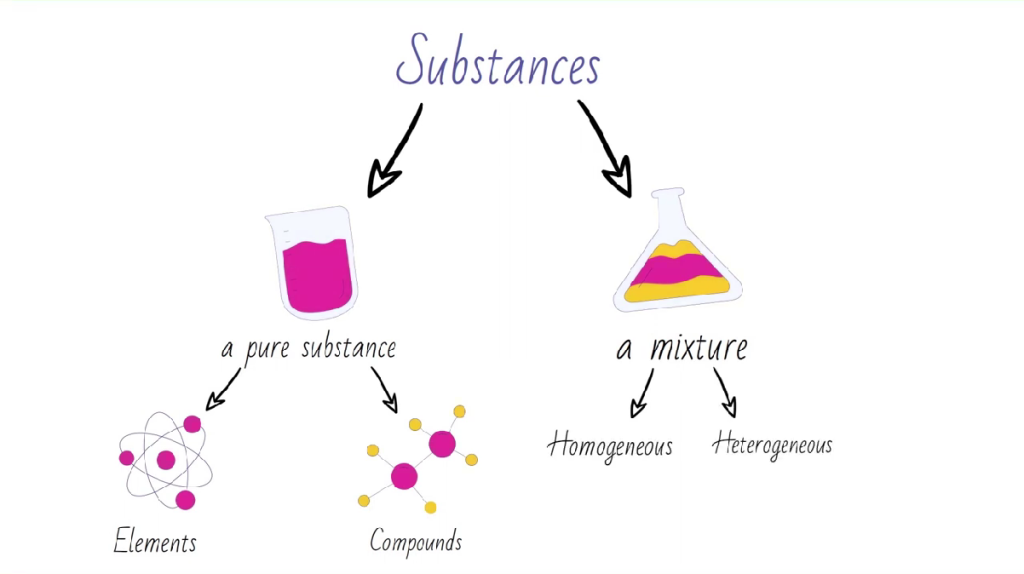
You will learn from the previous lesson that there are two types of substances-pure substance and additives.
Today we will look at ways to separate the mixture.
We now know that a mixture is the result of mixing two or more different substances.
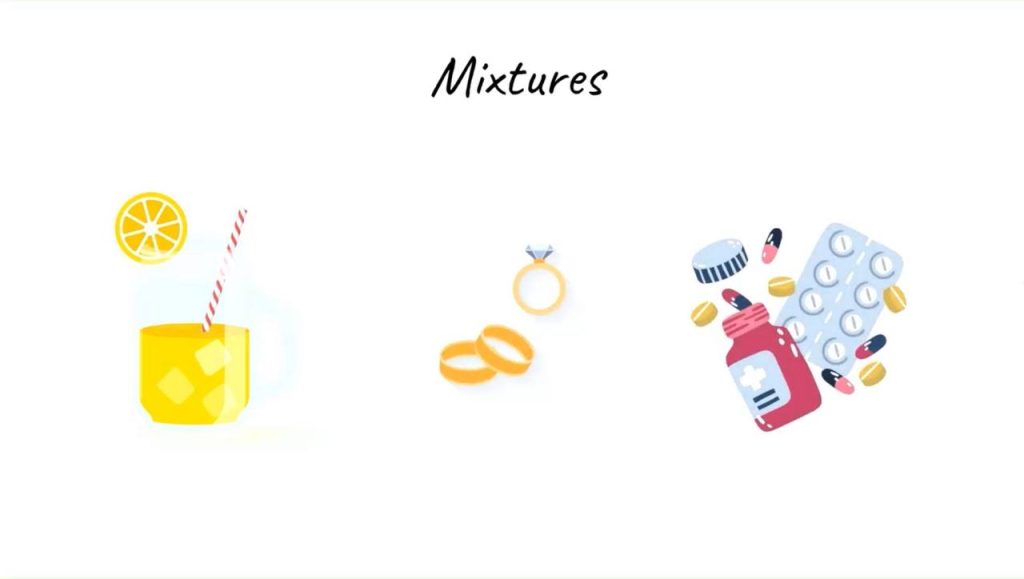
Mixtures include a mixture of solutions, alloys, and gases.
Mixtures are classified as homogeneous and heterogeneous
Separation of pure substances from mixtures is an important part of chemistry and modern industry.
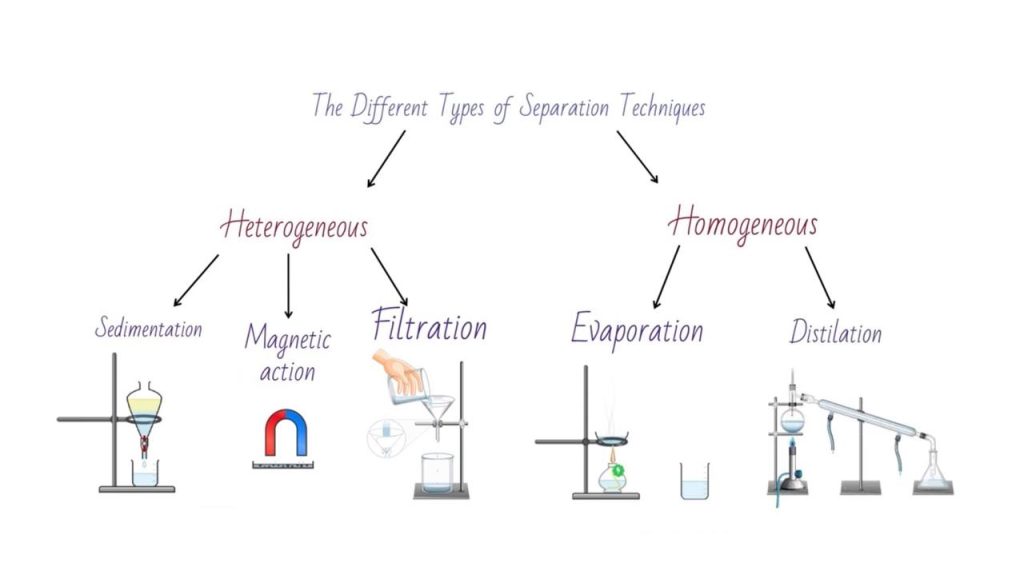
Thus, there are various ways to separate mixtures until a pure substance is obtained.
To do this, it is necessary to determine the nature of the mixture: that is, to distinguish whether it is heterogeneous or homogeneous
Practical part
Salt produced in nature is usually contaminated. We’re experimenting to figure out how to clean it up.
Mix a tablespoon of table salt with sand.
Cleaning of contaminated table salt.
Suppose you have a heterogeneous mixture of salt and sand.
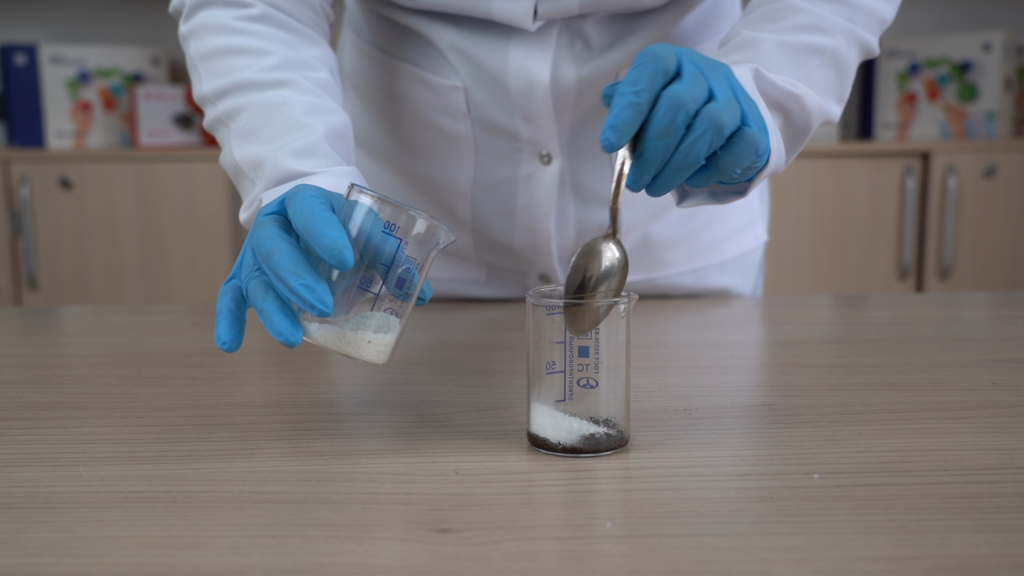
It is known that sand is insoluble in water, and salt has the properties of solubility in water
Step 1. First, pour distilled water into a glass with an additive, that is, contaminated with table salt.
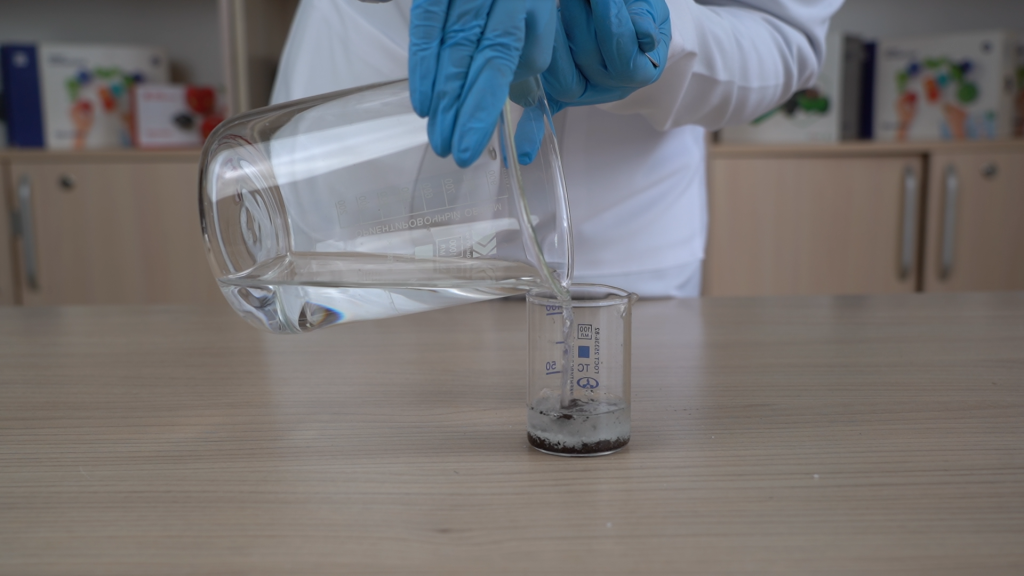
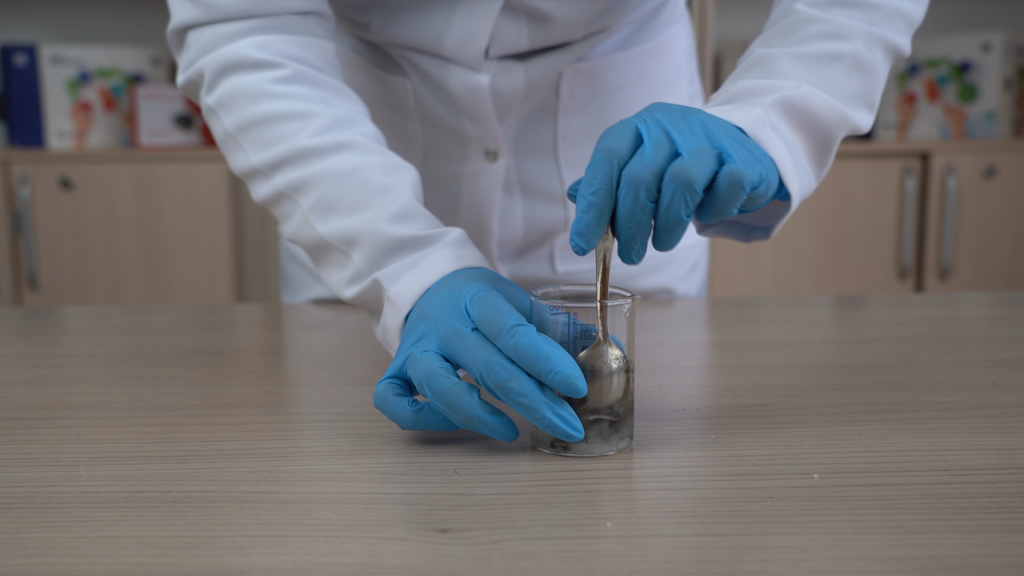
Step 2. Mix well.
What did you notice? The salt is completely dissolved in water, and sand remains at the bottom.
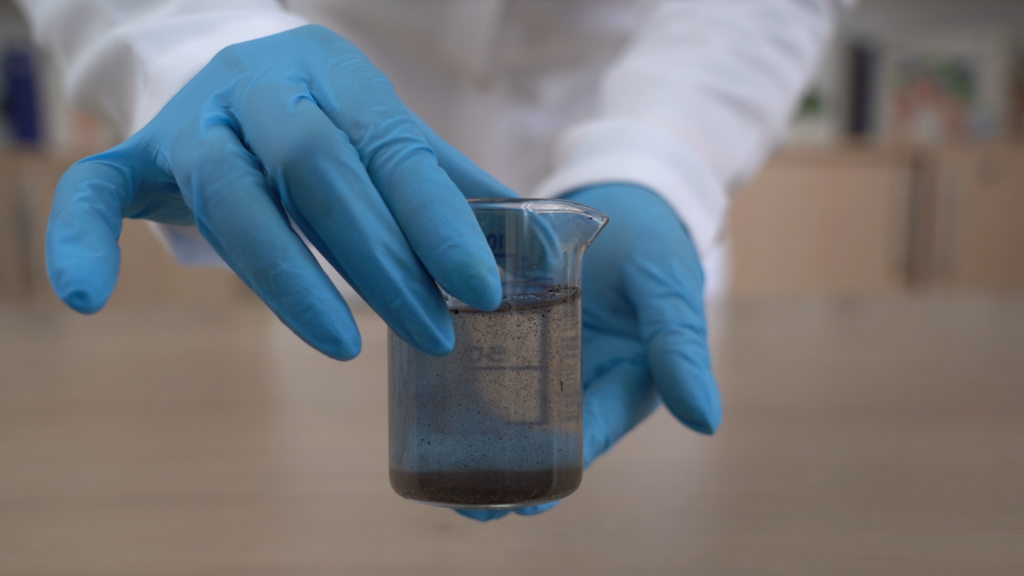
Step 3. Then you need to filter the solution of the mixture in a glass.
To do this, use filter paper, a strainer, and a glass or flask.
Filter out the solution:
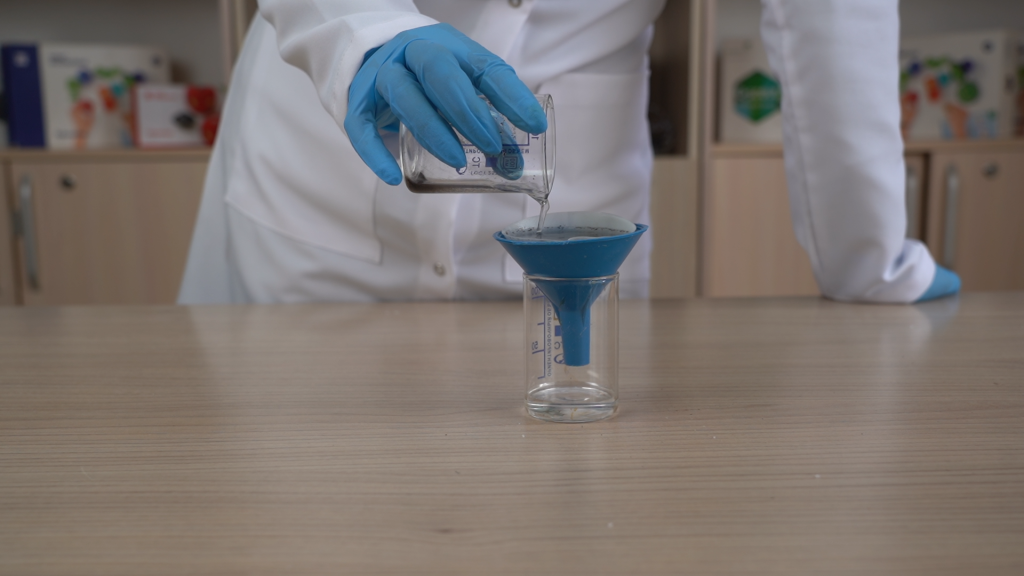
What did you notice?
The result is a homogeneous mixture, that is, a solution of table salt. And on the filter paper there was a sandy deposit
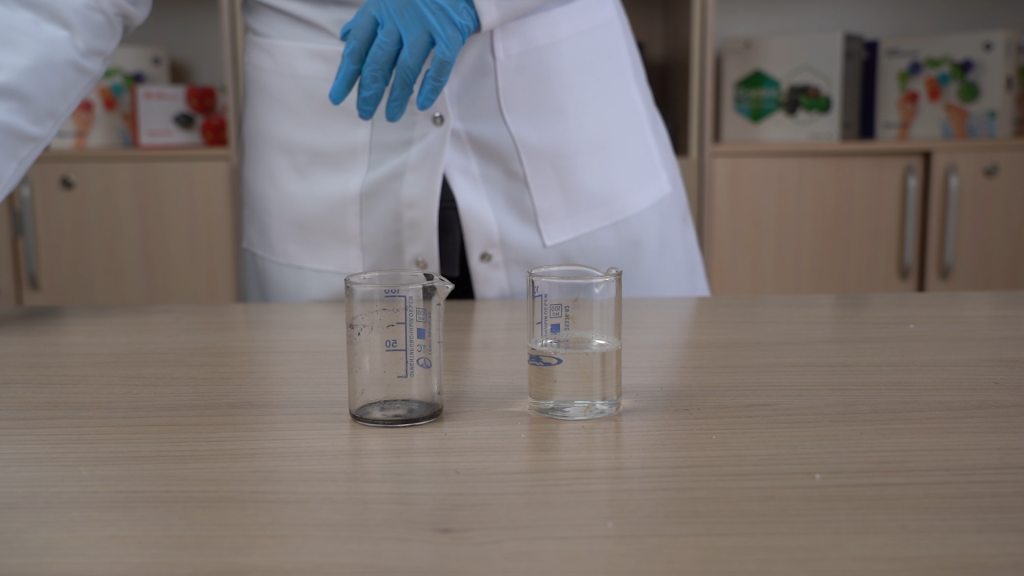
Step 4. Now the resulting transparent filtrate solution is poured into a porcelain saucer. Do the crystallization process with heating appliances.
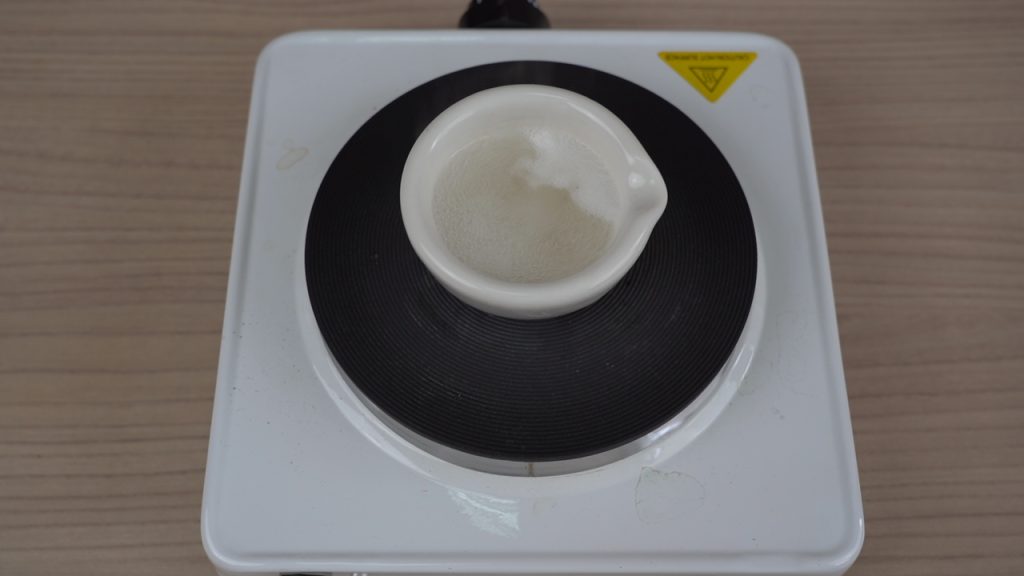
Step 5. The water will evaporate. At the bottom of the cup, table salt is formed in the form of crystals. As a result, we get a pure substance with the formula NaCl (sodium chloride).
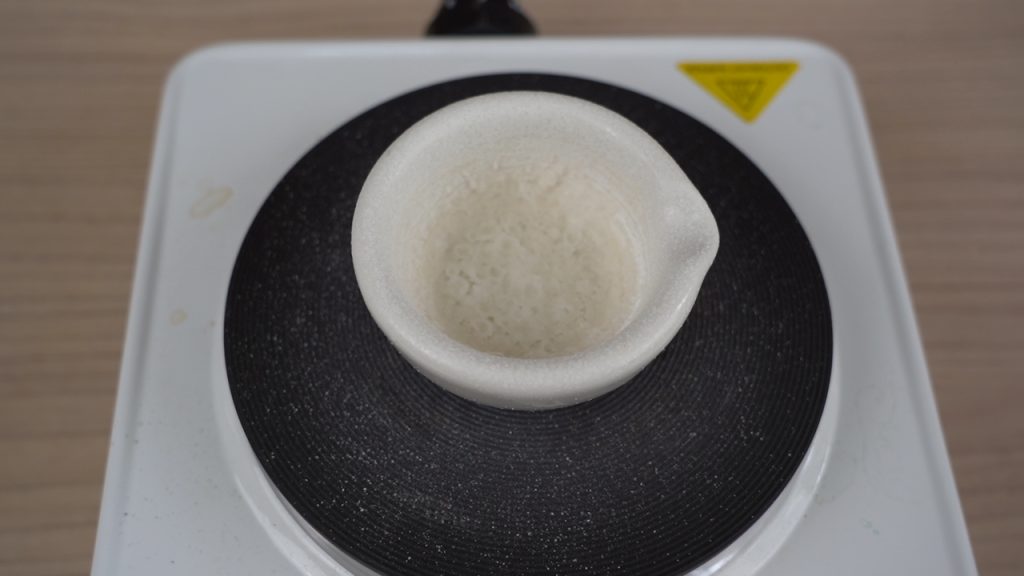
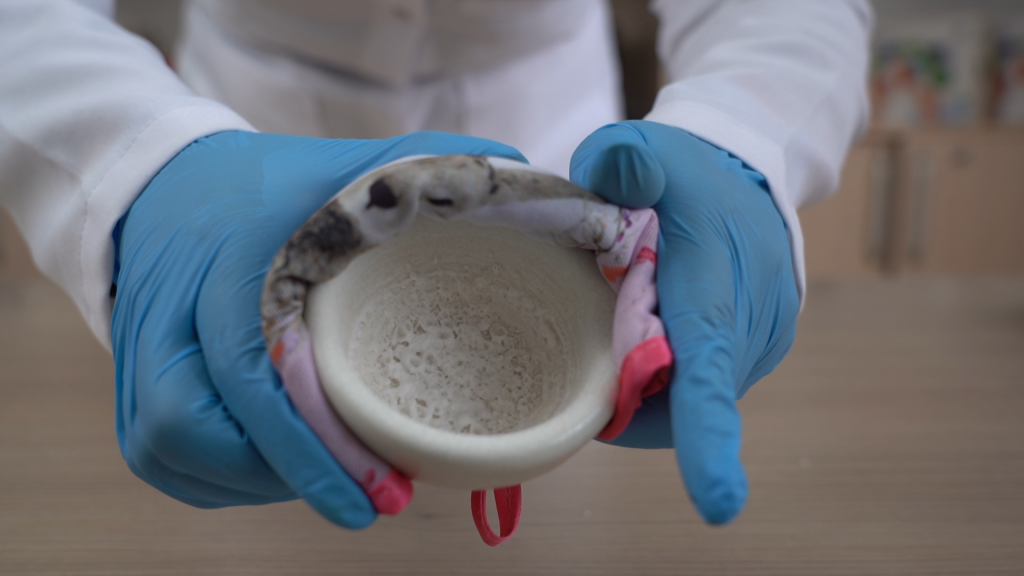
So you used two methods of separating impurities, such as filtration and evaporation, in the process of refining table salt.
Draw conclusions in your workbook:
Conclusion
In this laboratory work, students were introduced to the methods of mixture separation. Contaminated table salt was also cleaned.