
Sliding friction
Forces and Motion: Basics by PhET Interactive Simulations, University of Colorado Boulder, licensed under CC-BY-4.0 (https://phet.colorado.edu)
The title of the Project: Sliding friction
Purpose of the work:
- Identify the dependence of sliding friction on the friction coefficient;
- Identify the dependence of sliding friction on the normal force.
Practical part

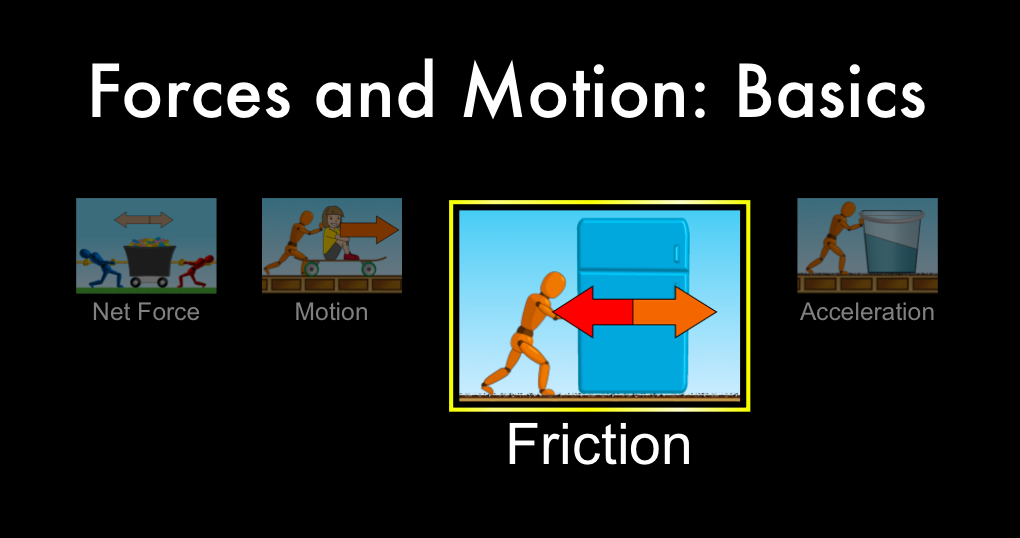
Choose “Friction” to start the virtual experiment.
This is a little instruction to the virtual experiment.
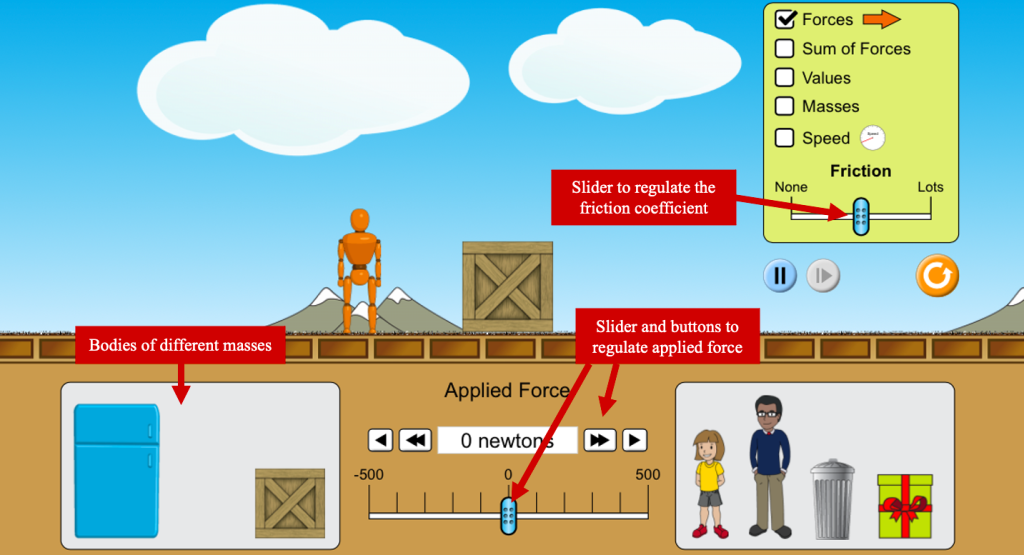
Part 1. Friction coefficient
Virtual experiment.
Step 1. Apply some force to the body such that it starts to move. Pause the experiment. Notice how much the sliding friction is.
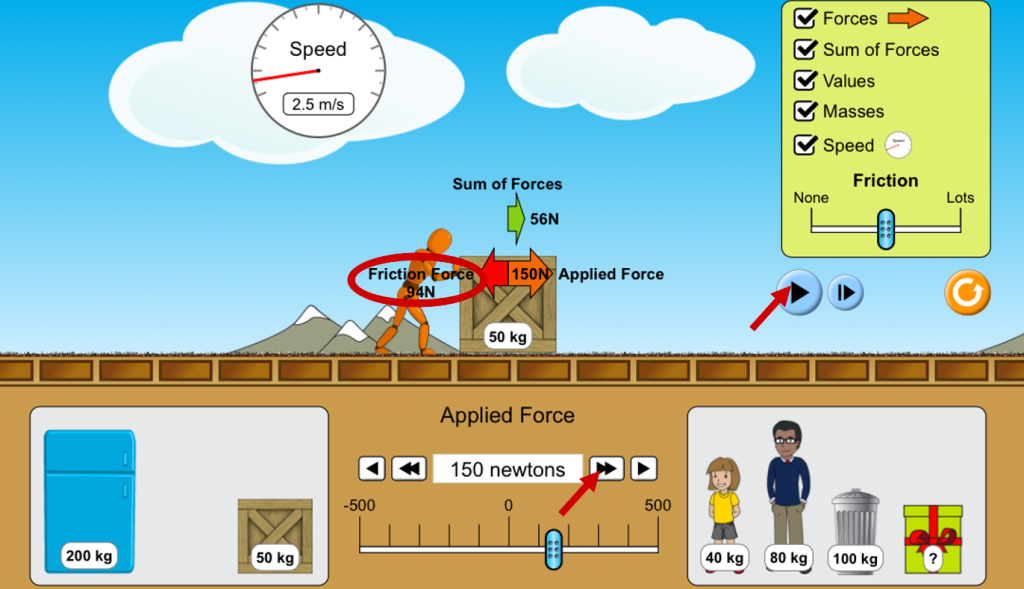
Step 2. Increase the friction coefficient. How the sliding friction changed?
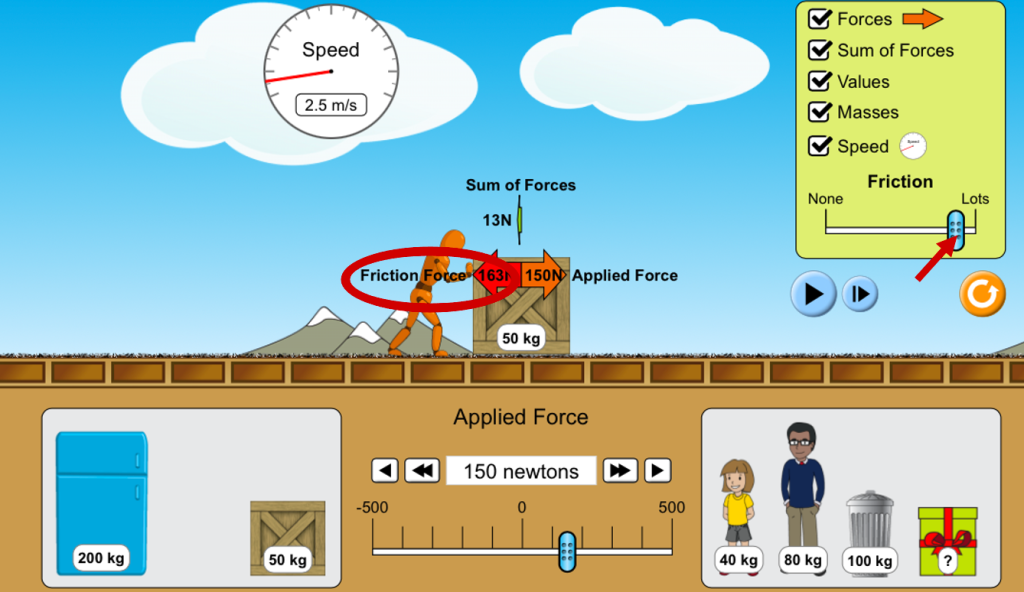
Step 3. Decrease the friction coefficient. How the sliding friction changed?
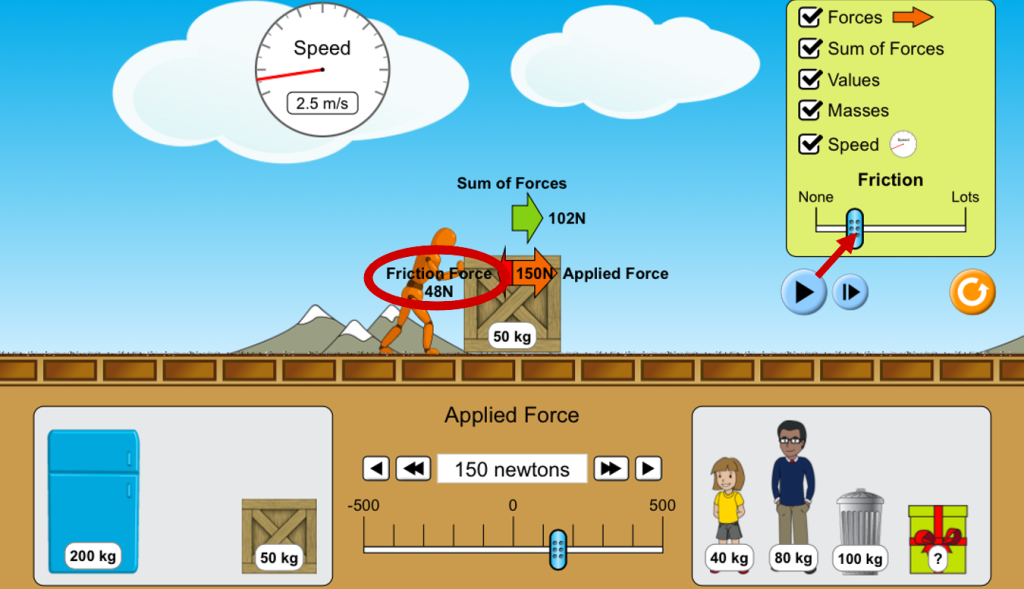
Step 4. Make a conclusion.
Part 2. Normal force
Virtual experiment.
Step 1. Start the experiment again. Apply some force to the body such that it starts to move. Pause the experiment. Notice how much the sliding friction is.
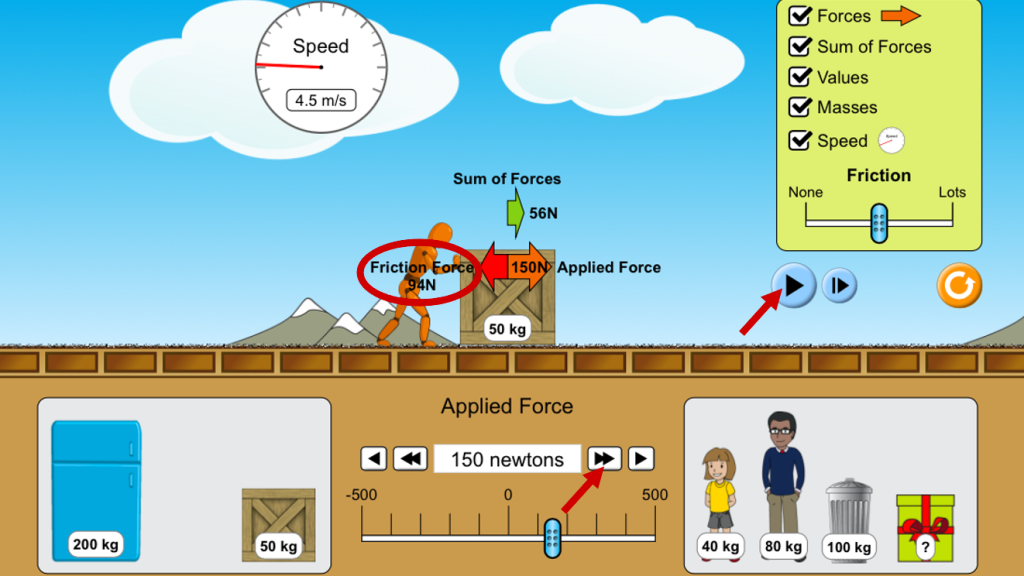
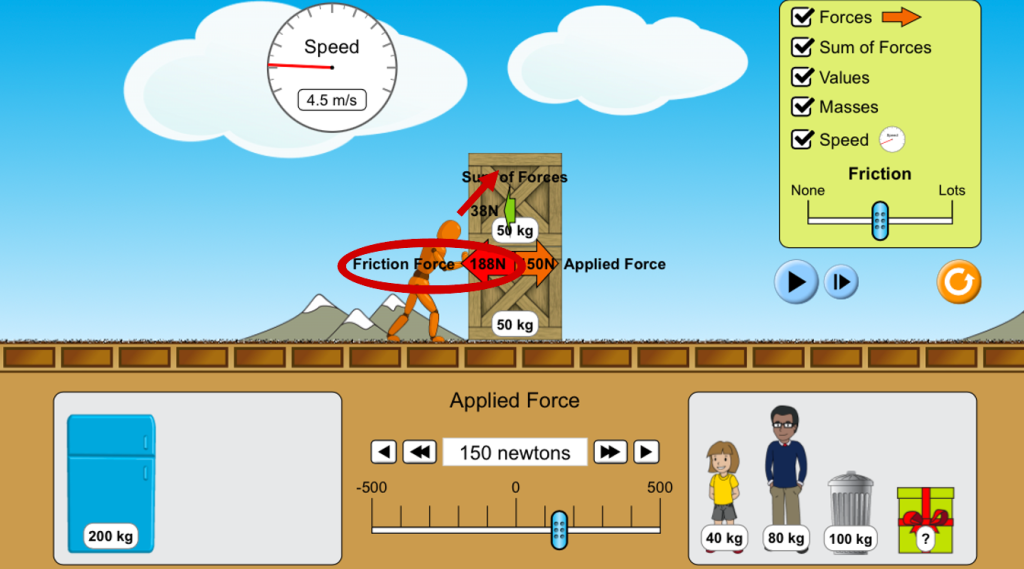
Step 2. Note to check the dependence of the sliding friction on the normal force we change the mass of the object since the normal force is equal to the force of gravity. Hence to change the normal force we should change the force of gravity and to do so we change the mass of the object.
Step 3. Add another box to increase the mass. How the sliding friction changed?
Step 4. Change the object for a lighter one. Apply some force. How the sliding friction changed?
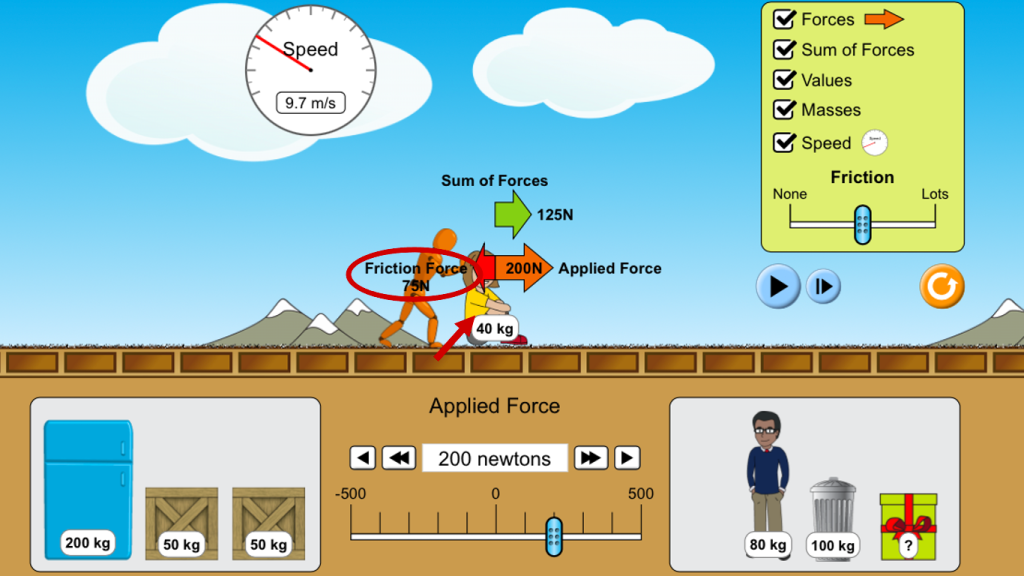
Step 5. Make a conclusion.
Conclusion
The sliding friction is directly proportional to the friction coefficient and the normal force.