
The law of refraction
Bending Light by PhET Interactive Simulations, University of Colorado Boulder, licensed under CC-BY-4.0 (https://phet.colorado.edu)
The title of the Project: The law of refraction
Purpose of the work:
- Study the law of refraction.
Practical part

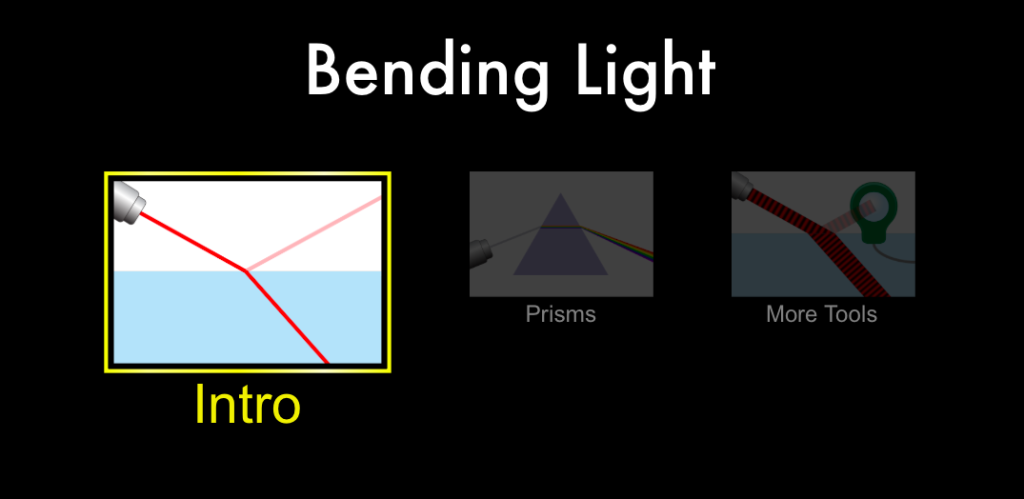
Choose “Intro” to start the virtual experiment.
This is a little instruction to the virtual experiment.
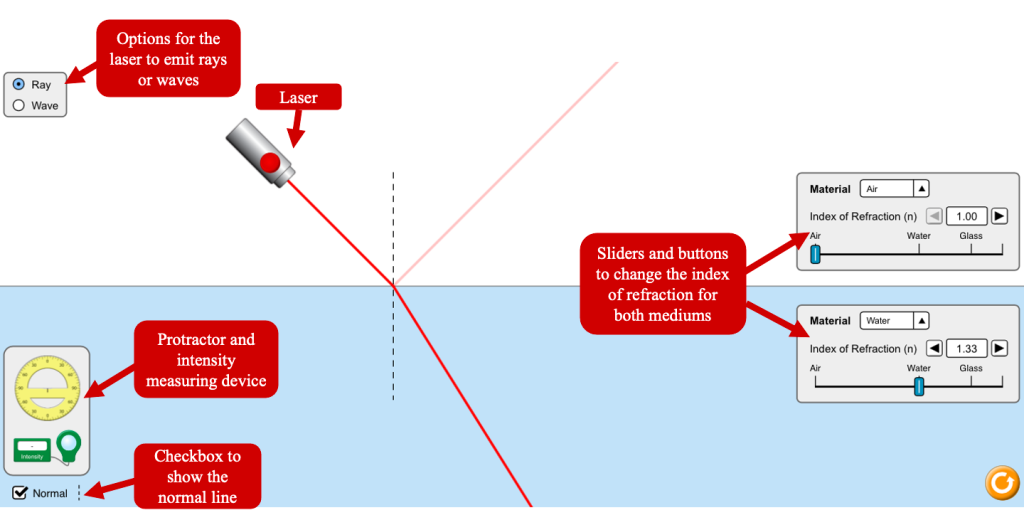
Part 1. Angle
Virtual experiment.
Step 1. Turn on the laser. Position the protractor along the normal line.
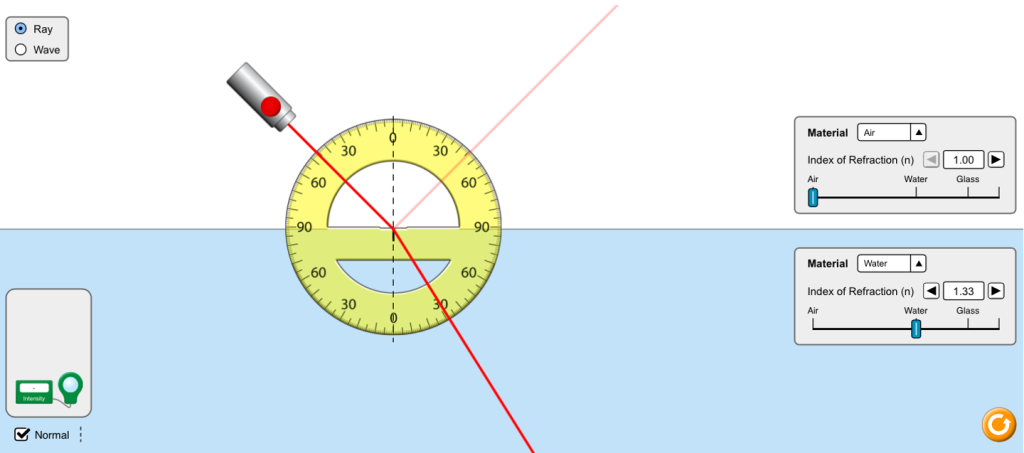
Step 2. Measure the angle between the normal line and the refracted ray. This is the angle of refraction.
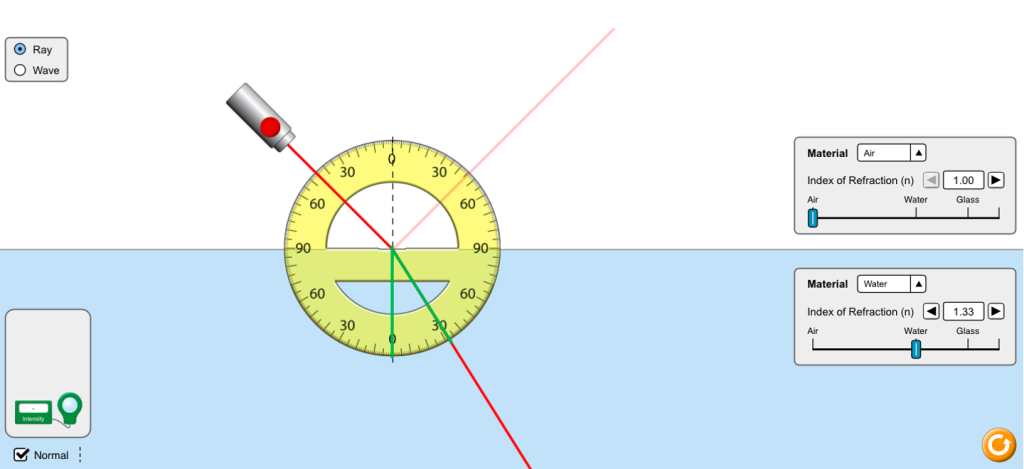
Step 3. Increase the angle of incident ray. What happens? The refracted angle increases.
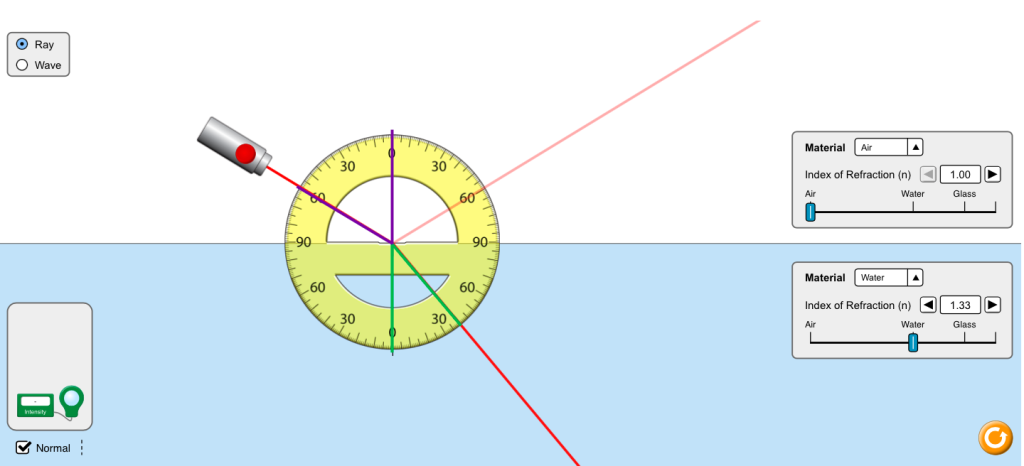
Step 4. Decrease the angle of incident ray. What happens? The refracted angle decreases.
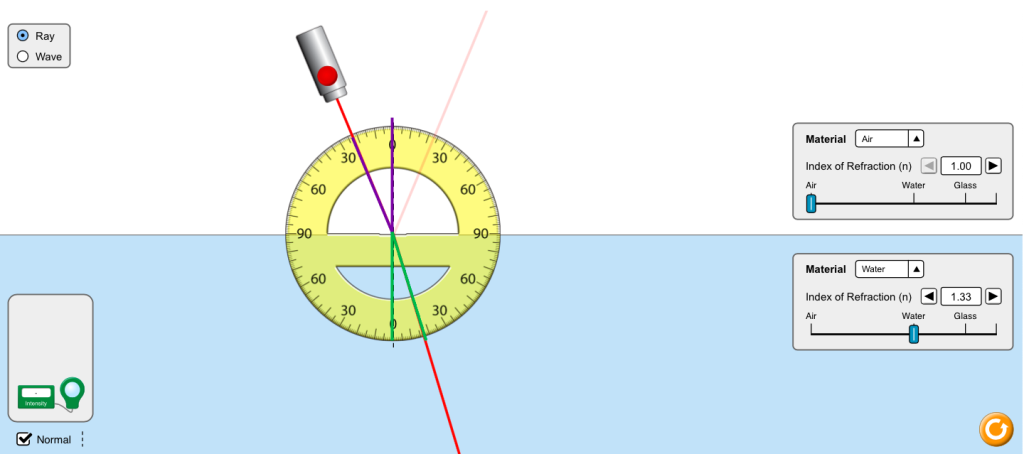
Step 5. Make a conclusion.
Part 2. Index of refraction
Virtual experiment.
Step 1. Increase the index of refraction of the incident ray medium. What happens? The refracted angle increases.
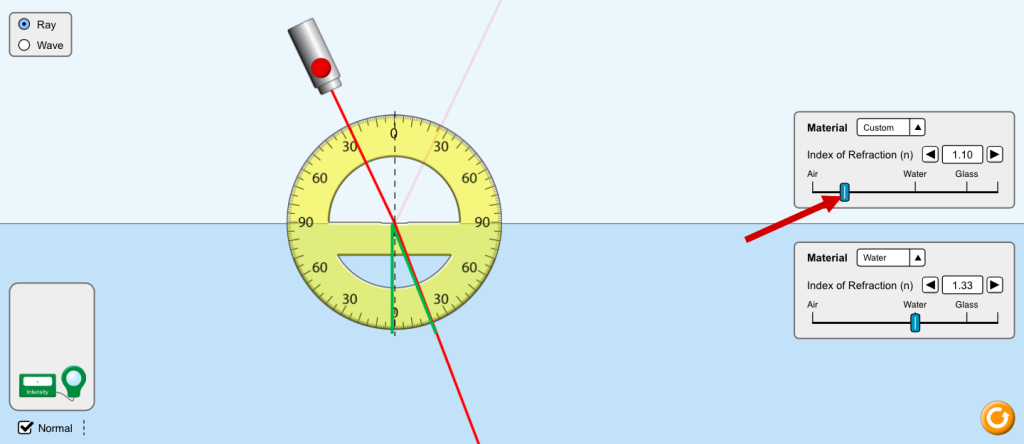
Step 2. Decrease the index of refraction of the incident ray medium. What happens? The refracted angle decreases.
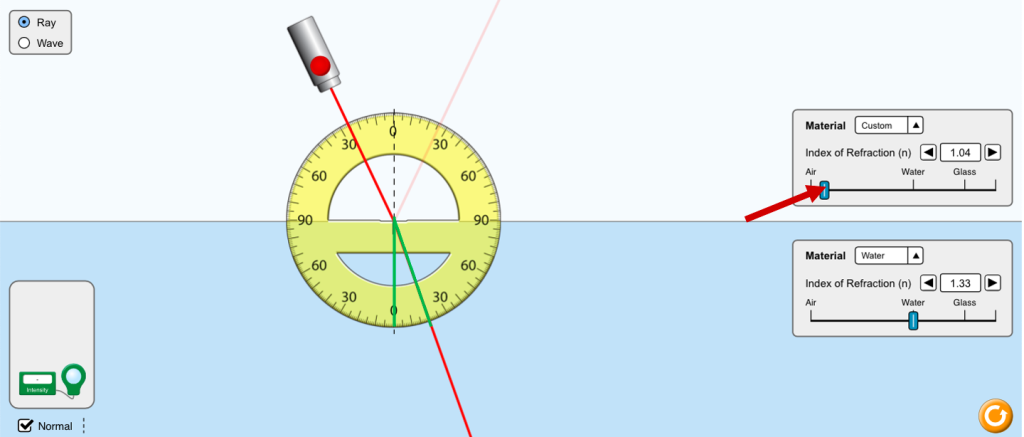
Step 3. Increase the index of refraction of the refracted ray medium. What happens? The refracted angle decreases.
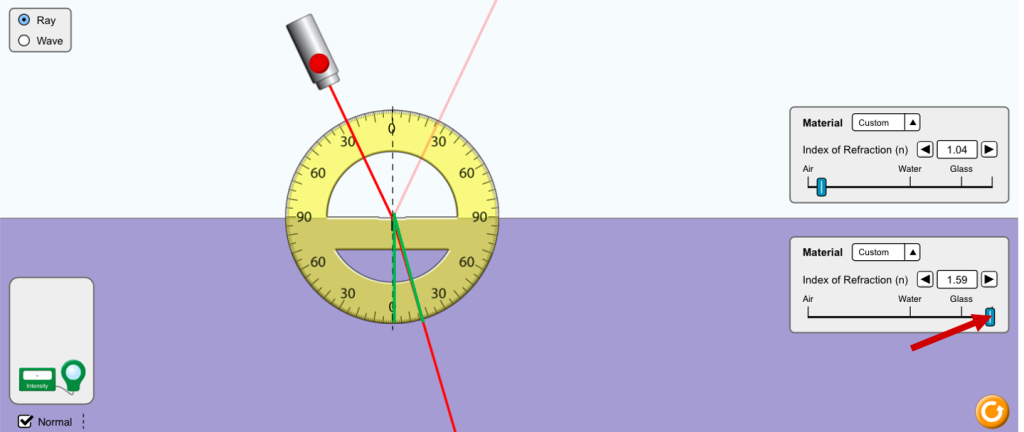
Step 4. Decrease the index of refraction of the refracted ray medium. What happens? The refracted angle increases.
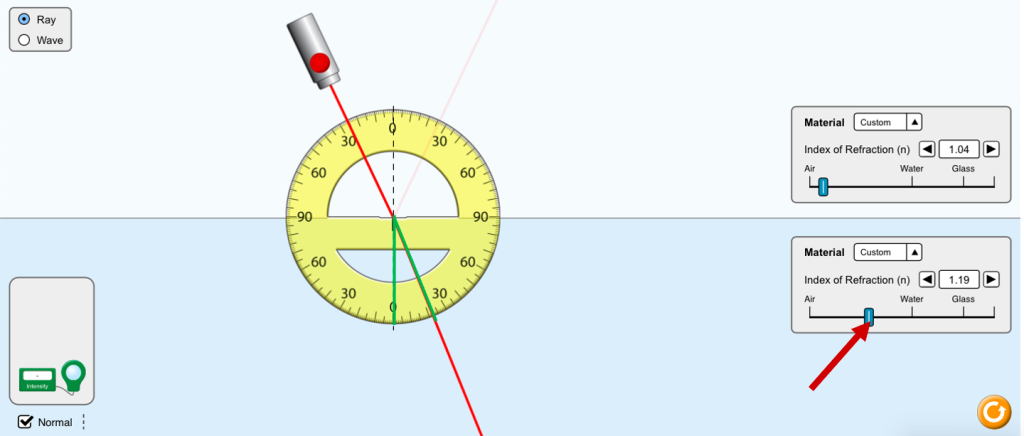
Step 5. Make a conclusion.
Conclusion
The refraction angle depends on the incident ray angle and on the index of refraction of both mediums, incident and refracted. The refraction angle is directly proportional to the incident way angle and the index of refraction of the incident ray medium and is inversely proportional to the index of refraction of the refracted ray. This can be summarized into Snell’s law, which states that the product of sinus of the incident ray angle and the index of refraction of the incident medium is equal to the product of sinus of refraction angle and the index of refraction of refracted angle.