
Study of the acidity and alkalinity of solution media
pH Scale: Basics by PhET Interactive Simulations, University of Colorado Boulder, licensed under CC-BY-4.0 (https://phet.colorado.edu)
The title of the Project: Study of the acidity and alkalinity of solution media
This virtual laboratory is intended for use in chemistry classes on the following topics:
- 7th grade. Chapter V. “Chemical reactions”.
Objectives:
- Identifying acidity/basicity: Students will investigate various everyday liquids to determine if they are acidic or basic.
- Understanding pH: The simulation allows students to learn how pH is affected by the concentration of a solution.
- Impact of dilution: Students will experiment with diluting solutions and observe how the pH changes as water is added.
Practical part

The “pH scale: Basics” simulation allows students to explore the pH of everyday liquids. They can determine if a solution is acidic or basic and learn how dilution with water affects pH.
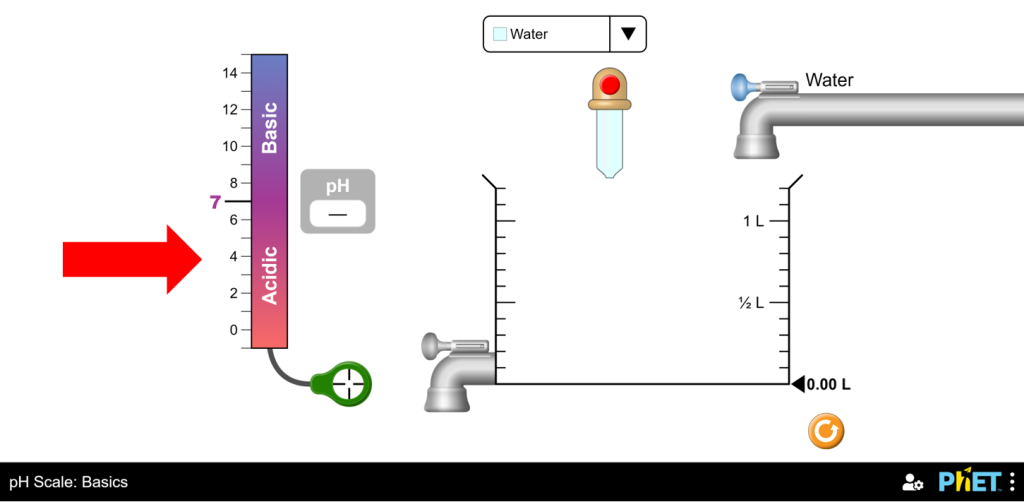
Step 1. Launch the simulation. You’ll see a beaker on the right where you can add solutions and a pH scale with a sensor on the left.
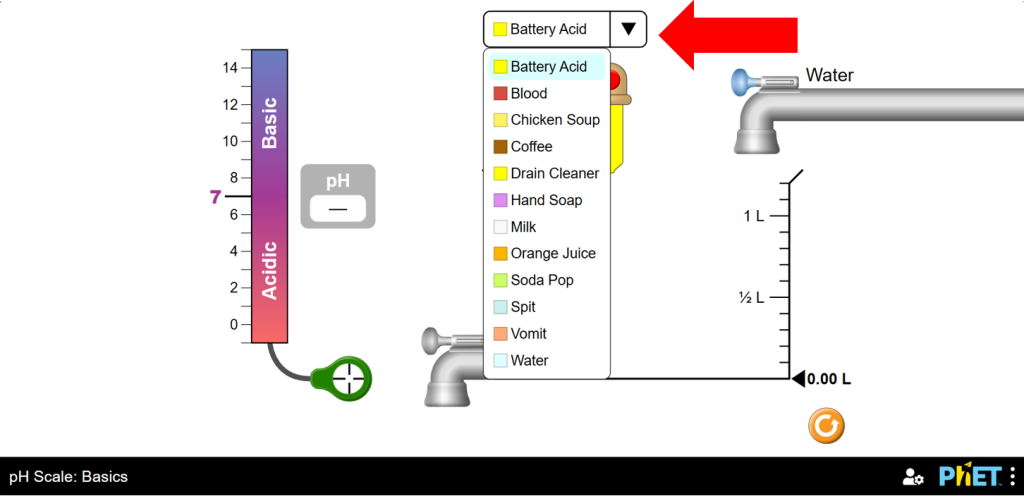
Step 2. Use the dropdown menu at the top of the screen to pick a solution for testing.
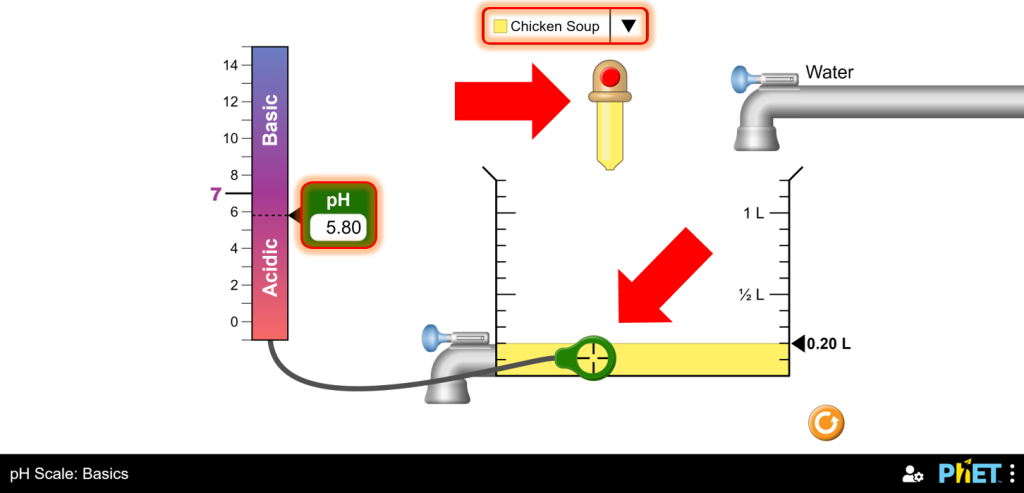
Step 3. Use the dropper to add some solution (like chicken soup) to the beaker. Then, drag the pH probe into the solution to see its pH level. You’ll discover that chicken soup is acidic.
Step 4. See how adding water from the faucet changes the pH, but draining some solution doesn’t affect the pH.
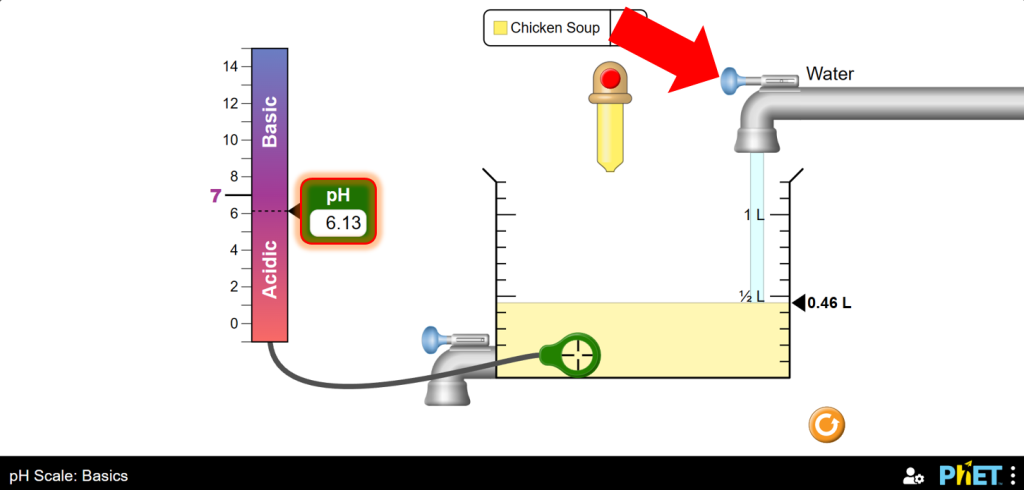
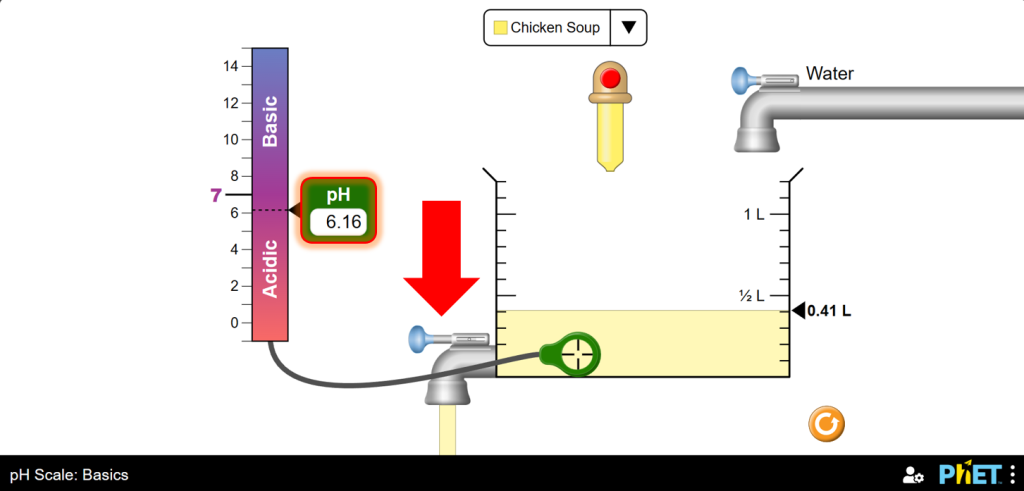
“Dilution is the process of making something less concentrated by adding more solvent, which is usually water.”
Step 5. Compare how diluting acids and bases affects the solution’s pH. You might notice that the pH gets closer to 7 (neutral) in both cases.
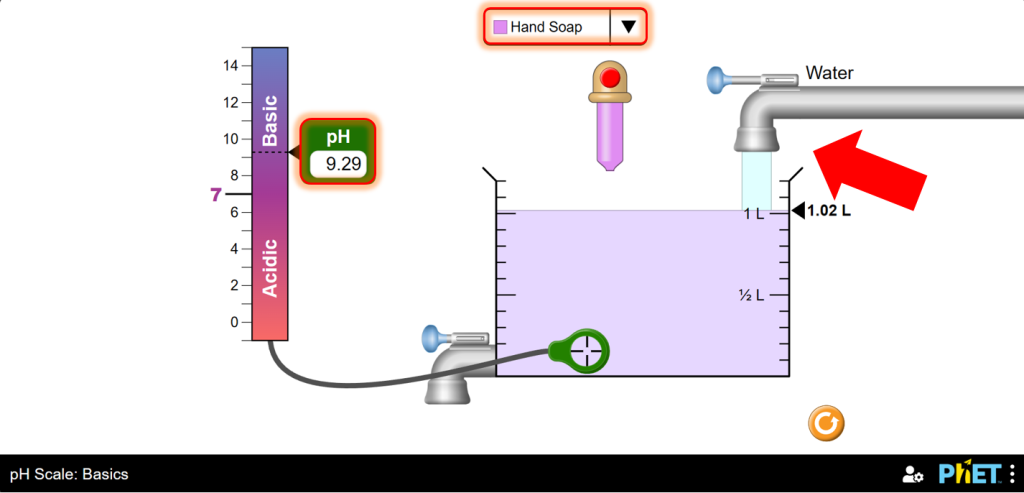
Virtual experiment
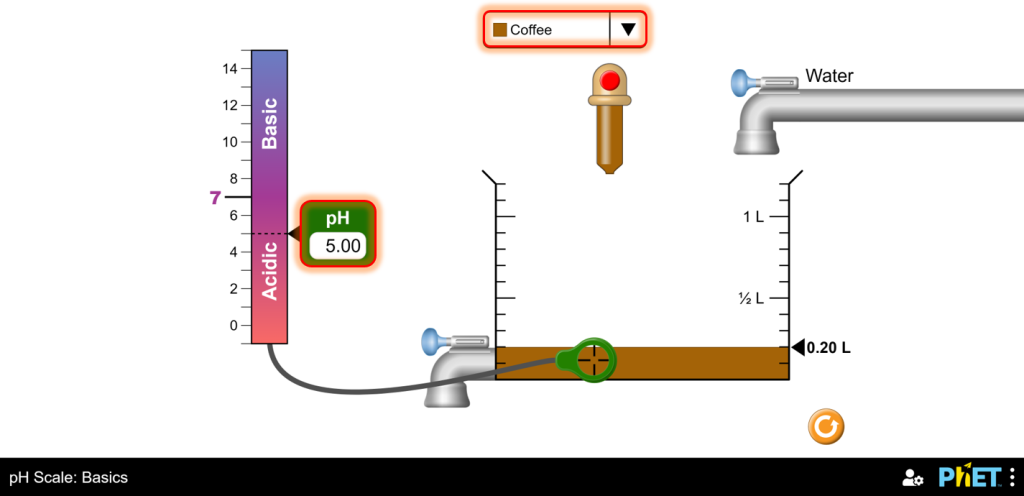
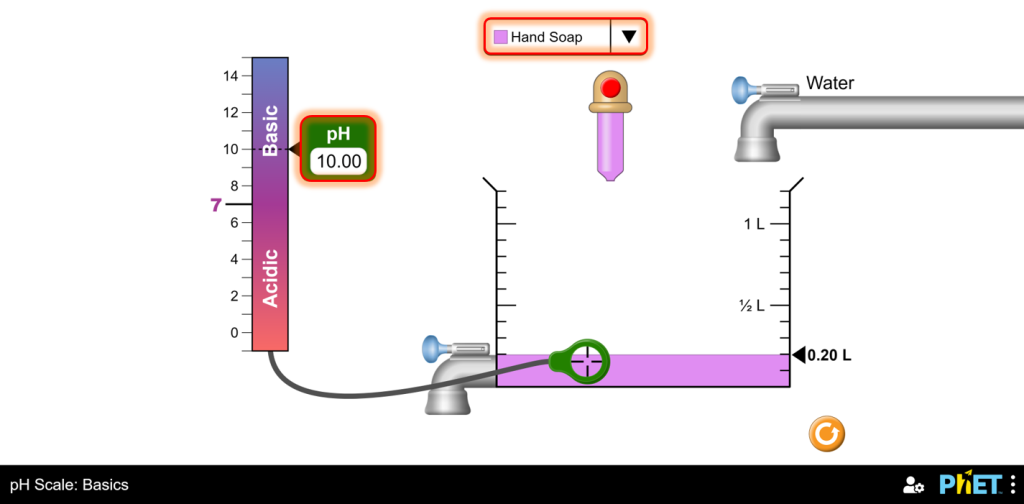
Step 6. Select a substance from the list. Use the dropper to fill the beaker halfway (½ L).
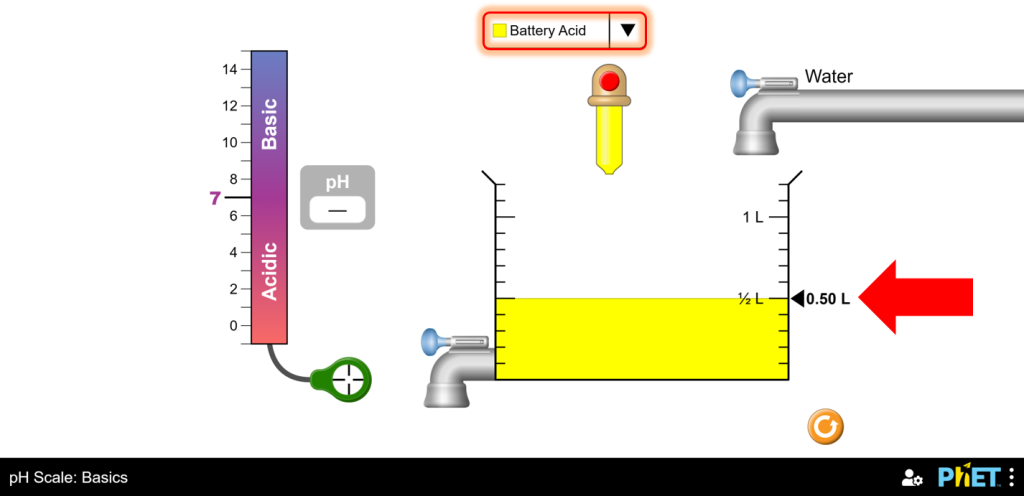
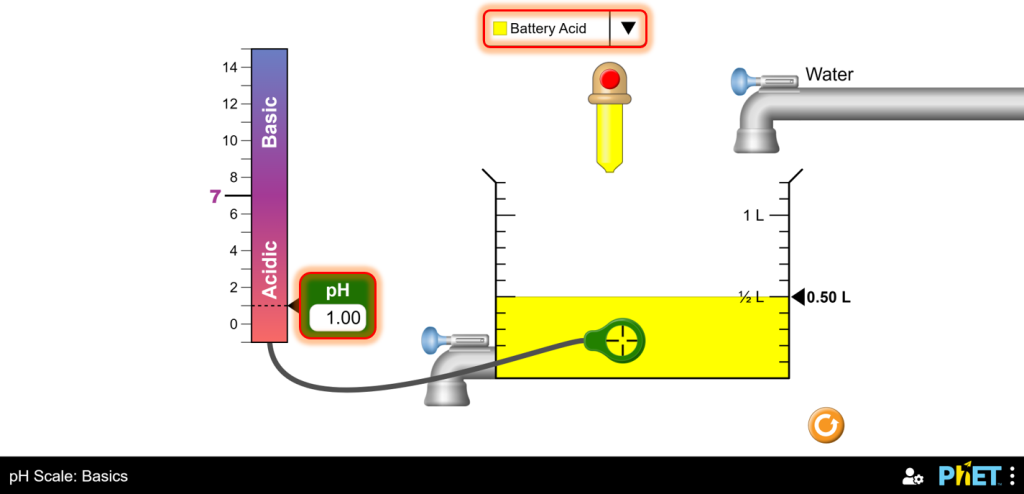
Step 7. Place the pH sensor in the beaker. Record the substance’s pH level and whether it’s acidic, basic, or neutral in a table below.
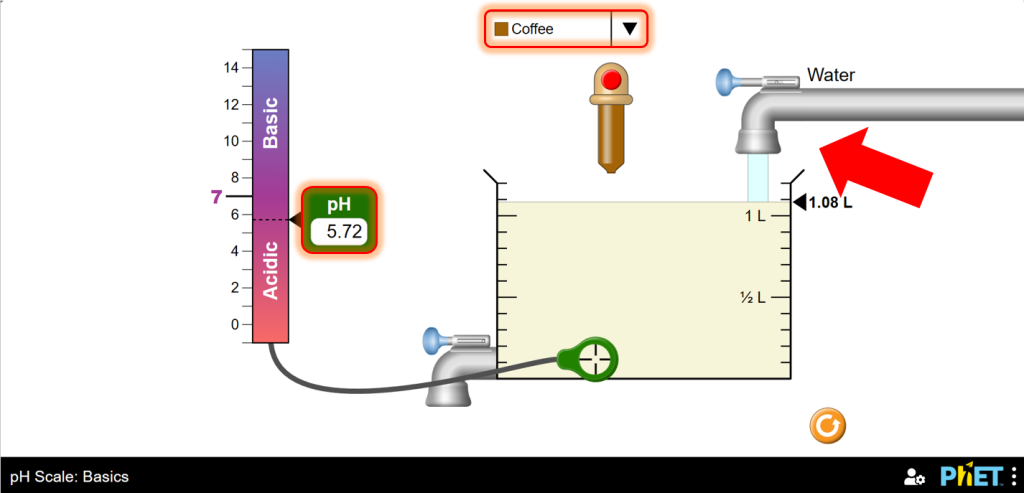
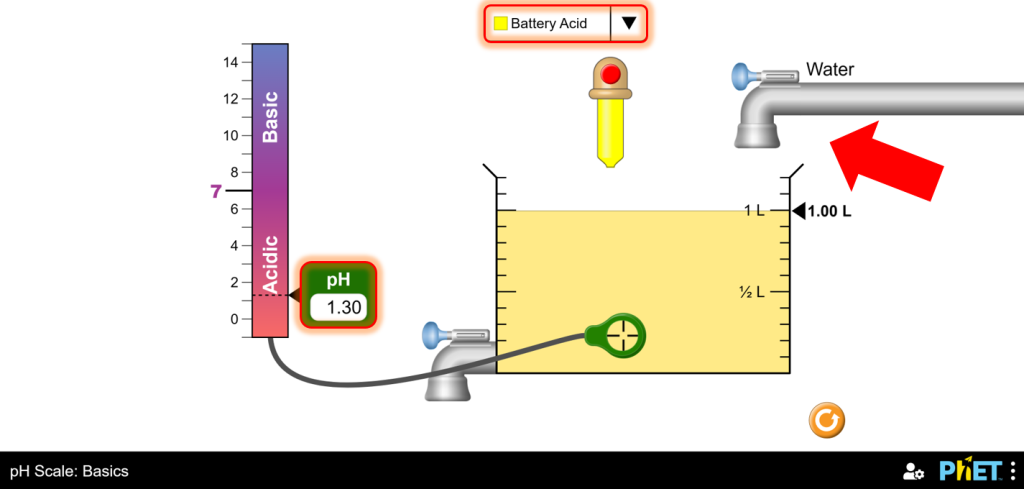
Step 8. Fill the beaker completely (1 L) by clicking the water faucet. Now, record the substance’s pH level after dilution in the same table.
Step 9. Repeat steps 6 through 8 for each substance listed in the table.
Table 1
| Substance | pH level | Acid/Base/Neutral | pH level after dilution |
| Battery acid | 1.0 | acidic | 1.30 |
| Blood | |||
| Chicken soup | |||
| Coffee | |||
| Drain cleaner | |||
| Hand soap | |||
| Milk | |||
| Orange juice | |||
| Soda pop | |||
| Spit | |||
| Vomit |
Conclusion
The “pH scale: Basics” simulation provides an interactive learning experience for students to grasp the concepts of pH, acidity, and basicity of common substances. By performing virtual experiments, students can observe how dilution with water affects the pH of both acidic and basic solutions.