
Pendulum
Pendulum lab by PhET Interactive Simulations, University of Colorado Boulder, licensed under CC-BY-4.0 (https://phet.colorado.edu)
The title of the Project: Pendulum
Purpose of the work:
- Identify what does the period of pendulum oscillation depend on.
Practical part

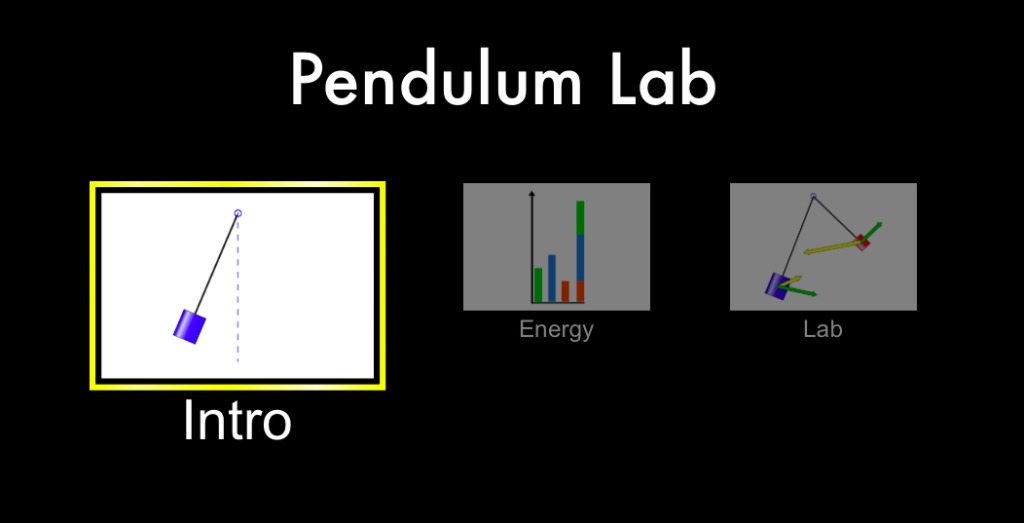
Choose “Intro” to start the virtual experiment.
This is a little instruction to the virtual experiment.
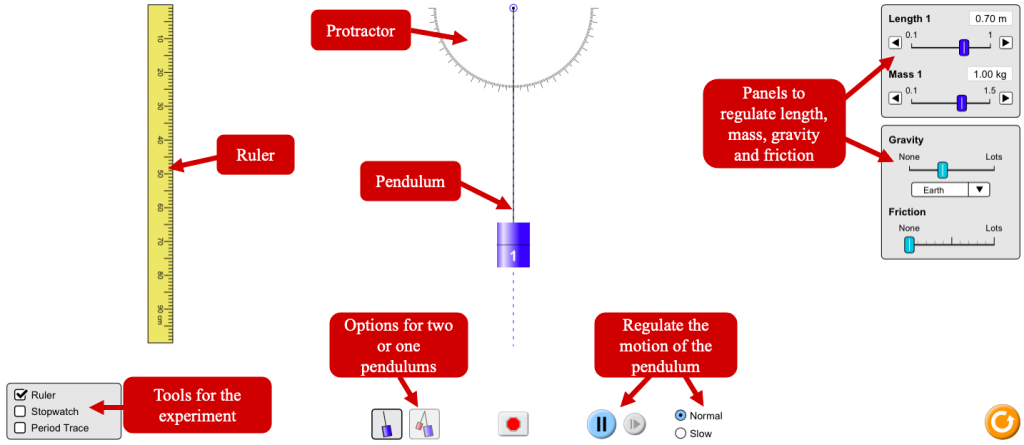
Part 1. Length
Virtual experiment.
Step 1. Set the parameters as shown in the photo.
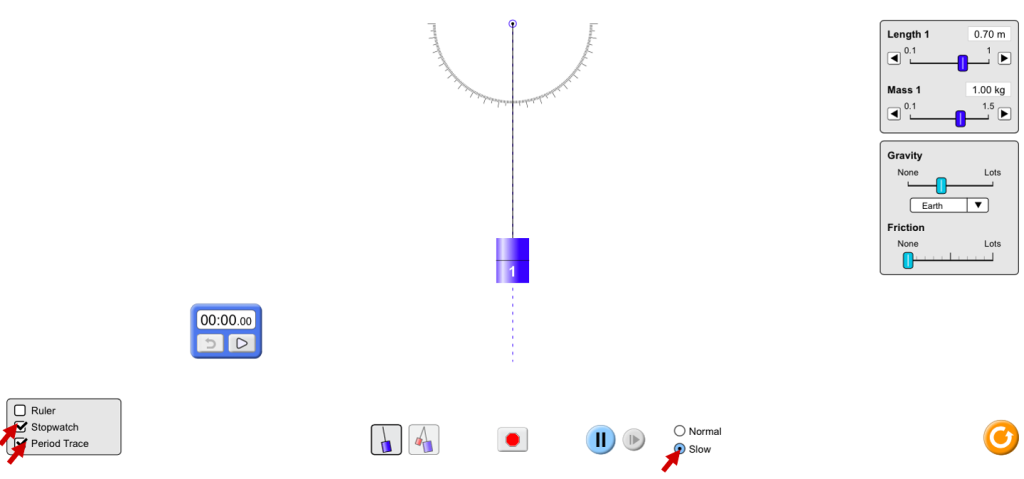
Step 2. Using the stopwatch count the period for the given length.
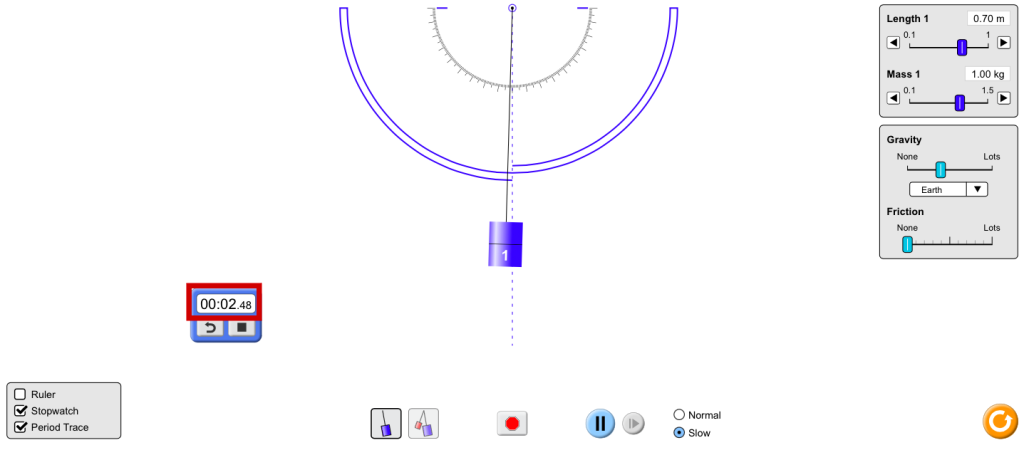
Step 3. Increase the length. Using the stopwatch count the period again. Compare the results.
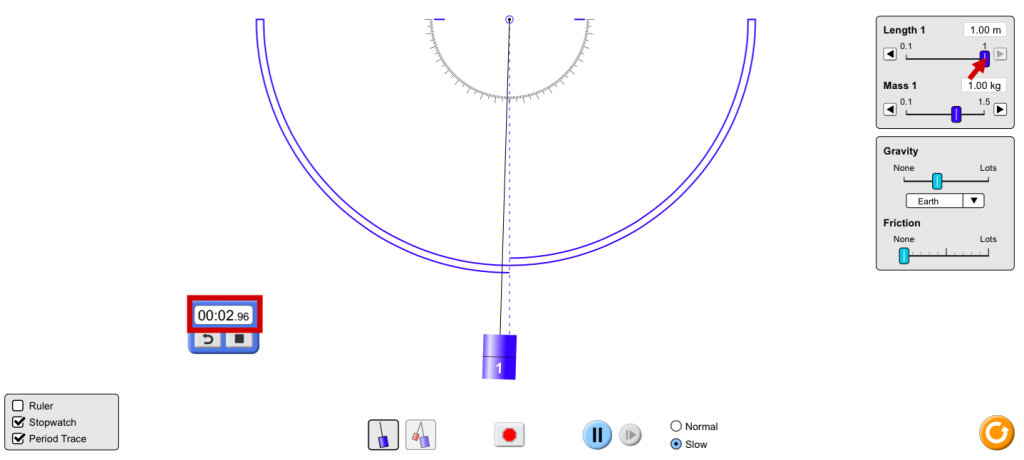
Step 4. Decrease the length. Using the stopwatch count the period again. Compare the results.
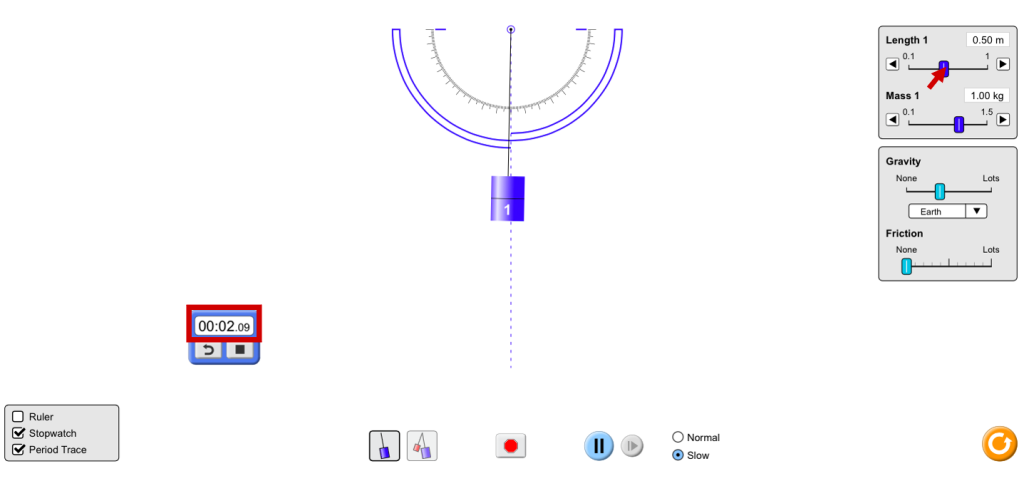
Step 5. Make a conclusion.
Part 2. Mass
Virtual experiment.
Step 1. Increase the mass of the pendulum. Using the stopwatch count the period. Compare the results with the previous one.
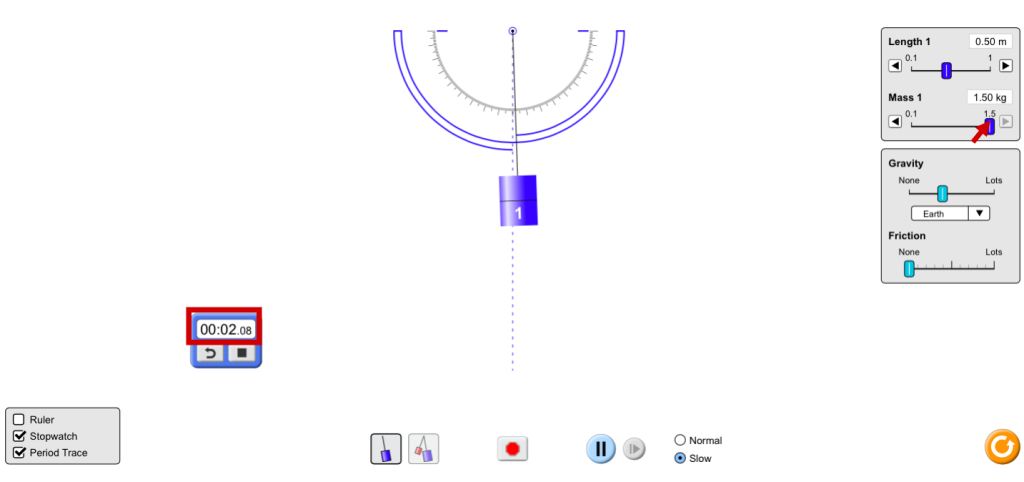
Step 2. Decrease the mass of the pendulum. Using the stopwatch count the period. Compare the results.
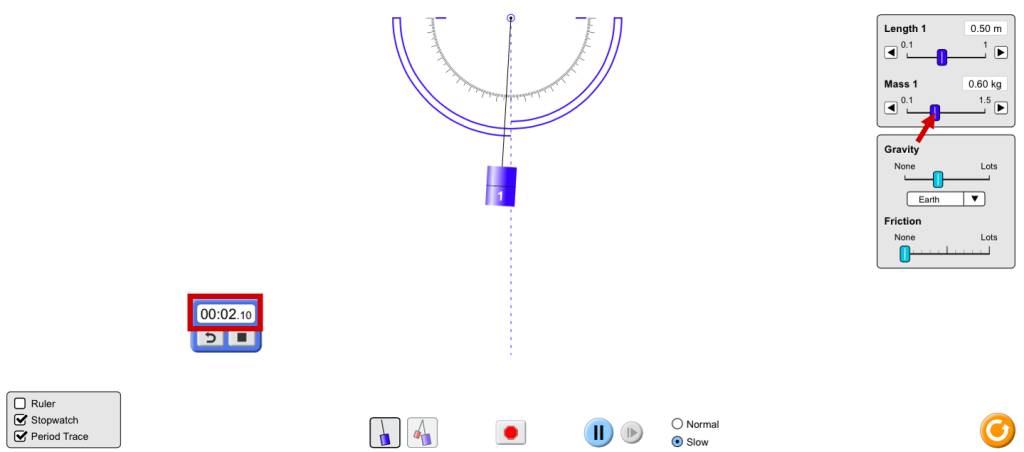
Step 3. Make a conclusion.
Part 3. Gravitational acceleration
Virtual experiment.
Step 1. Increase the gravitational acceleration. Using the stopwatch count the period. Compare the results with the previous one.
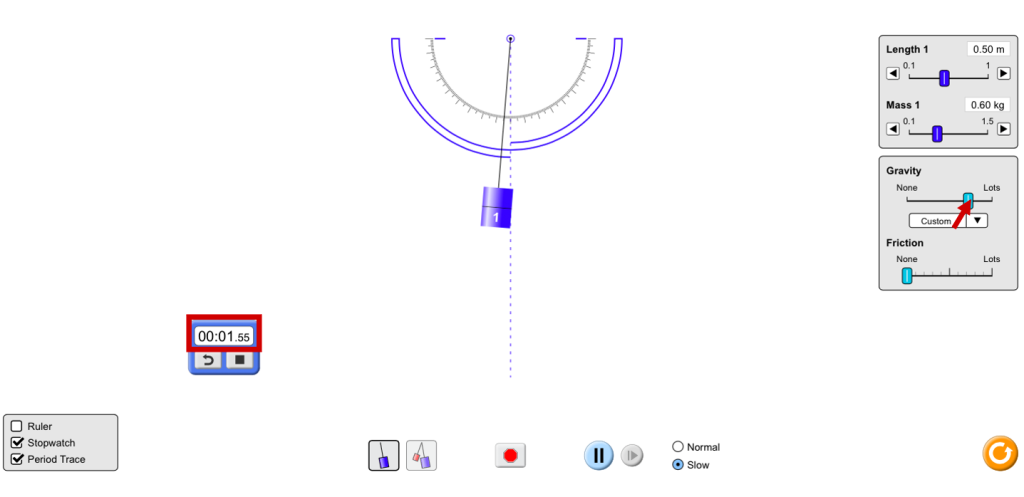
Step 2. Decrease the gravitational acceleration. Using the stopwatch count the period. Compare the results.
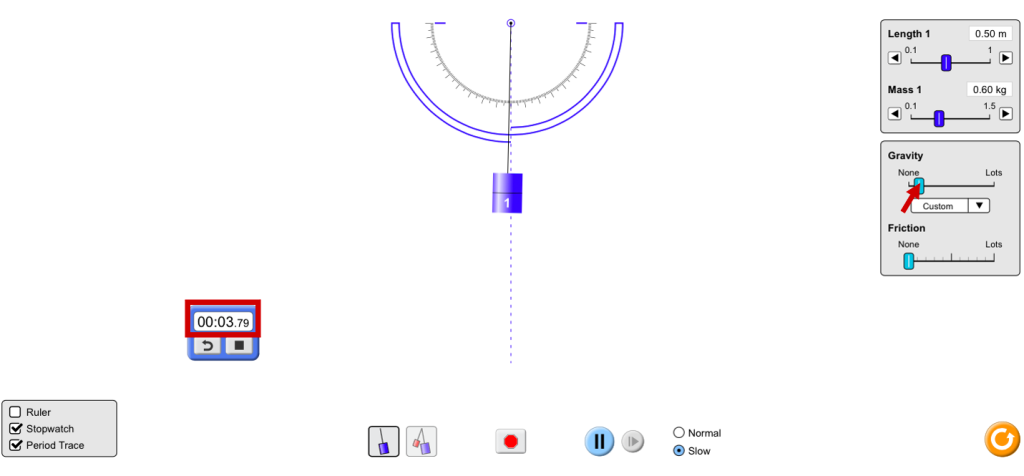
Step 3. Make a conclusion.
Conclusion
The period of the pendulum is directly proportional to the length of the pendulum, inversely proportional to the gravitational acceleration and doesn’t depend on the mass.