
Lesson
Purpose of the work:
- Investigate the reaction of acetic acid with zinc
- Investigate the reaction of hydrochloric acid with zinc
Expected results:
After completing the work, students can:
- develop teamwork skills
- be able to analyze and summarize the information received
- draw logical conclusions
Teacher’s Guide:
- The task is performed in groups of people
- Before starting laboratory work, please read the safety rules by following the link:
- To download the worksheet, follow the link:
Theoretical part
When diluted acids react with metals, they can cause interesting chemical reactions. When reacting with active metals, they form salts and release hydrogen gas.
The reactivity series of metals helps predict which metals will react with acids. More active metals like magnesium and aluminum react easily with acids, while less active ones, such as copper and silver, do not react.
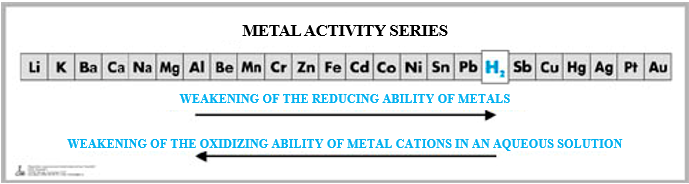
Examples of reactions:
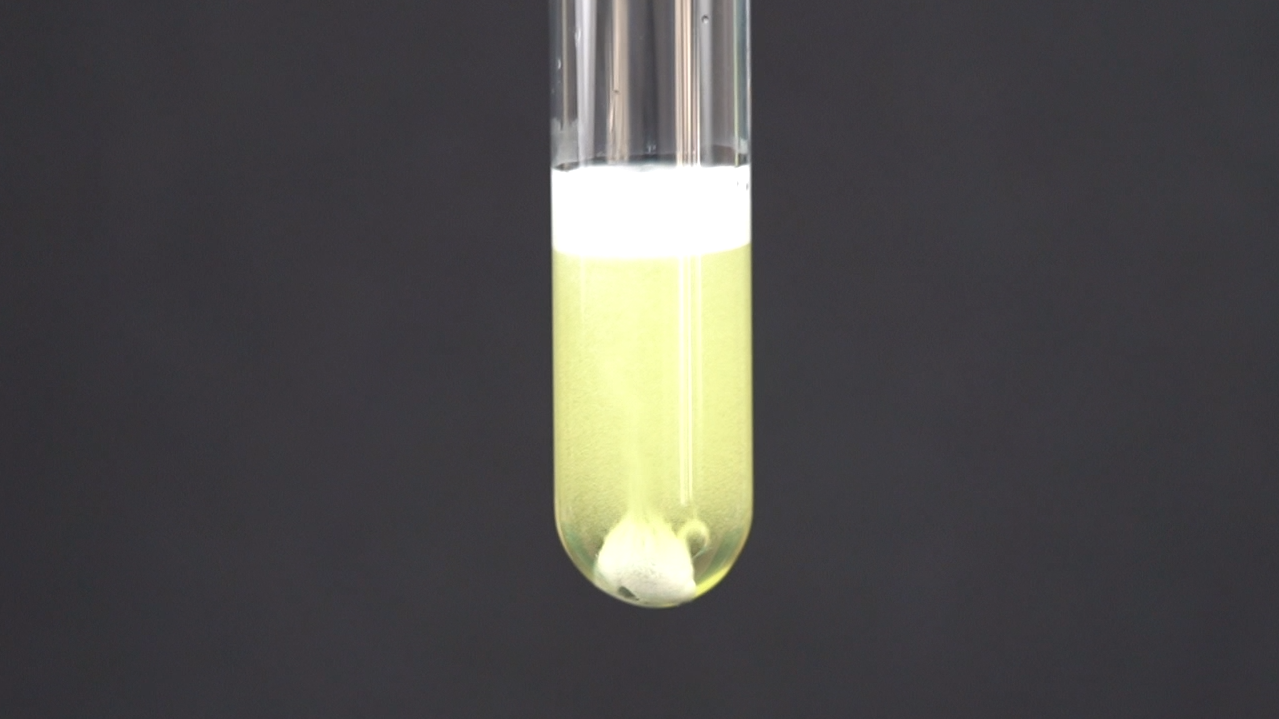
- Magnesium’s reaction with hydrochloric acid:
Magnesium + Hydrochloric acid → Magnesium chloride + Hydrogen
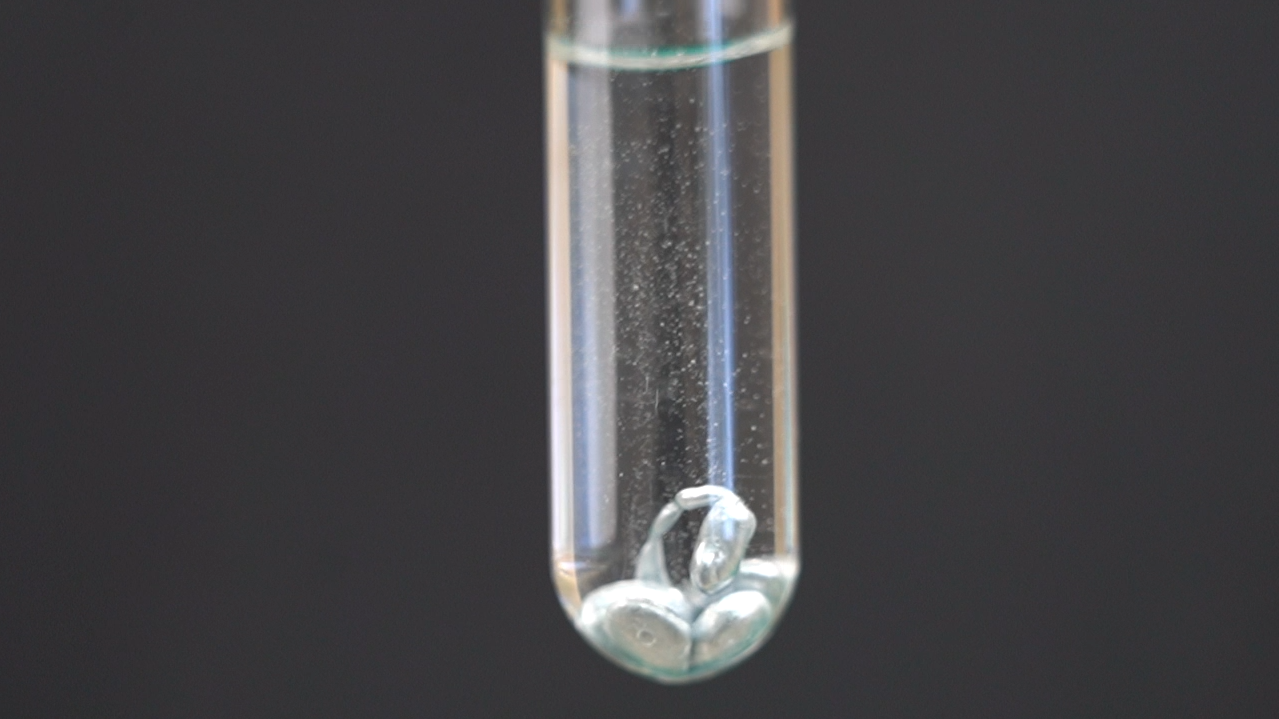
- Zinc’s reaction with acetic acid:
Zinc + Acetic acid → Zinc acetate + Hydrogen
Practical part
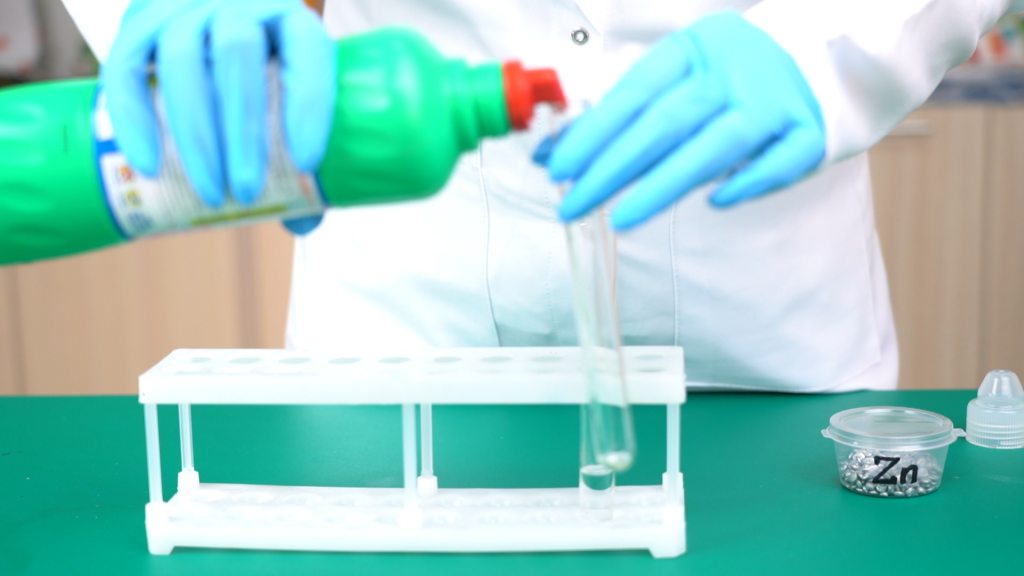
Step 1. Prepare the necessary materials. Don’t forget to wear gloves when working with acids! This experiment uses food-grade vinegar (70%) and household cleaning solution based on hydrochloric acid (9%).
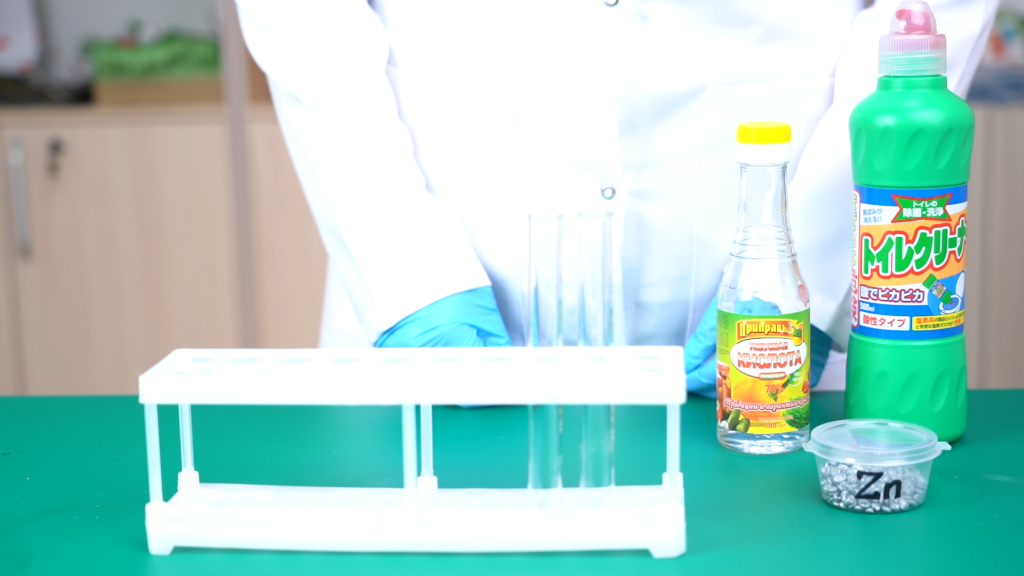
Step 2. Place a piece of zinc in each test tube.
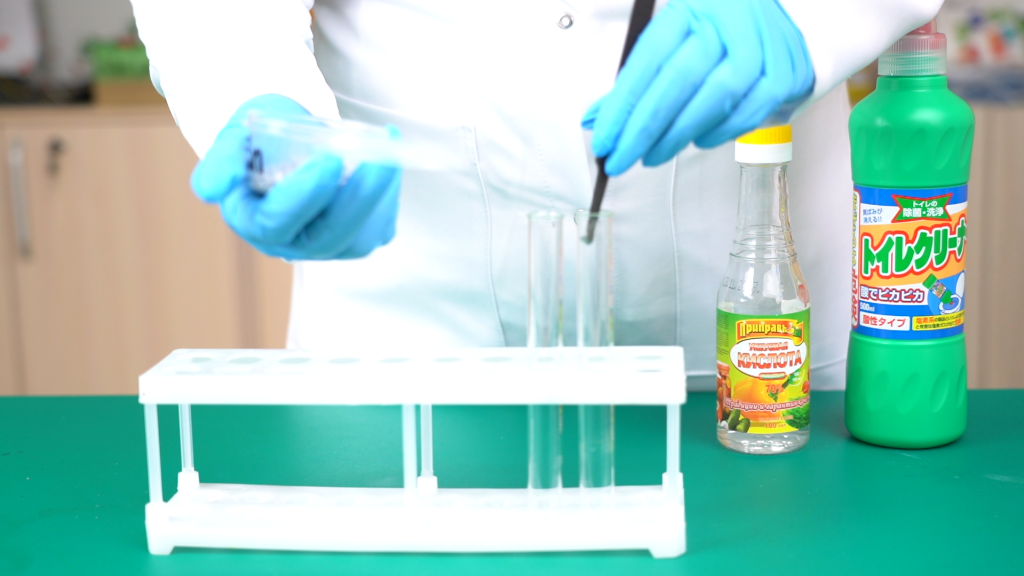
Step 3. Pour a small amount of acetic acid into one test tube and hydrochloric acid into the other.
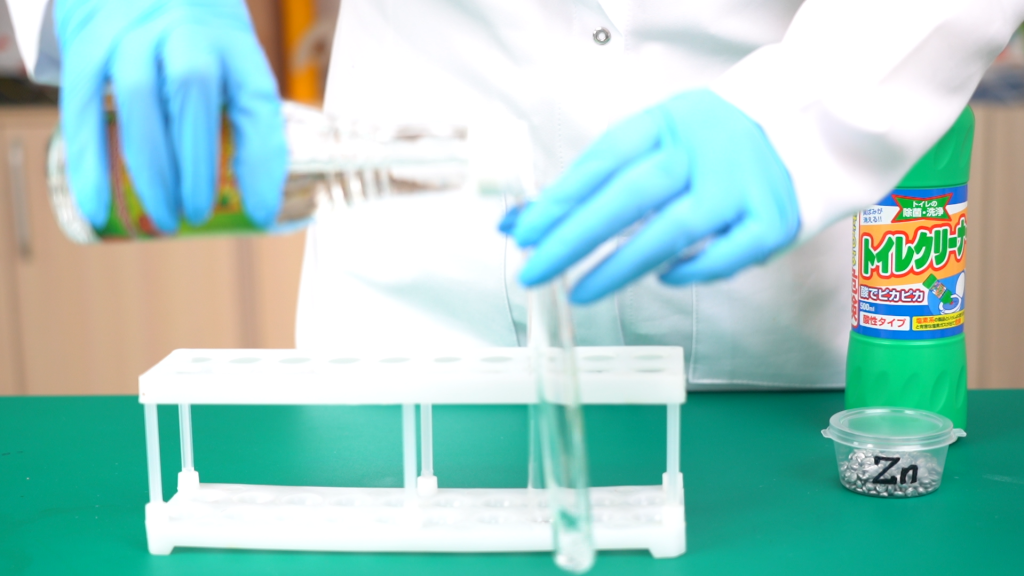
Step 4. Observe the reaction. Draw conclusions by comparing the reactions in both test tubes. Record your observations and conclusions in the Worksheet.
Conclusion
In this experiment, students observed how diluted acids interact with metals and learned to predict such reactions based on the reactivity series of metals.