
Lesson
Purpose of the work:
- Experimentally prove the release of hydrogen during the reaction of acids with metals.
Expected results:
After completing the work, students can:
- develop teamwork skills
- be able to analyze and summarize the information received
- draw logical conclusions
Teacher’s Guide:
- The task is performed in pairs
- Before starting laboratory work, please read the safety rules by following the link:
- To download the worksheet, follow the link:
Theoretical part
Reaction of Metals with Acids
Metals like zinc, magnesium, and iron can react with acids, releasing gaseous hydrogen. These reactions occur because the metal displaces hydrogen from the acid. This is an important part of chemistry that demonstrates the properties of metals and acids. Let’s consider the reaction of magnesium with hydrochloric acid:
magnesium + hydrochloric acid = magnesium chloride + hydrogen ↑
As a result of the reaction, a salt — magnesium chloride (MgCl₂) is formed, and hydrogen (H₂) is released as a gas.
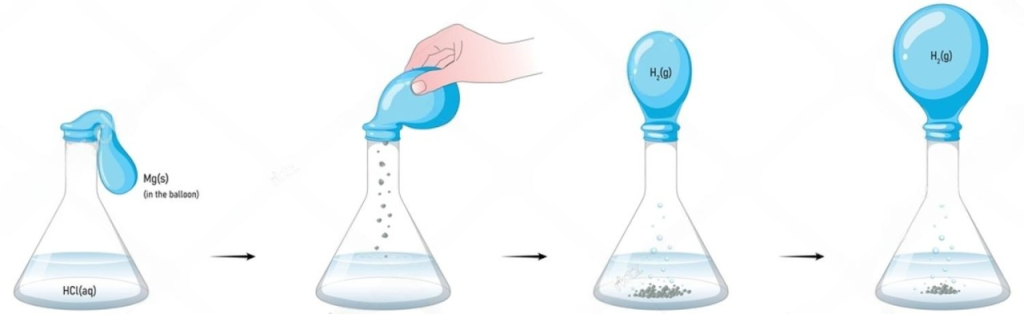
What is Hydrogen?
Hydrogen is a colorless, odorless, and lightweight gas. It is the lightest gas and has explosive properties when mixed with air or oxygen. To confirm that hydrogen is released during the reaction, it is ignited, and if the gas burns with a pop, this confirms the presence of hydrogen.
Why Do Such Reactions Occur?
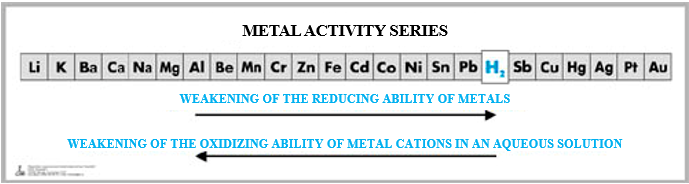
Metals in the activity series can displace hydrogen from acids. For example, zinc is above hydrogen in the activity series, so it can displace it from the acid. As a result, zinc turns into salt (ZnCl₂), and hydrogen is released as gas.
zinc + hydrochloric acid = zinc chloride + hydrogen ↑
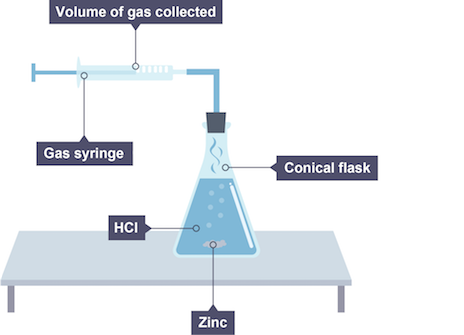
Practical Importance
Such reactions are important not only in the laboratory but also in real life. They are used in the chemical industry to obtain hydrogen and to produce various chemical substances.
Practical part
Step 1. Prepare all necessary materials: diluted hydrochloric acid (HCl), zinc granules, a glass flask, and a balloon. In this experiment, household cleaning product (hydrochloric acid) is used as the acid.
Important: Always wear gloves when working with acids to protect your skin from possible chemical burns.
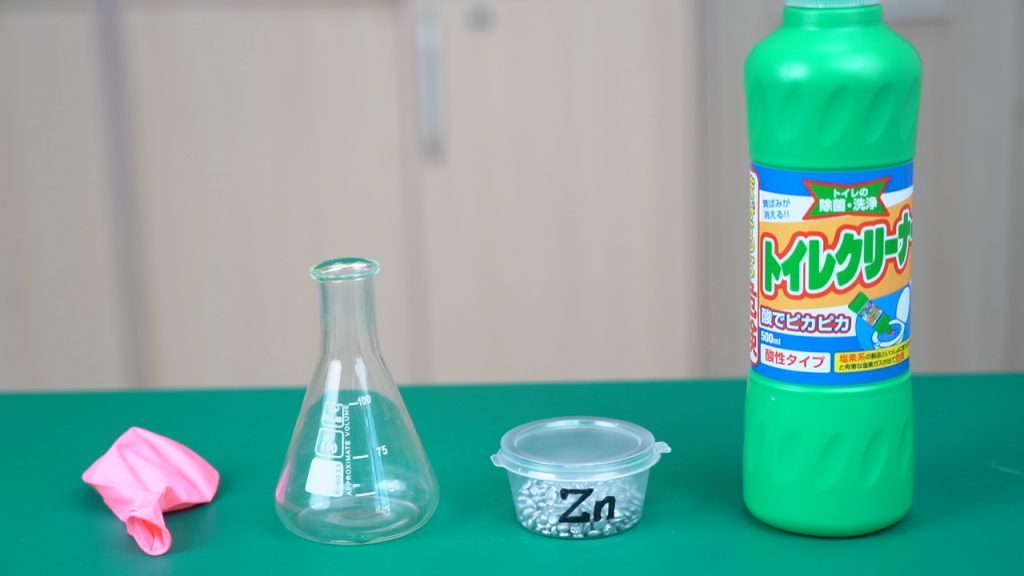
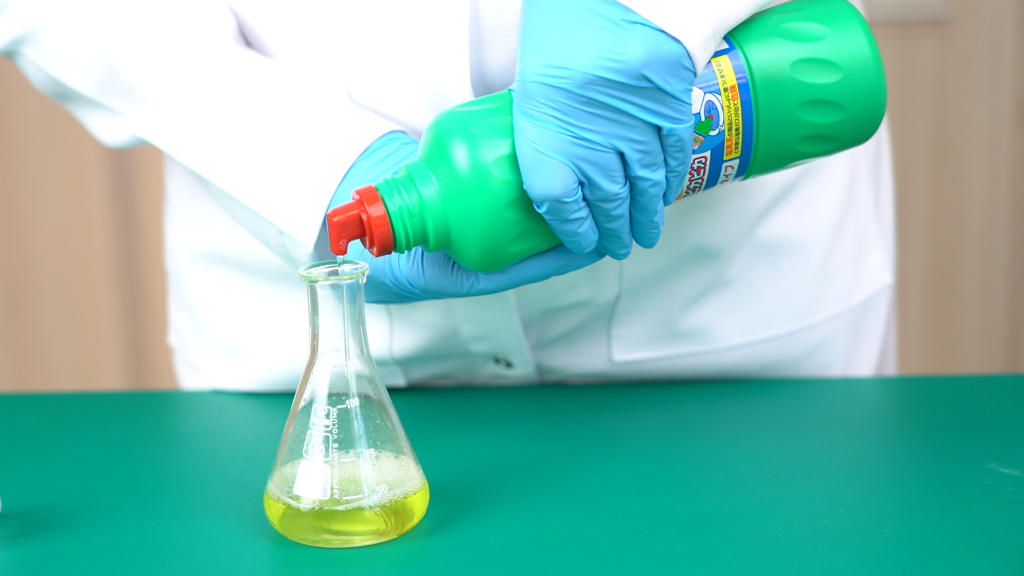
Step 2. Pour 50 ml of 9% hydrochloric acid solution into the glass flask. The solution should cover the bottom of the flask, creating enough surface area for the reaction.
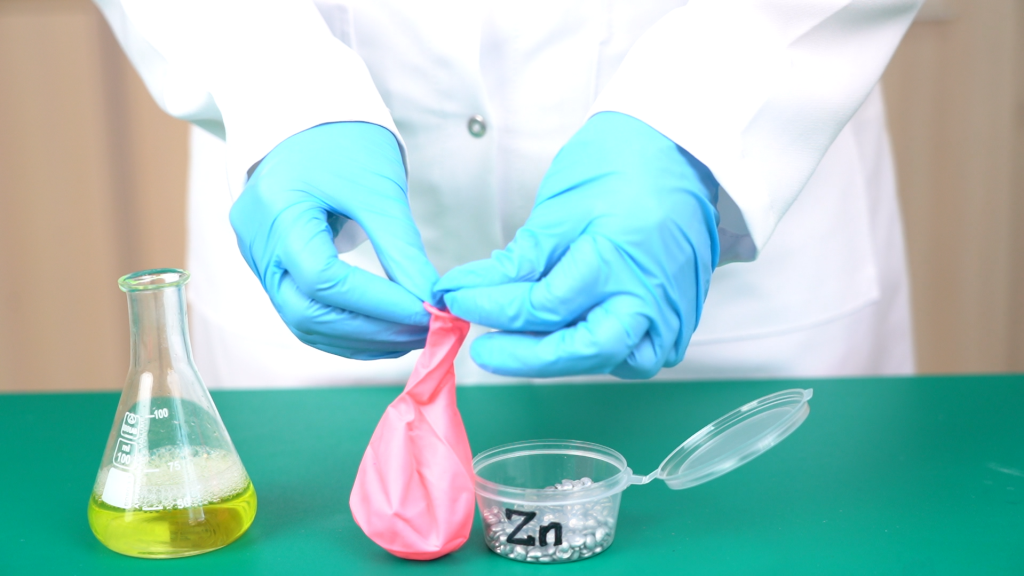
Step 3. Place 7–8 zinc granules into the balloon.
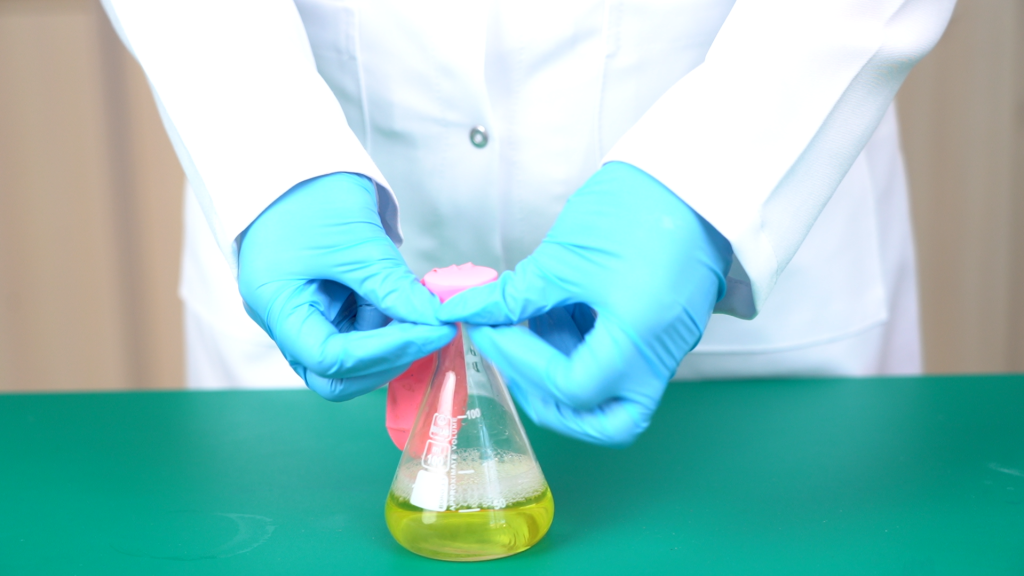
Step 4. Carefully attach the balloon to the neck of the flask. Then, gently lift the balloon, so the zinc granules fall into the solution.
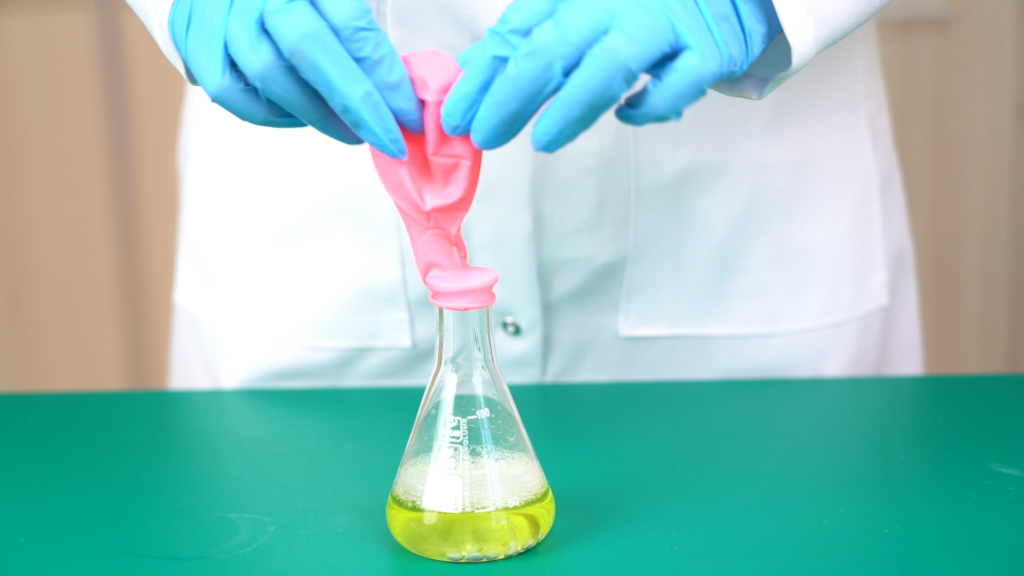
Step 5. Observe the reaction. As the zinc reacts with the acid, bubbles of hydrogen gas will start to form. You will know the reaction is progressing when the balloon begins to gradually inflate.
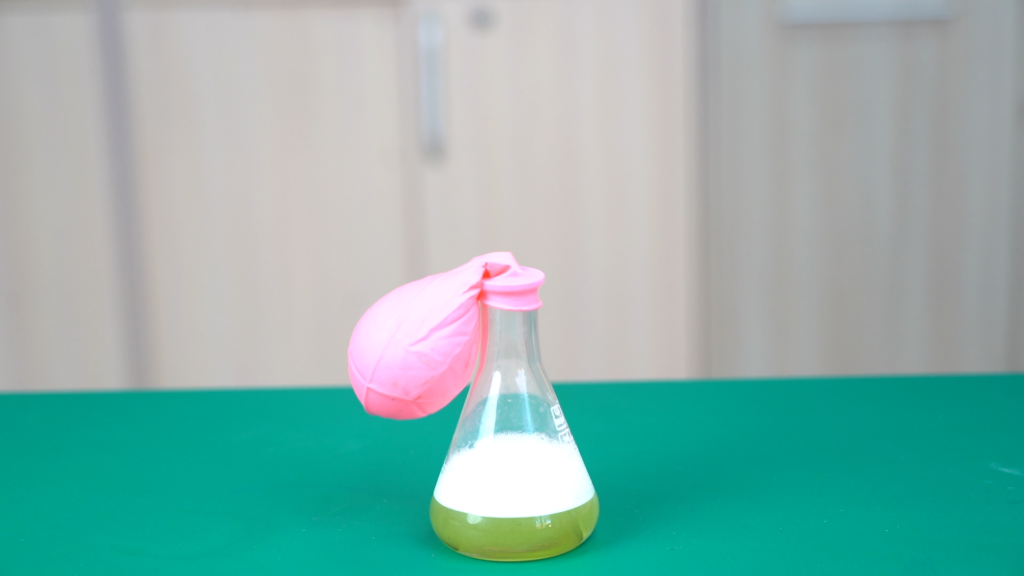
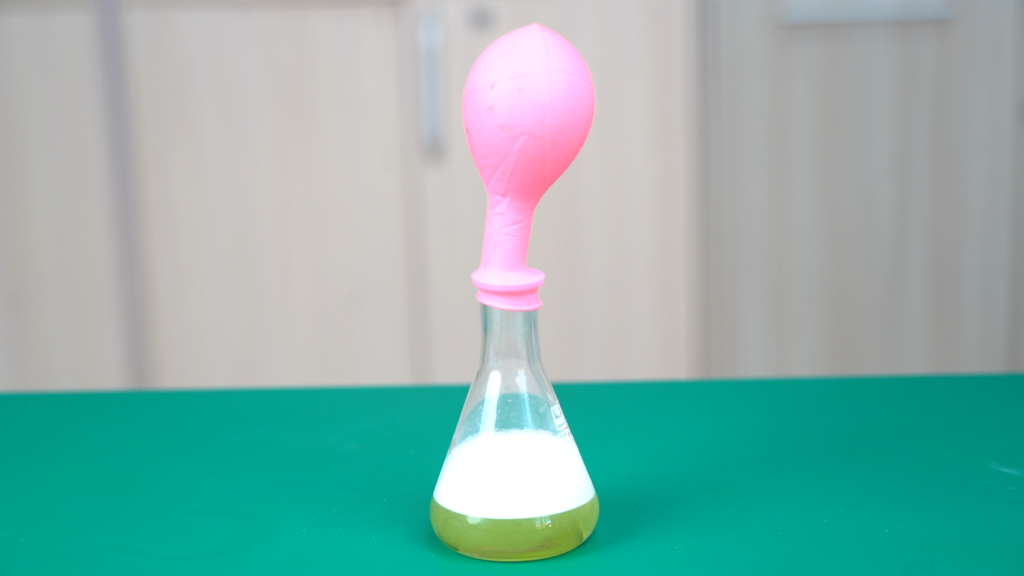
Step 6. Perform a qualitative test for hydrogen.
When the balloon is sufficiently inflated, remove it from the flask. Following all safety precautions, bring a lit match to the open mouth of the flask. You should hear a characteristic “pop”, confirming the presence of hydrogen.
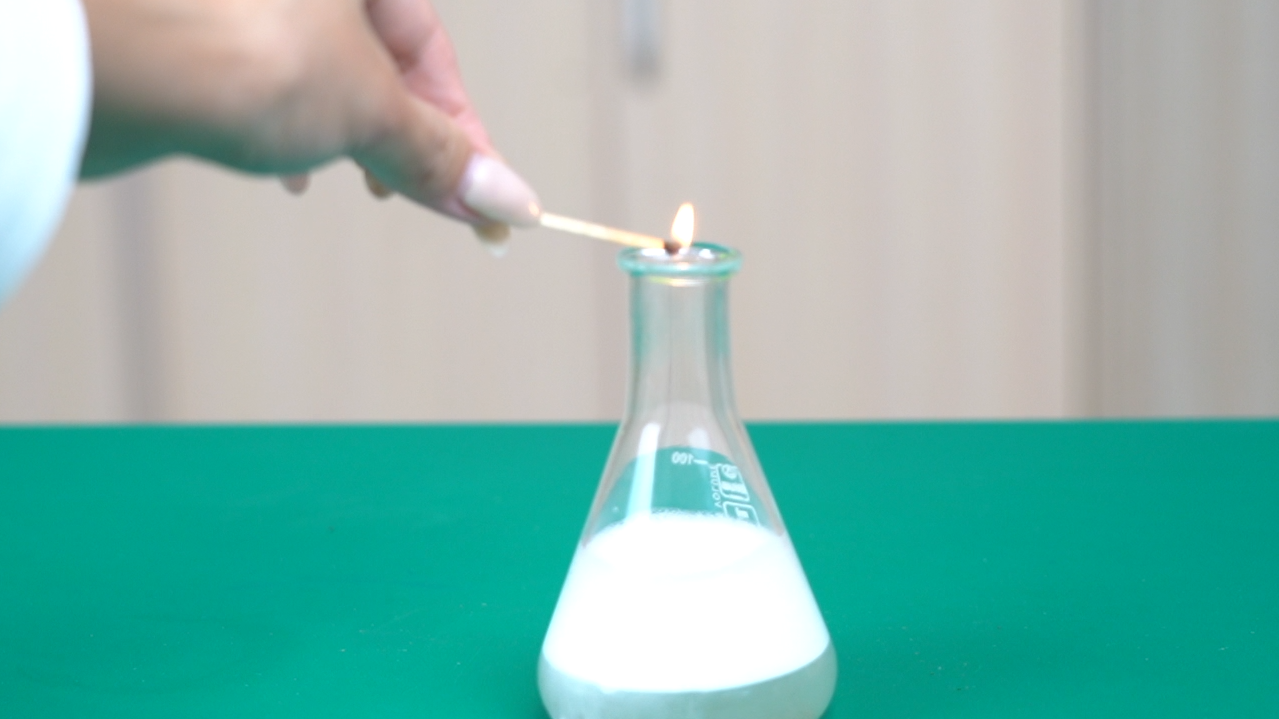
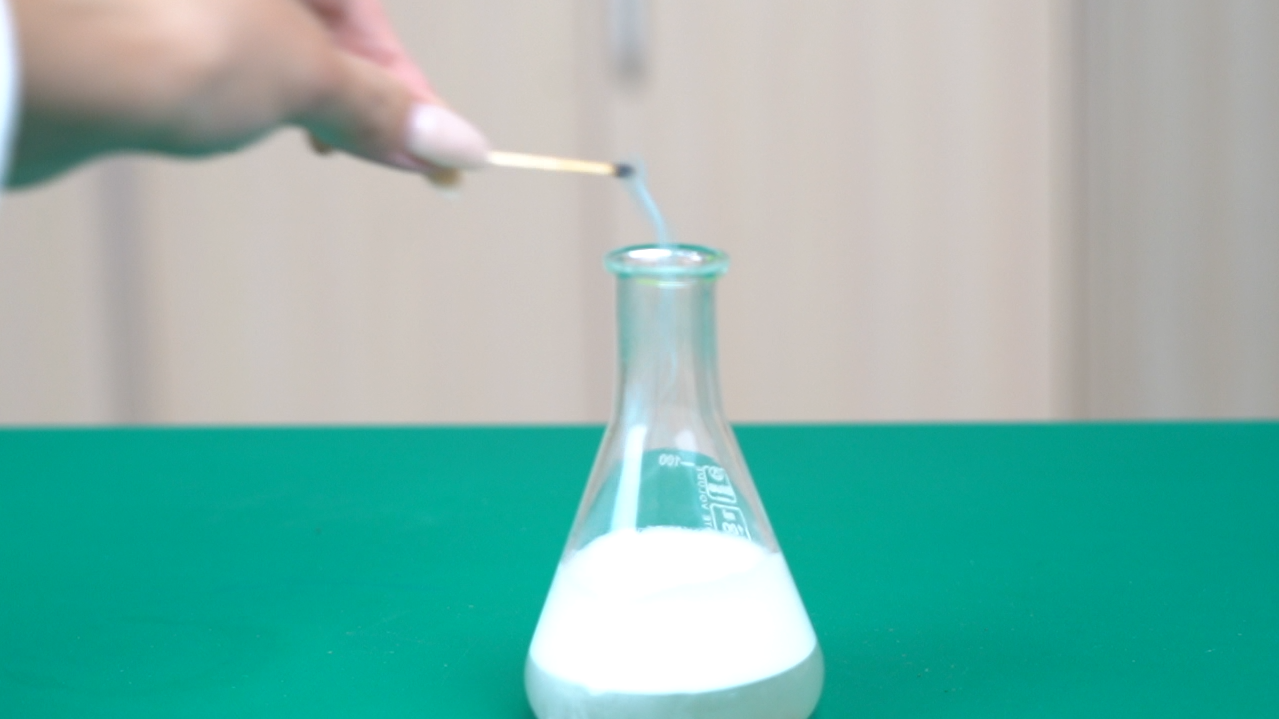
Step 7. Record the results.
Describe your observations (reaction speed, gas release) and make conclusions about the course of the reaction. Record everything in the worksheet.

Conclusion
As a result of the experiment, the ability of zinc to react with hydrochloric acid, releasing hydrogen, was confirmed. The observation of gas release and its ignition confirmed the qualitative test for hydrogen. This experiment demonstrated important aspects of metal reactions with acids and the behavior of hydrogen as a chemical element.