
Lesson

Project Goal:
To investigate thermal conductivity and the property of air to fill space.
Teacher Instructions:
Prepare all necessary materials before the lesson.
Conduct the experiment as a demonstration, assigning students the role of observers.
Ask engaging questions related to the experiment and summarize the findings.
Discuss the results with students and provide a scientific explanation.
Give a brief reminder about safety rules during the activity.
At the beginning of the lesson, explain the PBL (Project Based Learning) rubric to the students. 4K Skills (Critical Thinking, Collaboration, Creativity, Presentation).
Theoretical Part
Air is a gaseous form of matter. Although it is invisible, we always feel its presence – for example, when the wind blows or when inflating a balloon. Gas molecules are spaced far apart and constantly move. Their motion and position depend on the surrounding temperature.
When the temperature increases, air molecules move faster and spread out – the air expands.
When the temperature decreases, molecules slow down, move closer together, and occupy less space.
Thermal conductivity is the ability of heat energy to pass through a substance. In this experiment, heat is transferred from the bottle to the air inside, causing the air to expand – inflating the balloon.
Practical Part
Experiment №1
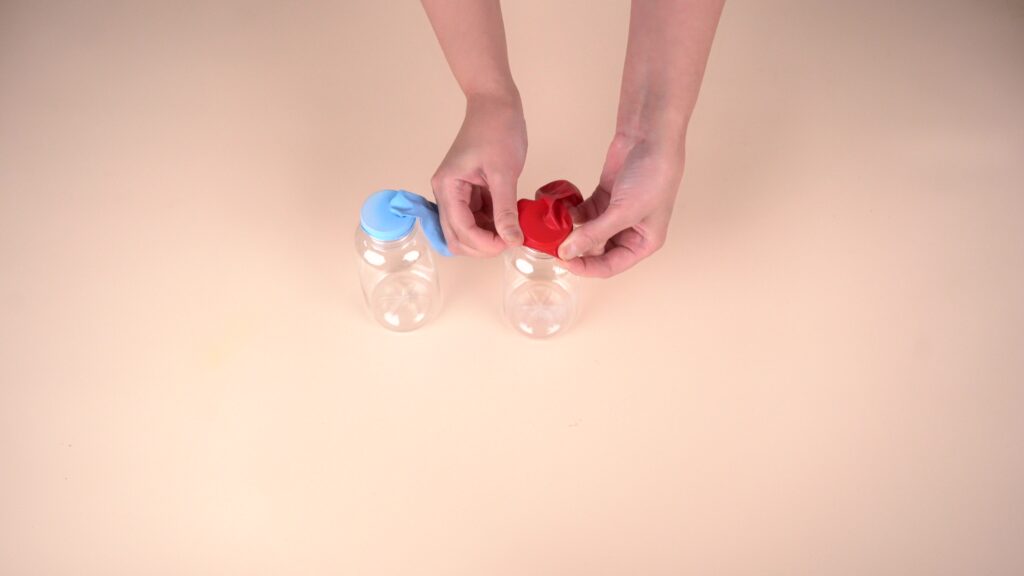
Step 1. Attach empty, uninflated balloons to the necks of two bottles.
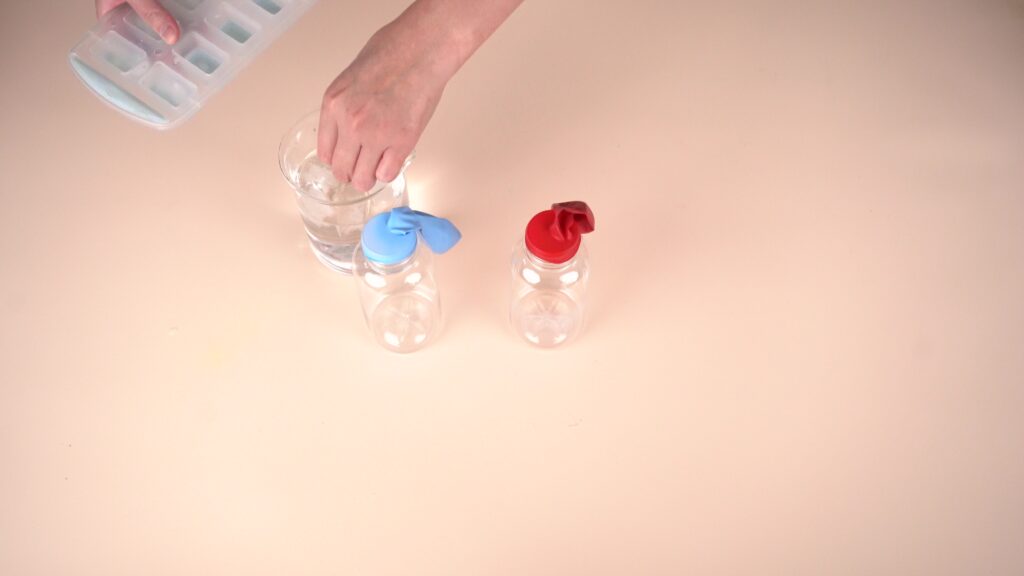
Step 2. Fill one large container with cold water and add ice cubes.
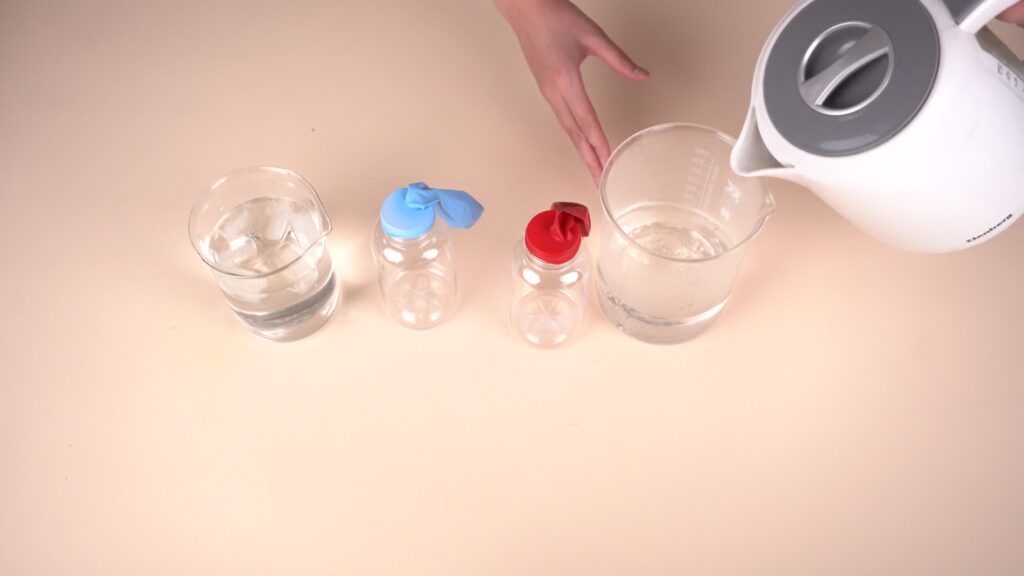
Step 3. Fill another container with hot water.
Step 4. Place one bottle into the hot water, and the other into the cold water.
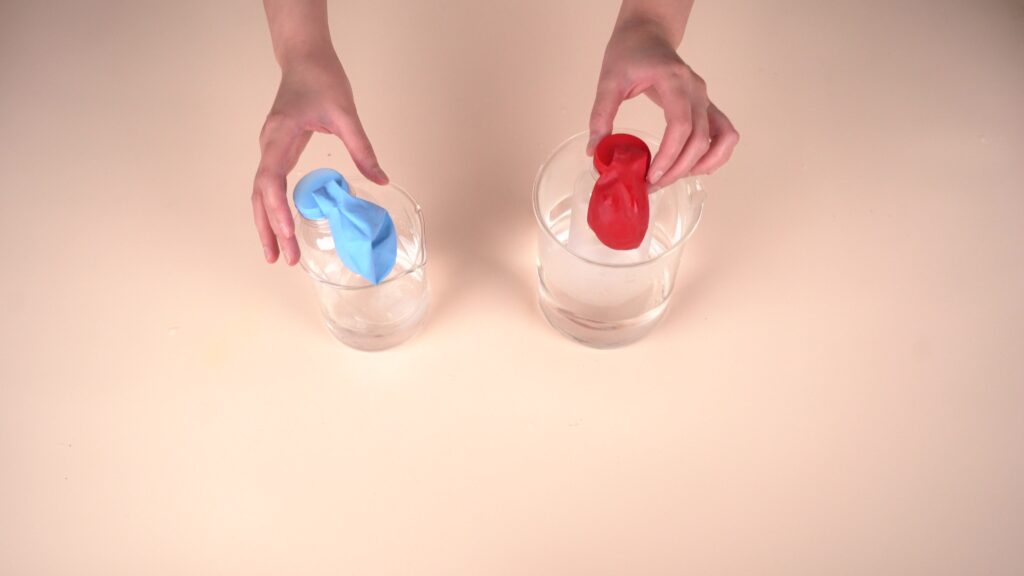
Step 5. Students observe how one balloon expands while the other shrinks. Ask: why did the balloon expand or contract? Discuss together.
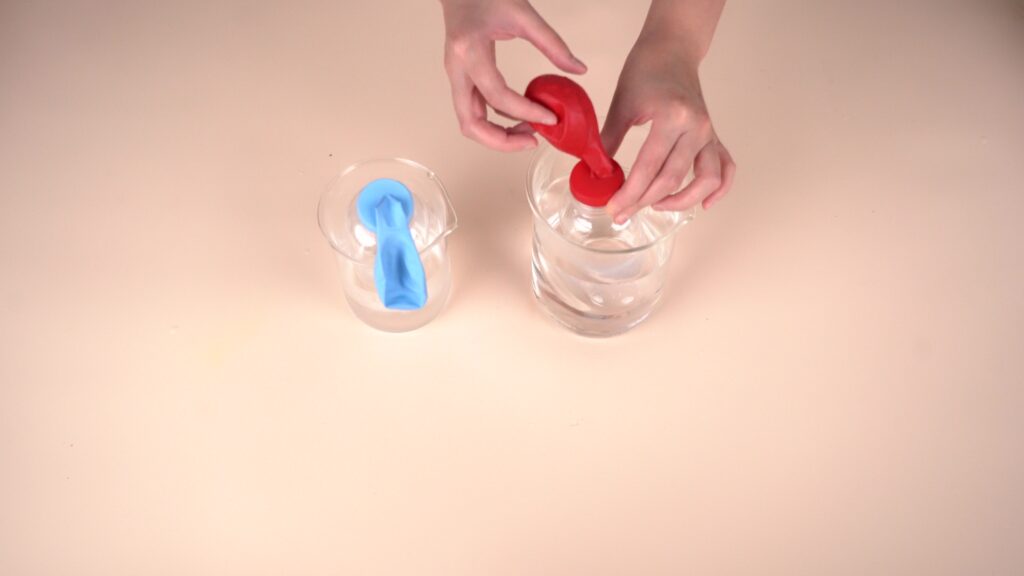
Observation: Air changes its volume depending on temperature: it expands in heat and contracts in cold. That’s why the balloon inflates in hot water and deflates in cold water. This is one of the basic properties of gases.
Experiment №2
Step 1. Make a small paper boat.
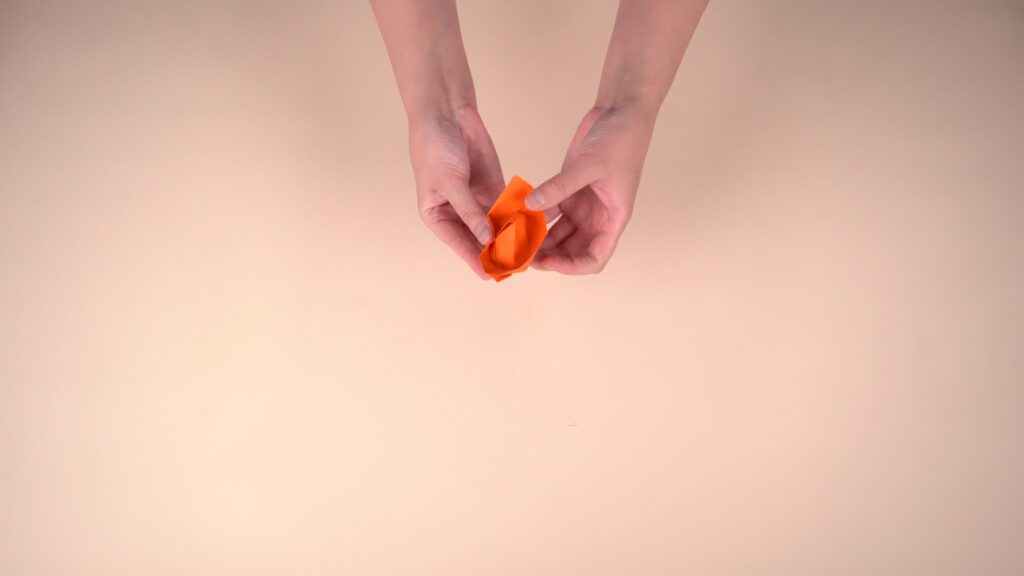
Step 2. Place it in a transparent deep container filled with water.
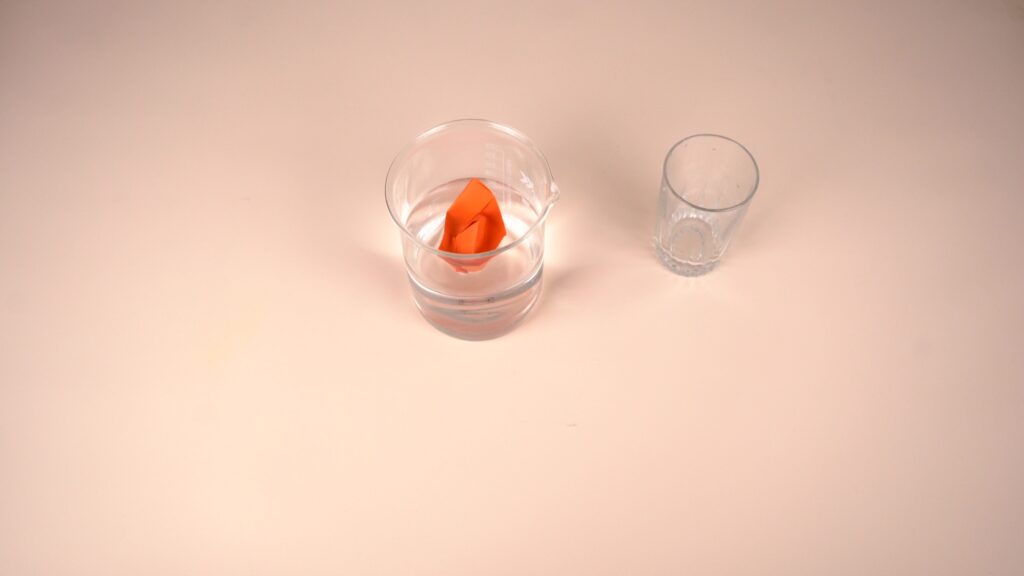
Step 3. Cover the boat with an inverted glass and submerge it into the water.
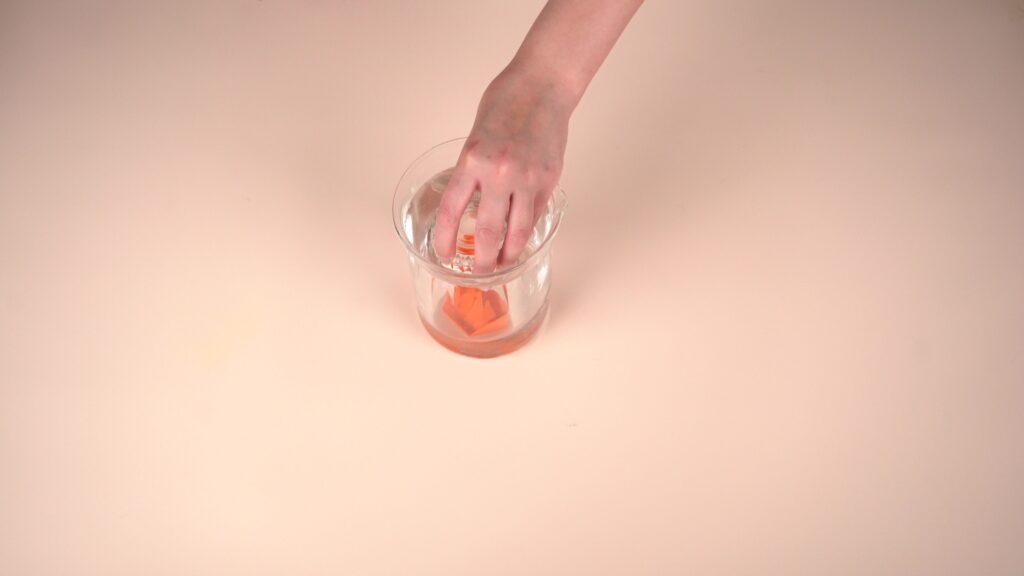
Step 4. Lift the glass and boat back to the surface. You’ll notice that the boat remains dry. Ask students why the boat stayed dry.
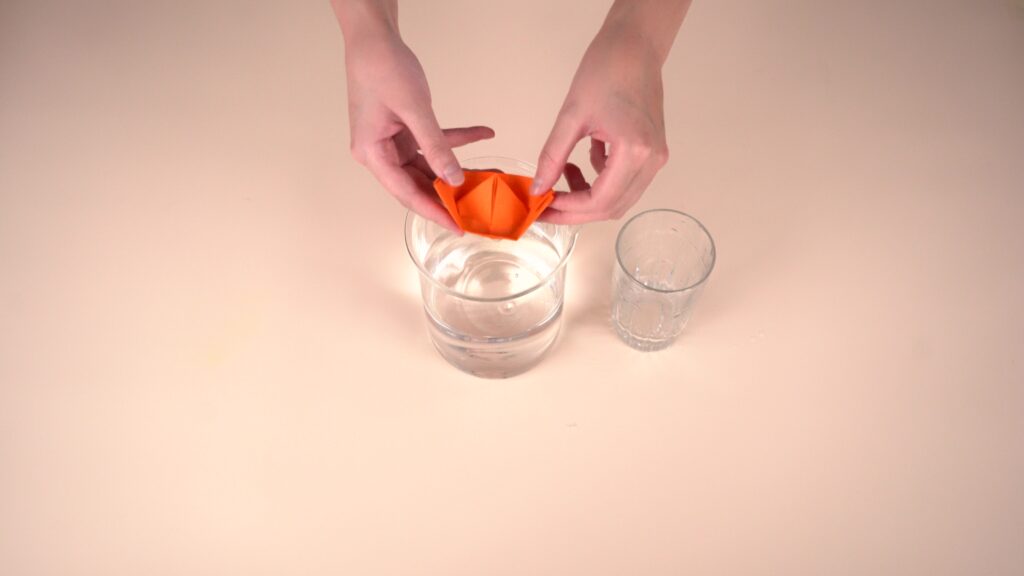
Step 5. This time, don’t fully cover the boat with the glass – cover it partially, then submerge and lift it again. Check whether the boat is still dry or if it got wet.
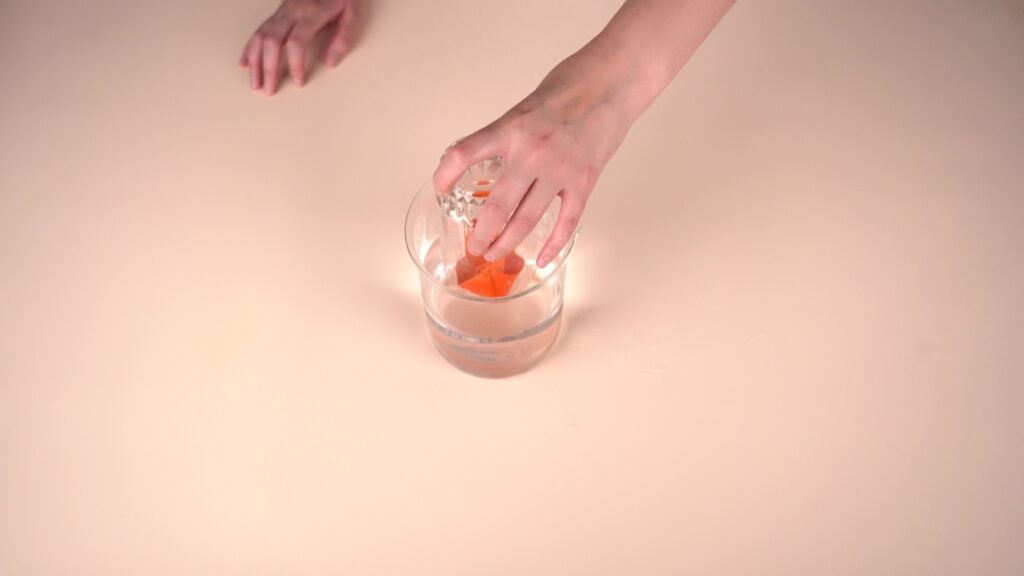
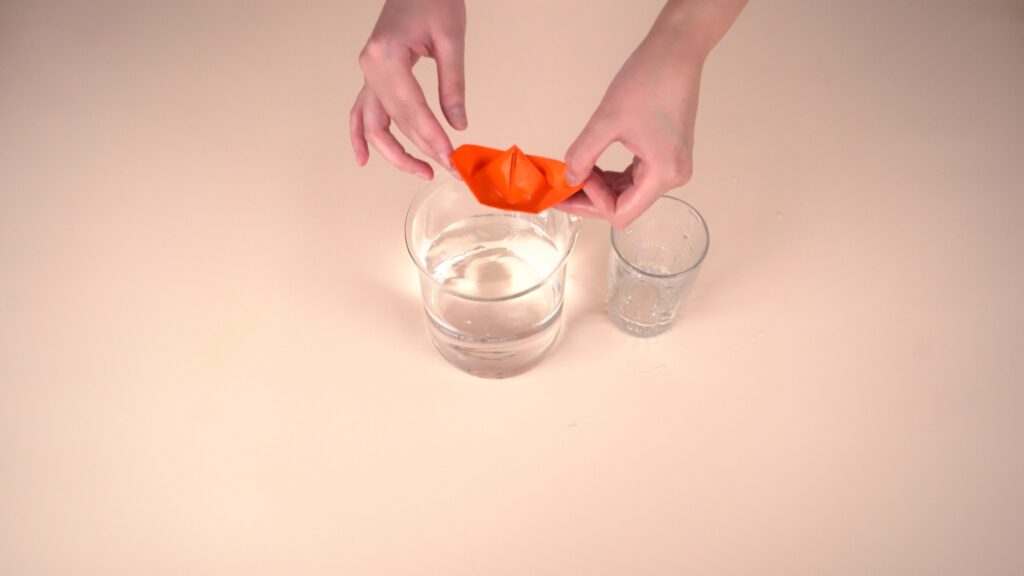
Observation: Even though we can’t see it, there is air inside the glass. When we submerge the upside-down glass into the water, the air inside prevents the water from entering. In the second case, since the glass does not fully cover the boat, water enters and wets the paper.
Conclusion
Through this demonstration project, students learn that air – though invisible – fills space, reacts to temperature changes, and can change its volume. As a result of the project, children directly observe the properties of gases and the relationship between heat and air, helping them understand scientific concepts in a simple and visual way.

In this project, each student is assigned a STEAM title in several categories:
– By assembling this model, you have become a true master of science! You have learned how clocks work. This is real scientific thinking!
– Look at this beautiful clock! You have used your design and problem-solving skills to create a working model. Congratulations, you are an expert engineer!