
Lesson

Purpose of the work:
- To study the chemical and physical properties of acetic acid
Expected results:
After completing the work, students can:
- develop teamwork skills
- be able to analyze and summarize the information received
- draw logical conclusions
Teacher’s Guide:
- The task is performed in groups of 3-4 people
- Before starting laboratory work, please read the safety rules by following the link:
- To download the worksheet, follow the link:
Theory
Carboxylic acids are organic compounds that contain the –COOH carboxyl group, which determines their properties.
Acetic acid (ethanoic acid) is a representative of saturated monobasic carboxylic acids. Thanks to the carboxyl group, it can:
- exhibit acidic properties
- react with bases, metals, and salts of weaker acids
- form salts (acetates) and various gases depending on the reacting substance
These reactions demonstrate the behavior of carboxylic acids in chemical processes and allow distinguishing them from other classes of organic compounds.
Practical part
Reaction with Metal:
Step 1. Pour 3 ml of acetic acid into three test tubes.
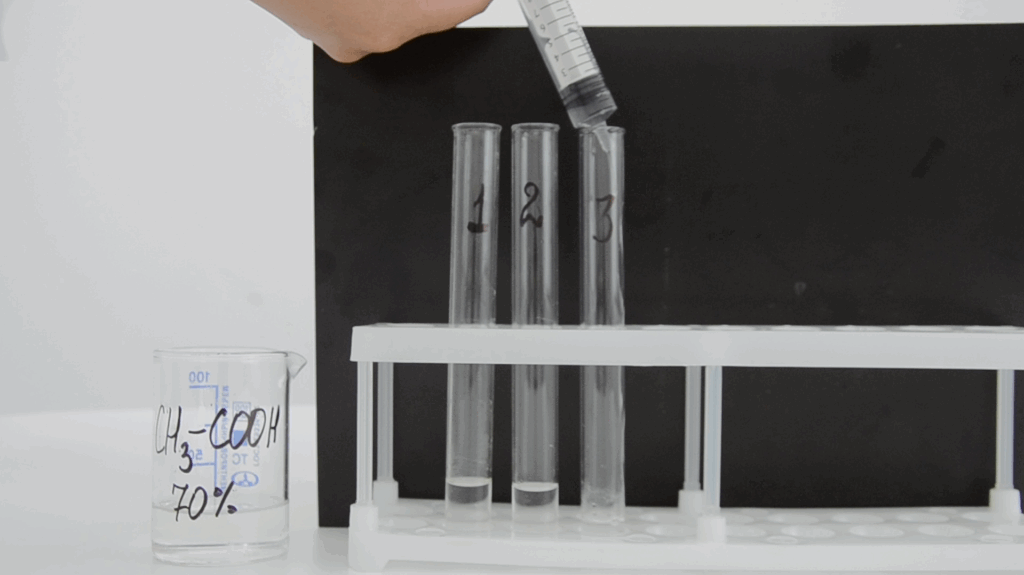
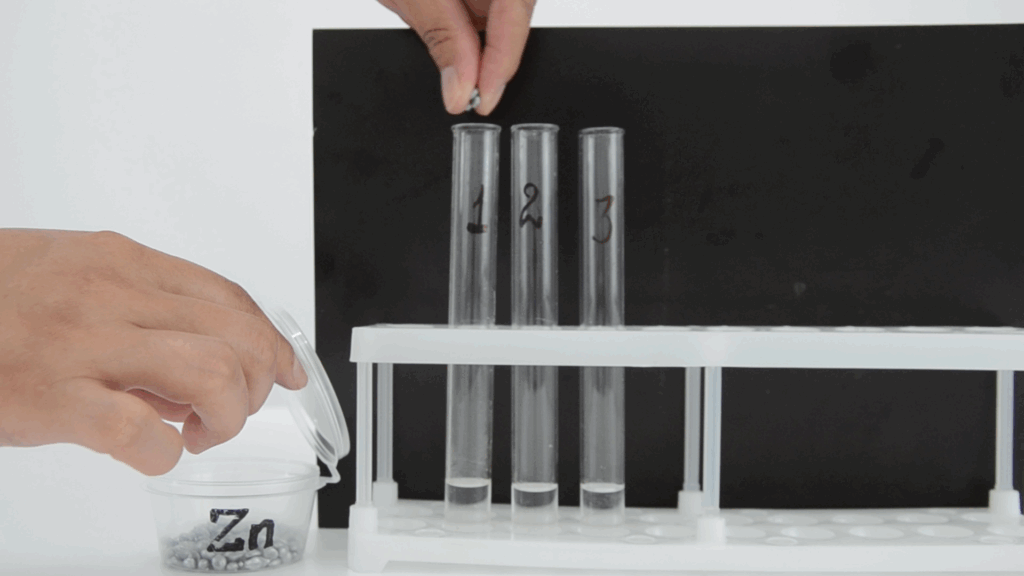
Step 2. Add several pieces of zinc or aluminum foil to the first test tube. What do you observe? Record your observations and write the reaction equation in the worksheet.

Reaction with Base (Neutralization):
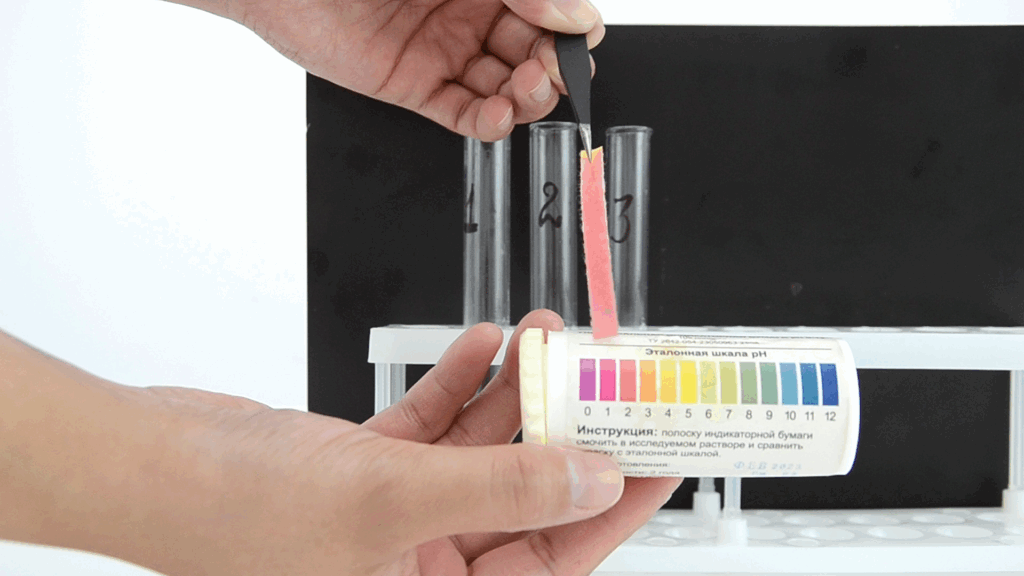
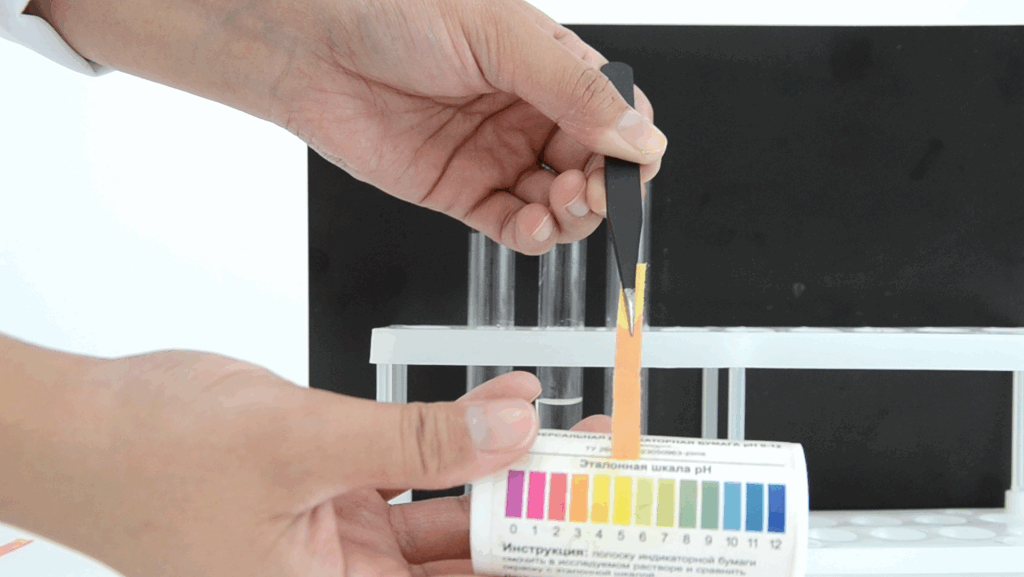
Step 3. Check the pH of the second test tube with acetic acid using an indicator.
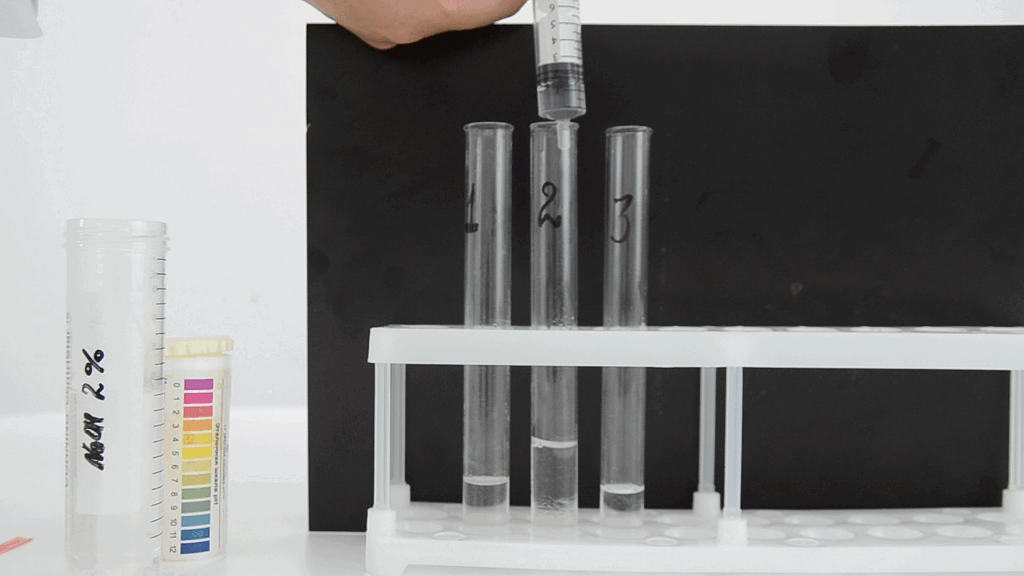
Step 4. Then add 3-4ml of sodium hydroxide solution (NaOH) and check the pH again. What changes occurred? Record your observations and the reaction equation in the worksheet.
Reaction with Carbonate:
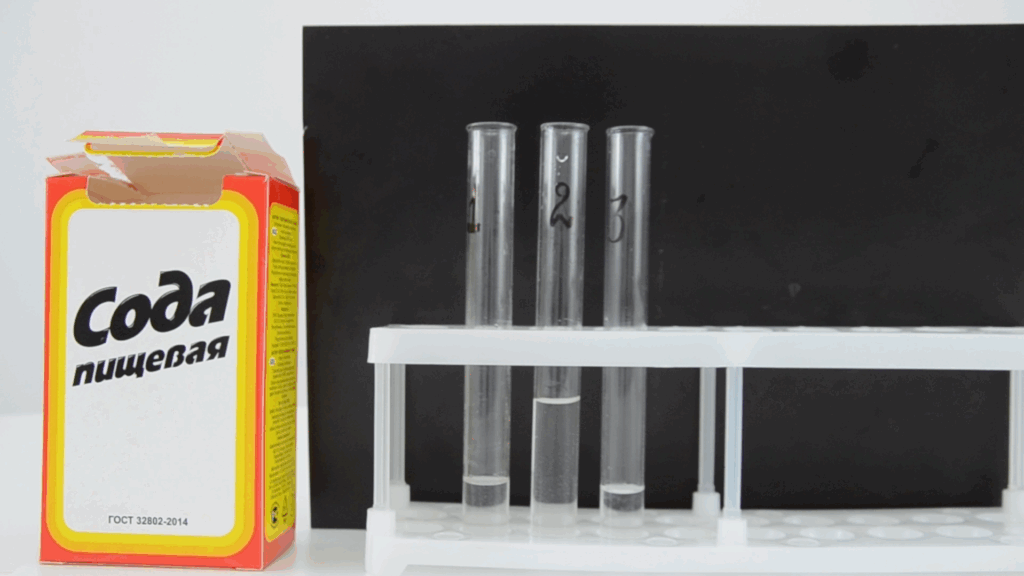
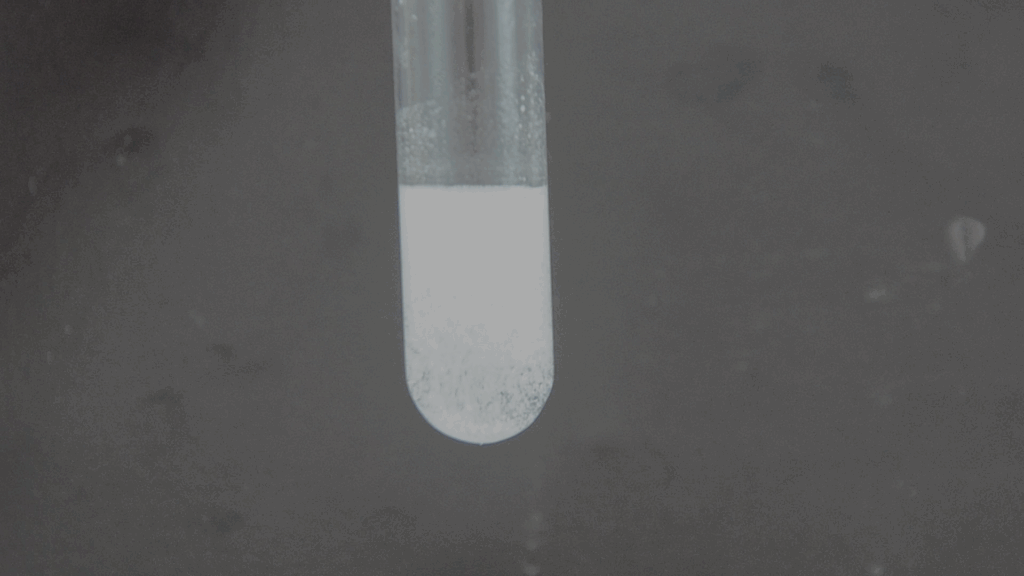
Step 5. Add a small amount of baking soda to the last test tube. Observe the release of gas.
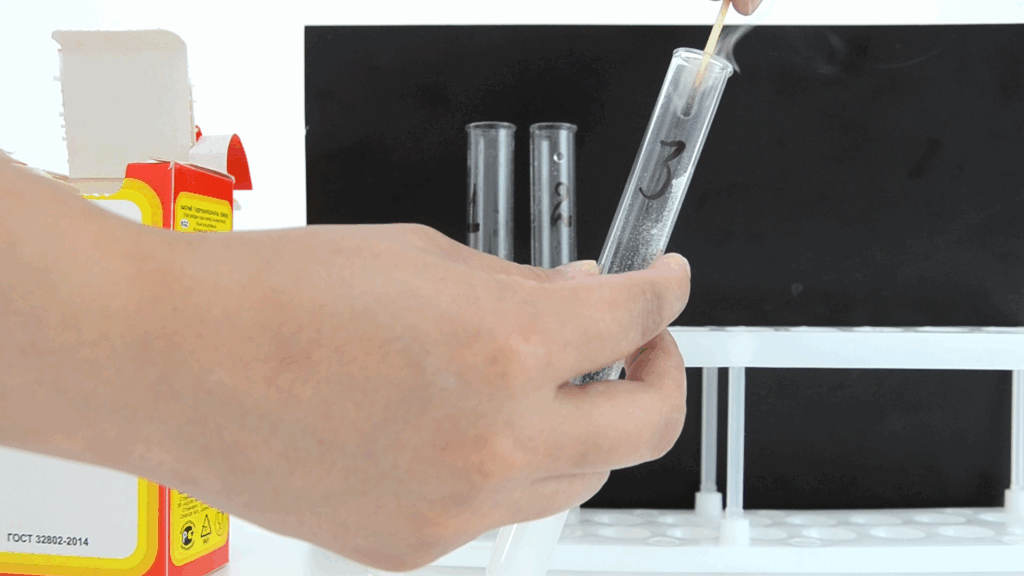
Step 6. Carefully bring a lit match to the mouth of the test tube. What happens? Record your observations and the reaction equation in the worksheet.
Conclusion
As a result of the laboratory work, students got hands-on experience with the characteristic properties of carboxylic acids using acetic acid as an example.
Based on their observations, they identified the signs that indicate the acidic nature of the substance and composed the corresponding reaction equations.