
Lesson

Purpose of the work:
- To study how changes in pH (addition of H⁺ and OH⁻ ions) affect chemical equilibrium.
Expected results:
After completing the work, students can:
- develop teamwork skills
- be able to analyze and summarize the information received
- draw logical conclusions
Teacher’s Guide:
- The task is performed in groups of 2-3 people
- Before starting laboratory work, please read the safety rules by following the link:
- To download the worksheet, follow the link:
Theory
Equilibrium reaction:

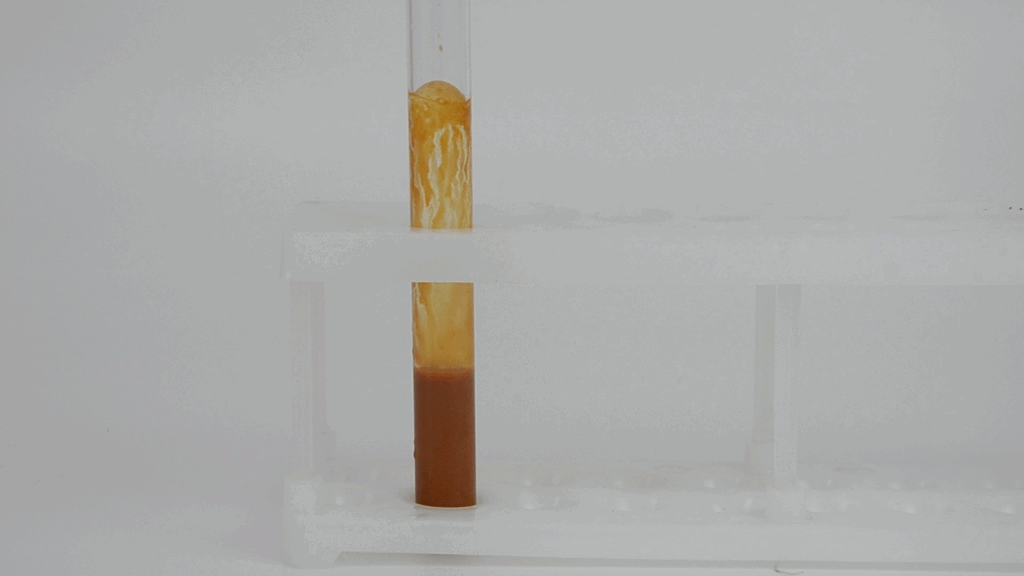
- Adding NaHCO₃ increases OH⁻ concentration, shifting equilibrium to the right, forming a brown precipitate of Fe(OH)₃.
- Adding CH₃COOH increases H⁺ concentration, which neutralizes OH⁻ ions → equilibrium shifts to the left, the precipitate dissolves.
This illustrates Le Chatelier’s Principle: a system shifts equilibrium to counteract external changes.
Practical part
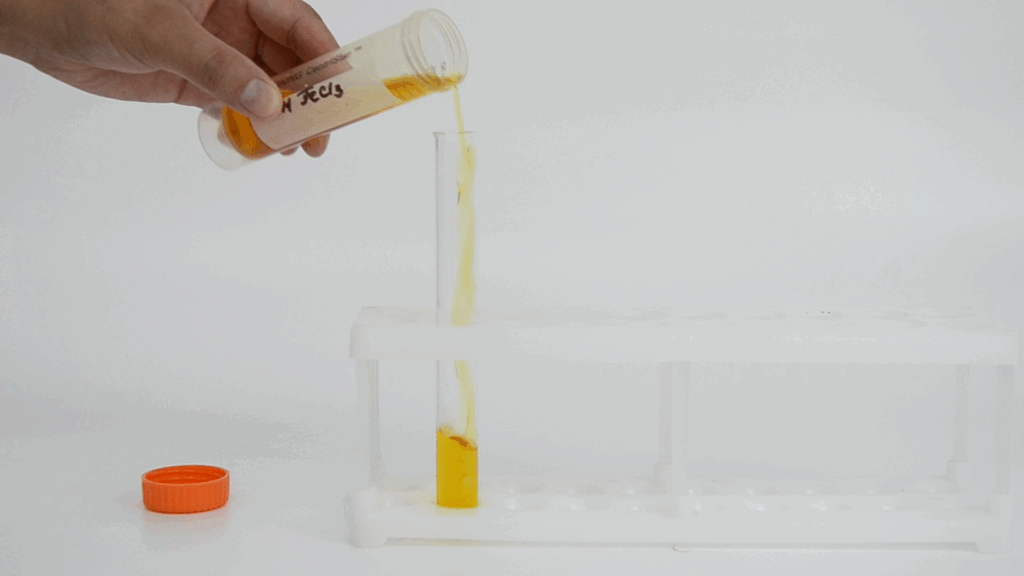
Step 1. Pour a small amount of iron(III) chloride (FeCl₃) solution into a test tube (about 1/3 full).
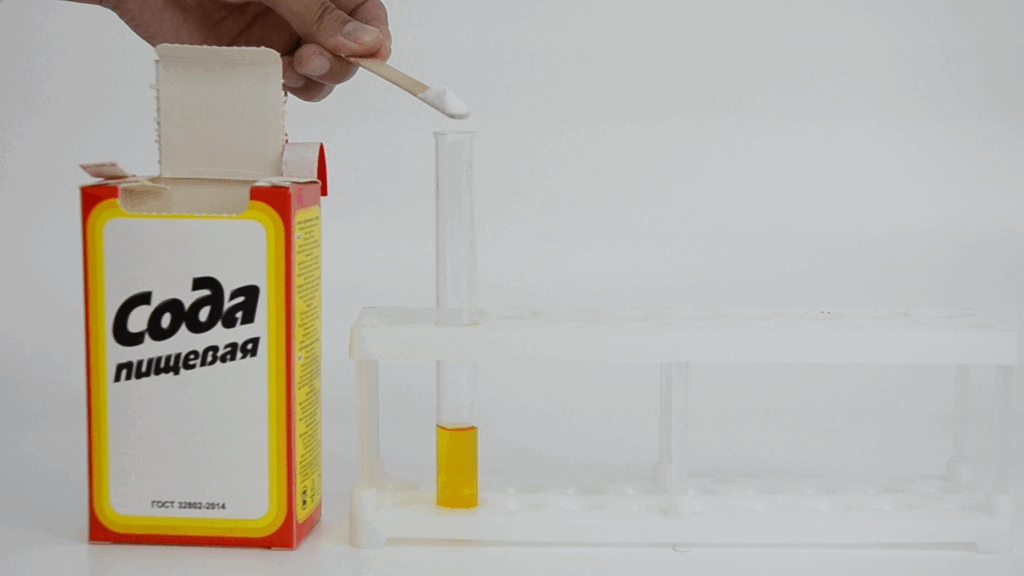
Step 2. Add a small amount of baking soda (NaHCO₃) — a pinch on the tip of a spatula.
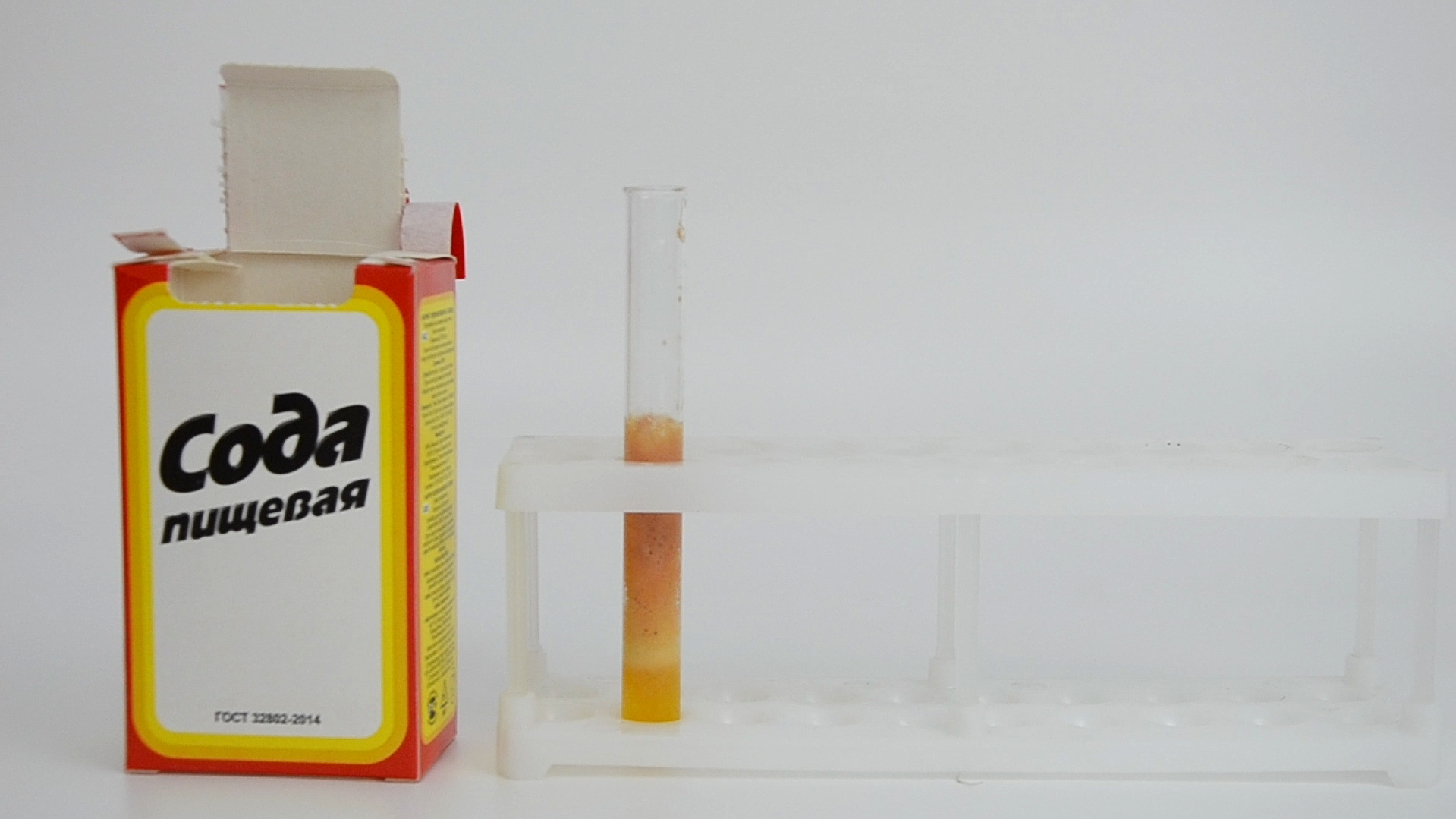
Step 3. Gently stir and observe the formation of a brown precipitate — iron(III) hydroxide (Fe(OH)₃).
Step 4. Add a few drops of acetic acid (or vinegar) into the test tube.
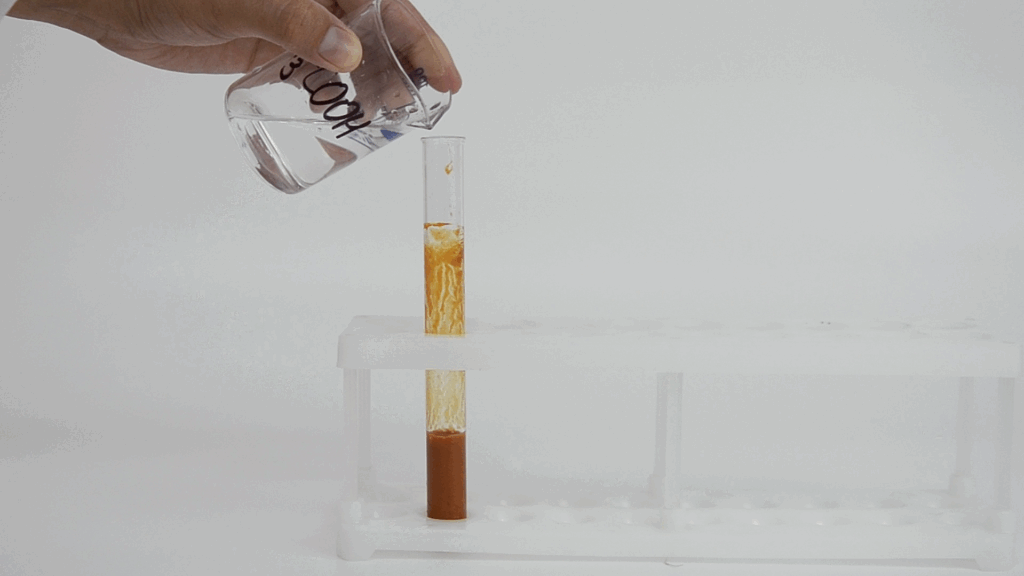
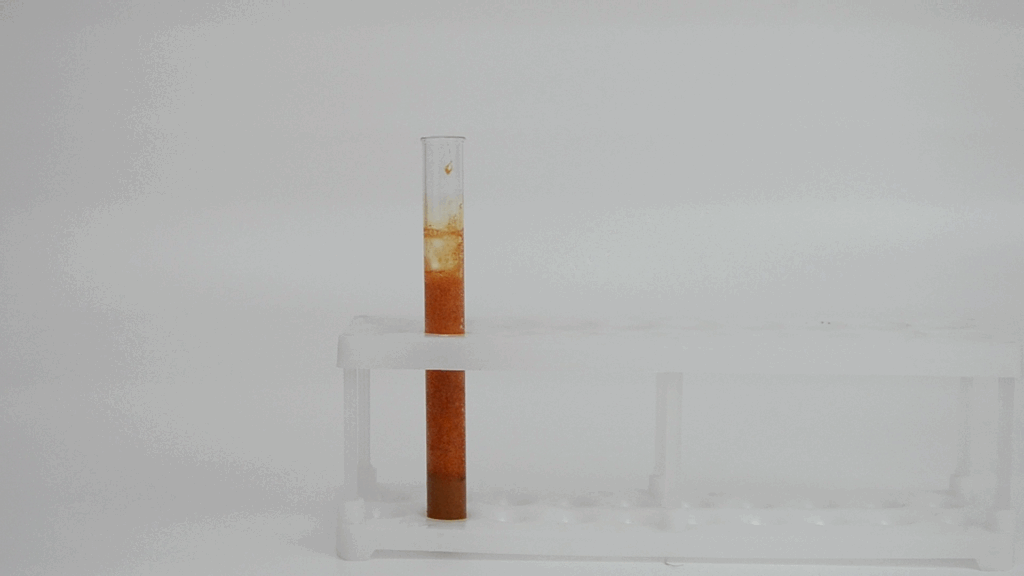
Step 5. Observe how the precipitate slowly dissolves and the solution becomes reddish-brown or slightly cloudy again.
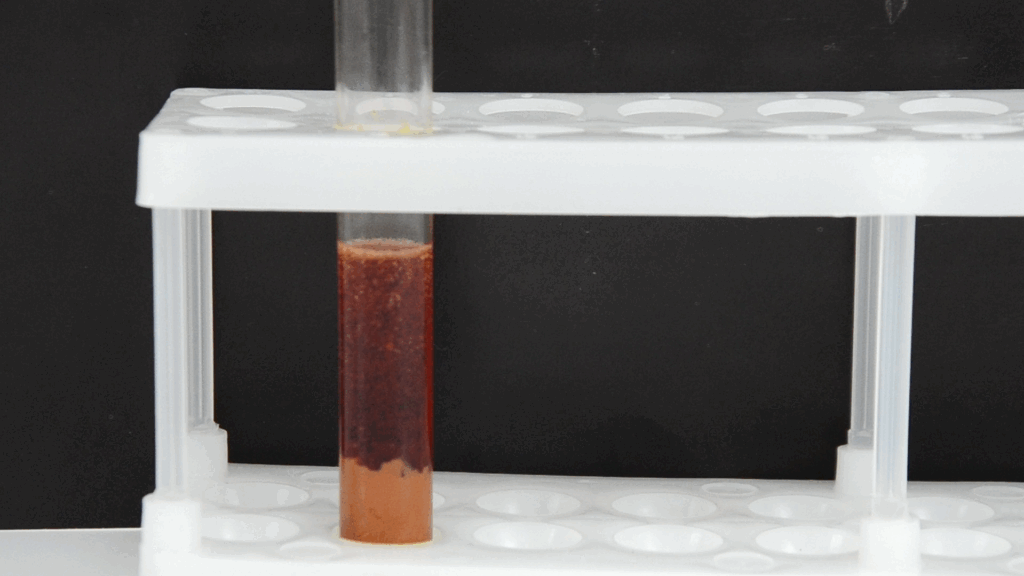
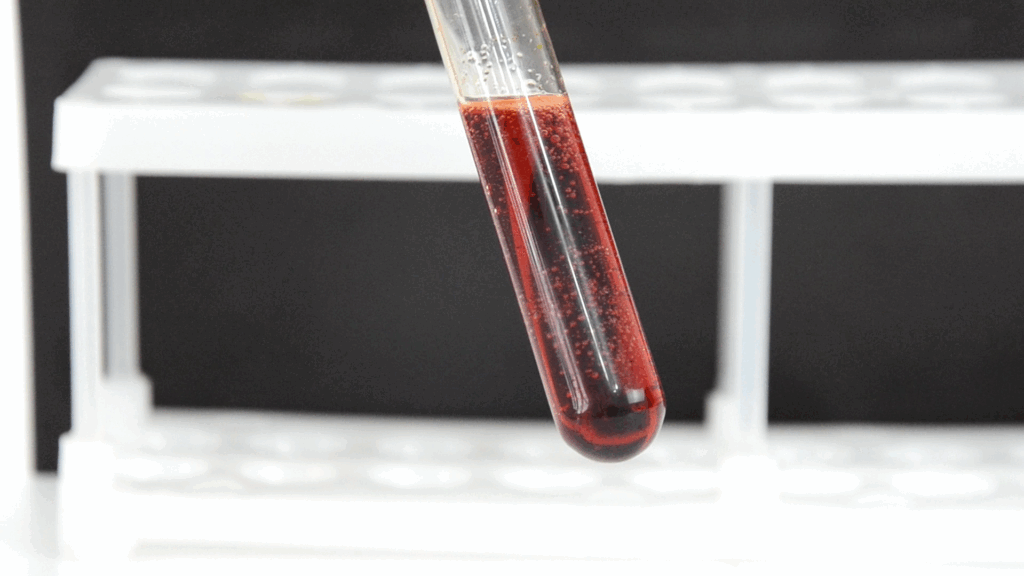
Step 6. Write the chemical equation on your Worksheet and make conclusions.
Conclusion
This experiment shows that changes in pH significantly affect chemical equilibrium.
Adding base (baking soda) shifts equilibrium toward precipitate formation, while adding acid (vinegar) shifts it toward dissolution.
This behavior is consistent with Le Chatelier’s Principle, where the system adjusts to counter external changes.