
Lesson

Purpose of the work:
- To carry out qualitative tests to detect the presence of proteins in food samples.
Expected results:
After completing the work, students can:
- develop teamwork skills
- be able to analyze and summarize the information received
- draw logical conclusions
Teacher’s Guide:
- The task is performed in groups of 3-4 people
- Before starting laboratory work, please read the safety rules by following the link:
- To download the worksheet, follow the link:
Theory
Proteins are essential organic compounds found in all living organisms. They perform many functions: structural, enzymatic, protective, transport, etc.
Proteins consist of amino acids linked together in long chains. The structure and composition of a protein determine its properties and role in the body.
Where are proteins found?
Proteins are present in almost all cells and tissues – in muscles, skin, blood, and in both plants and animals.
We get proteins from food: meat, milk, eggs, legumes, grains, and even some vegetables and fungi.
But how can we prove the presence of proteins in these foods?
How to detect proteins?
Several qualitative reactions can detect proteins. In this lab, we’ll use two methods:
1. Biuret Test
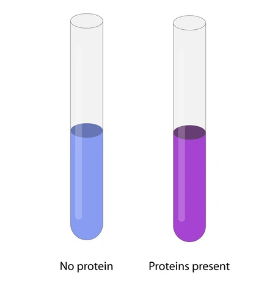
One of the most common tests for proteins. When Biuret reagent (a mix of sodium hydroxide and copper sulfate) is added, a violet or purple color indicates the presence of protein chains. The deeper the color, the more protein is present.
Why does this happen?
Copper ions (Cu²⁺) react with the peptide bonds (–CO–NH–) in proteins and form a colored complex.
2. Xanthoproteic Reaction
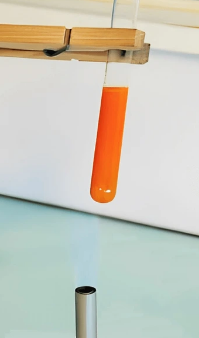
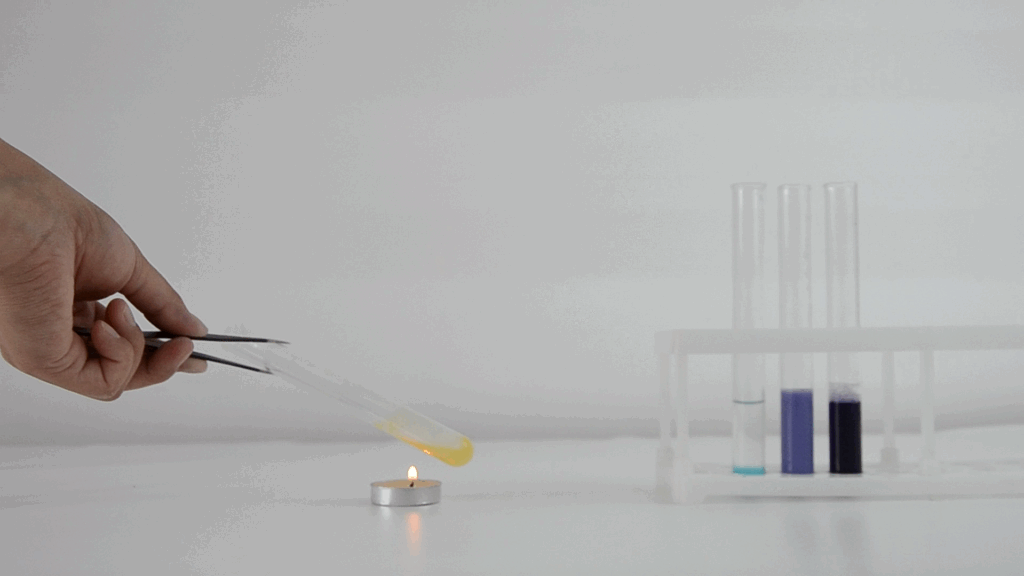
This test detects aromatic amino acids like tyrosine and tryptophan. When concentrated nitric acid is added and the solution is heated, it turns yellow. After adding alkali, it turns orange. This is due to nitration of aromatic rings.
Applications:
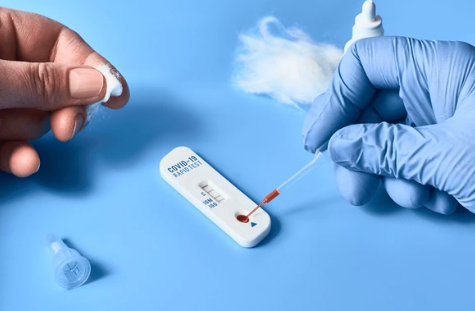
- In medicine – for blood tests and diagnostics
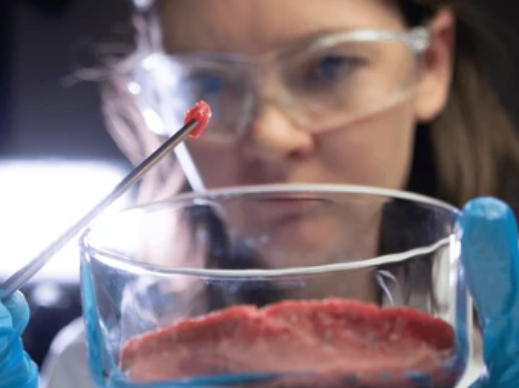
- In food industry – to assess product quality
- In biology – to study plant and animal tissues
- In school labs – to understand how chemistry helps explore the living world
Practical part
Step 1: Pour separately into three test tubes: water (control), milk, and egg white.
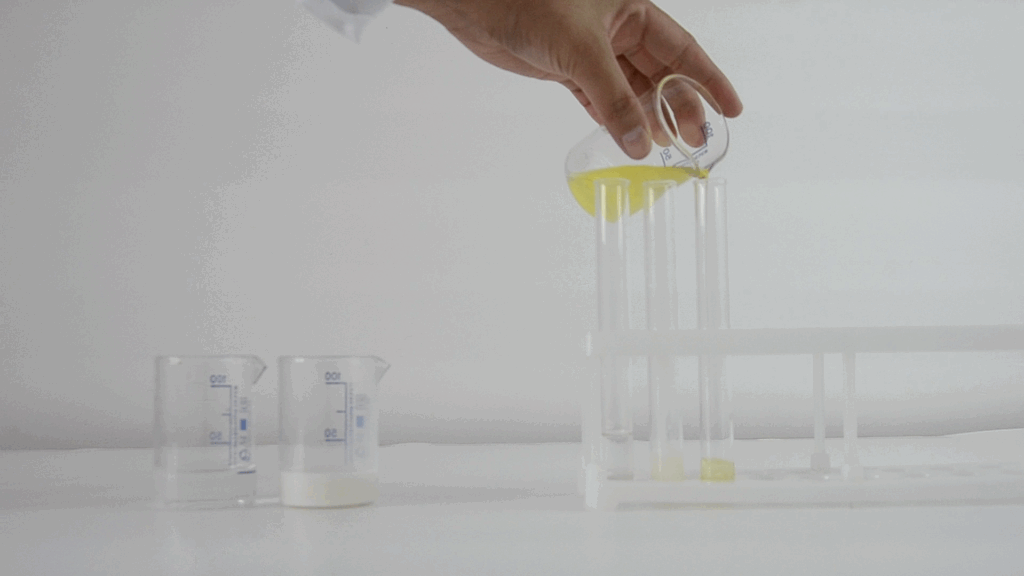
Step 2: Prepare Biuret reagent by adding sodium hydroxide (NaOH) to copper sulfate (CuSO₄) solution.
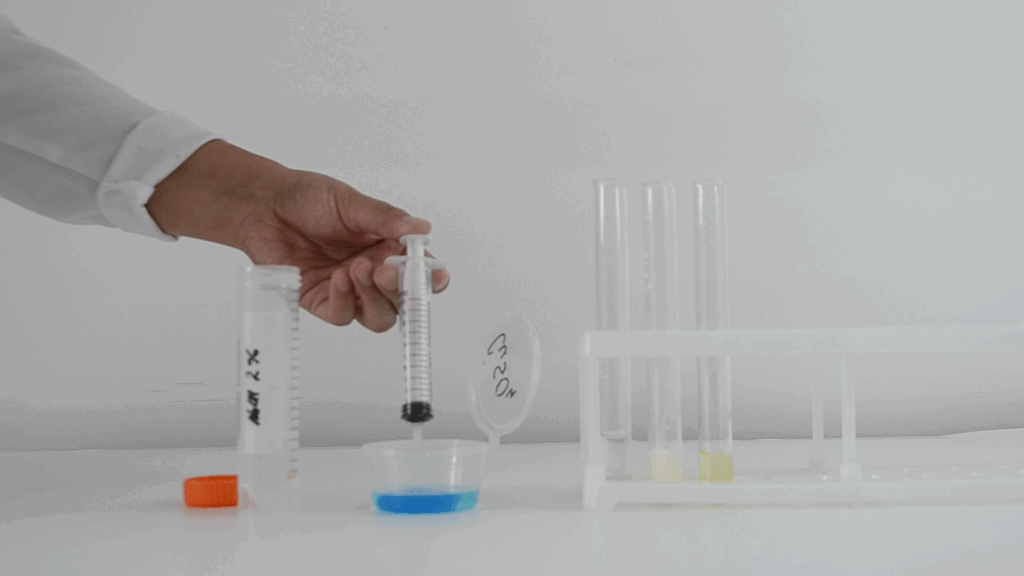
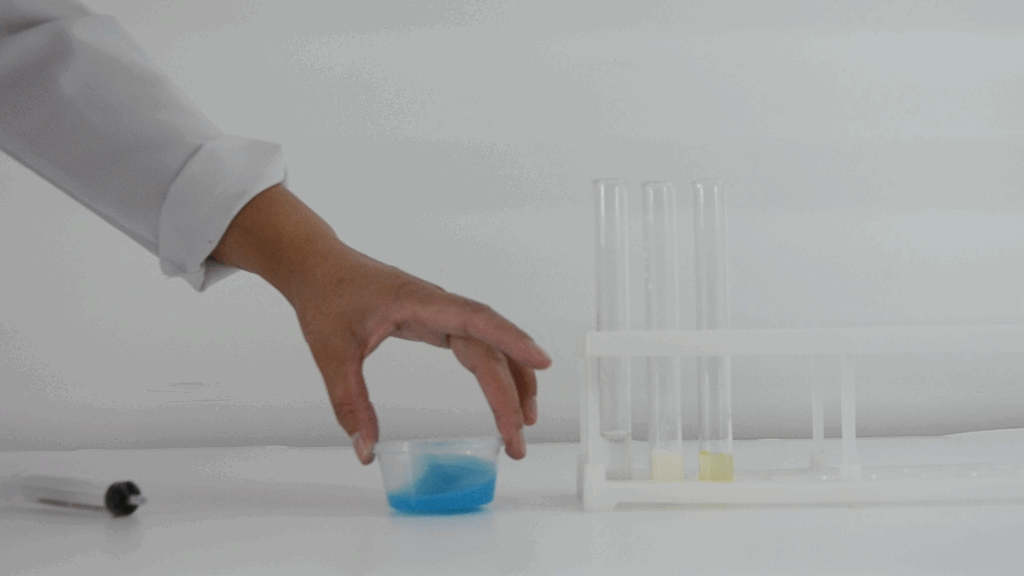
Step 3: Add 2–3 ml of Biuret reagent to each test tube. Add more alkali if needed. Gently shake and observe color changes. Record observations in your worksheet. In which test tube was protein confirmed?
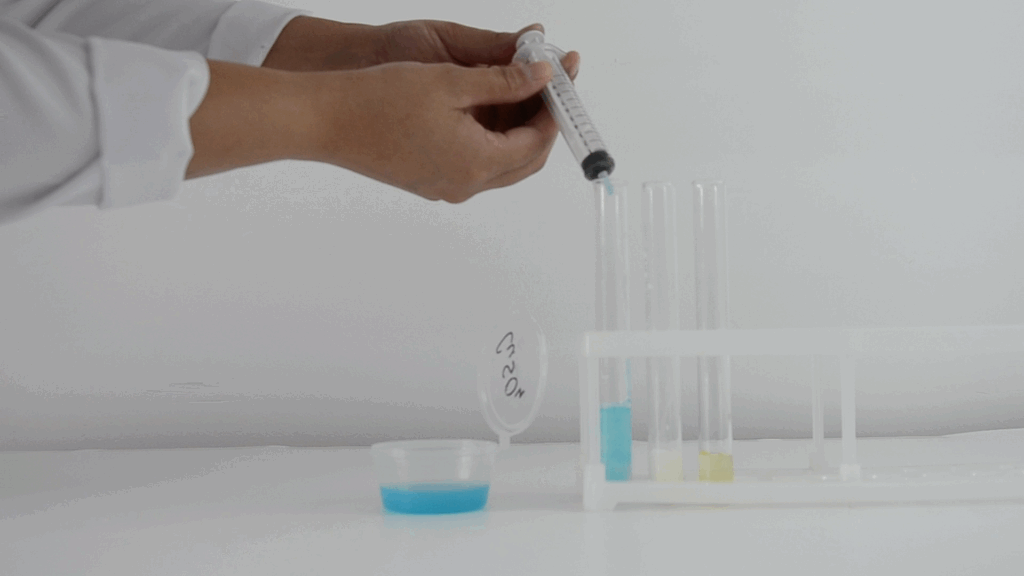
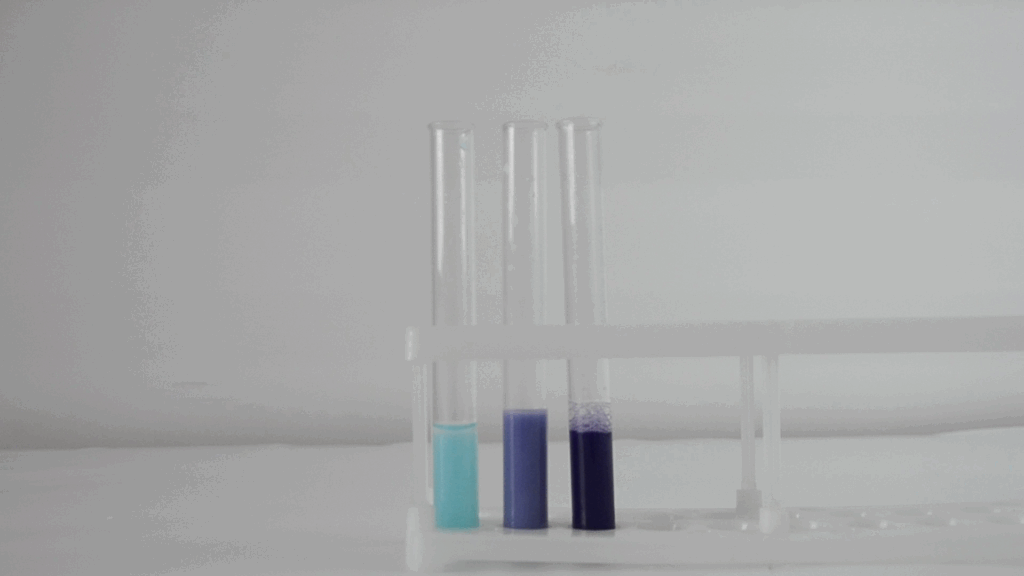
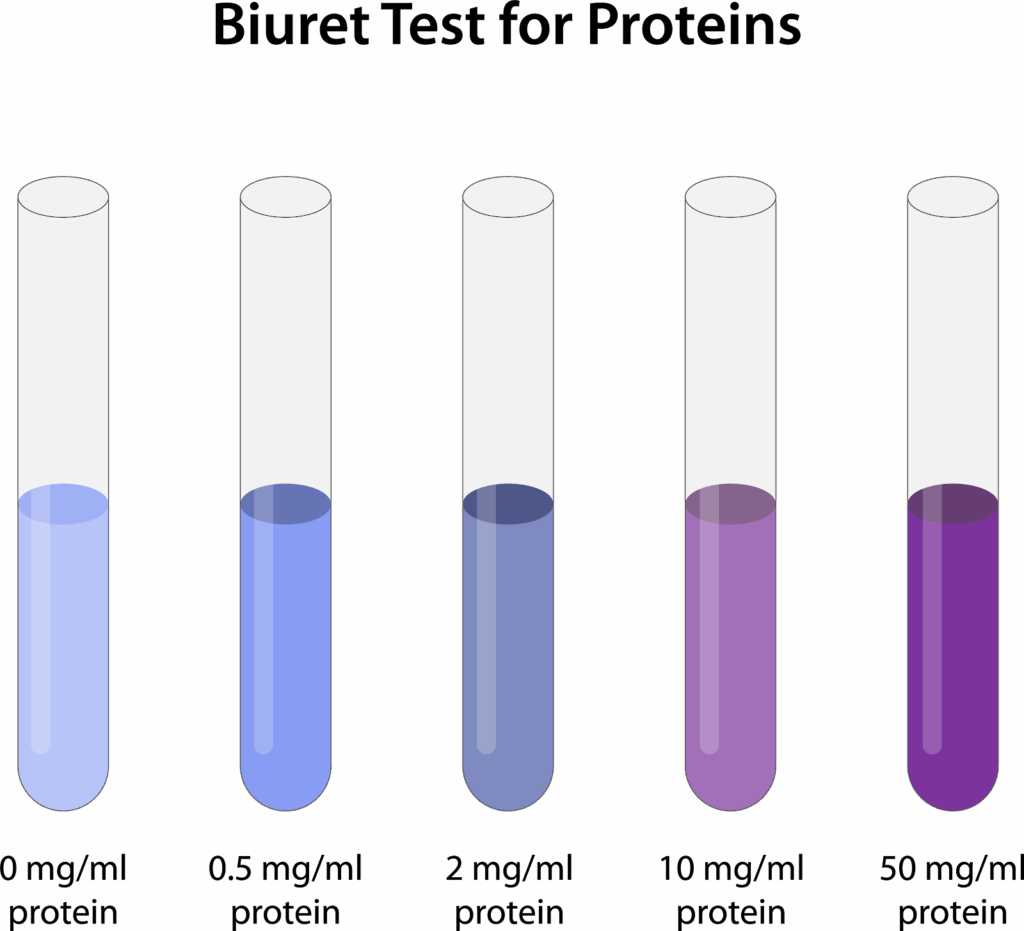
Step 4: Conduct the second protein test – the xanthoproteic reaction. Add a few drops of concentrated nitric acid (HNO₃) to the egg white.
⚠️ Be cautious! Wear gloves and follow safety rules. Work in a ventilated area or under a fume hood.
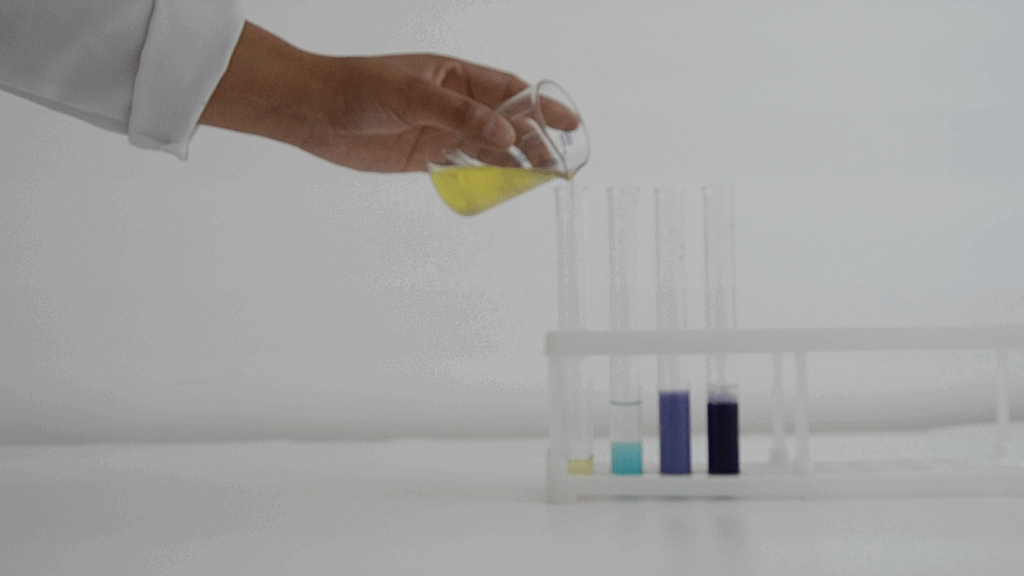
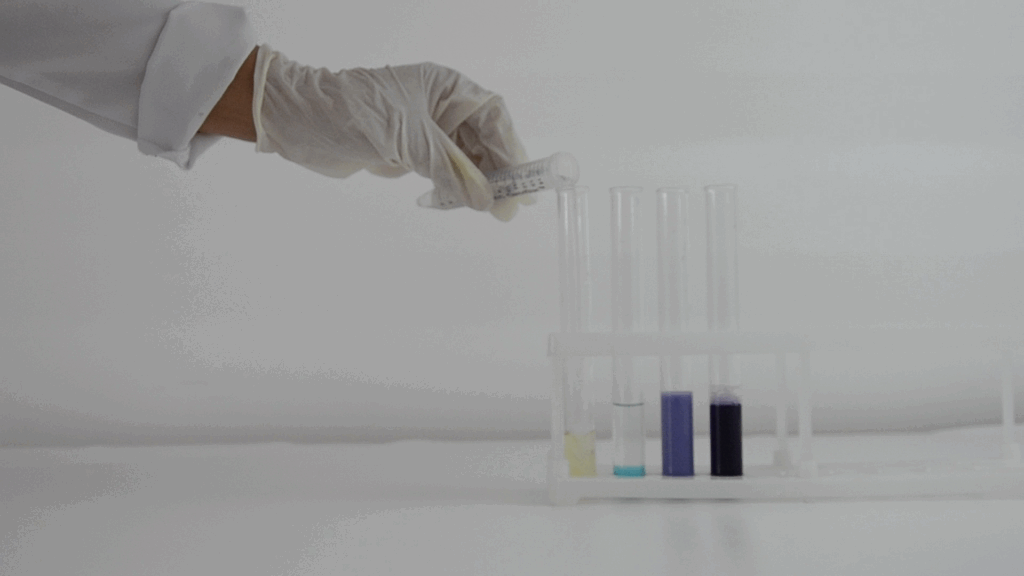
Step 5: Observe the change in concentration of the protein.
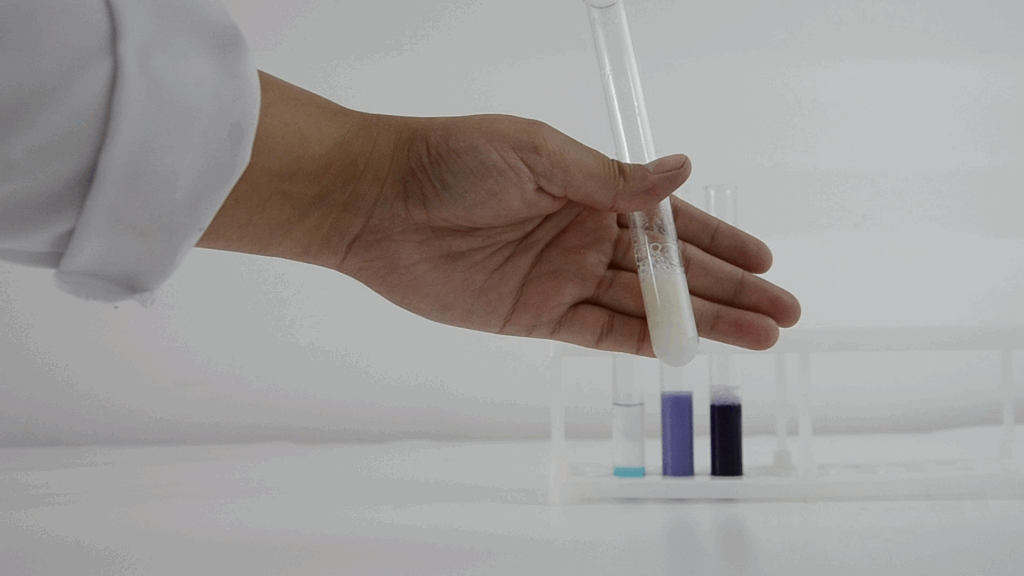
Step 6. Light the alcohol lamp or candle and carefully heat the test tube. Watch for color changes.
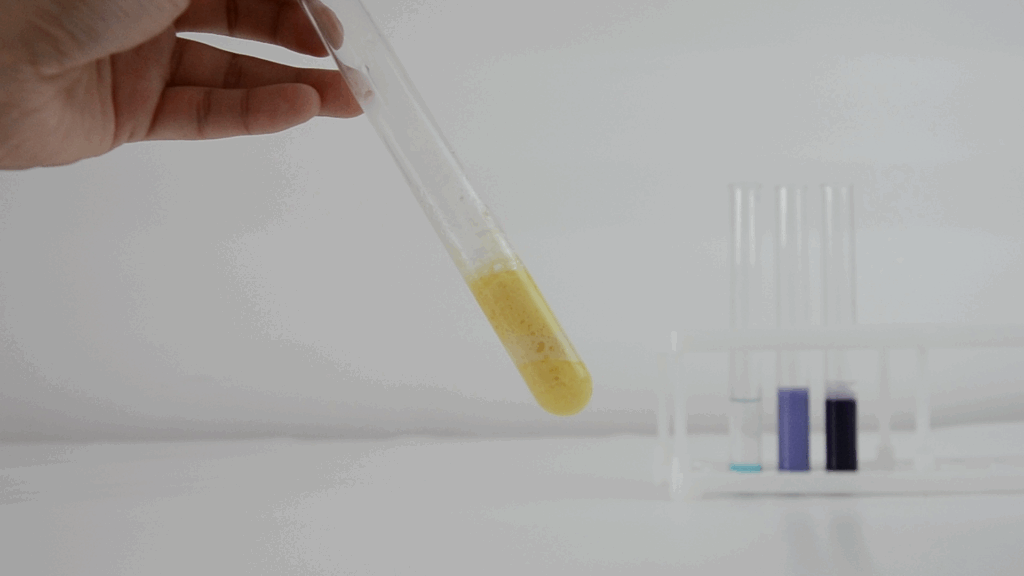
Step 7: Let the tube cool, then add some alkali (NaOH or ammonia solution).
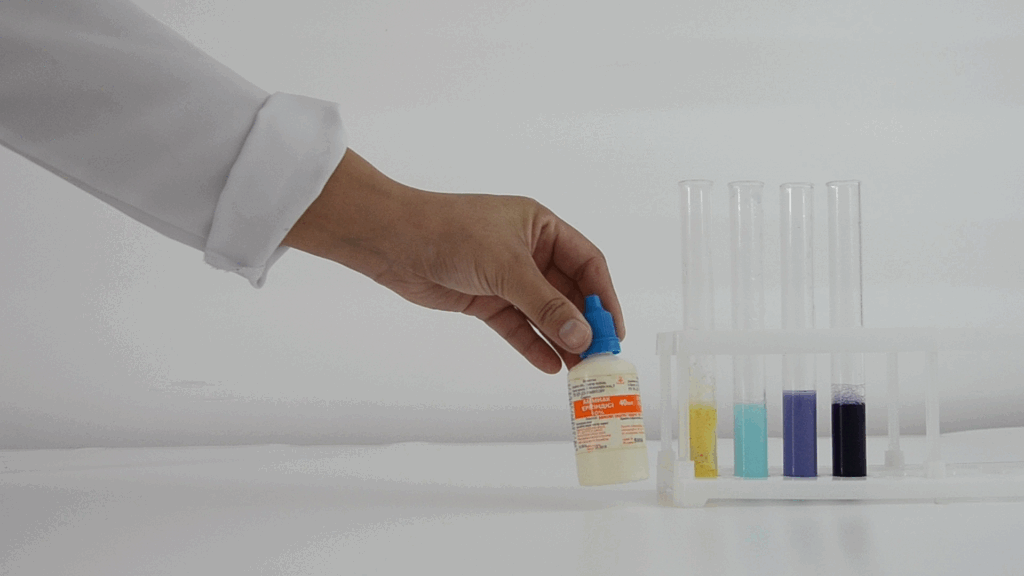
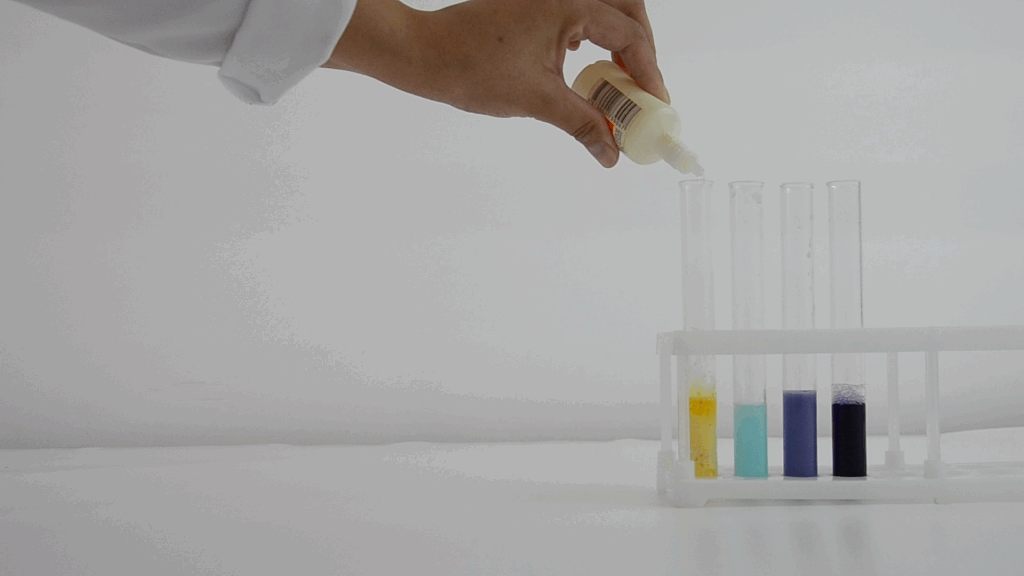
Step 8. What changes did you see? Record your observations and conclusions.
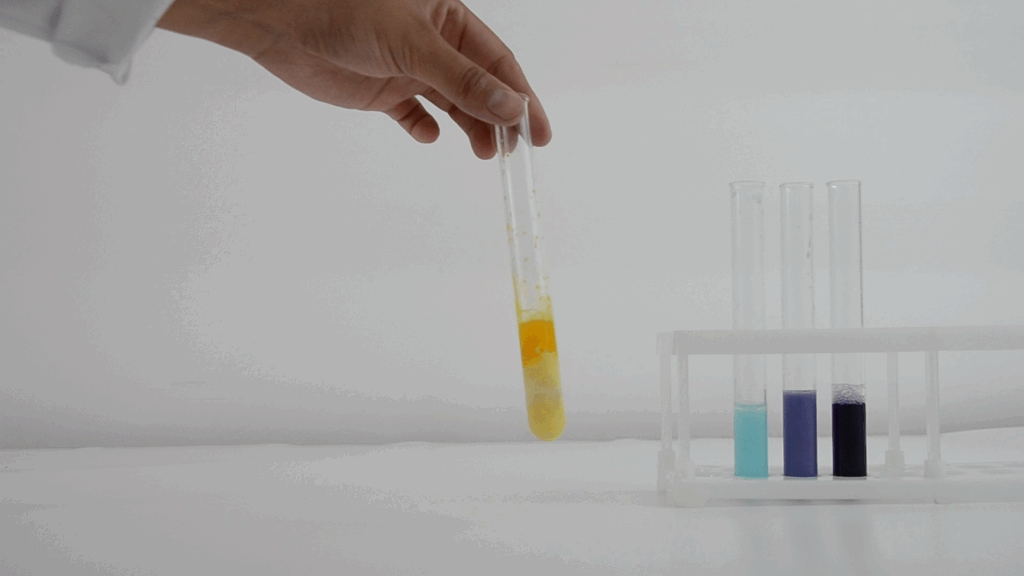
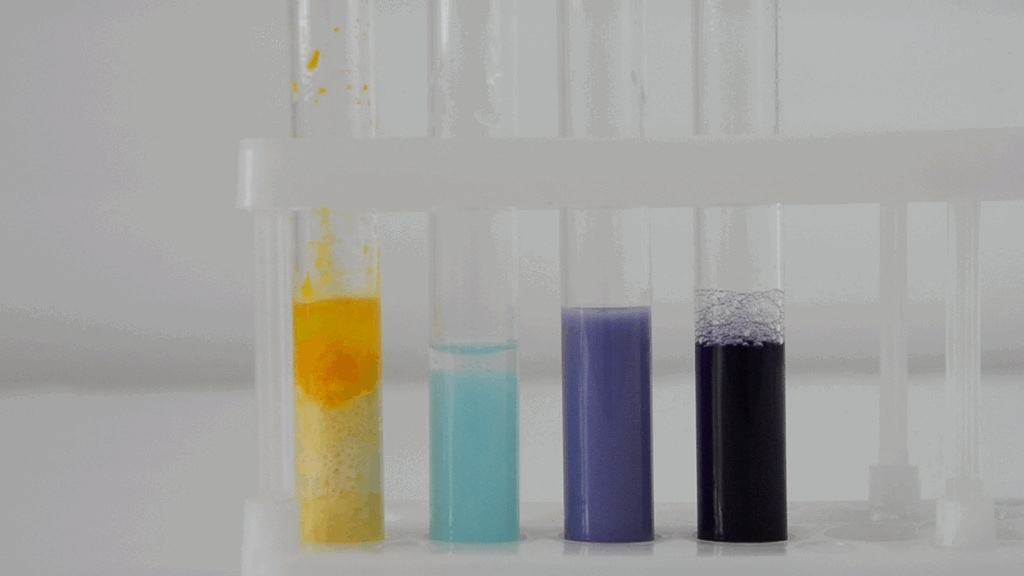
Conclusion
In this lab, students carried out qualitative reactions to detect proteins in different biological samples (milk, gelatin, egg white). They performed the Biuret and xanthoproteic tests, observed color changes, and learned how to detect proteins using external indicators.