
Lesson

Purpose of the work:
- to study the properties of Group IIA elements and their compounds.
Expected results:
After completing the work, students can:
- develop teamwork skills
- be able to analyze and summarize the information received
- draw logical conclusions
Teacher’s Guide:
- The task is performed in groups of 3-4 people
- Before starting laboratory work, please read the safety rules by following the link:
- To download the worksheet, follow the link:
Theory
Group IIA elements are alkaline earth metals: beryllium (Be), magnesium (Mg), calcium (Ca), strontium (Sr), barium (Ba), and radium (Ra).
They have two electrons in the outer shell and easily lose them, exhibiting an oxidation state of +2.
Calcium and magnesium are widely found in nature — in chalk, limestone, gypsum, dolomite, and seawater.
Their compounds play important roles in living organisms, construction, and industry.
Main Properties:
- Carbonates (CaCO₃, MgCO₃) react with acids, releasing carbon dioxide.
- Oxides and hydroxides (CaO, Ca(OH)₂, Mg(OH)₂) exhibit basic properties, forming alkaline solutions.
- When salts of magnesium or calcium react with alkalis, insoluble white precipitates of hydroxides are formed.
Practical part
Experiment №1
Step 1. Pour about 2–3 ml of acetic acid into a clean test tube.
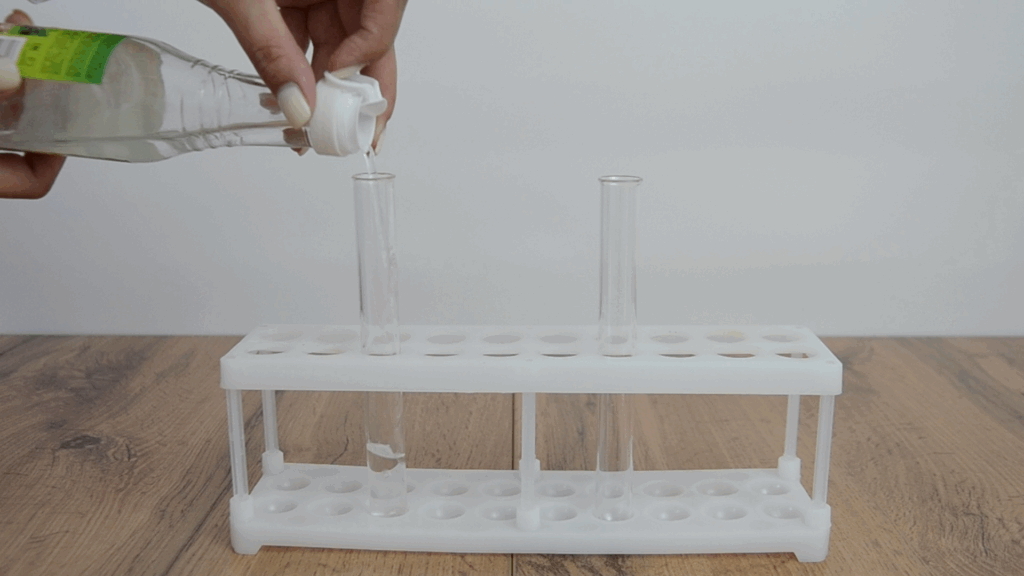
Step 2. Add a piece of chalk (CaCO₃) to the test tube.
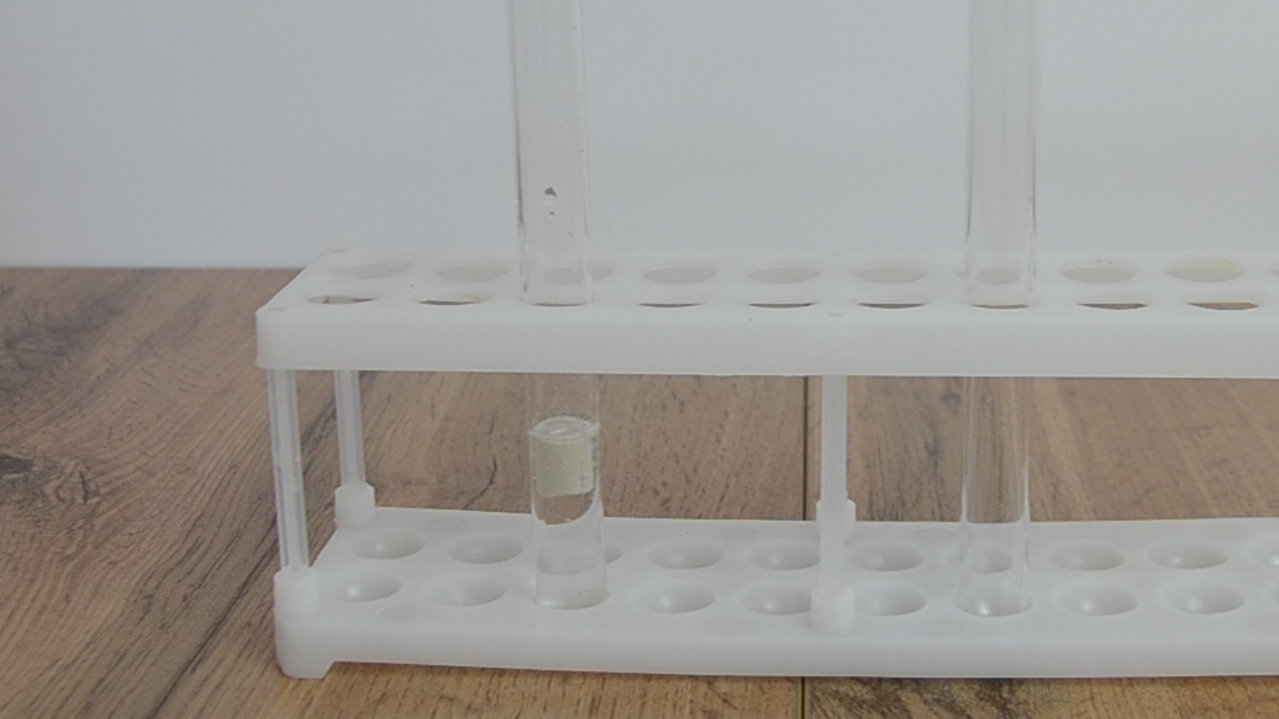
Observation: vigorous bubbling occurs — carbon dioxide gas (CO₂) is released.
Experiment №2
Step 3. Pour about 30 ml of water into a glass and add a small amount of slaked lime (CaO). Stir well.
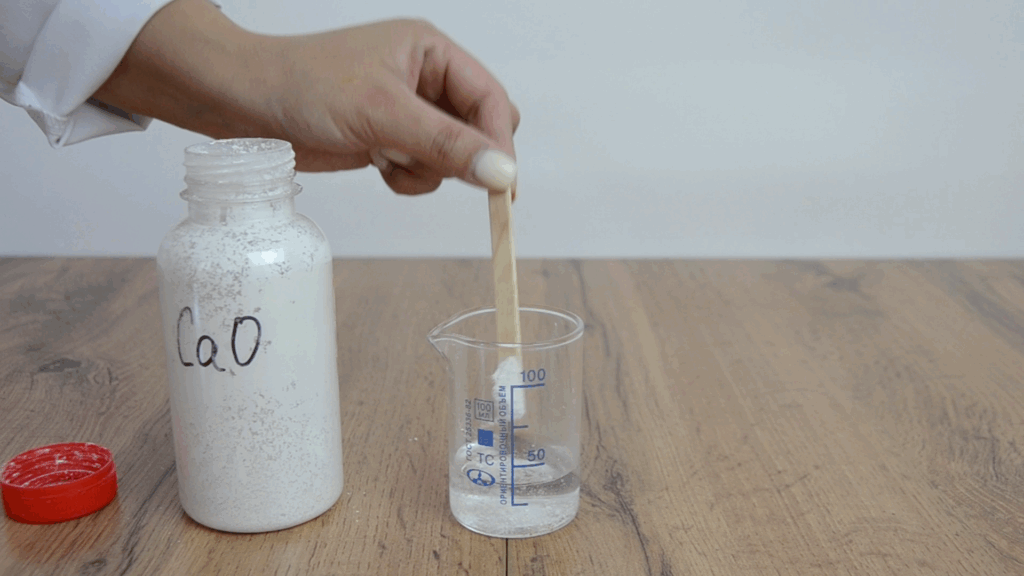
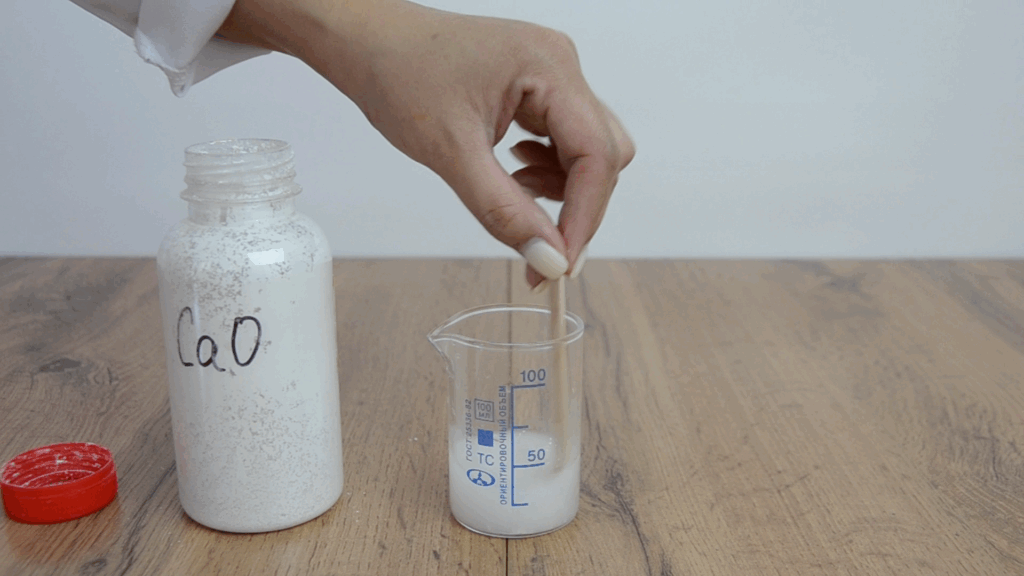
Step 4. After the mixture settles, test its pH using indicator paper.
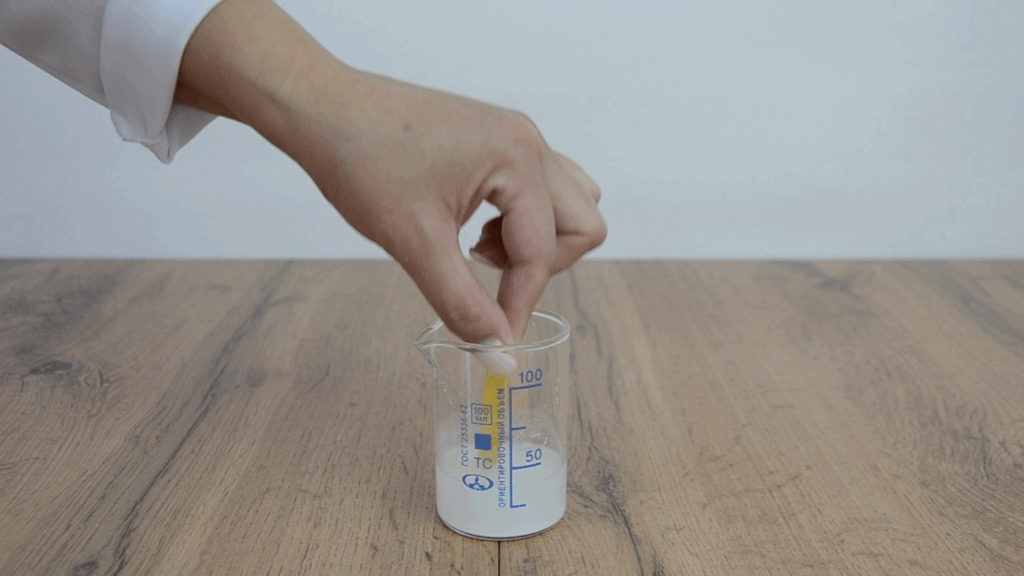
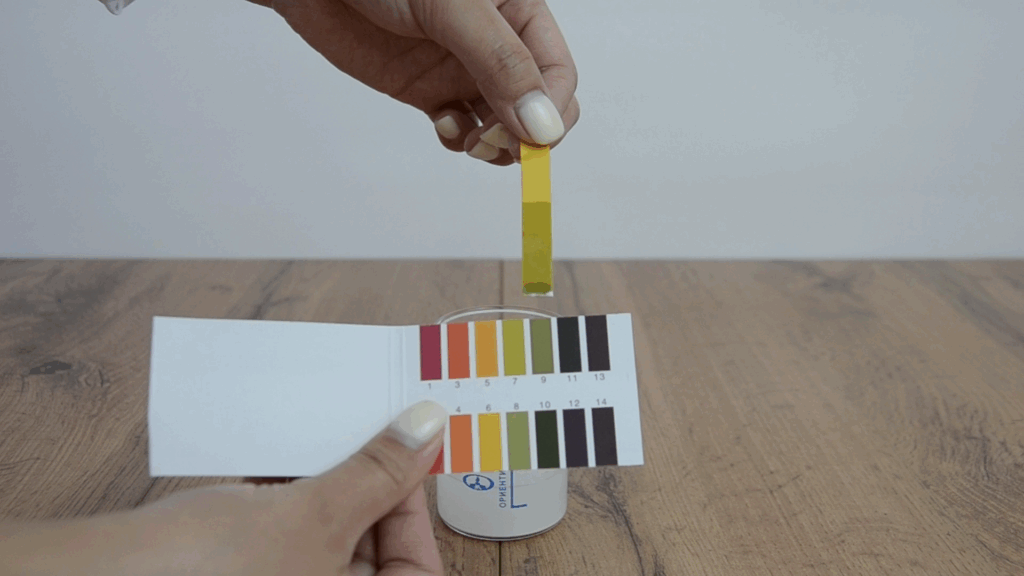
Observation: the paper turns blue/green — indicating an alkaline reaction.
Experiment №3
Step 5. Dissolve about 3 g of magnesium sulfate (MgSO₄) in 30 ml of warm water.
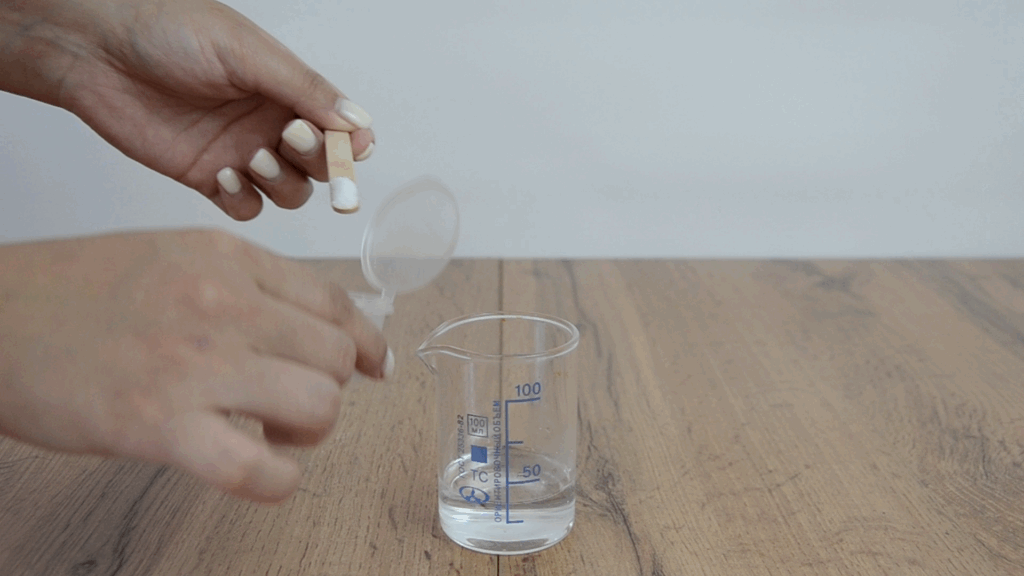
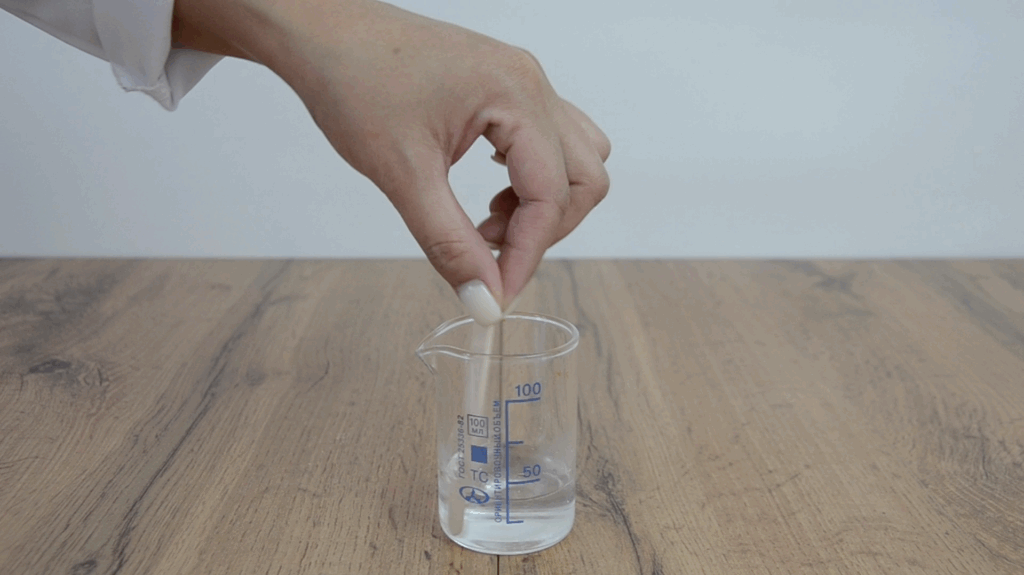
Step 6. Pour 2–3 ml of the MgSO₄ solution into a clean test tube and add a small amount of baking soda (Na₂CO₃) or sodium hydroxide (NaOH) solution.
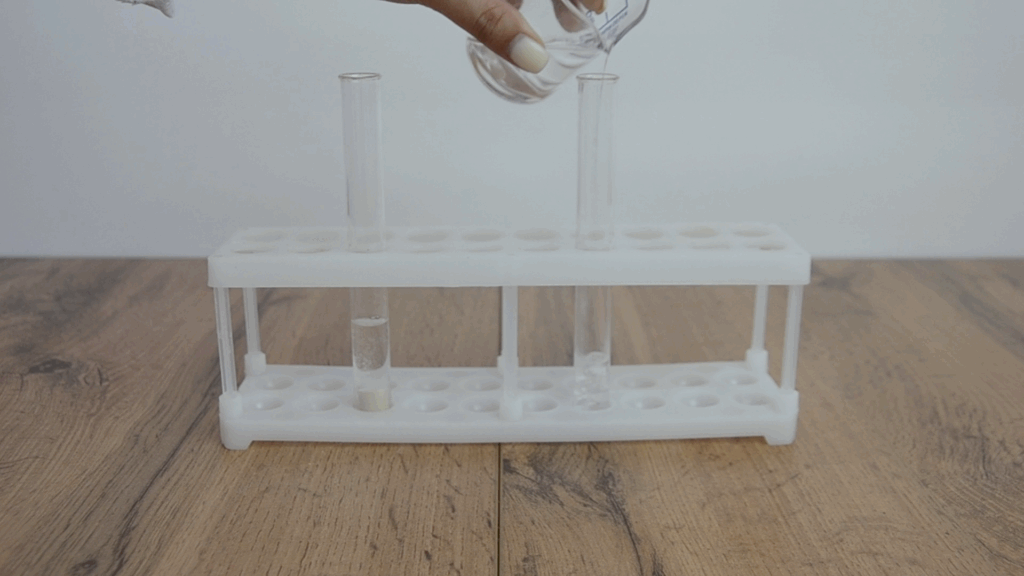
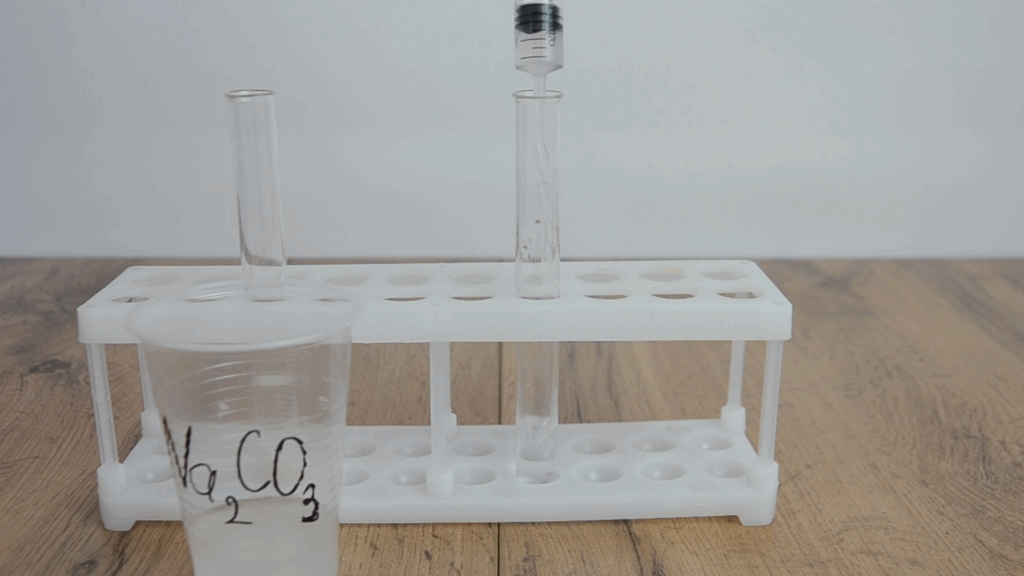
Observation: a white cloudy precipitate forms — magnesium hydroxide (Mg(OH)₂).
Conclusion
In this work, students studied the basic properties of alkaline earth metals and their compounds. The experiments demonstrated that Group IIA elements share similar chemical properties and actively react with acids, water, and alkalis.