
Lesson

Purpose of the work:
- to demonstrate how photosynthesis intensity changes when the dissolved CO₂ concentration and light intensity vary.
Expected results:
After completing the work, students can:
- develop teamwork skills
- be able to analyze and summarize the information received
- draw logical conclusions
Teacher’s Guide:
- The task is performed in groups of 3-4 people
- Different factors can be assigned to each group for investigation, and at the end of the lesson they can compare the results and make a common conclusion.
- Before starting laboratory work, please read the safety rules by following the link:
- To download the worksheet, follow the link:
Theory
Photosynthesis is the process by which green plants convert carbon dioxide and water into glucose and oxygen using sunlight.
The rate of photosynthesis depends on environmental conditions.
Limiting factors of photosynthesis are external conditions that restrict the rate of photosynthesis if their supply becomes insufficient.
Key limiting factors:
- Light — low light slows photosynthesis; high light leads to a saturation plateau.
- CO₂ concentration — increasing CO₂ raises photosynthesis rate until another factor becomes limiting.
- Temperature — affects enzyme activity; too low or too high slows photosynthesis.
- Water and mineral availability — required for chloroplast functioning.
Once one factor is optimal, another becomes the limiting factor. This is known as the Law of Limiting Factors.
Practical part
Influence of CO₂ concentration
- Light: constant medium intensity (fixed lamp distance)
- CO₂ levels: 0%, 0.25%, 0.5%
- Replicates: 3 setups per level
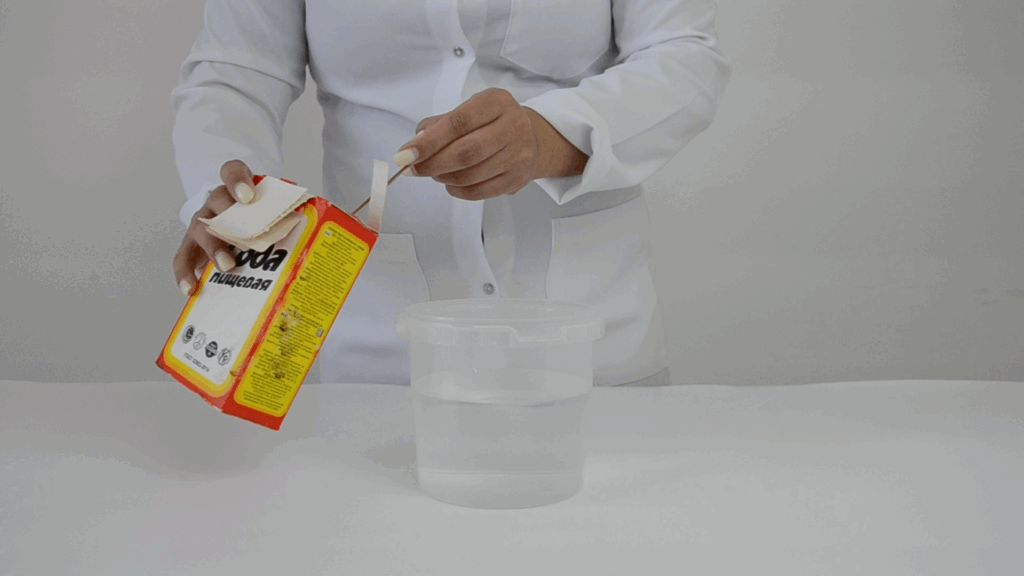
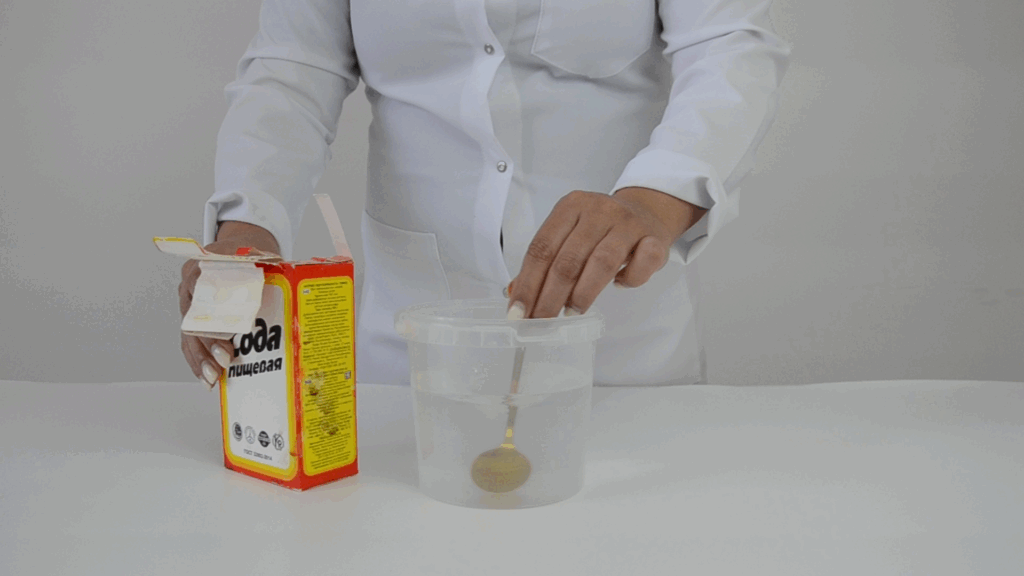
Step 1. Add the required amount of baking soda (NaHCO₃) into the container:
- I – 0% (control): water only
- II – 0.25% → 0.25 g/100 ml → 2.5 g/L
- III – 0.50% → 0.5 g/100 ml → 5.0 g/L
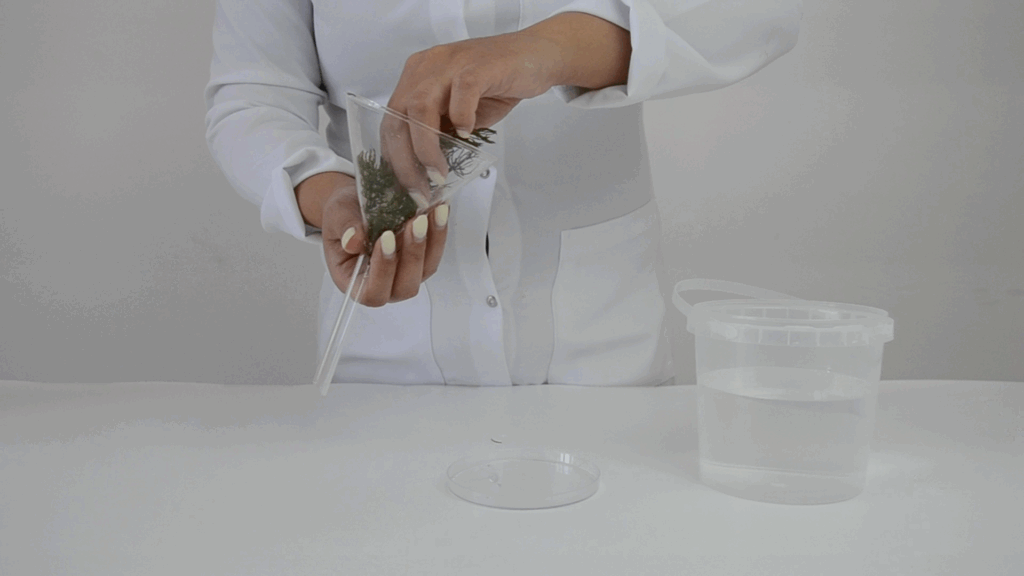
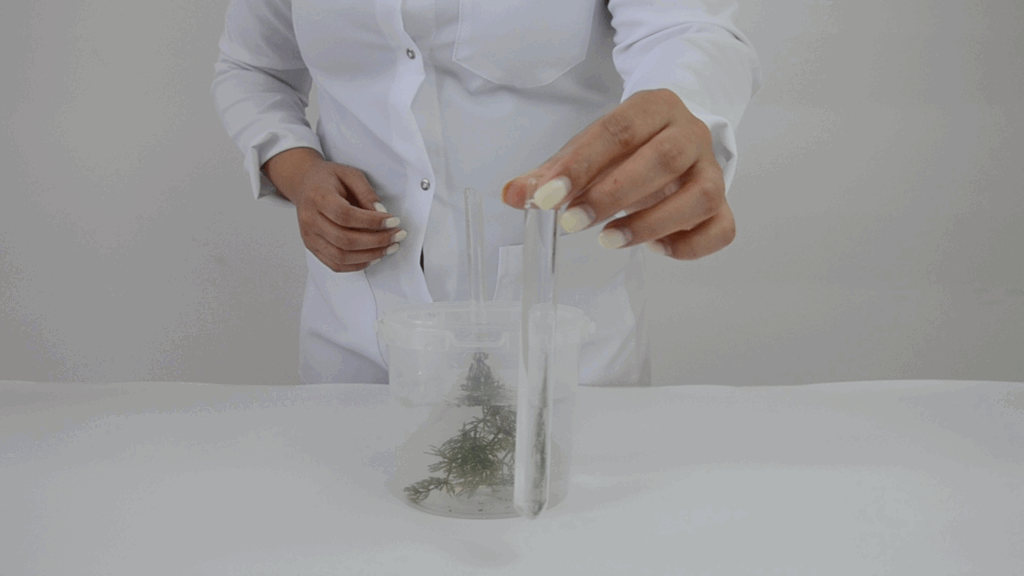
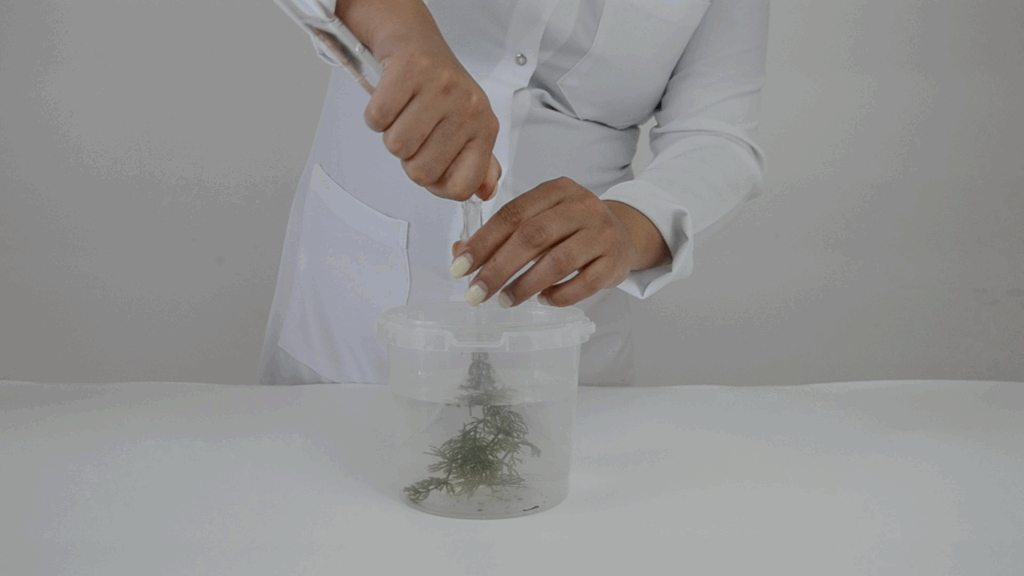
Step 2. Place a piece of the aquatic plant into the funnel with the cut end facing downward.
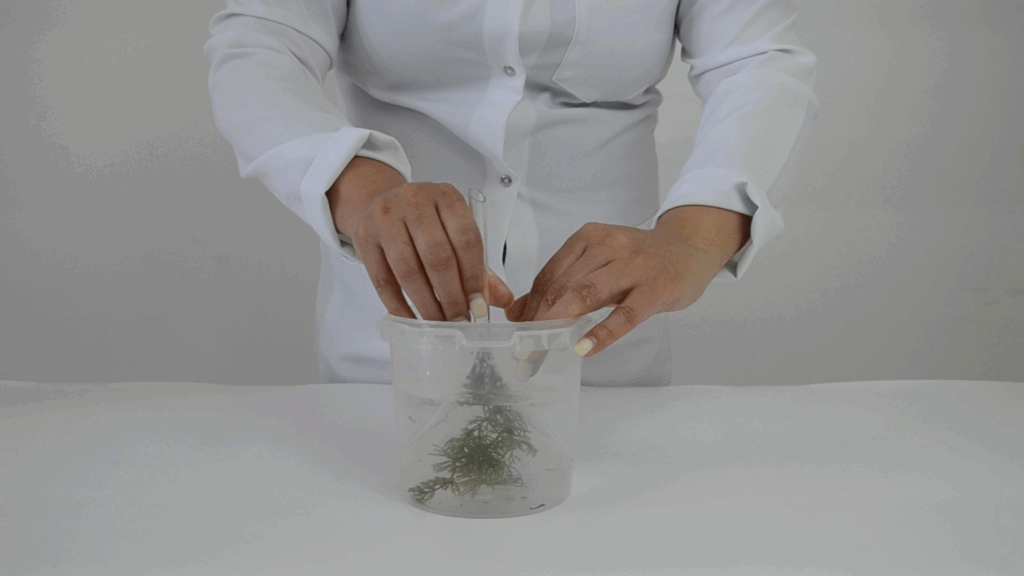
Step 3. Fill the test tube completely with water, cover the opening, invert it and place over the funnel stem, ensuring no air enters.
Step 4. Turn on the lamp at 25 cm height.
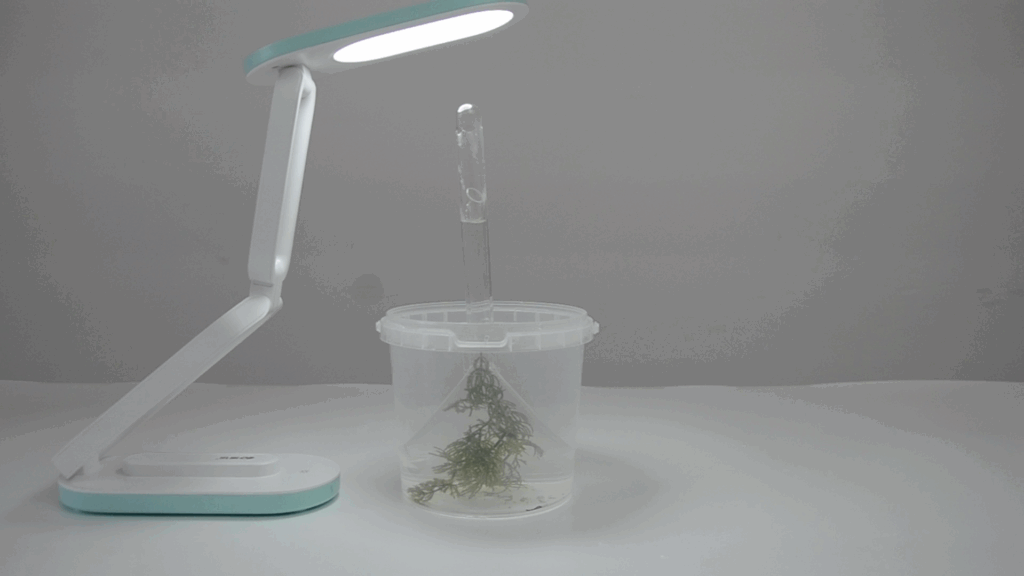
Step 5. Allow 2–3 minutes of adaptation to the light.
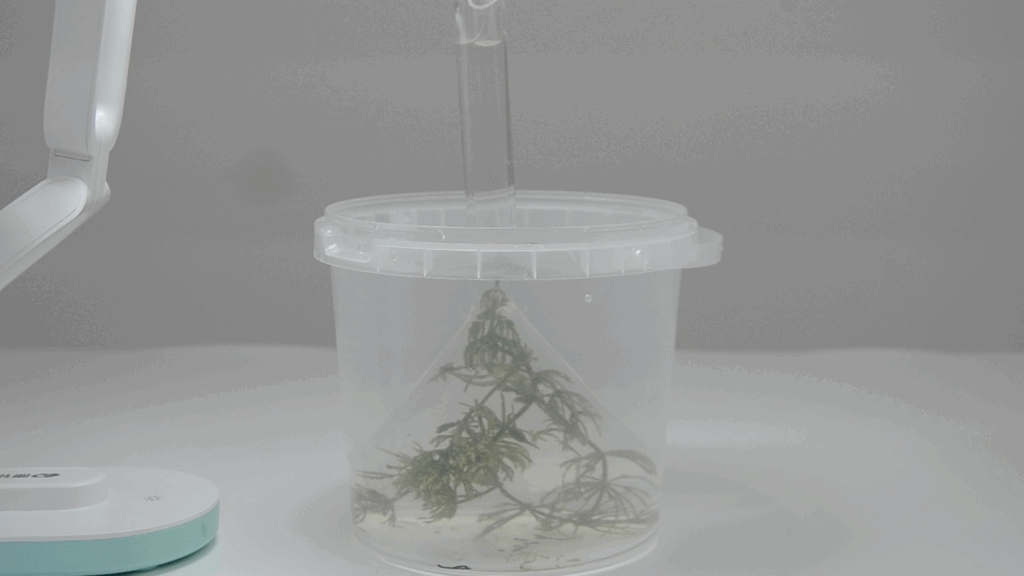
Step 6. Start the timer and count the number of bubbles for exactly 5 minutes.
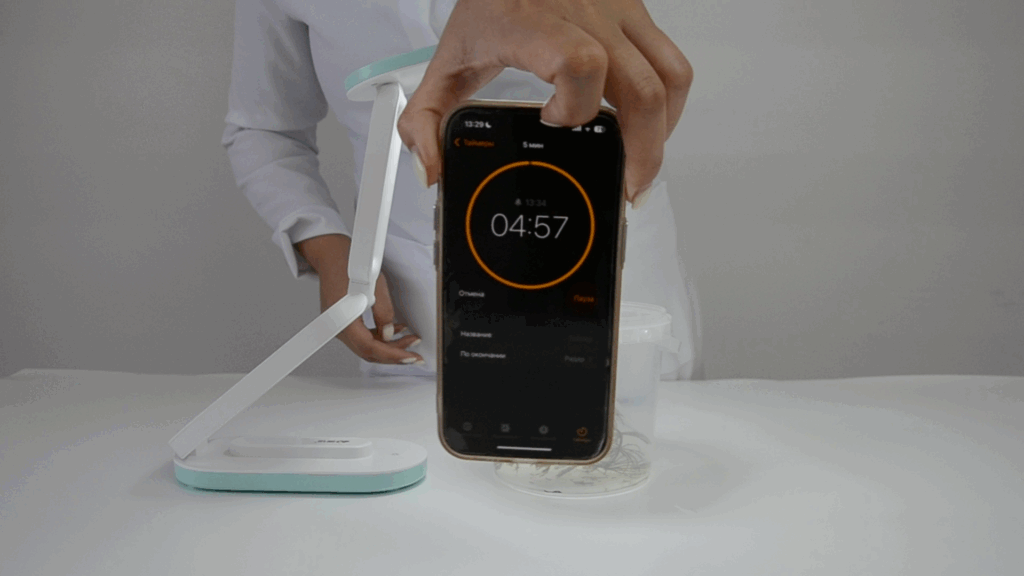
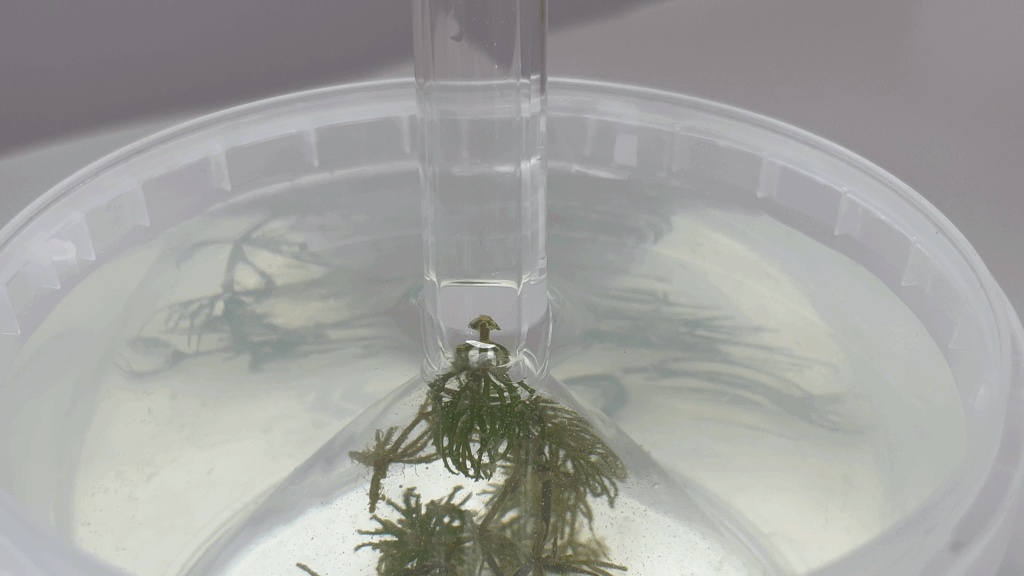
Step 7. Record data in the worksheet and make conclusions. Repeat the experiment with other factors, for example with light intensity:
- CO₂: constant (e.g., 0.25%)
- Light levels: 10 cm (high), 25 cm (medium), 40 cm (low)
- 3 replicates for each level
Conclusion
Students confirmed experimentally that photosynthesis rate depends on environmental conditions. An increase in CO₂ concentration and stronger illumination led to a higher number of O₂ bubbles. Thus, students validated the Law of limiting factors: the factor in shortest supply limits the rate of photosynthesis at any given moment.