Week 1
Goals:
- Improve knowledge of geometric shapes and the shape of objects
- Develop figurative thinking
Read the safety instructions before you start [ safety insructions].
Teacher’s Guide:
- Tell the students about the life of bees and their dwelling.
- Before starting a project, give a brief briefing on how to work with scissors and glue.
Introduction
Honey bees produce a lot of honey and create large nests. To build nests, they use wax that they produce themselves.
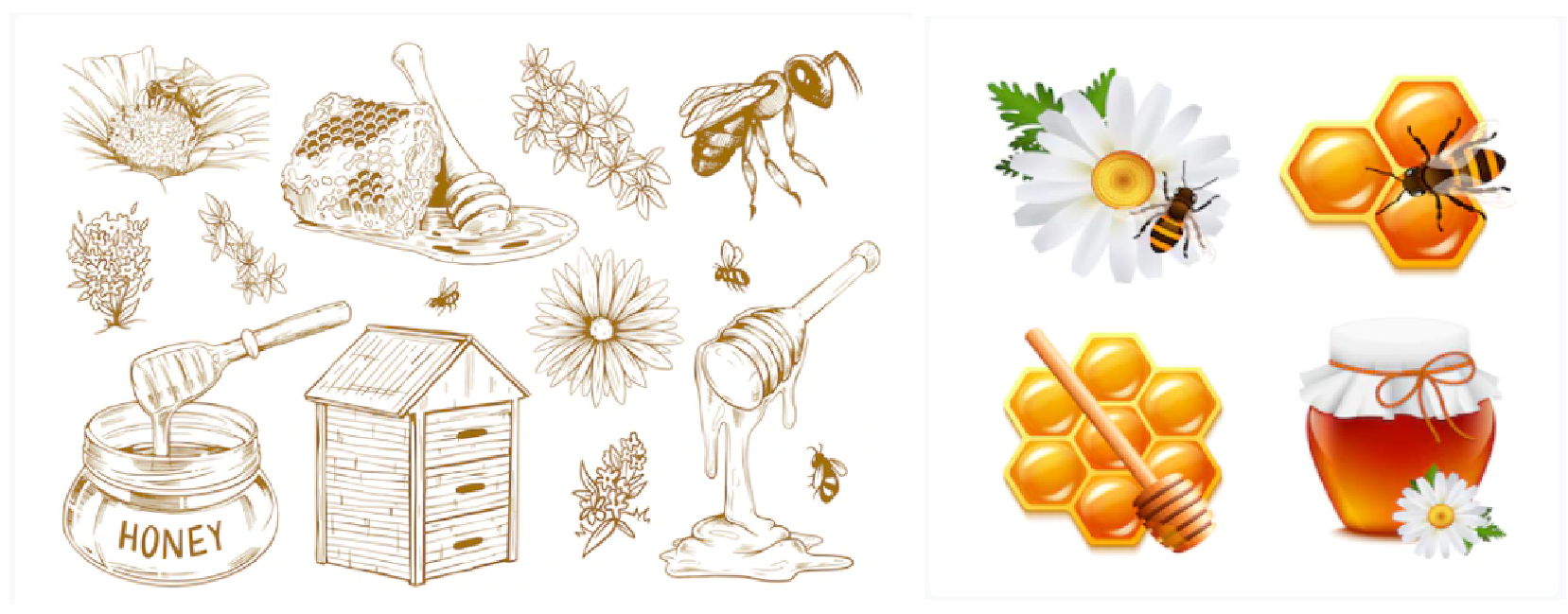
Honeycombs are wax cells that are designed to store nectar and turn it into honey. Also, honeycombs are a place for growing offspring. During the construction of the wax construction of honeycombs, bees secrete wax from special glands.
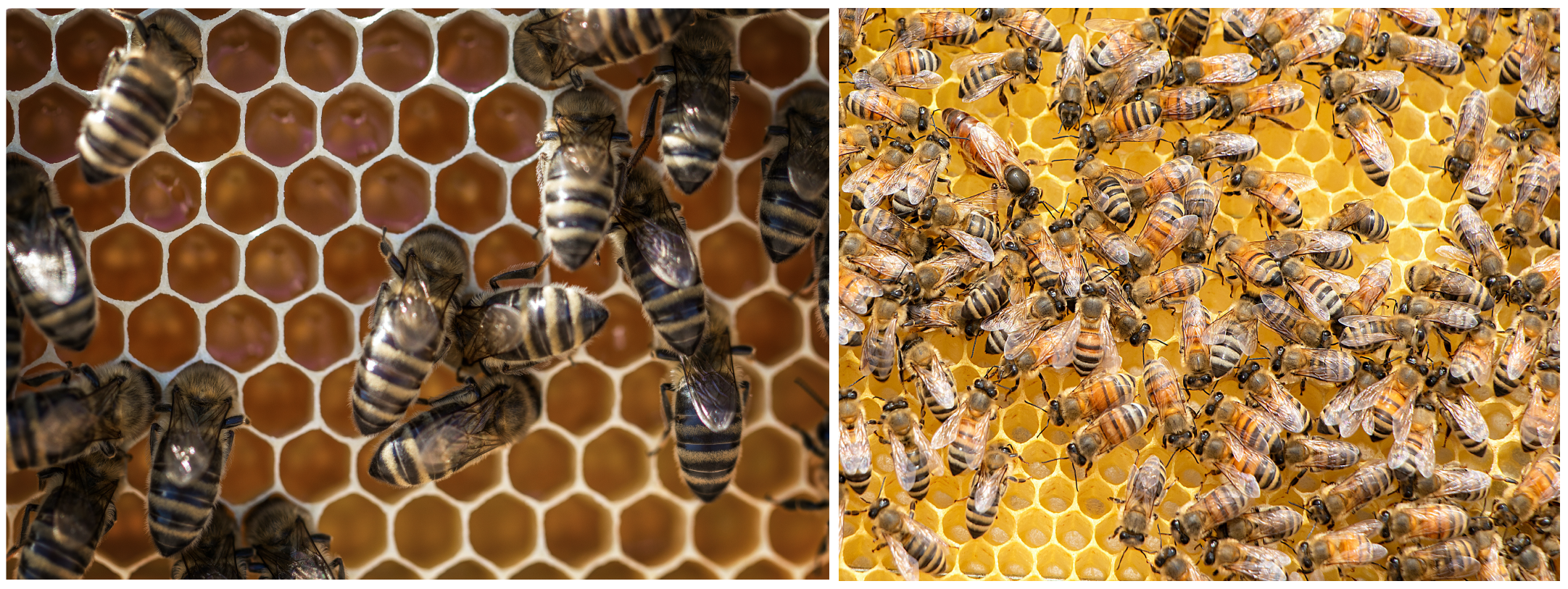
Why are honeycombs hexagonal?
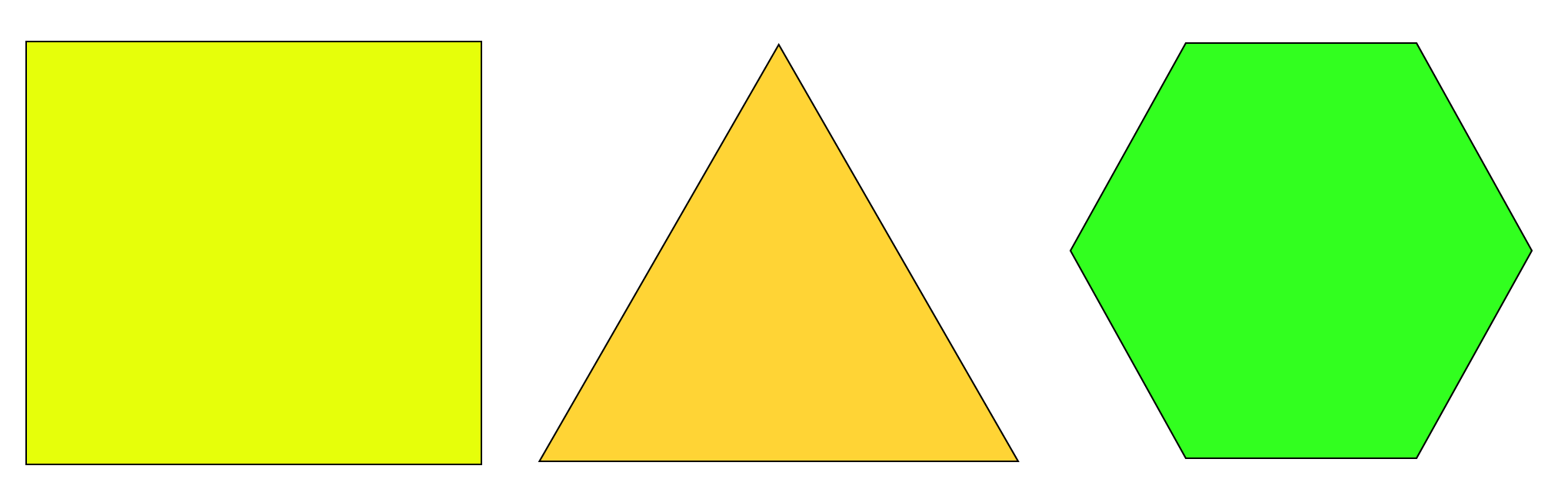
Bee dwellings are a work of art in engineering. At the heart of the wax cells that make up the honeycombs are hexagons with equal sides. In the combs of bees, in addition to hexagonal combs, there are also pentagonal ones. They are located between large and small cells.
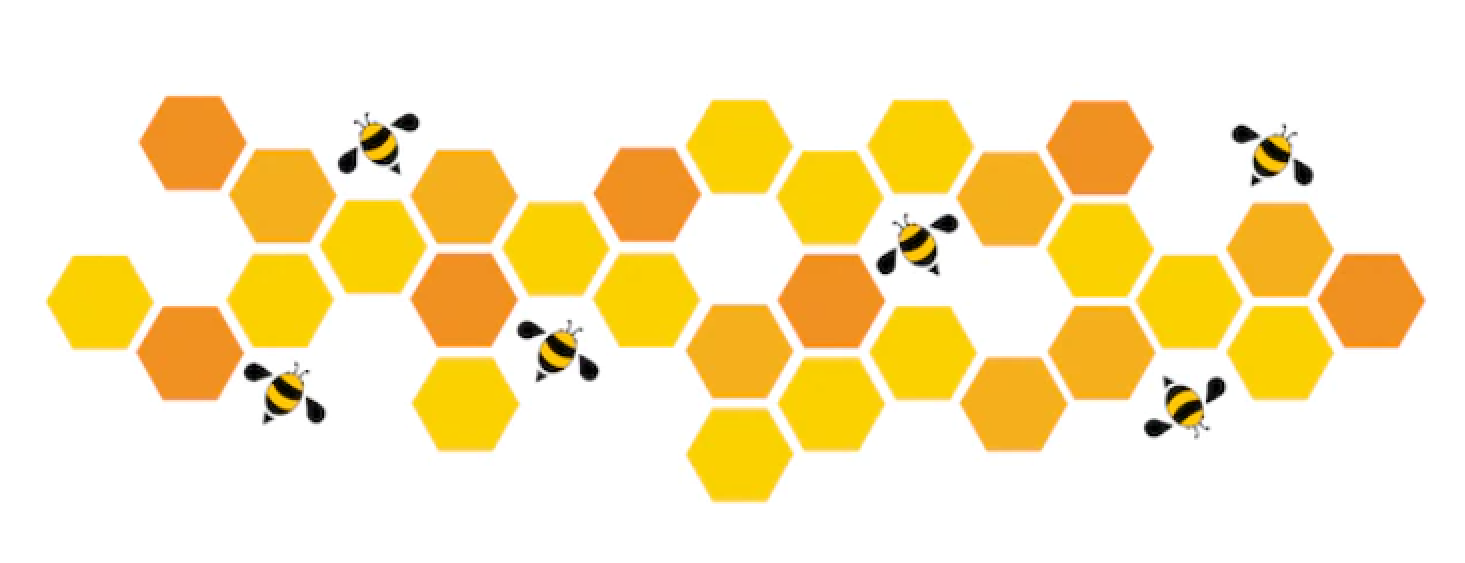
The hexagonal shape is the most convenient and economical shape for honeycomb construction. In the eighteenth century, Charles Darwin studied the honeycombs of bees. Comparing different figures, the scientist explained that the shape of the hexagon reduces the cost of wax and labor of bees. Thus, a hexagon is an ideal shape for building honeycombs [1].
References:
[1] https://medvoblago.ru/pchelovodstvo/pochemu-soty-pchel-imeyut-shestigrannuyu-formu
Practical part.
The following are instructions for a team of three. Each student from the team must make one type of honeycomb.
Give each student one piece of colored card.
Cut the colored cardboard into strips 1.5 cm wide as shown in the picture.
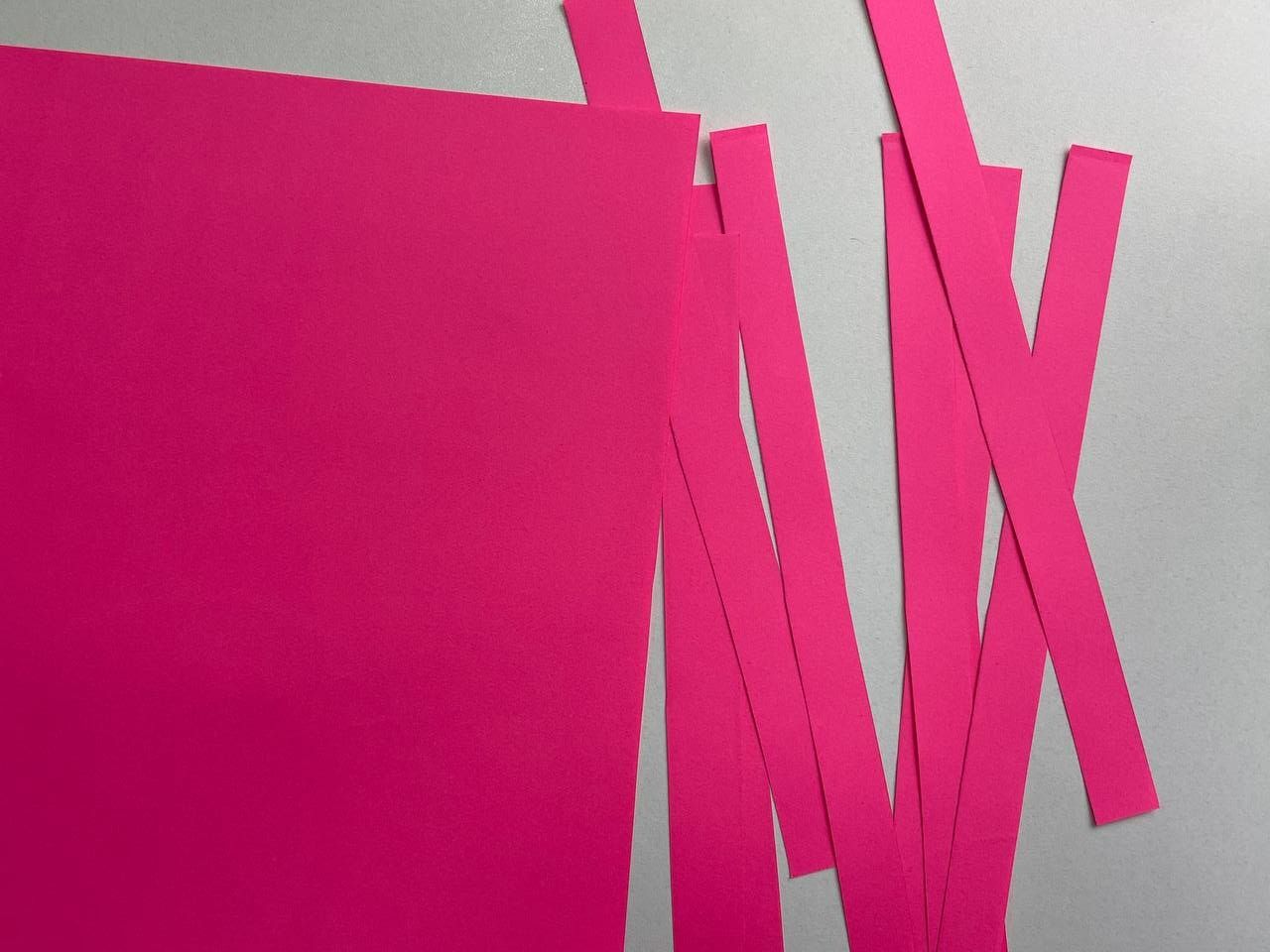
Next, each student makes honeycombs consisting of one type of figure.
Fold the strips so that the sides are the same and glue the ends to make the desired figures.
Honeycombs from triangles.
Divide the strip into 3 equal parts of 6.5 cm and bend them so that you get a triangle. Glue the ends with paper glue.
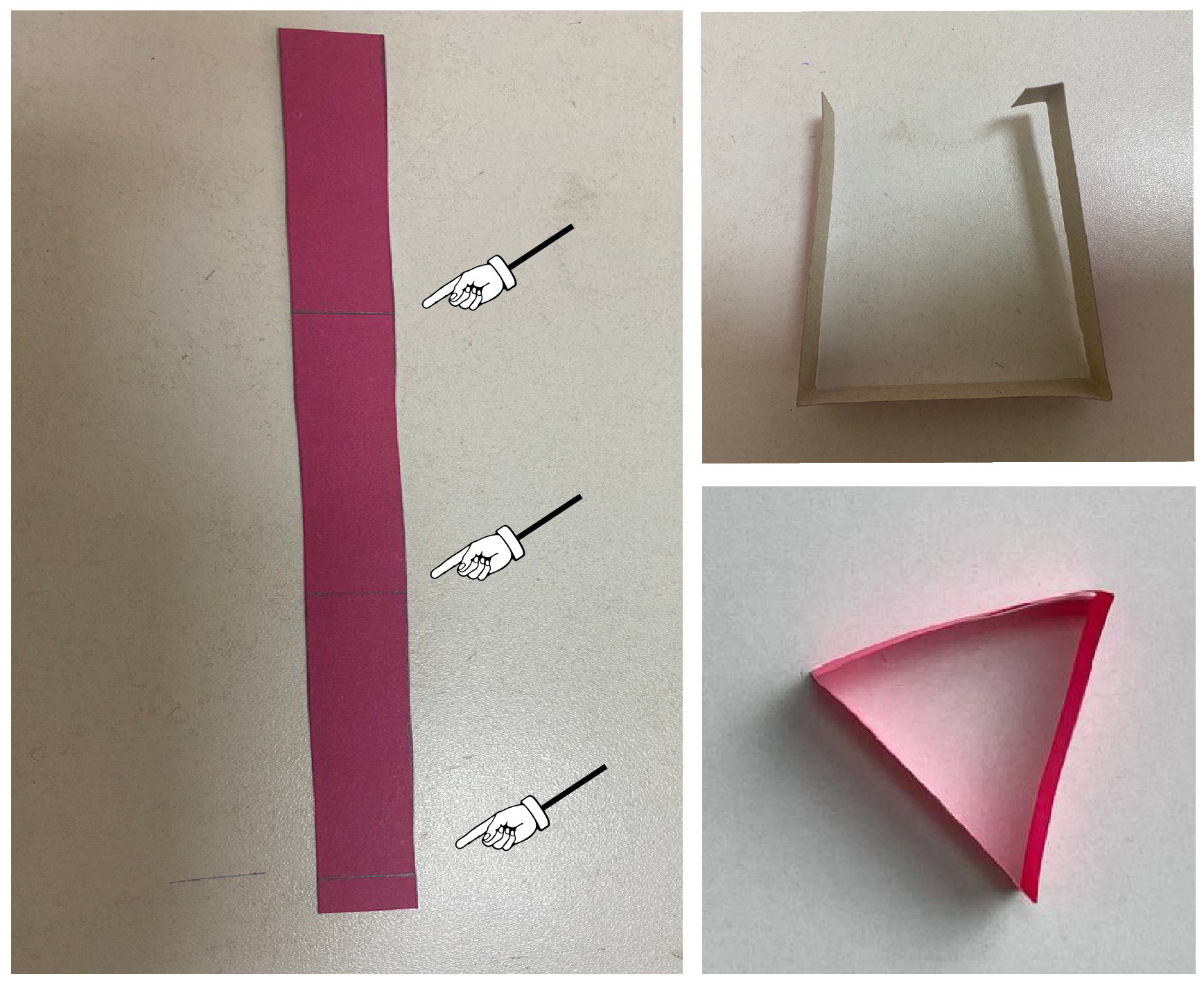
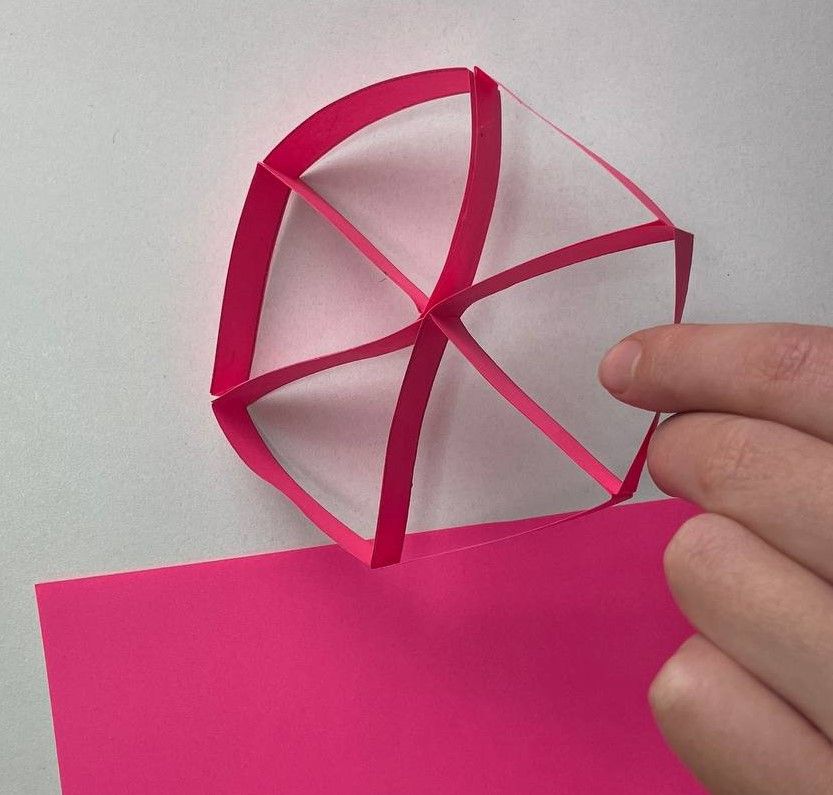
Make 5 more such triangles. Glue the resulting triangles to make honeycombs.
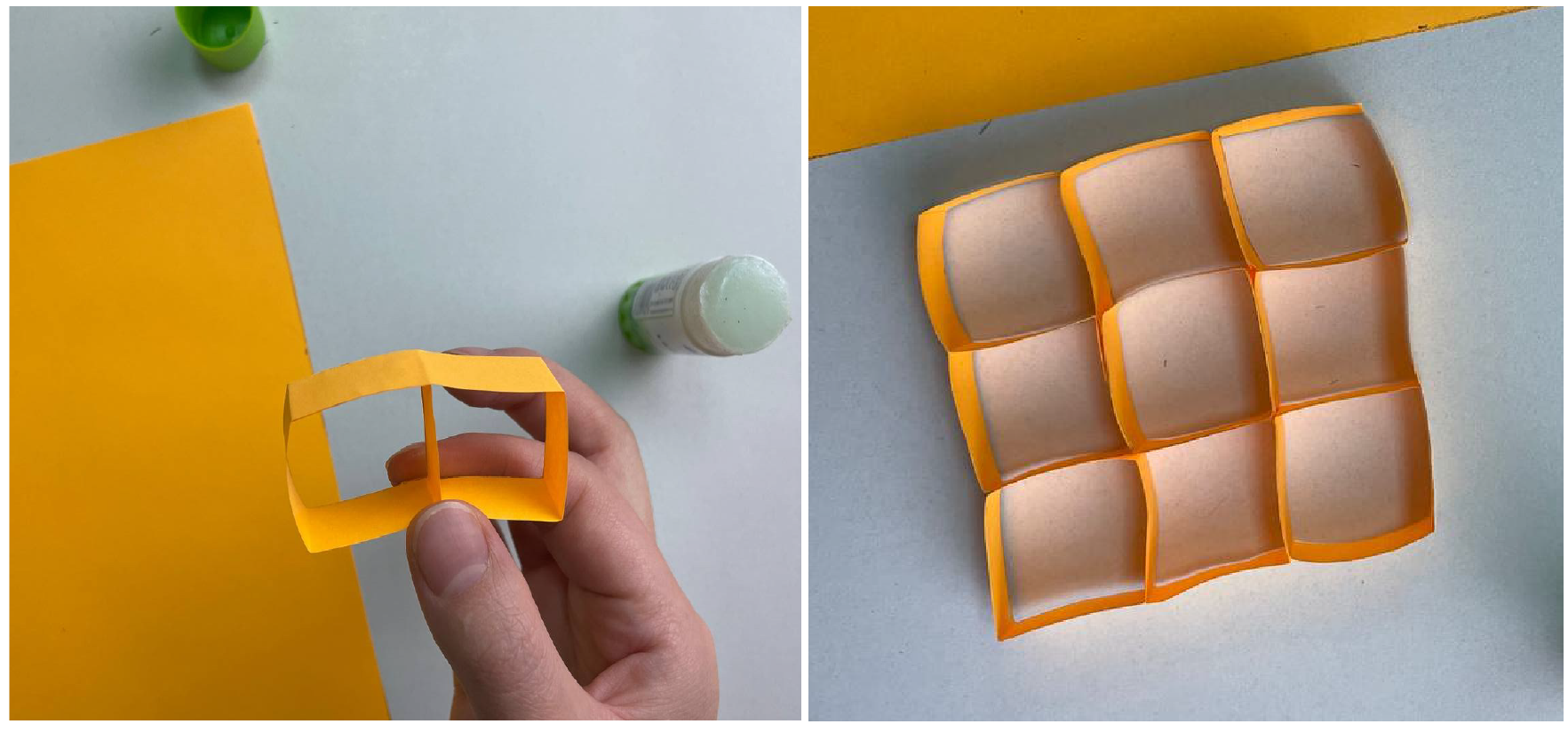
Honeycombs from squares.
- Divide the strip into 4 equal parts of 4.5 cm and bend them so that you get a square.
- Make 8 more of these squares. Glue the resulting squares to make honeycombs.
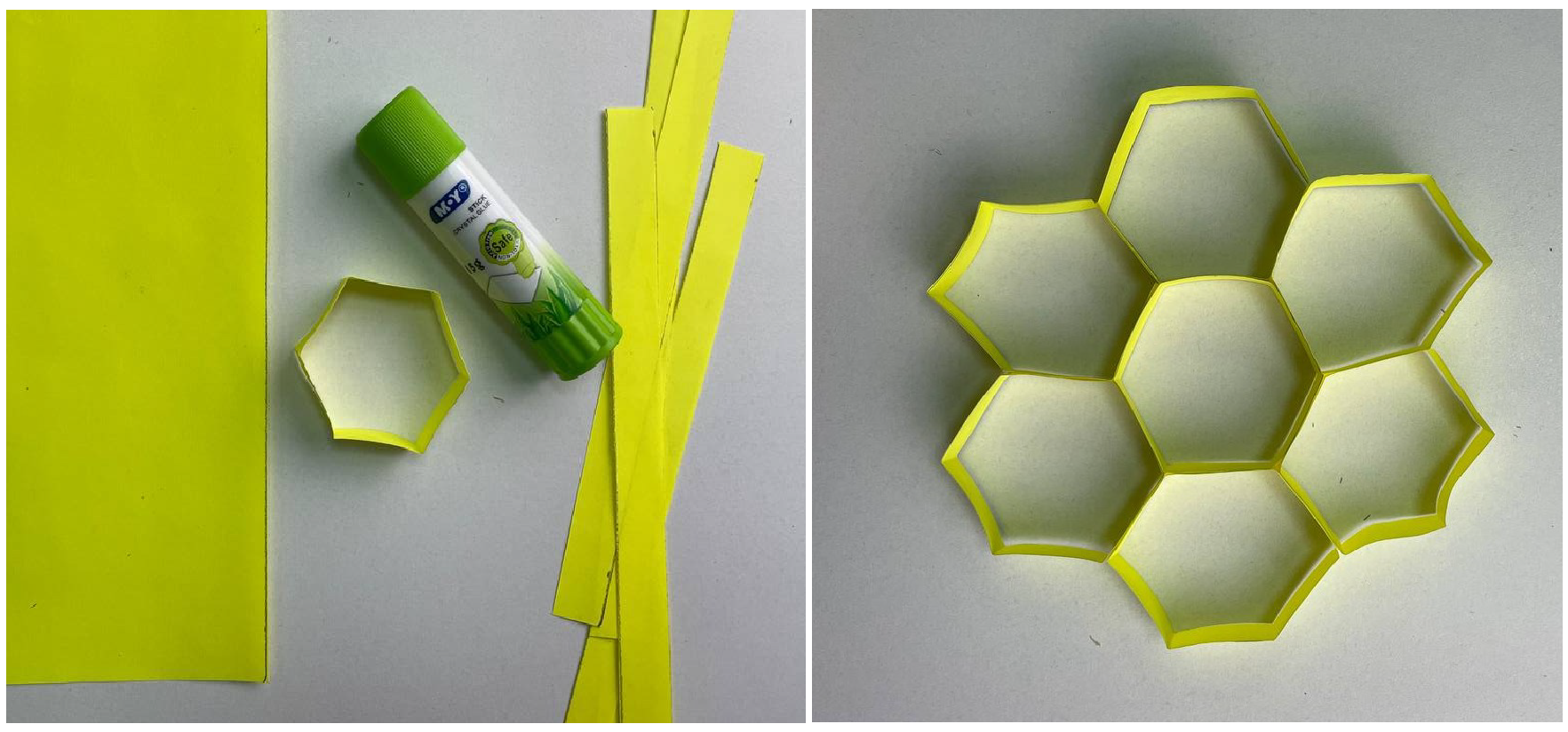
Honeycombs from hexagons.
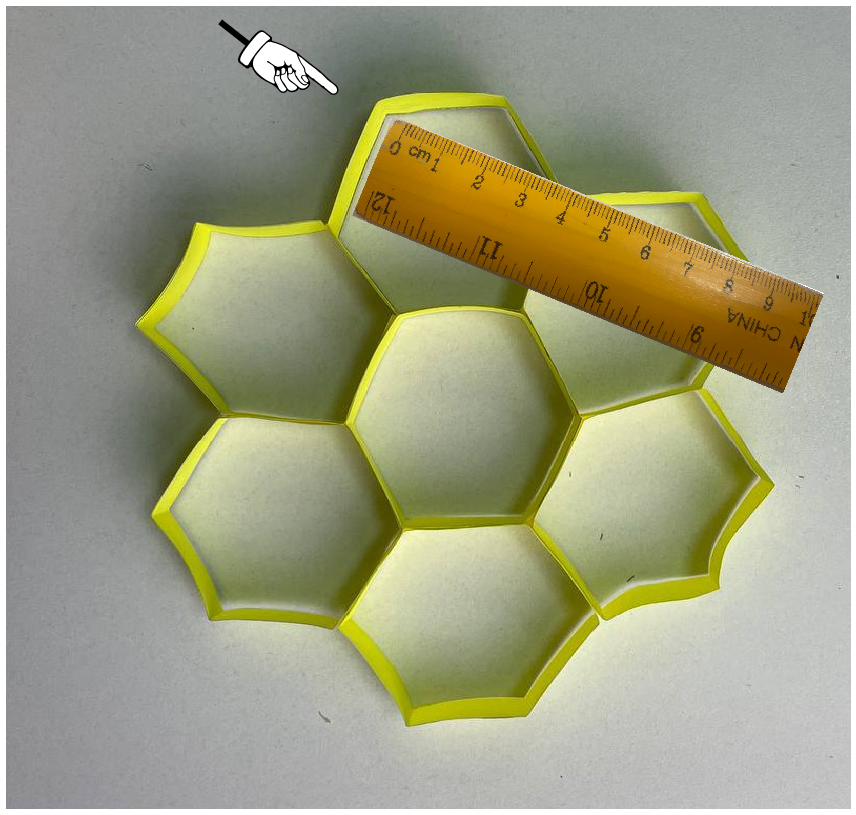
- Divide the strip into 6 equal parts of 3 cm and bend them so that you get a hexagon.
- Make 6 more of these hexagons. Glue the resulting hexagons to make honeycombs.
Discussion of angle types.
Discuss with the students the inside corners of the figures. Each team member will have different answers, depending on the type of figurine.
Ask students:
How many sides does a triangle / square / hexagon have?
What type is the inside corner of your figure? (Obt/Acute/Right Angle)
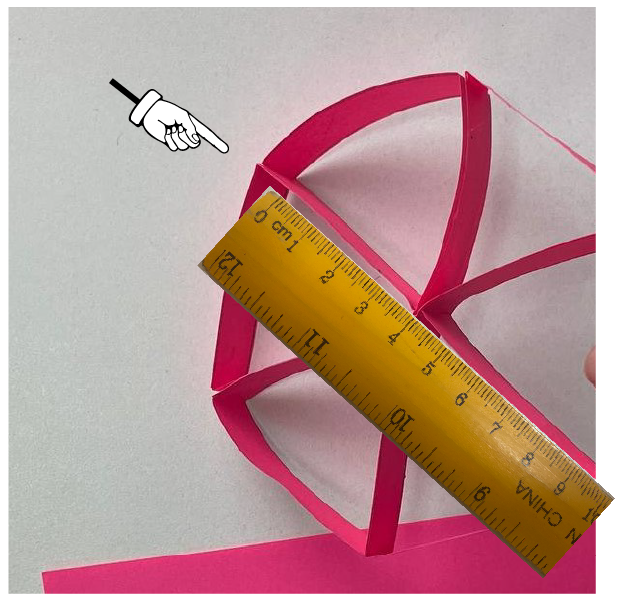
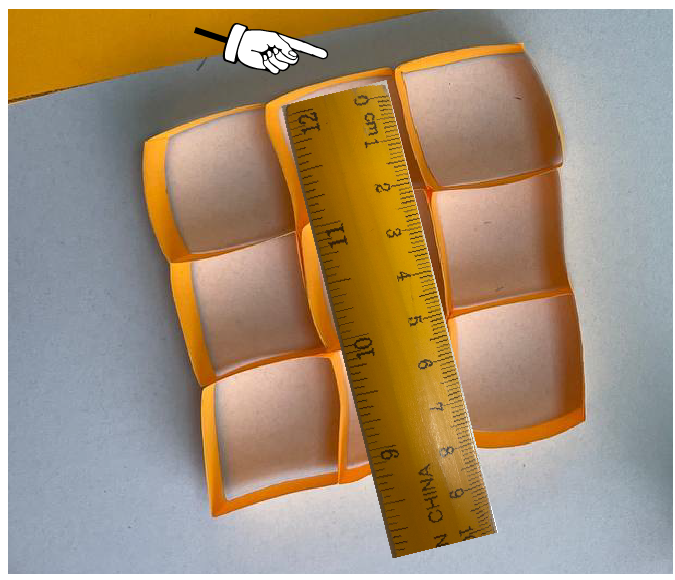
To determine the type of interior corners, ask students to use a right angle ruler.
The angle of the triangle is less than the angle of the ruler. Therefore, the angle of our triangle is acute.
The angle of the square is equal to the angle of the ruler. Therefore, the angle of our square is a right one.
The angle of the hexagon is greater than the angle of the ruler. Therefore, the angle of our hexagon is obtuse.