Week 3
Step 1
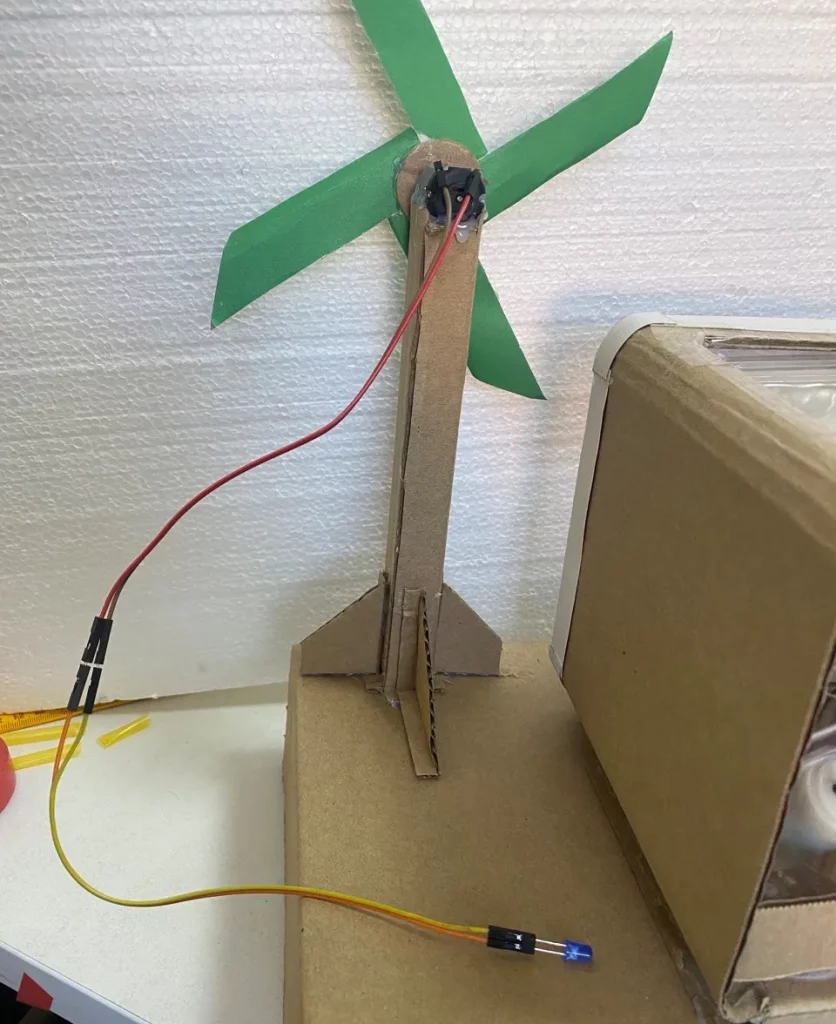
Connect the motor and the LED as shown in the illustration
Step 2.
Attach the LED to the inside of the house using duct tape.
Step 3.
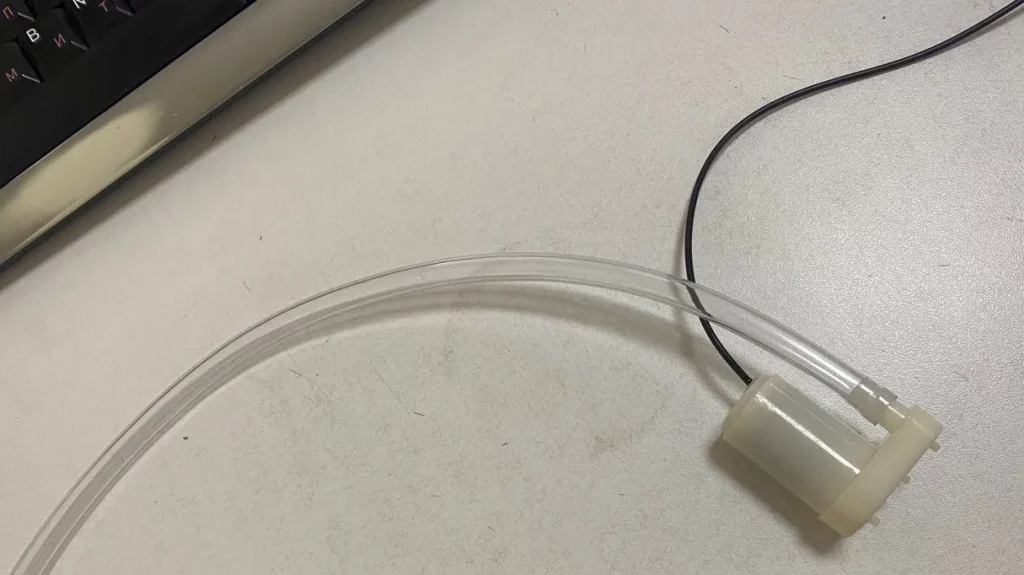
Connect a 25 cm hose to the water pump
Step 4.
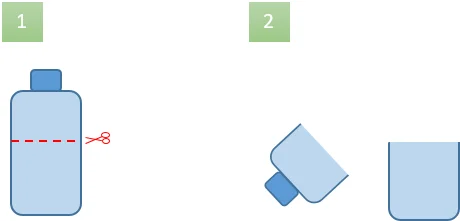
Cut the top of the plastic bottle into 0.3 liter pieces
Step 5.
Glue the resulting piece to the inside of the house. Put the pump in the inside of the plastic bottle
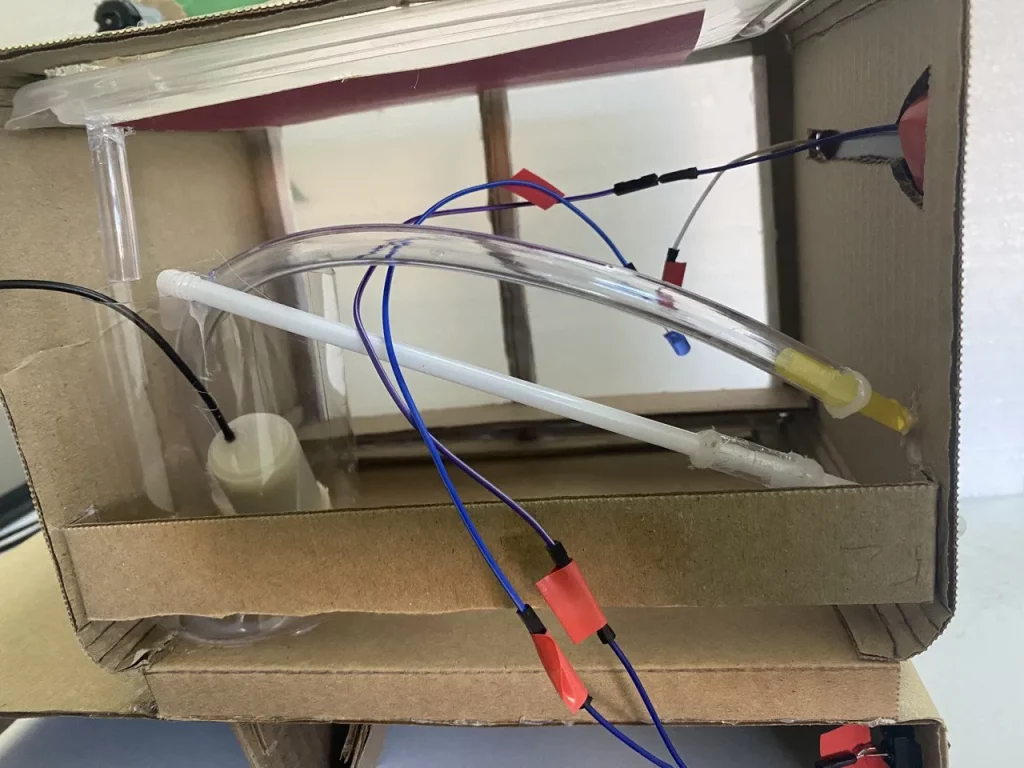
Step 6.
Take 5 plastic tubes and a silicone hose. Run the tubing from the vegetable garden to the water barrel inside the house. Use thermoplastic adhesive to glue the tubes together.
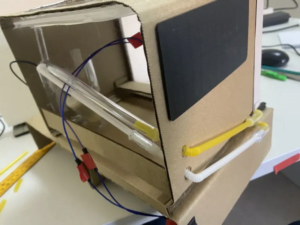
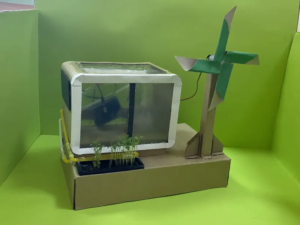
Test the work of an autonomous home as shown in the video

Conclusion
The “autonomous house” system is especially attractive for objects remote from the power grid: detached homesteads (farmsteads), hunting lodges, hotels in protected areas, sawmills, greenhouses, distant army garrisons, etc. But even near the power grid, an autonomous system will reduce the cost of uninterrupted power supply, create the necessary reserve in case of breakdowns and accidents at substations. And connection to the grid can serve as a guarantee against all sorts of troubles with your power system, such as long inclement weather or lack of energy in winter. The greatest effect of implementing an “independent home” system can be obtained in places where neither power lines nor gas pipelines are available.
Assessment PBL evaluation criteria:
Problem based learning (problem-oriented learning) is a learning method in which students acquire knowledge and skills by working on one project for 3 or 4 weeks to research and find an answer to a genuine, interesting and complex question, problem or challenge (then follow the PBL Rubrics link to the Rubrics).
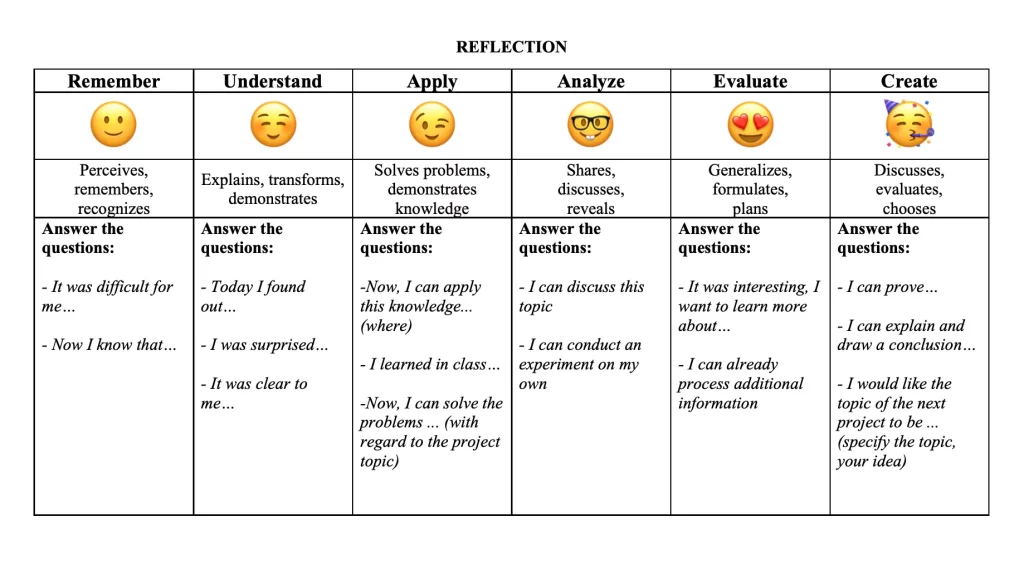
Reflection