Lesson 2
Let’s continue to make an infinite cube.
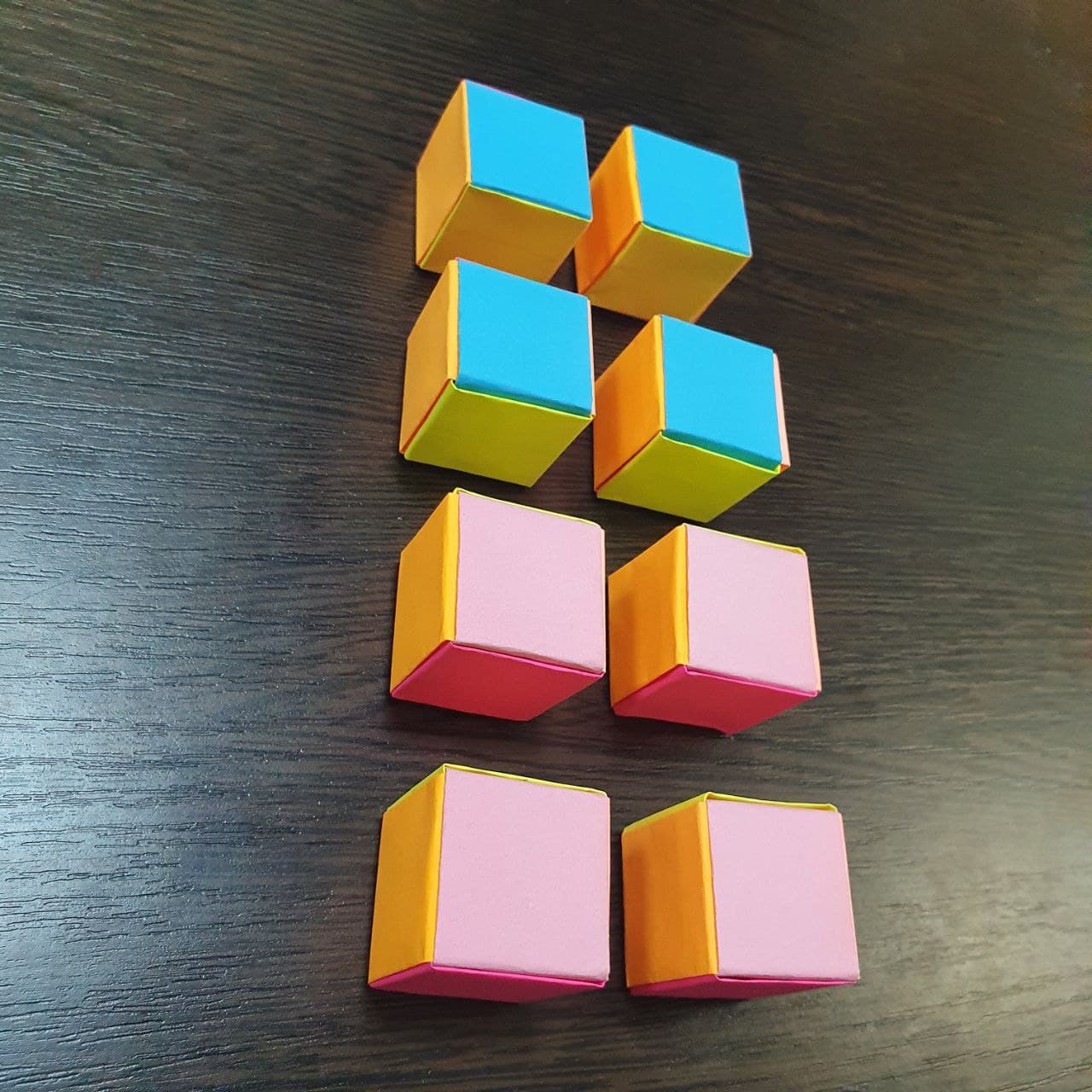
1. Arrange the cubes in the order shown in the photo.
All eight cubes must stand so that all on the left side have one color and on the right side the other. In the photo, everyone has orange on the left side, and pink on the right side. The first four have blue up and purple down. And for the rest, the blue color remained at the bottom, and purple looks up.
2. Tape the first two cubes on top (two blue) and turn, open the back side and connect the pink and orange on the backside.
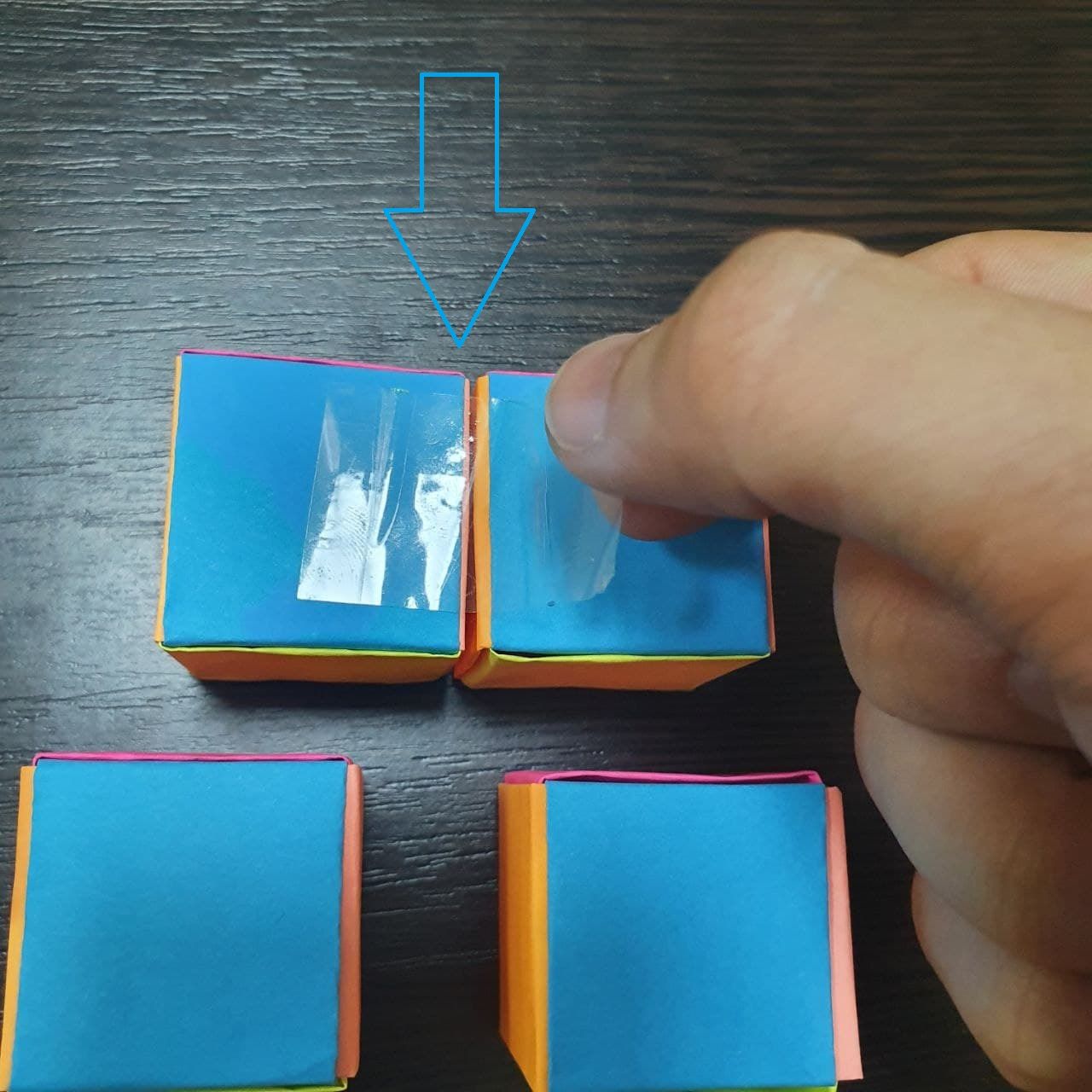
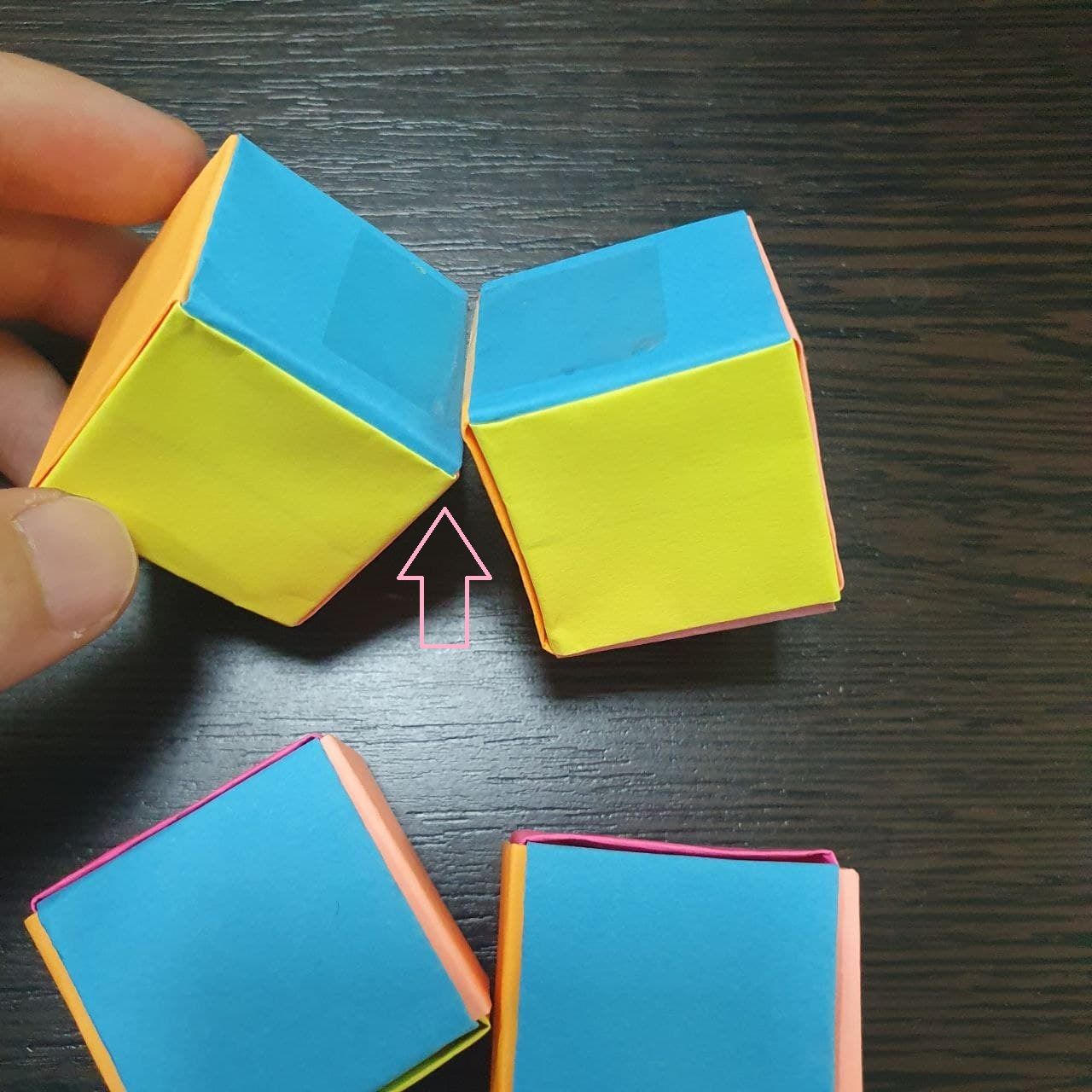
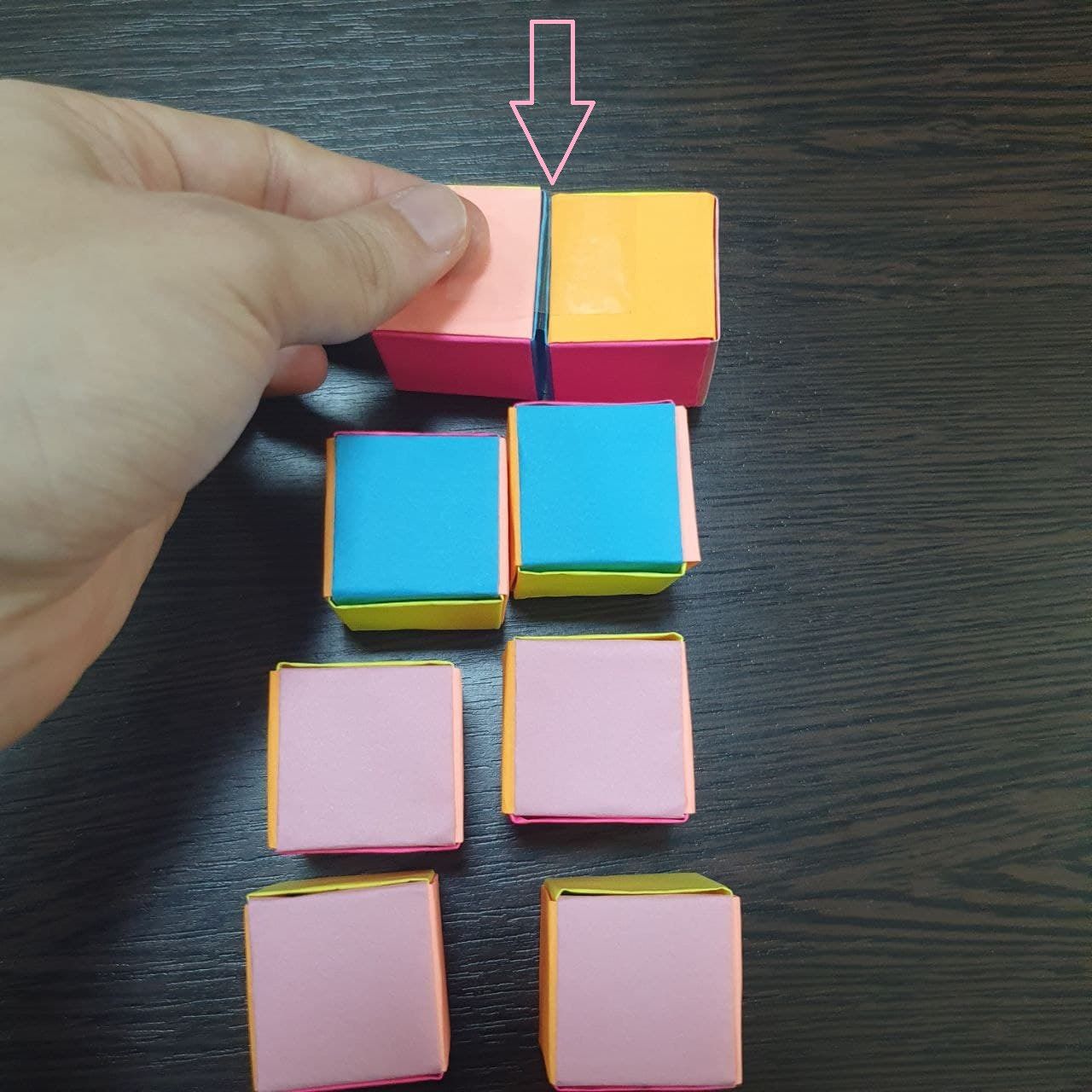
3. Glue the two lowest cubes in the same way. On the reverse side too.
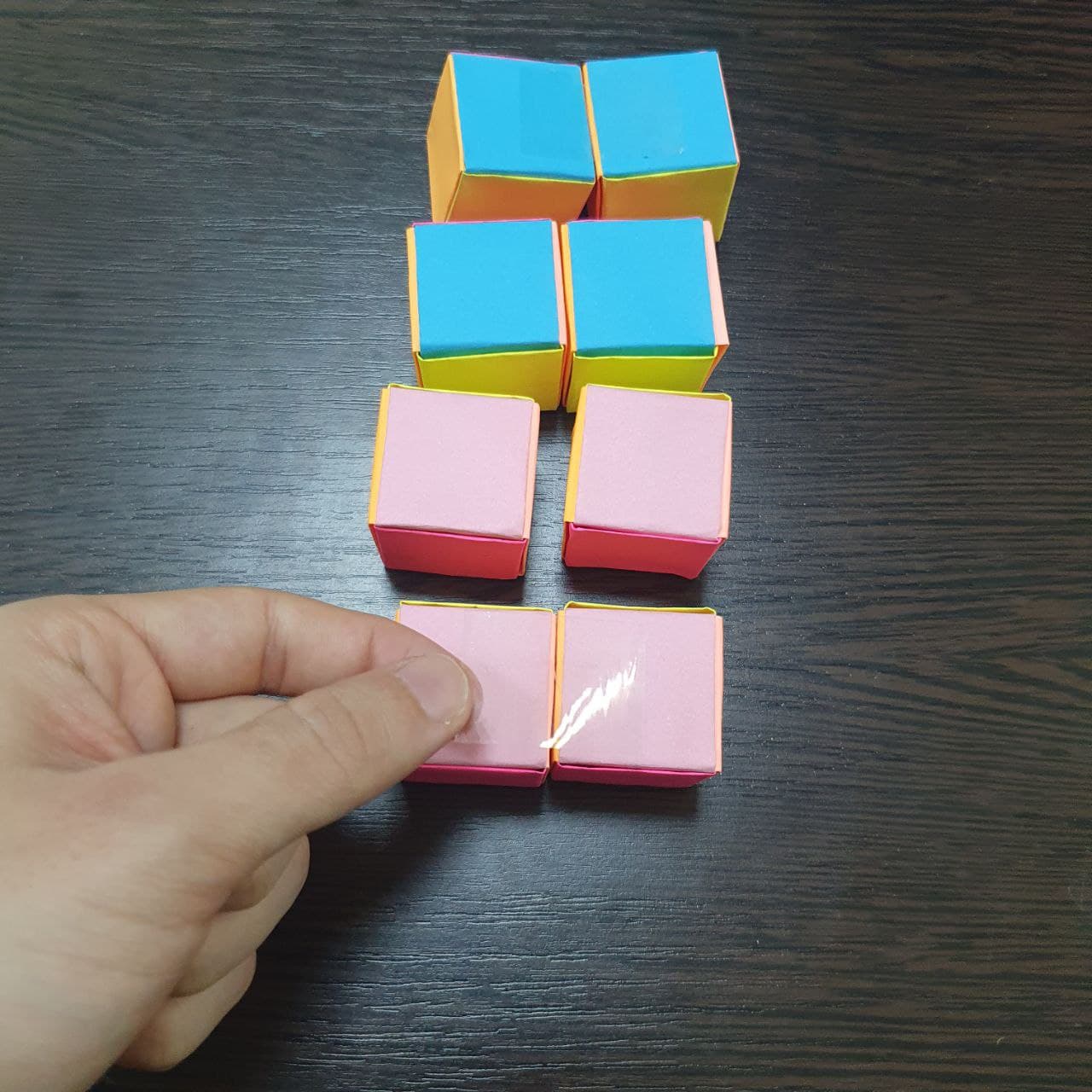
4. Glue the two lower cubes on the left side (two orange). Open and from the back to (red with yellow) glue.
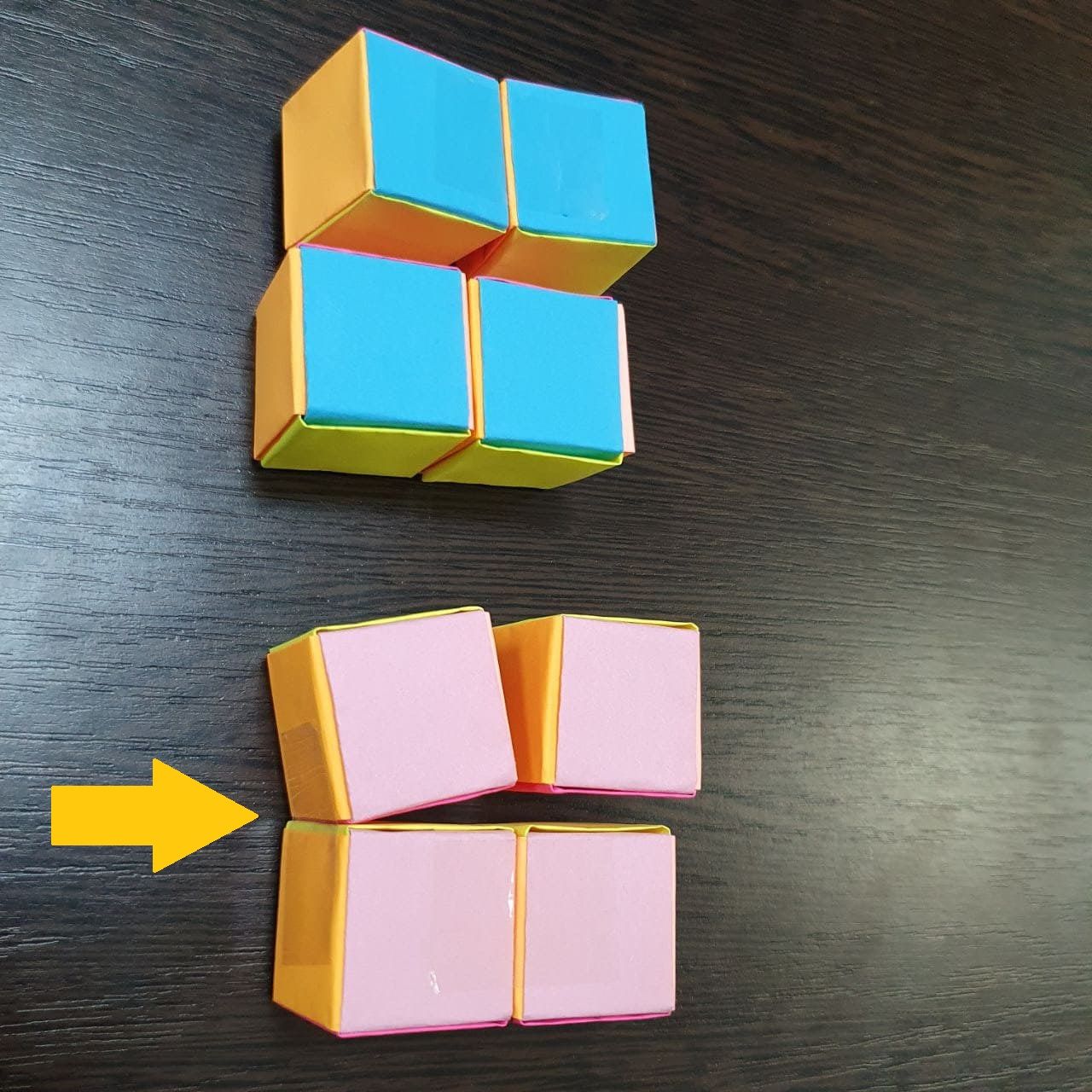
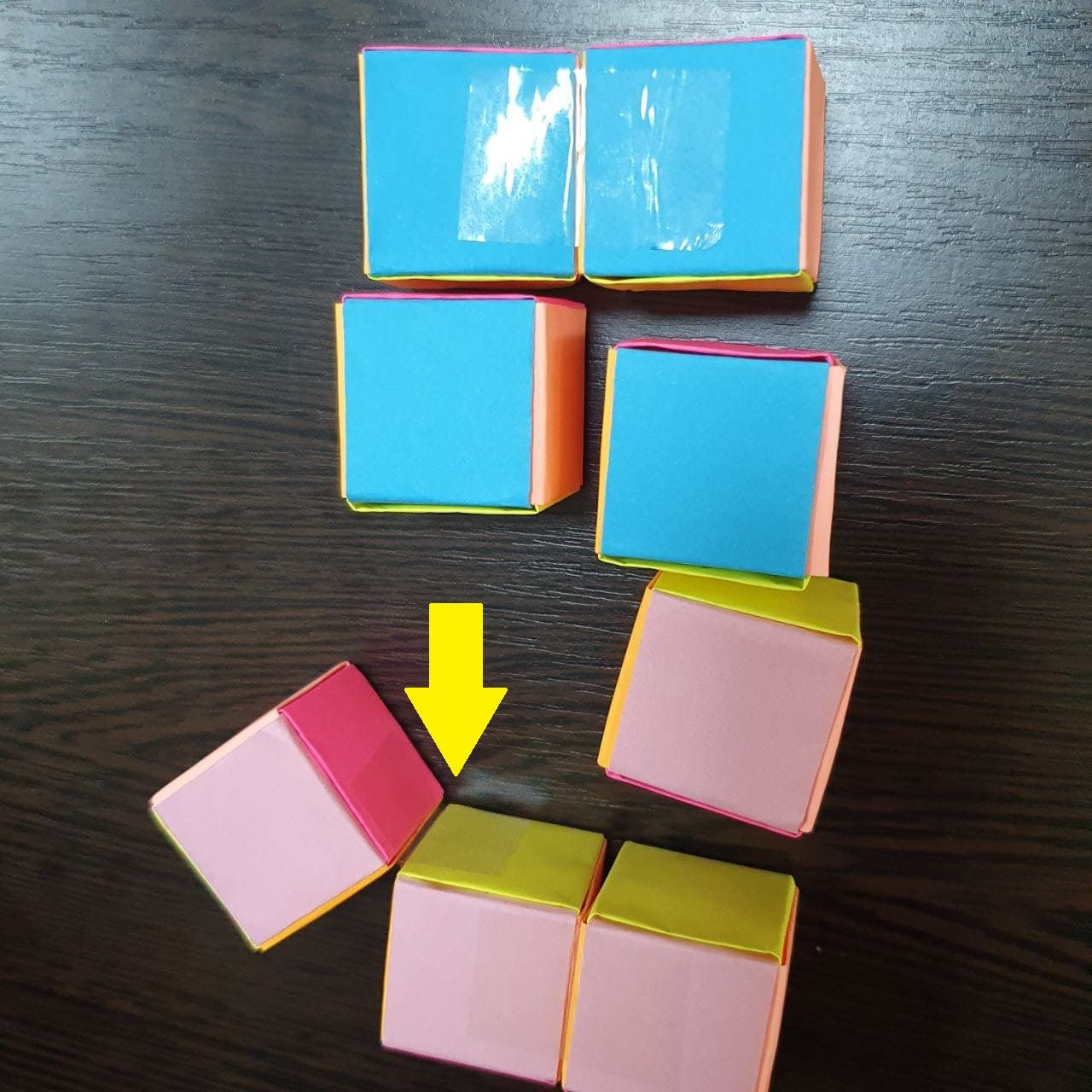
5. Glue the two lower cubes in the same way on the right side (two pink ones). Open and glue on the back side too (red with yellow).
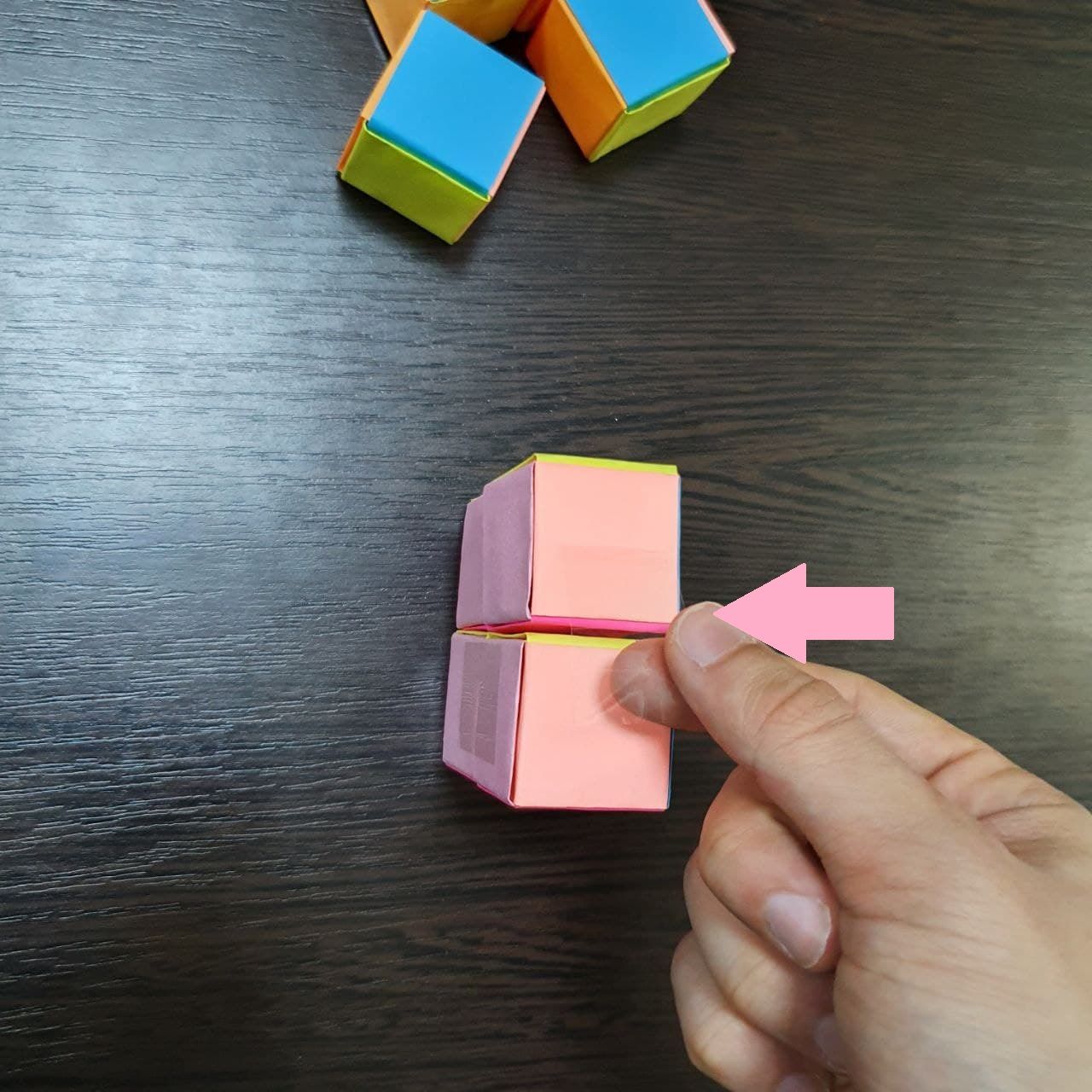
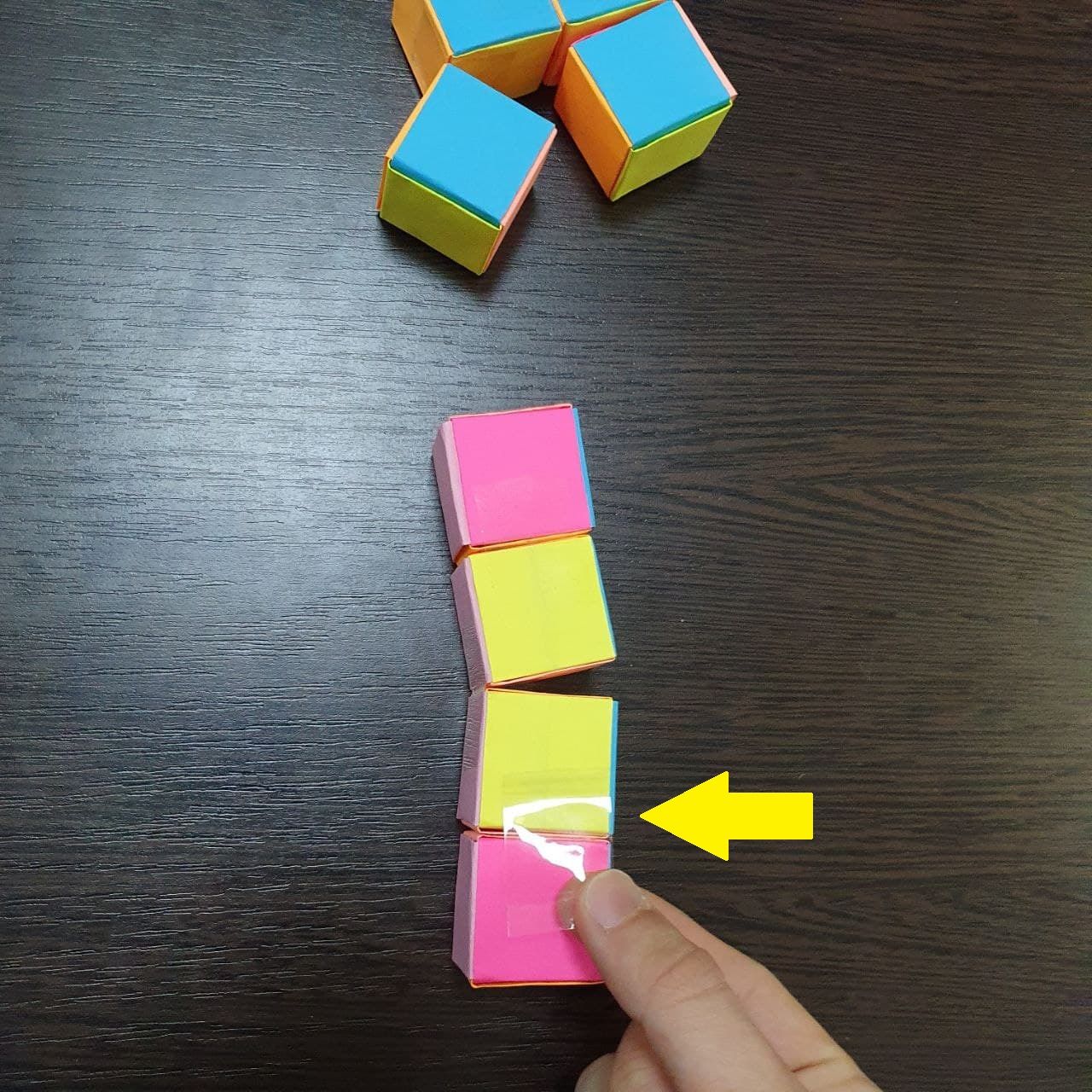
6. Glue the top two cubes on the left (two oranges) in the same way. Open and from the back to (red with yellow) glue.
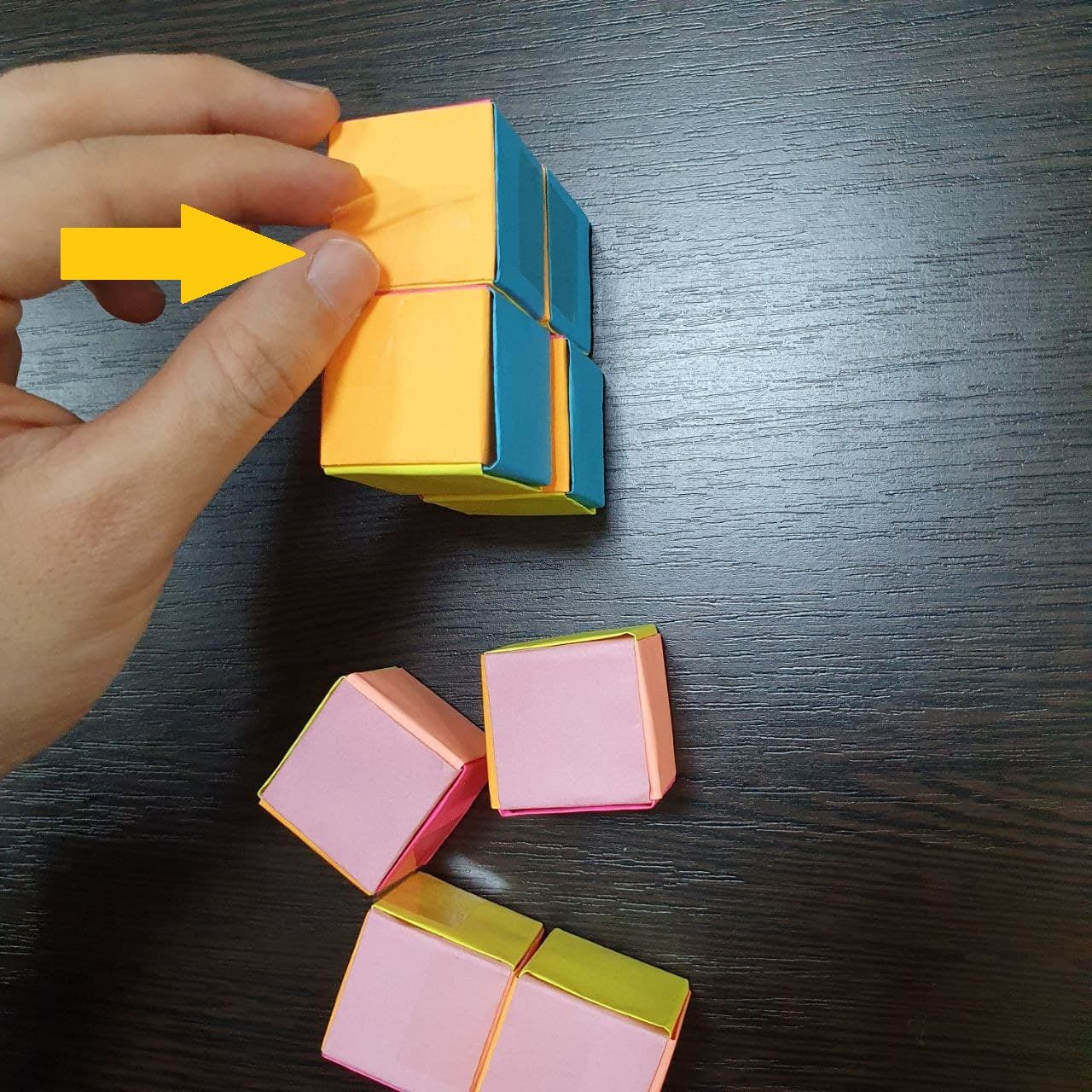
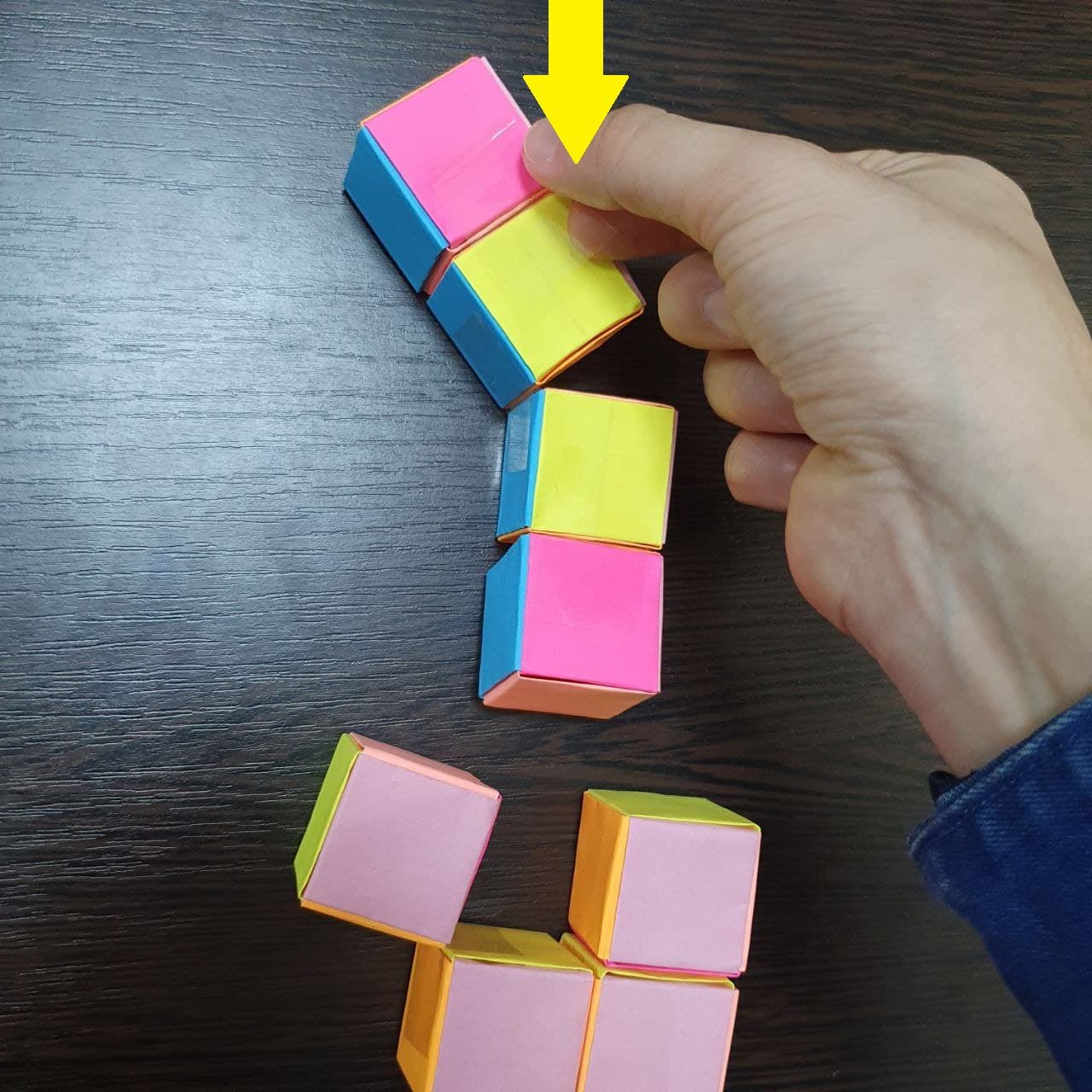
7. Glue the top two cubes in the same way on the right side (two pink ones). Open and glue on the back side too (red with yellow).
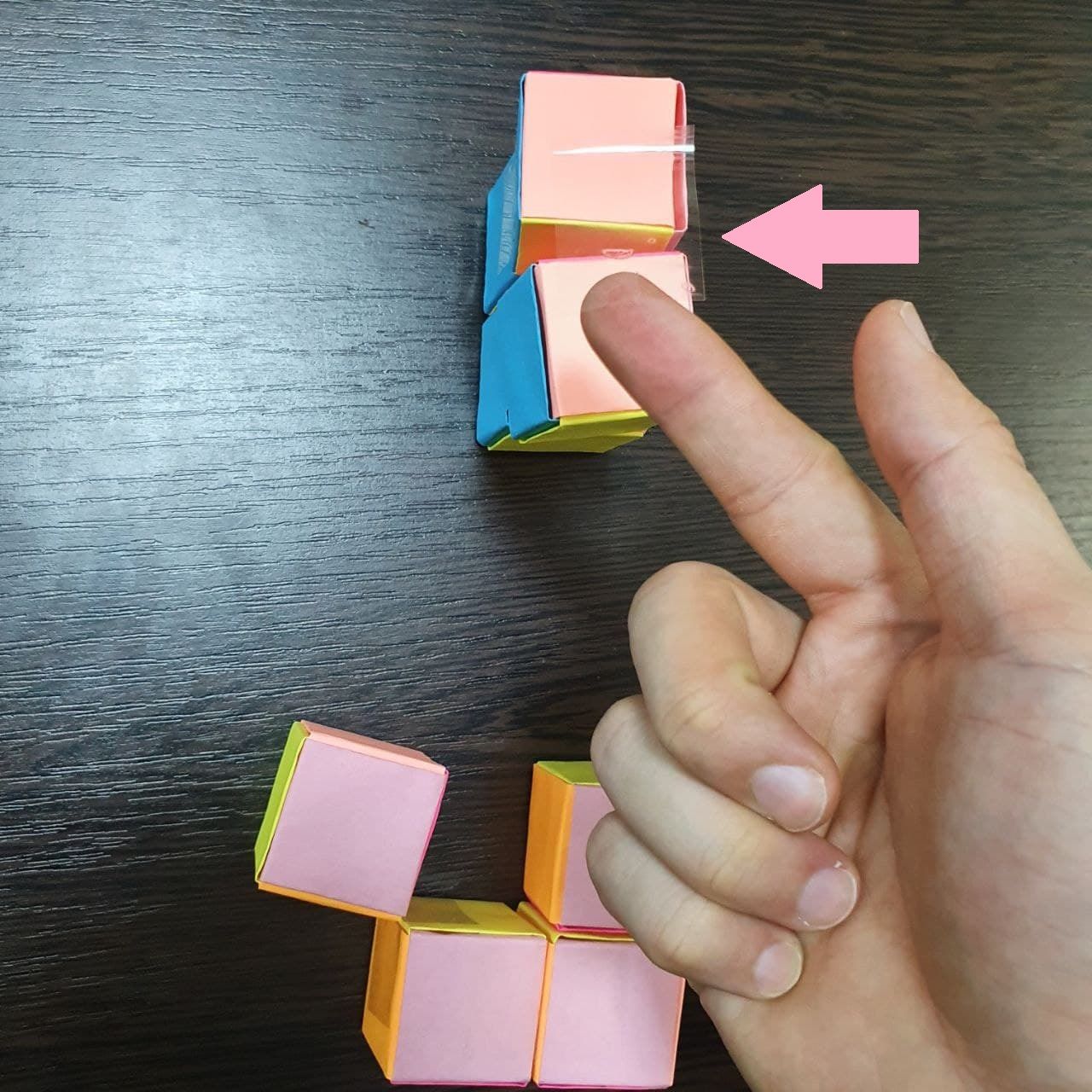
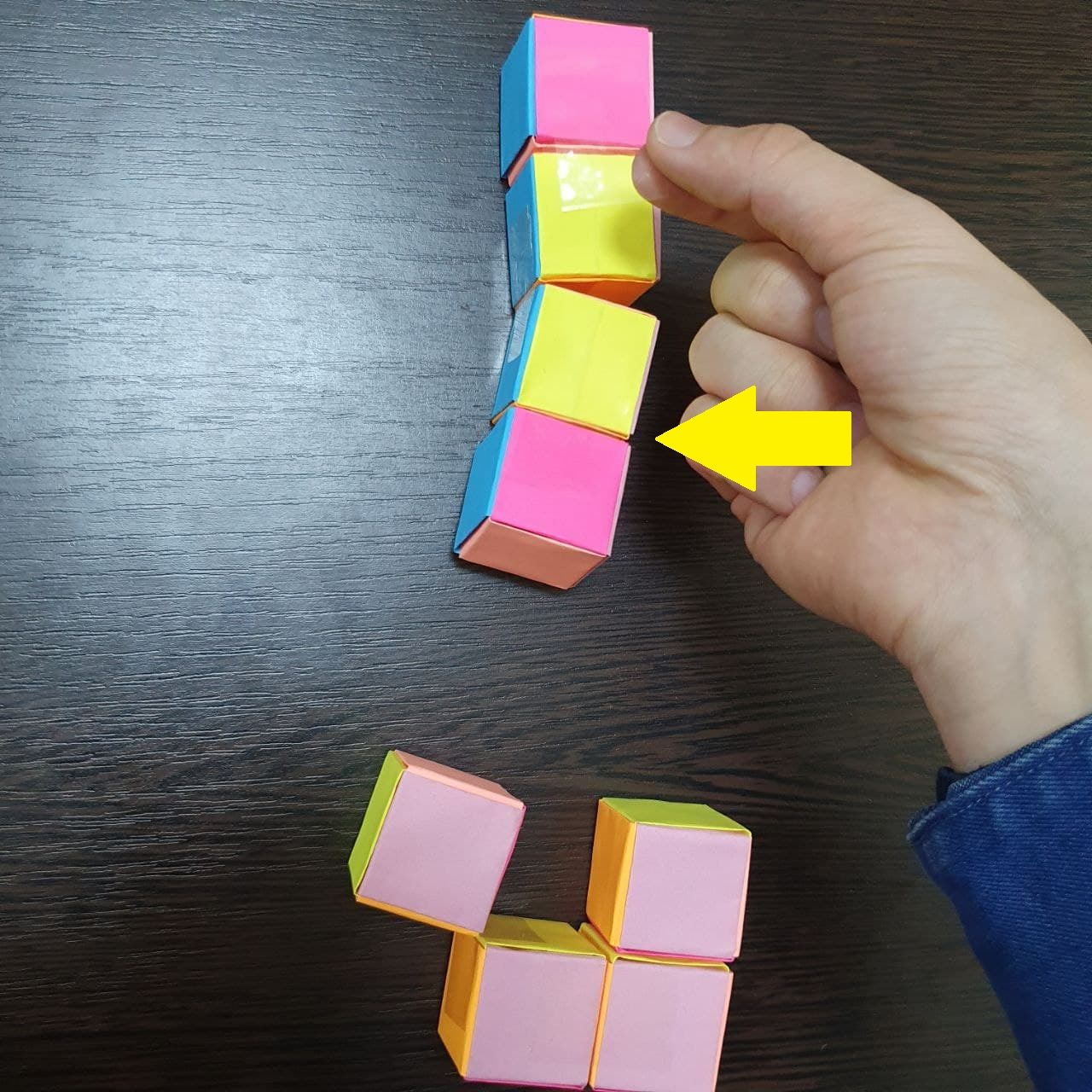
8. You will get two parts as in the photo.
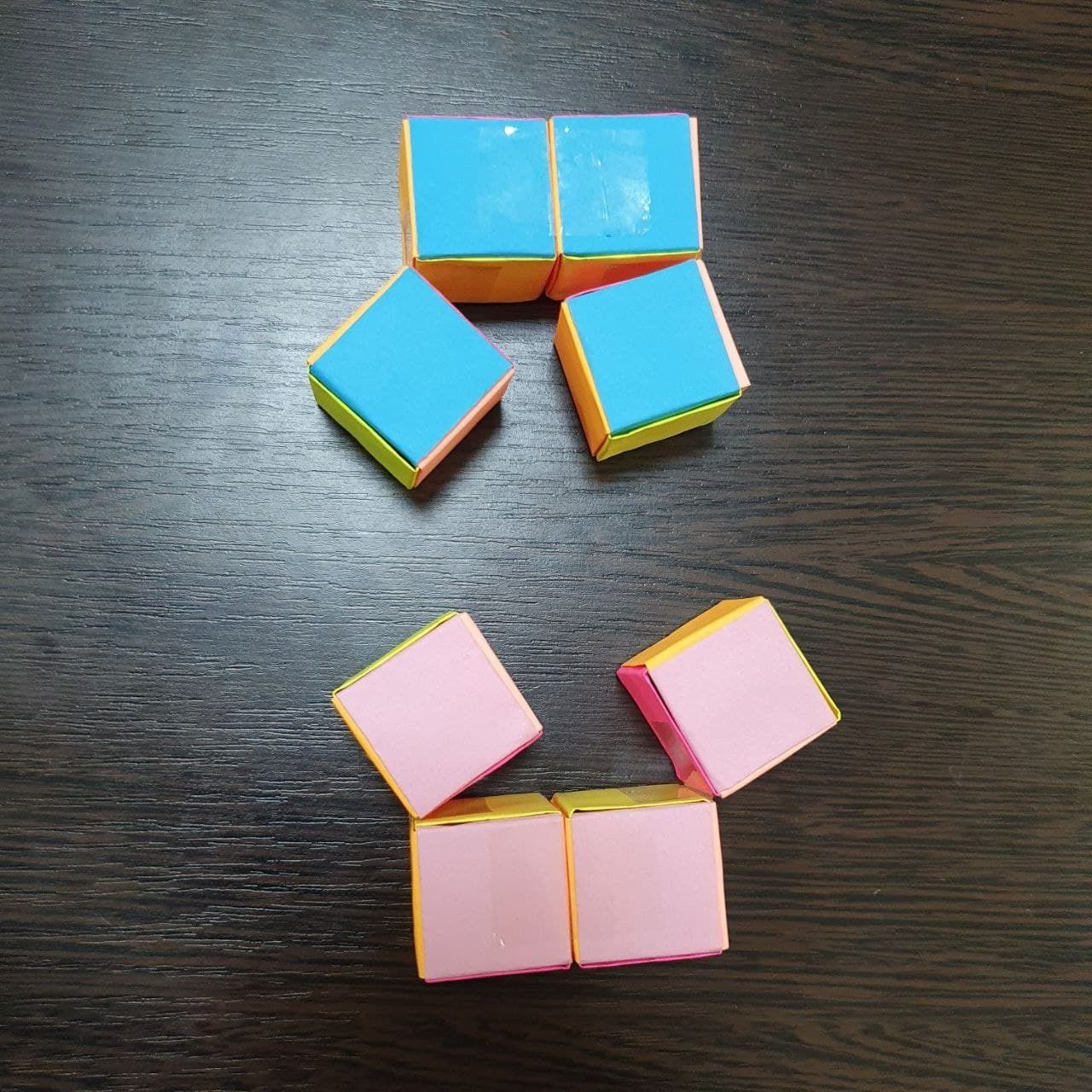
9. Connect the two parts. To do this, glue them in the middle (blue with purple) as in the photo.
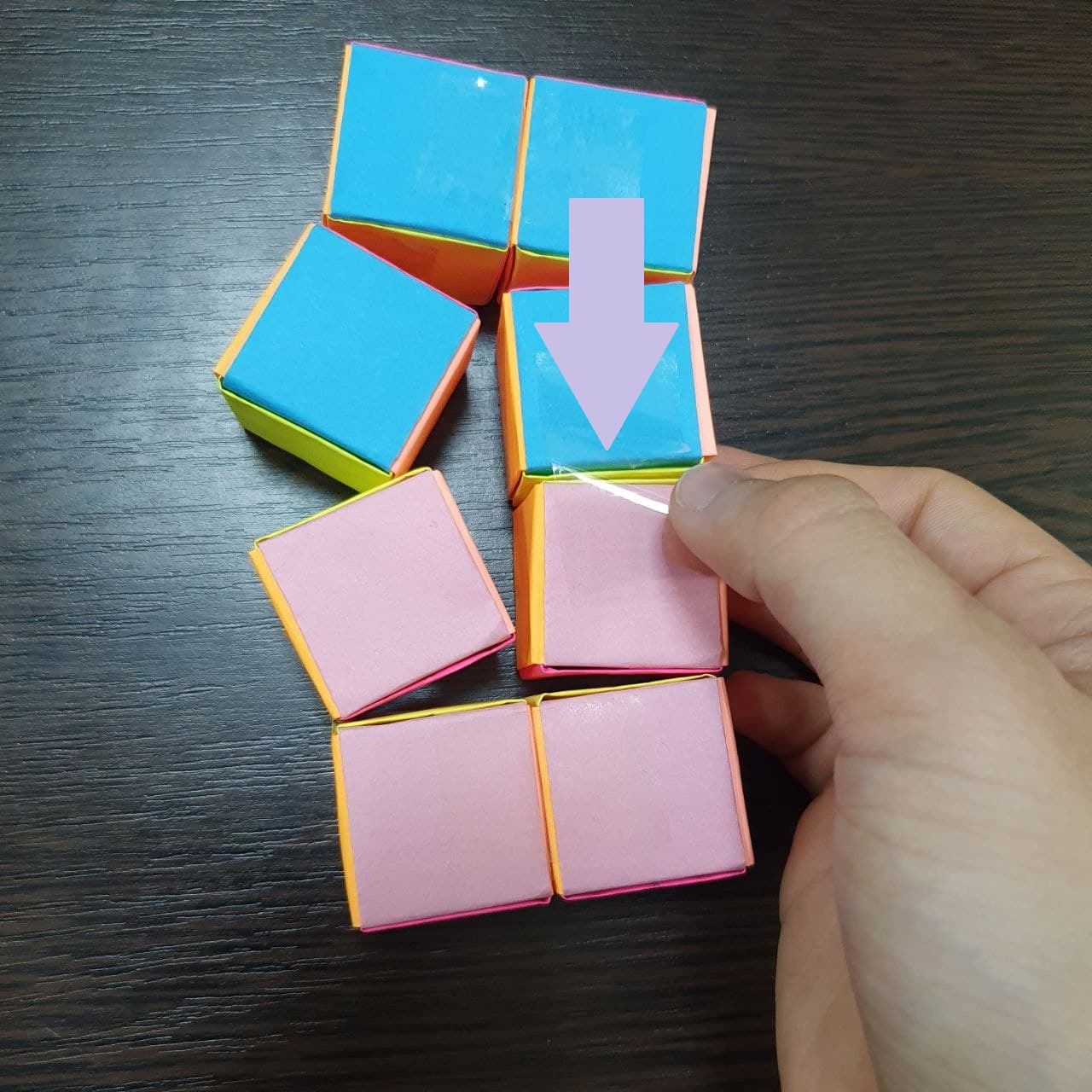
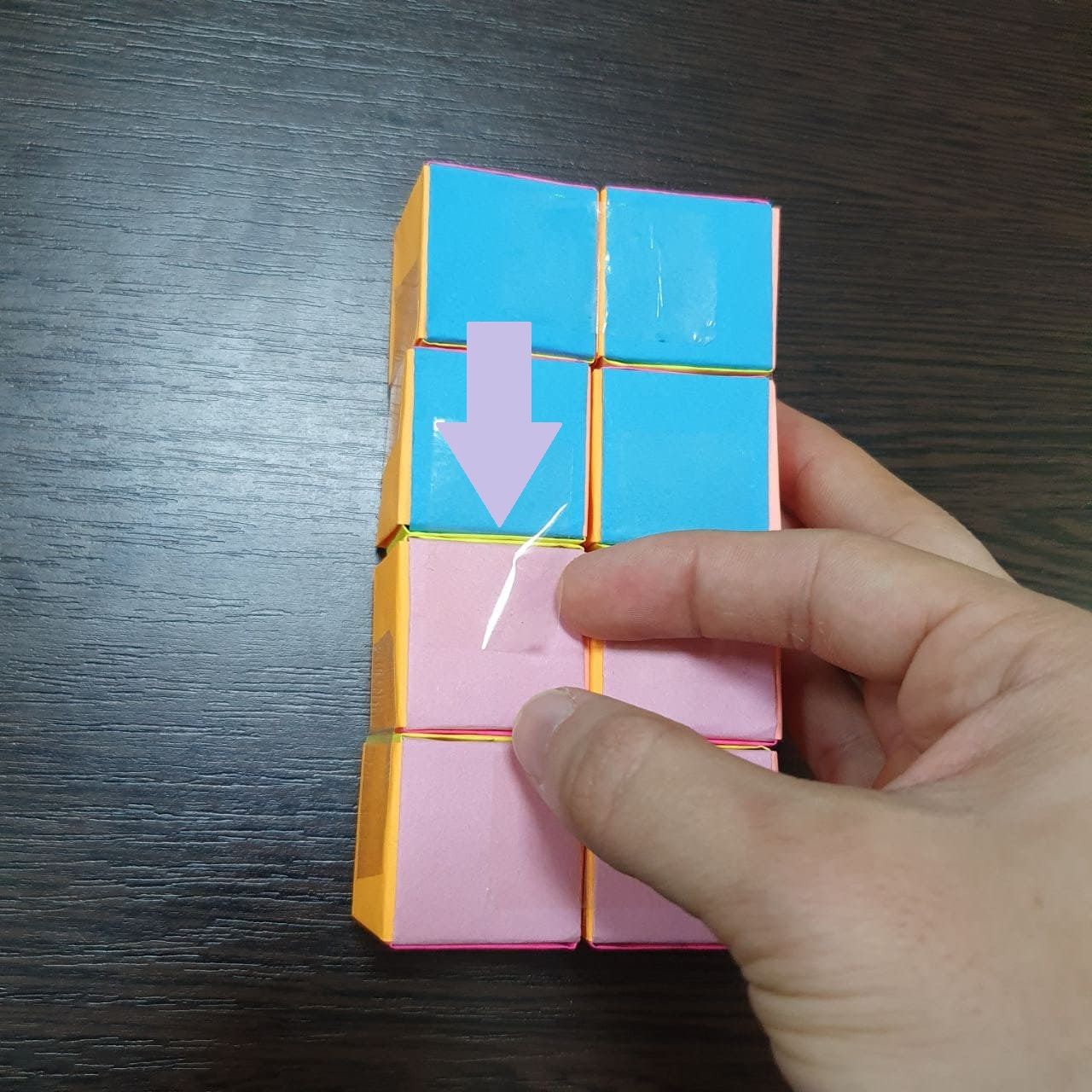
10. Now we turn and connect with adhesive tape on the backside.
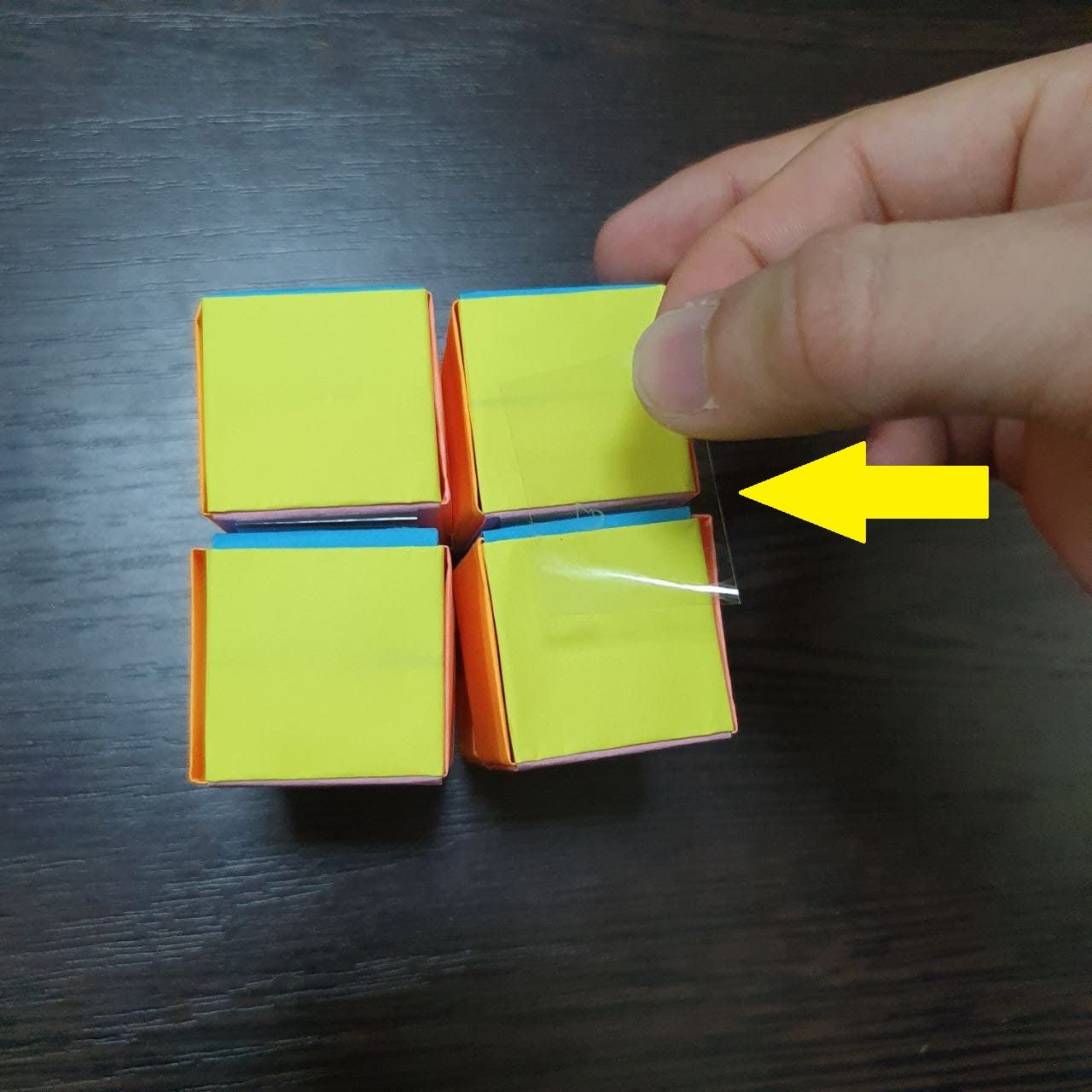
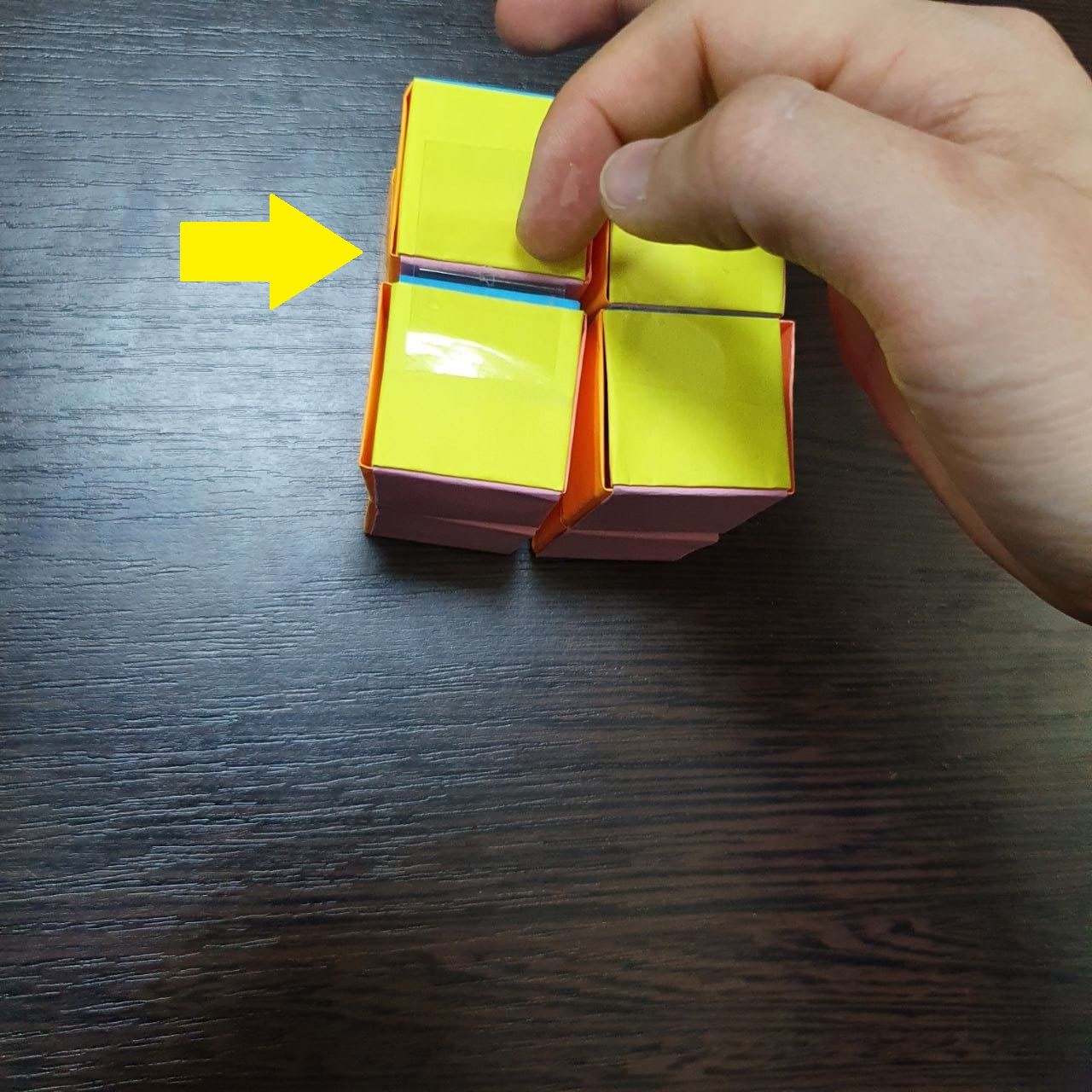
Everything, our endless cube of cats, you can play with it. Please note that when assembled, we get a CUBE, and when opened, it is a PARALLELEPIPED. Now tell me how they differ. Name the elements of a cube and a parallelepiped. Conclusion
On this project, the students got acquainted with the development of geometric shapes like a cube and a parallelepiped, built models of figures, made an infinite cube with their own hands, and with the help of it memorized the elements of a cube and a parallelepiped. We also saw the difference between a cube and a cuboid using their model as an example.
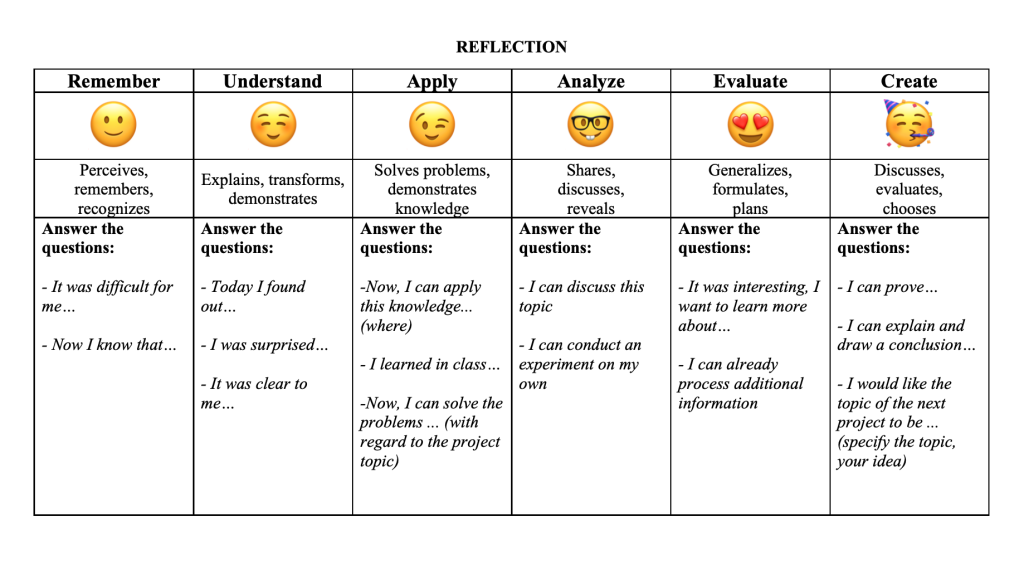
Evaluation
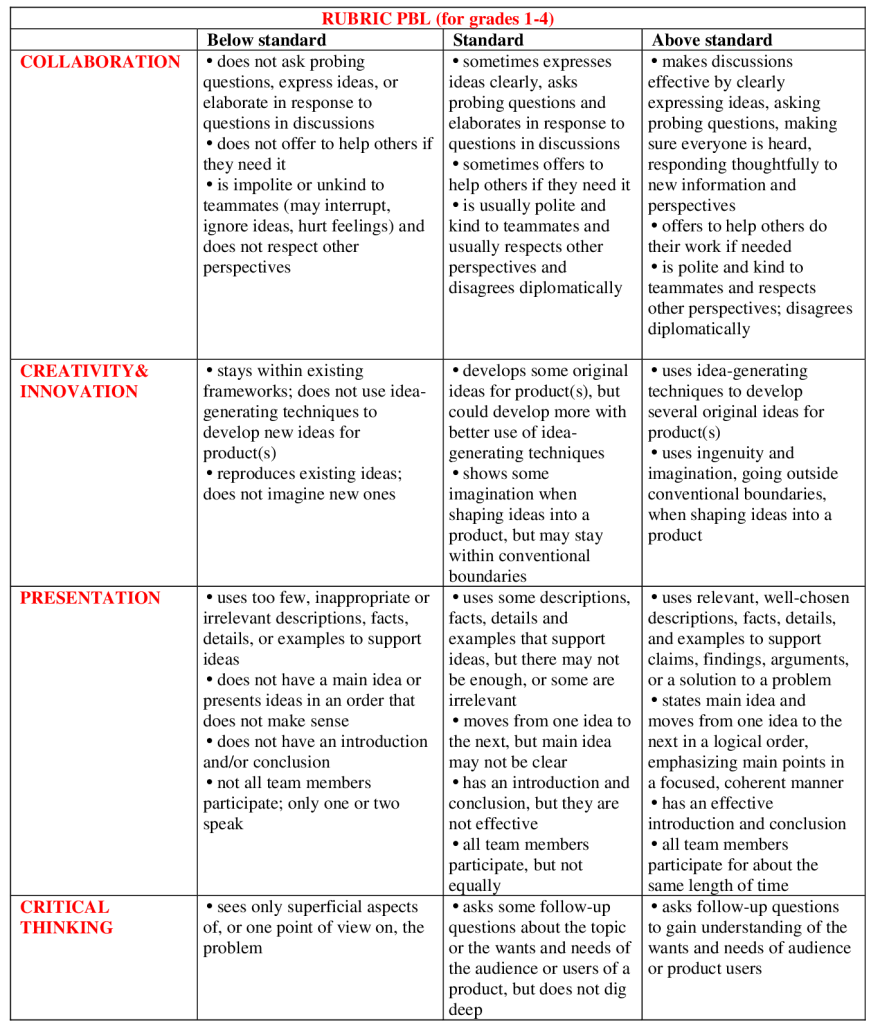
PBL grading criterion:
Project-based learning is a learning method in which students acquire knowledge and skills by working on a single project to explore and find an answer to a genuine, interesting, and complex question, problem, or challenge.