Week 1
Goal:
- Familiarization with alternative energy sources and consideration of ways to put them into action.
- Creation of a device that receives thermal energy from solar energy.
- The study of physical phenomena.
Expected results
After studying the project, students will be able to:
- acquire the skill of cooperation with a teacher and work in a group, in pairs
- analyze and summarize the information received
- a responsible attitude to the teaching will be formed
- communicative competence will be formed in the process of educational activity
- consider ways to bring natural energy sources into play
- familiarity with the properties of thermal conductivity of materials
- study of the phenomenon of convection
In this project you will study:
Knowledge of the advantages and disadvantages of alternative energy sources;
How is solar energy converted into heat?
The structure of the solar collector;
The progress of the solar collector.
Subject:
- Physics (obtaining thermal energy from solar energy)
- Engineering (fabrication of a solar collector layout design, design)
- Artistic work (sizing, cropping)
Teacher’s Guide
- To evaluate the project, in the first week, provide this material (PBLrubrics) to students in order to:
— the students previously understood by what criteria they needed to prepare,
— the students were able to independently give an appropriate assessment to their colleagues.
- At the beginning of the lesson, it is recommended:
— to encourage interest in the project, ask a few «leading questions», such as:
– What traditional forms of energy exist?
– What about alternative forms of energy?
– In what ways can people get thermal energy at the present time?
– What are the benefits of solar thermal energy?
– What are the disadvantages of solar thermal energy?
Theoretical part
Solar energy is energy from the sun, and it’s the most abundant energy resource on Earth. The introduction of solar energy led to the emergence of the science of solar energy. It studies devices that convert solar radiation into electrical and thermal energy.
These devices include solar panels and solar collectors.
There are a lot of minerals on the Earth. But that doesn’t mean they aren’t exhausted at all. In particular, today oil and gas reserves are declining every year. Therefore, it is necessary to use other types of energy (nuclear, water, wind, solar, etc.), which can compete with it directly, using energy economically. Ways of converting solar energy into a source of thermal energy are considered.
In general, there are several ways to generate electricity and heat from solar radiation. They are:
1) generating electricity using photocells.
2) conversion of solar energy into electrical energy using heat engines (types of heat engines: reciprocating or turbine steam engines, Stirling engine).
3) Solar thermal energy – distribution, application of heat and heat on the surface that absorbs the sun’s rays.
4) thermonuclear power plants (conversion of solar energy into the energy of an air flow directed through a turbogenerator).
5) solar balloon power plants (generation of water vapor inside the balloon balloon due to solar heating of the balloon surface).
A solar cell or photovoltaic generator is a power source consisting of a semiconductor photovoltaic converter (PET) that converts sunlight energy into electrical energy. This is a structure with a smooth protective coating of photocells, which are semiconductors. Solar arrays vary in size. For example: in sizes from those installed on a microcalculator to those installed on the roofs of buildings and the roofs of cars. Also, solar panels are used on spacecraft and vehicles as the main source of electricity in the power supply system. And the current power source for many products used in everyday life and technology – calculators, watches, players, flashlights, etc. also are solar panels.

And solar collectors have a completely different principle of operation. In technical terminology, climate equipment that converts the energy of sunlight directly into heat is called a solar collector. The device does not generate electricity like a classic solar battery, but only collects, concentrates and transfers heat to the heating system. The carrier is water, non-freezing liquid or air. This technology helps to increase the efficiency of heating houses in the cold season and at the same time save costs.
According to the design characteristics and the associated principle of operation, solar collectors for building heating are divided into 3 main types – flat, vacuum and air. Structurally, the device consists of a set of series-connected tubes in the form of coils connected by a supply and return barrel. Inside them, water, antifreeze or air circulates as a carrier.
The heat is usually transferred through the carrier to the radiators and the heating process begins. Thus, it is used for heating buildings, water heating. Solar collectors can be used anywhere where heat is used. If water acts as a carrier, then at first the solar radiation that hit the collector plate works by heating the water and transporting it to the house. Solar collectors allow you to save up to 30% of the cost of hot water supply at home, up to 60% for heating. And it is on this principle that the air flow also serves to heat the building, overheating by the sun’s rays.
In addition, the use of solar collectors is considered cost-effective due to their very simple layout.

Sources:
- Күн энергетикасы – Физика – (bilim-all.kz)
- Солнечные батареи: альтернативная энергия (electric-220.ru)
- Данияр Д.Д. 5В071200.pdf (satbayev.university)
Practical part
In this project, we are doing some experimental work. They show us how several physical processes take place. In addition, we will develop a collector model based on the principle of the solar collector. The process of the collector: air flow enters through special holes on both sides. Air passes through the interconnected cans. At the same time, through the mirror (we replaced the mirror with food film), sunlight heats up the can, and the air inside it also heats up. The heated air comes out through a specially made hole on the collector block. By installing a pipe or hose into this opening, we let the heated air inside the house or any building where heating is needed. Thus, the cold air inside the building and the hot air entering through the collector interact, the temperature rises, and the air heats up.
Experiment. Convection
Step 1. Read all the necessary materials.
- Test tubes – 2 pcs
- Large transparent bowl with water at room temperature
- Red and blue gouache
- Cold water
- Hot water
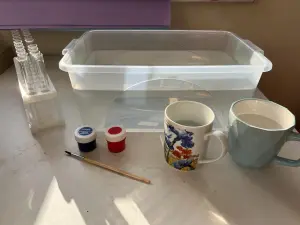
Step 2. Pour cold water into one of the test tubes.
Step 3. Add blue gouache to a test tube with cold water.
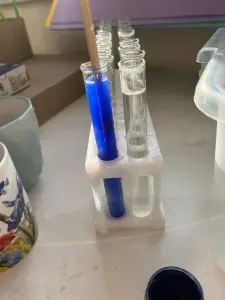
Step 4. Pour hot water into the second test tube.
Step 5. Add red gouache to this test tube.
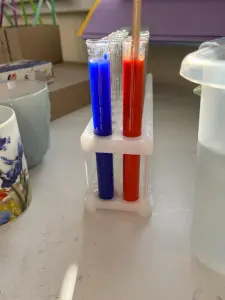
Step 6. Place two test tubes in a large colorless bowl of water and observe the process.

Step 7. At the end of the experiment, draw conclusions and answer the questions:
Why did the water in red climb into the high compartment?
Why did the blue water get into the bottom?
Why is the air conditioner placed at the top of the room and the heaters at the bottom of the room?
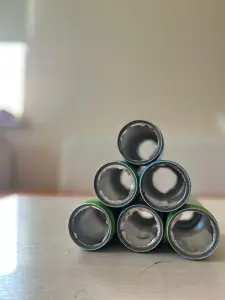
After completing this week’s experimental work, we will begin to create a model of the solar collector. In general, we divided the work that needed to be done into 3 weeks. The first week we prepare cans.
Step 1. Divide 5 people into groups. Read all the necessary materials.
Step 2. Wash and clean the cans freed from drinks.
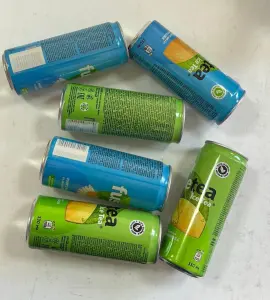
Step 3. Cut out the top and bottom surfaces of the can.
This promotes rapid air movement.
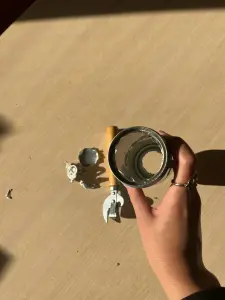
Step 4. Repeat this process for the rest of the cans.