Lesson 2
Solar panels.
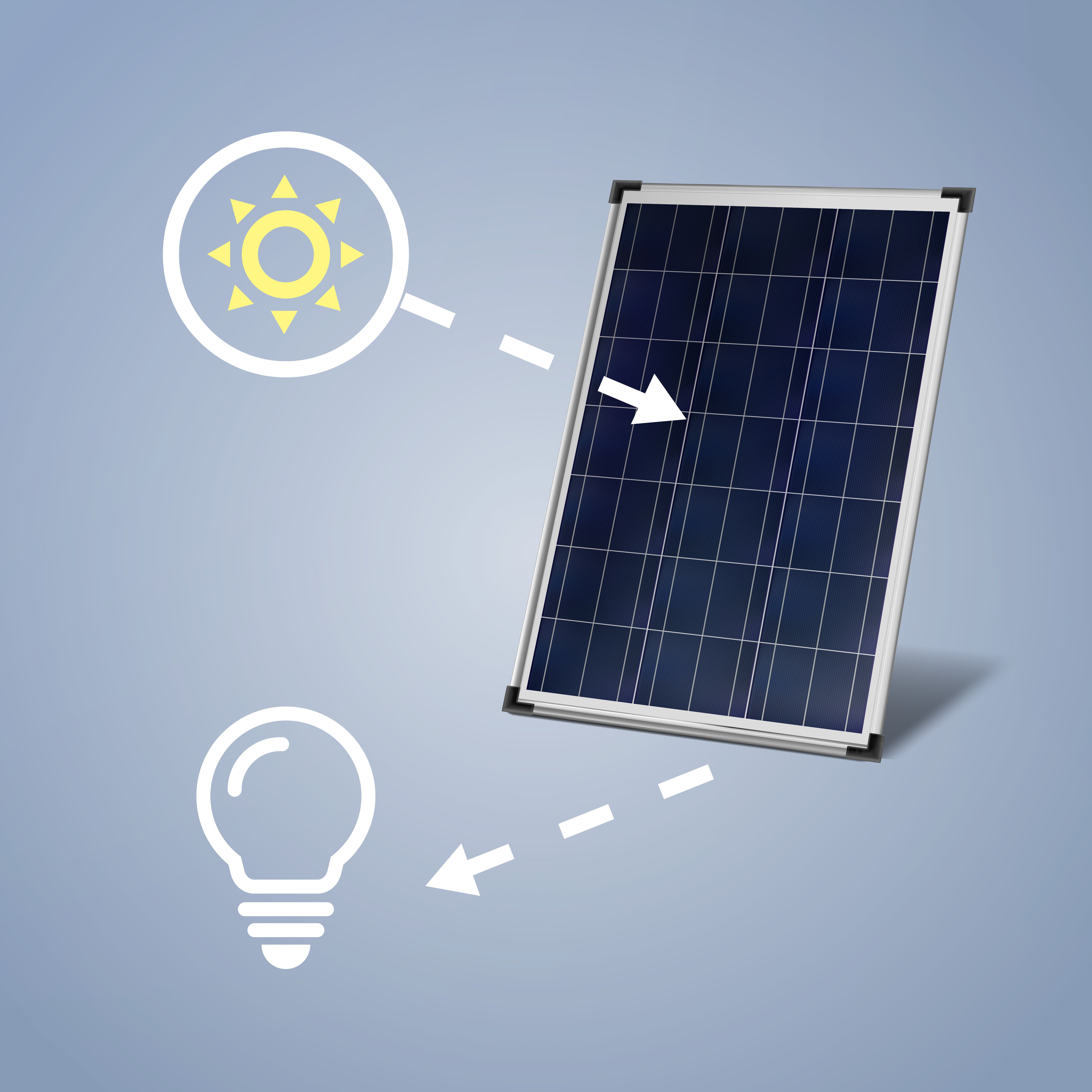
Solar cells or photovoltaic cells convert light into electrical energy. The first photovoltaic battery was developed in 1954 at Bell Laboratories. It was called a solar battery, but its commercial use was very expensive. In the 1960s, the space industry’s need for electricity on orbiting spacecraft led to the development of the photovoltaic technology industry. The cost of solar panels has decreased, and this technology has been used in many devices.
https://ru.freepik.com/photos/technology’>Technology фото создан(а) freepik – ru.freepik.com
Today, a solar battery consists of a specially processed semiconductor wafer made of silicon or a similar element, such as germanium. This system consists of two plates, one of which is positive and the other negative. When light photons enter a semiconductor, electrons come out of one layer of the semiconductor and create a voltage during the transition to another. Several solar panels can be made of modules and panels and connected in series or parallel and can generate any direct current. Some of the most common types of mini solar panels are designed for road signs, remote control stations, outdoor landscape lighting, and charging mobile phones, tablets, and laptops.
According to the erroneous opinion, a higher temperature than a higher light intensity is associated with more efficient power generation by solar panels. Whether on a clear day, the battery that generates electricity depends on the amount and angle of sunlight, not on thermal energy. In the middle and high latitudes, solar panels generate a lot of electricity in warm weather, but this is due to the intensity of light and the fact that they shine longer during the day. The efficiency of solar panels depends on thermal energy. However, the conversion of light by solar panels into electrical energy with an increase in temperature, on the contrary, decreases somewhat.
The practical part
In this lesson, we connect the solar panel to the engine and start the fan. Characteristics of the solar battery used in the example: rated voltage 5 V, current 240mA. At the end of the lesson, we modify the gazebo.
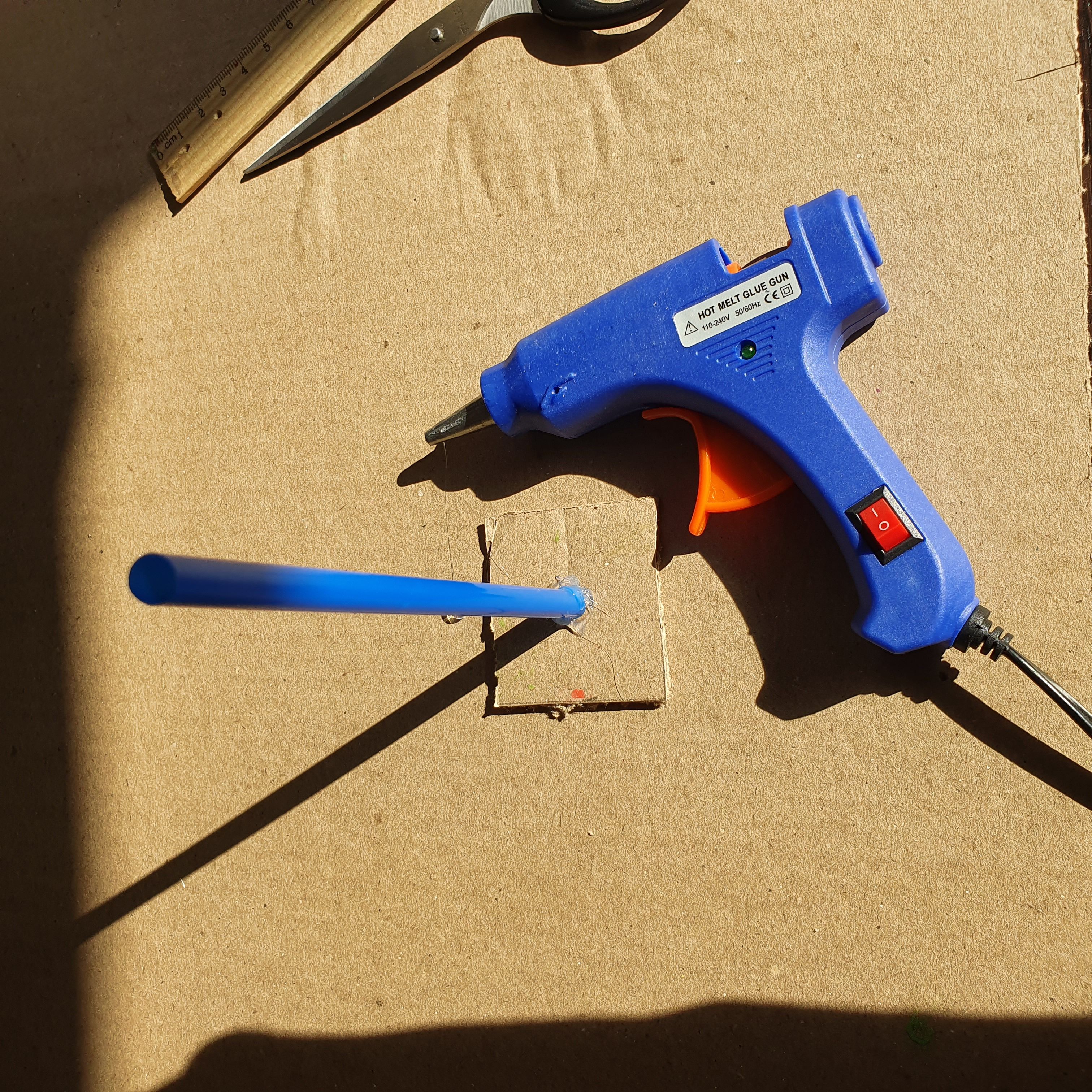
Step 5. Prepare a pillar for a solar battery using cardboard and a tube. Then attach the solar panel to this pole with hot glue.

Step 6. To extend the wires sticking out of the roof of the gazebo, extend with an additional wire. To do this, cut the wire, clean the ends from the plastic insulator and connect it to the motor wire. Isolate the junction.
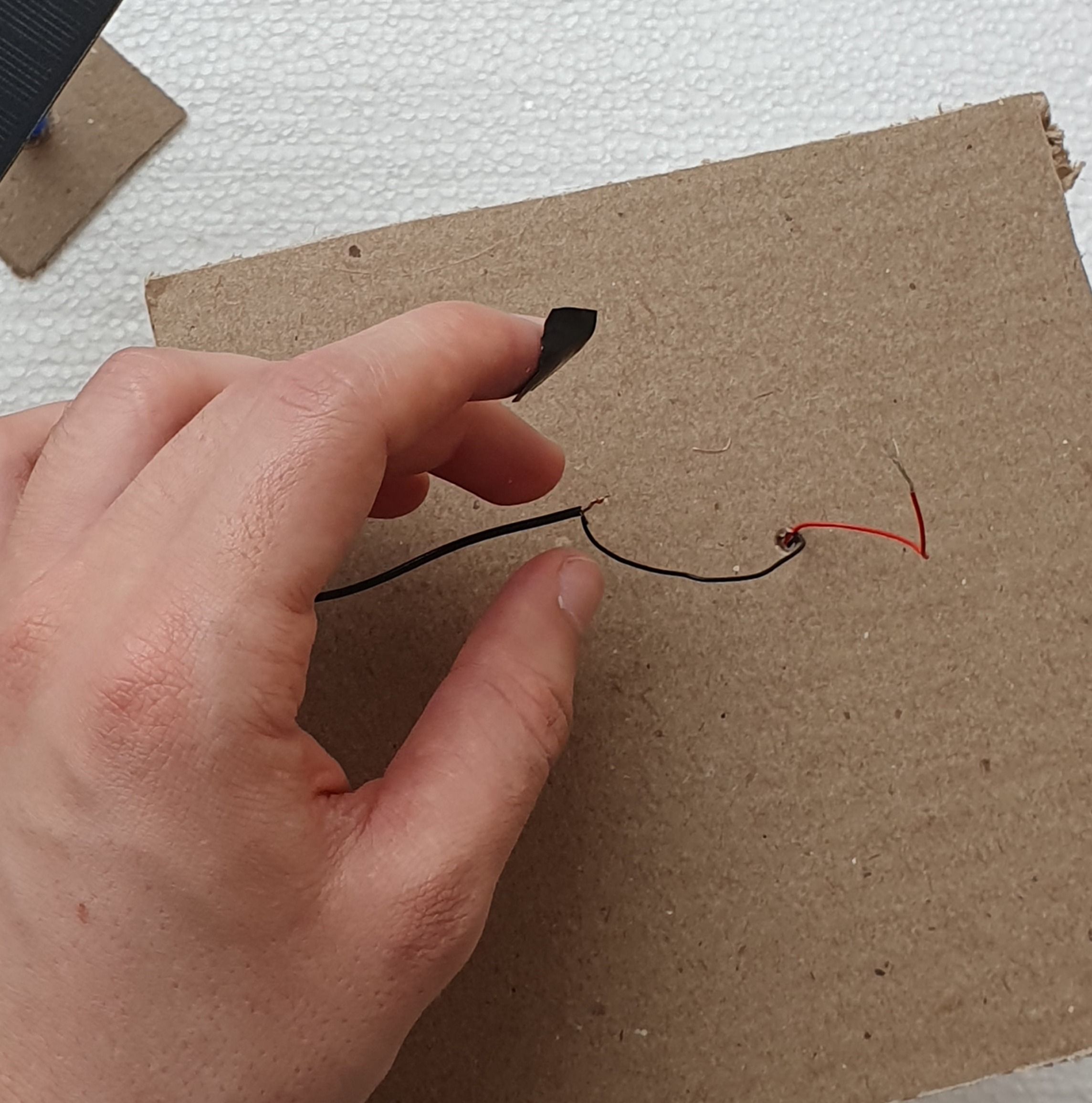
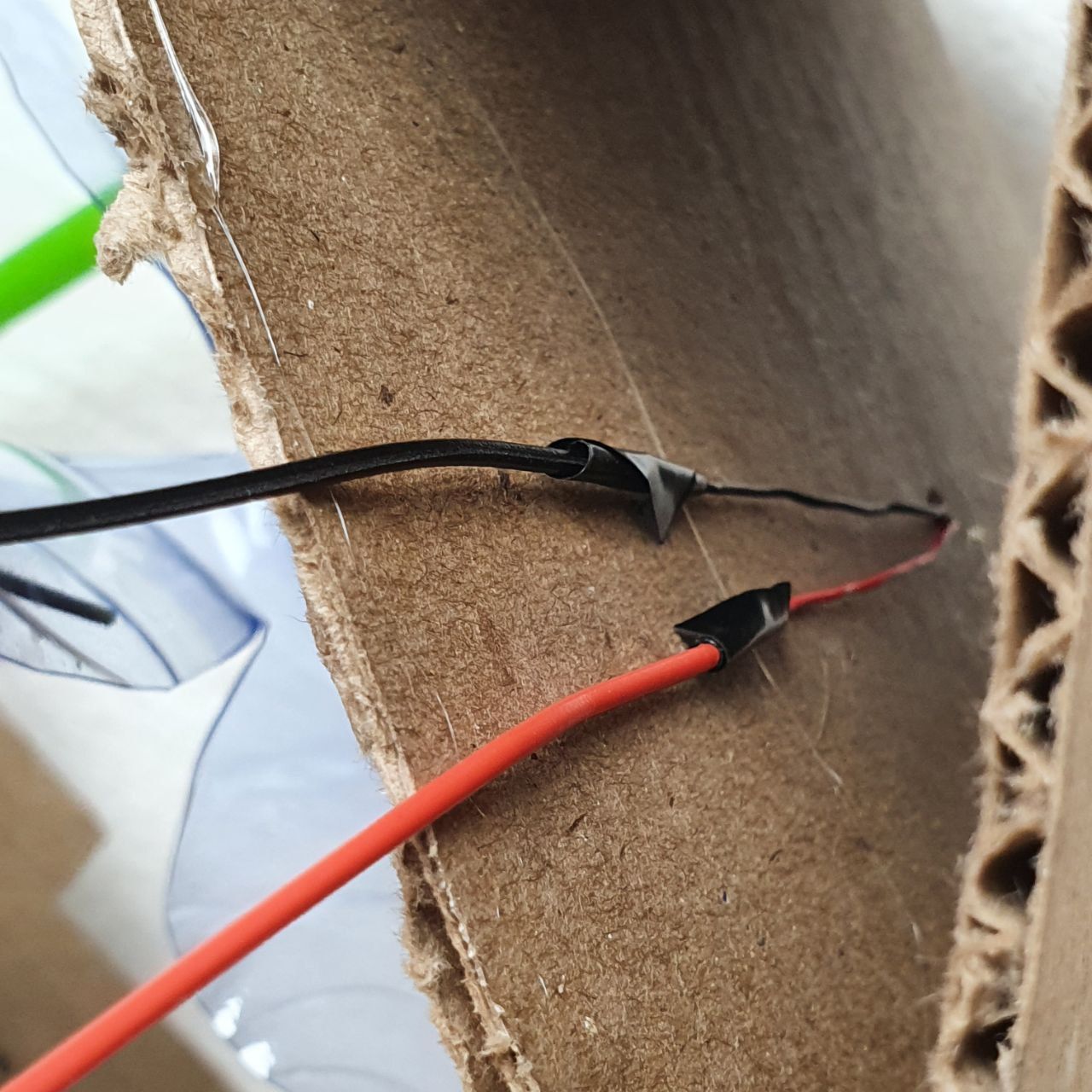
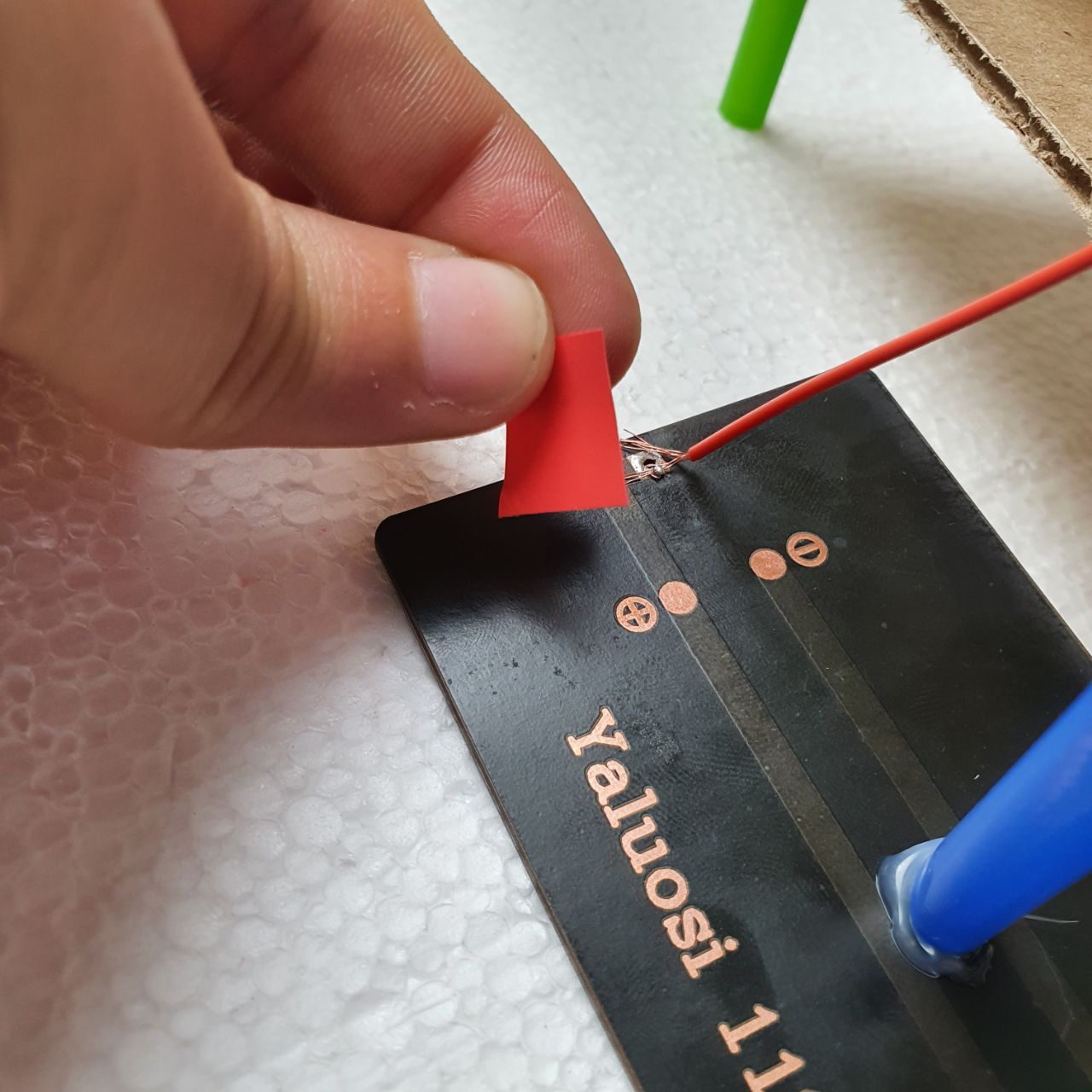
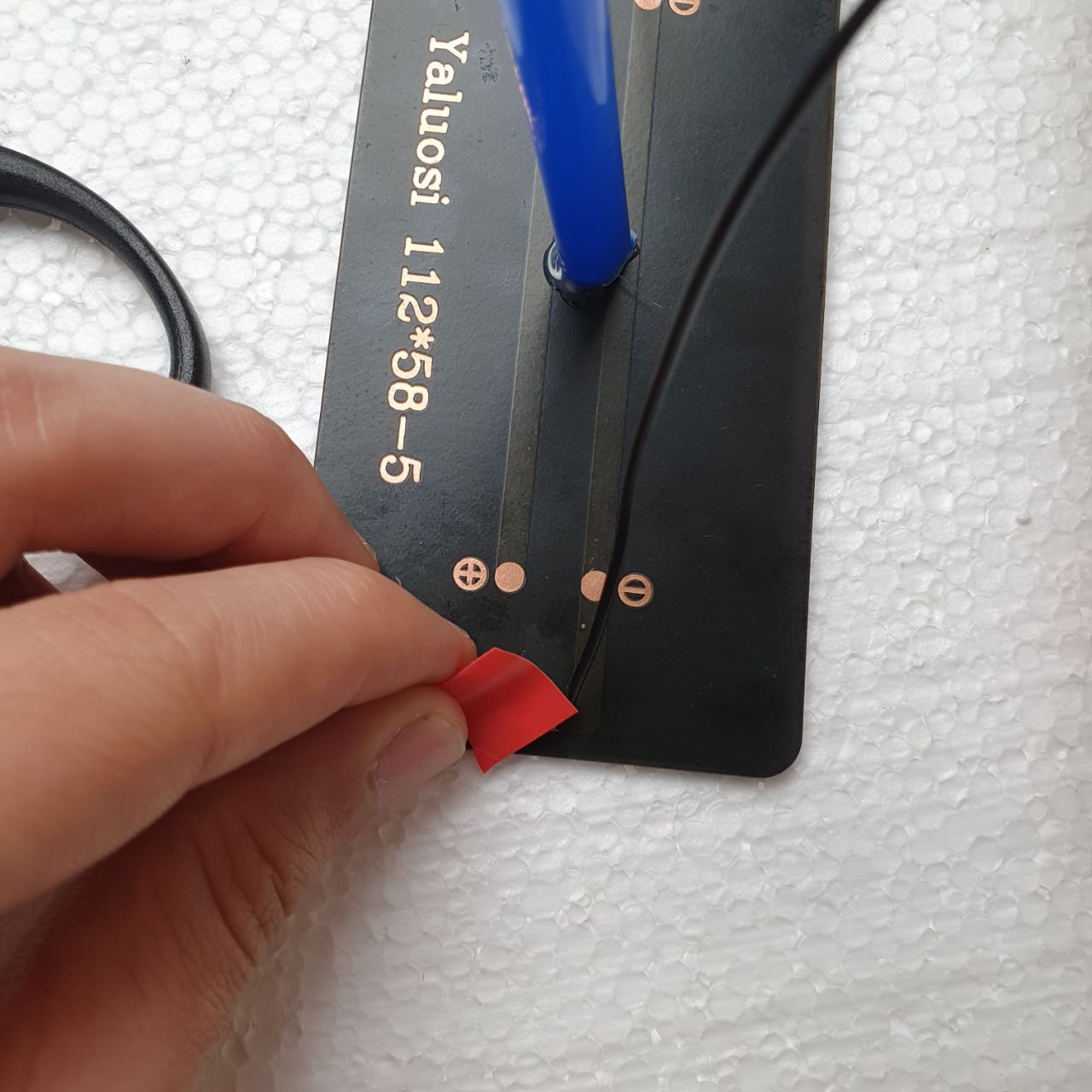
Step 7. Connect the second ends of these wires to the solar battery. The red wire from the motor connects to the “+” on the battery, and the black wire connects to the “-“. To connect, use soldering, or you can make contact with electrical tape and fix it on top with hot glue.
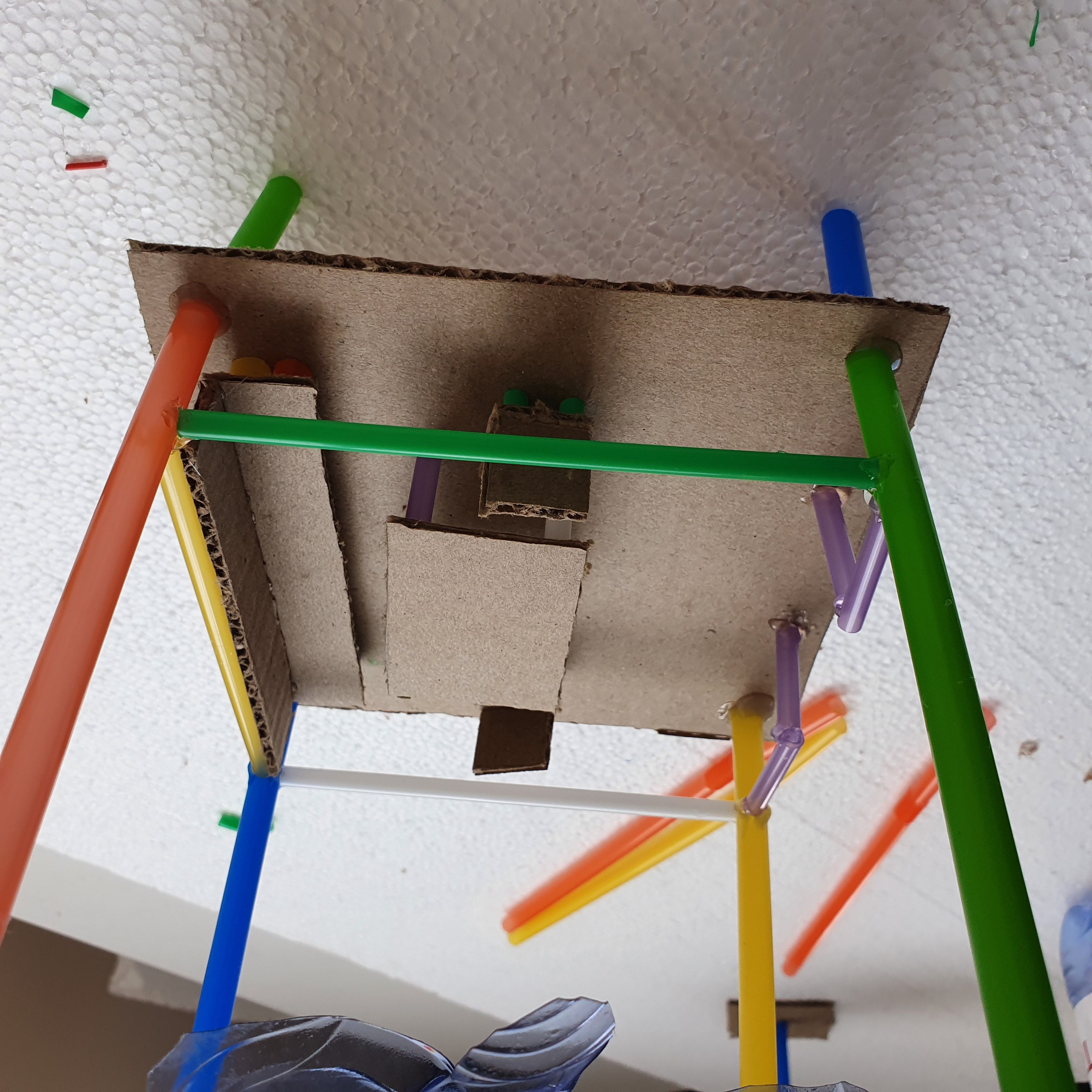
Step 8. And now let’s decorate the place of rest. Using a straw, cardboard, or other materials, decorate the gazebo as desired. For example, you can make a table and chairs.
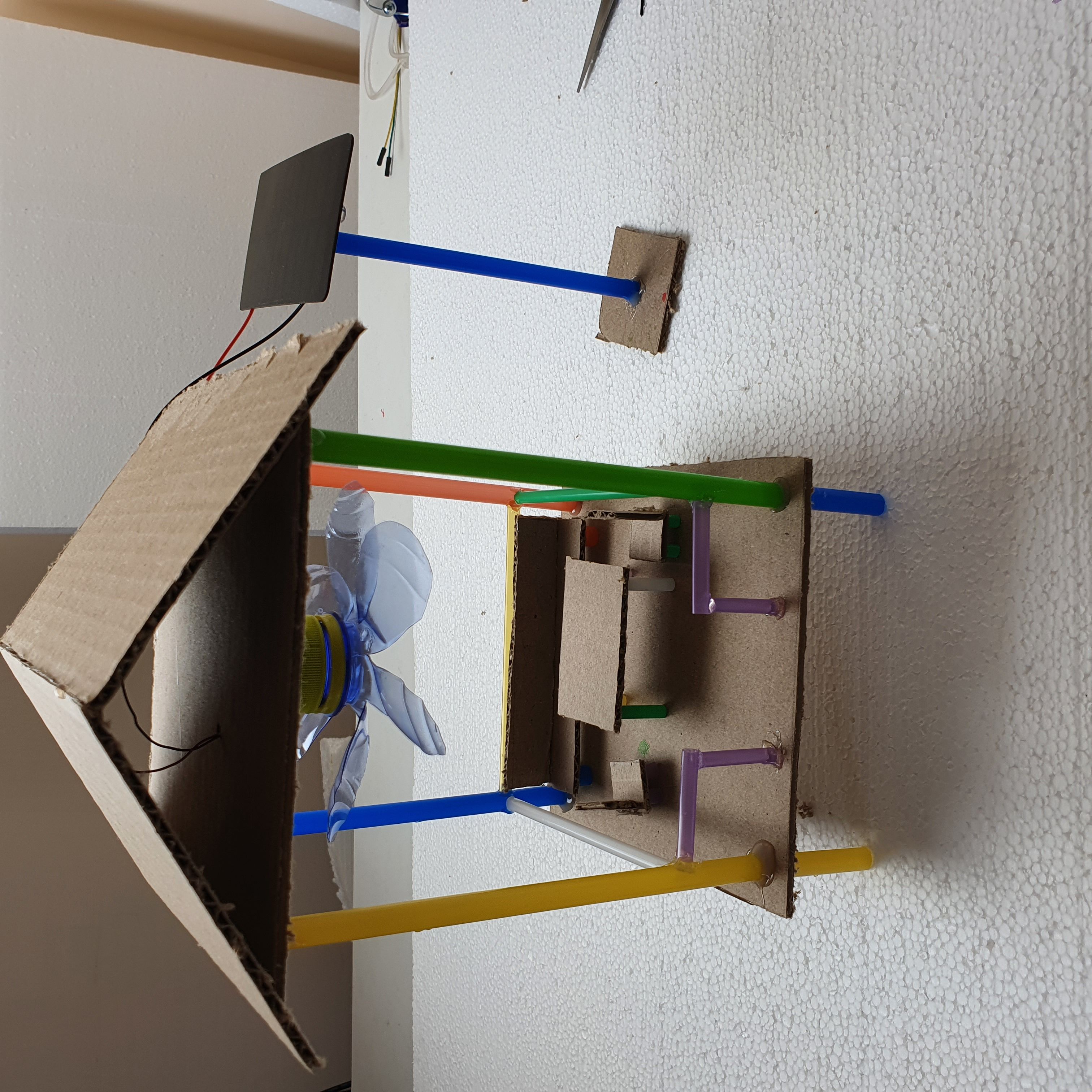
Step 9. If the solar panel is brought to a place where the sun shines well, the engine should start and the fan will rotate.

Conclusion
In this project, students considered one of the most important issues of our time – problems in the energy sector. One of the ways to solve it was considered the transition to alternative inexhaustible sources of energy, including the use of solar energy, as a solution to this problem. In this project, not only research work was done, but also practical work, and the students developed a solar-powered fan using simple improvised means. Thanks to this, the students were convinced that the use of the energy of the future – inexhaustible sources of energy – is possible and very effective in implementing into everyday life.
Evaluation
Criteria for evaluation by PBL:
Problem based learning is a teaching method in which students acquire knowledge and skills by working on one project to explore and find an answer to a genuine, interesting and complex question, problem or challenge. Download
For project assessment, in the first week, provide this material (PBL rubrics) to students in order to:
– the students understood in advance what criteria they need to prepare for,
– students were able to independently assess their colleagues.