
Lesson 1
Teacher’s Guide
– Divide the students into groups;
– Familiarize students with the topic of the lesson (introduction);
– In the first lesson, students must make a homemade fan and place it in the layout of the gazebo;
– In the second lesson, using a solar panel, turn on the fan;
– Monitor the work of students and observe safety precautions when working with a stationery knife and a lighter.
– Last week’s presentation and final week.
– For project assessment, in the first week, provide this material (PBL rubrics) to students to:
– the students understood in advance what criteria they need to prepare for,
– students were able to independently assess their colleagues.
Introduction
There are a lot of minerals on the globe. But when we consider them as a source of energy, we know that minerals are being depleted. In particular, the currently most used oil and gas reserves are being reduced annually. In addition, when using these energy sources, the risk of climate change increases due to the excessive release of air-polluting gases. In this regard, many countries are looking for other sources of energy instead of traditional fossil fuels. For example atoms, water, wind, sun, etc. Among those named in this project, the issue of using solar energy as an alternative energy source will be touched upon.
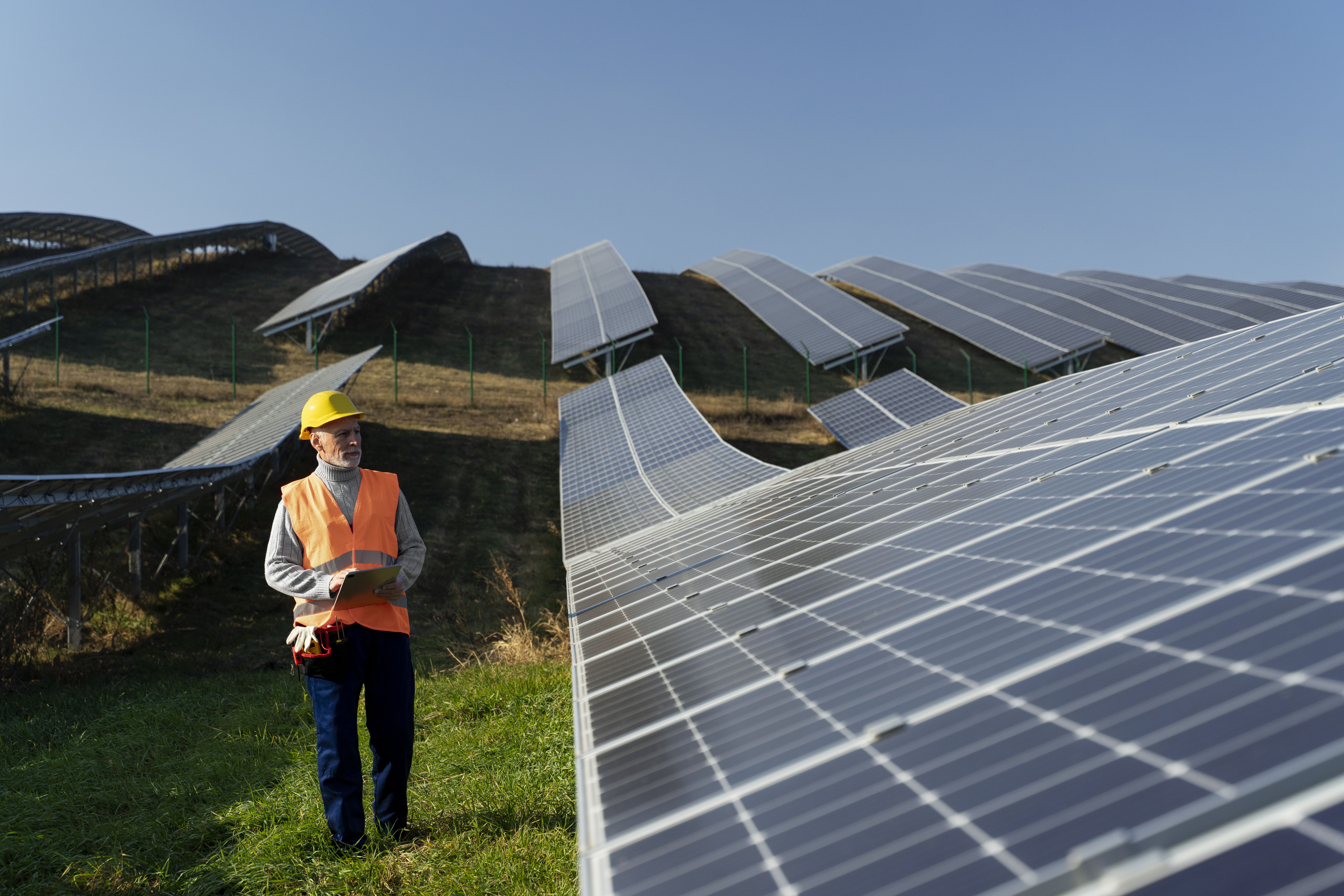
The use of solar energy opens the way to solving energy problems on earth. For example, in the USA it turns out that about 25% of the energy generated in the USA is spent on heating houses and providing houses with hot water, and in the Nordic countries this figure is even higher. When solving this problem, a large proportion of heat can be obtained through the use of solar energy, and solar panels. Solar energy’s advantages include that it does not pollute the environment, is biologically safe, and is infinitely inexhaustible. In addition to the advantages, there are also disadvantages. This is: the maximum efficiency of energy conversion is achieved only during peak hours, i.e. energy is generated only when sunlight hits, rare materials have to be used, and a large area is required.
https://ru.freepik.com/vectors/man”>Man вектор создан(а) pch.vector – ru.freepik.com
https://ru.freepik.com/photos/nature”>Nature фото создан(а) freepik – ru.freepik.com
Currently, the number of solar panels converts less than 20% of the solar energy reaching them into electrical energy. But as technology develops, this indicator increases. Solar panels are widely used nowadays in tropical and subtropical regions. It is especially common to place solar panels on the roof of a house in Mediterranean countries. And in new villas built in Spain since 2007, water heaters are powered by solar energy. Such equipment can provide from 30% to 70% of the demand for hot water. It is also possible to install solar cells used today on solar panels on various types of transport, such as boats, airplanes, hybrid cars, and electric vehicles. Even the installation of solar cells on the roof of railway trains is carried out in countries such as Japan, and Italy. To give a concrete example, Solatec LLC is engaged in the sale of thin-film solar cells. These solar cells are designed to be placed on the roof of a Toyota Prius hybrid car.
The practical part
In this project, we will look at the application of solar panels. Let’s imagine that you wanted to relax and sit in the gazebo in hot weather, the rest will be even more comfortable if there is a fan in the recreation area. And it would be even better if it was powered by free solar energy. Such a fan can be installed anywhere. Let’s make such a fan charged with solar energy. For this:
Step 1. Make a fan out of the bottle by looking at the video. Motor parameters used in this project: Voltage range 1.5-6V; current 22mA. (Keep in mind that if you use such a motor, the voltage that you are powered by a solar battery should not exceed 6 V, and the current strength should be higher than 22mA, which means that it can provide enough current.)

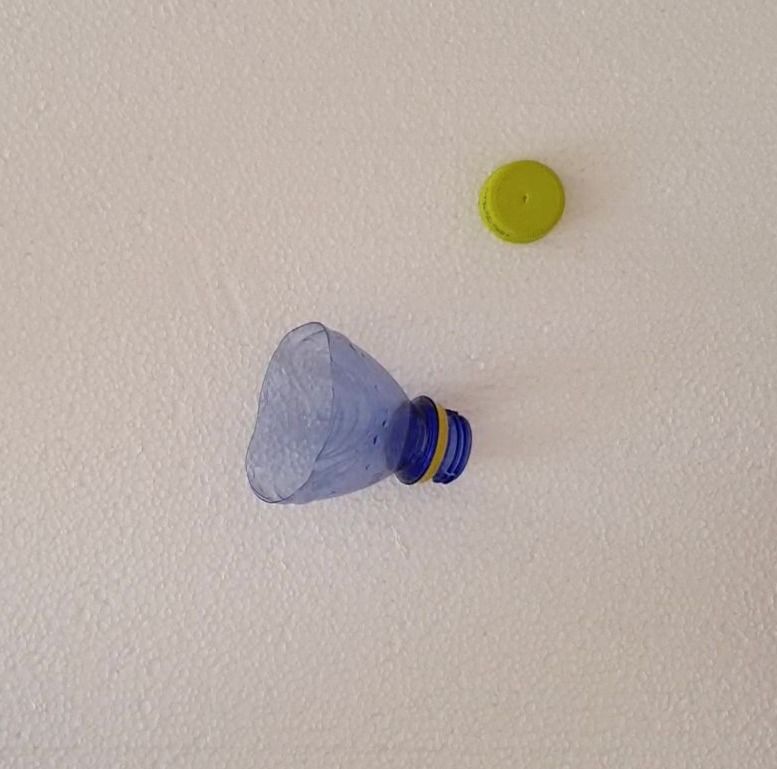
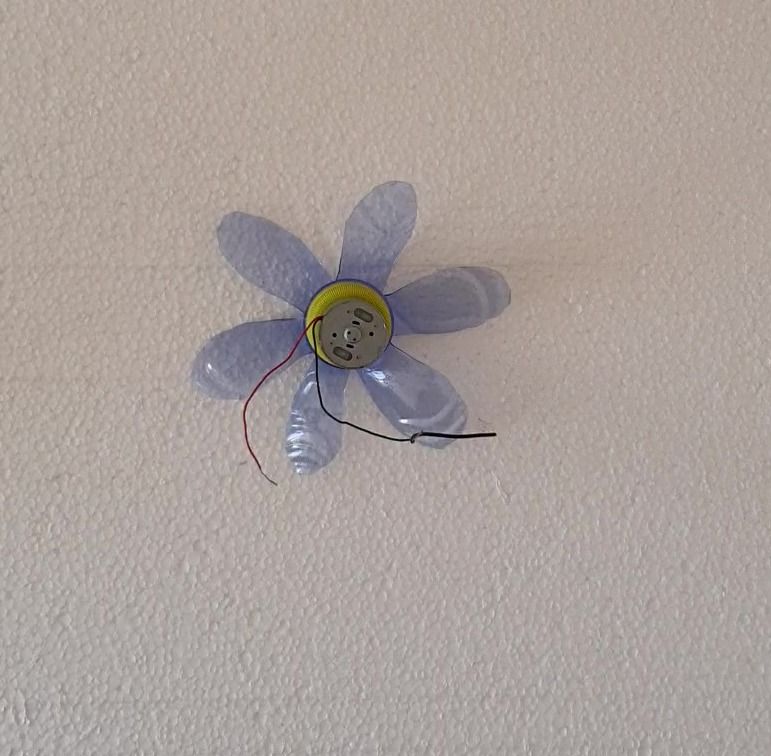
- Cut off the head of the bottle with scissors or a knife. Then divide into several equal parts, as in the photo.
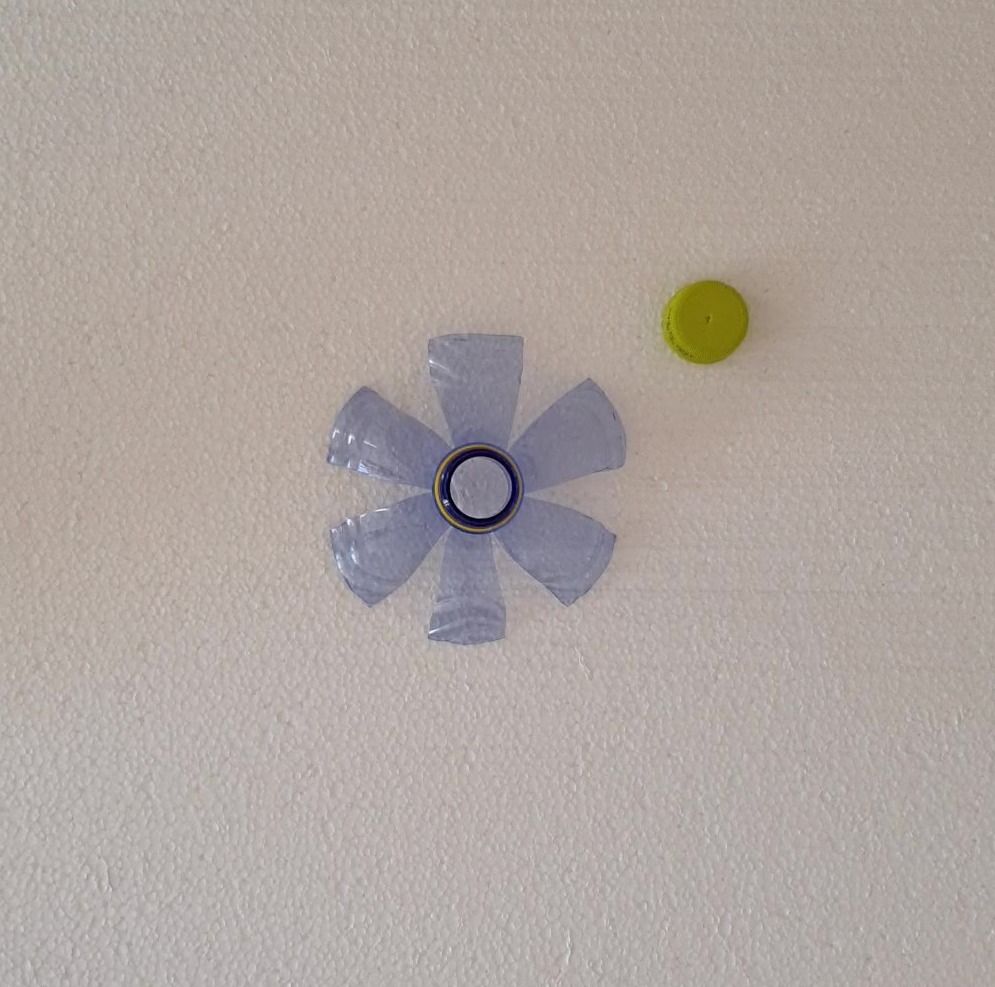
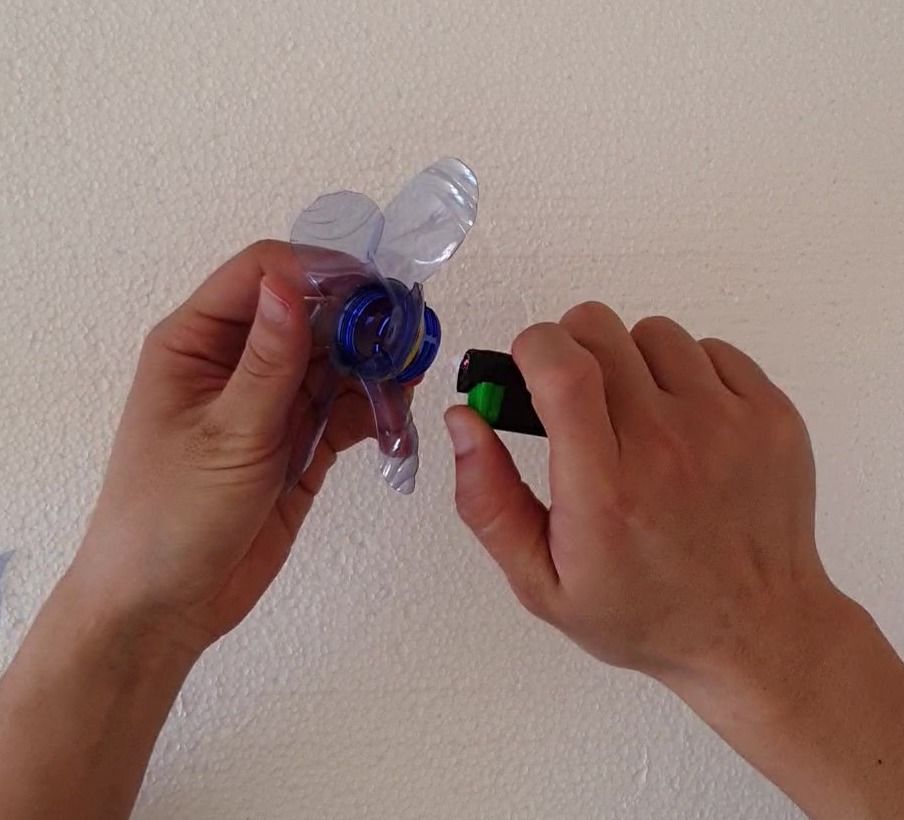
2. You can cut corners by rounding them like flowers. Then heat each fan blade with fire and bend it manually to a small angle.
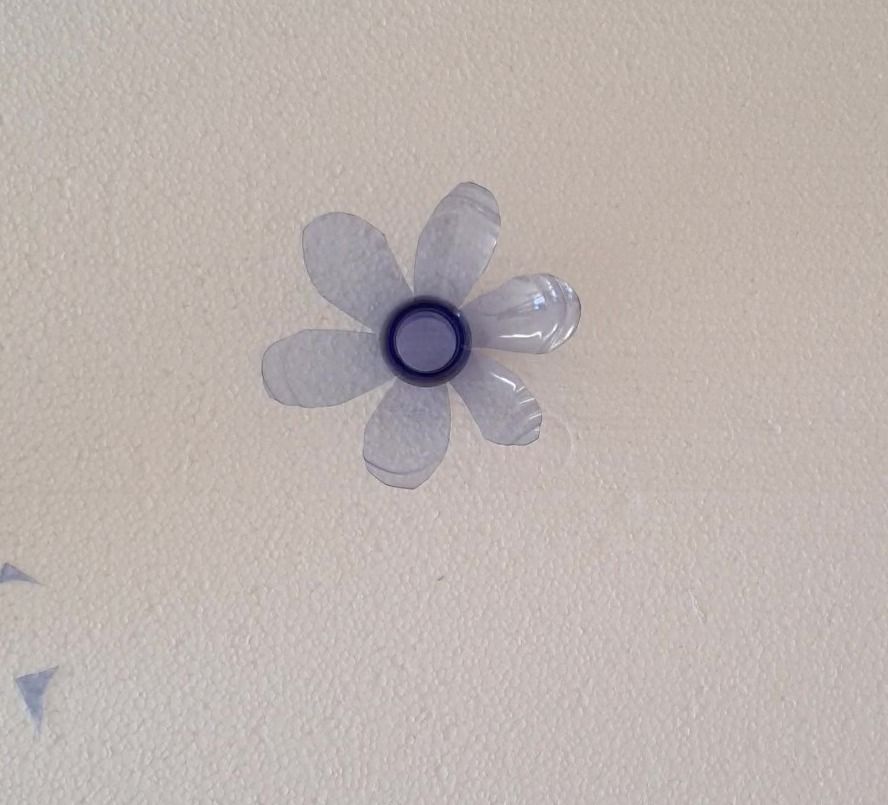
3. Now puncture the bottle cap to install the motor on the bottle. Then, through the same hole, put the engine on the lid.
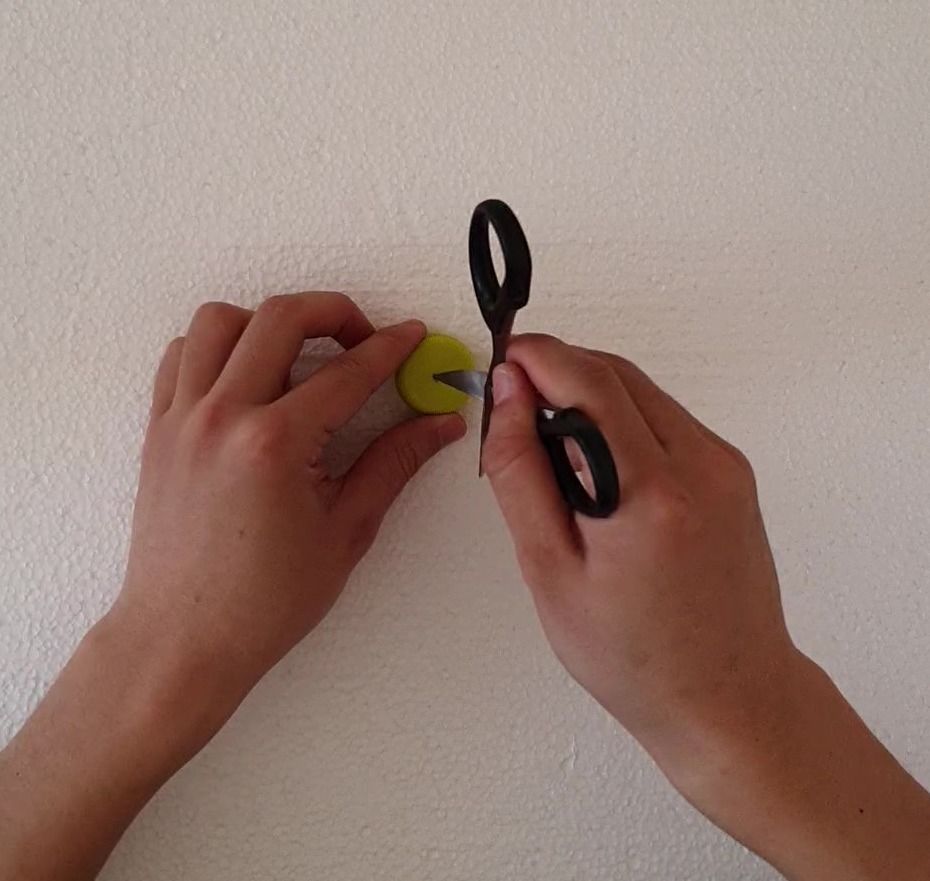
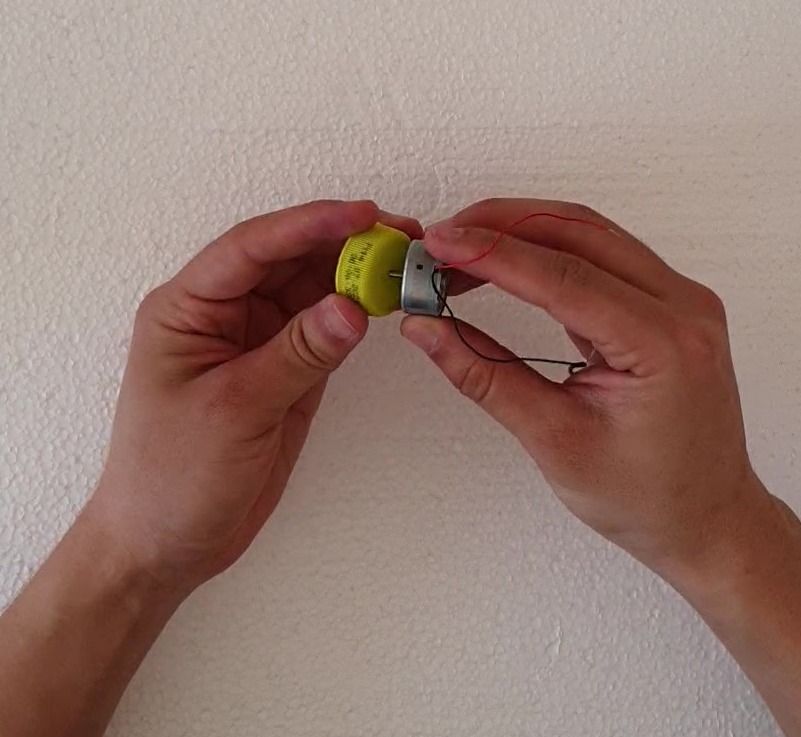
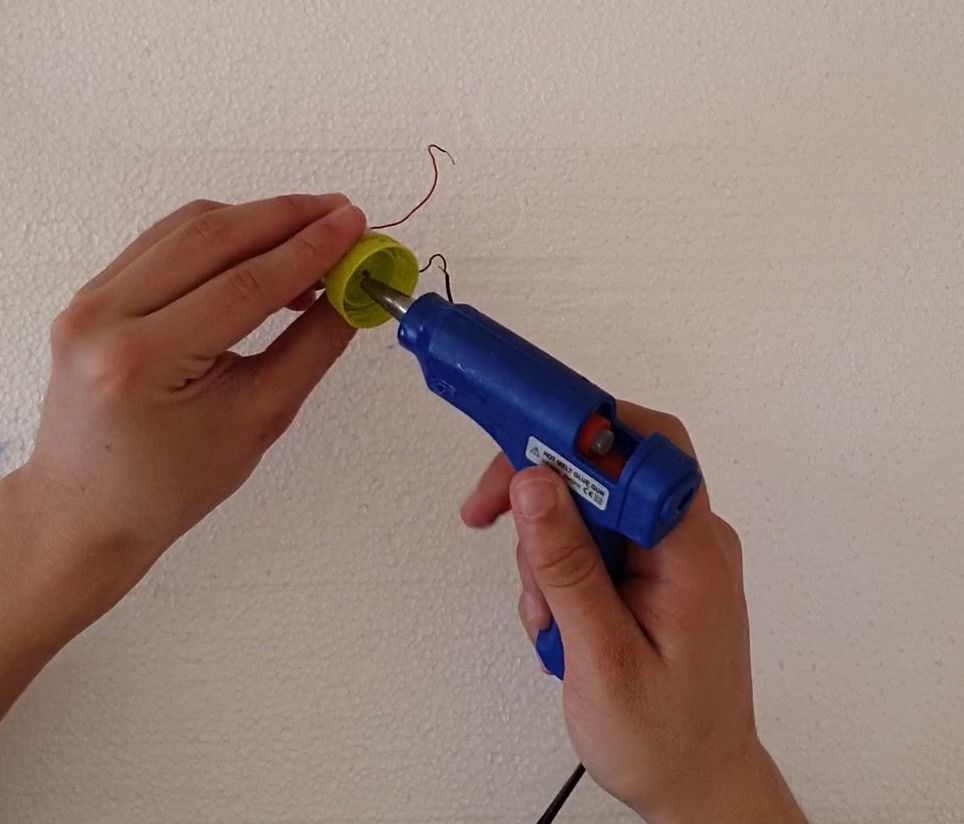
4. Use hot glue to secure the motor securely, and wait for it to harden. When the motor rotates, the cover should rotate together. When it is ready, put the pre-prepared bottle blades on the lid.
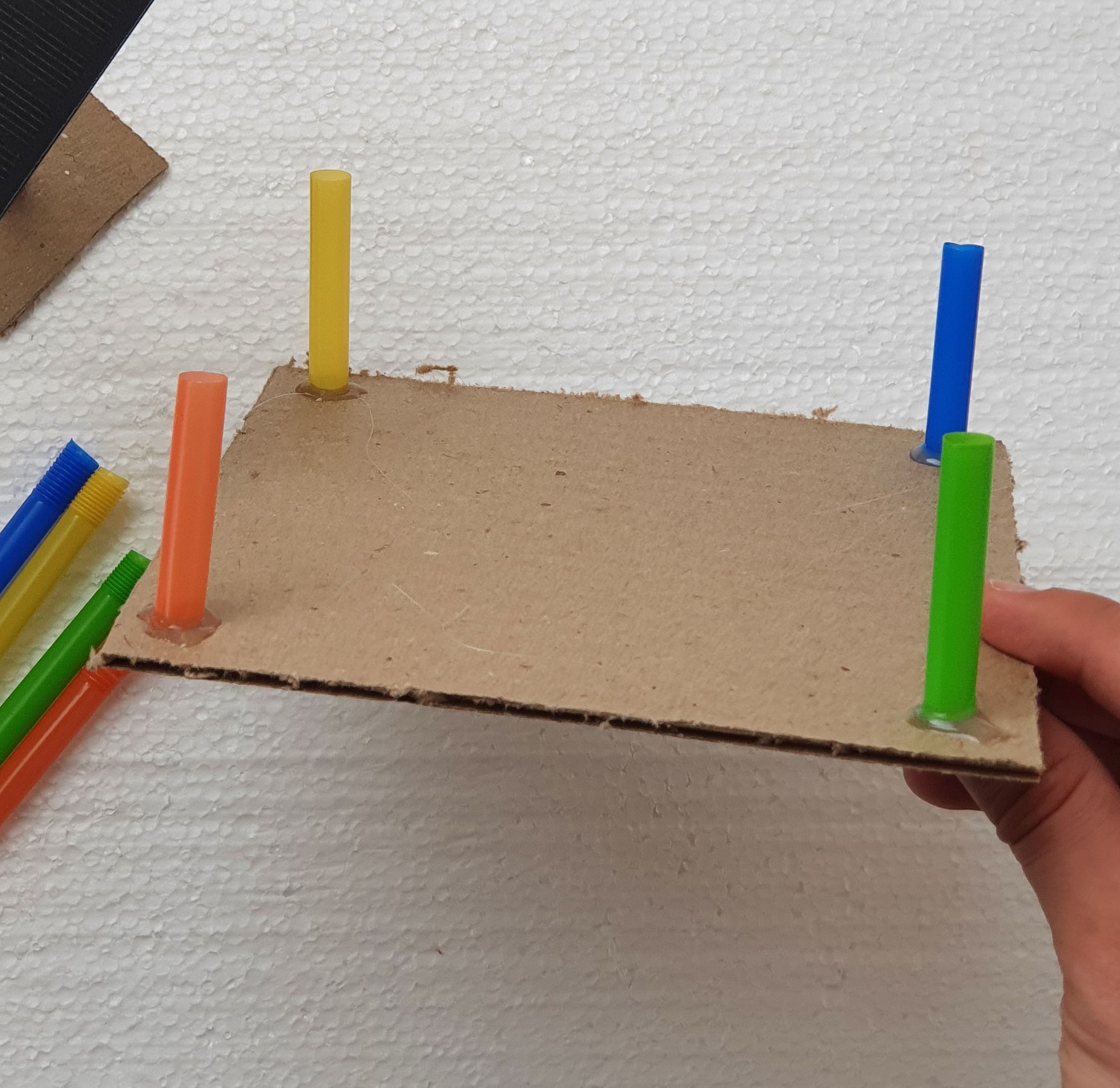
Step 2. Using cardboard and tubes, come up with and make a mock-up of a gazebo, turn on your imagination. You can see the instructions below: First, we cut out the cardboard for the floor. We cut out the tubes and make the legs. Then fix the pillars of the tubes. Then we cut out the ceiling from cardboard and install it with glue.
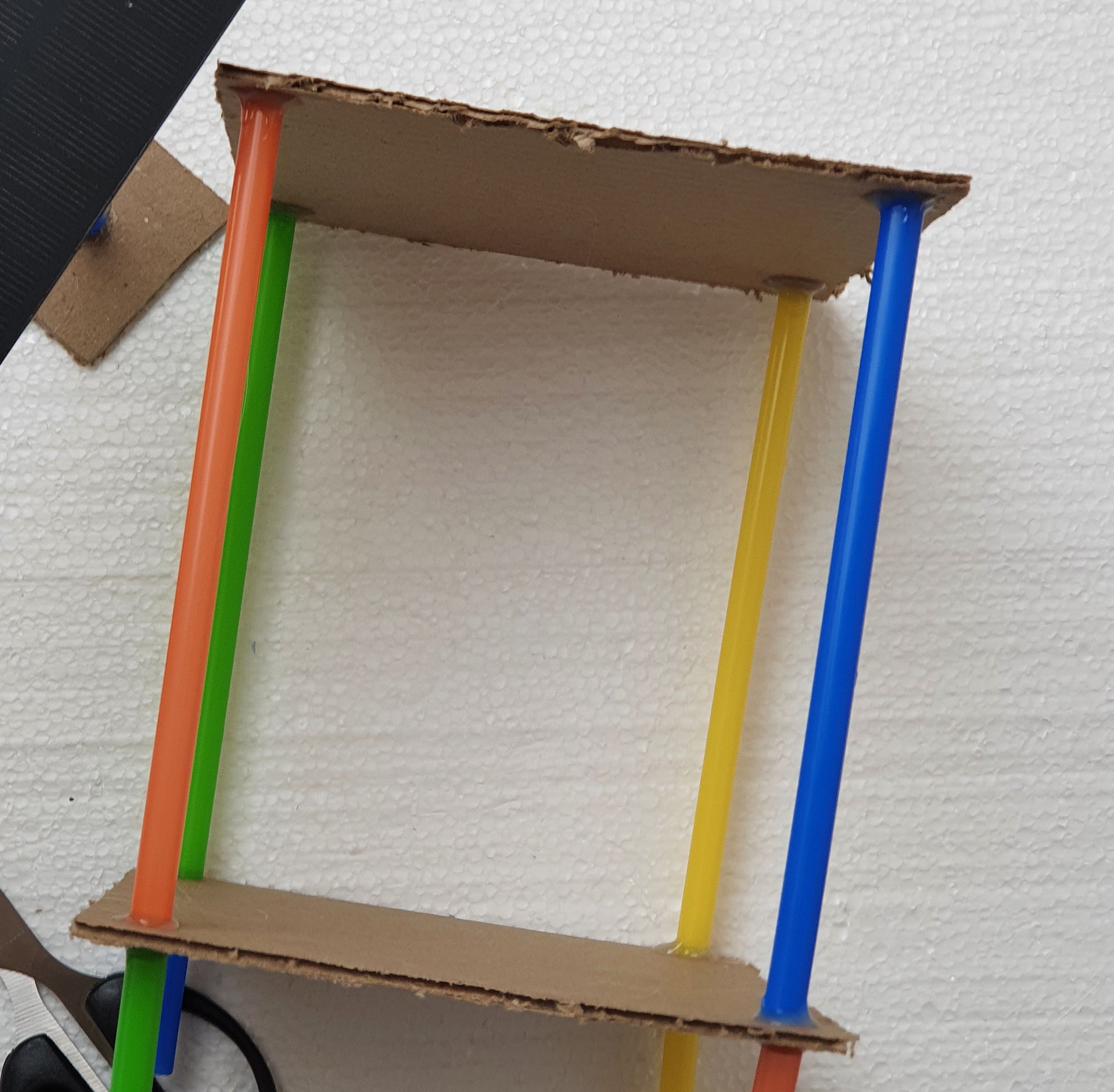
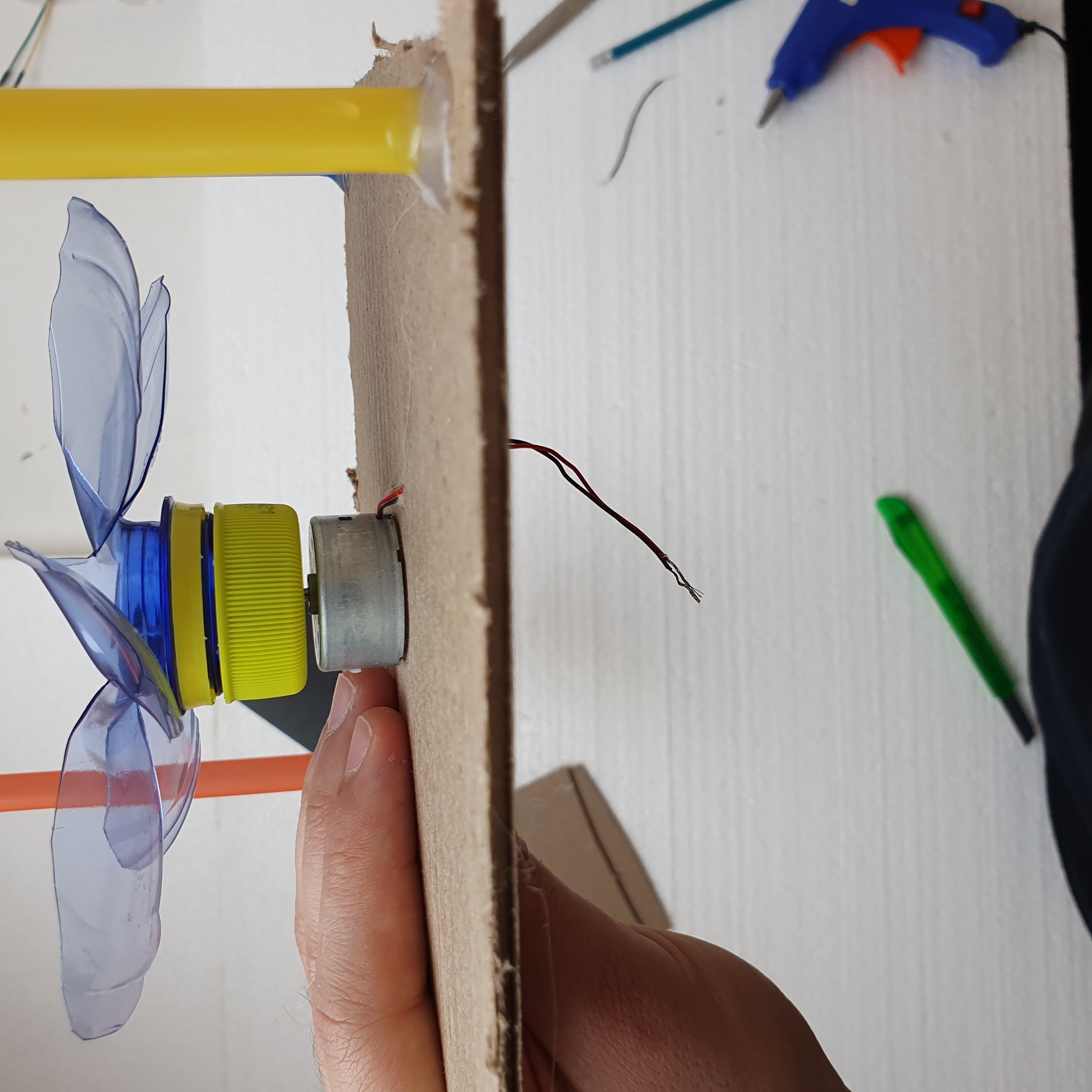
Step 3. Install the fan on the ceiling of the gazebo with glue. Make a hole in the cardboard and pass the wires up.
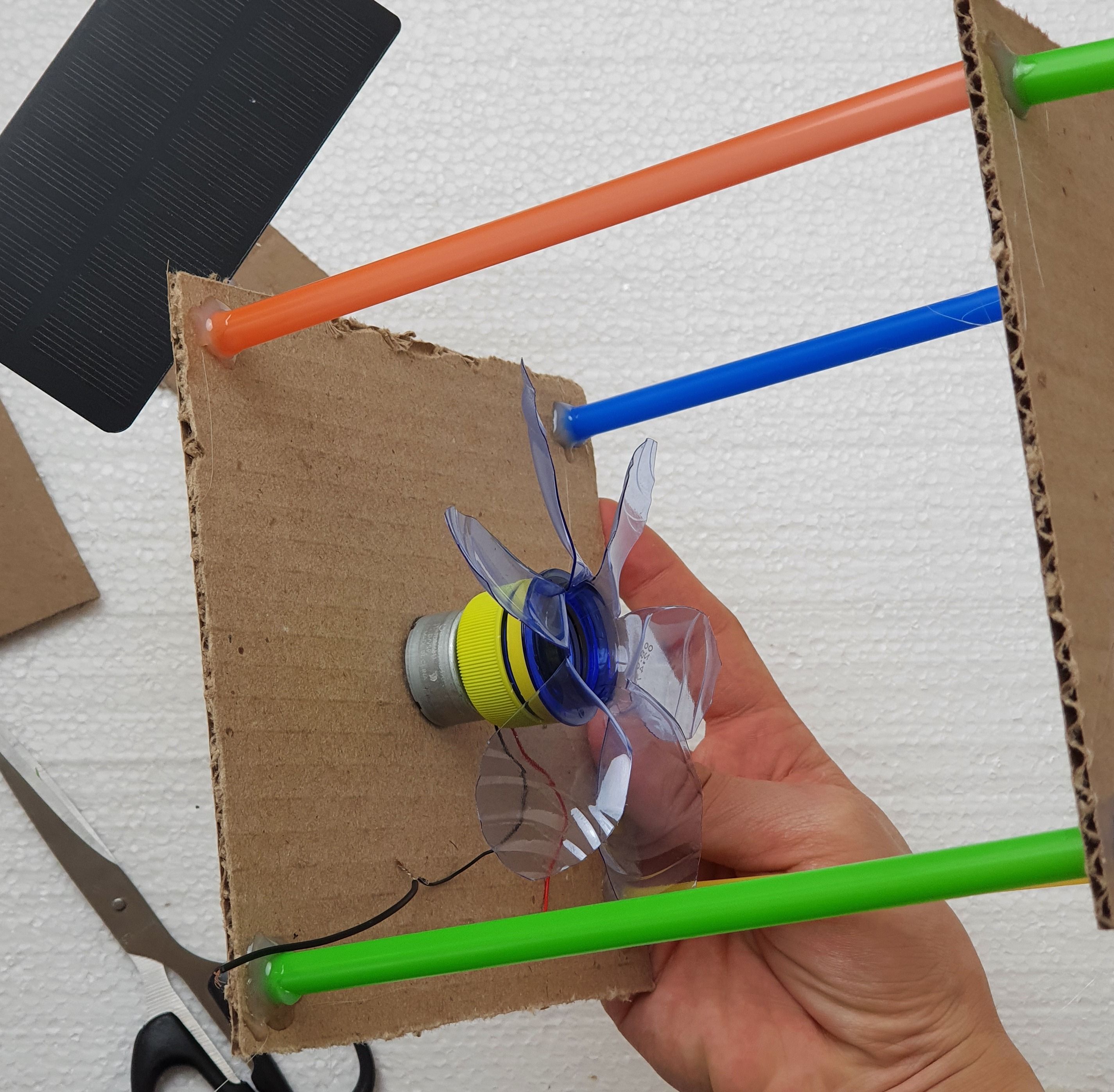
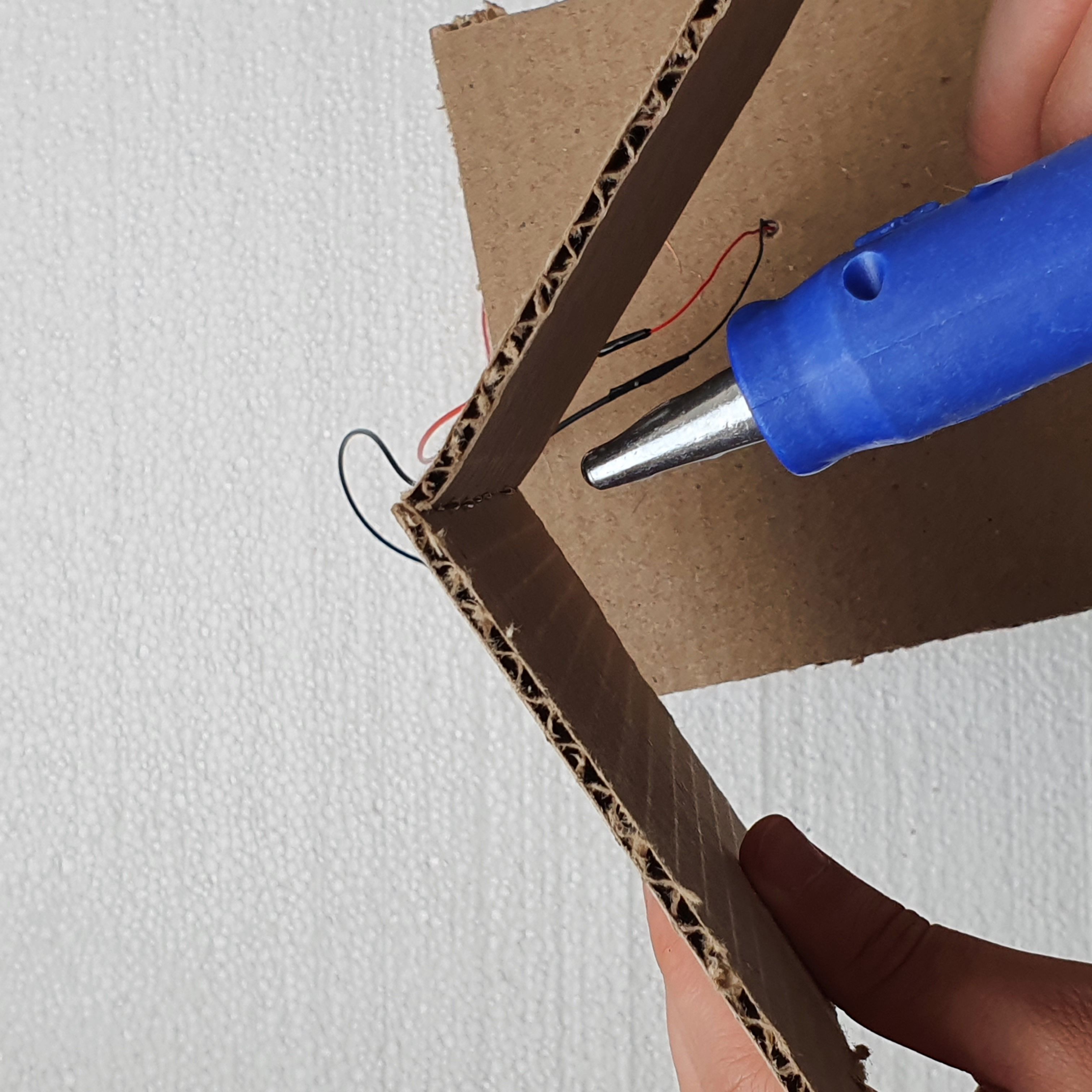
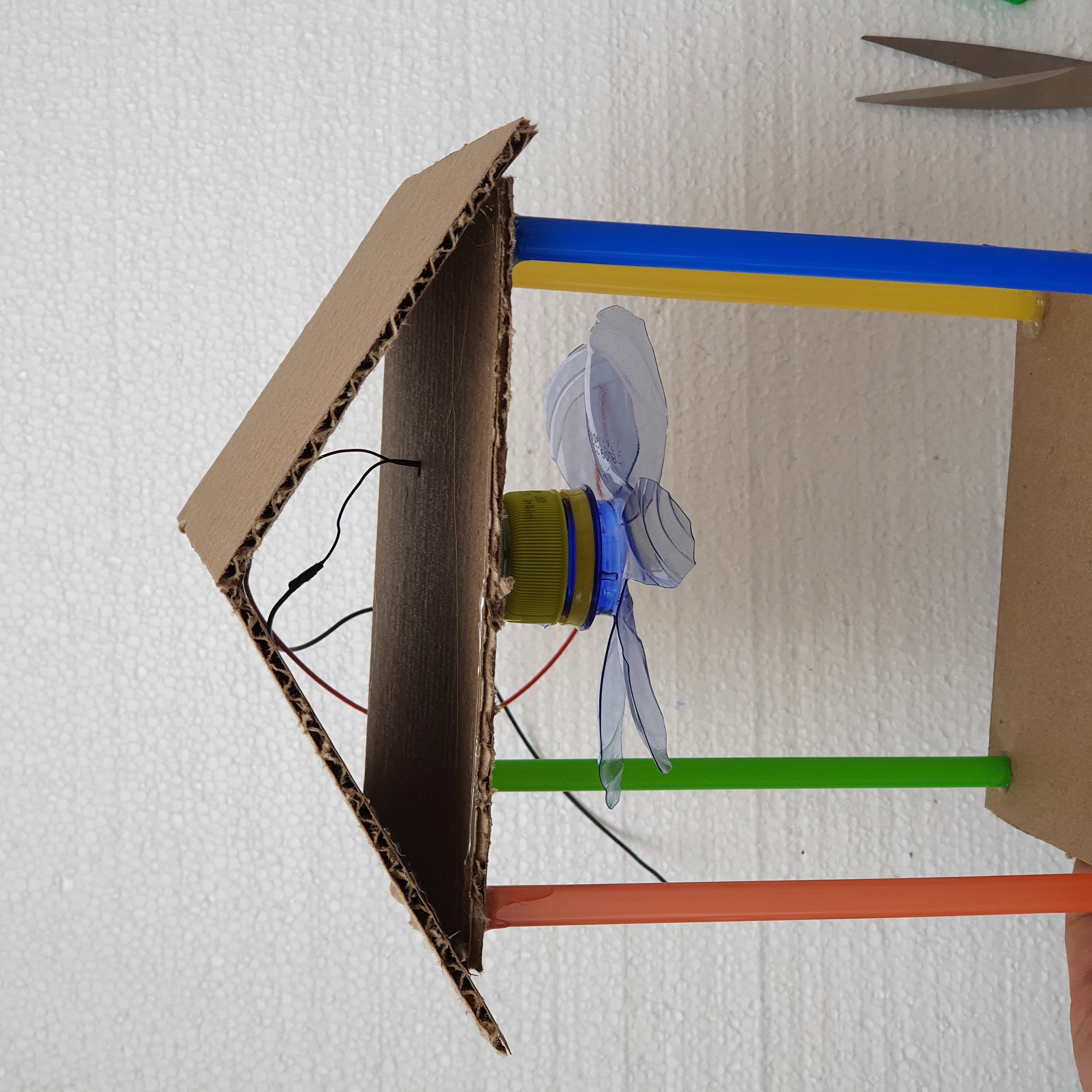
Step 4. Make a cardboard roof and close the roof.
This concludes today’s lesson. Next week we will start our fan by charging it from a solar battery.