
Lesson 1
Project Goals
– Instill environmental education and upbringing;
– Understand the importance of sorting garbage in everyday life;
– Make an Ecobox to motivate others to sort waste.
Teacher’s Guide
– Divide students into groups;
– At the beginning of each lesson, make a brief review of the theoretical part;
– Don’t forget your homework at the end of the lesson;
– Provide PBLrubrics to students to:
– the students previously understood by what criteria they needed to prepare,
– the students were able to independently give an appropriate assessment to their colleagues.
The theoretical part
According to research, 2 billion tons of municipal solid waste is produced annually. By 2050, this indicator is projected to grow by 70%. If from now on we do not sort and reuse waste, in a few decades our planet will turn into one big pile of garbage.
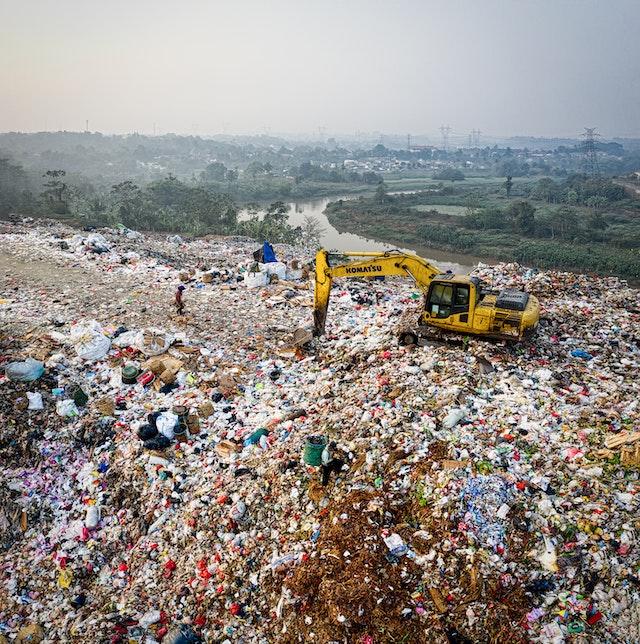
Photographer: Tom Fisk: https://www.pexels.com/ru-ru/photo/3174350/
In Europe and East Asia, waste sorting has long been practiced in everyday life, and in the CIS countries, waste recycling is a new trend, and is only being introduced. To say that one person cannot change everything is just an excuse, because everything starts small, and thus if we take any business collectively, the situation will be moved from the dead center.
Whether waste should be sorted is not up for debate at this time. For example, in Germany, Canada, Sweden, America, New Zealand, and Japan, care for nature is instilled from childhood and they are taught to sort waste in every home. There are colorful trash cans in front of each house, and the kitchens have separate sections for different types of trash. Educational work on the topic of ecology is also carried out in schools.
Sorting waste benefits the people themselves, for example, in Europe you can get a reward of up to 25 cents by selling one plastic bottle. These countries have the highest rates of environmental friendliness: 99% of waste is recycled.
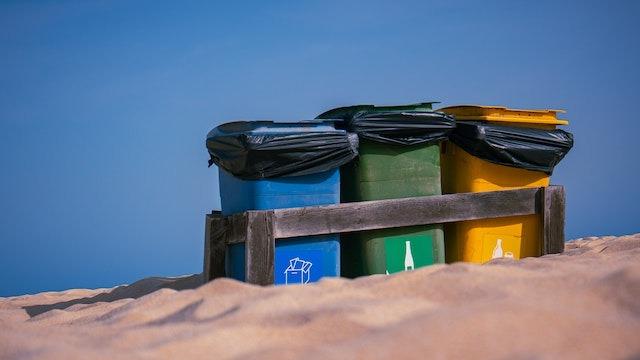
Photographer: Cole May: https://www.pexels.com/ru-ru/photo/11263242/
Why is waste sorting important?
Unsorted waste continues to accumulate in the areas, not reaching processing, as a result of which polluted air, soil, and water cause serious damage to the ecosystem.
The garbage accumulated in the squares is burned when the gases released cause serious damage to the earth’s atmosphere of our planet. By sorting garbage, you help them to be recycled and not accumulate in landfills.
For example, by sorting waste paper, you can save a few trees from pruning. If you know what materials can be recycled, you will be more conscious about buying and using products.
Waste sorting before being sent for recycling is a must. In European countries and the USA, separate collection of waste such as glass, plastic, and paper has been carried out for many years.
Categories of sorted garbage:
In Kazakhstan, such a system is just being introduced. Therefore, this option is the responsibility of waste processing enterprises.
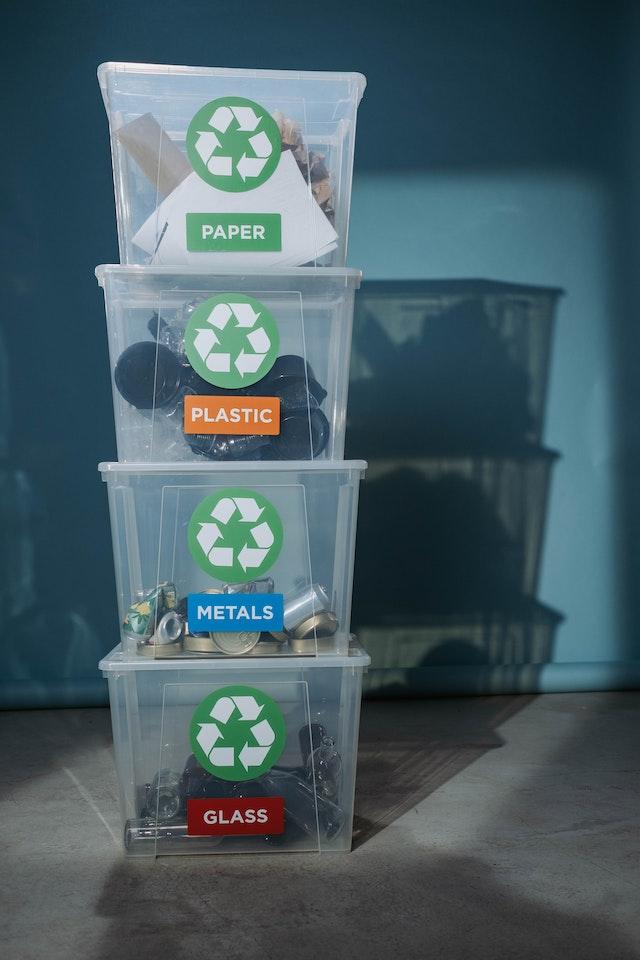
– Substances of paper origin are suitable for 4-5 recycling cycles. Cardboard boxes, newspapers, magazines, and notebooks are recyclable items.
– Glassware is a unique material that can be recycled an unlimited number of times. That is, you can endlessly process, create a new product, and with each process, the quality of the product remains the same.
– Plastic products are marked. When sorting at special plants, processing with this marking is allowed. They are 1, 2, 3, 4, 5, and 6.
– The principle of metal sorting largely depends on the chemical composition and is often implemented at special metallurgical plants. The following metal products become recyclable: aluminum utensils, canned utensils, metal lids, and foil used in cooking.
Used literature and additional information:
https://www.redbull.com/kz-ru/how-to-reuse-and-recycle
https://www.kwr.kz/blog/view/sortirovka-musora-cto-nado-znat/
https://the-steppe.com/obshestvo/rabotaet-li-sortirovka-musora-v-kazahstane
Practical part
In the practical part, you will make automated, gift eco-boxes. In this tutorial, we will create a box automation system using Arduino. When debris enters the box, the IR sensor sees it and sends a signal to the servomotor. The servo motor will push the gift.
With such an automated trash can, you can encourage students at school to sort their trash.
1. Assemble the circuit between the Arduino microcontroller, the sensor, and the servo motor according to the diagram. Pay attention to which ports each wire goes into.
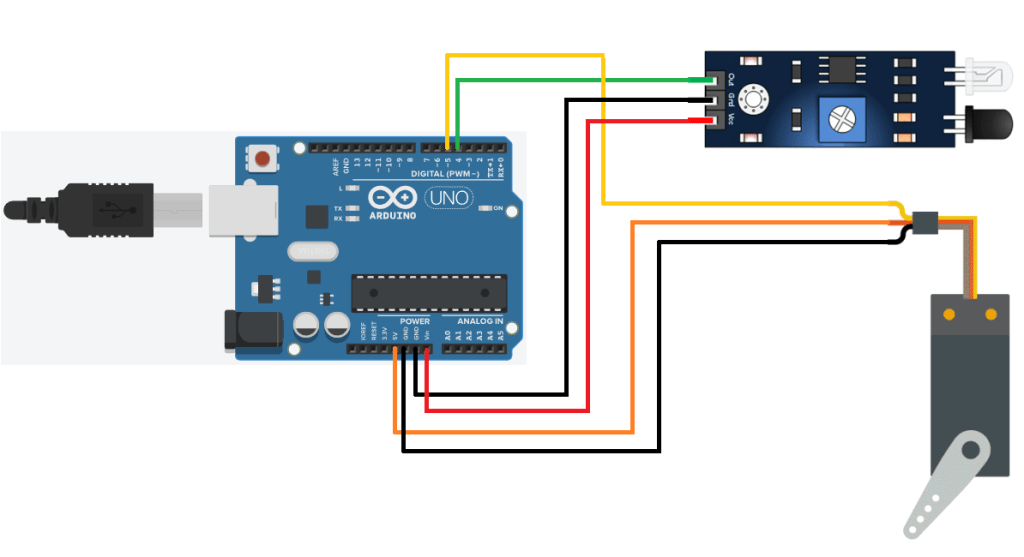
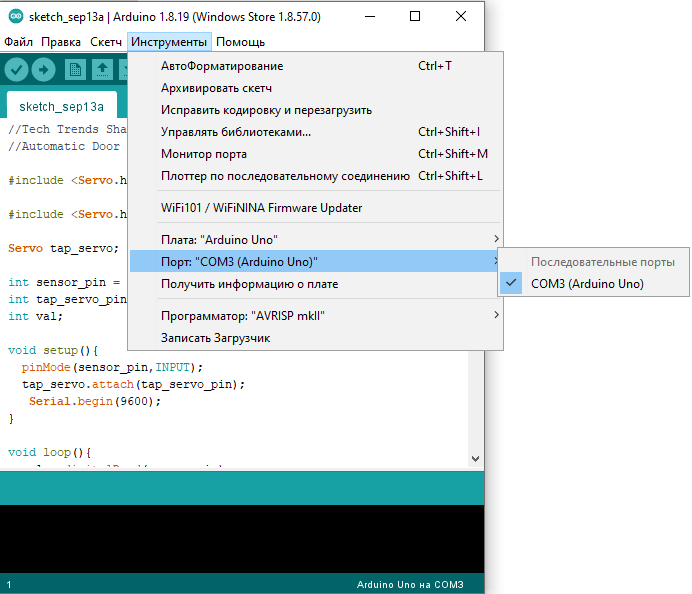
2. Connect the circuit to your computer, open the Arduino IDE and paste the code below and upload it. The code:
#include <Servo.h>

#include <Servo.h>

Servo tap_servo;

int sensor_pin = 4;
int tap_servo_pin =5;
int val;

void setup(){
pinMode(sensor_pin,INPUT);
tap_servo.attach(tap_servo_pin);
  Serial.begin(9600);
}

void loop(){
val = digitalRead(sensor_pin);
Serial.println(val);
if (val==0)
{
   tap_servo.write(90);
   delay(2000);
   tap_servo.write(0);
}
/*if (val==1)
{
    tap_servo.write(180);

}*/
}
When the Arduino circuit is ready, in the next lesson we will prepare and place it in the box. The sensor should be on the path where the debris falls, and we place the servomotor on the side where the gift is served.
Homework
Each group should research the type of waste it has chosen to handle. You need to look for information about where you can drop off the collected garbage in your city. You can come up with a box design.