Lesson 1
Project objective
1. to study the structure of the food chain. To make a model of the food chain.
2. Make a Russian folk toy “matryoshka” and use it to explain the food chain.
Teacher’s guide
– For the experimental part of the project, students work in groups of 4-5.
– The students should be familiarized with the topics covering the purpose of the project.
– Before beginning the experimental part, familiarize and provide the students with all the necessary materials.
– At the beginning of the lesson explain the PBL (project based learning) rubrics to the students. 4K skills (critical thinking, collaboration, creativity, presentation)
Safety in Steam lessons
Before we begin the lesson, teachers are advised to familiarise themselves with the safety procedures. If necessary (if using items specified in the PPE), brief the students. Visit Safety in Steam Lessons: Safety
Theoretical Part
Animals have to eat to survive. Those animals that eat plants are called herbivores and those that eat other animals are called predators. A chain of living things eating each other is called a food chain.
All living things are interconnected by a food-consumer relationship.
Primary producers (green plants) – primary consumer – secondary consumer – tertiary consumer …….. – final consumer (decomposition of the last consumer)
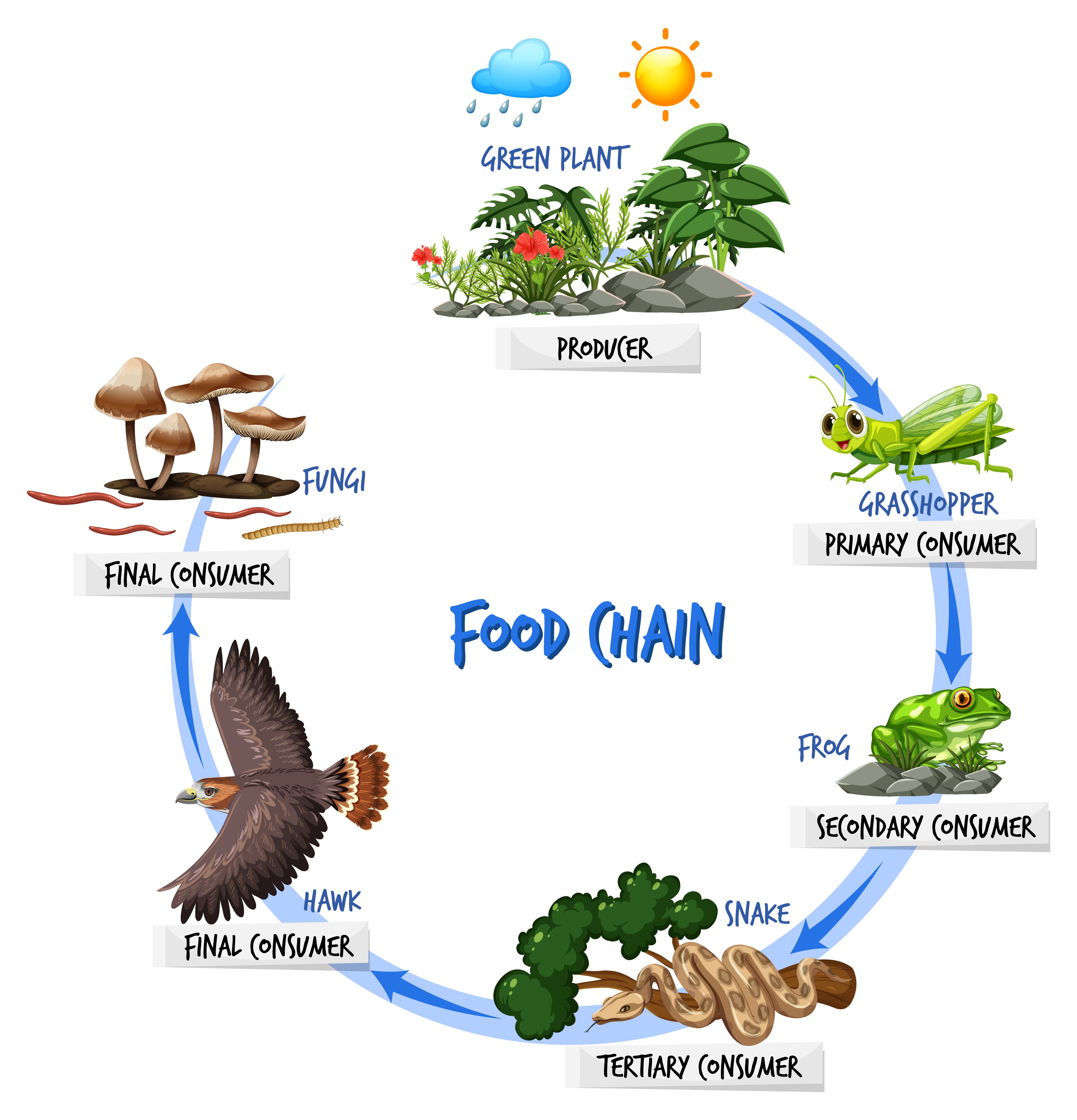
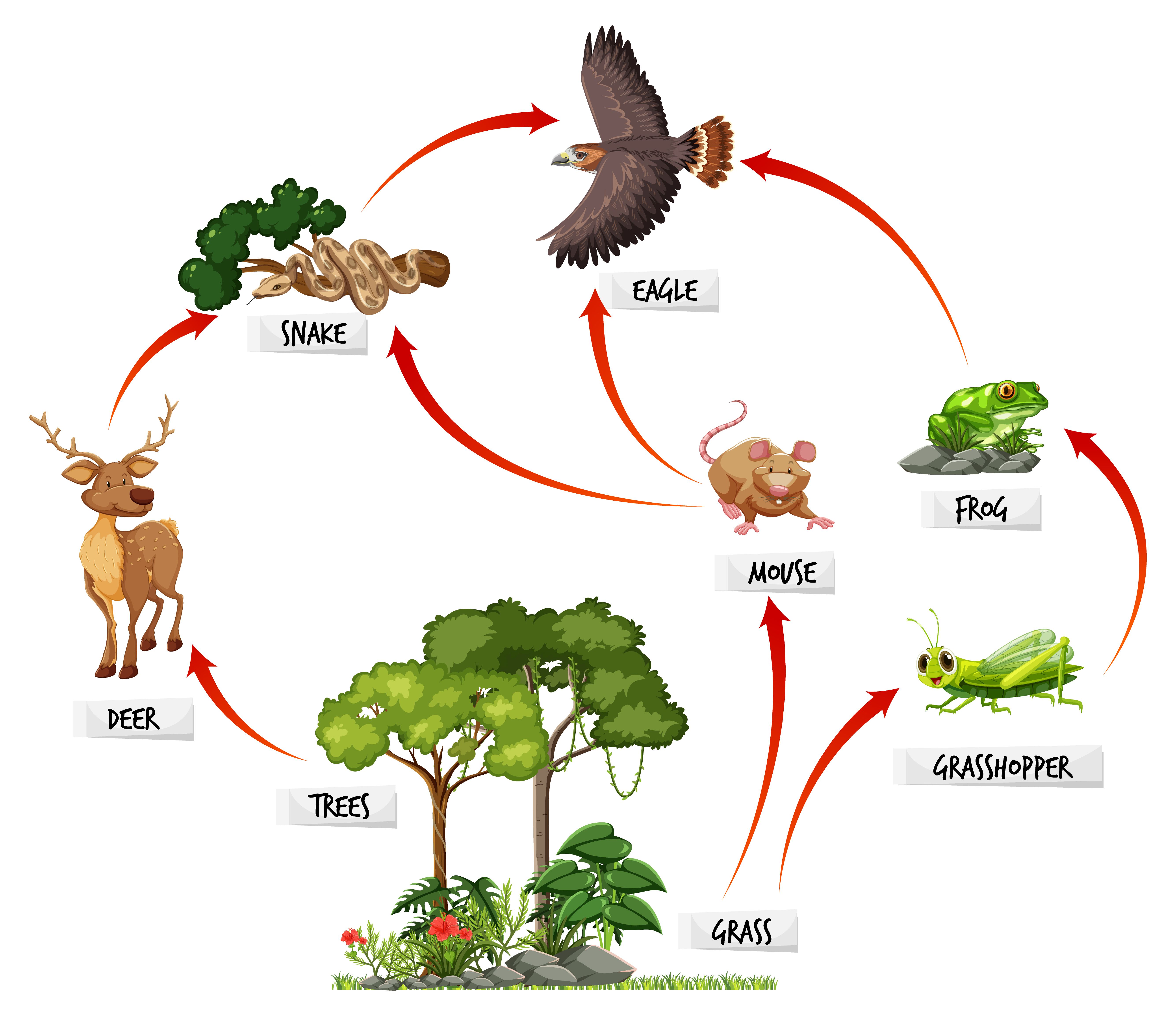
The food of each species usually includes not one but several or many species, each of which in turn can serve as food for several species.
There are two main types of food chains – grazing and detritus.
The grassland food web is based on autotrophic organisms which are eaten by herbivores (e.g. zooplankton feeding on phytoplankton); the upper levels are made up of 1st order predators (e.g. fish eating zooplankton) and 2nd order predators (e.g. zander feeding on other fish). Especially long T.c.’s are in the ocean, where many species (e.g. tuna) take the place of 4th order consumers.
In detrital (decomposition chains), which are the most widespread in forests, most plant products die off, then undergo decomposition by saprotrophic organisms and mineralisation. Detritivated wood is based on organic matter, which is eaten by detritophages (mainly fungi and bacteria). They serve as food for 1st order predators which in their turn are consumed by higher order predators. In aquatic ecosystems (especially in eutrophic ponds and deep oceanic waters) a large part of plant and animal production also goes into detrital trophic chains.
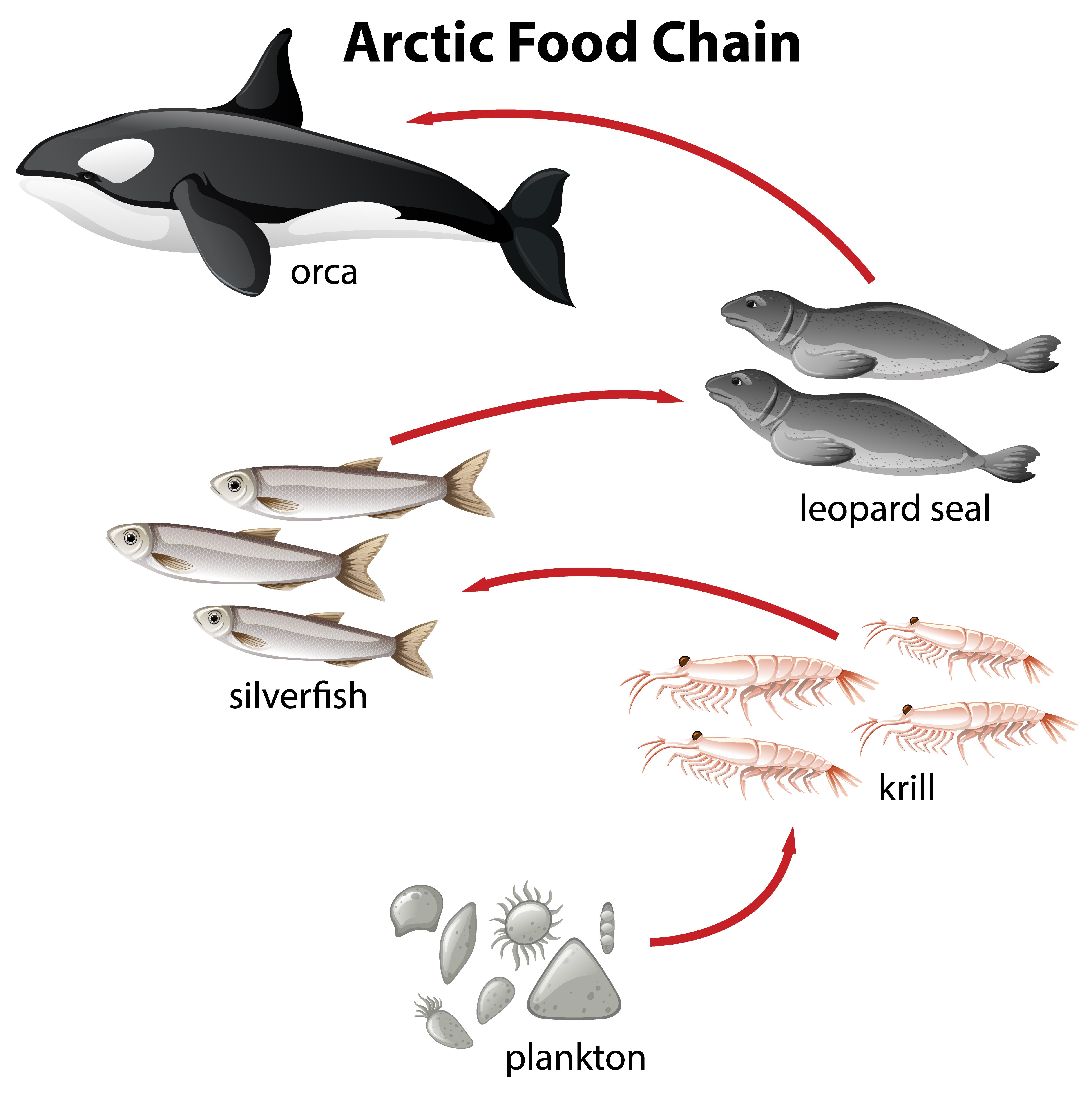
For example, the marine chain begins with phytoplankton, a cluster of tiny plants that produce nutrients when exposed to sunlight. As shown in the figure, each animal eats the smaller ones. This food chain culminates in the killer whale, which indirectly lives off the tiny phytoplankton.
Phytoplankton – zooplankton (krill) – herring – cod – seal – killer whale
Sources of information:
1. All about animals from A to Z. Encyclopaedia for children
2. Karpenkov S. H. ESSENTIALITY // The Big Russian Encyclopedia. Electronic version (2017); https://bigenc.ru/technology_and_technique/text/1978848
3. https://ru.freepik.com
The practical part
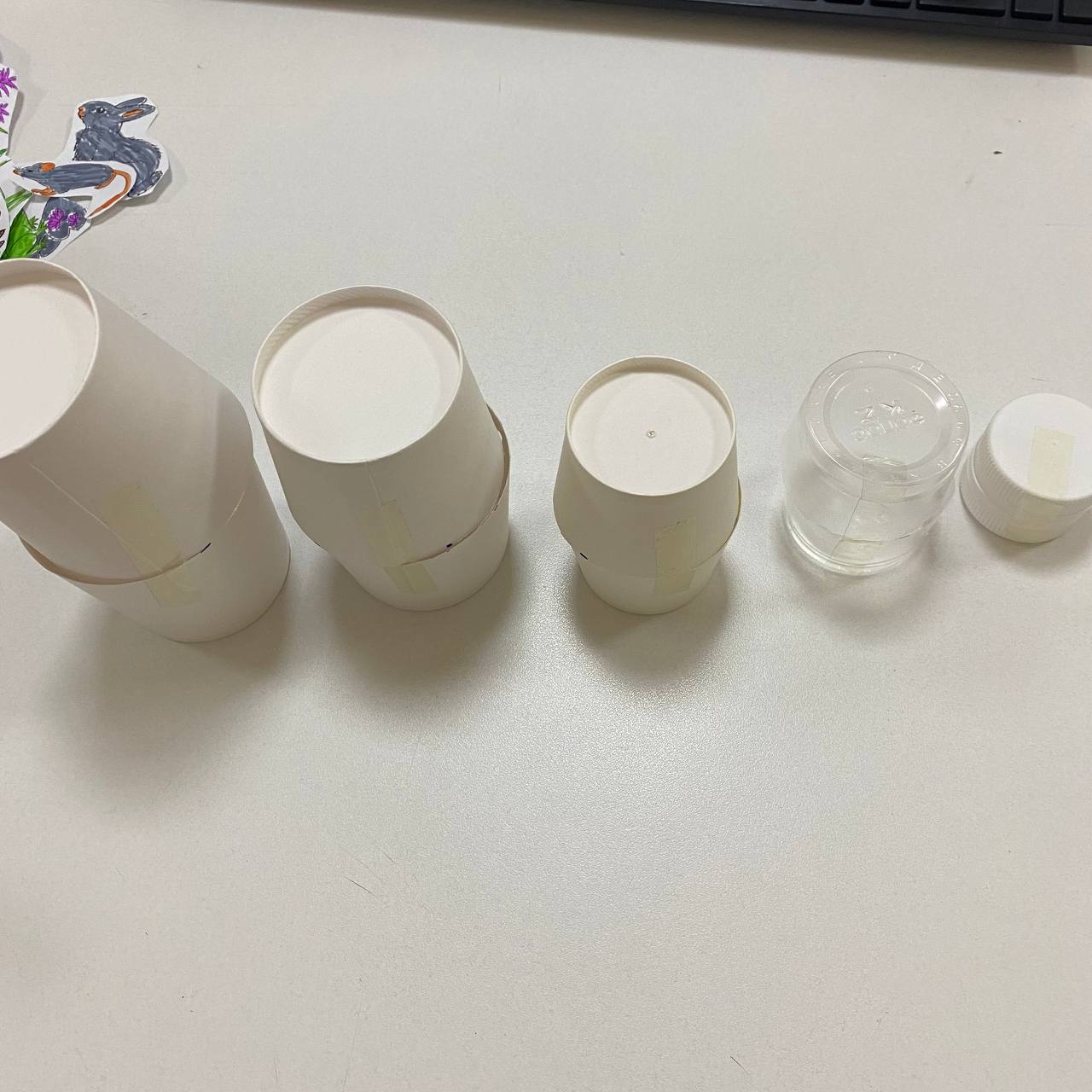
Step 1: Prepare all the necessary materials. Then take a pair of glasses of different volumes and, using scissors, divide them into two parts. Leave only the bottom.
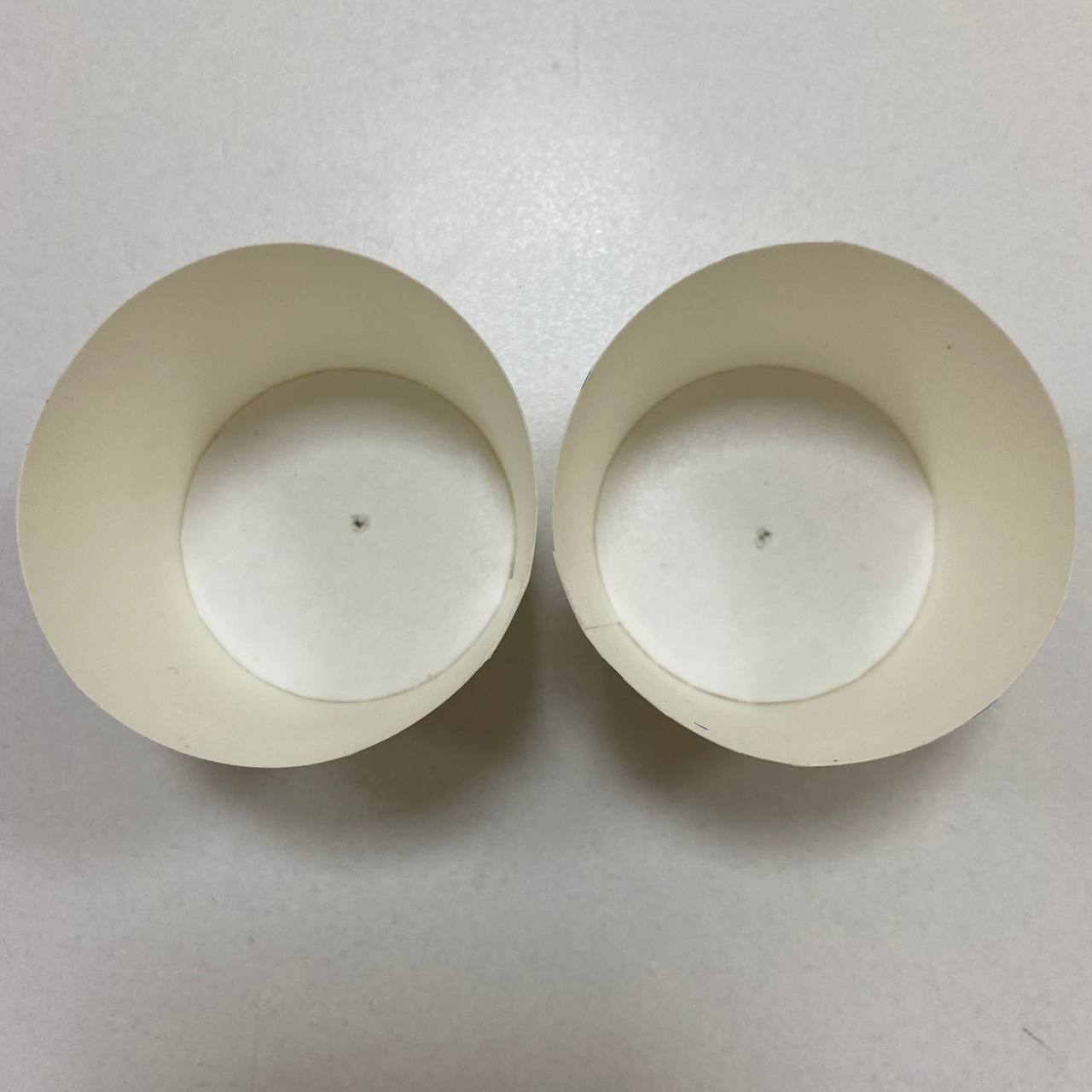
Step 2. Then, use tape to connect all the matching glasses in pairs.
.jpg)
Step 3. The glasses must open and close freely.
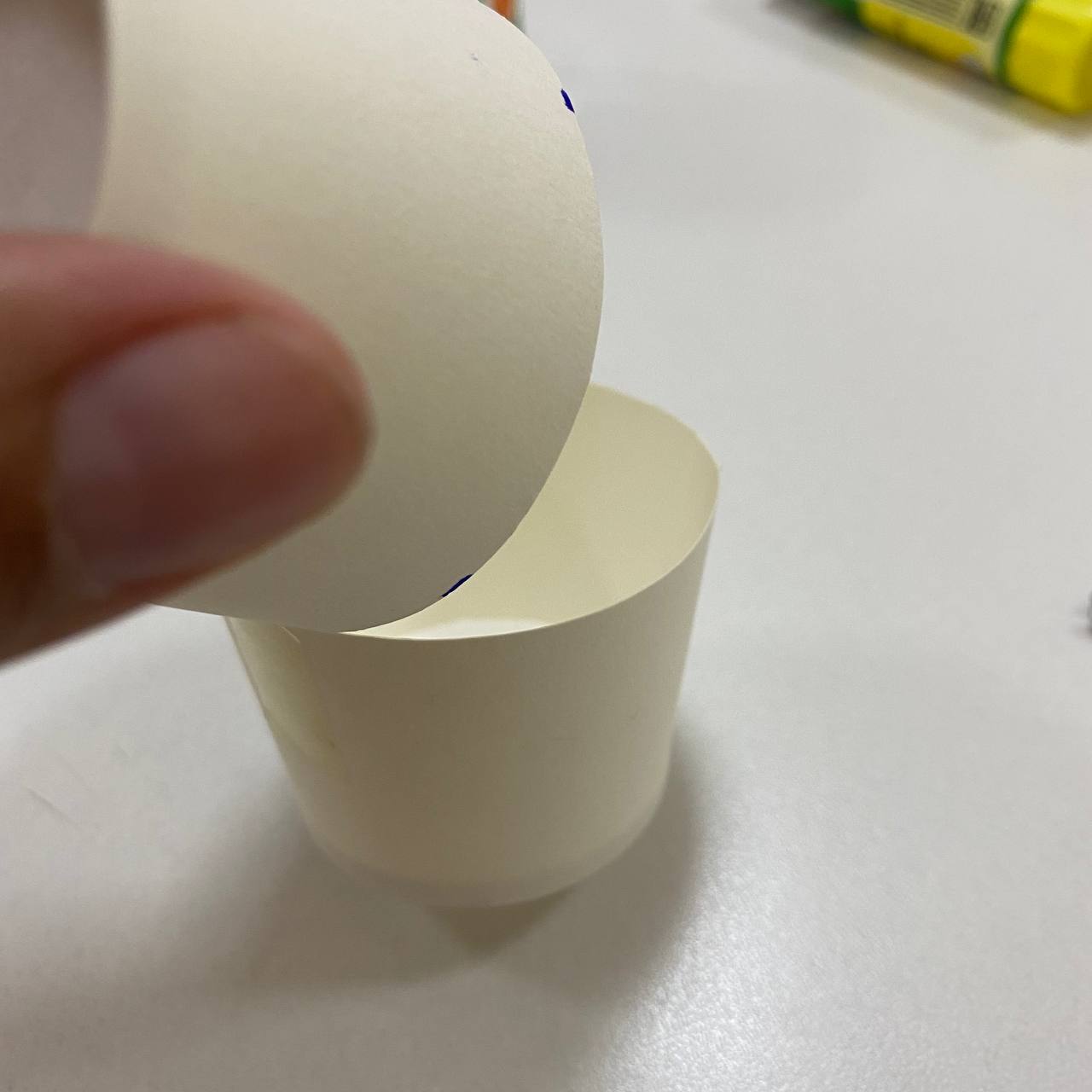
Step 4: Prepare all the glasses in the same way. There should be five of them. They should fit together like a nesting doll system, in ascending order.