
Lesson 1
Purpose of the work:
- to study the influence of ethylene on fruit ripening processes
- to evaluate the rate of ripening under the influence of ethylene
Expected results:
After completing the work, students can:
- develop teamwork skills
- be able to analyze and summarize the information received
- draw logical conclusions
Teacher’s Guide:
- The task is performed in groups of 3-4 people
- Working with a knife requires increased attention
- Before starting laboratory work, please read the safety rules by following the link:
- To download the worksheet, follow the link:
Theoretical part
Ethylene is a gaseous phytohormone, a natural plant growth regulator. This gas performs many important functions in plant life, including participation in the processes of flowering, fruit ripening, and leaf fall. Ethylene is produced in various plant organs as a gas and can affect neighboring plants, affecting their growth and development. This hormone also has practical significance, used in agriculture and the food industry to control the ripening and storage of fruits and vegetables.
Practical part
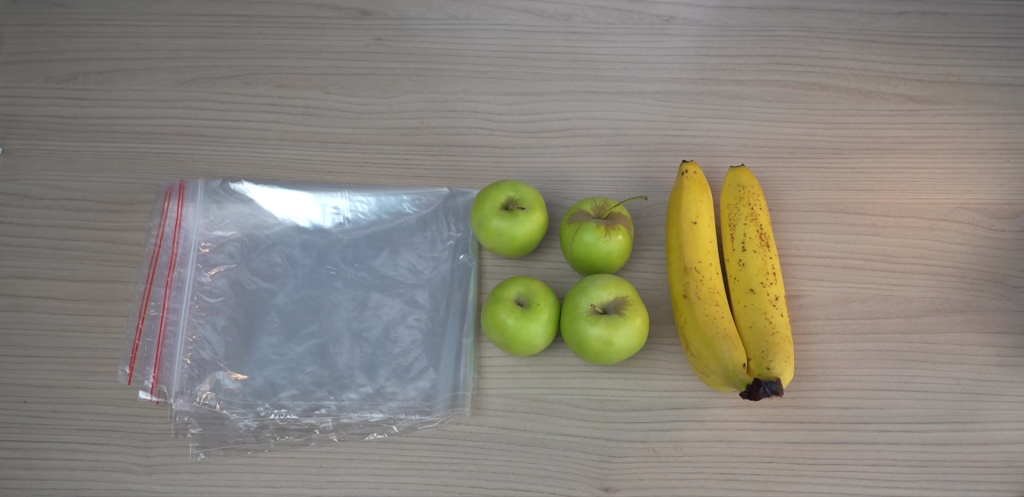
For this experiment we will need a ripe banana and any unripe fruit. You can use apple or pear. Determine the level of fruit ripeness by eye and touch. The greener and harder the fruit, the more unripe it is.
Step 1. Prepare the necessary materials.
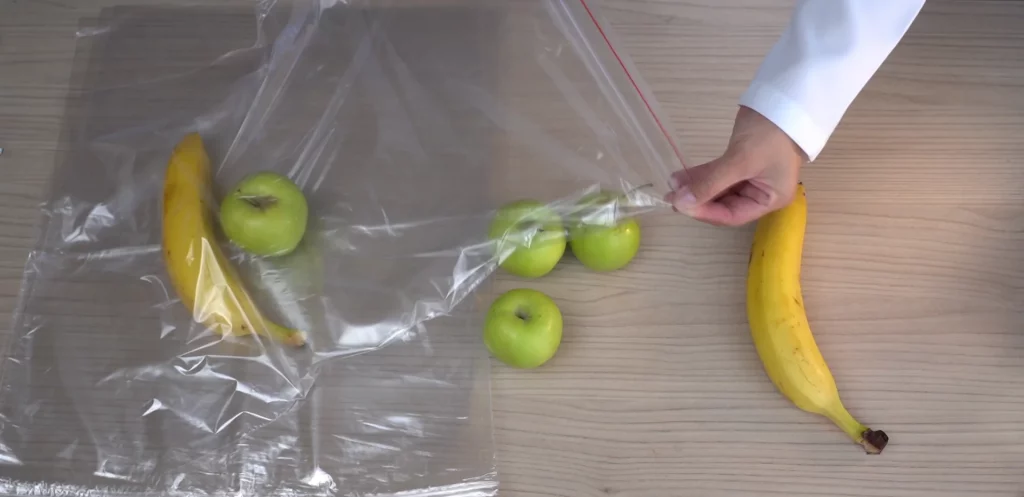
Step 2. Place one apple on each of the two bags and lock the zip tightly. Place one banana and one apple in the remaining two.
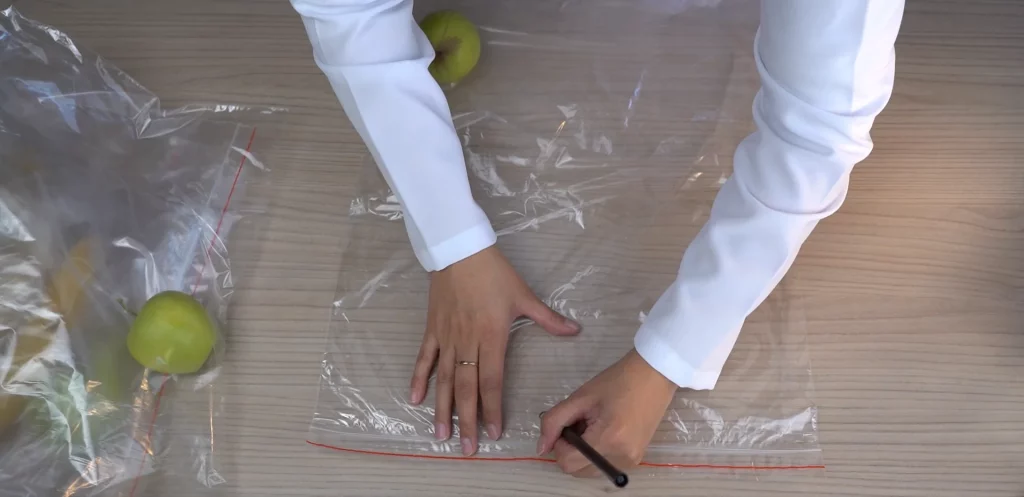
Step 3. Divide the samples into two groups: control and test. Place for research at different temperatures: 22-24 °C (room temperature) and 0-4 °C (low temperature) for 3-5 days.
"Ethylene is a growth regulator, which, in the absence of oxygen, affects the ripening of fruits. Ripe bananas actively produce ethylene and can affect other fruits ripening process."