
Lesson 2
Step 4: Observe the samples. What changes have occurred? Describe the appearance of the samples in each package. This may include the color, texture, size and ripeness of the fruit.
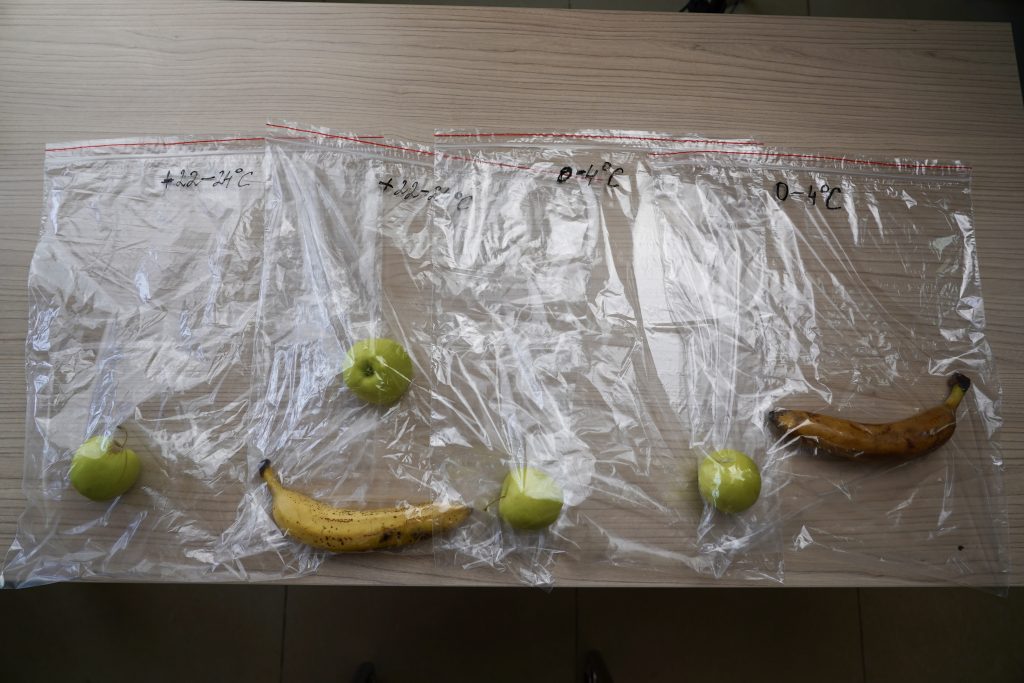
"Ethylene stimulates the breakdown of starch into sugar."
Step 5. Now test for the presence of starch in the apples. To do this, pour 0.5 cm high Lugol’s solution into Petri dishes.
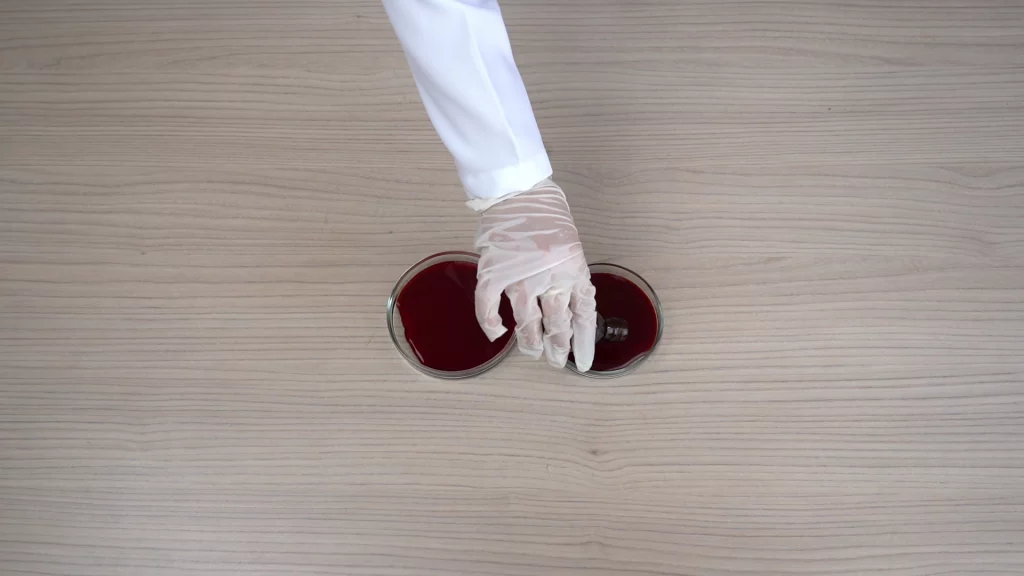
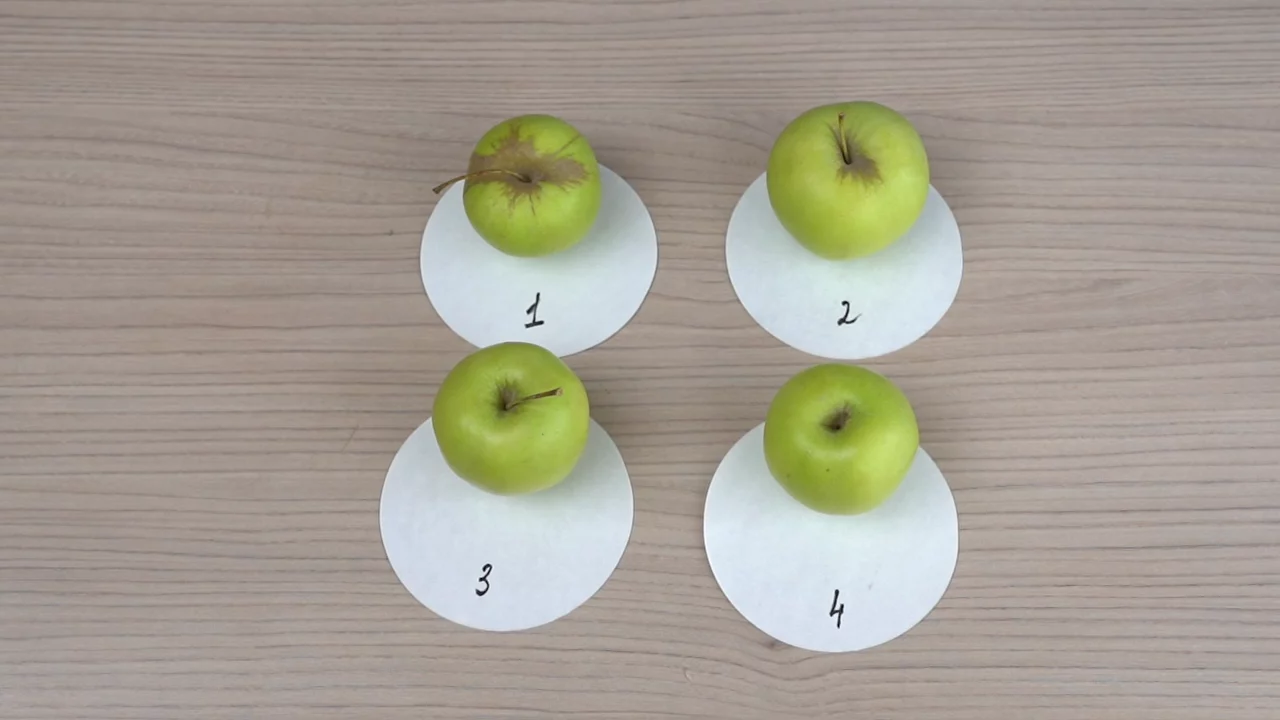
Step 6: Number the apples from 1 to 4.
- No. 1 – control sample at room temperature
- No. 2 – test sample at room temperature
- No. 3 – control sample at low temperature
- No. 4 – test sample at low temperature
Step 7: Next, cut the apples in half. Be careful when working with a knife!
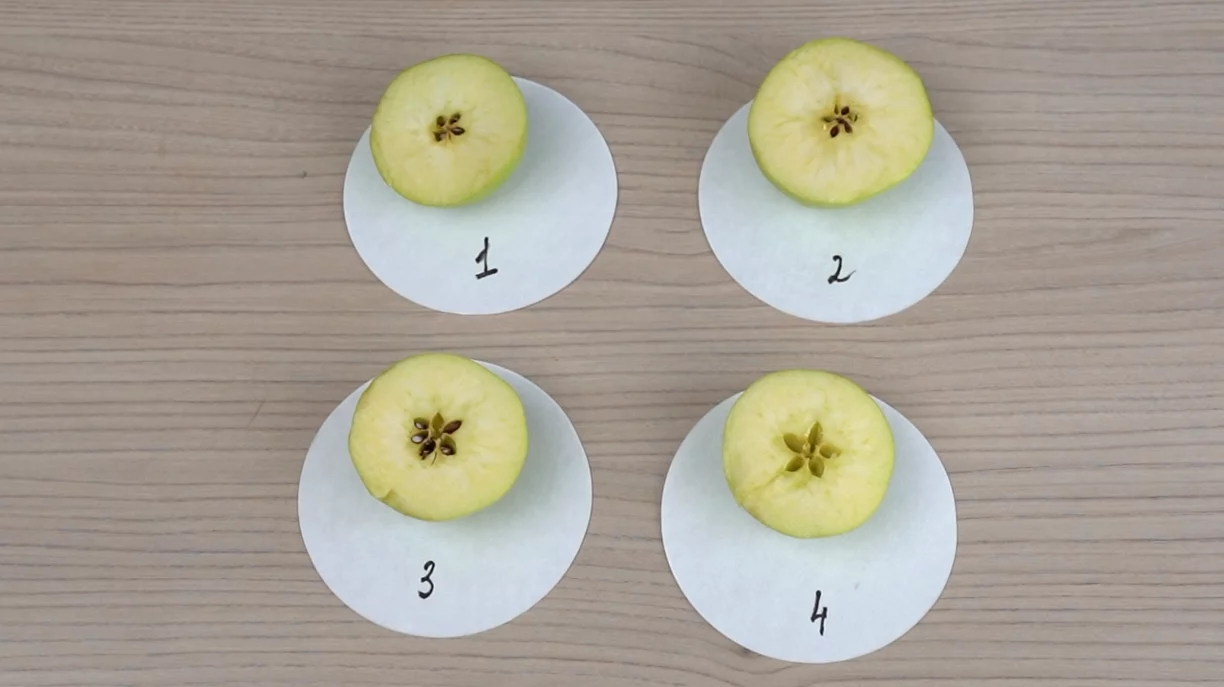
Step 8: Dip the samples into the solution and leave for a minute.
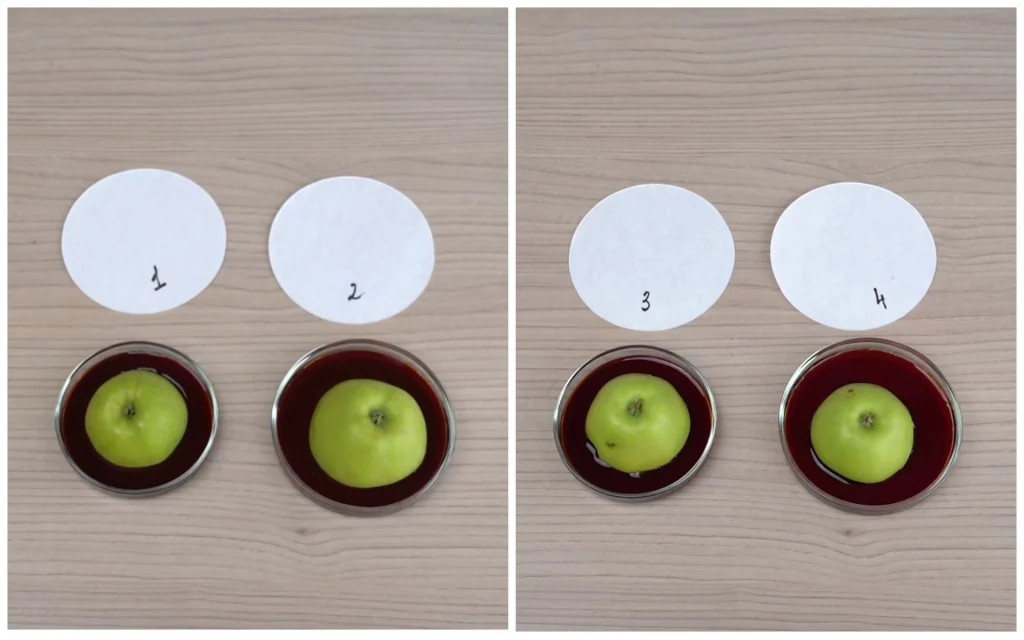
Step 9. Observe the changes and analyse the results
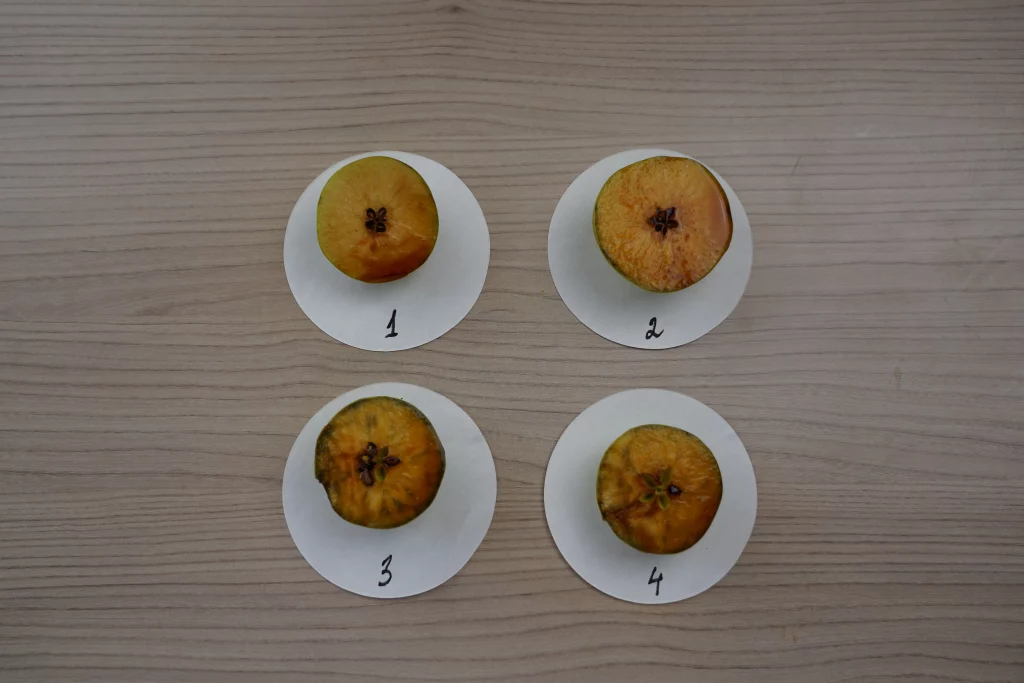
"If starch is present, the solution will turn dark blue or black. The absence of these colors means that the starch has been broken down into sugar."
Step 10. Fill out the results in the table provided in the Worksheet.
Sample number | at the room temperature | at the low temperature |
№1 | ||
№2 | ||
№3 | ||
№4 |
Step 11. To sum up, answer the questions below in your Worksheets:
- What role do plant hormones play in fruit ripening?
- What events trigger the production of ethylene?
- What physical and chemical changes occur as a fruit ripens?
- How does an iodine stain indicate the difference between ripe and unripe fruit?
Conclusion
This experiment will allow students to understand how the phytohormone ethylene affects fruit ripening and what practical applications this knowledge can have, for example, to improve the processes of harvesting and storing crops.