
Lesson 2
In the last lesson, you conducted an experiment to test the effectiveness of antibacterial agents used in everyday life. Now it’s time to observe the results of this experience and analyze them.
Observe and Analyze:
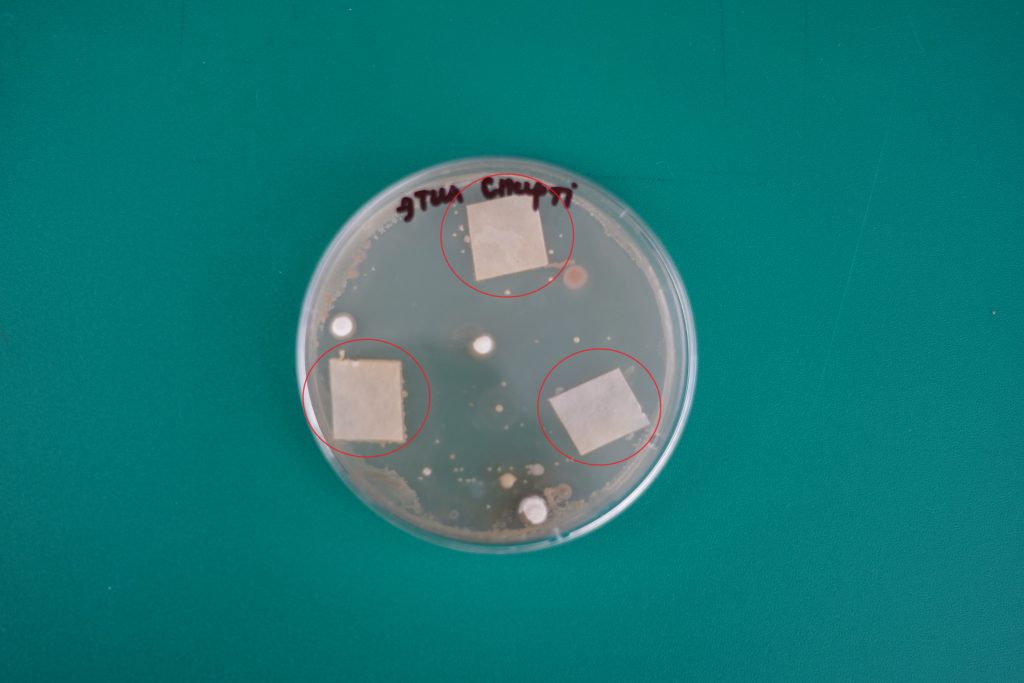
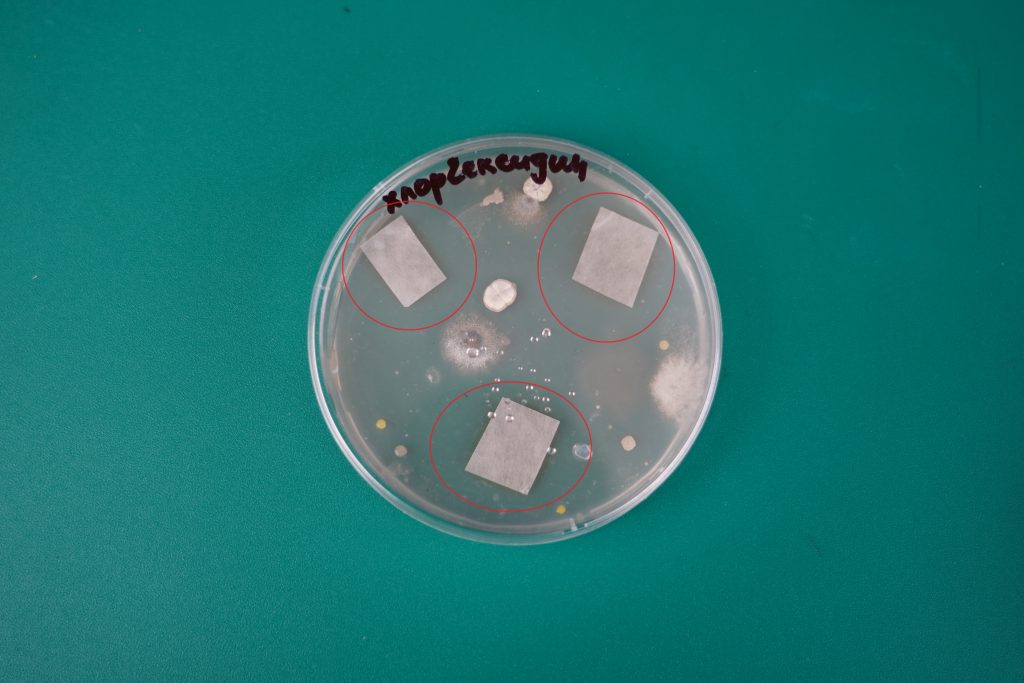
Step 1.After incubation, compare the amount of bacteria growth around each paper square. Which one has bacteria growing closest to it? Which one has the least amount of bacteria growing near it? If you did more than one test dish, are the results similar in all the test dishes? If not, what variables do you think might have caused the results to be different? How does this affect your conclusions?
Draw Conclusions:
Step 2. Based on the results, rank the tested substances in order of their antibacterial efficacy. Discuss the potential mechanisms of action for each substance and explain the observed results.
Conclusion:
This “sensitivity square” method provides a simple and visual way to qualitatively compare the antibacterial activity of various substances. While not quantitative, it offers valuable insights into the relative effectiveness of these substances against bacterial growth.