
Lesson

Purpose of the work:
- To study the properties of different polymers (combustion, buoyancy, solubility), compare the behavior of various types of plastics, and learn to make conclusions about the relationship between structure and properties.
Expected results:
After completing the work, students can:
- develop teamwork skills
- be able to analyze and summarize the information received
- draw logical conclusions
Teacher’s Guide:
- The work is carried out in groups of 3–4 students or as a teacher’s demonstration.
- Before starting laboratory work, please read the safety rules by following the link:
- To download the worksheet, follow the link:
Theory
What are plastics?
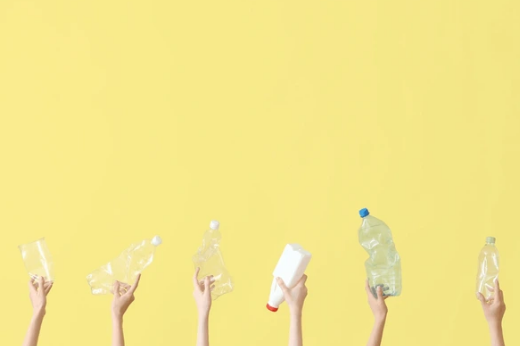
Plastics are synthetic materials made from polymers. They are lightweight, strong, durable, and can take almost any shape when heated or molded. Thanks to these properties, plastics are used in nearly all areas of life.
Main categories of plastics
- By recyclability:
- Thermoplastics – soften when heated and can be recycled multiple times (polyethylene, polypropylene, PET, PVC).
- Thermosetting plastics (thermosets) – once hardened, they cannot melt again because strong chemical bonds are formed (epoxy resins, phenol-formaldehyde resins).
2. By origin:
- Synthetic plastics (from oil, gas, coal) – the most common.
- Bioplastics (from starch, cellulose, lactic acid) – an eco-friendly alternative.
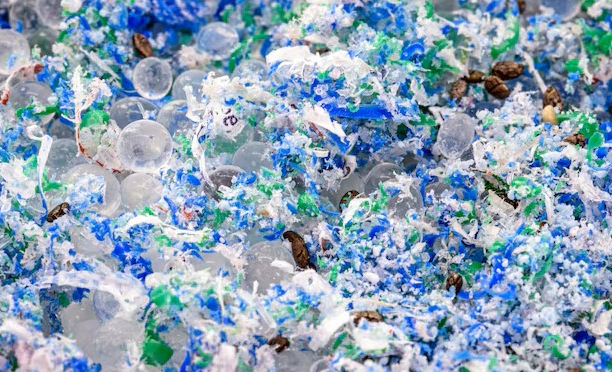
3. By application (practical classification):
- Packaging plastics – polyethylene (bags, film), polypropylene (containers, bottles).
- Construction materials – polyvinyl chloride (windows, pipes), polycarbonate (transparent panels, greenhouses).
- Engineering plastics – nylon, polyurethane, Teflon (gears, bearings, coatings).
- Medical plastics – polypropylene, polycarbonate, silicones (syringes, catheters, lenses, implants).
- Electrical plastics – polystyrene, fluoroplastics (cable insulation, device housings).
♻️ Plastics are marked with numbers 1 to 7 inside a triangle of arrows. This helps identify whether the material can be recycled and where it is most often used.
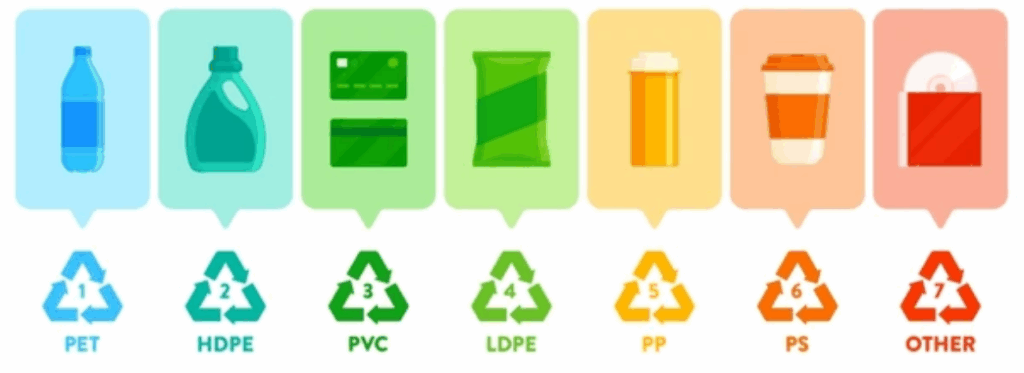
- PET (Polyethylene terephthalate, code 1)
Application: bottles for water and soft drinks, packaging.
Recycling: easily recycled into new bottles, fabrics (fleece), and straps. - HDPE (High-density polyethylene, code 2)
Application: canisters, bottles for milk and shampoo.
Recycling: used for pipes, containers, and construction materials. - PVC (Polyvinyl chloride, code 3)
Application: pipes, windows, cable insulation.
Recycling: difficult, often not recycled, releases harmful substances. - LDPE (Low-density polyethylene, code 4)
Application: bags, film, wrapping.
Recycling: limited, used for garbage bags and coverings. - PP (Polypropylene, code 5)
Application: food containers, caps, syringes.
Recycling: fairly well recycled, used in auto parts and furniture. - PS (Polystyrene, code 6)
Application: disposable cups, foam.
Recycling: difficult, rarely recycled, often pollutes the environment. - Other (Miscellaneous, code 7)
Application: polycarbonates, bioplastics.
Recycling: depends on the type, usually difficult.
| Polymer name | Where to find | Burning & heating | Density (relative to water) | Solubility |
| Polyethylene (PE) | Plastic bags, cling film, bread packaging | Melts, burns with bright flame and paraffin smell, continues burning outside flame | < 1 g/cm³ — floats in water | Insoluble in water and alcohol; dissolves in some organic solvents when heated |
| Polypropylene (PP) | Food containers, bottle caps, yogurt packaging | Melts, burns slowly with candle-like smell, drips | < 1 g/cm³ — floats | Insoluble in water and alcohol; resistant to most organic solvents |
| Polyvinyl chloride (PVC) | Rigid pipes, window frames, document covers | Decomposes on heating with acrid smoke (HCl), burns poorly, extinguishes outside flame | > 1 g/cm³ — sinks | Insoluble in water; some types dissolve in acetone or tetrahydrofuran |
| Polyethylene terephthalate (PET) | Beverage bottles, salad packaging | Melts, burns with smoke, sweetish odor | > 1 g/cm³ — sinks | Insoluble in water and alcohol; dissolves in some organic solvents at high temperature |
| Polystyrene (PS) | Disposable dishes, packaging for electronics, foam | Easily ignites, smokes, burnt plastic smell, melts | ~1.05 g/cm³ — sinks or nearly neutral in water | Insoluble in water but dissolves in acetone |
| Polytetrafluoroethylene (PTFE, Teflon) | Non-stick coating for pans, sealing tapes | Does not burn, decomposes at high heat releasing toxic gases | > 1 g/cm³ — sinks | Insoluble in water and most solvents |
| Nylon (polyamide) | Toothbrushes, nylon threads, fabric straps | Melts and burns with smell of burnt horn/wool | ~1.15 g/cm³ — sinks | Insoluble in water but degrades in concentrated acids |
Practical part
Step 1. Examine the plastic samples and write down which items they were taken from. In this work the following were used:
♻️ 1 (PET or PETE) – PET bottle.
♻️ 2 (HDPE) – high-density polyethylene bottle.
♻️ 3 (PVC) – piece of PVC wall panel.
♻️ 4 (LDPE) – transparent cellophane bag (low-density polyethylene).
♻️ 5 (PP) – sour cream cup (polypropylene).
♻️ 6 (PS) – polystyrene foam.
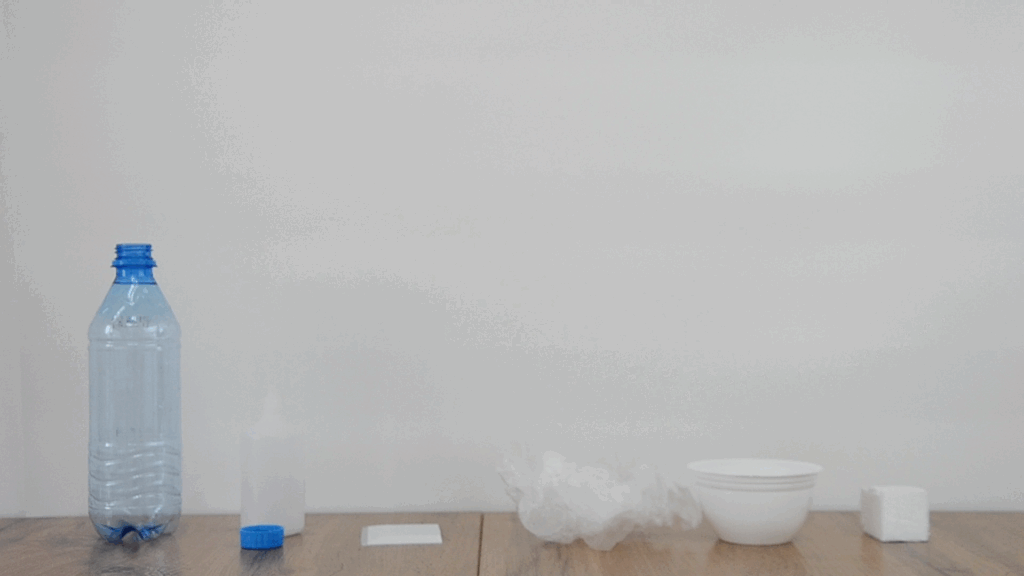
Step 2. Preparation of samples: cut small pieces (1×1 cm) from each type of plastic.
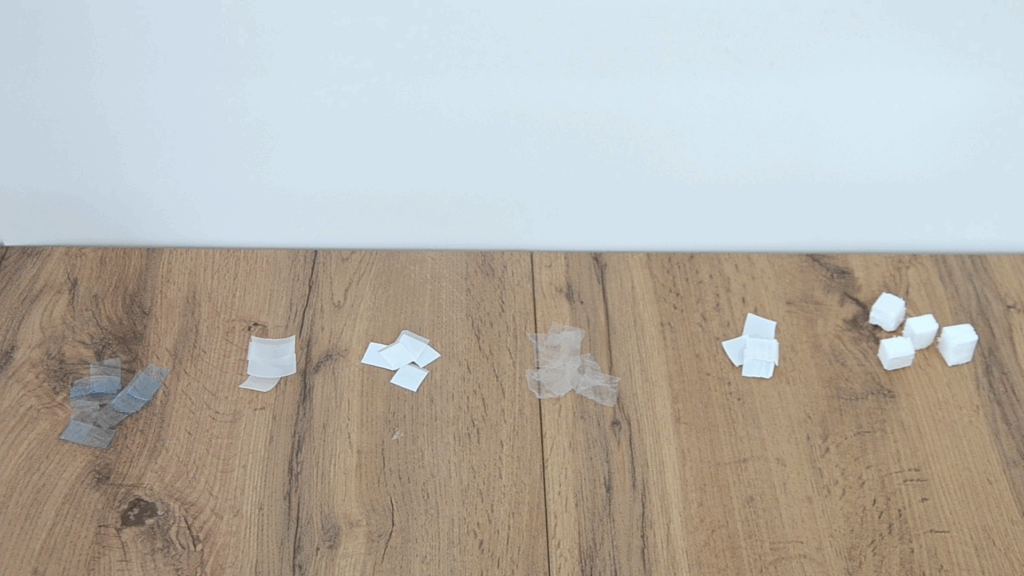
Investigation of polymer burning
Step 3. Light a candle or spirit burner and place a metal tray under it, since plastic decomposes during burning.
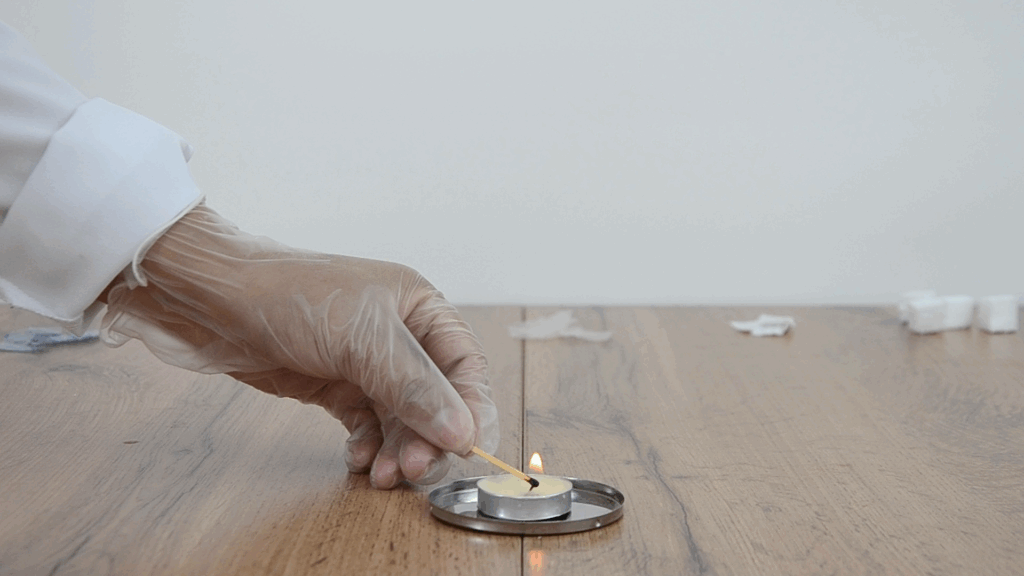
Step 4. Carry out the burning experiment: note whether the plastic melts, burns outside the flame, and whether there is an odor.
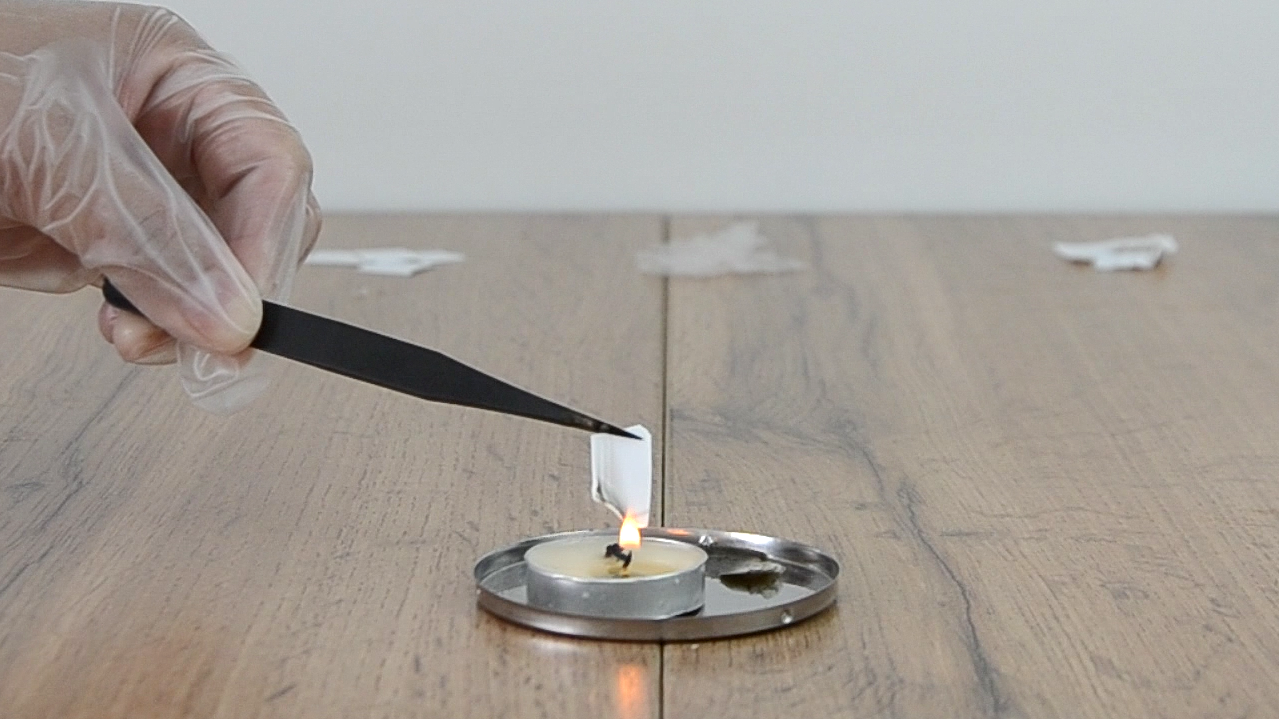
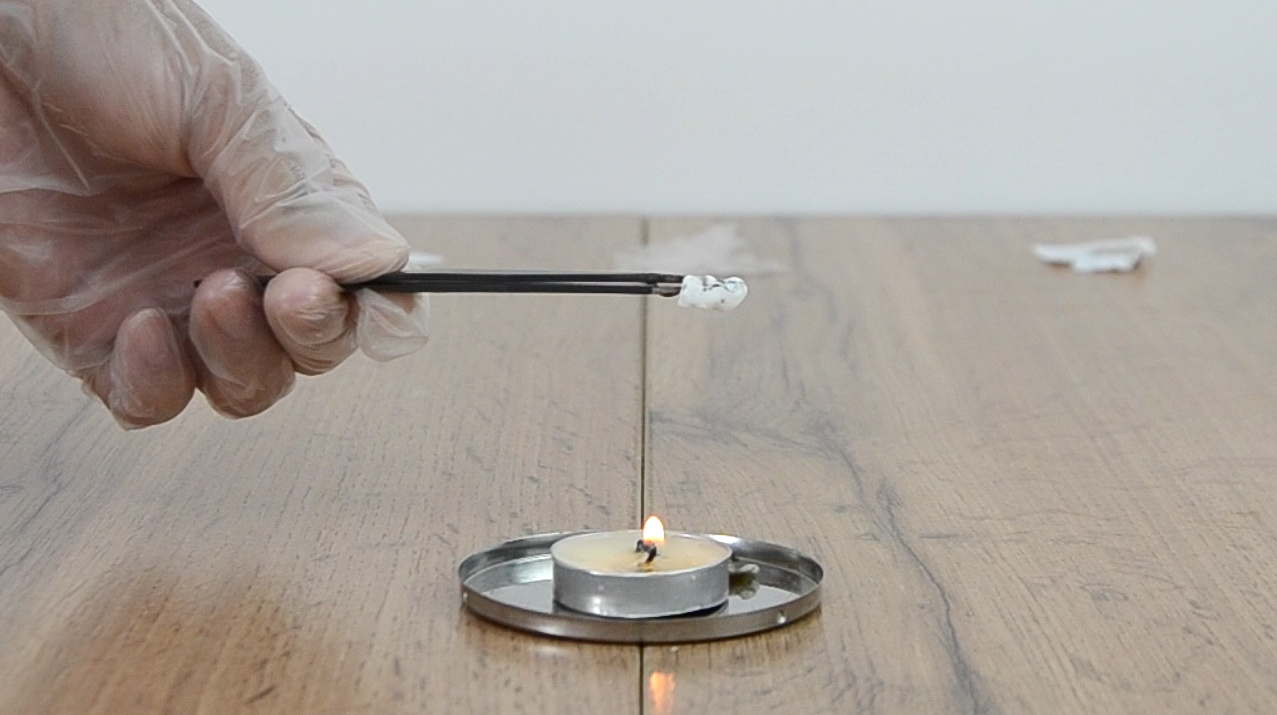
Investigation of polymer density
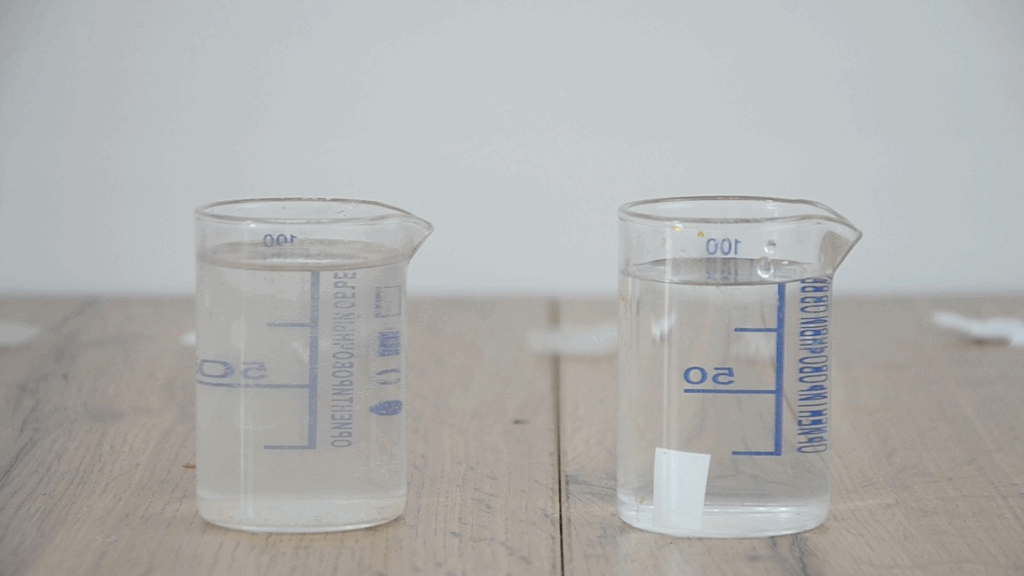
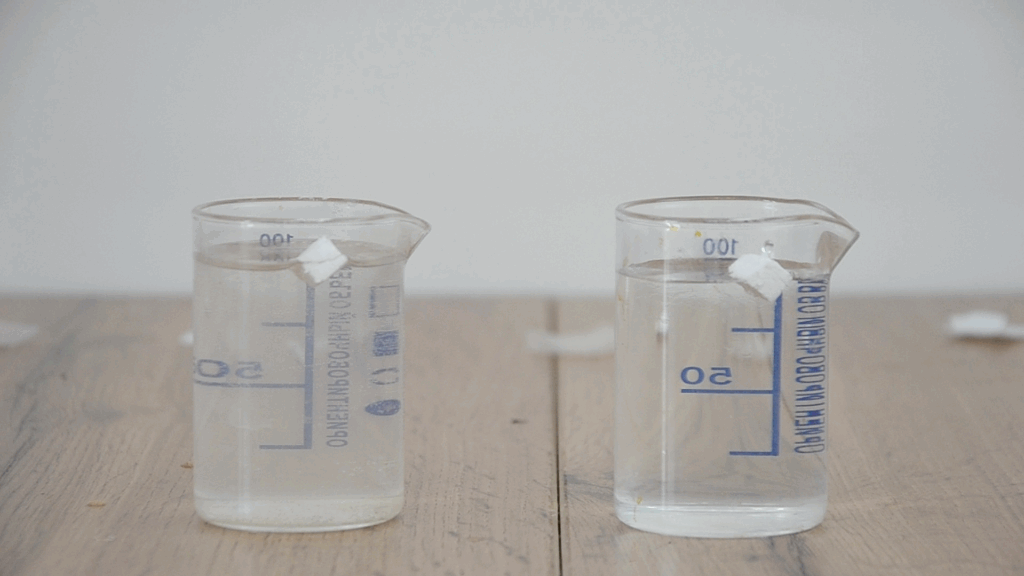
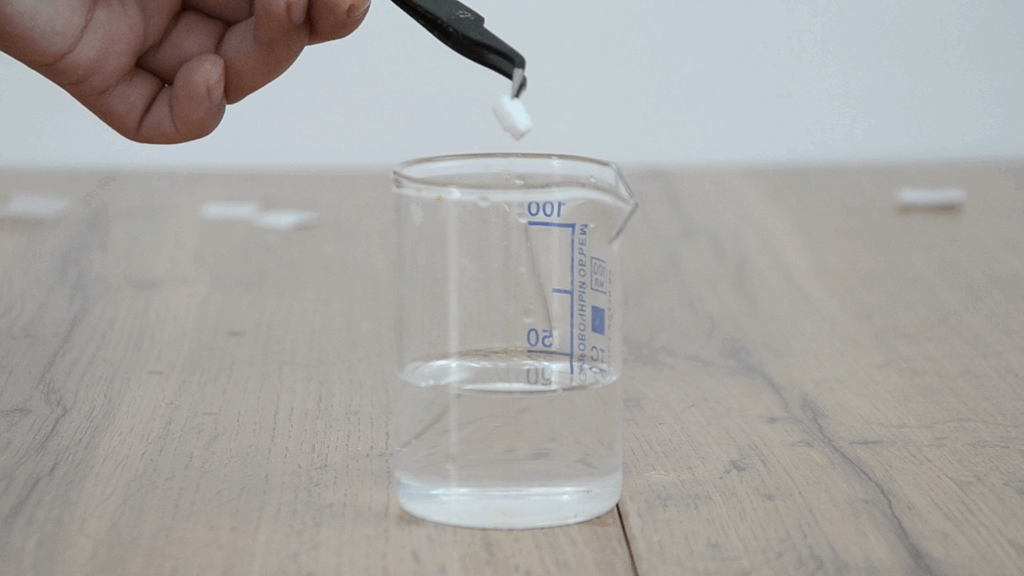
Step 5. Prepare two glasses: fill one with pure water, and the other with a salt solution. Place a piece of plastic into the water. Observe — does it float or sink? Repeat in the salt solution. Draw a conclusion: if it floats in water — density < 1.0; if it sinks in water but floats in salt solution — ~1.0–1.2; if it sinks in both — > 1.2.
Investigation of polymer solubility
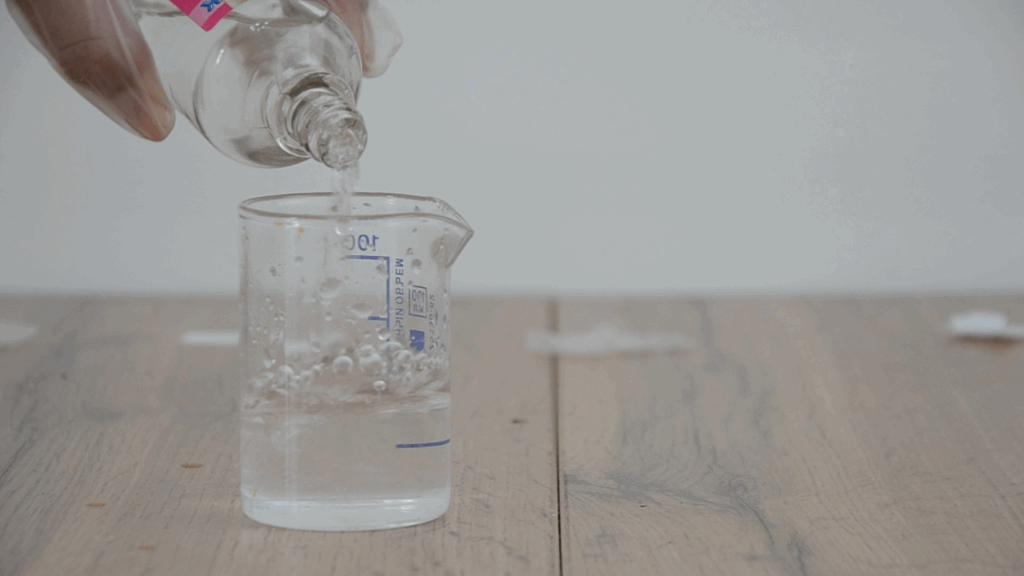
For this test, various organic solvents can be used; in this work acetone was applied.
Step 6. Pour acetone into a separate glass (nail polish remover can be used).
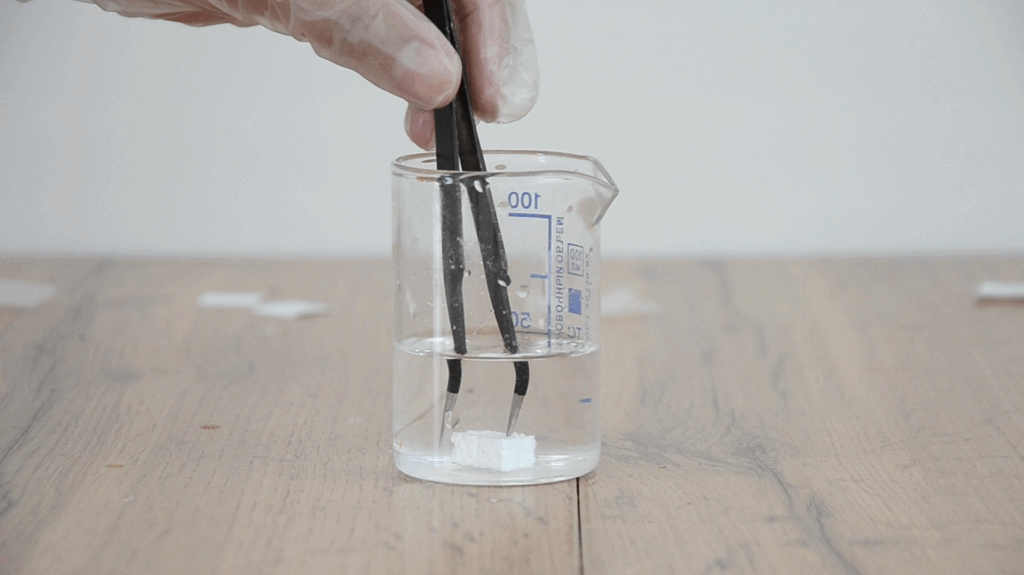
Step 7. Test the effect of the solvent on each plastic (partial dissolution, softening, swelling, or no change). Note which polymers remain stable and which degrade.
Step 8. Enter the data into the table in the Worksheet and compare your results with the reference table given above.
Conclusion
Students draw conclusions about the differences between polymers based on three criteria: combustion, density, and solubility. They emphasize that the properties of plastics determine their use in everyday life and industry, as well as the complexity of recycling and disposal.