
Laboratory work #7: «Polymers and Their Properties»
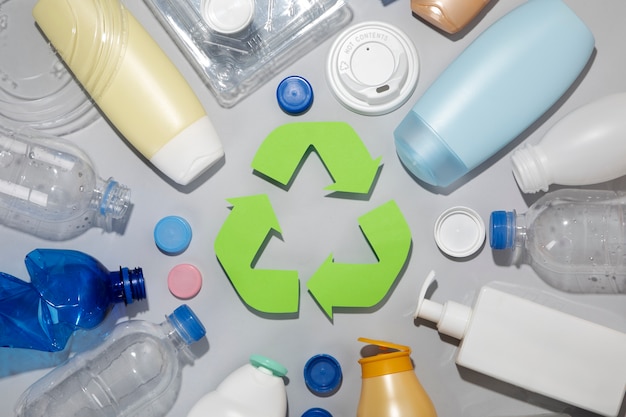
Description: In this laboratory work, students investigate the properties of various types of plastics commonly found in everyday life. The experiment includes observing their behavior during heating and burning, determining their density using water and salt solution tests, and checking their solubility in an organic solvent (acetone). The work allows students to see in practice how the structure of a polymer influences its properties and applications.
| Section of the Long-Term Plan | Subsections of the Standard Curriculum | Learning objectives |
| Synthetic polymers | High-molecular compounds Polymerization reactions | 11.4.2.10 distinguish between the concepts of “monomer,” “repeating unit,” “oligomer,” “polymer,” “degree of polymerization.” 11.4.2.11 compose equations of polymerization reactions and study the properties of polymers. |
- Plastic samples (plastic bottle, polystyrene foam, plastic containers and flasks, polyethylene bag, etc.)
- Water
- Salt
- Nail polish remover (acetone)
- Measuring cylinders
- Tweezers
- Candle and matches