
8 grade. 8 lab. Lesson
The title of the laboratory work: Studying the properties of permanent magnet, obtaining images of magnetic fields
Purpose of the work:
- Study the interaction of magnets with various substances;
- Experimentally verify the existence of magnetic poles, check the interaction of similar and unlike poles;
- Study the magnetic lines of magnetic fields created by a horseshoe magnet;
- Graphically represent the magnetic field using lines of force.
Expected results:
- Substances of different properties react differently to a magnetic field, depending on their magnetic properties;
- Opposite magnetic poles attract, and like magnetic poles repel;
- Magnetic field lines leave the north pole and enter the south pole, the tangent lines of force coincide with the axis of the magnetic needle.
Teacher’s Guide:
- Divide the students to 3 students in each group.
- Before starting laboratory work, read the safety rules:
- To download the worksheet, please follow this link:
Theoretical part
A study of the magnetic properties of various substances has shown that they react differently to a magnetic field.
Ferromagnets are substances that significantly enhance an external magnetic field.
Substances that slightly enhance the magnetic field are called paramagnets, and those that slightly weaken them are called diamagnetic.
Sources:
- Постоянные магниты, магнитное поле. (2018). Физика. Учебник для 8 класса общеобразовательной школы.
Experimental part
Experiment 1. Identifying the power of the lamp.
Procedure:
Step 1.
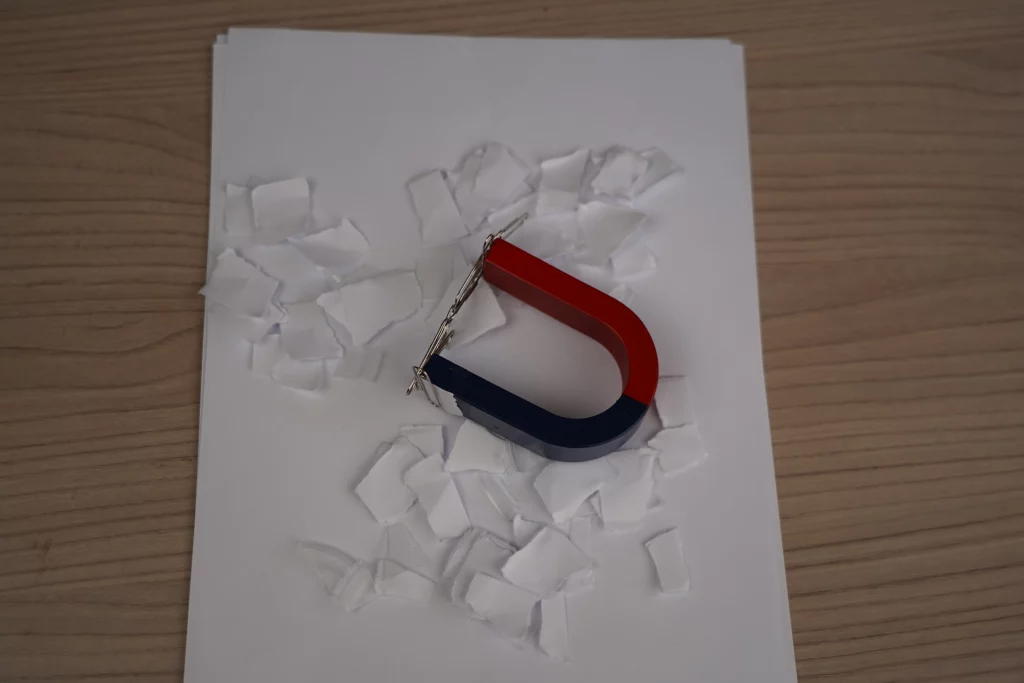
Scatter small items made from various substances, including metal, onto a sheet of white paper. Place the magnet near the items. Write down which substances are attracted by a magnet and which are not.
Step 2.
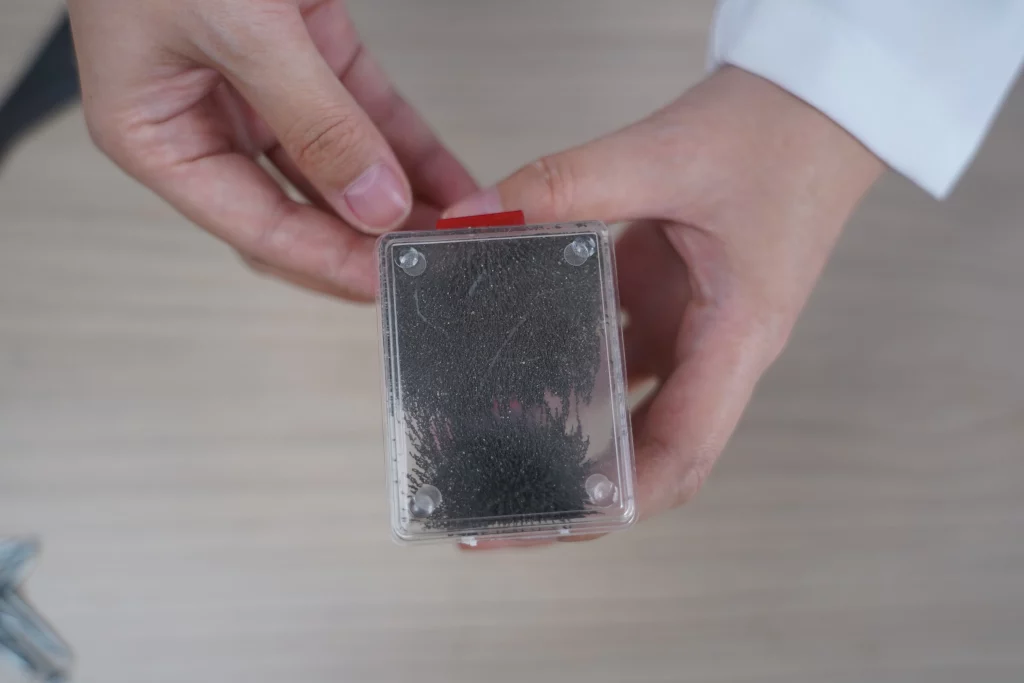
Hold a magnet near the iron filings and determine the location of the poles of the horseshoe magnet.
Step 3.
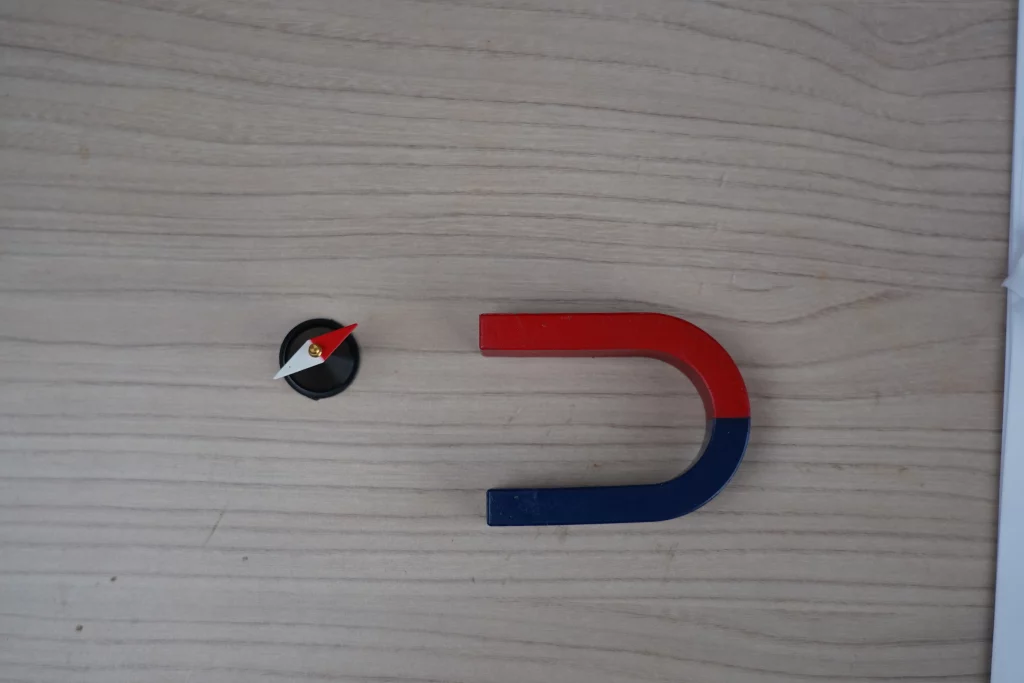
Make sure that like poles of magnets repel and opposite poles attract. Bring the magnet to the north pole of the magnetic needle, then, without changing the pole of the magnet, to the south pole of the magnetic needle.
Step 4.
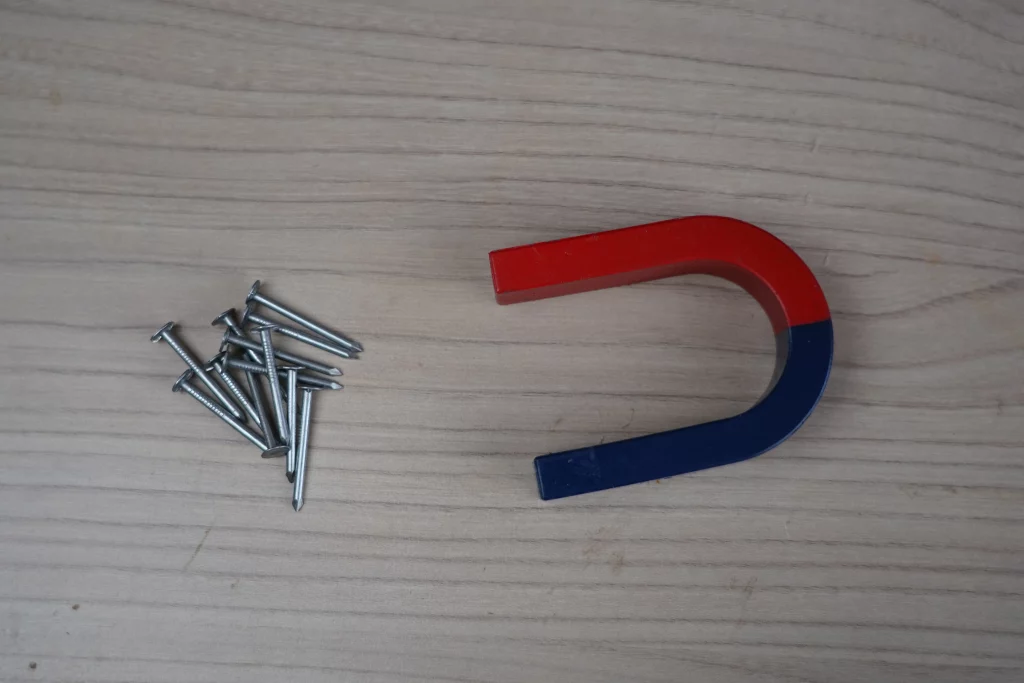
Hang a chain of small nails from the magnet. Using the top nail, remove the magnet. Why doesn’t the chain of nails fall apart immediately after removing the magnet? Draw a conclusion.
Experiment 2. Identifying the work of the electric current and its cost.
Procedure:
Step 1.
Place the horseshoe magnet on the table and cover it with a piece of paper. Place a thin layer of iron filings on the paper. Draw a picture of the resulting magnetic lines in your notebook.
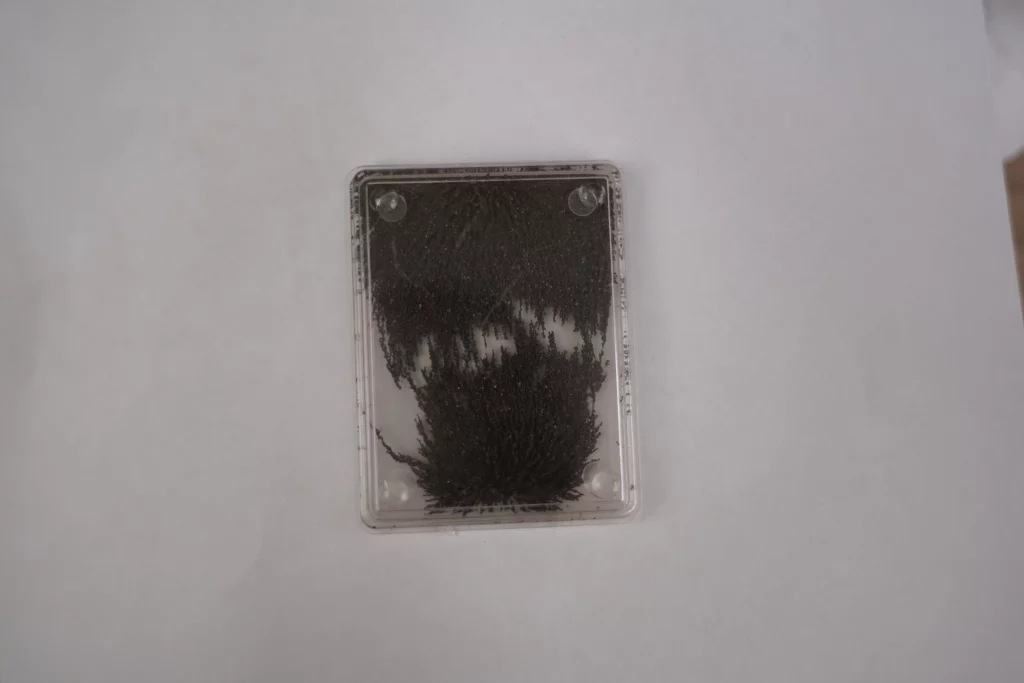
Step 2. Draw a conclusion.
Research part
When deriving conclusions, answer the following questions:
- In the first experiment, why does the chain not fall apart immediately after removing the magnet?
- How does a magnetized body differ from a non-magnetized body?
- What needs to be done to magnetize iron?
- What properties do magnetic field lines have?
Conclusion
Substances of different properties react differently to a magnetic field, depending on their magnetic properties. Opposite magnetic poles attract, and like magnetic poles attract. The magnetic field lines leave the north pole and enter the south pole, the tangent lines of force coincide with the axis of the magnetic needle.