
9 grade. Lab #2. Lesson 1.
The title of the laboratory work: Study of the motion of a body thrown horizontally
Purpose of the work:
- Identify the initial velocity of a body thrown horizontally with the help of experiment.
Expected results:
- Initial velocity depends on the height and on the distance the body has traveled.
Teacher’s Guide:
- Divide the students to 3 students in each group.
- Before starting laboratory work, read the safety rules:
- To download the worksheet, please follow this link:
Theoretical part

Movement of a body thrown horizontally
A body thrown horizontally moves with free fall acceleration vertically and with constant velocity in horizontal direction. Initial velocity is identified as:
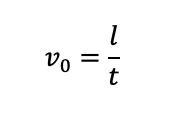
the fly time depends on the height:
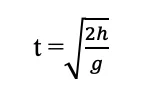
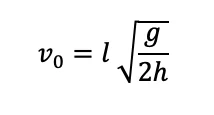
plugging the second formula into the first one, we get the formula for identifying initial velocity:
Sources:
- Скорость и перемещение при прямолинейном равноускоренном движении. (2019). Физика. Учебник для 9класса общеобразовательной школы.
- Свободное падение тел, ускорение свободного падения. (2019). Физика. Учебник для 9 класса общеобразовательной школы.
Experimental part
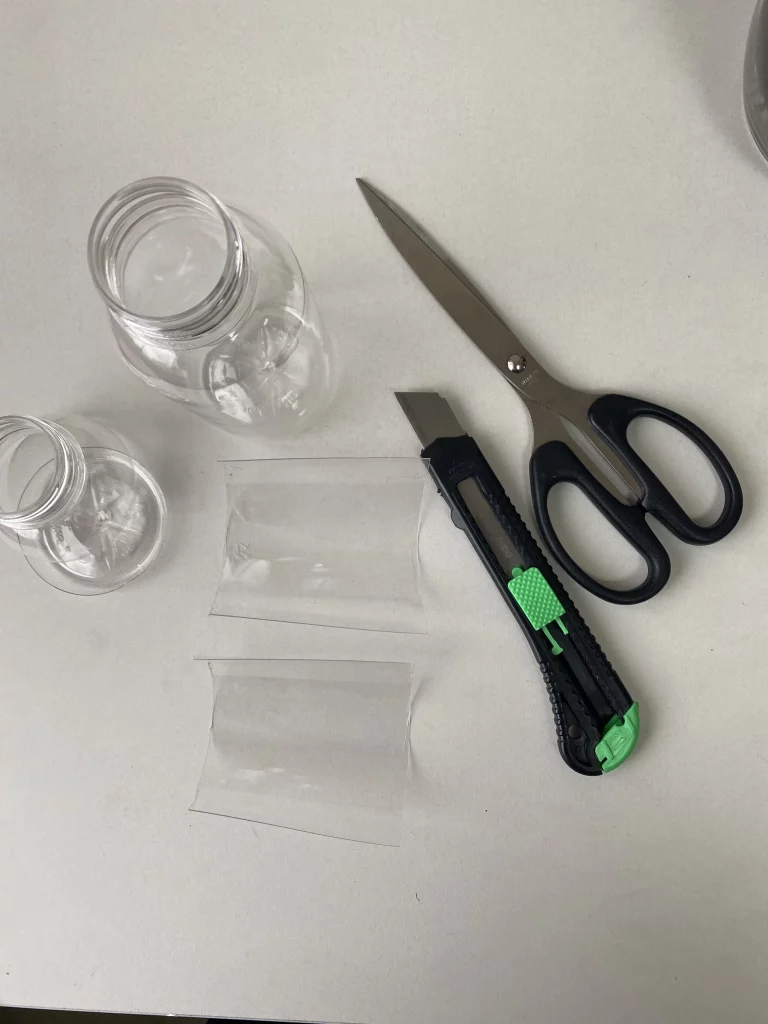
Laboratory trough. For this experiment we need a laboratory trough, it can be made from scratch using hands on materials. For this purpose, we need hot glue, wooden sticks, cardboard, scissors, stationery knife, plastic bottles.
Step 1.
Take plastic bottles and cut out parts from them as shown in the picture using scissors and a stationery knife.
Step 2.
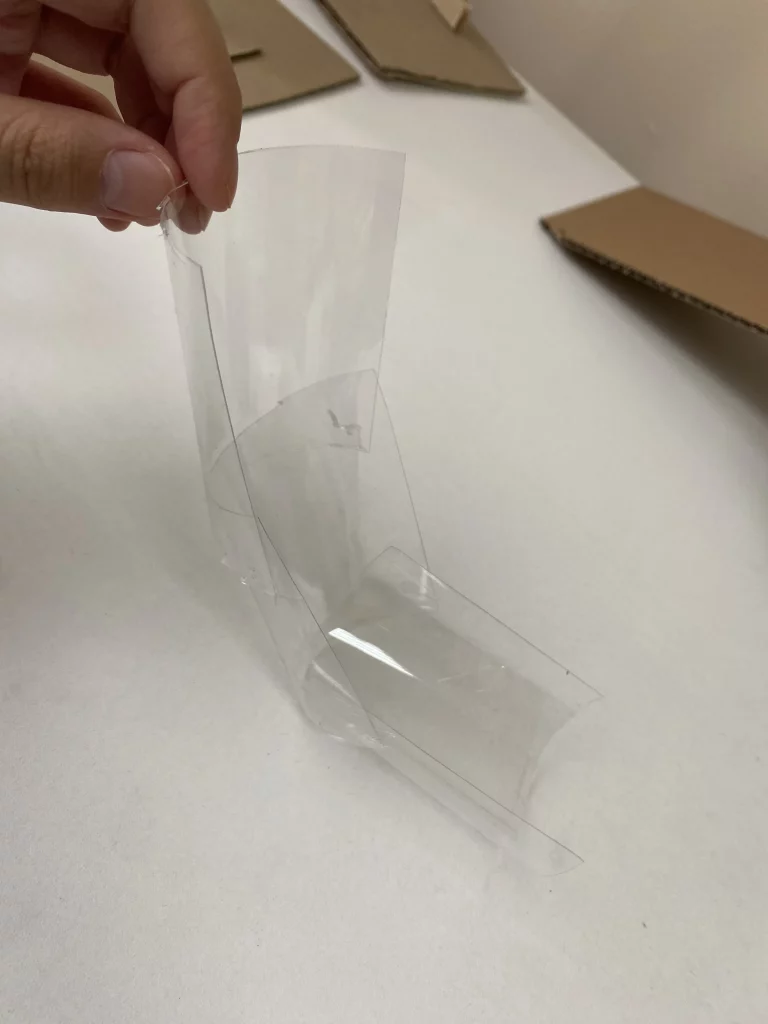
Glue the plastic parts together using hot glue as shown in the picture.
Step 3.
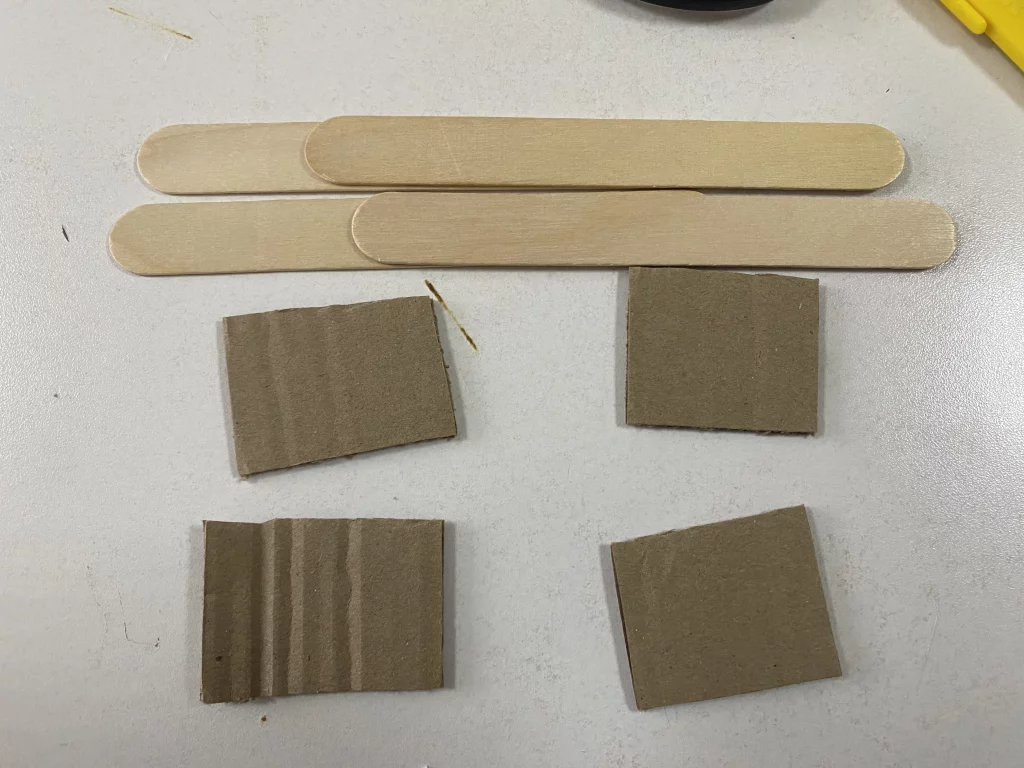
Prepare 4 wooden sticks and cut out several rectangular shapes from cardboard.
Step 4.
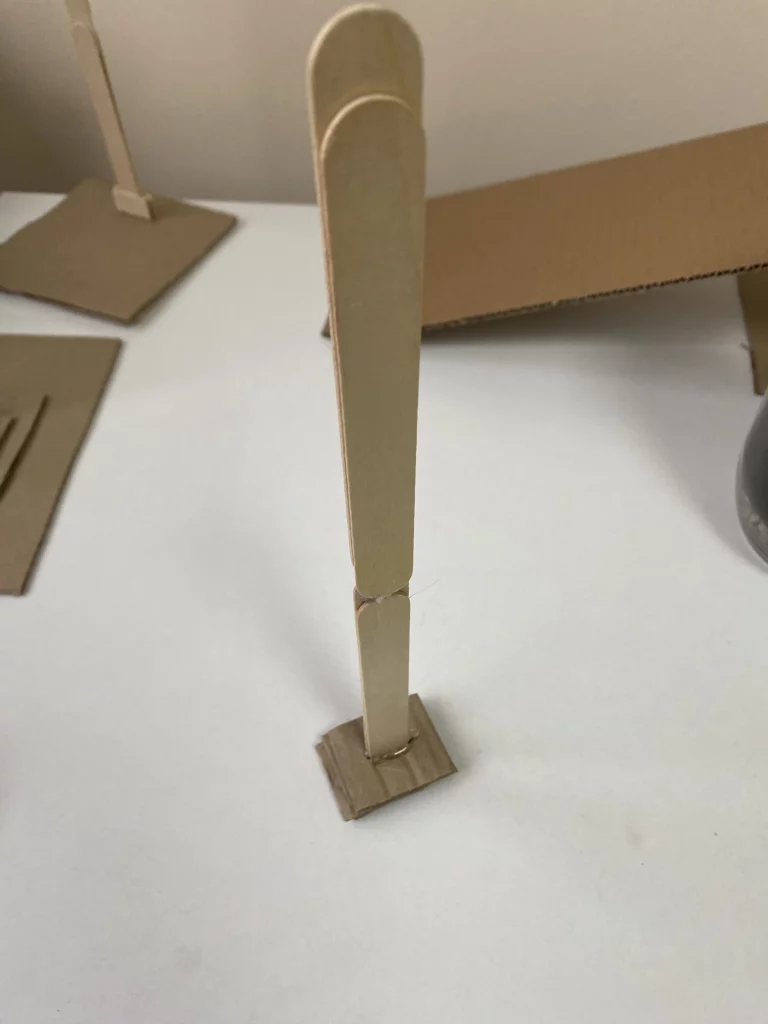
Glue the sticks and cardboard shapes together as shown in the picture. Cardboard rectangles are needed to balance the axis.
Step 5.
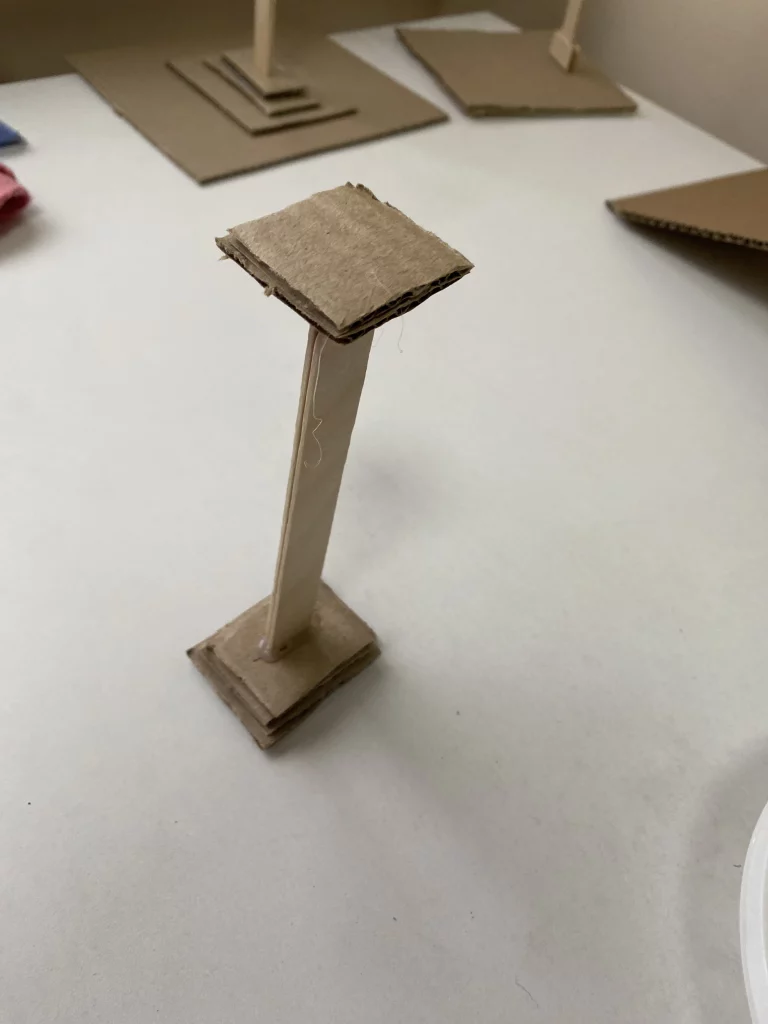
Prepare 2 wooden sticks and rectangles for the second, small axis. Glue them together as shown in the picture.
Step 6.
Now hot glue the two axles and the base of the laboratory trough together.
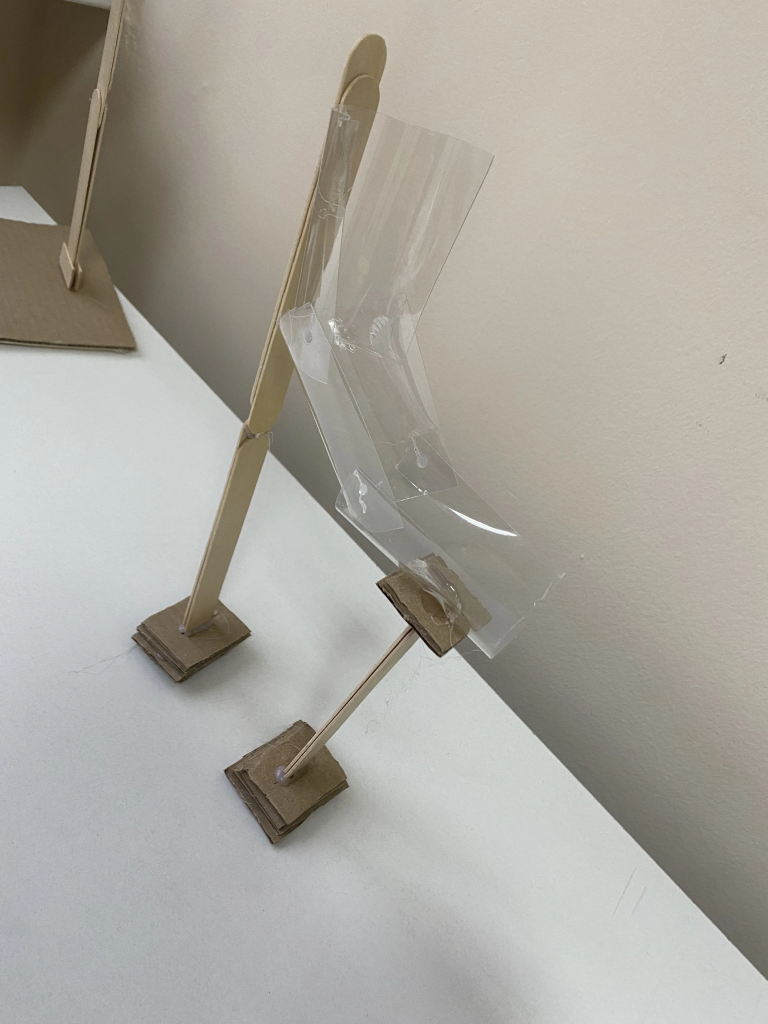
Now you can start the experiment.
Experiment.
Procedure:
Step 1.
Arrange the laboratory trough, sheet of paper, and copy paper as shown in the figure.
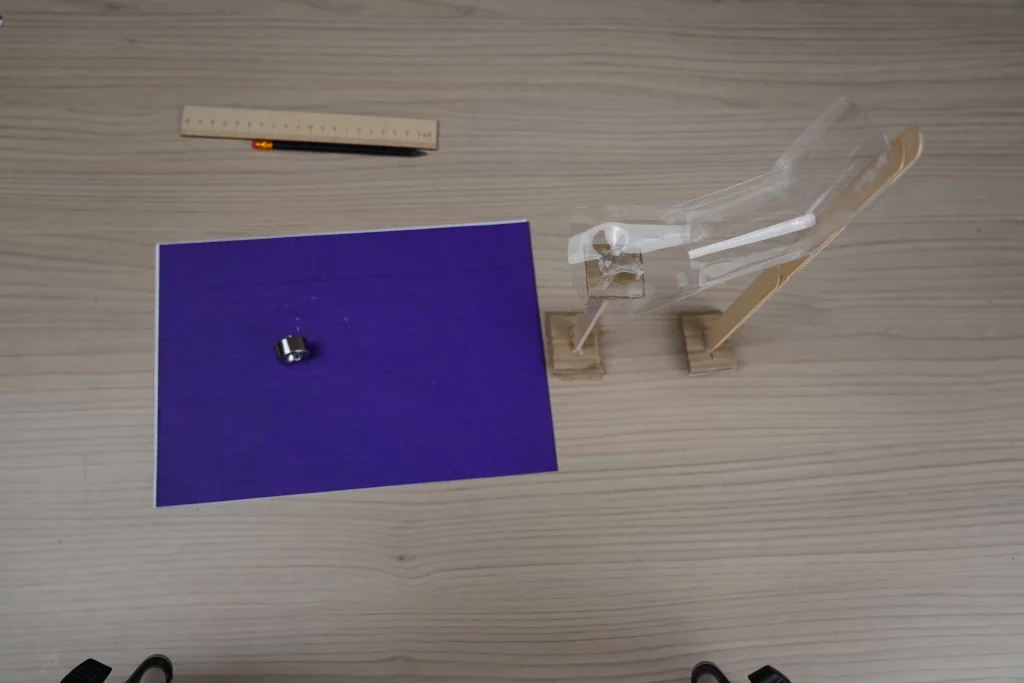
Step 2.
Place the ball along the groove from the plate. Measure the height using a ruler and the distance using copy paper. There should be a mark on the white paper where it fell. Enter the data into the table.
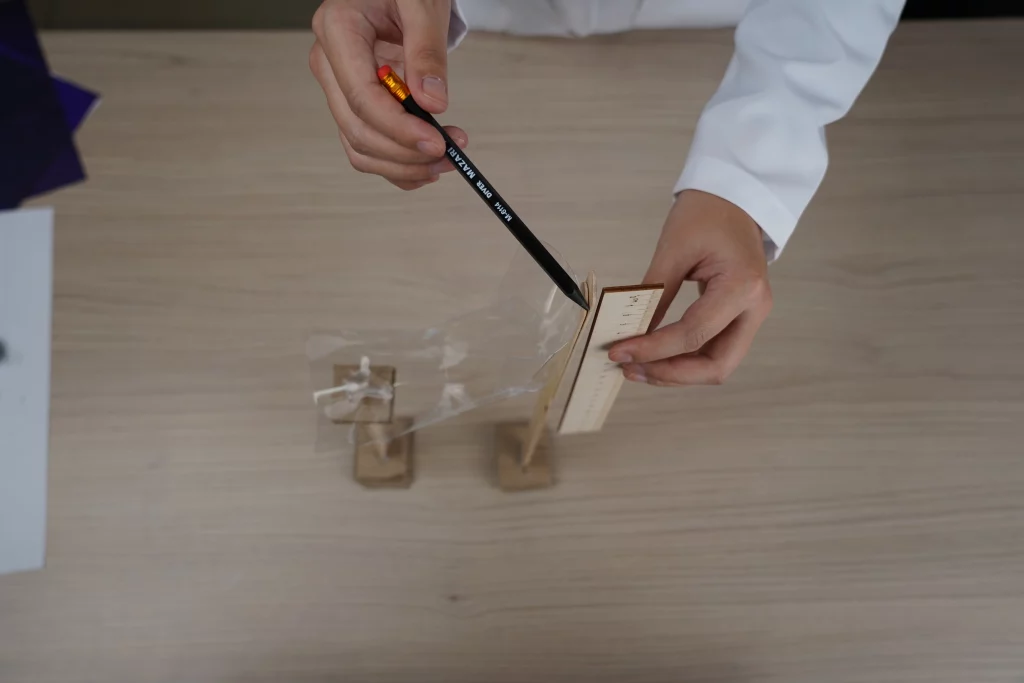
Step 3.
Repeat the experiment 5 times without changing the level of descent of the ball along the trough.
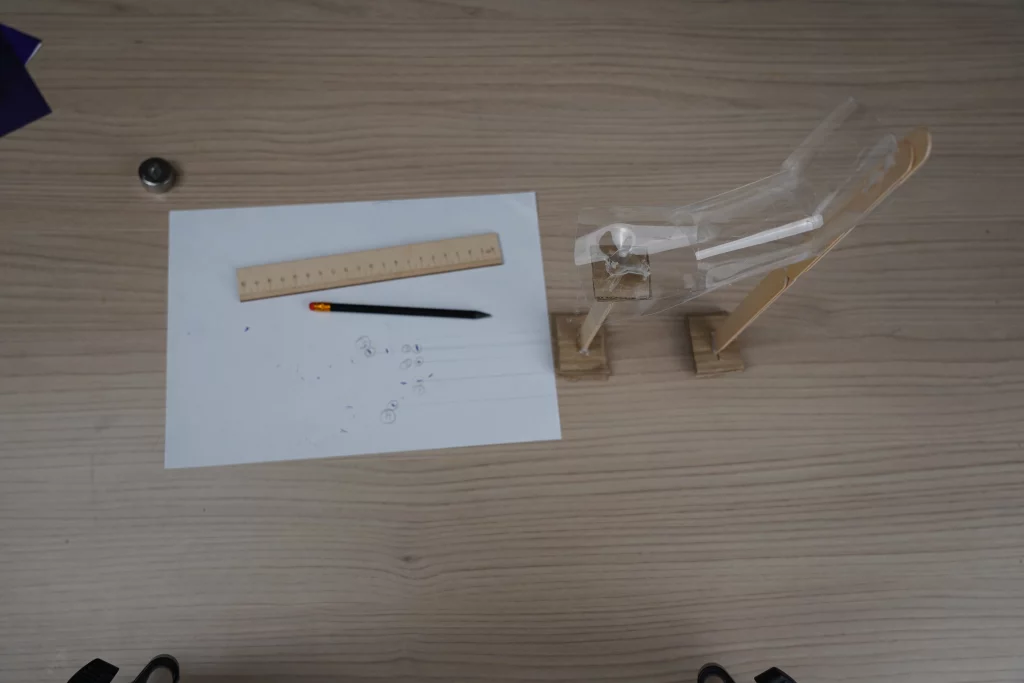
Step 4. Calculate the initial speed for each experiment using the formula:
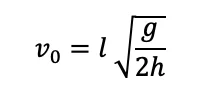
Enter the data into the table.
Step 5. Determine the average speed:
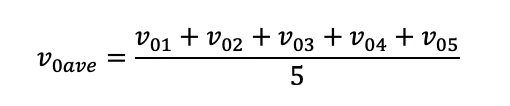
Step 6. Estimate the measurement error using a statistical method, determining the absolute error for each measurement:
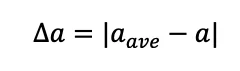
Average absolute error:

Relative error:
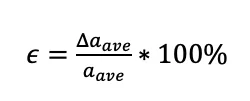
Step 7. Write down the measurement result as:

Research part
| № | Height, h, m | Traveled distance, l, m | Initial velocity, v0, m/s | Average velocity, v0ave, m/s |
| 1 | ||||
| 2 | ||||
| 3 | ||||
| 4 | ||||
| 5 |
When deriving conclusions, answer the following questions:
- Why can’t you change the level from which the ball descends down the chute in these experiments?
Conclusion
The initial velocity depends of the height the body has fallen from and the distance it traveled in the horizontal direction.