
Atomic and mass numbers
Build an Atom by PhET Interactive Simulations, University of Colorado Boulder, licensed under CC-BY-4.0 (https://phet.colorado.edu)
The title of the Project: Atomic and mass numbers
Purpose of the work:
- Identify what atomic and mass numbers are.
Practical part

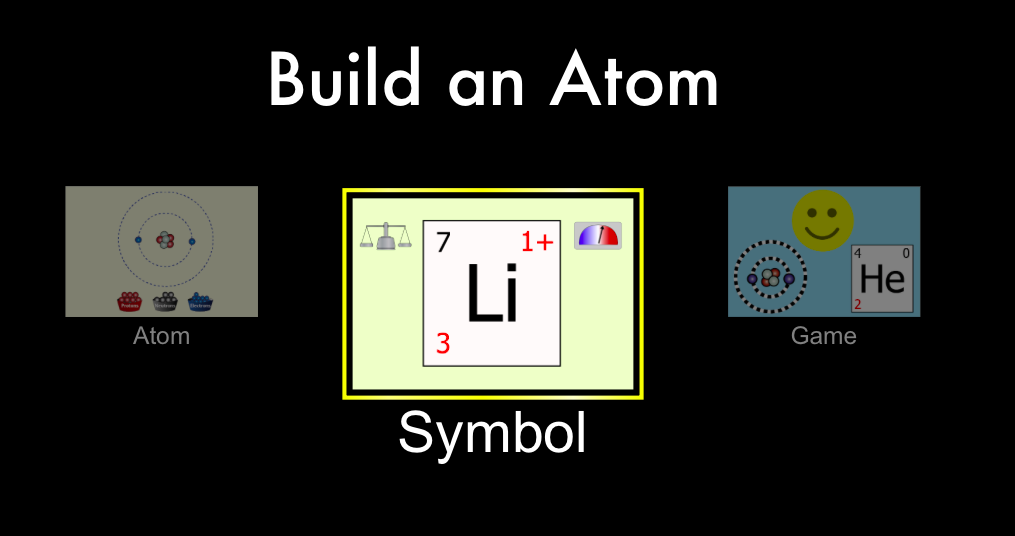
Choose “Symbol” to start the virtual experiment.
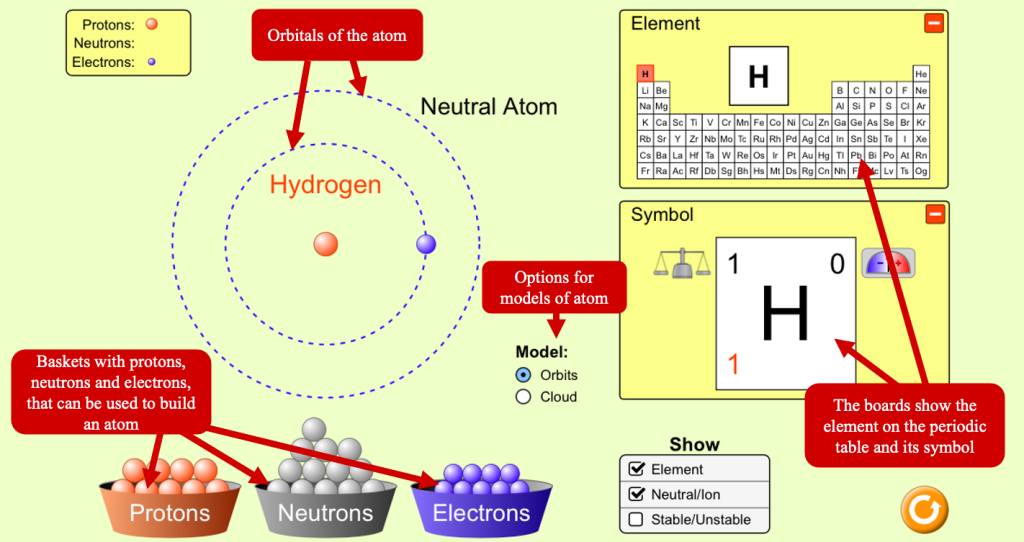
This is a little instruction to the virtual experiment.
Part 1. Atomic number
Virtual experiment.
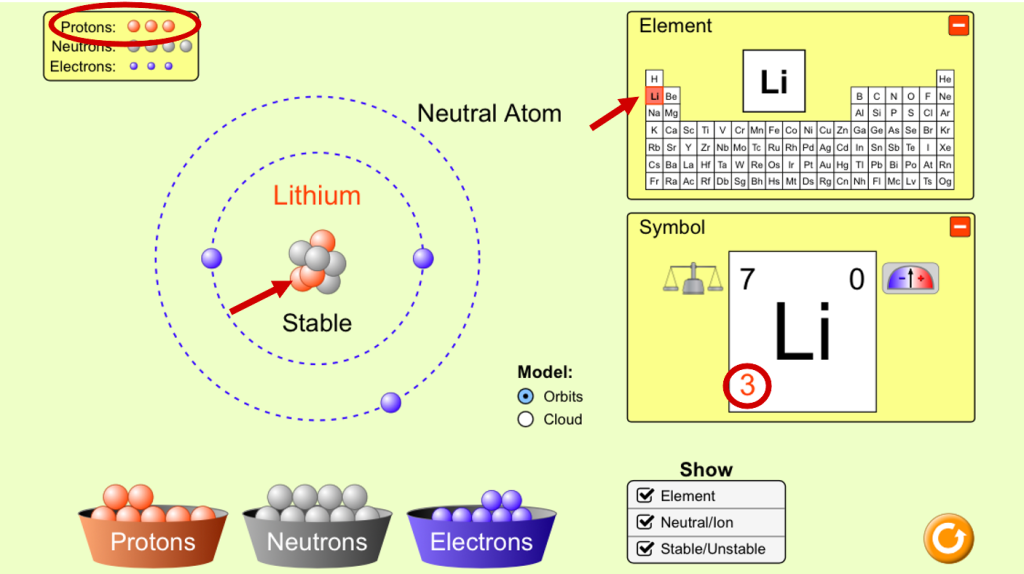
Step 1. Build a lithium atom. It has 3 protons, 4 neutrons and 3 electrons. The number of electrons and protons in an atom is the same, but the number of neutrons may vary.
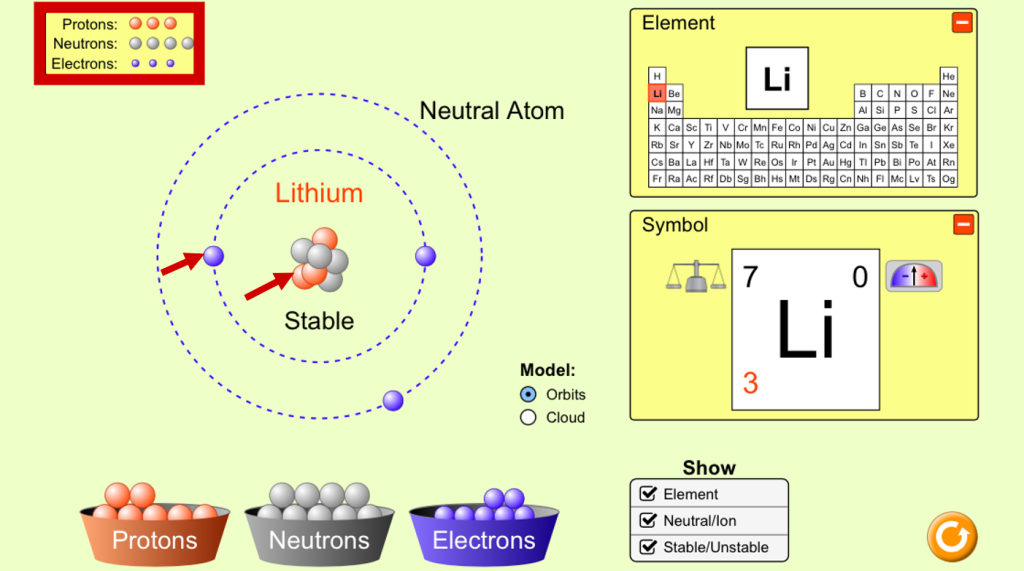
Step 2. Notice that the number of protons coincides with the number in the lower left corner of the element symbol. It is the atomic number (Z) of the element.
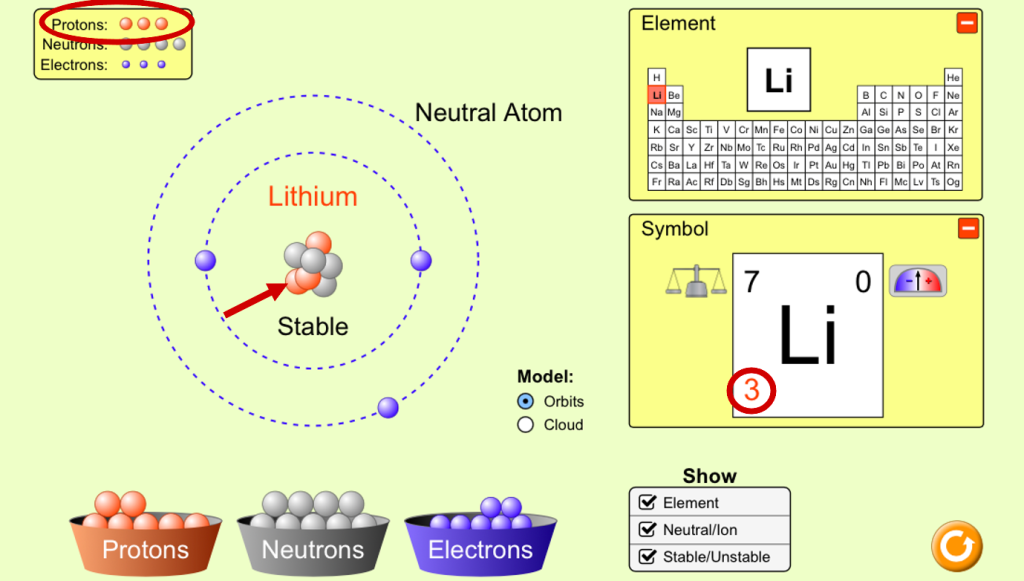
Step 3. Note that the atomic number is the number of charges of the atomic nucleus, or the number of protons. The atomic number corresponds to the order in the periodic table.
Step 4. Make a conclusion.
Part 2. Mass number
Virtual experiment.
Step 1. Notice that the sum of protons and neutrons coincides with the number in the upper left corner of the element symbol. It is the mass number (A) of the element.
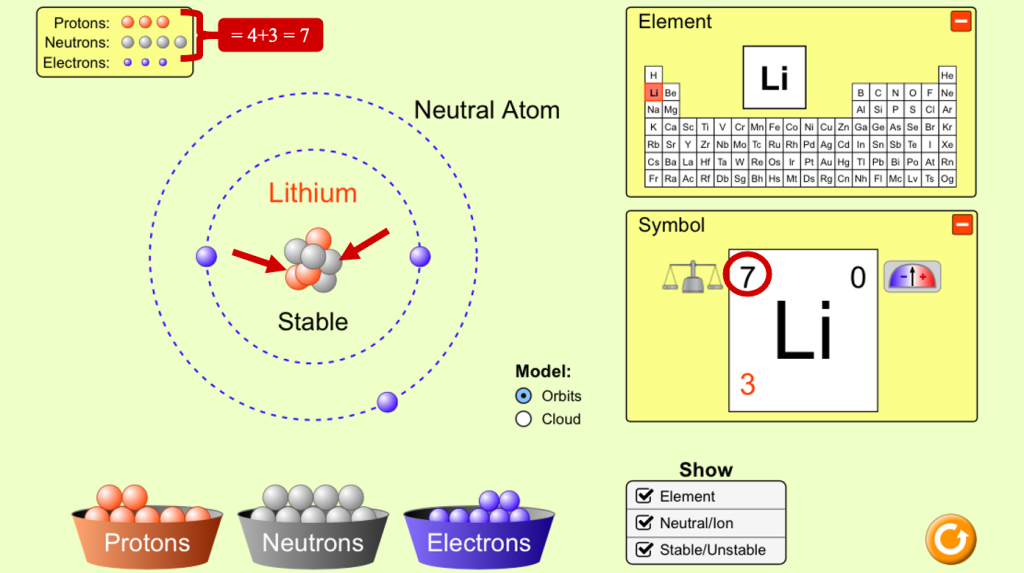
Step 2. Note that the mass number of the element is the number of nucleons of that element.
Step 3. Make a conclusion.
Conclusion
The atomic number is the number of charges of the atomic nucleus, or the number of protons. The mass number is the number of nucleons, or the sum of protons and neutrons.