
Beer’s Law
Beer’s Law Lab by PhET Interactive Simulations, University of Colorado Boulder, licensed under CC-BY-4.0 (https://phet.colorado.edu)
The title of the Project: Beer’s Law
Objectives:
- Use the Beer-Lambert Law concept to connect the absorbed light to the concentration of the colored solution.
- Simulate the use of a spectrophotometer to measure light absorption in colored solutions.
Theory
Beer-Lambert Law is a fundamental principle that describes the interaction of light with solutions. It states that:
- The absorbance of light by a solution is directly proportional to its concentration.
- The absorbance of light by a solution is directly proportional to the path length of light through the solution.
Colored solutions appear colored because they absorb light of certain wavelengths and transmit others.
For example:
- Copper sulfate solutions appear blue because they absorb red and yellow wavelengths but transmit blue wavelengths.
- Potassium permanganate solutions appear purple because they absorb green and orange wavelengths but transmit purple wavelengths.
A spectrophotometer is an instrument used to measure the absorbance of light by solutions. It allows for the determination of the concentration of a solution as well as the identification of its components.
Practical part

This guide will take you through the PhET Interactive Simulations’ Beer’s Law Lab, where you’ll discover how solutions work and the science behind colored solutions!
- Launch the simulation. Choose between two screens: “Concentration” and “Beer’s Law”. Let’s take a look at the second one.
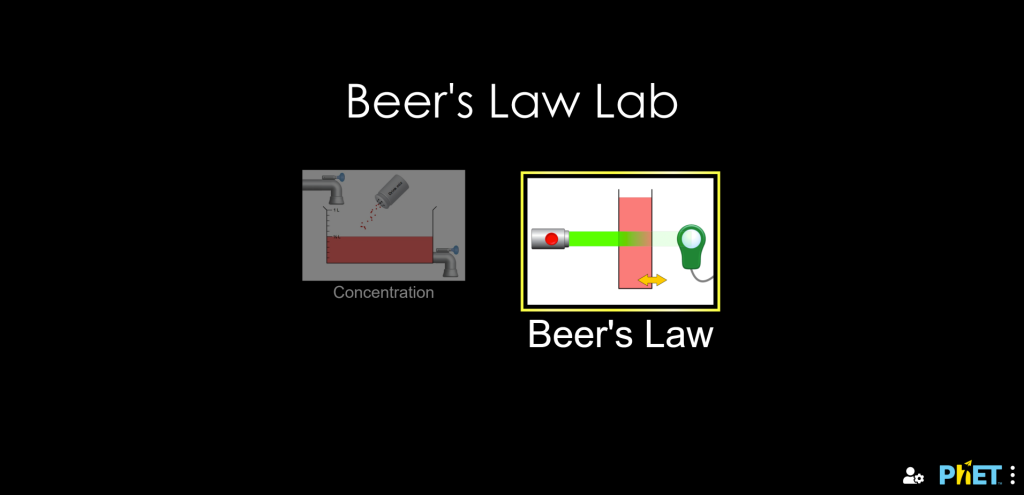
The Beer’s Law Screen
The Beer’s Law screen allows you to discover how the concentration of a colored solution can be determined experimentally.
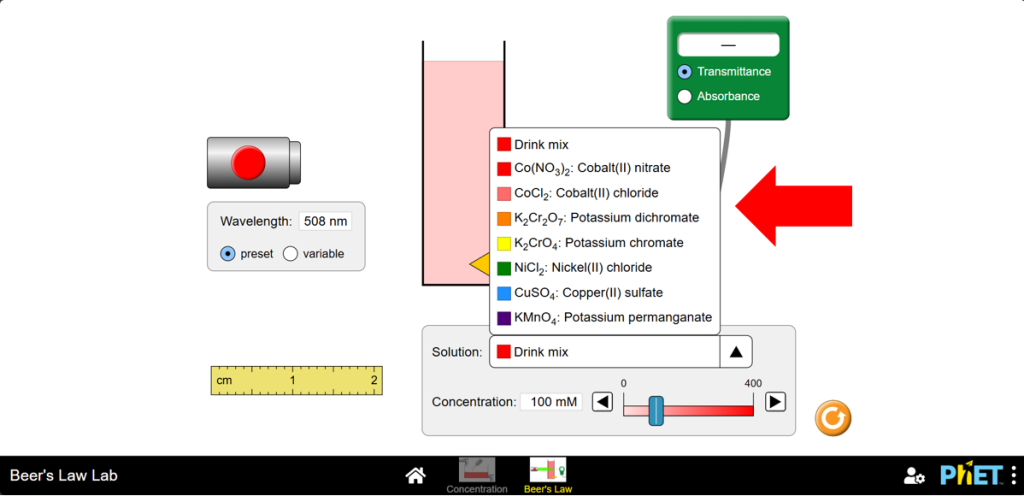
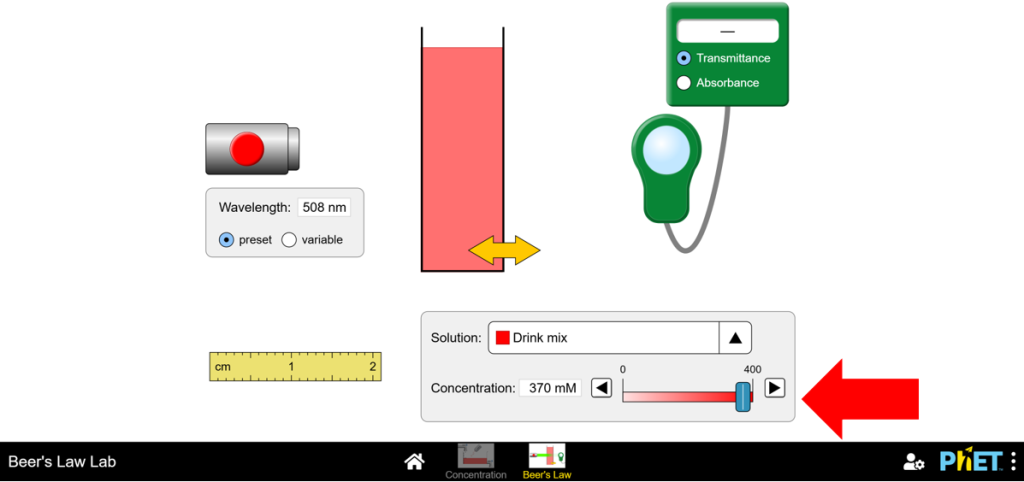
2.Use the dropdown menu to choose a colored solution. Adjust the concentration slider and observe the solution change.
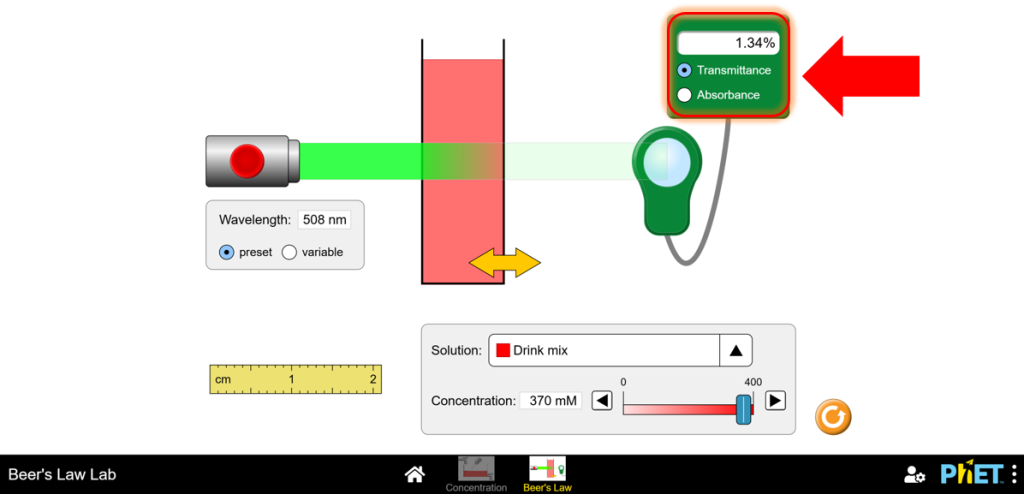
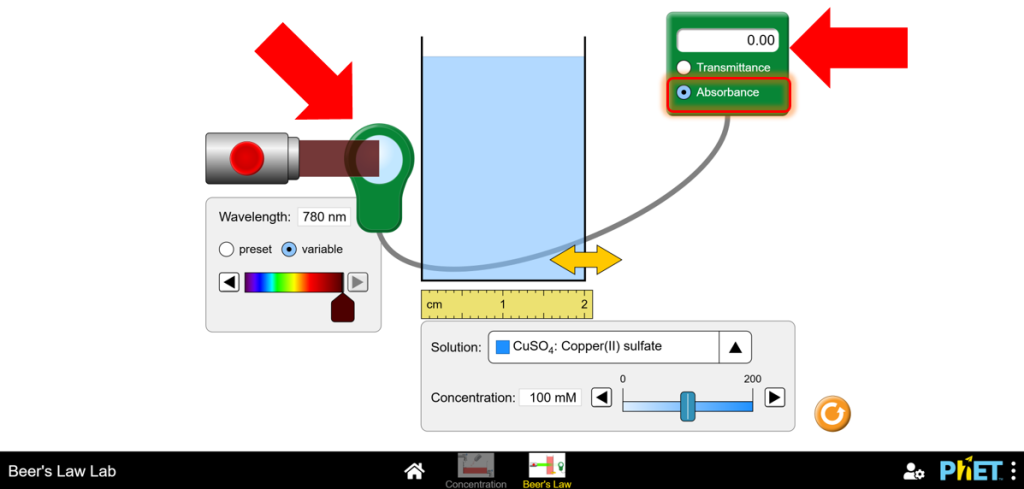
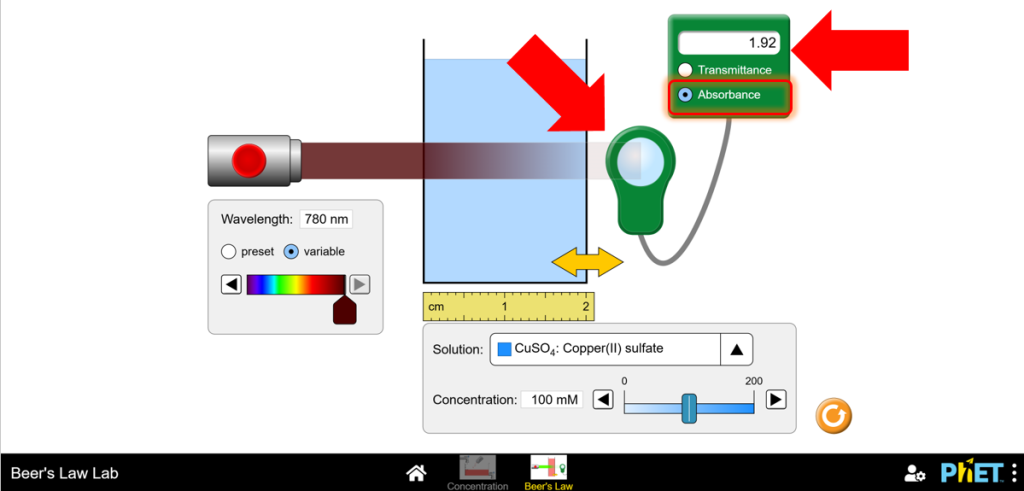
3.Turn on the light source. Use the meter to measure either transmittance (light passing through) or absorbance (light absorbed).
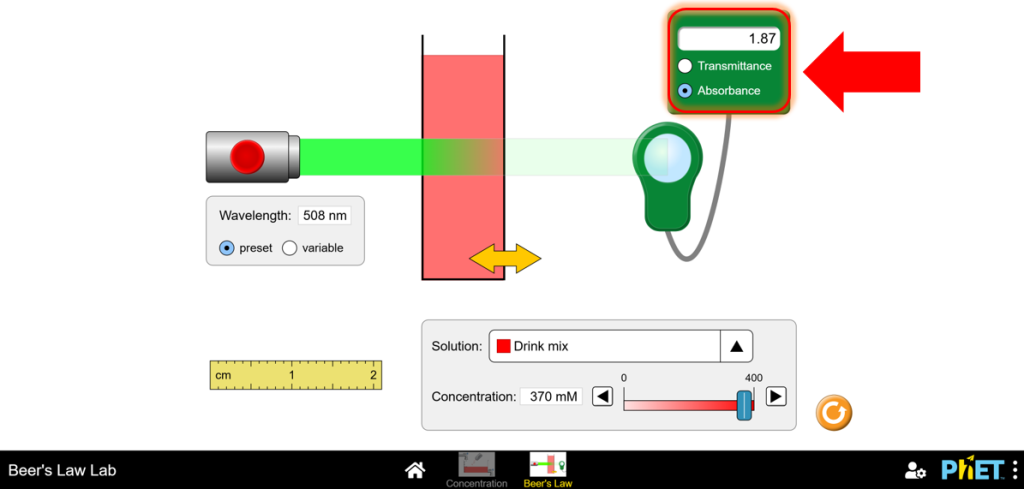
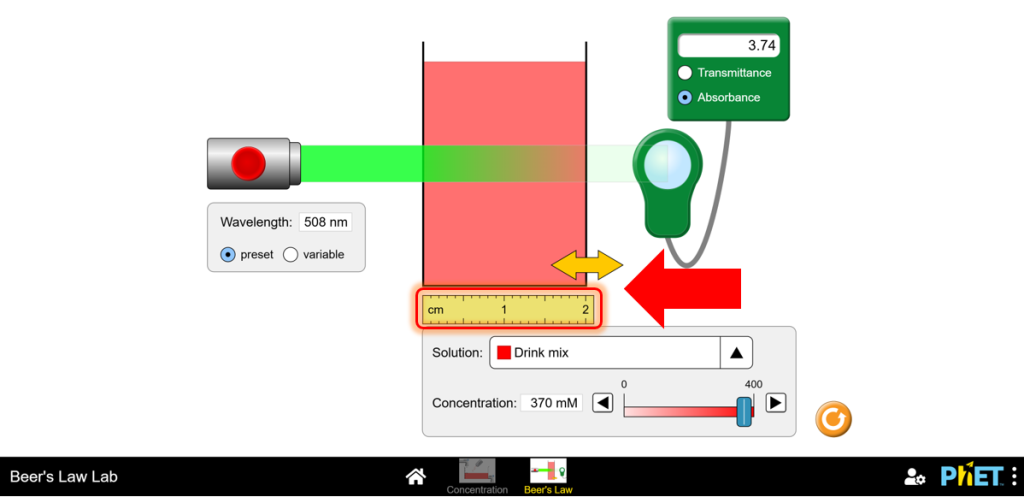
4.Change the container width and measure the pathlength (distance light travels) using the ruler. How does this affect absorbance?
5.Set the wavelength panel from “Preset” to “Variable.”Explore different light colors. How does the color of light affect the amount absorbed or transmitted by the solution?
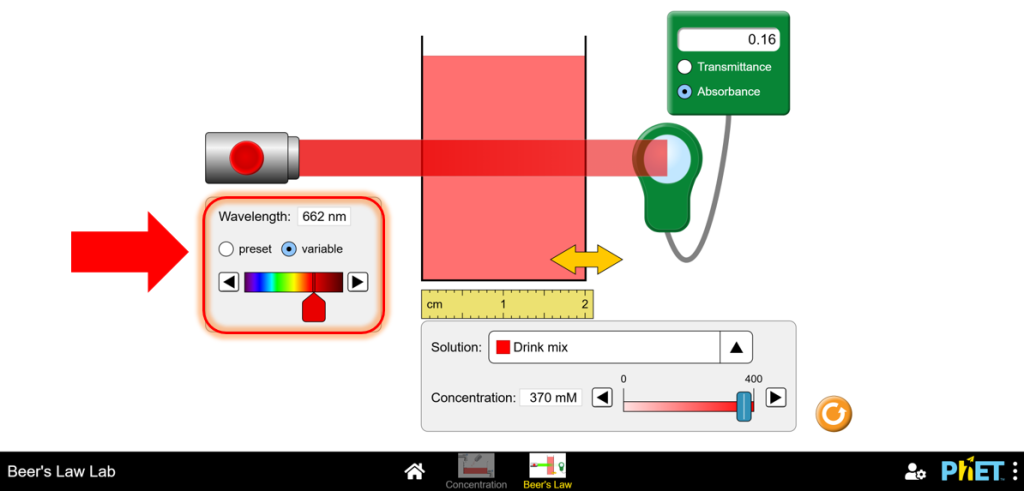
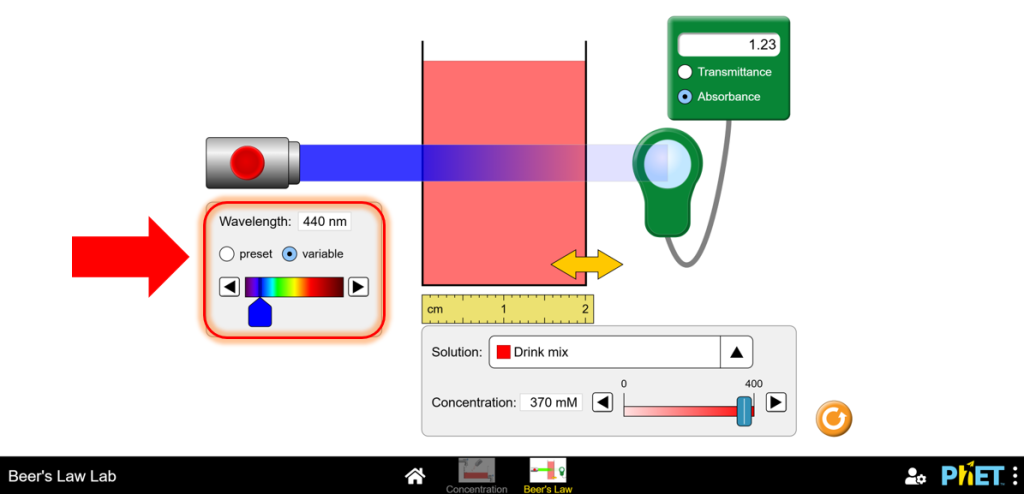
6.Predict which light color will be absorbed the most by the solution (usually the opposite of the solution’s color). Compare your prediction with the simulation’s preset values.
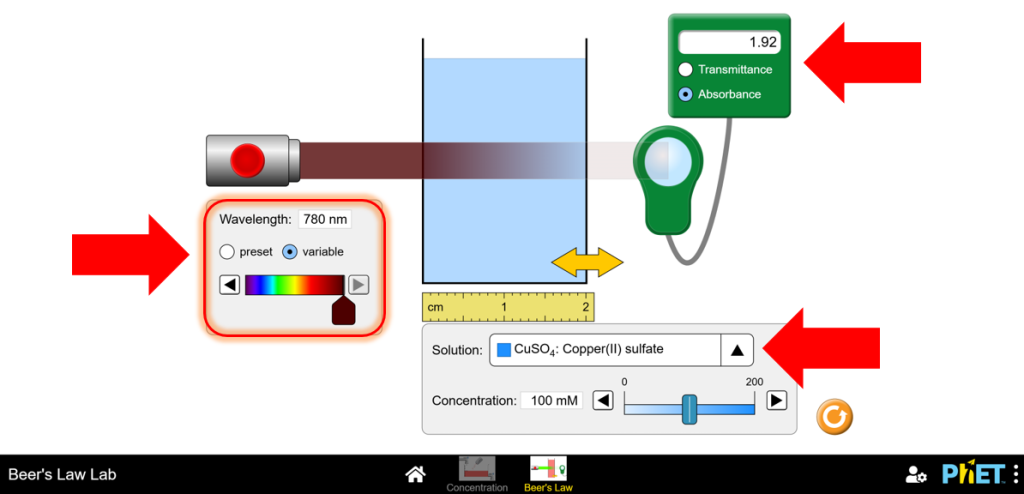
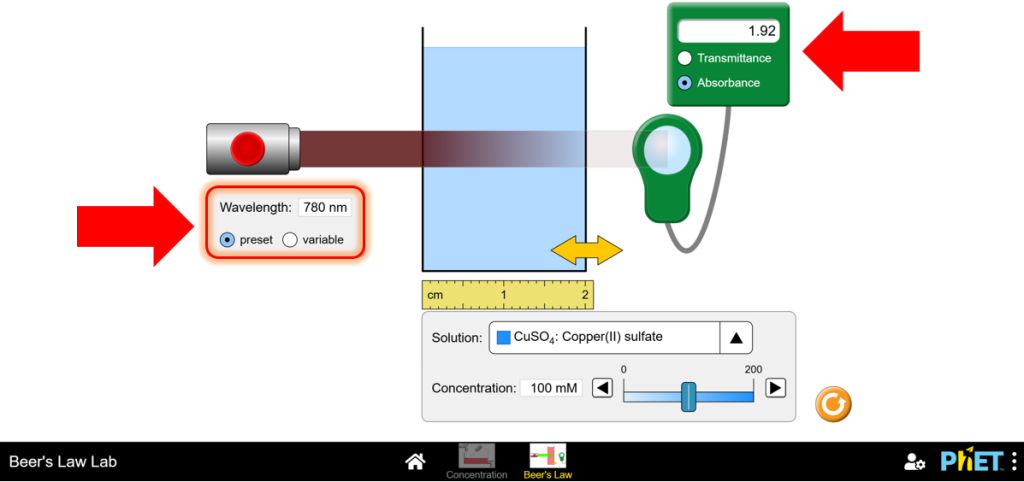
7.Analyze the wavelengths absorbed and transmitted by the solution.
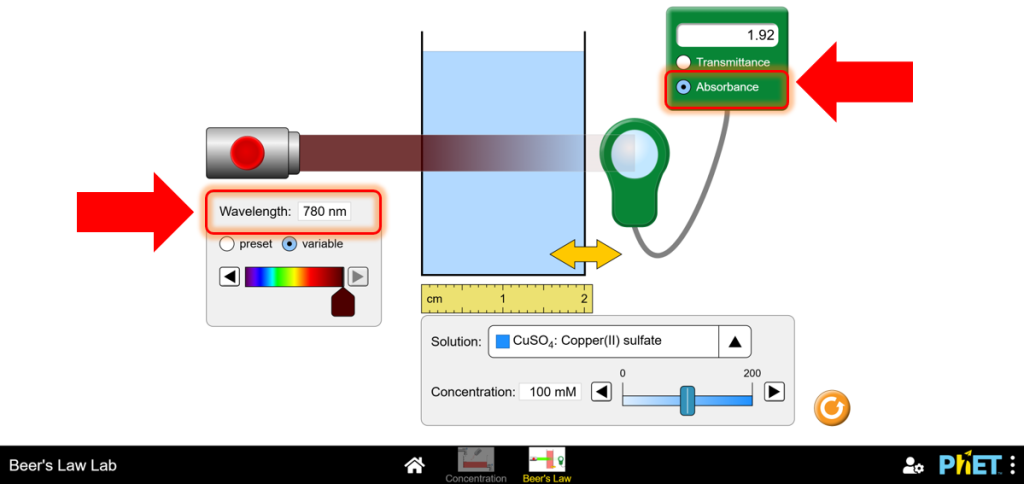
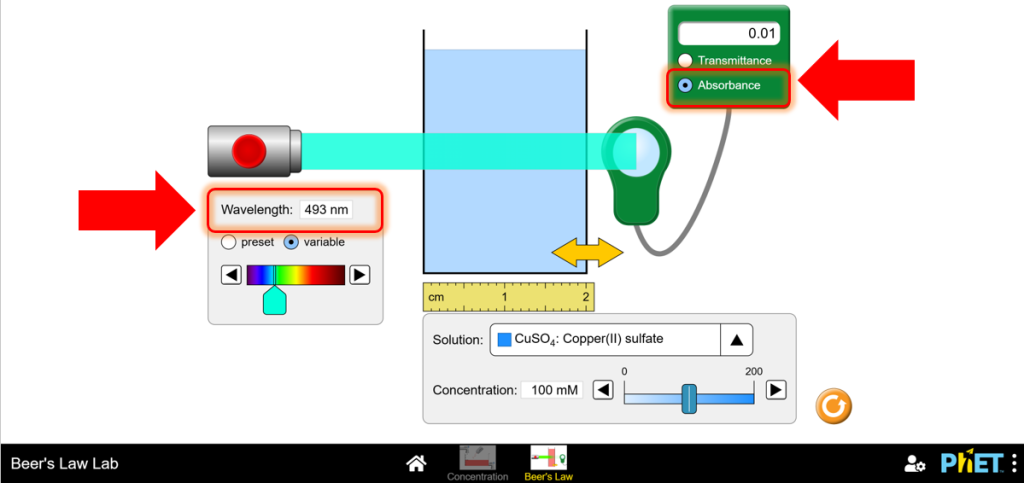
8.Solutions appear colored because they absorb specific wavelengths of light and transmit others. For example, copper sulfate solutions appear BLUE because they absorb RED and YELLOW wavelengths, but transmit BLUE wavelengths.
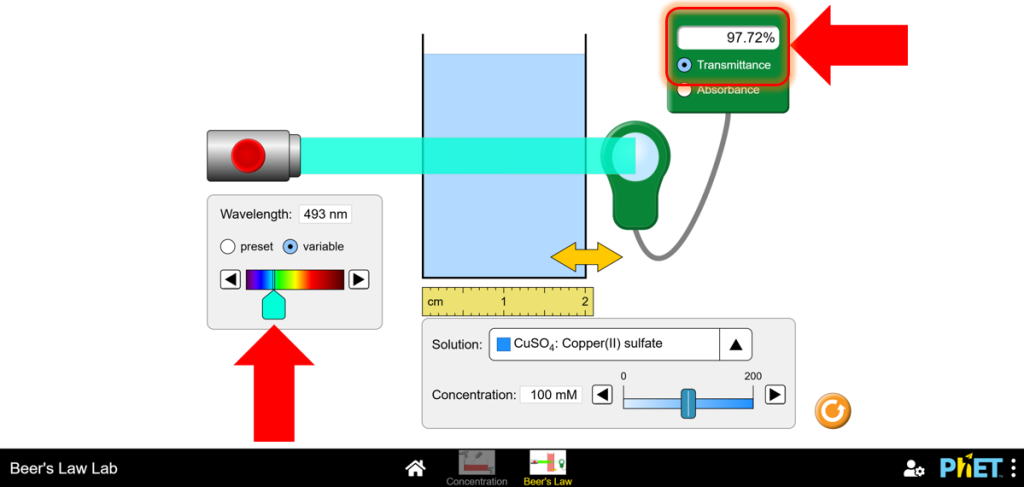
9.If you get confused by the terms “absorbance” and “transmittance” you can use the meter to compare the light intensity before entering the solution with the transmitted light.
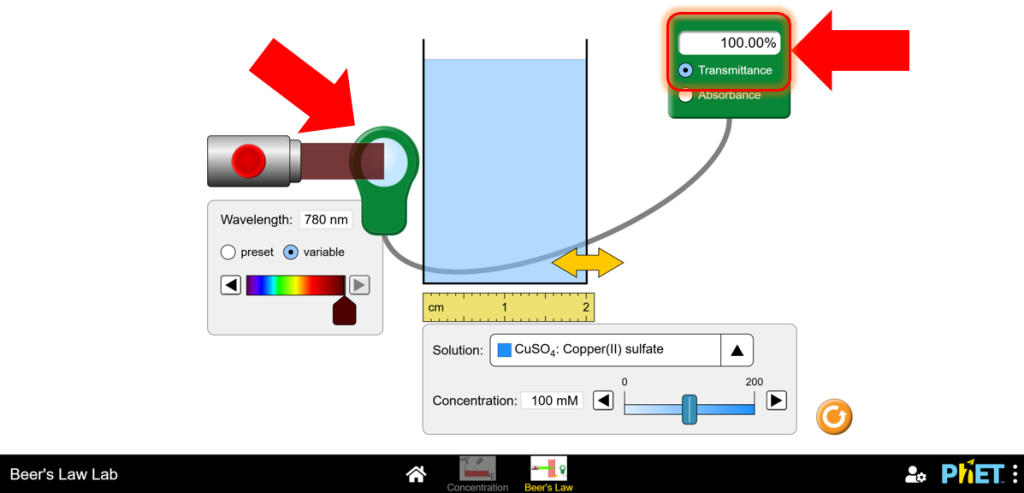
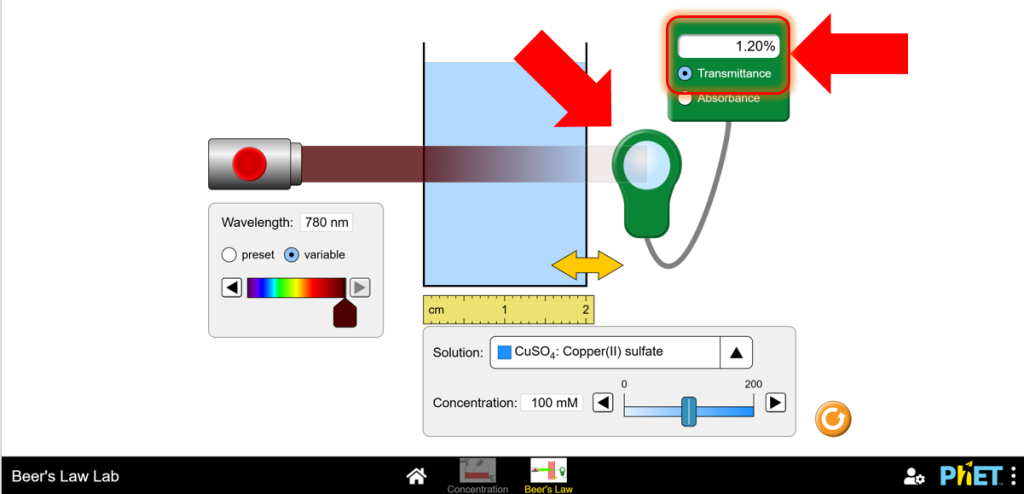
10.Transmittance is a percentage of light that passes through, while absorbance is the amount of light absorbed.
Connecting to Real-World Labs:
This simulation acts like a virtual spectrophotometer, shining light through solutions and measuring how much light passes through. It can help you understand how real laboratory equipment works!
Remember: Play around with the simulation! This is your chance to explore and discover the relationships between solutions, light, and color.
Conclusion
This exploration with PhET’s Beer’s Law Lab allows you to virtually experiment with solutions and light. You’ve discovered how concentration, pathlength, and light color all influence the absorption of light by a colored solution. This knowledge can help you understand why solutions appear colored and how scientists use tools like spectrophotometers to analyze them.