
Lesson 1
Topic of the laboratory work: “Study of the local ecosystem”
The purpose of the work:
- Learn about the main storage substance of plants – Starch
- Learn to identify starch in a sample using an iodine solution
- To study various properties of plant tissues on the example of potato storage tissue
Teacher’s Guide:
- Tasks are performed in groups of 2-3 people
Expected goals:
- Students can perform a starch test
Worksheet:
Safety technique:
Description

The storage tissue of plants is a tissue that serves to accumulate nutrients and energy that the plant can use in the future. It is one of the main characteristics of the plant cell and is found in various parts of the plant, such as roots, stems, leaves and fruits.
Among the storing tissues of plants, starch and fats are the most common. Starch is the main reserve substance in most higher plants. It is stored in chloroplasts in the form of grains and can be used for glucose synthesis during photosynthesis or in the absence of light.
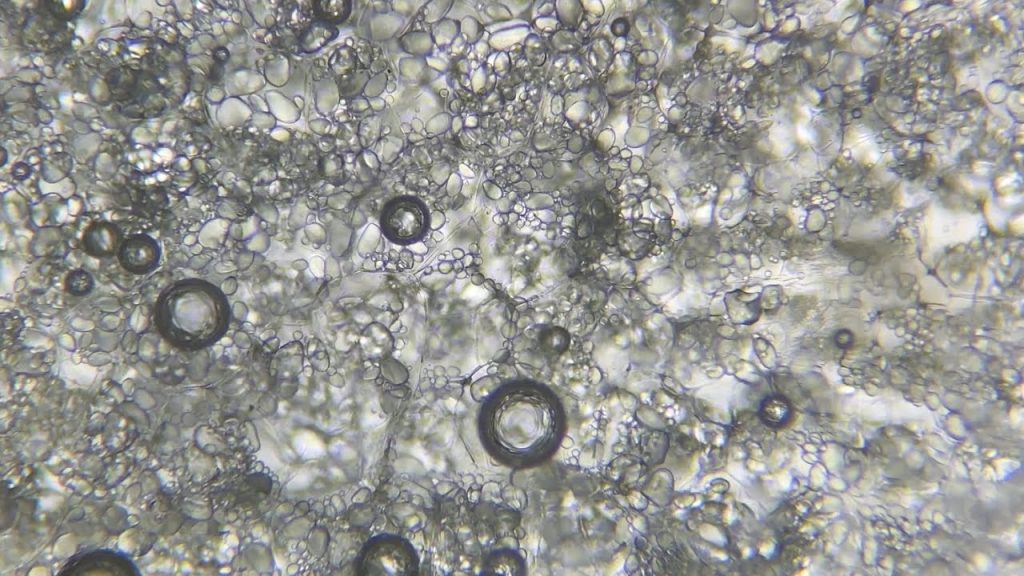
The study of plant storage tissues is important for agriculture and the food industry, as it allows you to optimize the cultivation of plants and increase their yield. In addition, the storage tissue of plants is an important source of nutrition for many animals, including humans.
The reaction of iodine with starch is a classic experiment that allows you to clearly demonstrate the presence of starch in a sample. Iodine turns starch blue, which allows you to quickly determine the presence of starch in plant or food products.
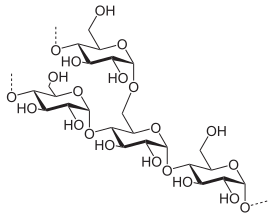
Starch is a complex carbohydrate, which is the main reserve nutrient for most plants. When iodine is added to starch solution, iodine interacts with starch molecules in a molecular way, forming a blue complex. The color of this complex allows you to determine the presence of starch in the sample.
The experiment can be carried out by adding a few drops of iodine to a piece of potato or a piece of white bread. If the product contains starch, it will quickly turn blue. This indicates the presence of starch in the product and allows you to quickly and easily determine its presence.
List of necessary equipment
- Plate
- Potatoes
- Iodine 5 %
- Pasteur Pipette
Practical part

1) Take a potato and put it in a plate or cup
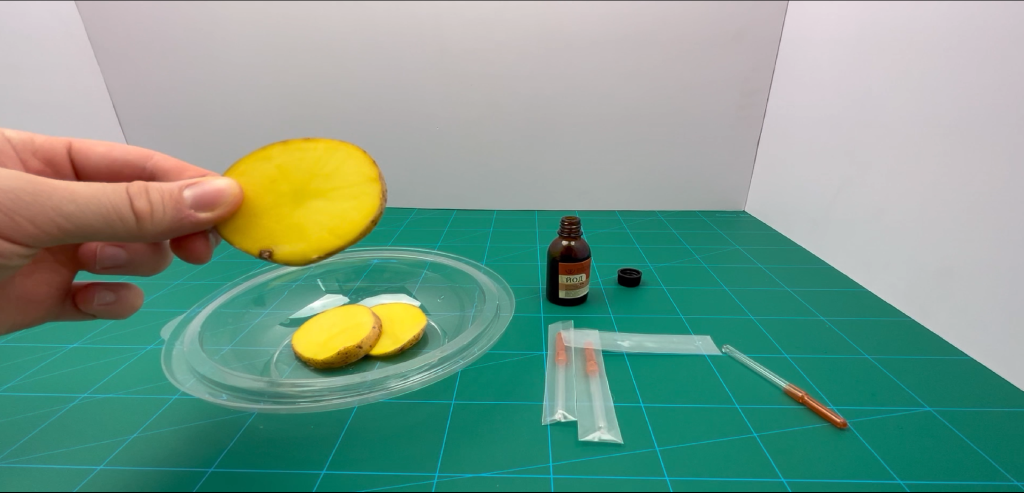
2) Take a couple of drops of iodine with a Pasteur pipette.
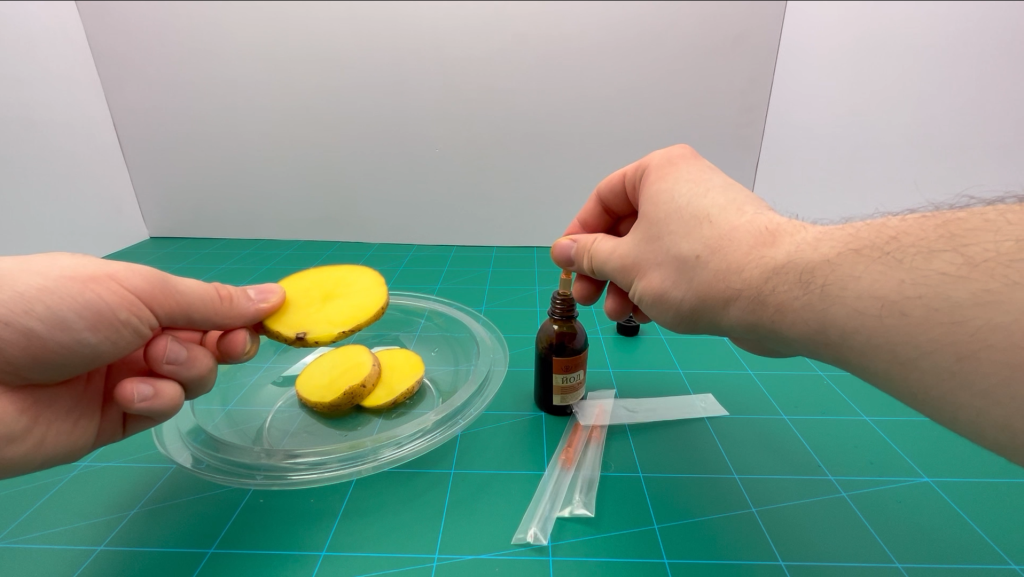
3) Add several drops of iodine onto potato
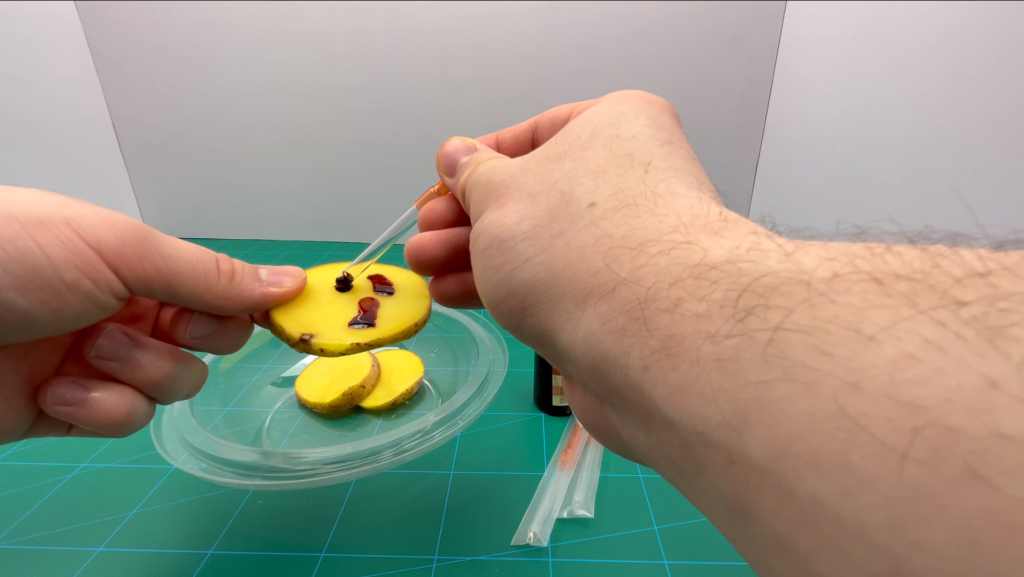
4) Observe the changes and record the result
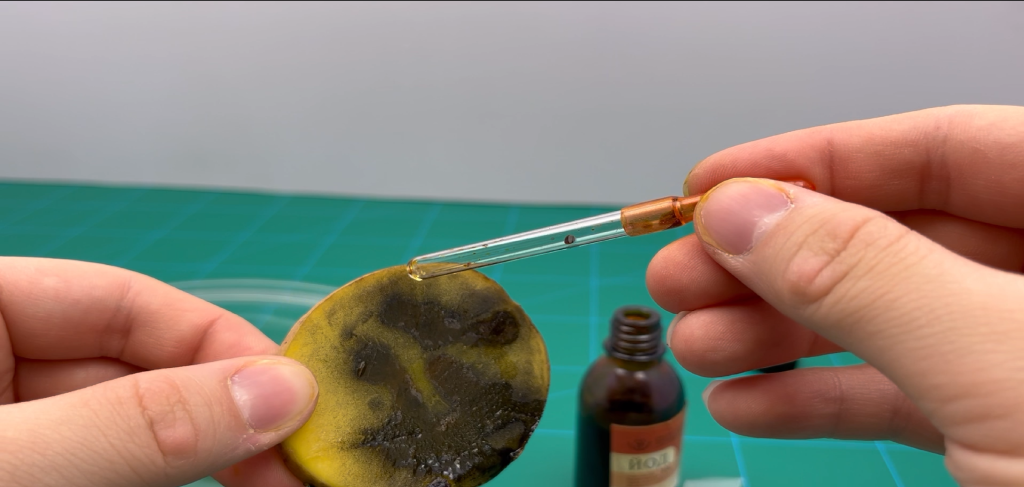
Conclusion
So you learned how to test for starch using iodine.
Rules for designing the laboratory work
The laboratory work should contain items in the following order:
- Laboratory work number
- Topic name
- Purpose of the work
- Hypothesis
- Brief description of the theoretical part
- Equipment
- Steps in the correct sequence
- Add a photo from the experiment (if you can’t insert a photo, you can add a picture)
- Give a brief description
- Write a brief discussion and explanation of the topic covered
- Write the conclusion of the work
- The workplace must be cleaned and put in order
Feedback